
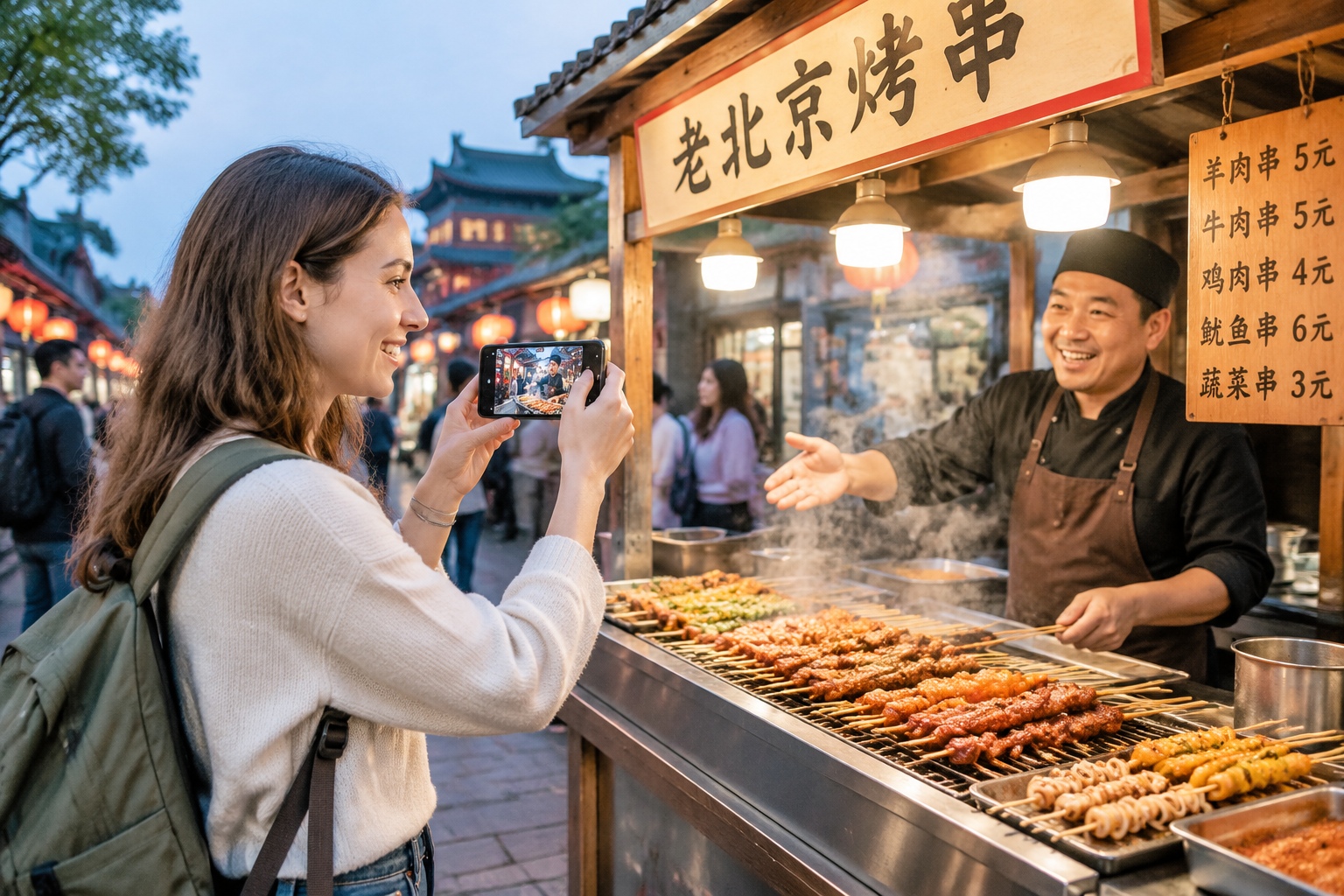

Late-Night Convenience Store, Not the Great Wall
At 11:40 p.m. in Chengdu, a British vlogger holds his phone in front of a convenience store hot-food cabinet. Steam fogs the glass. He lifts a tea egg with tongs, asks the cashier how much it costs, taps his phone, and tells the camera, “That’s about 80 pence.” The clip is not about a landmark. It is about a city that is still awake, and a system that lets a visitor buy a hot snack without speaking much Chinese.
Scroll through China travel videos and the same spaces keep appearing: the convenience store at midnight, the night-market stall with skewers and price signs, the teahouse where people sit for three hours over a 20-yuan cup of tea. The Great Wall is there too. But in a public sample of about 150,000 ChinaVlogs, the everyday spaces are harder to avoid.
A Sample of 150,000 Videos—and What It Can’t Tell Us
For this exploratory review, I looked at a public sample of roughly 150,000 China travel videos posted between 2023 and 2025 on YouTube, TikTok, Instagram Reels and other short-video platforms. The search terms included ChinaVlog, TikTok China travel, visa-free China, China travel tips and city names such as Chengdu, Xi’an, Chongqing and Shanghai. I removed duplicates, official tourism campaigns and corporate accounts. The remaining videos were mostly by independent creators, often young, often English-speaking, and often visiting the same handful of big cities.
This is not a scientific survey. It cannot tell us what every foreign visitor thinks, and it cannot represent China as a whole. Platform algorithms reward some scenes over others. Creators who post about China are a self-selected group. What the sample can show is a pattern in what gets filmed, edited and watched: the small, repeatable spaces of daily life.
The Pattern: Daily Spaces Outnumber Landmarks
In a rough scene-coding pass, convenience stores appeared in about three in ten videos; night markets and street-food streets in about one in four; teahouses, parks and ordinary shopping streets in another large share. Major landmarks—the Great Wall, the Forbidden City, the Bund—still appeared, but usually as one segment in a longer video. A single shot of a wall is impressive. A 40-second clip of buying yogurt at midnight answers a more practical question: what would it be like to be here?
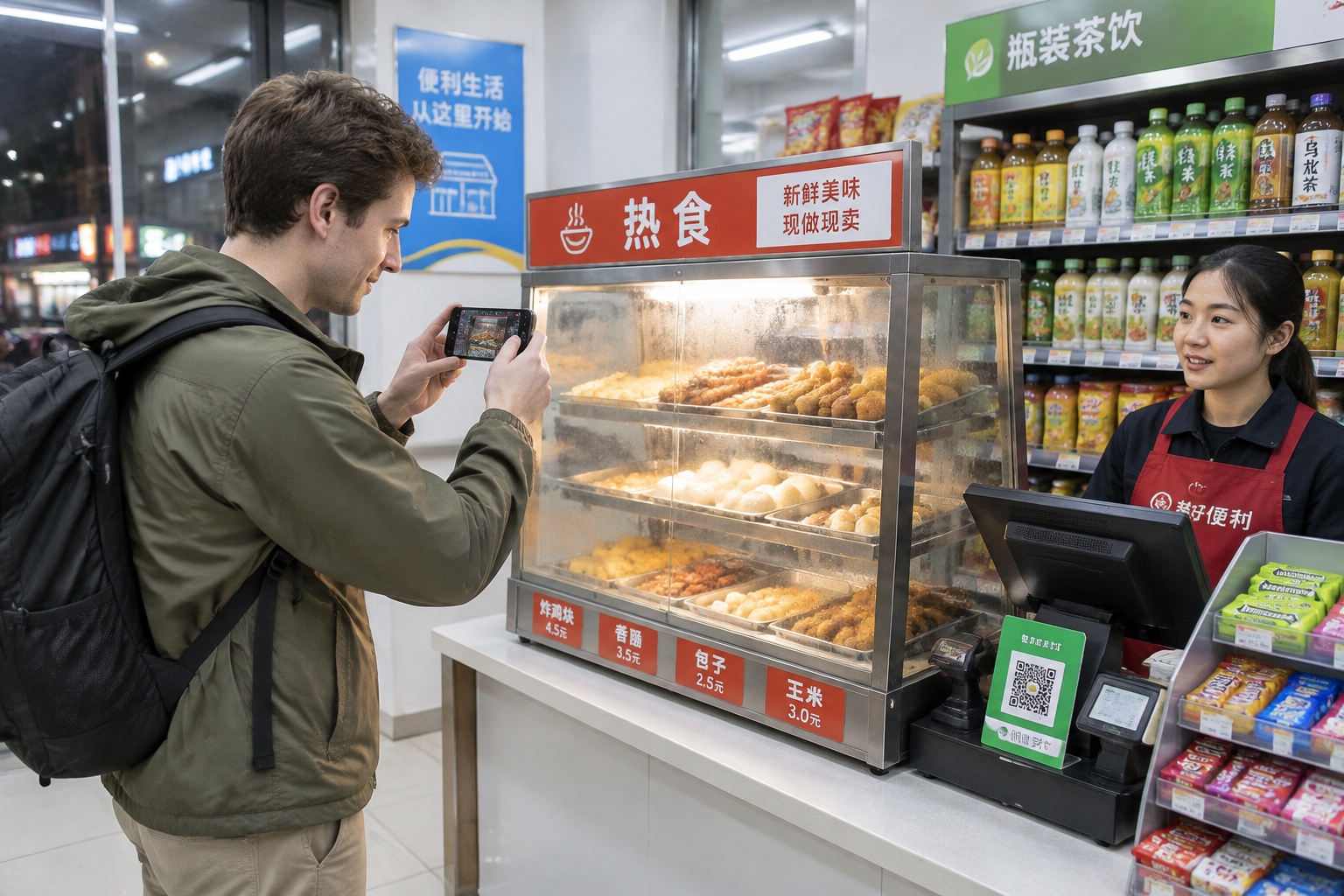
That is the first reason the convenience store wins. It is filmable. The light is good, the prices are visible, the action is simple, and the creator can interact with a cashier or a shelf without a permit or a crowd. The second reason is that it is legible to viewers abroad. A store is a store, even when the payment method and the hot-food cabinet are different.
Scene One: The Convenience Store at 11 p.m.
The convenience store is where a foreign visitor first feels the texture of urban China without needing a guide. The doors slide open. A delivery rider checks his phone outside. Inside, the shelves are dense: bottled tea, yogurt, instant noodles, phone chargers, small packs of tissues. At the counter, someone pays with a QR code; another customer pays cash. The hot-food cabinet has tea eggs, steamed buns, oden and sausages. The cashier asks whether the food should be heated.
For visitors from places where late-night food means a drive-through or an expensive delivery app, the 24-hour store is a small shock. It is cheap, bright and ordinary. The vlog does not need to explain “China’s retail revolution.” It only needs to show a traveler buying water at midnight and walking home without a second thought. That is why these clips get saved: they turn an abstract idea of safety and convenience into a plastic bag and a receipt.
Scene Two: Night Markets and the Price Conversation
Night markets produce better television. There is smoke, sound, movement and haggling. A creator points at skewers, asks “how much?”, and the vendor turns a price board or types a number into a phone calculator. The camera catches the oil, the chili powder, the queue of young people sharing a paper tray. A comment section fills with comparisons: Bangkok, Istanbul, Mexico City, Taipei. The scene is familiar enough to be approachable, foreign enough to be interesting.
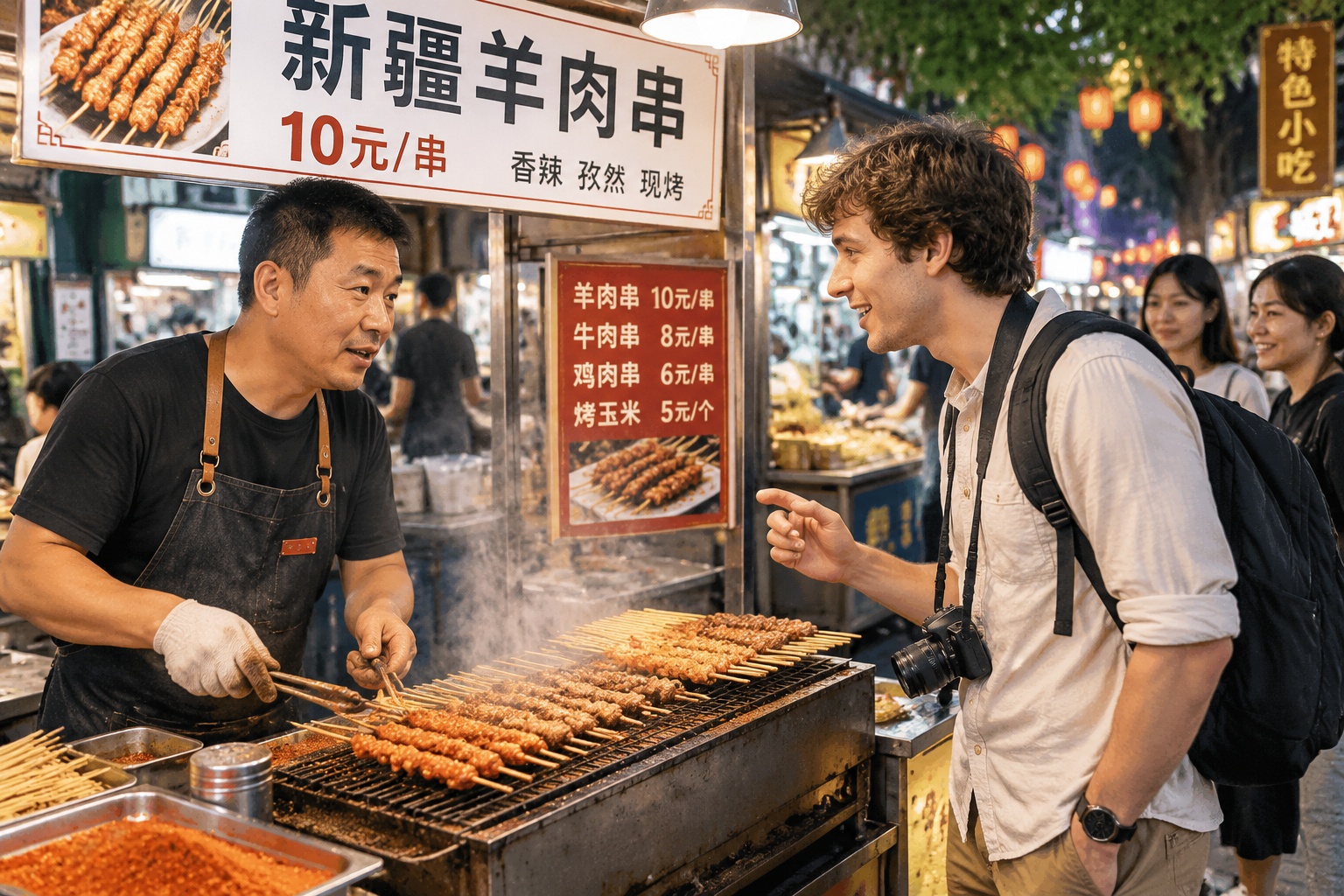
It also shows how nightlife is organized. Many Chinese cities have moved street vendors into managed night-market streets with waste collection, lighting and traffic control. The result is not a free-for-all. Vendors pay fees or rent, close at certain hours, and share space with residents who want to sleep. The vlog rarely explains this. But viewers can see the order: bins, signs, security guards, a line of scooters parked at the edge. The romance of the night market depends on a very unromantic layer of city management.
Scene Three: Teahouses and the Slow Side of the City
The teahouse is the quiet counterpoint. In Chengdu, retirees sit in bamboo chairs, play cards, smoke, and get their covered cups refilled with hot water. In Hangzhou or Beijing, younger visitors photograph the interior, order a pot of tea and stay for an afternoon. The camera lingers on details: a chipped table, a birdcage, a thermos, the sound of mahjong tiles. The space is traditional, but it is not a museum. People are using it.
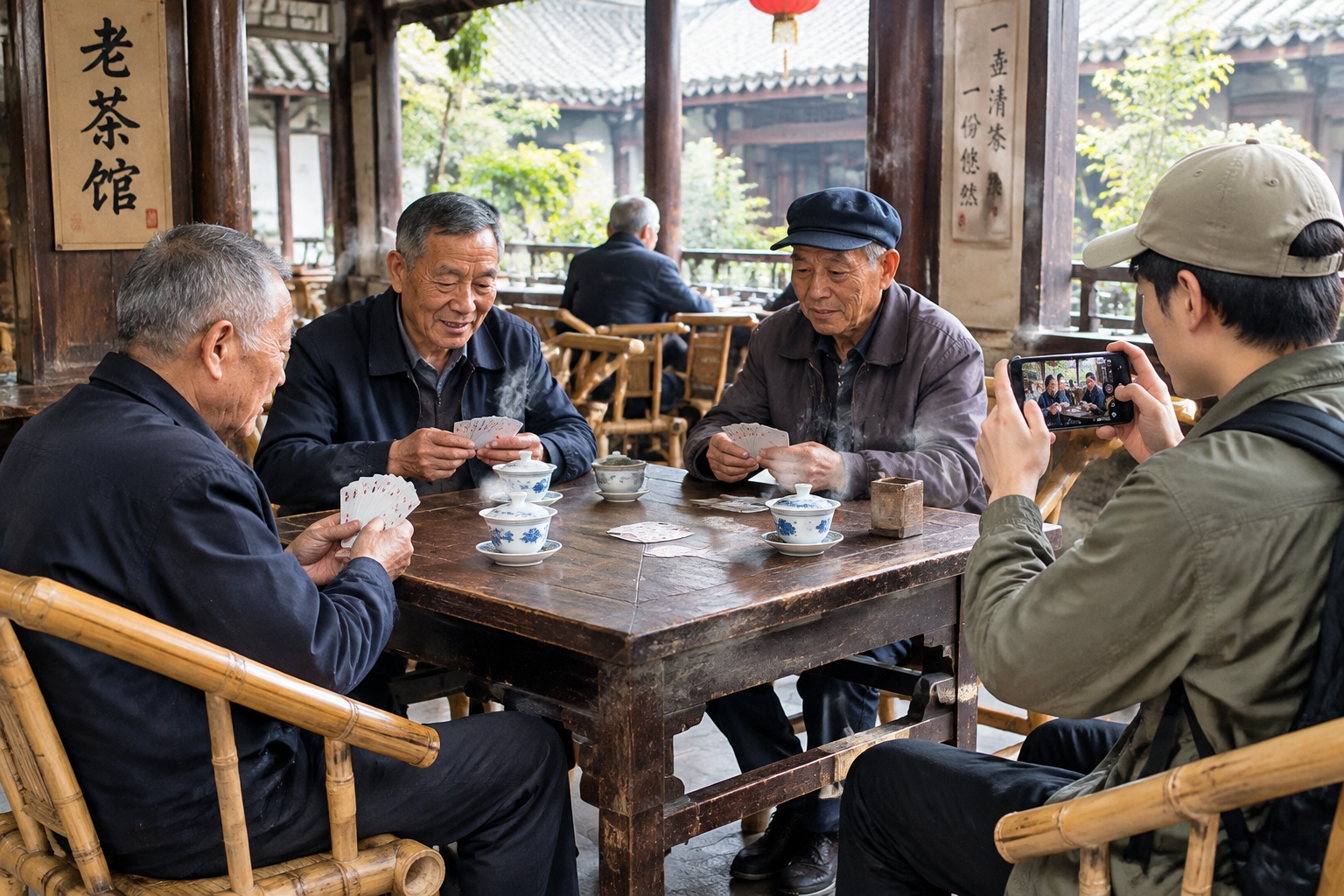
For foreign viewers, the teahouse is a way to see public life without a ticket. It also complicates the picture of a fast-moving country. China’s cities are full of speed—delivery apps, high-speed rail, mobile payment—but they also contain spaces built for doing very little. The vlog often catches that contrast in one shot: a young creator filming a group of older men who are completely unbothered by being filmed.
Three Vloggers, Three Ways of Looking
In one clip from Guangzhou, a British creator films a 7-Eleven near his hotel at midnight. He buys bottled water and a hot snack, talks about walking alone, and shows the total on his phone. The comments are not about the store’s brand. They are about the feeling of a city where the lights stay on.
In Xi’an, a Mexican couple films a night-market street near the city wall. They ask a vendor about the spices in a roujiamo, try to pronounce the name, and end up in a short conversation about family. The camera shakes. The audio is messy. That is part of the appeal. The video feels like a place, not a presentation.
In Chengdu, a Chinese-Canadian vlogger spends an afternoon in a teahouse. He does not perform surprise. He orders tea, sits with older men, and lets the silence run. The comments ask practical questions: How much was the tea? Do they mind being filmed? Is it easy to find a teahouse that is not for tourists? These are the questions that turn travel content into a guide.
Why These Clips Travel—and Where the Algorithm Intervenes
Everyday scenes have low production costs and high recognition. A creator does not need a drone or a script. A phone, a store, a stall and a few questions are enough. The details are sensory: steam, chili, fluorescent light, the beep of a payment terminal. Viewers abroad can compare them with their own convenience stores, markets and tea shops. The videos reduce the distance between “China” as an abstract headline and a place where someone buys a snack.
This is one of the clearest travel content trends of the past two years, and it explains the natural traffic around these videos: viewers share them because they feel usable, not because they feel official.
There is also a platform effect. Short-video algorithms reward retention, surprise and comment bait. A night-market price dispute or a “I can’t believe this costs 6 yuan” moment will travel further than a calm teahouse scene. That does not make the teahouse unimportant; it means the sample is shaped by what platforms push. Creators also cluster in cities with good transport, cheap hotels and recognizable food. A visa-free China trip in 2024 or 2025 often means Shanghai, Chongqing, Chengdu or Xi’an, not a small town in Gansu.
The Infrastructure Under the Everyday
The convenience store, the night market and the teahouse do not float free of policy. They sit on top of supply chains, payment systems, rental markets and public-space rules. Mobile payment is now ordinary in Chinese cities, and foreign visitors can link international cards to Alipay or WeChat Pay, though cash still works in many places. Late-night delivery and dense retail make a 24-hour city possible. City governments promote night economies because they create jobs and spending. Teahouses survive where rents and local habits allow slow, low-margin businesses to remain in central neighborhoods.
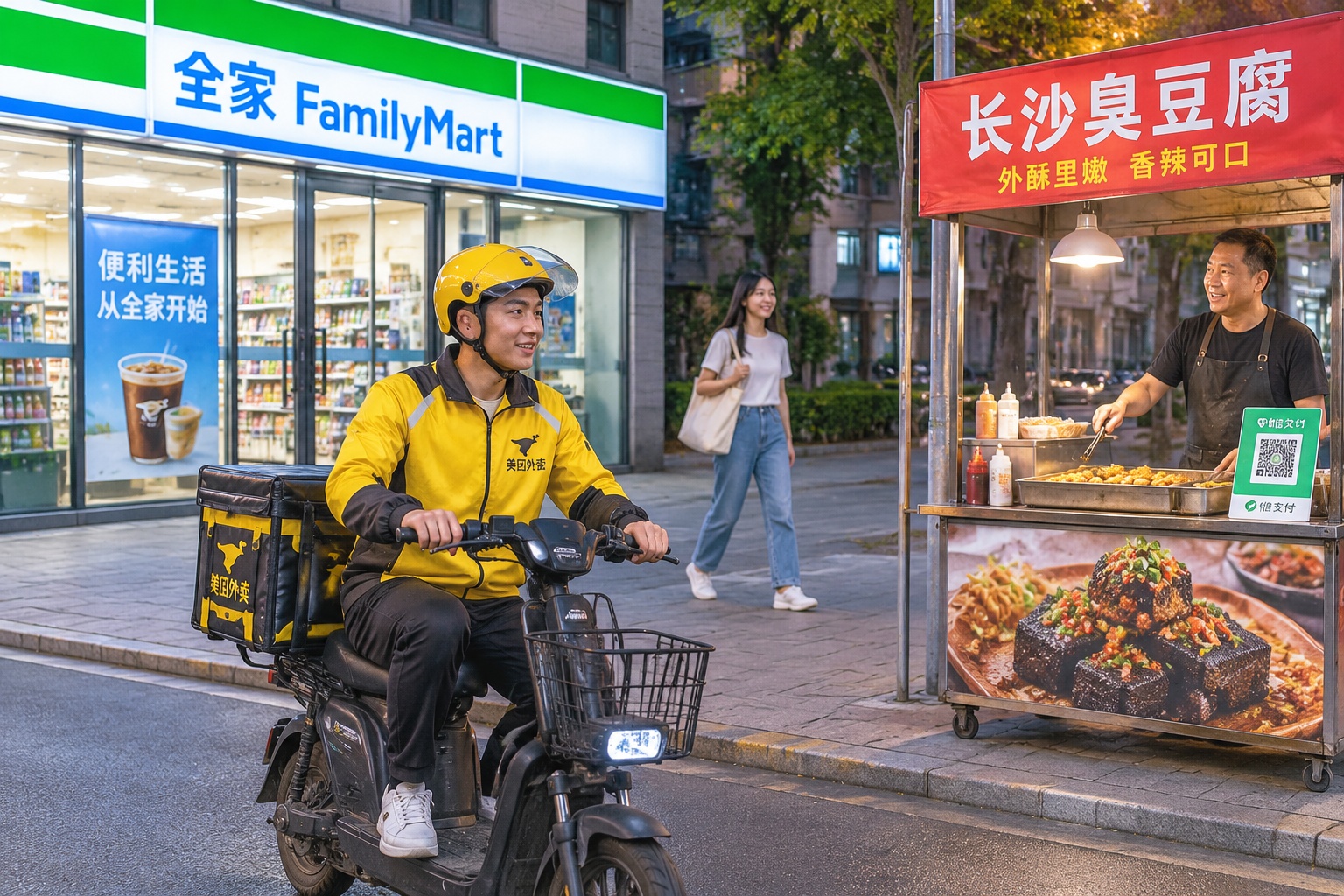
China’s visa-free policies have also changed the flow of travel content. Since late 2023, the country has expanded unilateral visa-free entry and longer transit-without-visa stays for citizens of many countries. That has made short trips easier and pushed “visa-free China” into search results. The result is more creators filming ordinary streets with less preparation. They are not only looking for the Great Wall. They are looking for a late-night snack, a price, a conversation, a place to sit.
The China That Fits in a Plastic Bag
The last shot is often small. A traveler leaves a convenience store with a plastic bag, a hot tea egg and a phone showing a payment of 12 yuan. A delivery rider passes. A night-market vendor stacks stools. An old man in a teahouse lifts his cup. The Great Wall still matters, but the vlogs are asking a different question: could I live here? The answer arrives in the ordinary places where a city proves it can work after dark.
Start the discussion at forum.chinacomes.com