

Where Desert Meets Vineyard
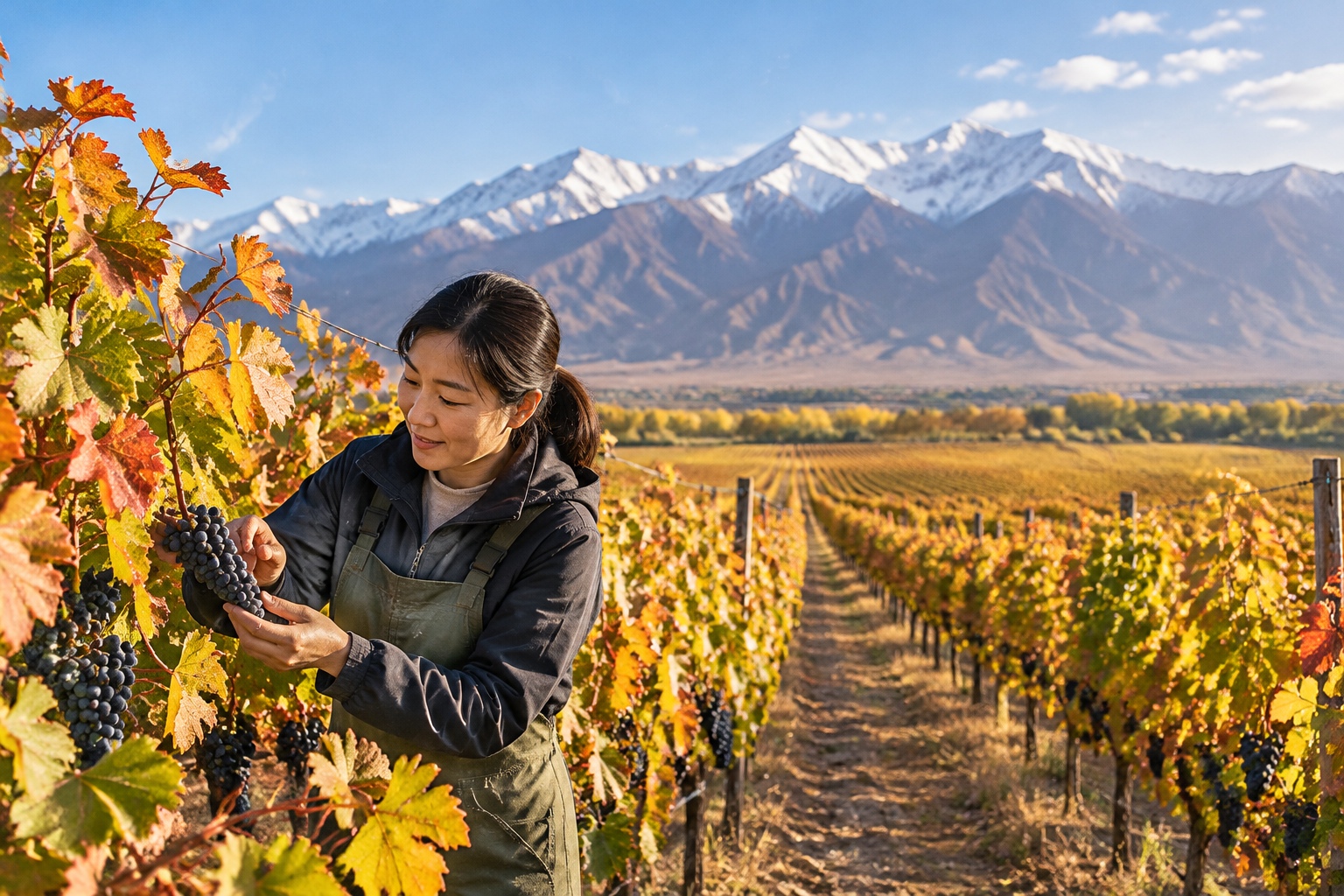
On a crisp October morning, I drove along the eastern foothills of the Helan Mountains, about an hour from Yinchuan, the capital of Ningxia, a landlocked region in northwest China. The vineyards stretched to the horizon, heavy clusters of Cabernet Sauvignon and Merlot hanging low on the vines. The air smelled of ripe fruit and dry grass. A worker named Zhang — born in a nearby village — broke a grape and offered it to me. “Try it,” she said. “This is our terroir.” The grape was intense, sweet and peppery at the same time. That afternoon, she poured me a red wine that had won a gold medal at a competition in Berlin. I had to keep reminding myself: this was China.
For most outsiders, Ningxia is a dusty, remote place on the edge of the Gobi. But this region has quietly become one of the world’s most exciting wine frontiers. Today, nearly 200 wineries operate here, and their bottles regularly collect awards at major competitions like the Concours Mondial de Bruxelles, Decanter World Wine Awards, and Berliner Wine Trophy. According to the Ningxia provincial government, local vineyards cover more than 36,000 hectares, roughly a third of China’s total wine grape area.
Standing between the vine rows, I could feel the energy of a new industry. Pickers moved through the rows in quick, practised motions. One of the foremen told me that every single grape harvester had received special training, and that the local agricultural school now offers courses in viticulture and oenology. Not all the wine produced here is great, but the best bottles are as characterful as anything from Australia or Spain.
A Region Designed for Wine
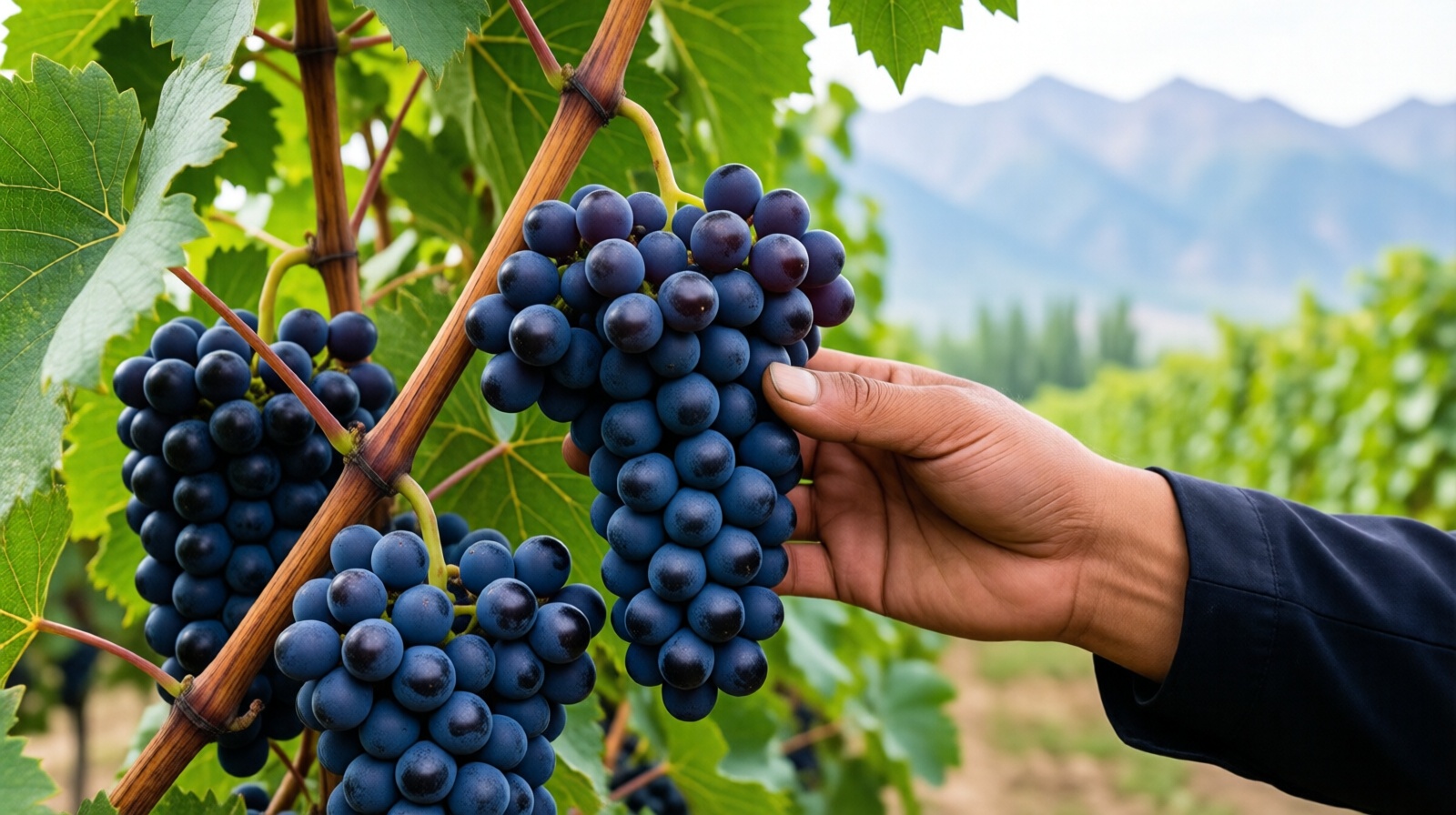
The eastern foothills sit at roughly the same latitude as Bordeaux, but the climate is a different animal. It’s dry — only about 200 millimetres of rain per year — so fungal diseases are less common and growers can use far fewer sprays. The sunlight is intense, yet nights are cool. This day-night swing flushes sugars into the grapes while preserving acidity, creating a natural balance that winemakers admire.
The Yellow River delivers irrigation water through a canal system that has served farmers for centuries. The Helan Mountains block cold western winds, extending the growing season. The soil is porous, rich in calcium and minerals, forcing roots to dig deep. Some winemakers compare their plots to the best gravel beds of Graves in Bordeaux.
These conditions produce wines with dark fruit flavours, firm but fine tannins, and a fresh spine. Every bottle carries the sense of a specific place — the kind of thing they call terroir in France. At one estate, the cellar master let me compare two vineyards just five kilometres apart. The difference in aroma and body was unmistakable.
From Wheat to Wine in One Generation
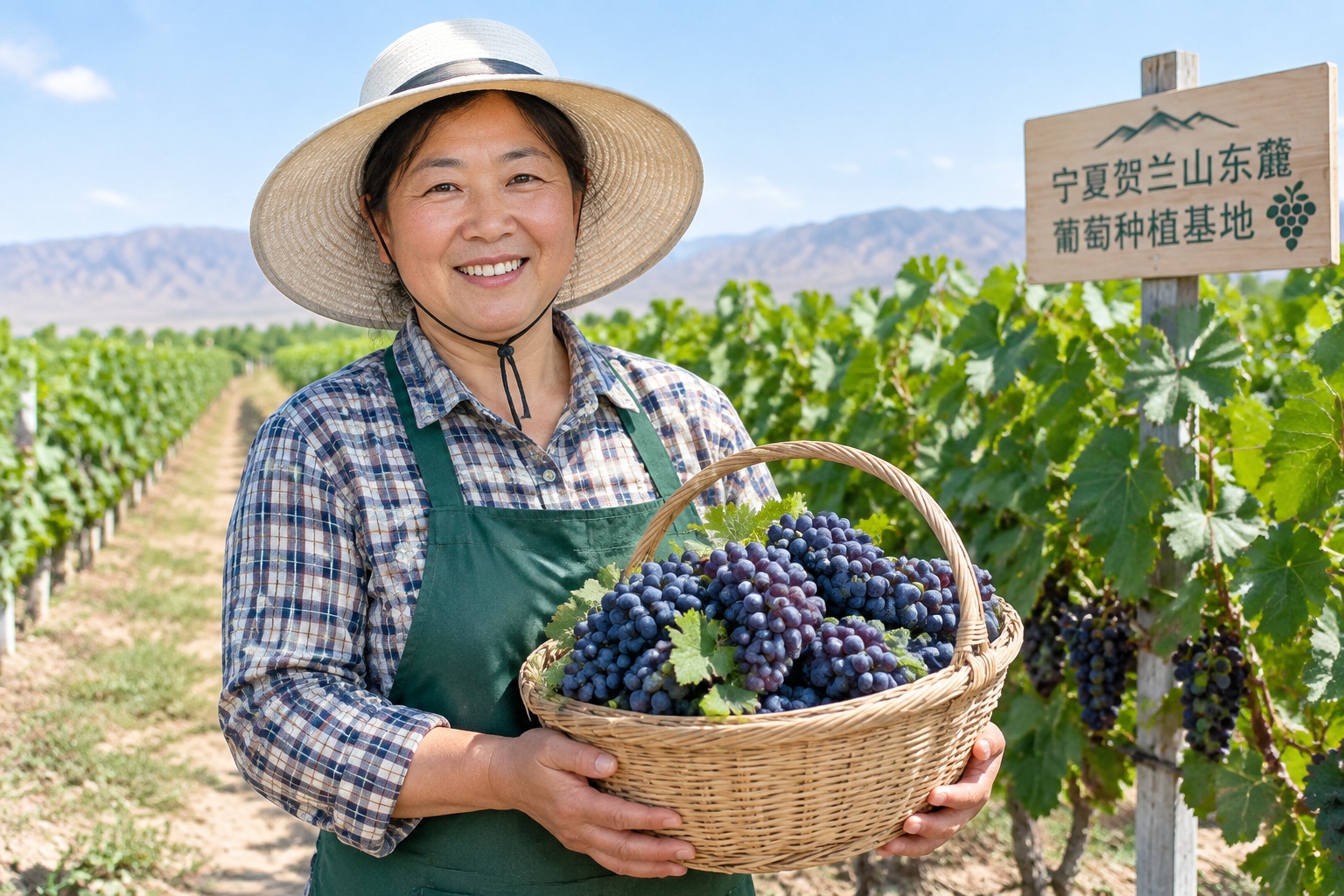
The worker who offered me that grape was in her forties, with sun-darkened hands and a quiet confidence. She used to work in a factory in a distant city. Ten years ago, her family grew wheat and sunflowers. Today, she walks dozens of rows a day checking irrigation and trimming leaves. “My daughter is studying wine tasting in Shanghai,” she said with pride.
She belongs to a generation that never planned to be in wine. But as the vineyards expanded, they brought jobs to a region where young people once left for coastal factories. Now, many stay home, and a few have become passionate cellar masters, tour guides or lab technicians. The transition is not romantic for everyone — farm work is hard — but it has turned a barren region into an economic hub.
The Craft Behind the Award Bottles
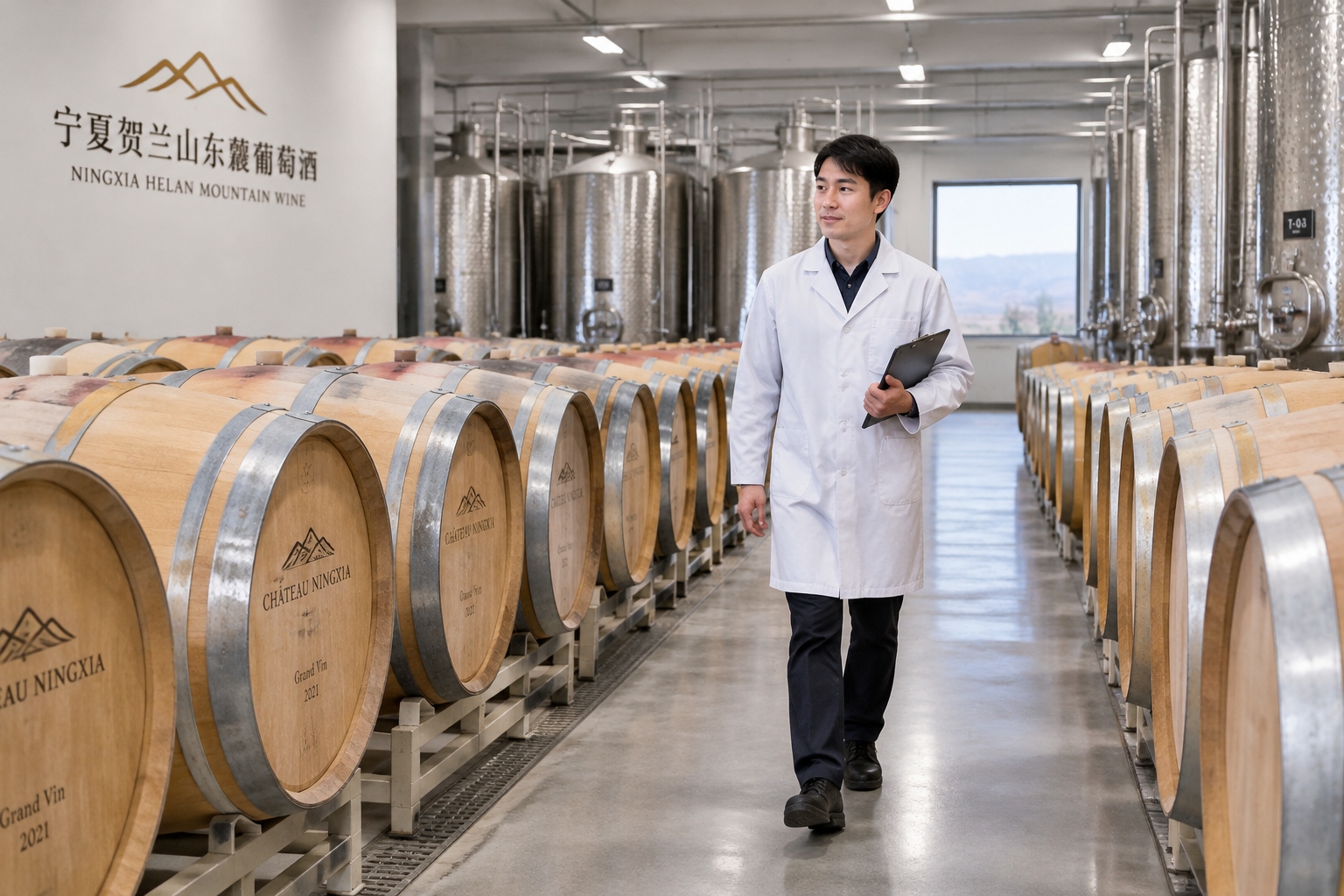
The history of modern winemaking in Ningxia goes back to the mid-1980s, when French oenologists first tasted the region’s grapes and praised their potential. But the real progress came after 2000, with private investment, government land incentives, and a flood of international exchanges.
Many wineries built gravity-fed cellars and invested in modern temperature control. They hired consultants from Bordeaux, California and Australia. Some even brought in techniques from the New World to handle the large diurnal temperature shifts. Yet everyone I met stressed one point: this is not a copy of Europe. “We respect tradition, but we make wine for our climate and for our taste,” one winemaker explained.
That independence shows in the score sheets. Since 2011, Ningxia wineries have won more than 1,000 international medals, including top awards at the Decanter World Wine Awards and the Concours Mondial de Bruxelles. In 2021, one of the region’s red wines was named among the top five in a blind tasting at the International Wine & Spirits Competition in London. The industry now accounts for nearly 40% of China’s premium wine output, according to local trade data.
Wild Weather, Unique Wines
Growing grapes here is tough. Winters are biting, with temperatures falling to minus 20 degrees Celsius. A late spring frost can wipe out young buds, so workers bury the canes under soil every November. It’s an unusual sight: in Ningxia, winter means burying the vineyard. In spring, thousands of workers come out at the same time to uncover the vines, a ritual that resembles a festival.
Some vintners claim this annual renewal gives the vines extra energy. It also means every vintage is a small gamble. But the gamble rewards a distinctive character. The long, dry autumn lets grapes hang longer, concentrating flavour without excess water. That is why the best Ningxia reds show a deep colour and layers of blackberry, liquorice and warm spice.
How Wine Is Changing Village Life
Beyond the labels and awards, the industry has reshaped small towns. Roads have been repaved, guesthouses built, and new restaurants serve wine pairings with local lamb and noodles. In the town of Langu, a once-ordinary farming settlement, you can now walk down a street of tasting rooms. Cellar doors stay open until late, and shopkeepers offer to ship bottles to your hotel.
Technical colleges now offer oenology courses, keeping young people in the area. Tourism has followed too. Bicycle rentals, hot-air balloon rides, and guided tours through cellars are easy to arrange. What used to be a three-day drive from Beijing is now a comfortable weekend tour, thanks to high-speed rail connections to Yinchuan.
A New Kind of Tourism
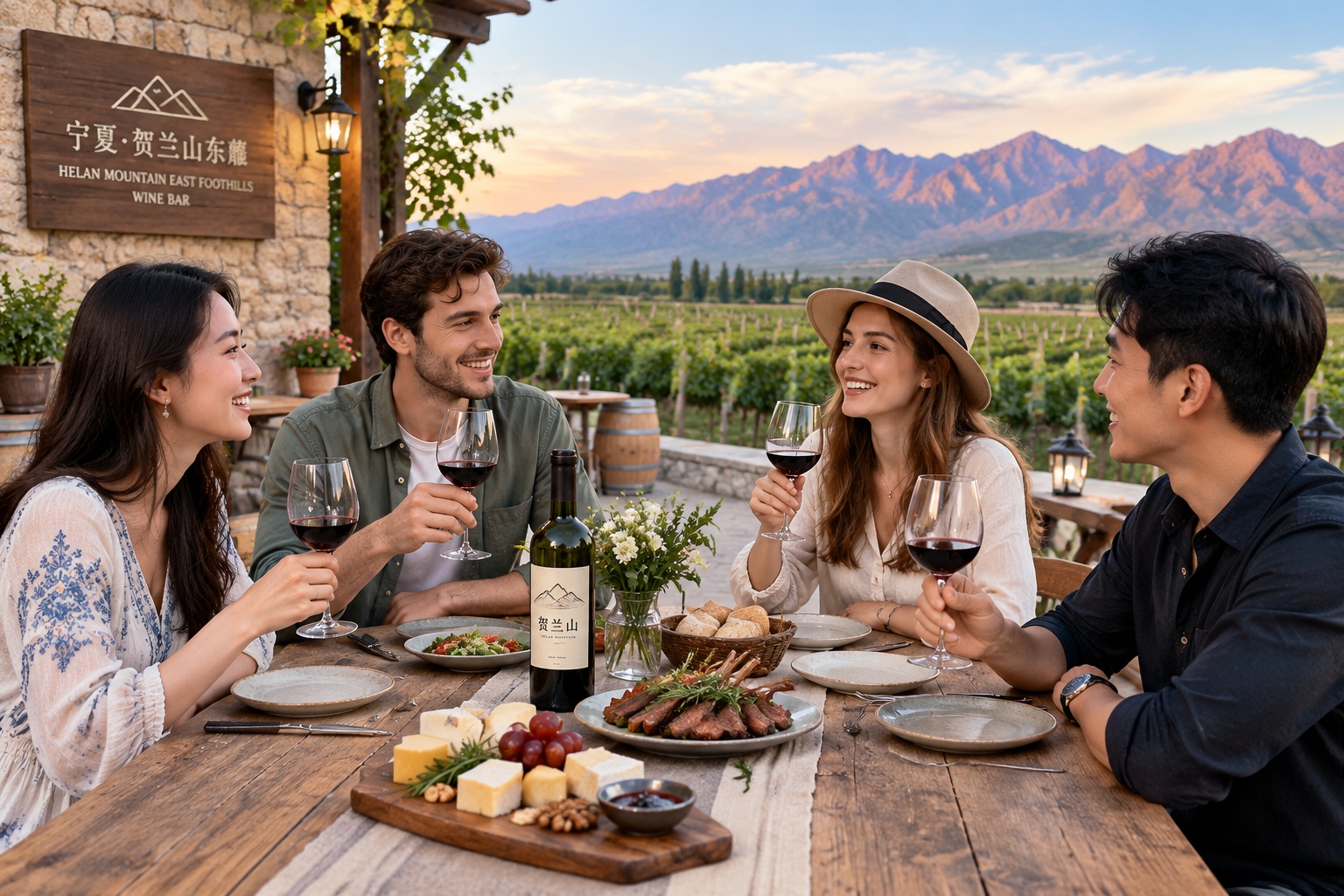
Locals have started calling the eastern foothills “the Tuscany of China.” That comparison may sound overblown, but after spending time here, it’s easy to see the appeal. Distant peaks, low stone walls, and the scent of ripe grapes in the air. In the evenings, vineyard restaurants light long tables under flame trees, with plates of roast lamb and fresh flatbread.
For international tourists, a visit still feels raw and authentic. There aren’t huge crowds or expensive entrance fees. You can book a table at a family-run vineyard, taste a flight of five wines, and share a plate of lamb — usually for less than $20. Some wineries have also started offering accommodation in renovated barns, with views of the mountains from the bedroom window.
Where to Find Ningxia Wines Today
If you want to taste these wines at home, you have options. In China, most decent wine shops and many restaurants now carry bottles from Ningxia. Prices start around 80 RMB (about $11) for an everyday red and rise to $100 or more for top cuvées. Some of the best value can be found in supermarkets in Beijing, Shanghai and Chengdu, where local wine sections are expanding.
Outside China, availability is growing slowly but steadily. Look for names such as Helan Qingxue, Mo-Union, and Silver Heights in wine-focused shops in Hong Kong, Singapore, the UK, or online merchants that ship internationally. Auction houses and fine-wine retailers have also begun to list Ningxia in their portfolios, though quantities remain limited.
For a first taste, pick a Merlot or Cabernet Sauvignon from a recent vintage. It pairs beautifully with grilled meats, spicy Asian dishes, or even salty cheese. Let it breathe for an hour; the wine will open up like a conversation. And if you can, visit the region. The best way to understand this wine miracle is to stand in the vineyard and feel the sun bake the leaves.
Conclusion: The Quiet Miracle
The wine miracle of Ningxia is not, strictly speaking, a miracle. It is the result of decades of careful work, a harsh landscape turned into an asset, and a generation of people who believed they could. The wines have won awards, but the bigger achievement is that they have won the curiosity of a global audience. In blind tastings, experts no longer shy away from Chinese bottles. They ask for the story.
When I flew back from Yinchuan, I packed a few bottles in my checked bag. On a plane high above the clouds, I thought of the vineyards buried under snow until March, waiting for the sun. Next autumn, another harvest will begin, and the wine will get a little better. That is the only kind of miracle worth believing in.
Start the discussion at forum.chinacomes.com