
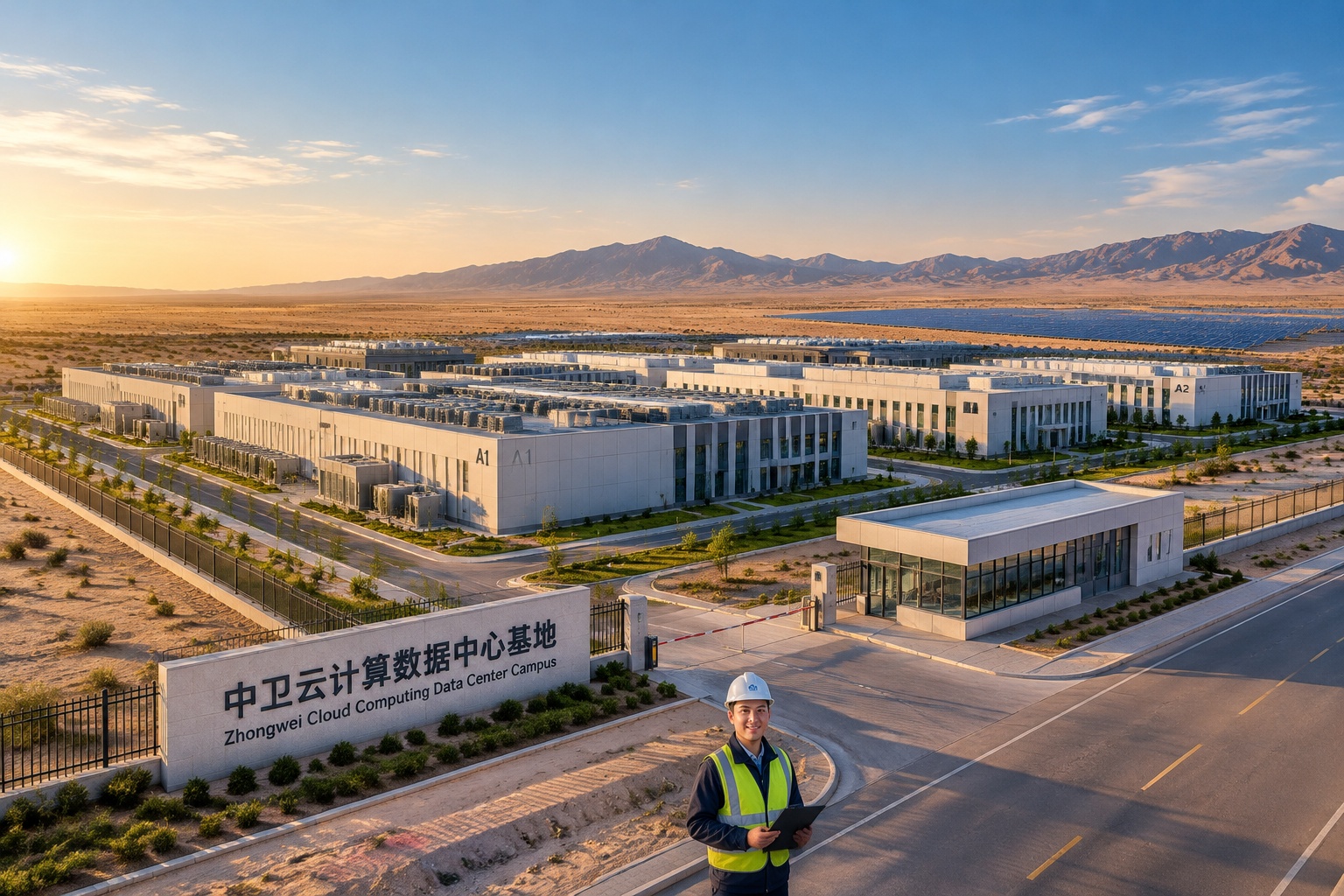

A Desert City’s Second Act
When a senior engineer from a major Chinese tech company steps off a flight in Zhongwei, a city of about 1.1 million people in northwest China’s Ningxia Hui Autonomous Region, the first thing they notice is the dry, cool air. Even in summer, the temperature rarely climbs above 30°C, and the humidity hovers around 30%. For someone who spends weeks inside climate-controlled server rooms, this feels like a natural cooling system.
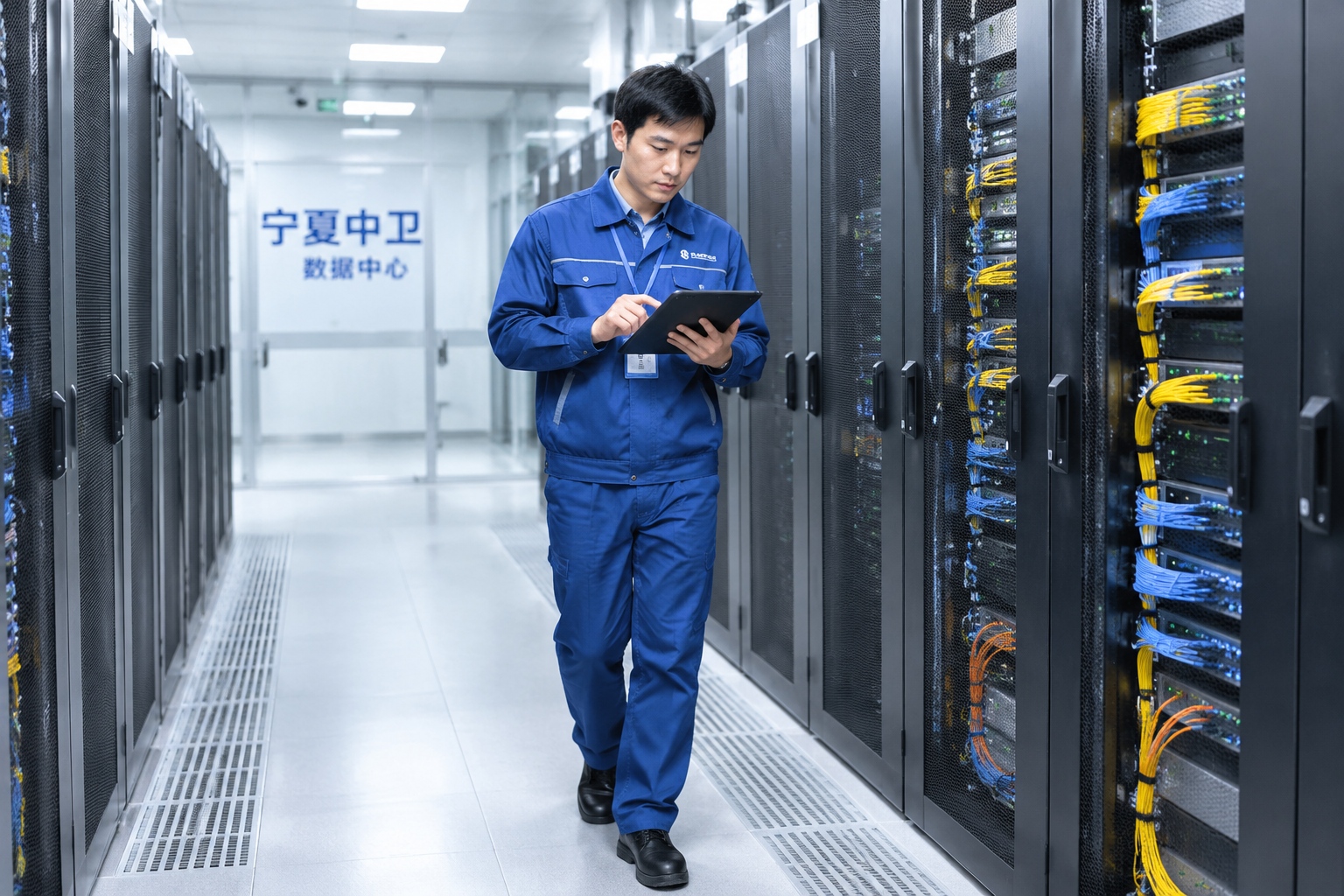
Zhongwei was once known for its goji berries and as a stop on the ancient Silk Road. But over the past decade, it has reinvented itself as a data center hub. Today, the city’s outskirts are dotted with vast, low-rise buildings full of servers that store everything from shopping transactions to movie streaming libraries. Why would tech giants like Amazon, Alibaba, and Tencent choose this remote location for their cloud computing infrastructure? The answer lies in a combination of geography, energy, policy, and a growing willingness to think differently about where digital services run.
Why This Location Makes Sense
Data centers are power-hungry and heat-sensitive. Servers generate enormous amounts of heat, and keeping them cool accounts for up to 40% of a data center’s electricity consumption. In cold or temperate climates, operators can use outside air to reduce reliance on energy-intensive air conditioning. Zhongwei’s average annual temperature is about 8.8°C, and it enjoys more than 2,800 hours of sunlight per year. That means natural cooling for most of the year. Local operators report that their power usage effectiveness (PUE) — a measure of energy efficiency — can be as low as 1.1, compared with a national average of around 1.5. In plain terms, this means less energy wasted per terabyte of data stored.
The region also sits on stable geological terrain, with no major earthquakes in recorded history, and it is far from coastlines, reducing risks from typhoons or floods. For companies that need to keep data safe and always available, these natural conditions are a quiet bonus.
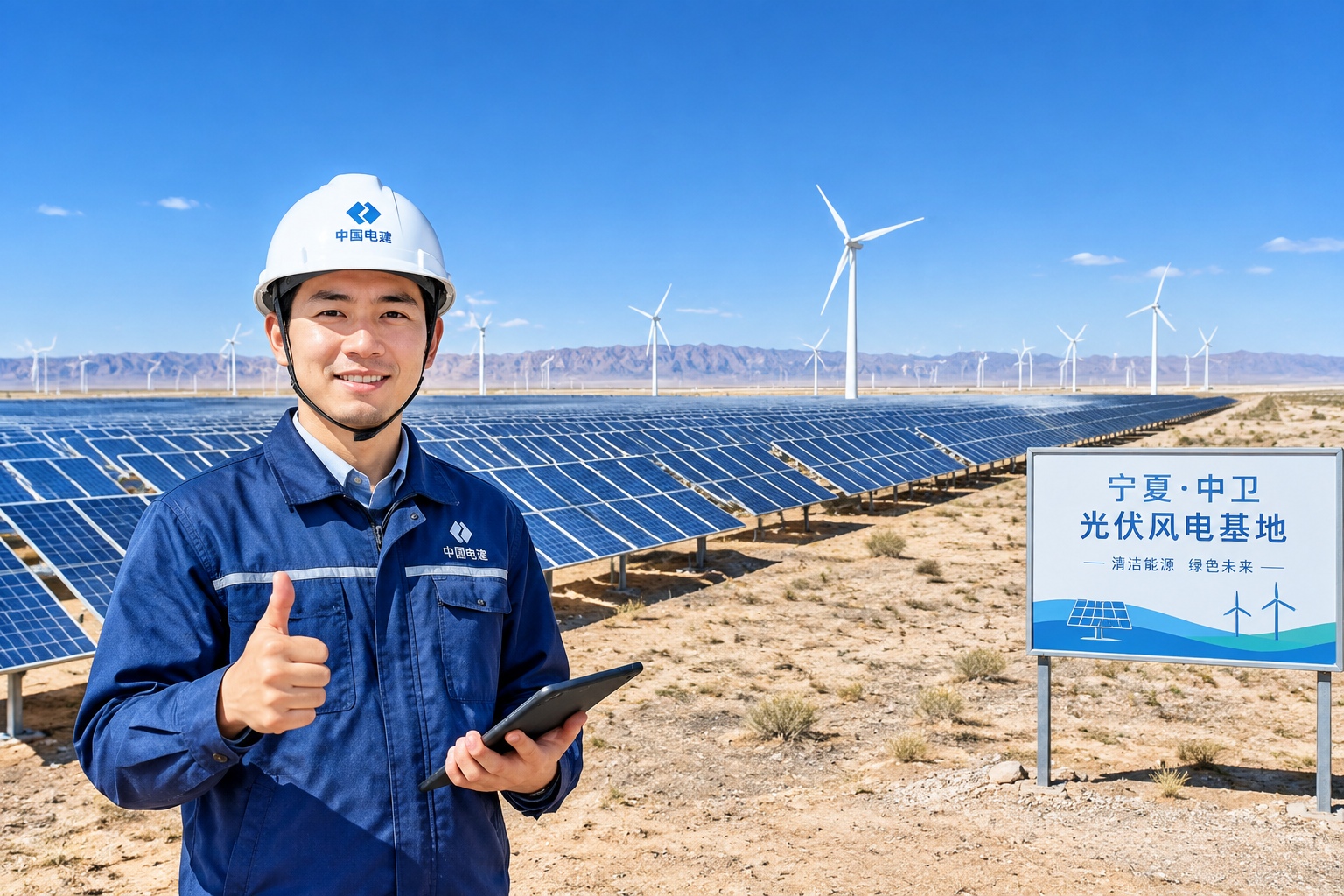
But the bigger draw is energy. Ningxia is one of China’s leading regions for wind and solar power. Vast solar farms stretch across the nearby Gobi Desert, and wind turbines line the Yellow River plain. The local government has invested heavily in renewable energy infrastructure, and electricity prices for large industrial users are among the lowest in China — often around 0.3 yuan (about U.S. $0.04) per kilowatt-hour, nearly half of what some coastal provinces charge. For a facility that can consume enough electricity to power a small town, this adds up to huge savings.
The Network and the National Plan
A data center is only useful if data can move in and out quickly. When Zhongwei first started attracting tech companies, critics questioned whether a city so far from China’s major economic hubs could offer acceptable latency. The answer came with new fiber-optic lines. Zhongwei is now a node on China’s national backbone network, with direct connections to Beijing, Shanghai, Guangzhou, and even some international routes. The round-trip delay between Zhongwei and Beijing is about 20 milliseconds, and to Shanghai it’s around 30 milliseconds — perfectly fine for most cloud applications and online services. For comparison, typical latency between New York and London is around 40 milliseconds.
This infrastructure is part of a broader national strategy called the “Western Cloud, Eastern Data” (Dong Shu Xi Suan) initiative, launched in 2022. The idea is to move data storage and computation to the west, where energy and land are abundant, while leaving the coastal hubs to handle front-end, latency-sensitive tasks. Zhongwei is one of the designated cluster cities for this project, which means it receives preferential policies on land, taxation, and grid access. The state-level support has given companies long-term confidence to invest.
Tech Giants and the Local Economy
The list of companies with operations in Zhongwei reads like a who’s who of global cloud computing: Amazon Web Services (AWS) opened an office in Ningxia in 2016, and its local partners run a large availability zone. Alibaba Cloud, Tencent, Baidu, and China Telecom have also built data centers or large server farms there. By 2024, the city’s total server capacity exceeded one million racks, and the local government projects that figure will double by 2026.
The economic impact is visible on the ground. Zhongwei’s GDP has grown steadily, and the data center industry now contributes a significant share of local tax revenue. More importantly, it has created thousands of jobs. Data centers require technicians, security staff, and maintenance engineers, many of them young people who might otherwise have moved to coastal cities for work. The city has also trained workers through local vocational colleges, partnering with companies to offer targeted courses in server maintenance and network engineering. One local resident, a 24-year-old server technician named Li Wei, told me that he used to work in a factory in Shenzhen. When he heard about job opportunities at a new data center in Zhongwei, he decided to return home. “The pay is lower than in Shenzhen, but so are the costs, and I’m close to my family,” he said.
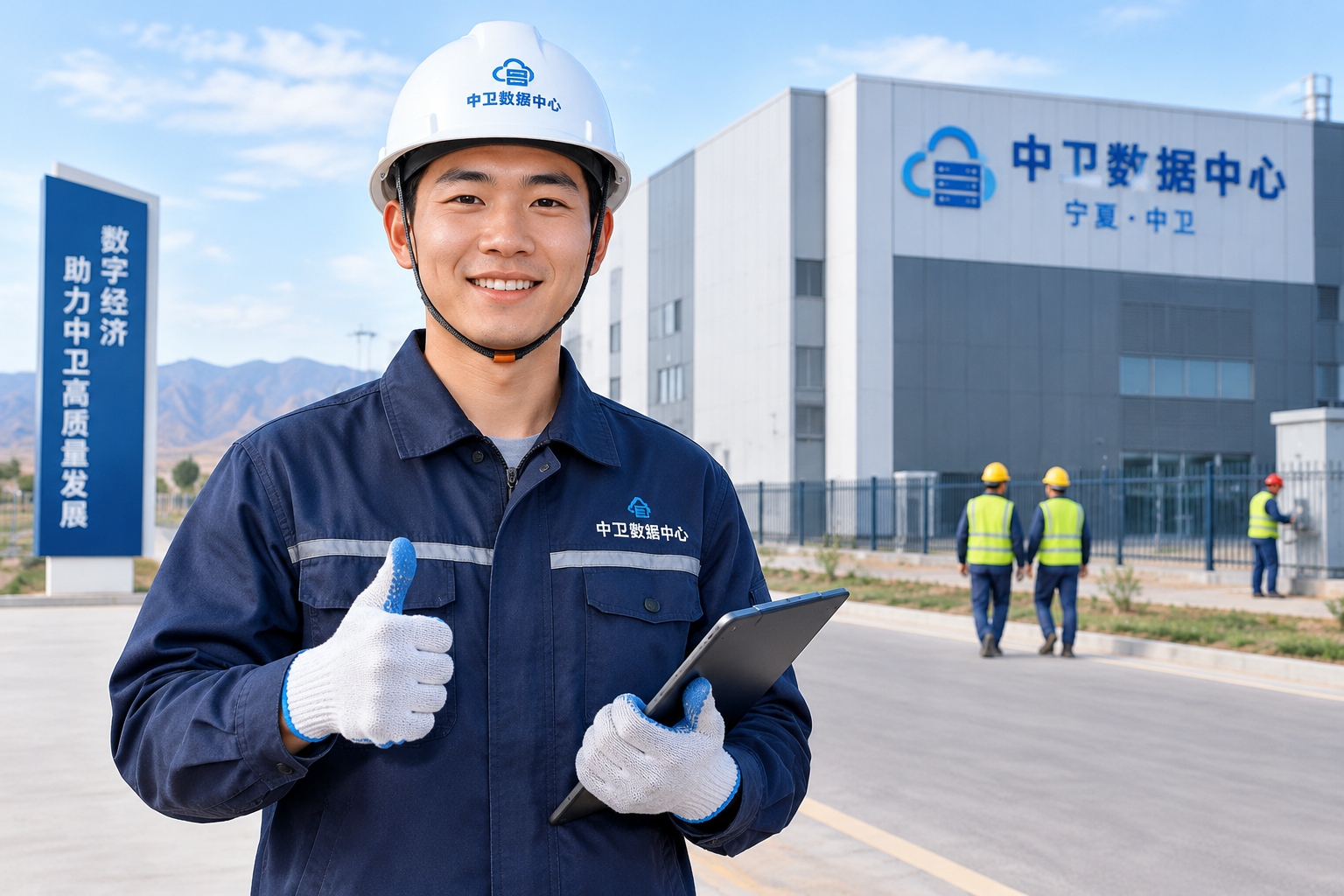
The ripple effects extend to public services. Cloud infrastructure hosted in Zhongwei powers online government platforms in Ningxia, making it possible for residents to pay utility bills or register businesses through mobile apps. In a region that once lagged behind China’s coastal areas in digital access, this is a concrete leap forward.
The Real Challenges
No story about development is without complications. Building so many data centers in a desert region raises environmental questions. Water is scarce, yet data centers need water for cooling systems, even with air-side cooling. Local officials insist that recycled water and closed-loop cooling solutions are being used, but environmentalists remain cautious. The region’s fragile ecosystem also has to withstand the construction of new substations, roads, and other infrastructure.
Another challenge is talent. While data centers create jobs, many require specialized skills that local workers lack. Companies often have to bring in engineers from other provinces, which raises costs and limits the benefits to the local population. The Ningxia government is trying to address this by establishing more vocational training programs, but it will take time. There is also the question of energy balance: despite abundant renewables, data centers still put pressure on the grid, especially during peak hours. The local grid operator says it is increasing energy storage capacity, but the transition is ongoing.
A Window Into China’s Digital Future
Zhongwei is a useful example of how China is trying to reconcile its digital ambitions with its regional disparities. Instead of concentrating everything in Beijing, Shanghai, and Shenzhen, the national plan deliberately spreads infrastructure to places like Zhongwei, creating new economic opportunities and bridging the digital divide. The city may not have the glamour of a coastal tech hub, but it has something arguably more valuable: the right conditions for the cloud, and the strategic backing to make it work.
For outsiders, Zhongwei’s story also challenges the stereotype that China’s tech boom is limited to shiny East Coast metropolises. Here in the desert, a less visible but essential part of the digital economy is taking shape — one server rack at a time. The next time you stream a video or run an application on a Chinese cloud platform, there’s a decent chance your data is being processed in a small city that used to grow goji berries. And that’s a surprising thought worth pausing on.
Start the discussion at forum.chinacomes.com