

An Orange That Tastes Like Hope
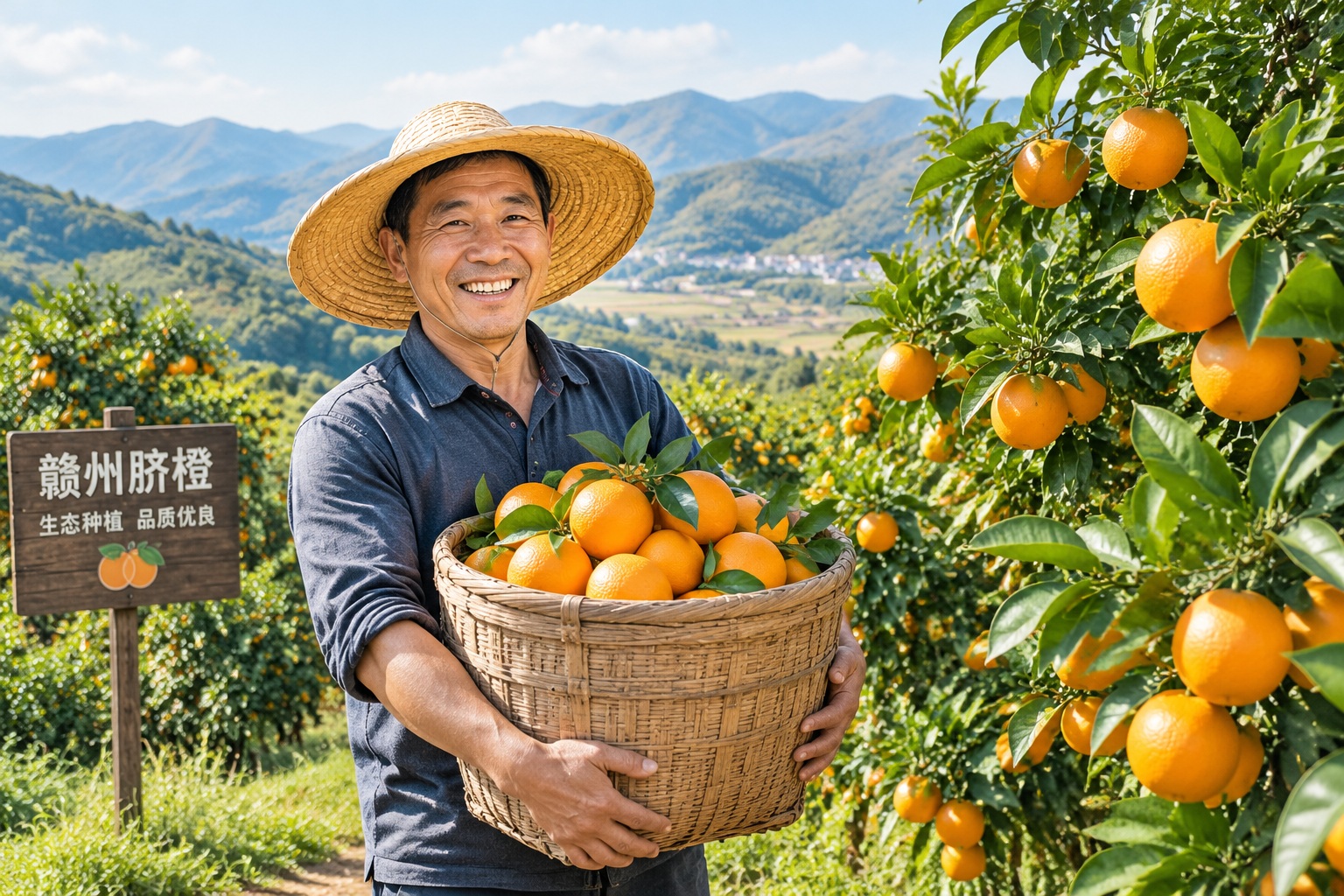
Last November, I arrived in Xinfeng County, deep in the hilly countryside of southern Jiangxi province. The autumn morning was chilly, and the hillsides were golden with the glow of countless orange trees. Here, in the heart of China’s navel orange country, the harvest was already underway.
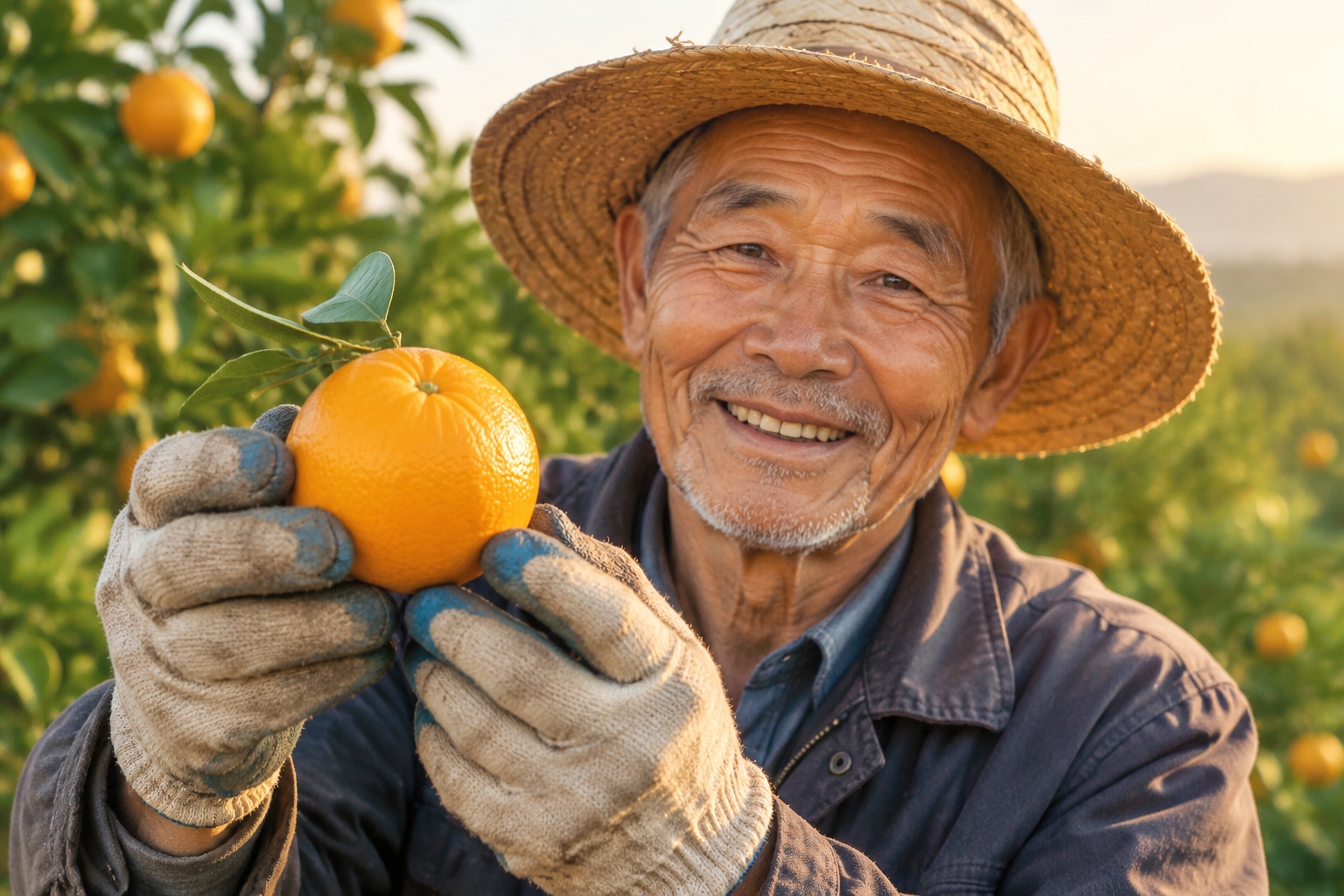
Li Guohua, a wiry 58-year-old farmer, waved me over to his orchard. The trees were short and spreading, their branches propped up with bamboo sticks under the weight of fruit. He pulled an orange from a branch, cut it open with a pocket knife, and handed me a wedge. It was one of the best things I have ever tasted — sweet, aromatic, with a delicate hint of acid on the finish.
‘This one was made by the sunshine and the red soil,’ he joked. ‘Sweet as honey, with a little bite at the end. That is how you know it is a true Ganzhou orange.’
Why Ganzhou Oranges Stand Out
Ganzhou, with a population of nearly 10 million, is the largest navel orange producing area in China and one of the largest in the world. The region’s unique environment shapes the fruit’s character. The climate is subtropical, with long sunny days and cool nights in autumn. This daily temperature swing helps the oranges accumulate sugars while preserving a lively acidity. The soil, rich in mineral compounds and weathered red clay, adds complexity to the flavor.
The dominant variety is the Newhall navel orange, a seedless type that is easy to peel and remarkably juicy. Growers often say it ‘melts in your mouth’. This combination of flavor and texture has made Ganzhou oranges a favorite during the Chinese New Year season, when they are gifted as symbols of luck and prosperity.
From Hillside to Market: How the Industry Grew
It wasn’t always this way. In the 1980s, Xinfeng and neighboring counties were among the poorest in Jiangxi. Farmers grew rice on steep, erosion-prone land and barely earned enough to survive. The change began in the early 1990s, when local officials and agricultural scientists started promoting navel orange cultivation as a strategic industry.
Li Guohua was one of the early adopters. He planted his first orange trees in 1993. ‘My father said these trees would be our savings account,’ he told me. ‘If they bloom and fruit, they keep giving for decades.’ His family now owns more than 4,000 trees, producing about 100 tons of oranges a year. In a good season, that brings home more than 300,000 yuan (roughly 40,000 US dollars) — a solid income for rural China. Many neighbors have done even better.
The government and cooperatives fueled the growth. They built roads, reservoirs, and cold-storage facilities, and set up research centers to help farmers deal with pests and improve yields. By the early 2000s, Ganzhou had become a model for agricultural development in China.
Tech, E-Commerce, and the New Generation
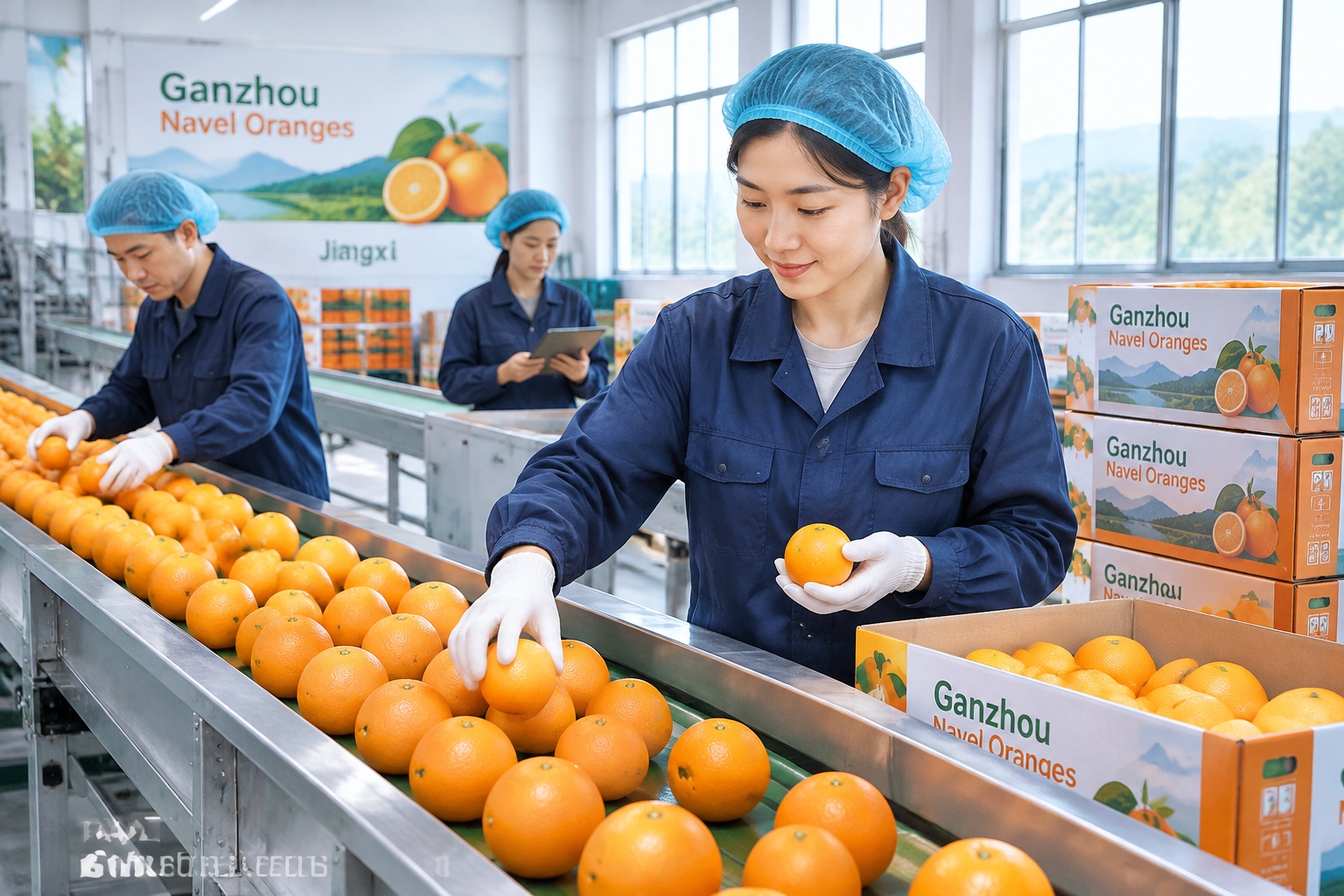
Modern Ganzhou oranges travel through a supply chain that would be unrecognizable to old-timers. In purpose-built packing houses, automated optical sorters inspect each fruit at high speed, measuring size, color, and an estimated sugar level using near-infrared sensors. The fruits are then packed in branded boxes and shipped to wholesalers, supermarkets, and factories that make orange juice and dried snacks.
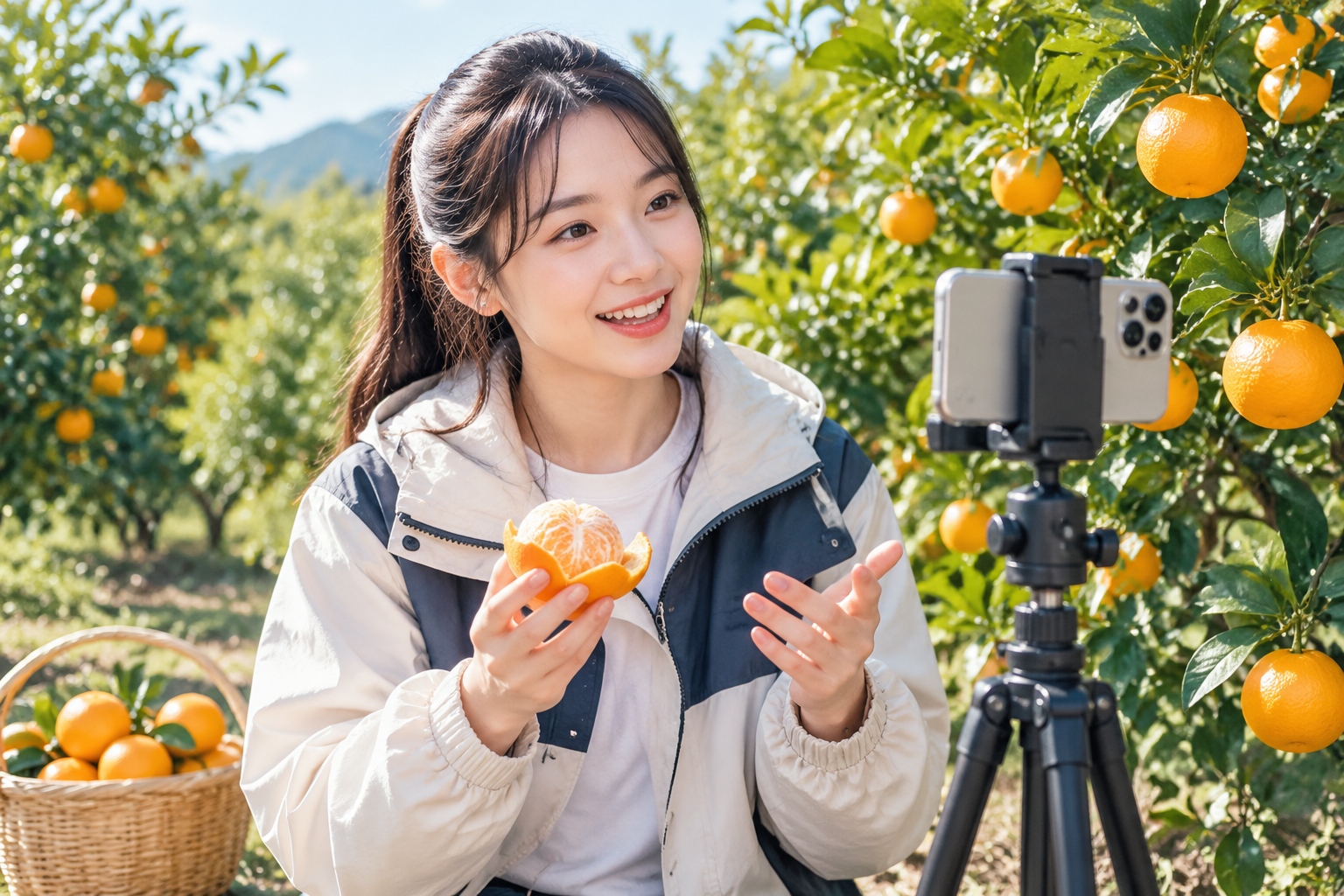
E-commerce has been another game-changer. In nearly every village, young people are returning to sell their family’s fruit online. One of them is 26-year-old Zhang Min, who studied education in college before coming home. She live-streams from the orchard every morning, peeling oranges on camera, answering questions about sugar content and shipping times. On a busy day, she sends out hundreds of orders.
‘Ten years ago, we had to sell to middlemen at whatever price they offered,’ Zhang says. ‘Now I talk directly to customers in Beijing, Shanghai, and even abroad. I can show them exactly what they are getting.’ Her earnings are up, and she feels proud to keep the family tradition alive.
Going Global: Navel Oranges with a Passport
Ganzhou’s oranges are no longer just a domestic treat. Over the past decade, exports have risen steadily. According to customs statistics, shipments reached over 100,000 tons in 2023, going to countries such as Thailand, Malaysia, Indonesia, Russia, the United Arab Emirates, and the Netherlands. Hong Kong and Singapore see them as a premium gift fruit.
For export, each batch must meet strict quarantine and quality standards. Liu Ming, who runs a fruit export company in Ganzhou, describes the process: ‘We work closely with customs to ensure the orchards are monitored for pests and the packing house is fully hygienic. Each box has a traceable code that leads back to the specific orchard and processing line. It is complicated at first, but once you build the system, it becomes routine. Today we ship containers to 20 countries.’
Facing the Future: Challenges and Innovation
Despite the successes, growers are not resting easy. Climate change has already shown its teeth. In 2021, an unseasonable cold snap damaged orchards in low-lying areas; in 2022, a severe drought cut yields. To adapt, the government is investing in irrigation networks, weather stations, and more resilient rootstocks. Some orchards now use drones to spray pesticides, and soil sensors monitor moisture in real time.
The biggest worry is citrus greening disease, an incurable infection spread by tiny insects. It has wrecked orange groves in Florida and Brazil. Ganzhou has established an aggressive monitoring system: yellow sticky traps, rapid tree testing, and immediate removal of infected plants. So far, the disease has been kept in check, but the threat is constant.
There is also growing market competition. Other regions inside China and some neighboring countries are expanding their own orange production. Maintaining the Ganzhou brand is crucial. ‘We have to keep our quality high and our story true,’ Liu Ming says. ‘One bad batch would hurt everyone.’ The Ganzhou municipal government has protected the name through a ‘geographical indication’ certificate, which ensures only oranges legitimately grown in the region can use the label.
A Lasting Sweetness
On my last morning in Xinfeng, Li Guohua handed me a paper bag filled with just-picked oranges. ‘Take them with you,’ he said. ‘Let your family taste where I live.’
Back in my apartment in Shanghai, I peeled one and the fragrance filled the room. The segments were crisp, floral, and so juicy they dripped down my fingers. It struck me that this fruit, ordinary as it seems, has rewritten the fate of an entire region. For the farmers of Ganzhou, every orchard is a promise: grow the soil, grow the tree, and share the sweetness with the world.
Start the discussion at forum.chinacomes.com