
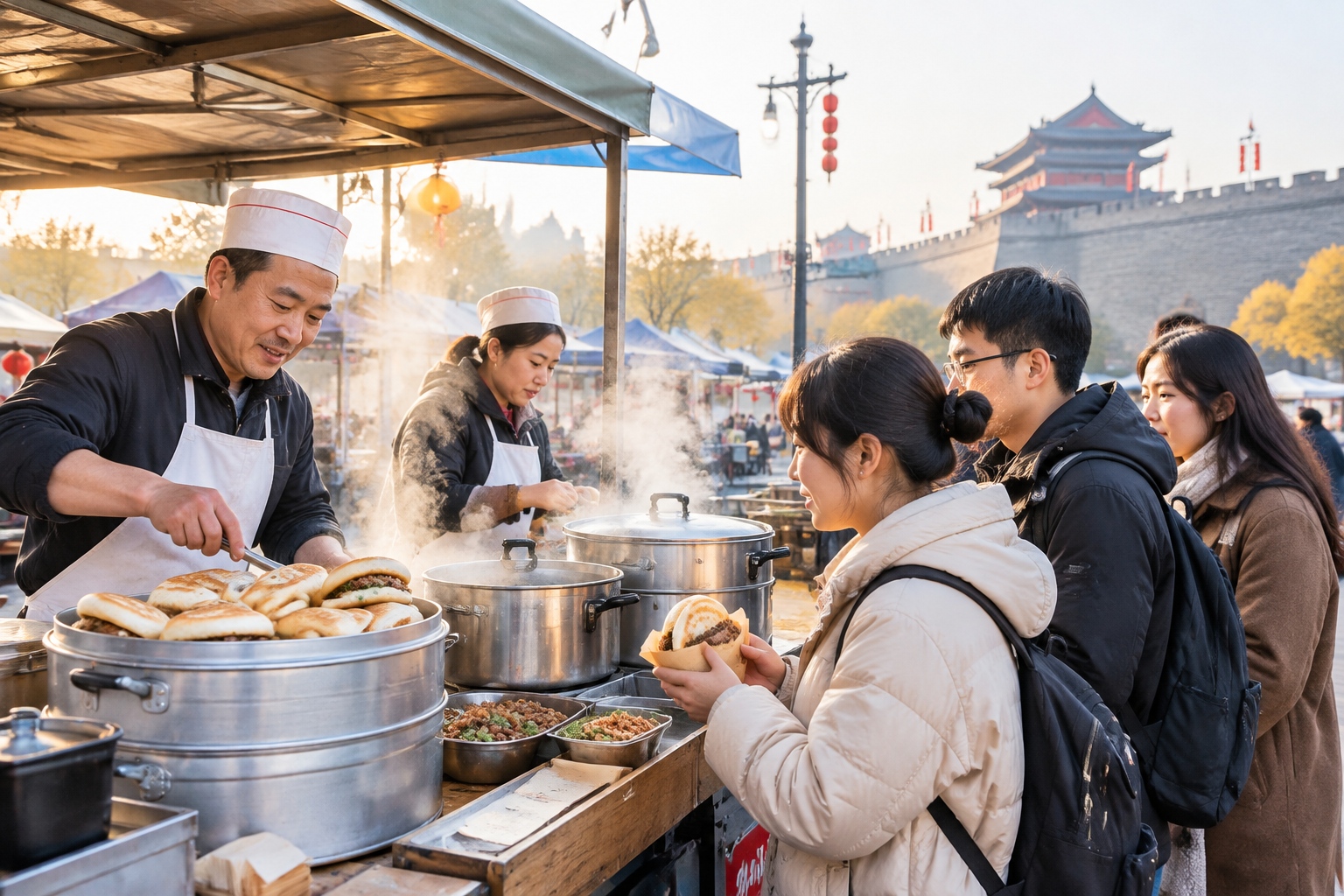

6:45 AM at Xiaonanmen Morning Market
The sky over Xi’an is still a pale gray when the first steam rises from a row of aluminum pots. Vendors at Xiaonanmen—locals call it ‘Little South Gate’—have been here since 4 AM, arranging plastic stools, stacking bags of fried dough twists, and ladling out bowls of youcha, a thick, savory tea soup thickened with flour and topped with crunchy mahn. The air smells of toasted sesame, chili oil, and wet stone.
By 7, the queue for one roujiamo stall stretches past three vegetable vendors. A woman in a pink apron slaps minced pork onto a split flatbread, then hands it over the counter without looking up. The line moves fast. Most people eat standing, one hand holding the sandwich, the other scrolling through their phone.
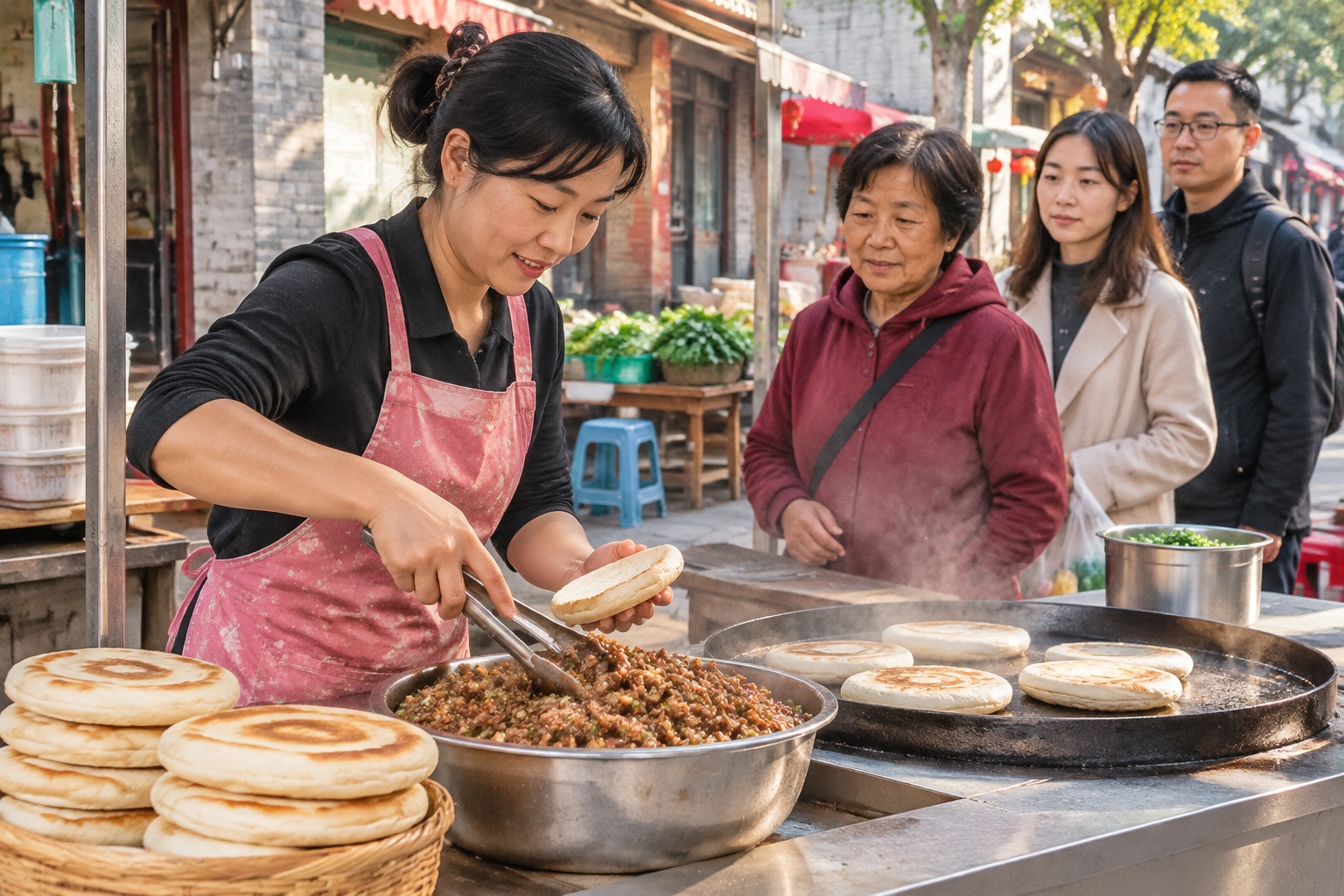
This is not a tourist market. There are no English menus, no souvenir shops. The customers are retirees with canvas bags, office workers in sneakers, and university students who took the first bus across town. They come for breakfast, but also for the ritual: the same stall, the same order, the same ten minutes of standing together before the day begins.
Qinqiang Under the City Wall: A Public Living Room
By 9 AM, the morning market has mostly cleared. A fifteen-minute walk south brings you to the base of Xi’an’s Ming Dynasty city wall, where a different kind of gathering is underway. Under the shade of willow trees, a group of retirees has set up a makeshift stage: two speakers, a portable amplifier, a folding table with a teapot, and a banner that reads ‘Self-Entertainment Troupe.’
They are singing Qinqiang, the oldest form of Chinese opera, known for its raw, shouted vocals and rhythmic clapping. The lead singer, a man in his late sixties with a gray cap, belts out a passage from ‘The Legend of the White Snake.’ His voice cracks on the high notes, but no one minds. A small crowd of twenty or so sits on stone benches or squats on the curb, some clapping, some smoking, some just closing their eyes.
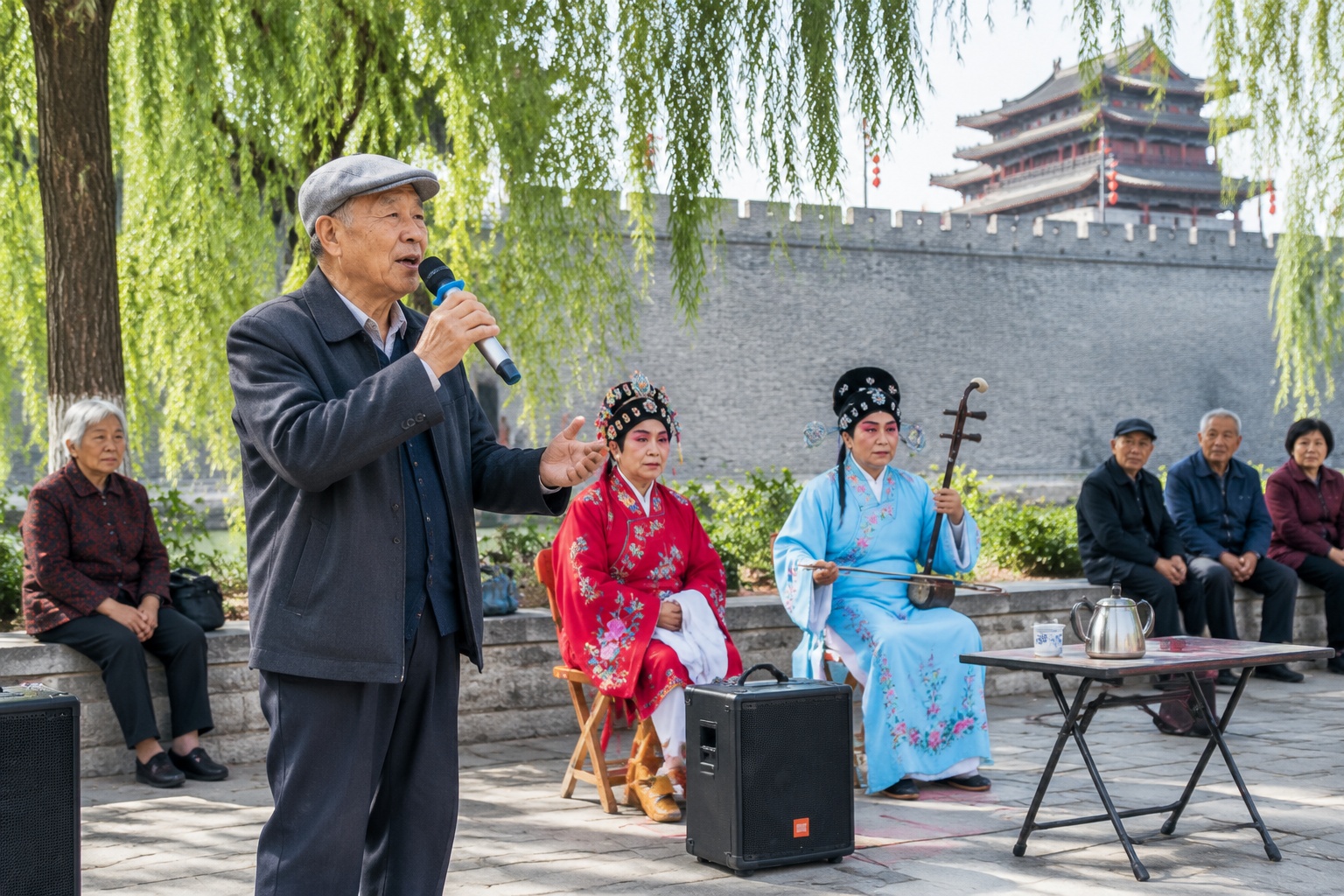
For many older Xi’an residents, this is their daily routine. They arrive around 8:30, sing until 11, then go home for lunch. The city wall—a 14th-century fortification that once defended the capital—now serves as a backdrop for their retirement. Tourists pay 54 yuan to walk on top of it. These men and women sit at its base for free, turning a monument into a living room.
Noodles, History, and the Hui Quarter
Xi’an’s food culture is inseparable from its history. As the eastern terminus of the Silk Road, the city has absorbed culinary influences from Central Asia, the Middle East, and beyond. The Hui Muslim community, concentrated in the narrow alleys of the Muslim Quarter near the Drum Tower, has been here for over a thousand years.
Walk through the quarter at noon and you’ll see lamb skewers grilling over charcoal, hand-pulled noodles stretched to order, and persimmon cakes frying in oil. The most famous dish, roujiamo—often called a Chinese hamburger—is deceptively simple: slow-cooked pork, chopped fine, stuffed into a warm, crusty bun. A good one costs 10 to 15 yuan (about $1.50 to $2).
But the food tells a bigger story. The wheat-based diet of the north, the lamb and cumin of the northwest, the sweet and sour of the Central Plains—all meet here. In a single meal, you can taste the geography of half of Asia.
Grand Tang Mall vs. the Old Neighborhoods
Twenty minutes by subway from the city wall, the Grand Tang Mall is a different Xi’an. Built in 2010, this pedestrian street is designed to evoke the Tang Dynasty (618–907 AD), with faux-ancient architecture, LED light shows, and street performers in elaborate costumes. On weekends, it draws tens of thousands of visitors. Young women rent Tang-style dresses for photos. Vendors sell bubble tea and grilled squid.
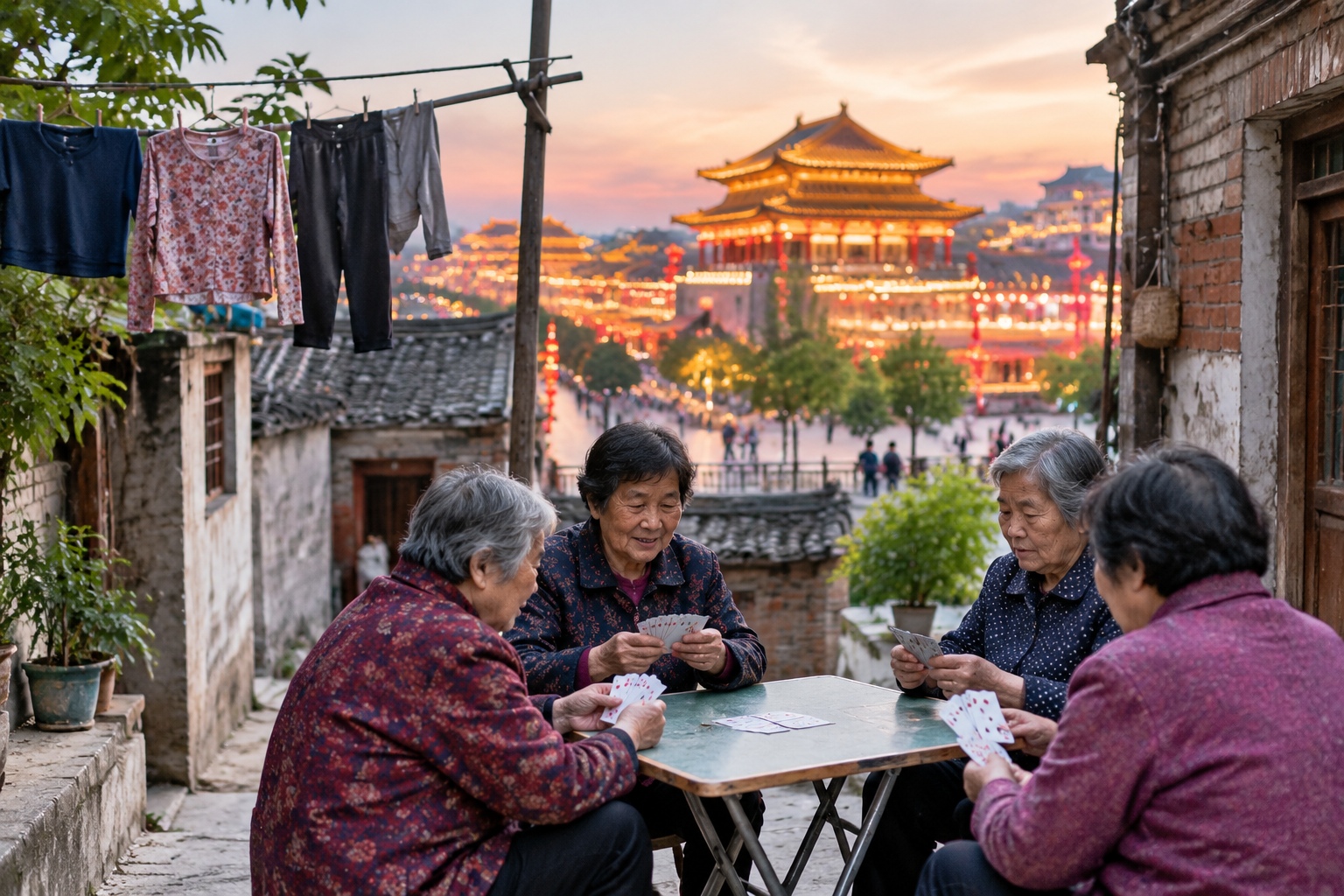
It is spectacular, and it is popular. But it is also a performance. The real Xi’an is elsewhere: in the old neighborhoods south of the wall, where laundry hangs between telephone poles, where grandmothers play cards on folding tables, where the same Qinqiang troupe has been singing for fifteen years.
Both versions of the city are real. The tourism boom has brought money and attention. The old neighborhoods have kept their rhythm. For a visitor, the trick is to see both—and to understand that the morning market and the light show are not opposites. They are two layers of the same city, one on top of the other, like the bricks of the wall itself.
At 6 PM, the sun sets behind the wall. The Qinqiang singers have gone home. The morning market stalls are packed away. But tomorrow, at 4 AM, the pots will start steaming again.
Start the discussion at forum.chinacomes.com