
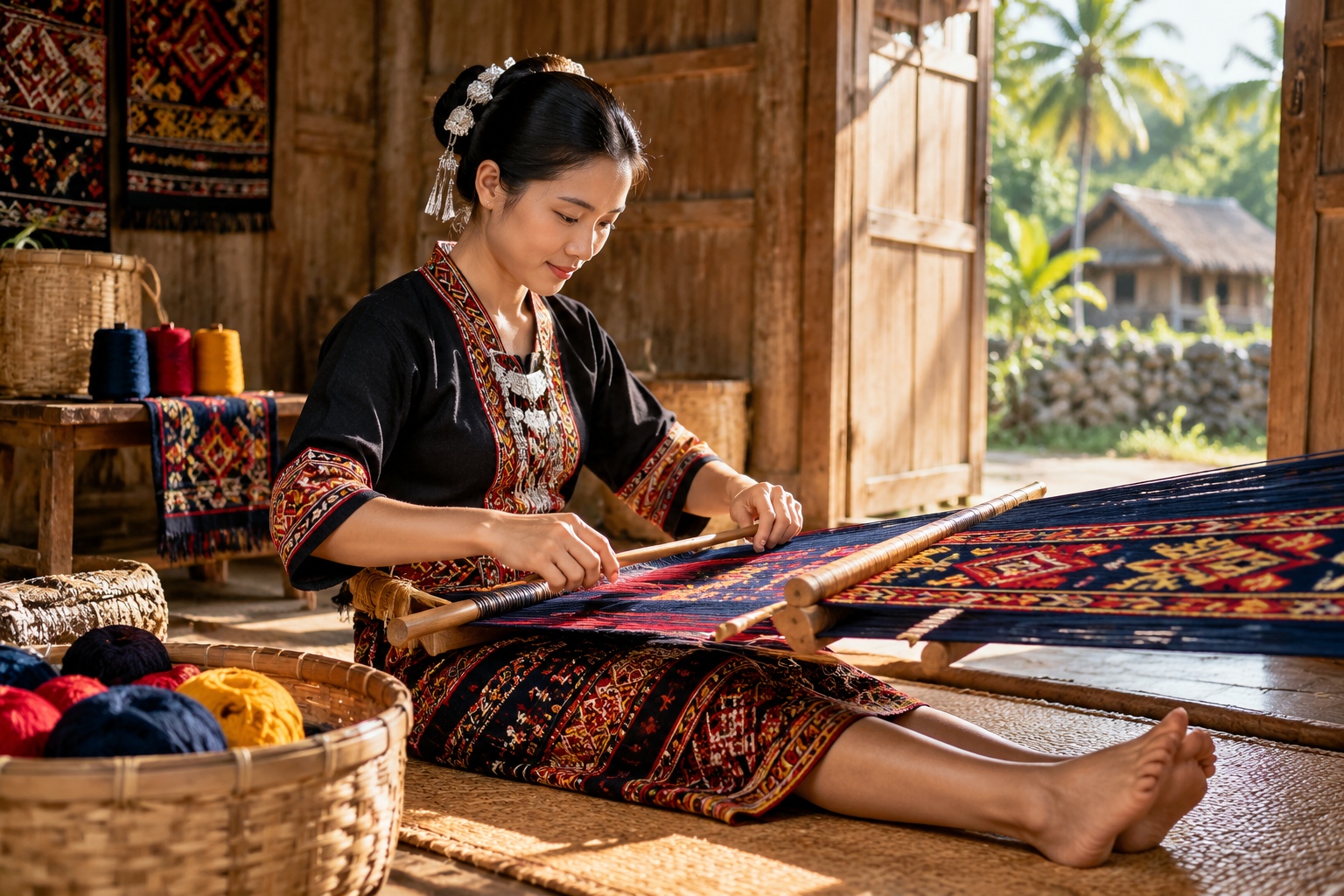

Morning at the Loom
At dawn, mist sits in the valleys around Wuzhishan, a peak in the center of Hainan Island. Inside a village house with a corrugated iron roof, the only sound is the rhythmic clicking of a wooden loom. Mei Xianglan, 57, is already at work. She sits on a low stool, legs stretched forward to control the warp threads, her hands moving swiftly with a shuttle made from buffalo horn. The yarns are dyed in deep indigo, rust red and a mustard yellow made from a local climbing plant. The patterns are geometric: diamonds, zigzags, small birds. She doesn’t follow a sketch. “It’s all here,” she says, touching her temple. “We call it memory cloth.”
Mei is making a traditional Li skirt, but this piece won’t stay in the village. Once finished, it will be shipped to a workshop on the coast, where a designer will cut it into the front panel of a modern kimono-style coat. “When I was young, I wove because my mother wove. I never thought someone in Beijing would wear it,” she says, laughing.
A Textile With 3,000 Years of History
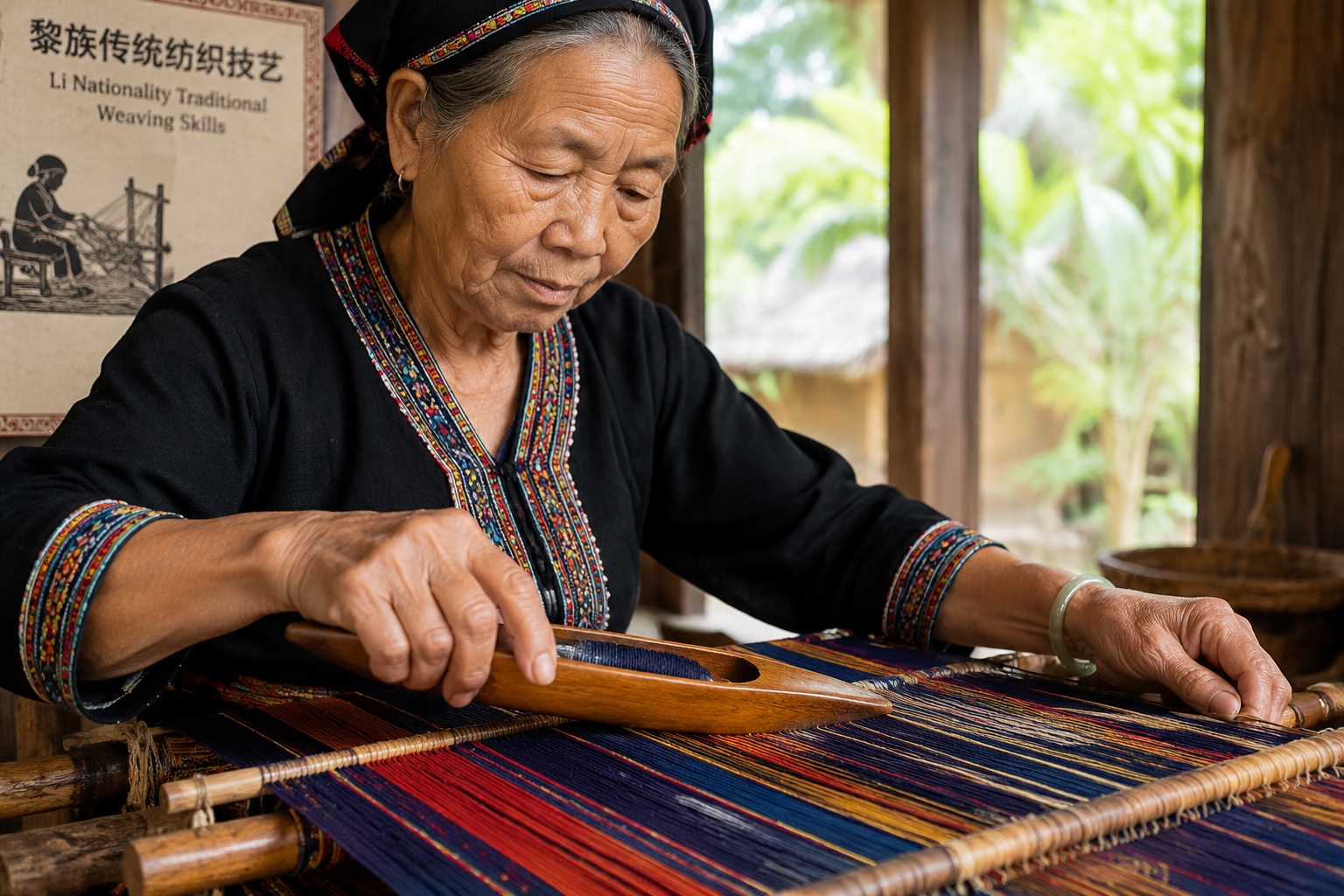
Li brocade, or li jin, is one of China’s oldest textiles, with its earliest archeological evidence dating back about 3,000 years. It was created by the Li people, the island’s original inhabitants, before they had a written language. The weaving encoded their cosmology: a spiral pattern represents the path of ancestors, a diamond shape is a field and harvest, and a human-like figure with raised hands is the “dancing person” used in ancestral rituals.
What separates Li brocade from other traditional Chinese textiles is the way it is made. It uses a waist loom — one of the oldest types of looms in the world. The weaver sits on the ground, stretches the warp threads by pressing her feet against a wooden beam, and passes the shuttle by hand. This slow, physical method means a skilled weaver can finish only a few inches a day. The cloth is dense, with a slight unevenness that no machine can reproduce. For the Li people, each piece was inseparable from ceremonies, birth, marriage and death. It was a form of identity: the patterns and colors varied from one village to another.
A Craft on the Brink
By the late 20th century, this living tradition was fading fast. As the tourism economy grew and factories along the coast offered steady wages, younger Li women left the villages. Weaving was seen as the work of grandmothers. Many old looms were stacked in corners and covered with dust. A 2005 survey found that only a few thousand women could still weave, and the average age was over 60. When UNESCO added Li textile techniques to its Intangible Cultural Heritage list in 2009, it was both a recognition and an emergency call.
A Second Life
The UNESCO inscription gave the craft a new kind of power. The Hainan government opened traditional textile skills training centers in Li communities. In Baoting and Wuzhishan, cooperatives were formed, and thousands of women were trained. Some of the trainees were already in their 50s and 60s, having not touched a loom for two decades. They were paired with younger women, including college graduates who were more comfortable with e-commerce and social media.
One of those younger women is Huang Yueling, 24, who grew up in Baoting but studied fashion in Guangzhou. She remembers watching her grandmother weave when she was little, but she did not learn until she returned after university. “I realized the geometric patterns are not just decorations; they tell the story of my family,” she says. Now Huang runs an online store that features tote bags, phone cases and jackets made with genuine Li brocade fabric. Most of her customers are urban women in their 20s and 30s. “They love the story behind it,” she says.
The village cooperatives are also fostering micro-innovation. Aunt Mei, for instance, now weaves not only traditional skirts but also custom pieces for fashion clients. She charges about 800 yuan for a weaving that takes 20 days. “Before I would earn almost nothing,” she says. “Now I can buy groceries and still have money left for my granddaughter.”
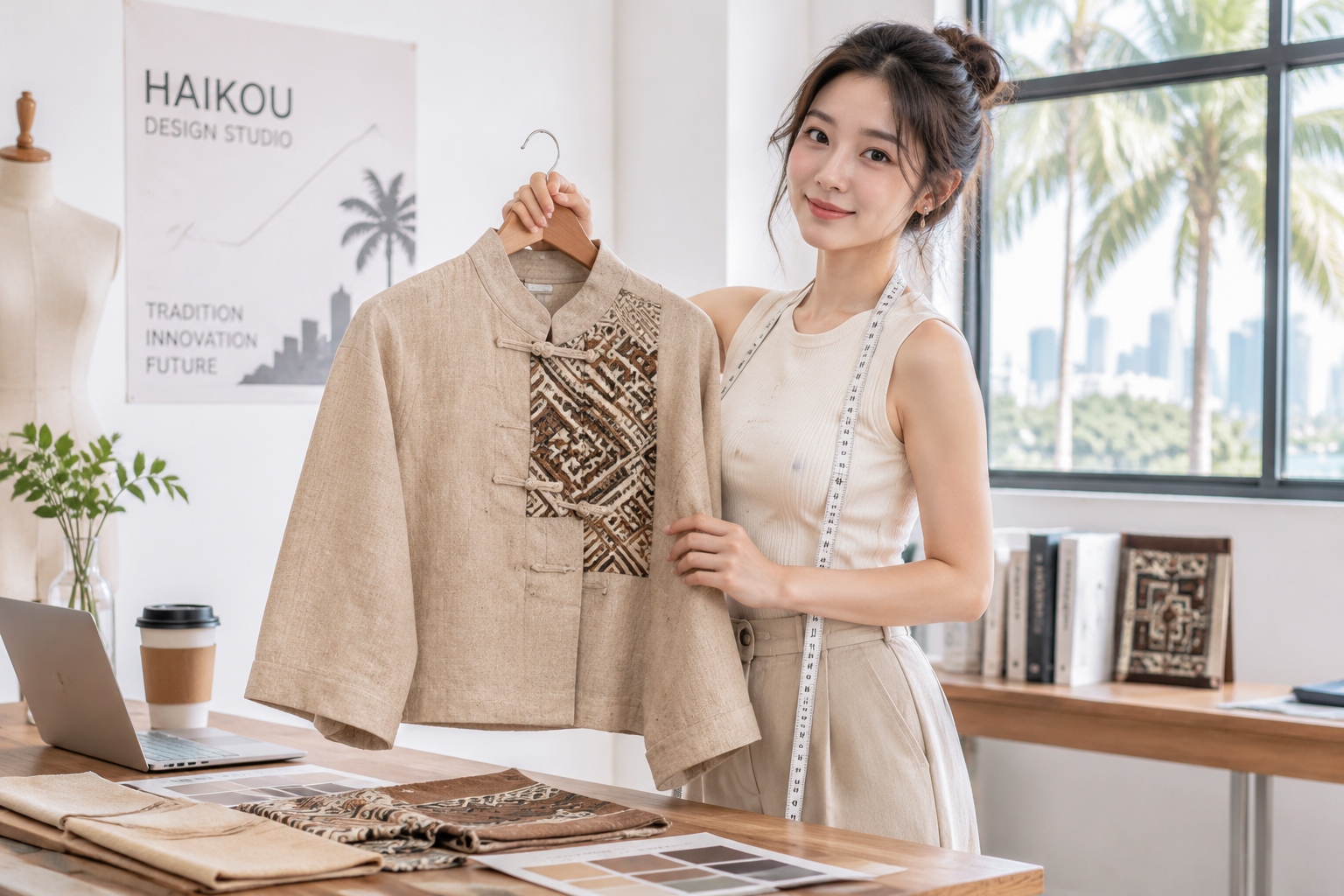
When Fashion Meets Heritage
Chinese fashion has turned its attention to Li brocade. In 2023, a collection called “Li Path” at Hainan Fashion Week featured floor-length linen coats, loose trousers and shirts with brocade panels inserted at the collar, cuffs and chest. The designer, Chen Yifan, explained that he wanted to “let the old patterns sit on the body in a new way.” The show created a buzz among fashion insiders and journalists, and photos circulated on Chinese social media.
Beyond the runway, some international luxury brands have collaborated with local cooperatives, licensing Li patterns for small leather goods and accessories. For example, a Swiss watchmaker has used a Li diamond pattern on a limited-edition strap. In addition, independent Chinese fashion studios increasingly source cloth directly from villages. These collaborations provide an income stream for weavers, but sometimes raise concerns about cultural appropriation. Some villagers are pragmatic: “If someone copies the pattern, there is nothing we can do. But if we get paid, it’s not theft, it’s trade,” one cooperative leader told me.
The Hard Parts
Revival does not mean everything is solved. Authentic Li brocade is expensive to produce. The dyeing uses plants that take months to grow; a single piece requires hours of preparation before weaving even starts. Therefore, a handwoven bag can cost between 500 and 3,000 yuan. Fast fashion e-commerce sites are filled with cheaper “Li style” items printed with patterns, which make it hard for genuine weavers to compete. Many young people still hesitate to become apprentices because the learning curve is long and the pay is uncertain.
But the women I met are patient. They are creating short videos for Douyin (the Chinese version of TikTok) showing the process from spinning to weaving. A few have become influencers, with hundreds of thousands of followers who tune in to watch the shuttle fly. Aunt Mei’s granddaughter, 15, is now asking for weaving lessons. “She thinks it’s cool,” Mei says. “Maybe she will continue. If not, at least she knows where the cloth comes from.”
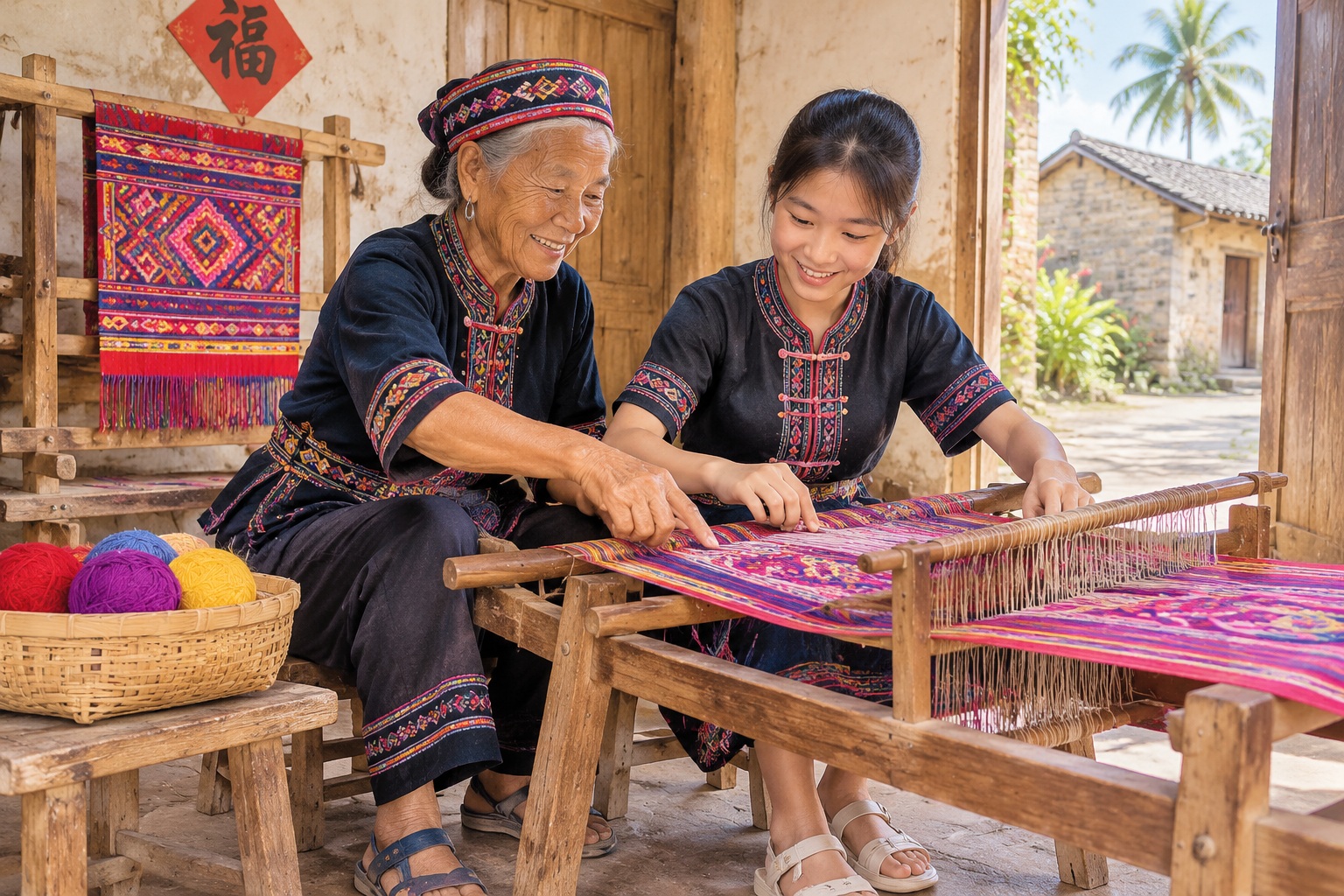
Fashion With Memory
Li brocade is not a museum artifact. It is being reshaped by designers, weavers and buyers every day. The old patterns carry memories of ancestors, but they also move through contemporary life: a coat in Shanghai, a tote bag in Paris, a scarf in Chengdu. The thread remains the same, but the hands that hold it are changing. As long as there are people willing to sit at the loom, this 3,000-year-old symbol will keep weaving its way into the future.
Start the discussion at forum.chinacomes.com