

Imagine going to a hospital in China. A doctor prescribes you a traditional herbal formula. You don’t have to carry home a paper-wrapped bundle and cook it in a clay pot all evening. Instead, you scan a QR code, choose ‘decanting service,’ and come back a few hours later to pick up a dozen vacuum-sealed pouches of warm, dark liquid. Or, if you’re in a hurry, you can choose herbal granules that dissolve in hot water like instant coffee.
This is the face of traditional Chinese medicine (TCM) in 2020s China — and it looks very different from the one in your imagination.
Over the past decade, China has pushed TCM modernization from a cultural relic to a tech-enabled healthcare option. In 2016, the State Council issued its Outline of the Strategic Plan for the Development of Traditional Chinese Medicine (2016-2030), which explicitly called for innovation. Since then, robotics, the Internet of Things, artificial intelligence, and big data have been making their way into every stage of TCM production and use.
From Clay Pots to Automated Kettles: Intelligent Decoction
Traditional herbal medicine is notoriously laborious. A specific amount of water, a low flame, time constraints, and sometimes complex rules like ‘decoct first’ (xiān jiān) or ‘decoct later’ (hòu xià). Get it wrong and the efficacy could drop. For centuries, that skill lived in the hands of an experienced Chinese mother or a seasoned pharmacist.
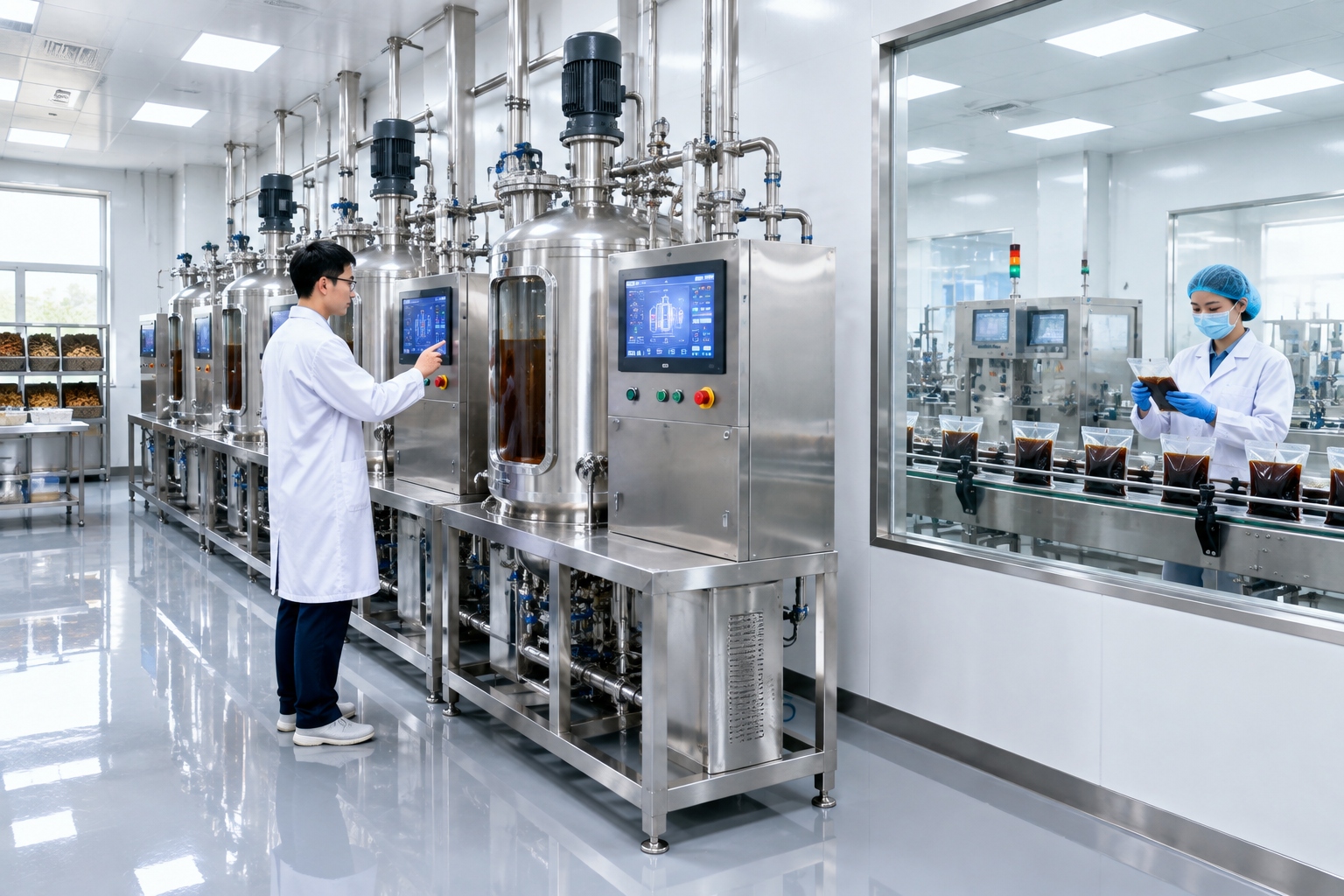
Today, machines can do it better. In the decoction workshop of China’s largest TCM manufacturers, rows of stainless-steel decoctors silently bubble under computer control. Sensors monitor internal temperature and pressure in real time. The machine can simulate the ancient sequence of boiling and simmering: high heat to bring the water to a rolling boil, then low heat to let the active compounds steep. Some machines are even programmed to add certain herbs at different intervals to mimic the ‘xiān jiān’ and ‘hòu xià’ rules.
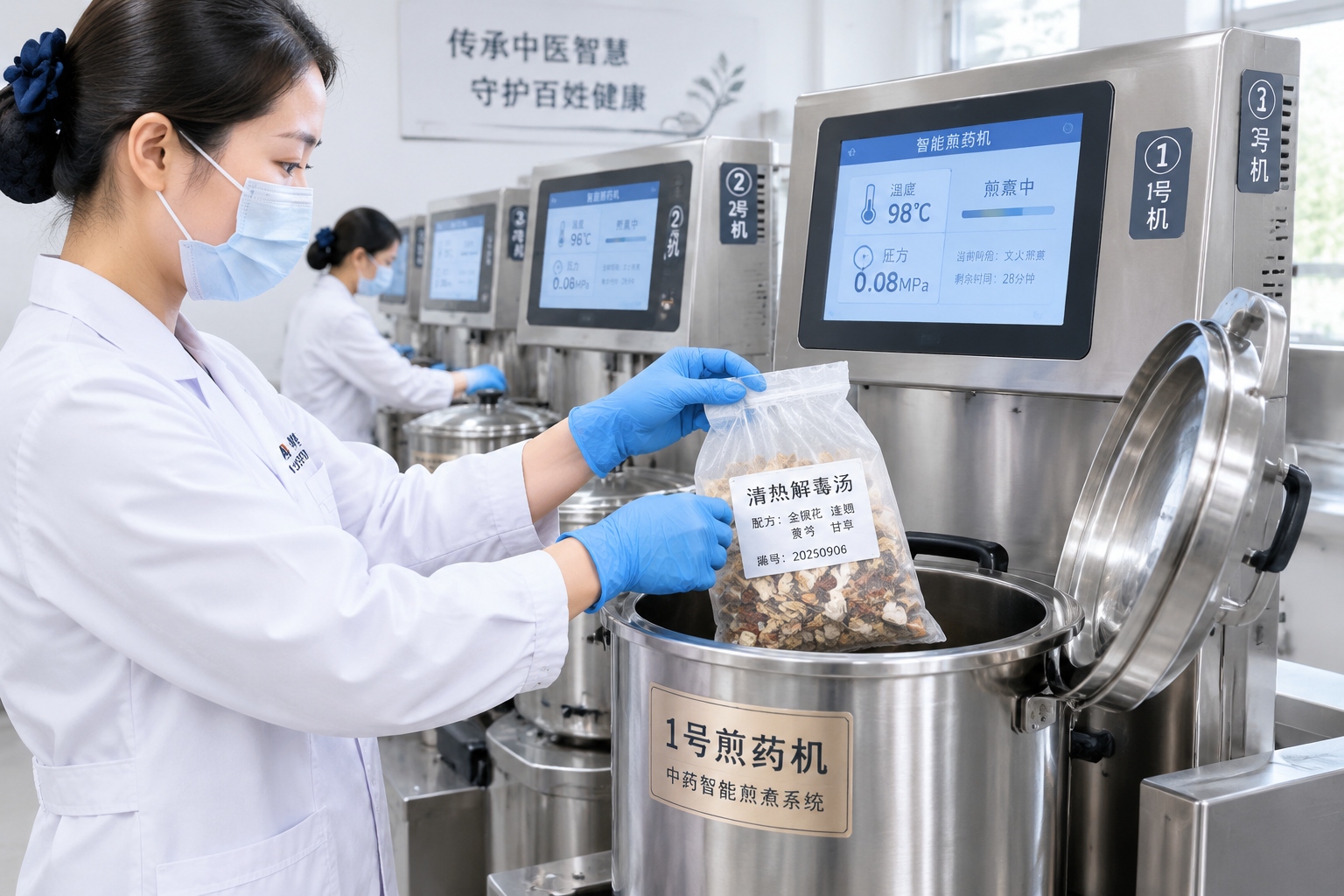
Patients don’t just trust the process blindly. In many hospitals, when you choose the decoction service, you get a barcode to scan. That barcode tracks your order in real time: you can see if your herbs are soaking, boiling, or concentrating. If you want, you can even watch the machine’s dashboard via an app — this is ‘intelligent decoction,’ turning an opaque process into a transparent, data-generated experience.
Robots in the Herbal Pharmacy
Behind that decocting service is another revolution: automated dispensing. Traditional Chinese pharmacies are famous for their walls of tiny wooden drawers, each holding a different herb. A pharmacist would walk along the wall, pulling out dried roots, leaves, and pods, weighing them on a scale. That process is slow and error-prone.
In modern TCM hospitals, those drawers are increasingly being replaced by automated dispensing systems. A robotic arm scans the barcode on your prescription, picks a box of herbs from a towering shelf, and sends it through a conveyor belt to a weighing station. The entire operation takes minutes, not the 20 or 30 minutes it used to take.
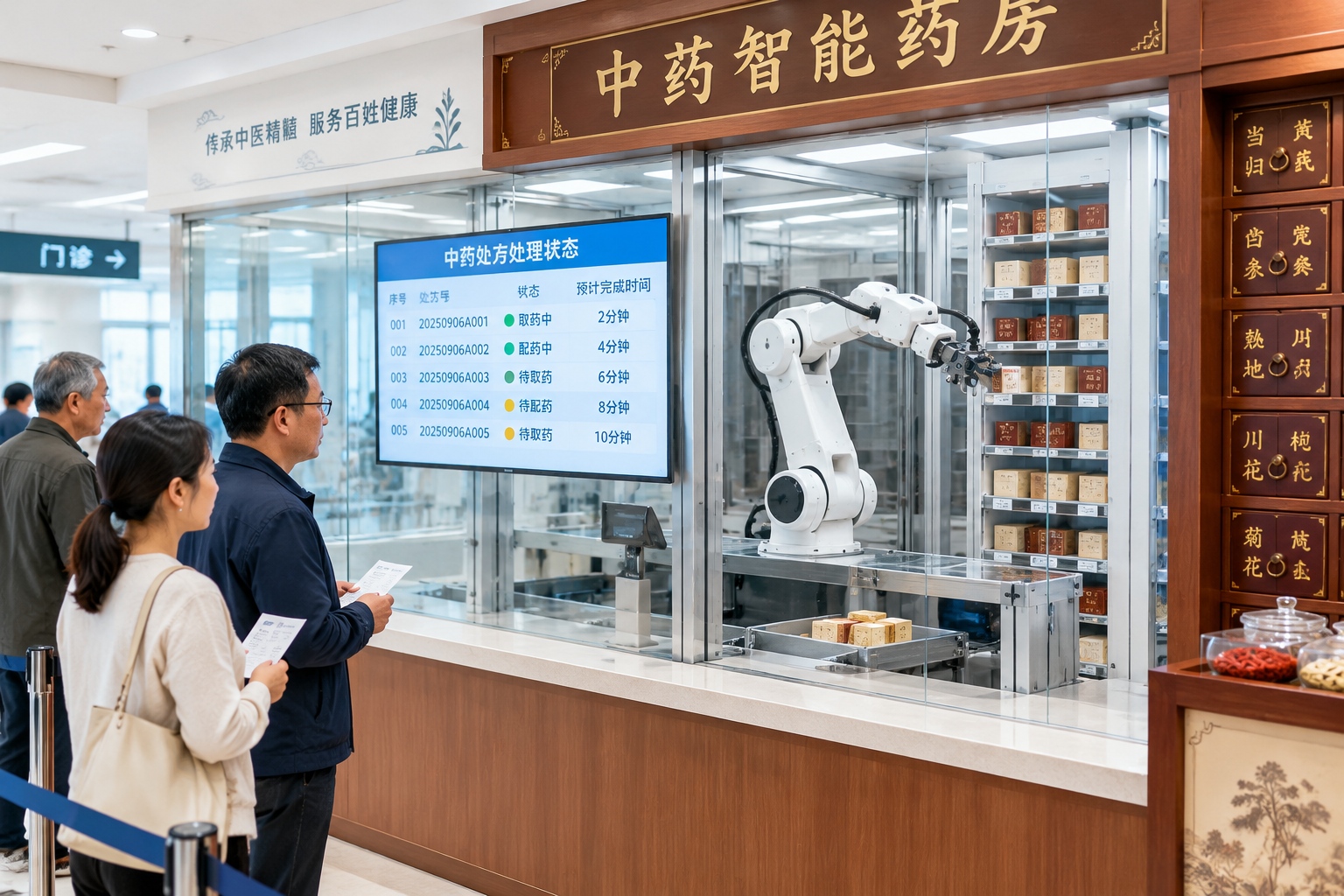
What’s the result? Less waiting, fewer human errors, and pharmacists can focus on advising patients about how to take the medicine. One pharmacist at a Beijing hospital told me that the automation cut her workload dramatically: ‘I now have more time to explain to people why they should not drink herbal tea with their medicine.’
Concentration and Convenience: The Rise of Herbal Granules
The most visible sign of modernization might be the humble granule. Also called TCM formula granules, they are made from single herbs that are individually extracted, concentrated, and dried into pellets. When you get a prescription, a machine or pharmacist mixes the corresponding granules into a bottle or sachet. At home, you just pour one packet into warm water and you have a drink that tastes almost like decocted medicine — but without the three-hour ceremony.
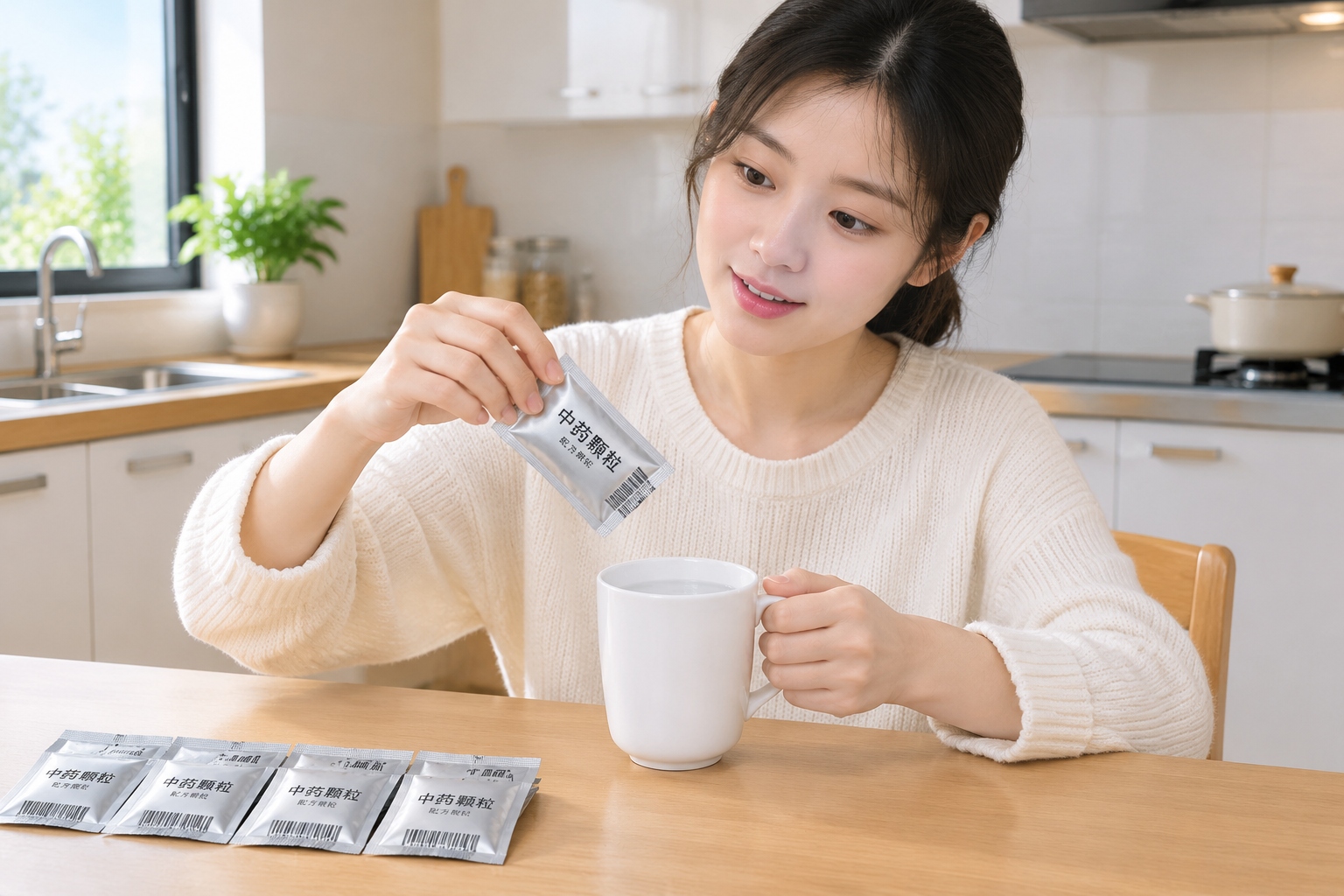
Granules solve one of the biggest obstacles to TCM adherence: time. A 2021 report by the National Administration of Traditional Chinese Medicine showed that formula granules now represent more than 10% of TCM sales in major cities, and their share is growing at over 20% per year.
But can pouring a powder from a packet really compare to the full decoction process? Research suggests it can. A 2019 systematic review published in the Journal of Ethnopharmacology found that, for most standard prescriptions, the active ingredients in granules were comparable to those in traditional decoction. Not everyone is convinced — some traditionalists worry that the concentrated pellet removes the synergy of simultaneous herbs. Yet for millions of young Chinese, it makes TCM possible during a busy lunch break.
Quality Control: A Scientific Eye on Ancient Wisdom
One of the strongest criticisms of TCM has always been its variability: herbs grow in different regions, in different seasons, and are often mixed with impurities. Modern TCM factories are fighting back with high-tech quality control.
In a modern production line, every batch of herbs undergoes high-performance liquid chromatography (HPLC) and mass spectrometry. These machines identify and quantify marker compounds — the active chemical fingerprints that define a quality product. If a batch of ginseng fails to meet the standard concentration of ginsenosides, it’s rejected.
And it doesn’t stop there. Many medicines now carry a QR code that, when scanned, reveals the entire supply chain: where the herbs were grown, when they were harvested, how they were processed, and which lab tests they passed. This kind of traceability is becoming a selling point for Chinese consumers who are accustomed to scanning food products to check their origins.
AI and Traditional Medicine: A New Pair of Eyes
The next frontier is digital diagnostics. TCM diagnosis relies on the ‘four methods’: look, listen, ask, and feel (the pulse). Now, engineers are building tools that assist doctors with these tasks.
In Shanghai, a TCM hospital trialed a tongue diagnostic device: a patient sticks out their tongue into a camera, and an artificial intelligence model trained on tens of thousands of tongue images suggests possible internal conditions. Another device simulates pulse taking: a pad with pressure sensors records the radial pulse wave, and software interprets its characteristics.
These AI tools don’t replace doctors. They provide a second opinion, especially valuable for less experienced practitioners. Dr. Wu, a young TCM physician in Guangzhou, told me: ‘The AI is like a spell-checker. It warns me if I might be missing something, but it never decides the treatment plan. Treating a patient is still an art.’
The Human Touch in the Machine Age
I asked Dr. Wu if he felt technology was eroding the soul of his profession. He laughed. ‘No, it’s bringing more people in.’ He says that young patients, who might be turned off by the traditional ‘burnt bitter soup’ vibe, are more receptive to medicine that looks like something you’d get from a high-end pharmacy. The packaging is neat, the instructions are printed clearly, and they can track their dose on a smartphone app.
The older generation is often more conservative. Many elderly Chinese patients still believe that boiling the herbs at home—with all its ritual and imperfections—yields stronger results. So, hospitals offer both options. Even in this high-tech era, there’s room for a classic clay pot in a warm kitchen.
Challenges Ahead
Modernization has its skeptics, both inside and outside China. There is the eternal worry that standardization may sacrifice the essence of TCM: its individualized diagnosis and balanced ecological view. If every herb is reduced to a pure chemical marker, is that TCM anymore? And the rise of automation might put traditional pharmacists out of a job.
Yet the industry seems to be navigating a middle path. Technology is being used as a tool, not a replacement for tradition. The China Academy of Chinese Medical Sciences is currently funding research on AI diagnostics that respect the philosophical framework of TCM, rather than simply imposing Western concepts.
From the outside, it’s easy to see TCM as an ancient, mystical art. But in China today, it’s a living practice that is evolving with the times. A bowl of herbal soup may have a barcode and a touch of machine precision, but the wisdom at its core remains as old as the hills.
That’s the real travelogue of a bowl of herbal medicine: from a clay pot to a sensor-controlled automaton, from a secret family recipe to a data-backed formula used by millions. And the next chapter is just being written.
Start the discussion at forum.chinacomes.com