

The Steel Islands in the Yangtze
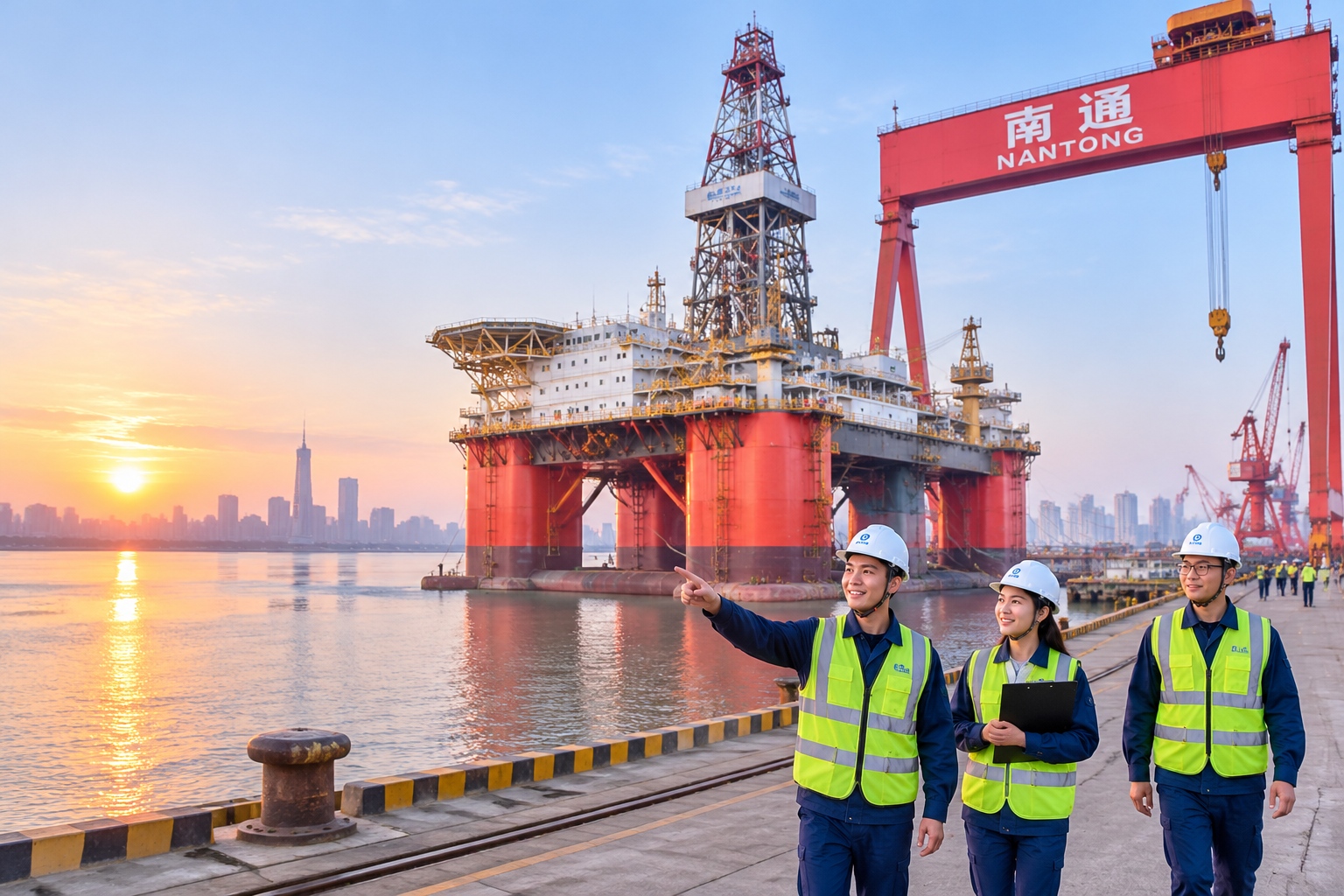
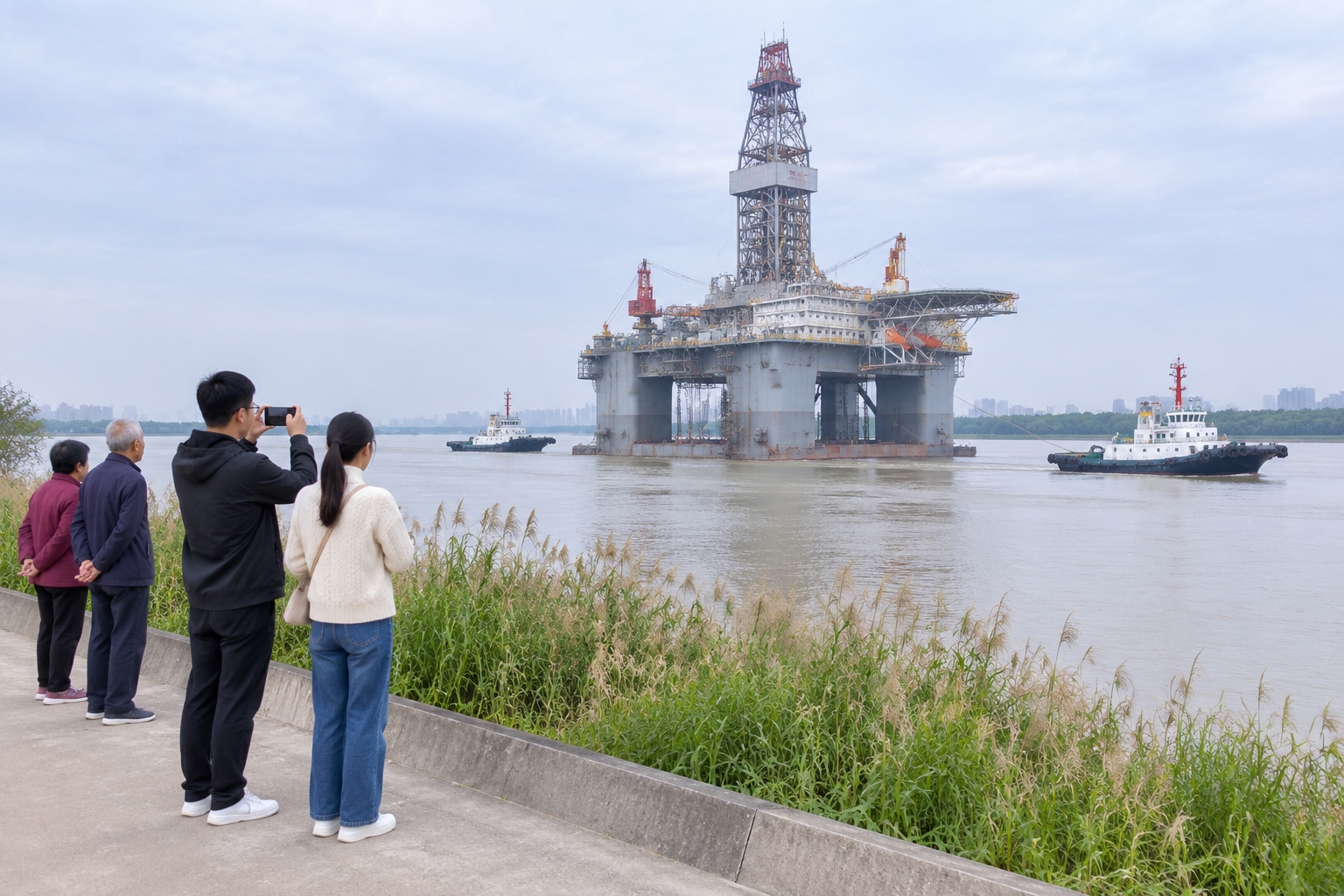
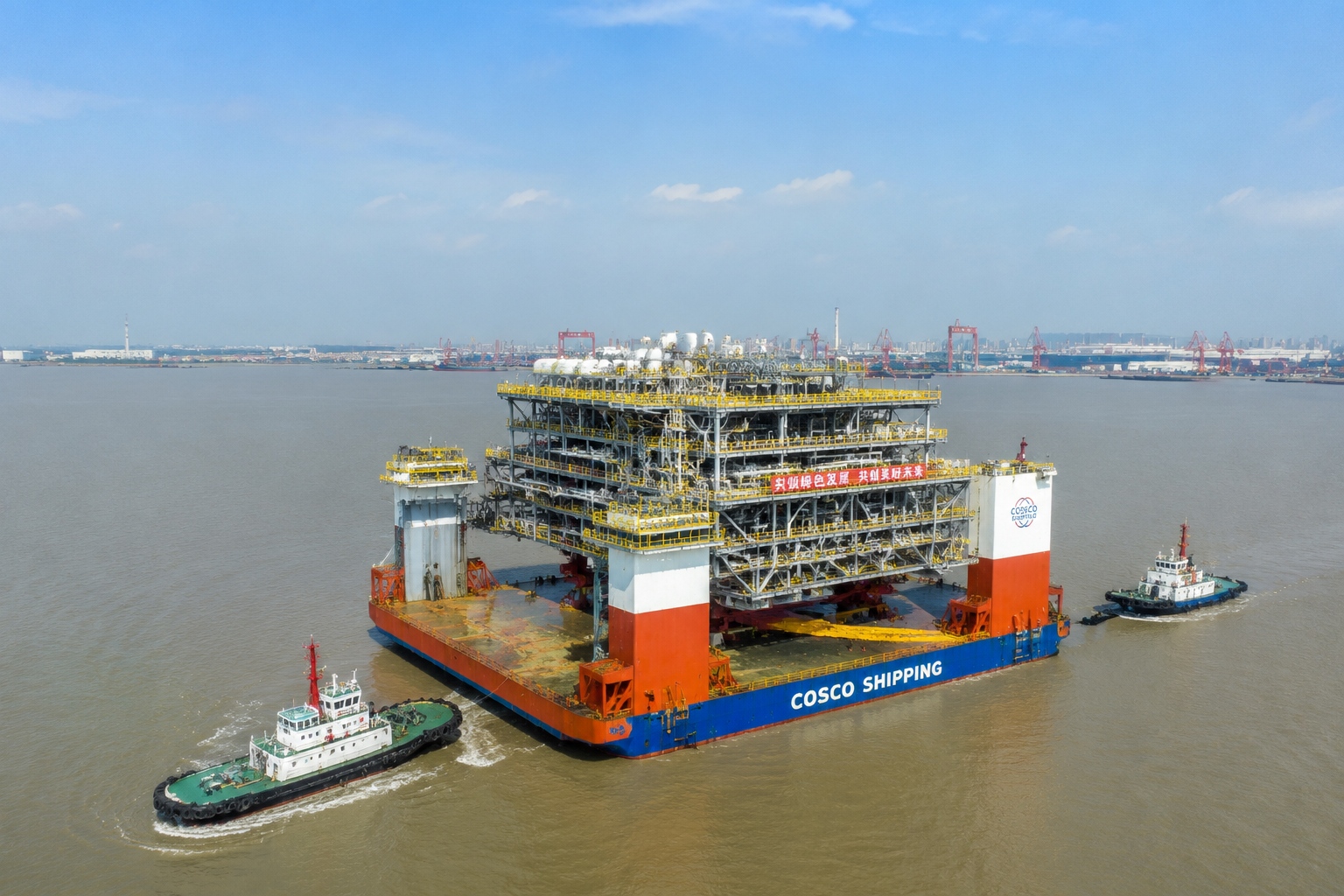
On a misty morning, standing on the bank of the Yangtze River in Nantong, you might see what looks like a small steel island drifting slowly downstream. It isn’t an island, though. It’s an offshore drilling platform, towering several stories above the water, being towed toward the East China Sea. If you didn’t know better, you’d guess it came from Shanghai, the glittering megacity just across the river. But it didn’t. It was built in Nantong, a city that rarely appears in international travel stories yet quietly makes some of the most complex machines in the world.
A City of Cotton Mills That Turned to Steel
Nantong sits on the northern bank of the Yangtze estuary, about 100 kilometers from Shanghai. Historically, it was known as “the first modern city of China,” because early industrialist Zhang Jian founded cotton mills, a harbor, and even a museum here in the late 19th century. That industrial legacy created a skilled workforce and a tradition of making things.
Today, those cotton mills are gone. In their place, massive shipyards and docks stretch along the river. Nantong is now one of China’s most important bases for marine engineering equipment. Companies like Cosco Shipping Heavy Industry, China Merchants Heavy Industry, and ZPMC operate large facilities here, their gantry cranes visible across the flat landscape.
How Did Nantong Get Here?
Location is part of the answer. Nantong has over 220 kilometers of river and coastline, including deep-water berths that can accommodate giant vessels and rigs. Land is cheaper than across the river in Shanghai, and the city is close enough to the global shipping lanes of the East China Sea. In the 1970s, the central government designated Nantong as a key shipbuilding base. In the 2000s, as global demand for offshore oil and gas surged, local shipyards began shifting from ordinary cargo ships to high-end marine equipment.
Another factor was courage to take risks. When oil prices soared, Chinese companies saw an opportunity to break into a market long dominated by South Korea and Singapore. Nantong yards invested heavily in new facilities and engineering know-how. They hired foreign experts, partnered with international designers, and gradually built up the capacity to design and assemble whole platforms.
What Exactly Do They Build?
The marine engineering industry is not about simple cargo ships. It focuses on high-value, complex vessels and structures: semi-submersible drilling platforms, floating production storage and offloading units (FPSOs), wind turbine installation vessels, and deep-water pipelayers.
One famous product is the “Hope No. 1,” the world’s first cylindrical deep-sea drilling platform, built at Cosco’s Nantong yard. It resembles a giant UFO on the water. Another is the “Hope No. 2,” a semi-submersible capable of drilling in water depths of 3,000 meters. These machines are not just steel; they contain thousands of kilometers of cables and pipes, sophisticated dynamic positioning systems, and living quarters for more than 100 people.
The Wind Power Connection
In recent years, offshore wind has become a major driver for Nantong’s yards. Wind turbine installation vessels—ships with giant cranes capable of lifting 1,000 tons or more—are in high demand as China and Europe build offshore wind farms. China Merchants Heavy Industry in Nantong has delivered several of these massive vessels, some among the largest in the world. The city is also making monopiles and substations for offshore wind parks.
Inside a Nantong Shipyard
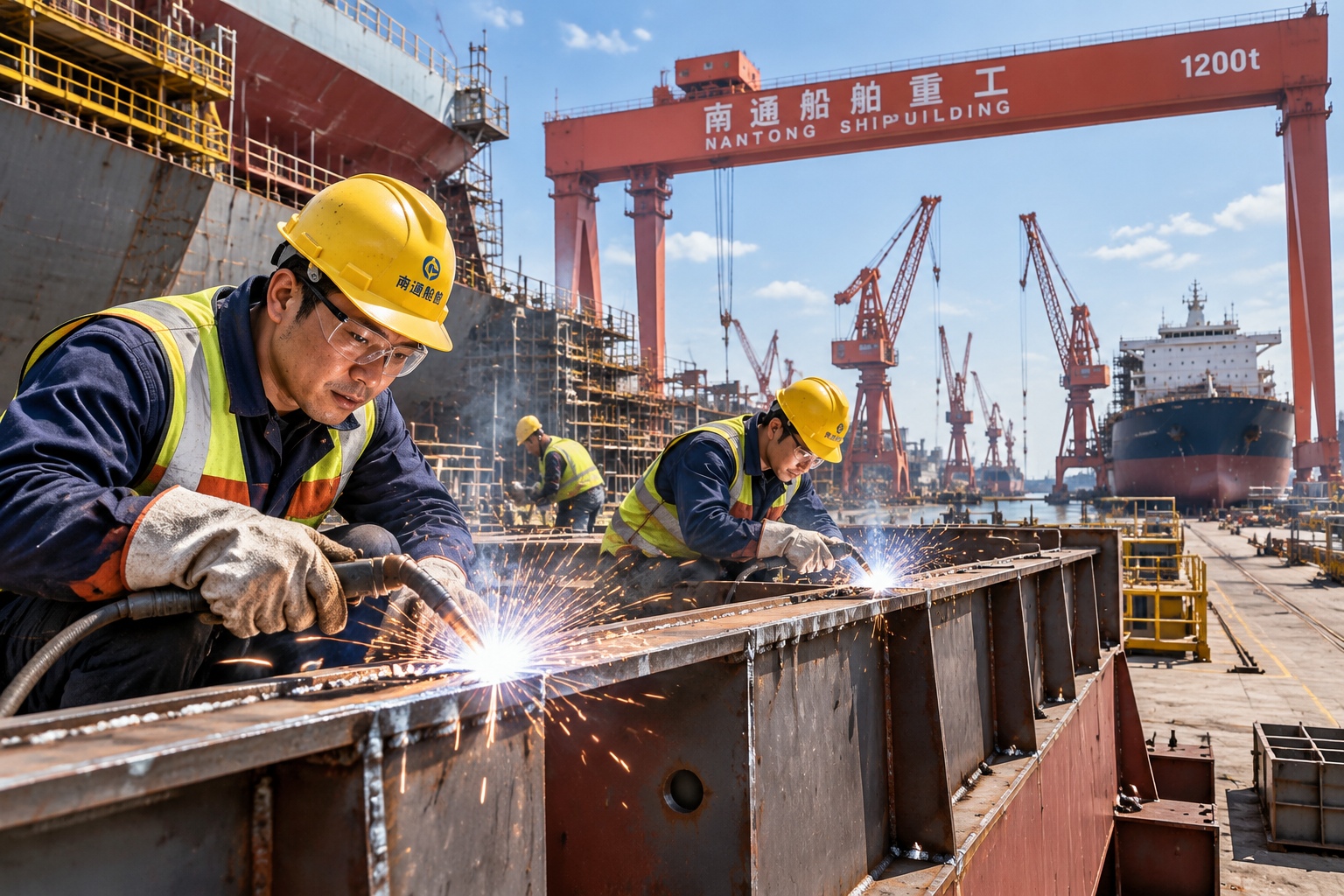
Walk into one of these yards, and you’ll be struck by the scale. Gantry cranes as tall as 100 meters loom overhead. Workers in safety helmets and reflective vests move like ants between steel blocks. The air is filled with the crackle of welding and the distant hum of diesel engines. It feels like a scene from a science fiction movie, but it’s real industrial labor.
Modernity is also present. Engineers use 3D modeling and digital twin systems to plan every step before any steel is cut. Drones inspect hard-to-reach areas. Robots weld repetitive seams, while human workers handle complex joints. “People think of shipbuilding as dirty old industry, but everything here is increasingly automated and digitized,” says Xu Lei, a project engineer at a local yard.
People Who Build Giants
Behind the machines are real people. Zhou Ming, 40, started as a welder 20 years ago. “When I began, we used hand tools and paper drawings,” he recalls. “Now we have robots helping with welding, and I’m learning digital processes.” Zhou earns about 15,000 yuan a month, far above the local average, and works 40 hours a week with overtime pay.
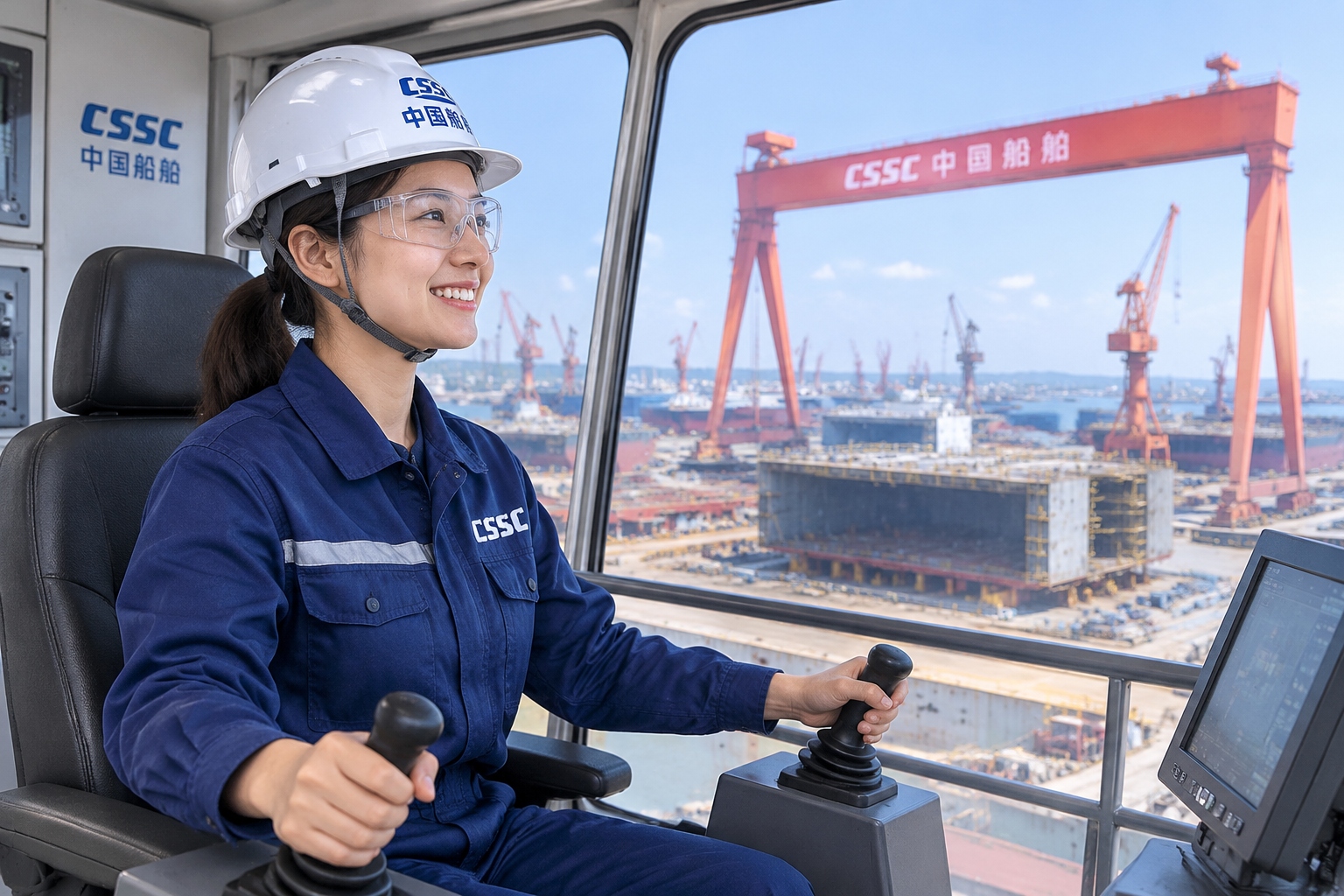
Many workers are former migrants who have returned to Nantong as the industry expands. Li Na, a 29-year-old crane operator, worked in Shenzhen before. “Here, I can live with my parents and afford my own apartment,” she says. “The city is growing, with new shopping malls and parks. It’s not like the old industrial towns you see in books.”
For young engineers, the appeal is also the challenge. “You get to work on enormous projects that very few people in the world can even imagine,” says Chen Jie, a naval architect who joined China Merchants after university. “Every day is different, and there’s a real sense of achievement when the rig finally floats.”
Machines That Travel the World
What comes out of Nantong doesn’t stay in China. The equipment is exported to more than 60 countries. A semi-submersible drilling rig might end up in the North Sea; a wind farm installation vessel could work on wind farms off the English coast. FPSOs built here have been sent to Brazil and West Africa. In fact, many of the giant steel components seen at ports in Europe or Latin America were born in this city.
Moving these enormous structures is a spectacle in itself. Sometimes, a semi-submersible heavy-lift vessel comes up the Yangtze. It submerges itself, allowing the rig to float onto its deck, then resurfaces and sails off across the ocean. Locals often gather on the riverbank to watch these giant “cargo” pass, a reminder that Nantong is connected to the global economy in a very physical way.
The Hard Lessons and New Roads
Nantong’s path has not been smooth. The offshore industry is heavily tied to oil and gas prices. When crude prices crashed between 2015 and 2017, many orders were canceled. Some shipyards went bankrupt or were forced to diversify. The city learned to rely less on a single sector and more on a mixture of offshore wind, liquefied natural gas carriers, and specialized vessels.
Environmental regulations have also pushed changes. Shipyards now need to reduce emissions and treat waste water. Ten years ago, the river near the yards was polluted. Today, locals say, you can see fish again. “It’s not all clean yet, but things are much better,” says a retiree walking along the riverbank.
What’s Next?
With China’s push for carbon neutrality, Nantong’s marine sector is focusing on green technologies. Shipyards are building battery-electric ferries and hydrogen-ready vessels. There is also a drive to make the industry more intelligent, using artificial intelligence and big data to improve design and operation. The local government is investing in an ocean engineering vocational school to train the next generation, hoping to overcome the shortage of skilled labor.
“We want to be the global center for marine engineering, not just a low-cost builder,” says Wang Li, a project manager at China Merchants. “That means investing in research and development, and in people.”
Hidden in Plain Sight
For many travelers, Nantong is just a blur of suburbs seen from the Shanghai-Beijing railway line. But its industrial landscape—giant yards, towering cranes, and equally giant dreams—is more impressive than some of China’s more famous sites. The city may not have a Bund or a classic old town, but it has something equally vital: the ability to build the machines that keep our modern world running.
The next time you read about a new deep-water oilfield or an offshore wind farm, think about Nantong. This unassuming city at the mouth of the Yangtze is one of the working engines behind global marine engineering.
Start the discussion at forum.chinacomes.com