
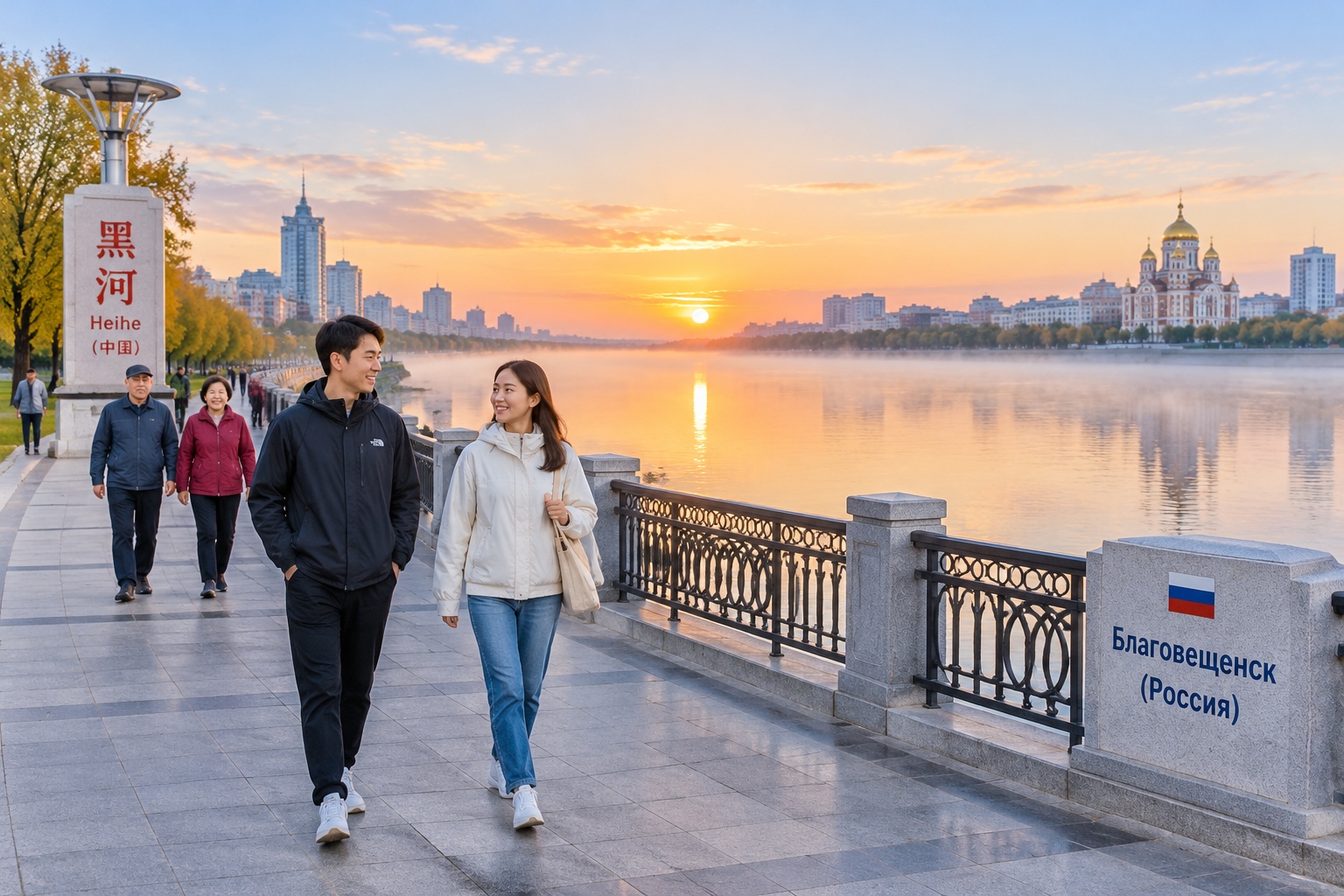

A River That Joins, Not Divides
The Amur River, called Heilongjiang in Chinese, is the natural boundary between northeastern China and the Russian Far East. But on a misty morning in Heihe, a city of about 200,000 on the Chinese side, the border feels less like a wall and more like a neighbor’s yard. From the riverfront, you can see the Russian city of Blagoveshchensk on the opposite bank, its church domes and apartment blocks just a few minutes by boat. Many locals joke that if you shout across the river, someone might hear you.
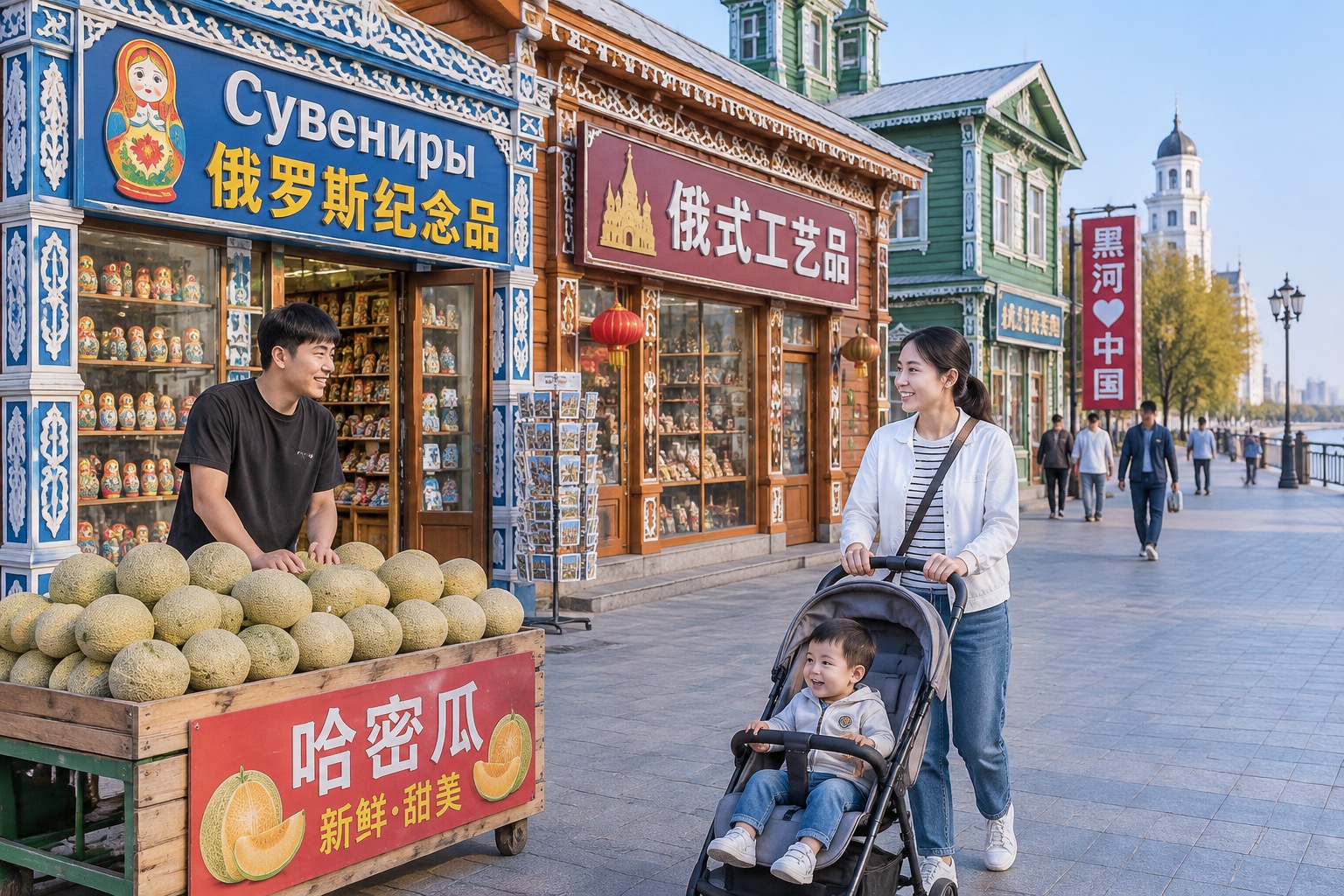
Street-Level Russian Traces: Architecture, Signs, Bread and Beer
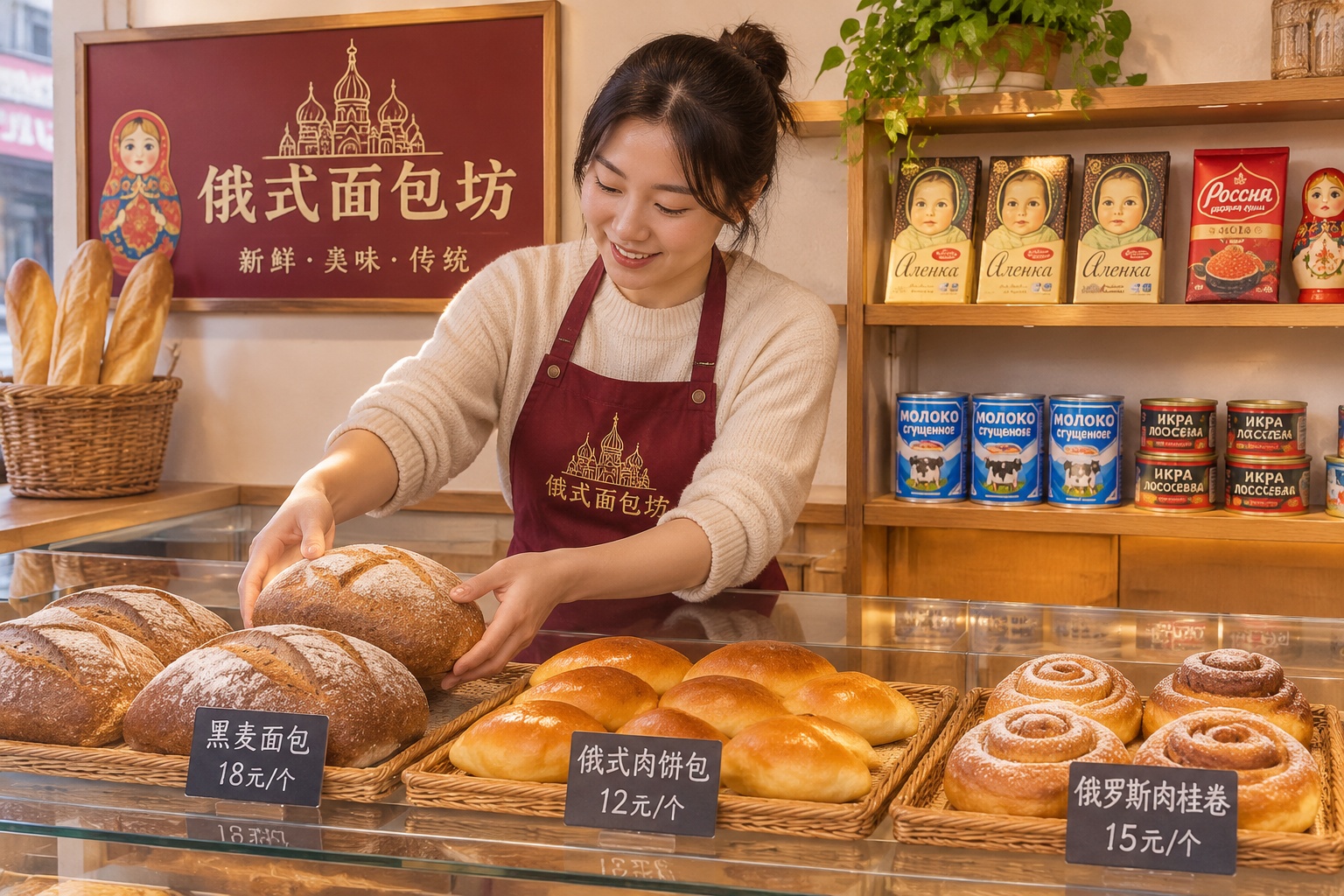
Walk through the center of Heihe or Suifenhe, and you’ll notice more than just Chinese characters. Painted wooden matryoshka dolls stand outside souvenir shops. Restaurant signs are written in both Chinese and Cyrillic. The aroma of fresh rye bread drifts from bakeries, alongside stalls selling smoked fish and Russian-style sausages. In Harbin, the provincial capital, this influence goes back more than a century: the city was built in the late 1800s by Russian railway workers, and its Central Street still has a long stretch of European-style architecture, a reminder of that history.
For anyone from Europe, this mixed streetscape might feel familiar—think of border towns like Basel or Strasbourg, where two cultures blend without waving a flag about it. A middle-aged local woman buying a loaf of Russian rye bread at a bakery in Heihe told me she has eaten it since childhood. “It’s not special,” she said. “It’s just bread.” At the nearby supermarket, shelves are stocked with Russian chocolate, canned fish, and buckwheat, because these goods have been part of the local diet for generations.
Lives That Cross the Border
The most interesting stories are not in the shops but in the people. In Heihe, there are families with Chinese and Russian roots, often the result of marriages that happened in the 1990s when border trade opened up. Some families run small cafes serving both Chinese dumplings and Russian borscht. Others work as cross-border commuters: a parent might live in Blagoveshchensk while the children go to school in Heihe. Russian students enroll in Chinese universities for cheaper tuition and better job prospects, while Chinese students study medicine and engineering in Russia.
One local merchant, Wang Wei, runs a small import business. He told me that his day starts with a WeChat message to his supplier in Russia, then a quick drive to the border checkpoint to pick up a shipment of sunflower oil and honey. “It’s not glamorous,” he said, “but it’s a normal job. The border is just a logistics problem to solve.”
This kind of daily cross-border life is still a minority, but it defines the rhythm of the town. Real estate agents in Heihe see Russian families renting flats for the school season. Dentists in the city center advertise in Russian, because dental work is cheaper than in Russia. On weekends, Russian tourists wander the pedestrian street, buying fabrics and electronics, while Chinese shoppers cross over for butter, cheese, and quirky Soviet-era souvenirs.
Russian Holidays and Everyday Rhythms
Russian cultural influence seeps into the calendar as well. During Maslenitsa, the Russian pancake week before Lent, some bakeries in Heihe make blini, and local Chinese families join in the pancake-eating fun. Orthodox Easter brings colorful painted eggs and kulich, a sweet bread, to shops. In winter, when the river freezes, both sides host ice lantern festivals and even the occasional cross-river game of football.
This is not a staged cultural performance. It is the natural result of people who live within sight of each other trading goods, sharing recipes, and sometimes marrying each other. The local Chinese government also supports this exchange: bilingual street signs, a Russian-language medical center, and regular cultural festivals are part of the effort to make the border city a welcoming place for Russian visitors and residents.
New Generation Trade and Travel: From Suitcases to Apps
The relationship is also changing with technology. In the 1990s, cross-border trade meant Russian shuttle traders hauling giant suitcases filled with fake leather jackets and Chinese sneakers. Today, much of the trade happens online. Local e-commerce companies in Suifenhe import Russian food and cosmetics, then ship them to Chinese consumers across the country. Russian tourists come to Heihe for dental care and shopping, paying with WeChat Pay, which now supports Russian bank cards.
Younger Chinese in these cities have a different mindset. Many are learning Russian in school, but not because of any deep historical attachment. They see it as a practical skill. A student at a Heihe high school summed it up: “If you can speak Russian, you can find a job in logistics, translation, tourism, or even live-streaming sales.” Cross-border live-streaming, where Chinese anchors sell Russian goods to Chinese audiences, has become a small but visible industry in the border towns.

More Than Exoticism: Real Life in a Shared Borderland
For a foreign reader, the Russian flavor of Heilongjiang might seem like a curiosity. But for the people who live here, it is simply part of the texture of home. The border is not something you think about every day; it is just there, shaping the food you eat, the languages you hear, and the friendships you form. It is a reminder that, despite all the talk of geopolitical tensions, ordinary people on both sides are mostly busy with the same things: raising families, running businesses, and making a living.
So when someone asks what Heilongjiang is really like, the honest answer is not a postcard of onion domes and Russian dolls. It is a place where Chinese and Russian ways of life have quietly woven themselves together, by people who live, work, and share coffee across a river that joins more than it divides.
Start the discussion at forum.chinacomes.com