

The Rope and the Wall
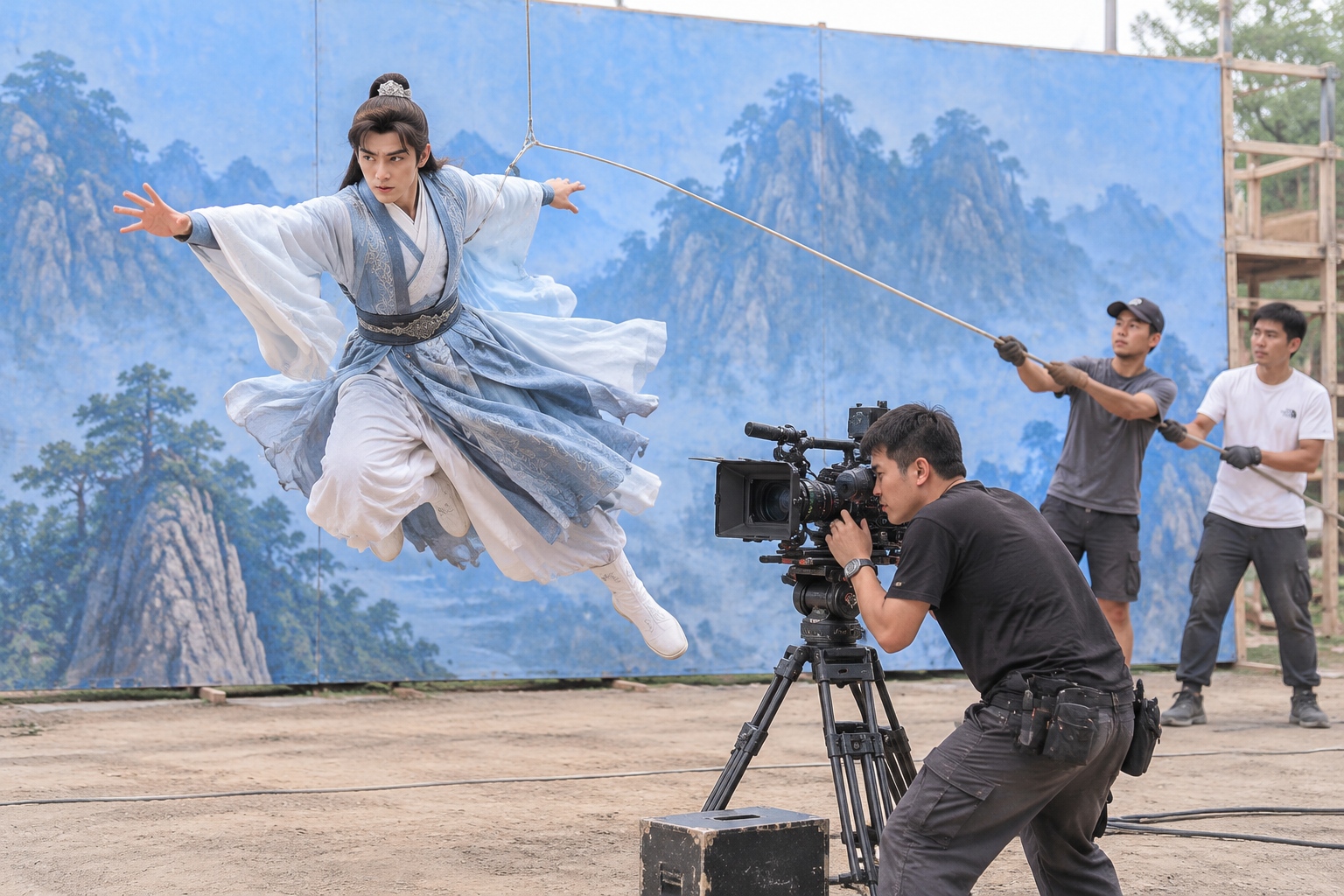
On a Hong Kong soundstage in the late 1980s, an actor stands flat against a painted plywood wall. A thin steel cable clips to a harness hidden under his robes. Three crew members grip the other end of the rope behind the camera. The director calls action. The actor kicks off the wall; the crew pulls; for a few seconds, he seems to sprint up the vertical surface and flip backward. One take. It looks like magic. It is actually a wire rigger, a stunt coordinator, and a climbing harness.
The footage is grainy. The wall is obviously fake. The audience in 1988 did not care. They came to see a body do something impossible, and the wire delivered it.
This is the world of wuxia (武侠), a Chinese storytelling tradition about martial artists and wanderers with impossible skills. It is not a superhero film. The characters are human, with human limits. The flying is a visual language, not a superpower.
What Wire Work Really Is
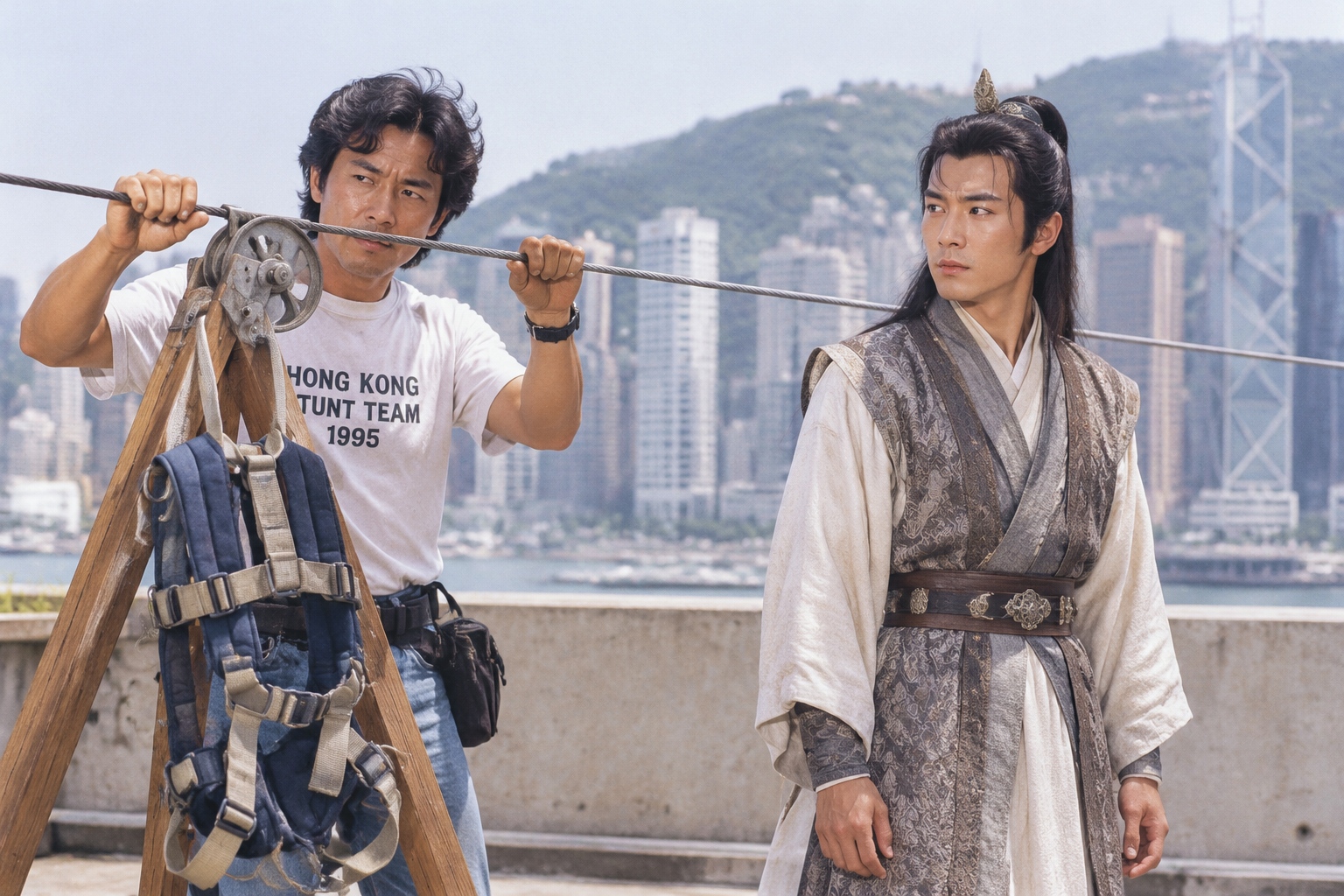
“Wire fu” is the English nickname for weiya (威亚) — wire work. A standard setup uses steel cables two to four millimeters thick, threaded through pulleys and anchored to human handlers or motorized winches. The performer wears a full-body climbing harness, padded at the hips and thighs, hidden under costume layers. The crew members pulling the rope train for months to sync their pulls with the actor’s movement and the camera frame. A simple wall-run might need six rehearsals and two cameras rolling at different speeds. Harnesses are checked before every take. Landing mats sit just outside the frame.
Hong Kong Action and the Rhythm of the Cut
In the 1980s and 1990s, Hong Kong filmmakers made wire work part of the editing rhythm. Tsui Hark’s A Chinese Ghost Story (1987) and Ching Siu-tung’s Swordsman II (1992) sent characters leaping between roofs and trees in bursts that matched the tempo of the music and the cuts. The trick was not just the cable. Editors trimmed the frames between the pull and the landing, letting the audience’s eye fill in the rest. Stunt teams rehearsed the jumps and sword swings without wires first. The wire extended what the body could already do; it did not replace it.
Yuen Wo-ping’s work on Once Upon a Time in China (1991) used wires sparingly — more for ladder fights and rooftop chases than for flying. The aesthetic was grounded, showing the audience that a body could do extraordinary things with enough training.
Going Global with Crouching Tiger and Hero
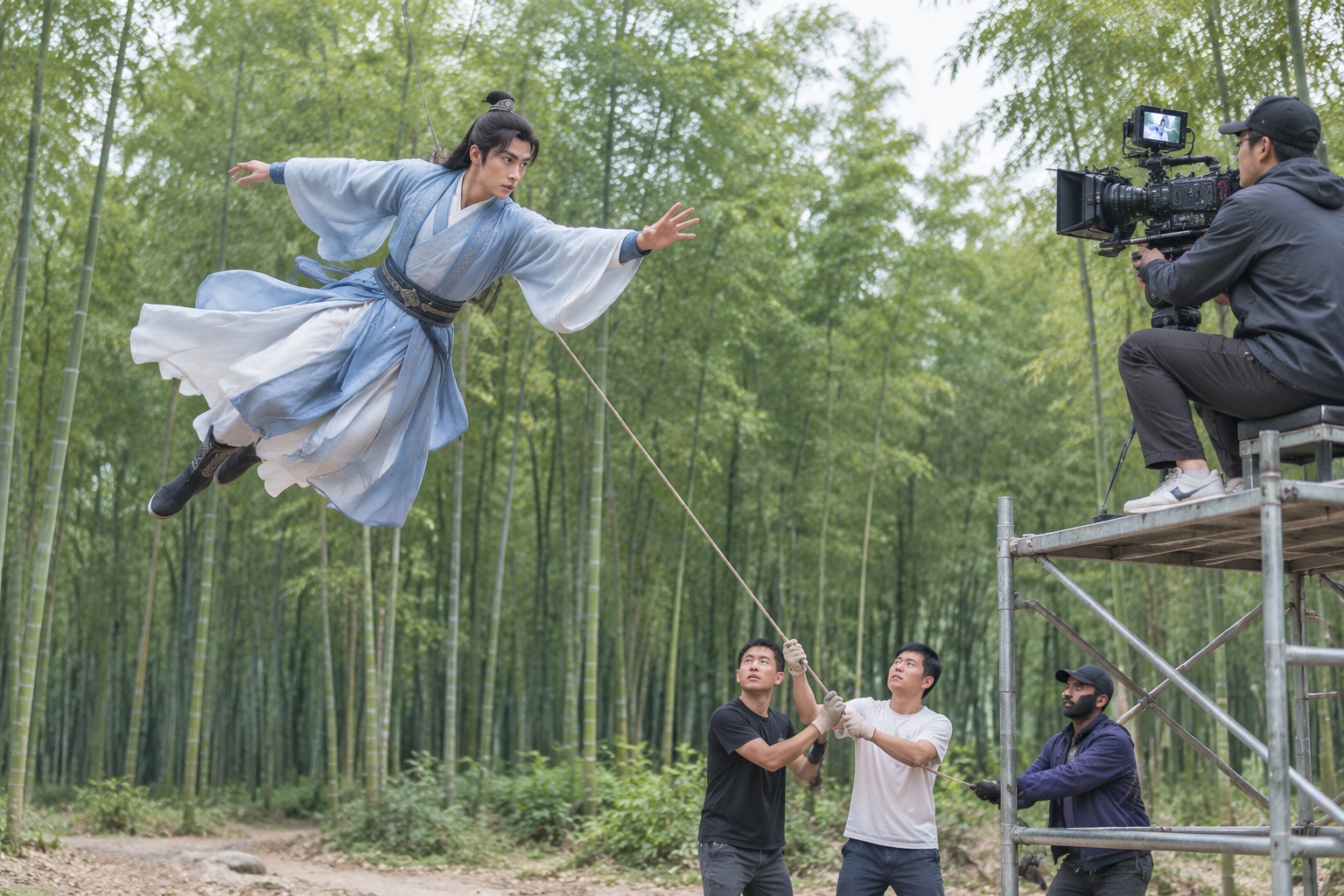
Crouching Tiger, Hidden Dragon (2000) changed the scale. Ang Lee’s film, with Yuen Wo-ping handling the action, cost about $15 million and earned more than $213 million worldwide. Its bamboo forest fight — actors suspended on cables thirty feet above a real bamboo grove — required removing the wires in post-production, which meant early digital painting and rotoscoping work.
Zhang Yimou’s Hero (2002) pushed further. The arrow-storm sequence combined thousands of digital arrows with practical wire work and real soldiers standing in rows. House of Flying Daggers (2004) placed wire work inside a bamboo grove and a peony pavilion, where dancers and fighters moved in circular patterns around the camera.
These films gave global audiences a new kind of action: the camera lingered on bodies in flight, not just on fast cuts. Their success created demand for Chinese action choreographers in Hollywood. Yuen Wo-ping worked on The Matrix (1999). Ching Siu-tung worked on Kill Bill (2003). The exchange went both ways.
Green Screens and Digital Doubles
By the 2010s, green screens and CG environments were standard. Digital doubles became a normal part of the workflow. The term sounds like a replacement for the actor. In practice, it is a solution for specific problems: a shot that requires a body to fall fifty feet onto concrete, a wide shot filmed on a day when the lead actor is shooting dialogue on another set, or a sequence that needs a younger version of a character.
Some productions began using digital doubles for entire sequences — a fight scene shot entirely in a computer, with actors providing only facial expressions or voice. This is rare and expensive, but it exists.
Chinese visual effects companies grew alongside these productions. Base FX, headquartered in Beijing, contributed shots to Pacific Rim and Star Wars: The Force Awakens. More VFX, founded in 2011, handled large parts of The Wandering Earth (2019), a science fiction film made for roughly $50 million that earned over $690 million. Its sequel, released in 2023, had more than 3,000 effects shots.
China now has over 80,000 cinema screens, more than any other country. Its box office reached about $7.6 billion in 2023. More screens mean more demand for action and spectacle, which means more pressure on VFX teams and stunt crews to deliver faster and cheaper.
Virtual Sets and Previsualization
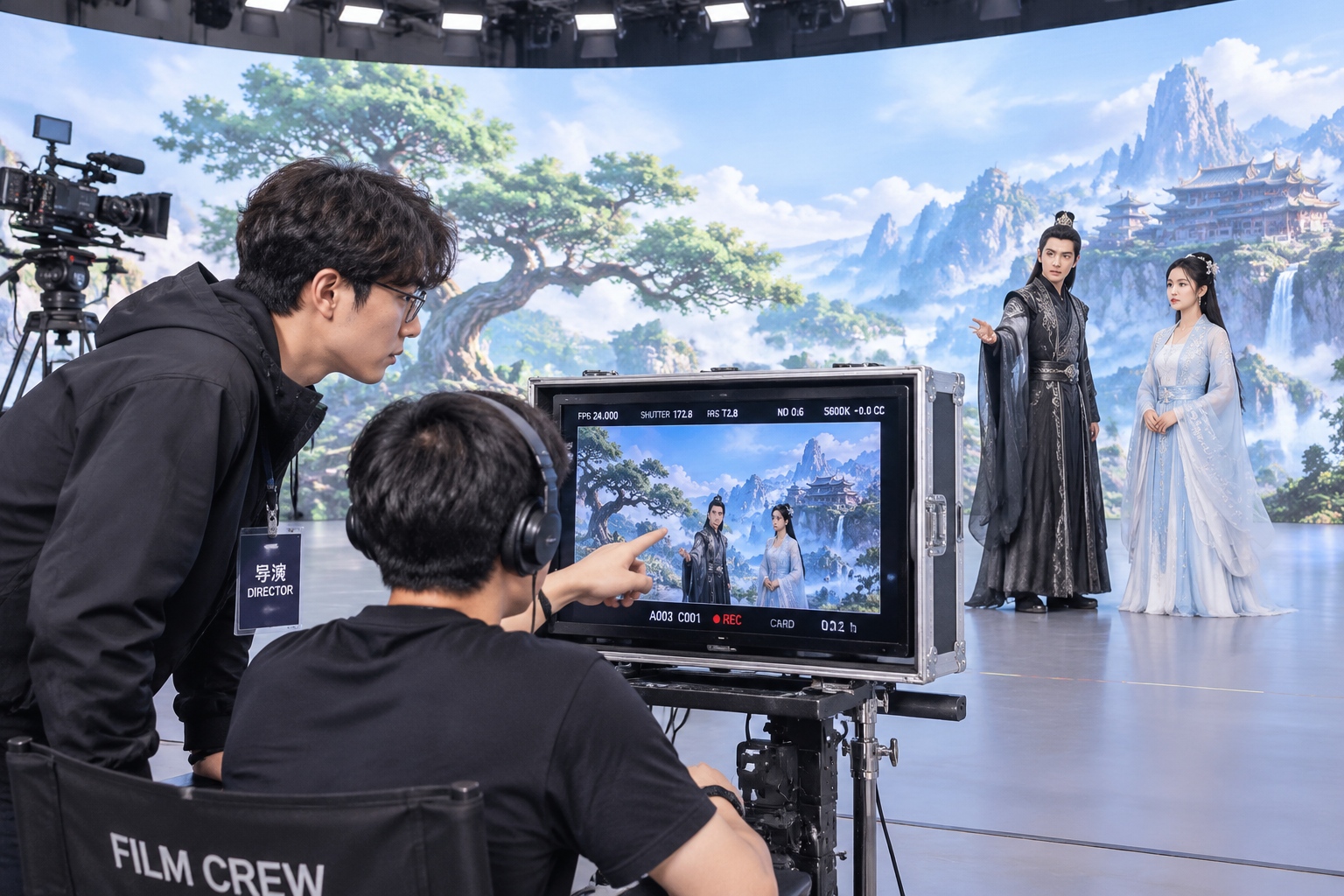
Virtual production changed the set itself. On A Writer’s Odyssey (2021), director Lu Yang used LED walls and virtual cameras to see the fantasy world while filming. The film had over 2,000 effects shots. Previsualization teams built animated versions of fight scenes before anyone stepped on set. Wire riggers could see exactly where cables needed to hang and where the actor’s body had to be at each moment. Some previz sequences were projected onto screens behind the actors, so they were not reacting to a blank green wall.
Virtual production stages have opened in Beijing, Shanghai, and Qingdao, allowing crews to shoot complex backgrounds without leaving the city.
What Audiences Notice
For viewers, the shift is visible in small ways. In 1990s films, you can sometimes see the wire glint. In a 2023 film, you might not know which shot used a digital double. Some viewers miss the visible effort — the slightly awkward landing, the harness line under the costume. Others prefer the seamless version. Both reactions are reasonable. The craft changed, but the goal did not: make the audience believe a human body can do something impossible for a moment.
The People Behind the Flight
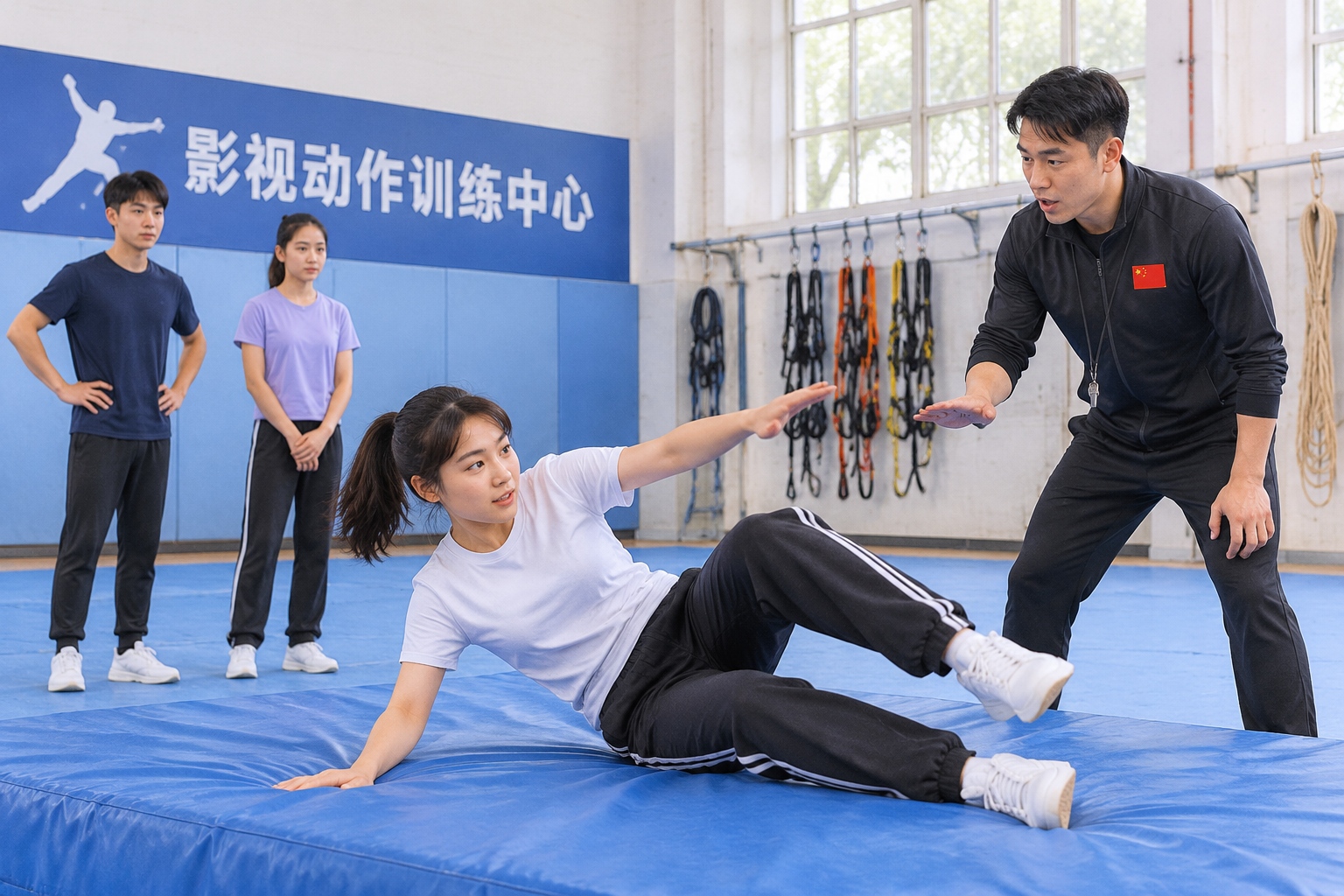
Behind every flight is a crew that spends most of its day waiting. Wire riggers adjust tension, check anchor points, and reset the same two-meter wall jump twelve times. Stunt performers train in gyms and martial arts halls, drilling falls onto mats until the movement becomes automatic. Younger actors now often spend three to six months in fight training before shooting begins. The goal is not to become a martial artist. It is to make the choreography look natural when the wire pulls them.
Two Misunderstandings
Two common misunderstandings are worth clearing up. First, these films do not rely entirely on computers. Even in effects-heavy productions, wire work and practical stunts remain part of the mix. Second, real kung fu has not disappeared. It changed form. Many stunt performers still come from martial arts backgrounds. Their skills now merge with digital tools rather than standing alone.
The Next Generation of Flight
The next generation of wuxia flight might be cheaper to shoot, more technically precise, and harder to distinguish from reality. It might also feel less risky and less alive. That tension — between the visible effort of a body on a wire and the invisible polish of a digital double — is likely to remain the defining question of Chinese action cinema. What audiences see next may be both more real and more artificial at once. It will still be a movie about bodies and imagination.
Start the discussion at forum.chinacomes.com