

A Morning Scene in Beijing
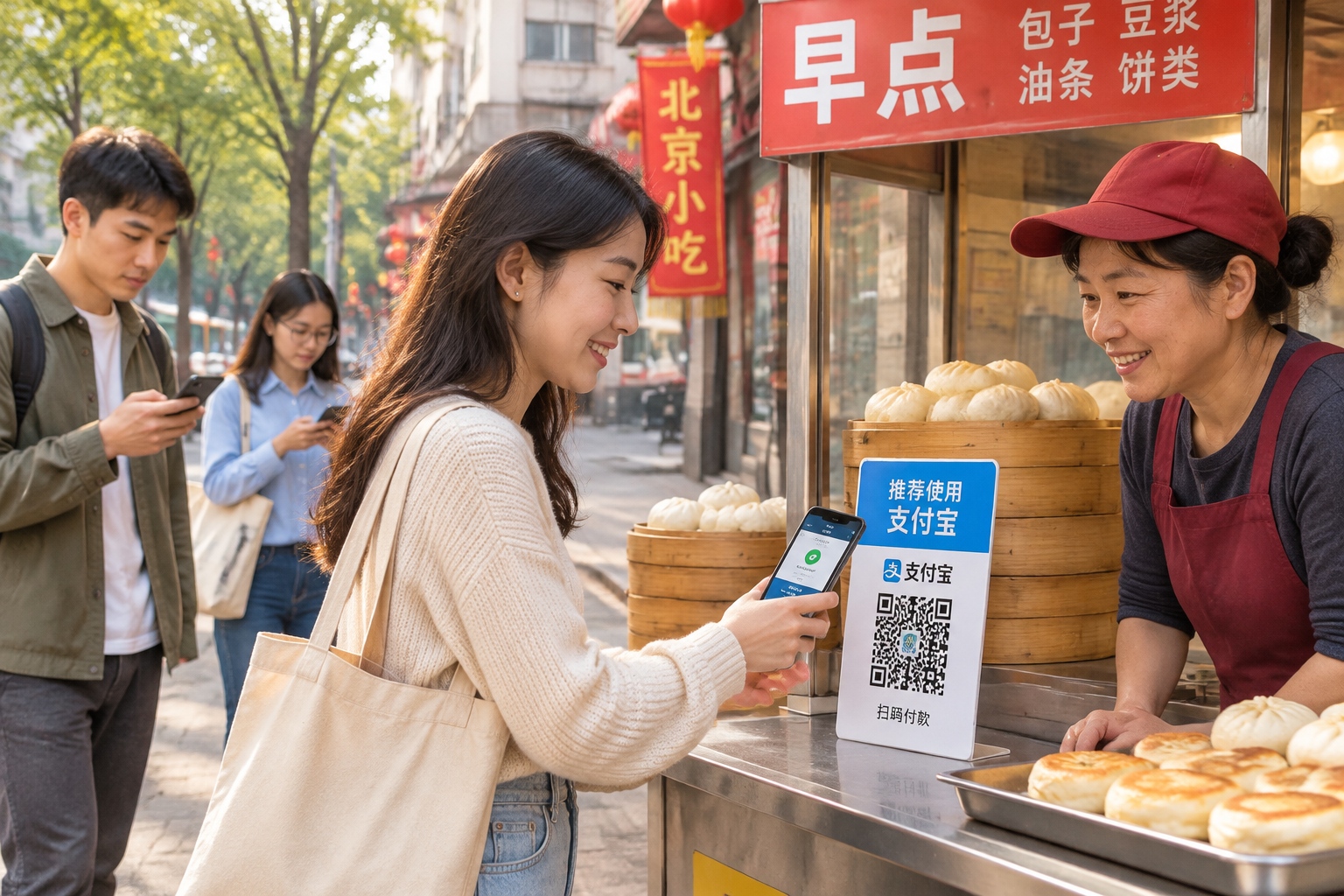
At 7:30 AM, Li Wei stops at his regular breakfast stall on a hutong lane in Beijing. He orders a jianbing (Chinese crepe) and a cup of soy milk. Total: 8 yuan (about $1.10). He doesn’t pull out cash. He doesn’t even unzip his jacket. He just points his phone at a small paper QR code taped to the cart, taps once on Alipay, and hears a cheerful beep: “Payment successful.” The entire transaction takes less than five seconds. For Li Wei, and for hundreds of millions of Chinese like him, carrying a wallet feels almost obsolete. This scene repeats itself millions of times a day across China – from high-end shopping malls to rural vegetable markets, from subway turnstiles to temple donation boxes. How did a country that used to be cash-heavy become the world’s most cashless society in just a decade?
The Convenience Factor: One Device Does It All
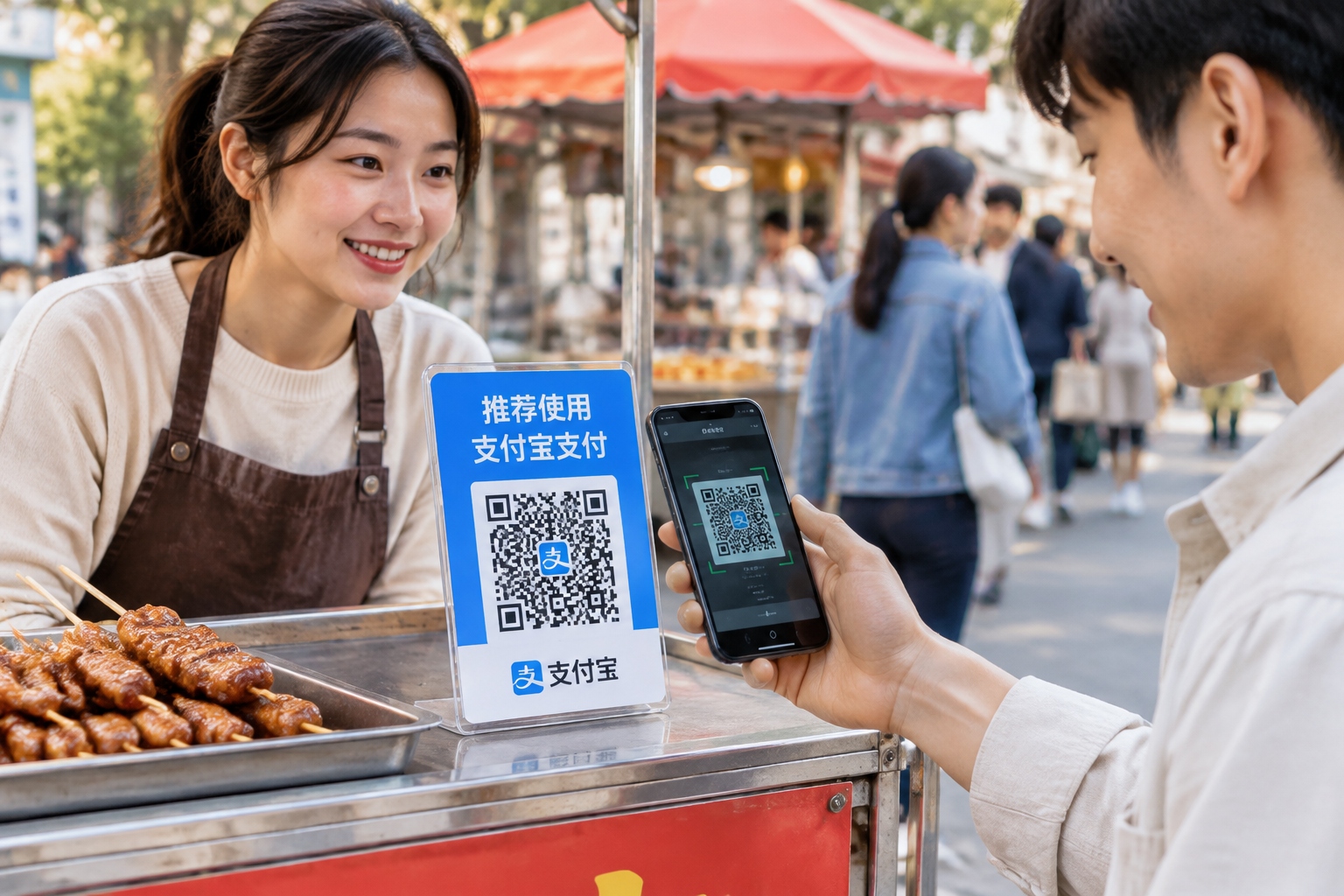
For many Western visitors, the first shock is this: you can leave your hotel room with nothing but your phone and still survive a full day. Need breakfast? Scan a QR code. Need a taxi? Hail one on Didi and pay automatically. Want to split a restaurant bill with friends? WeChat Pay lets you send money instantly, no awkward handling of coins. Even street performers and beggars often display a QR code for donations. The sheer ubiquity is staggering.
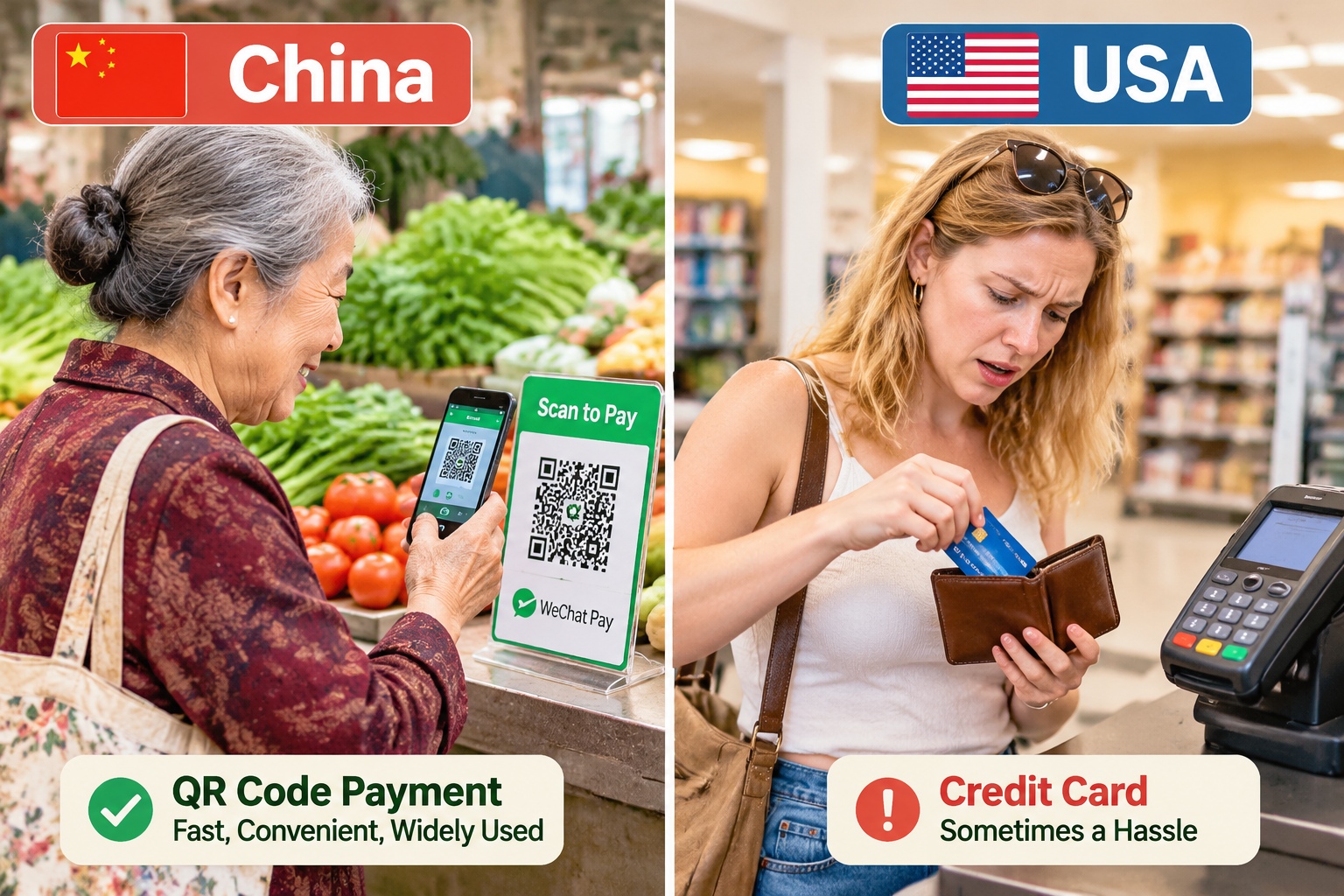
In the United States or Europe, mobile payments exist (Apple Pay, Google Pay) but are often supplementary to credit cards. In China, mobile payments are the primary method, especially for small transactions. According to a 2023 survey by the People’s Bank of China, over 86% of Chinese adults use mobile payments regularly. The average Chinese person makes about 30 mobile payment transactions per month, compared to fewer than 5 in Germany or Japan.
How Did China Leap into Mobile Payments?
The answer lies in what economists call “leapfrogging.” China never built a widespread credit card infrastructure. In the 2000s, most consumer payments were cash-based. When smartphones arrived around 2010, Alipay (launched by Alibaba) and later WeChat Pay (by Tencent) offered a simple alternative: link your bank account to an app and scan a code. No need for point-of-sale terminals or expensive card readers. Merchants could accept payments by printing a QR code on a piece of paper. This low barrier to entry meant that even the smallest street vendor could participate.
Compare this to the US, where credit cards were entrenched for decades, and the infrastructure (magnetic stripe, chip readers, NFC terminals) was already in place. The incentive to switch to a new system was weaker. In China, the absence of legacy infrastructure was actually an advantage. The government also played a role: it allowed Alipay and WeChat Pay to operate in a regulatory sandbox, fostering rapid innovation.
The Ecosystem: Super Apps and Social Integration
Why do Chinese people prefer scanning a QR code over tapping a phone with NFC? The answer is the “super app” ecosystem. Both Alipay and WeChat Pay are not just payment tools – they are platforms for messaging, social media, ride-hailing, food delivery, booking doctor appointments, paying utility bills, buying investment funds, and even applying for visas. When payment is embedded in a social app like WeChat (which has over 1.3 billion monthly active users), it becomes a natural extension of daily communication. You send a red envelope (hongbao) during Chinese New Year, or split a dinner bill in a group chat with a few taps. This social layer is something Western payment apps (like Venmo) only partially replicate.

The Real-World Feel: From Street Vendors to Luxury Stores
One afternoon, I visited a wet market in Chengdu. An elderly woman selling bok choy had a small plastic sign with her WeChat Pay QR code hanging from a string. She told me that more than half her customers now pay by phone, and she likes it because she doesn’t have to handle dirty coins. At the other end of the spectrum, at a Louis Vuitton store in Shanghai, the sales assistant will hand you a tablet to complete payment. The same QR code system works uniformly. This universality is key: there is no fragmentation like in the US where some stores only take Visa, others only Mastercard, and some still cash-only. In China, if a merchant has a phone, they can accept mobile payment.
For Chinese tourists abroad, this becomes a frustration. They often complain about how “backward” Western payment systems feel – having to carry multiple cards, sign receipts, or wait for change. The Chinese mobile payment experience has set a new baseline for convenience.
What About Privacy and Security?
No system is perfect. Chinese mobile payments are highly centralized, raising concerns about data privacy and surveillance. Every transaction is recorded and can be accessed by the companies and, potentially, the government. Many users are aware of this but trade privacy for convenience. In practice, fraud rates are relatively low due to real-name registration requirements, biometric authentication (fingerprint, face ID), and real-time fraud detection algorithms. If you lose your phone, you can freeze accounts instantly through another device. For most Chinese, the benefits far outweigh the risks.
Conclusion: A Habit Born of Practicality
So, why don’t Chinese people carry wallets? Because the mobile payment revolution was not a top-down mandate but a bottom-up adoption driven by convenience, social integration, and a favorable infrastructure gap. For a foreigner visiting China, the advice is simple: bring your phone, download Alipay or WeChat Pay, and link a credit card (international cards are now accepted). You’ll quickly understand why leaving the wallet behind feels so liberating. The revolution is not about technology alone – it’s about a daily experience that has reshaped how people interact with money, with merchants, and with each other.
Start the discussion at forum.chinacomes.com