
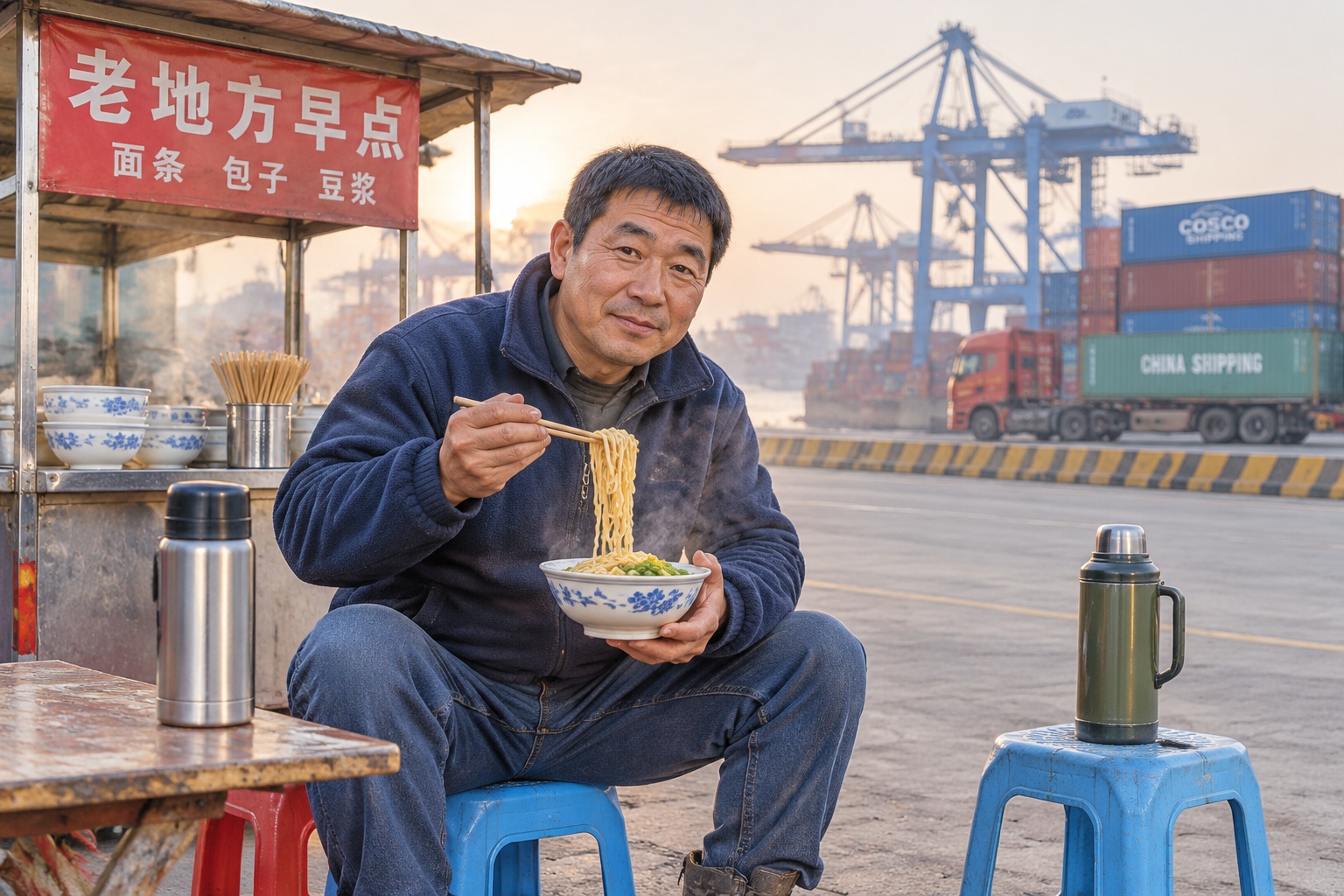

A Noodle Shop That Opens at 4:40 in the Morning
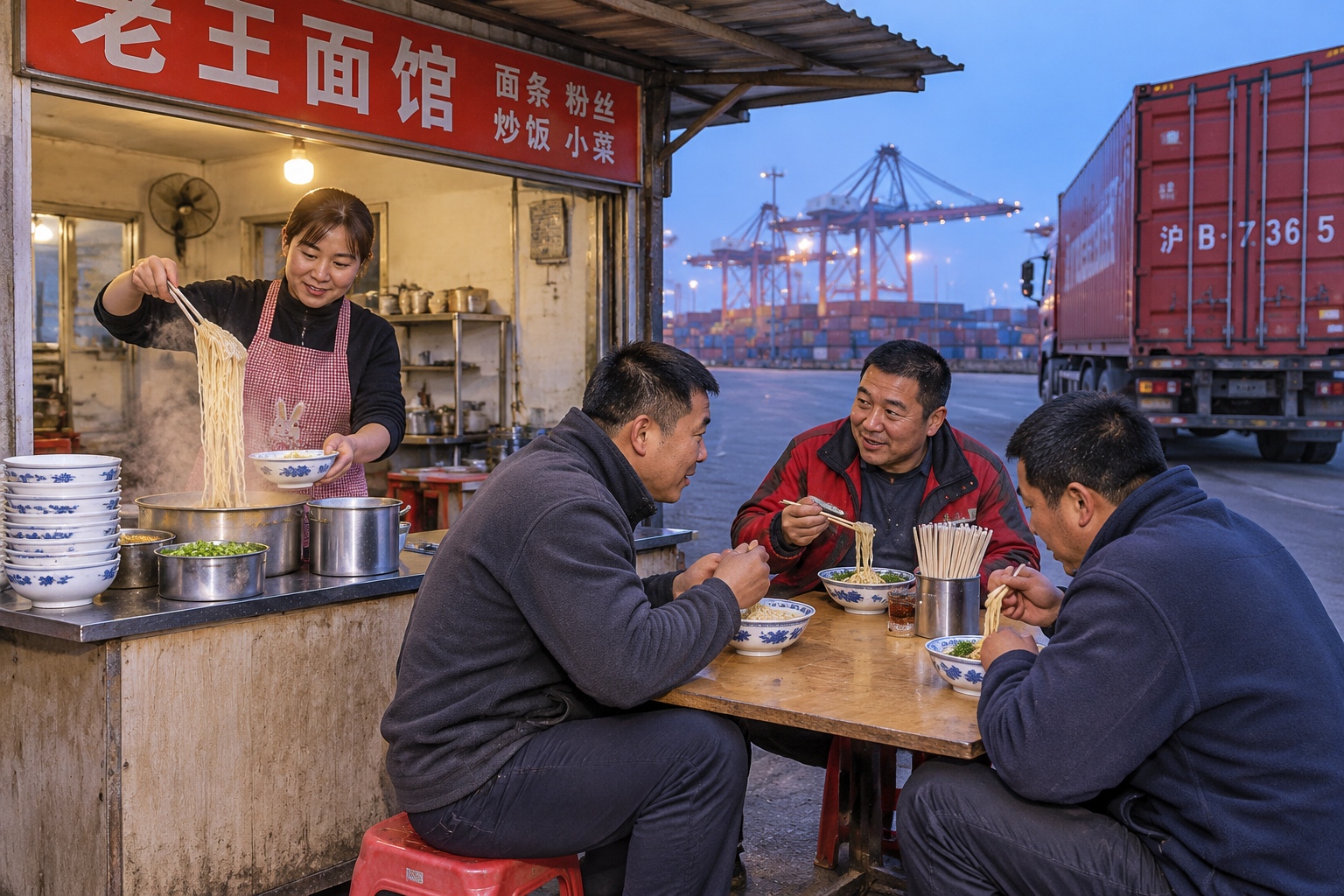
The metal shutter goes up at 4:40, and by five the six plastic stools outside are taken. The customers are men in fleece jackets with thermos flasks under their arms, and they all order the same bowl: noodles, pork, pickled greens, 12 yuan. Some eat standing. Others carry theirs back to the cab and eat with the engine running.
The shop stands about two kilometers from the gate of Yangshan Port, on the coast south of Shanghai. The port itself sits out on a chain of islands in Hangzhou Bay, joined to the mainland by the Donghai Bridge, a 32.5-kilometer span built mainly to move containers. At almost any hour there is a line of trucks on it, inching along like a very slow conveyor belt.
Ms. Gu has run the shop for nine years. She does not describe her work as part of global trade. She describes it as a timetable. “When the gate is busy, I cook at four. When it’s quiet, I cook at six.”
What “Eight of the Top Ten” Actually Means
In 2024, Shanghai became the first port anywhere to move more than 50 million standard containers in a single year. One container — a TEU, in the industry’s counting — is a steel box about six meters long, roughly the size of a small garage. Fifty million of them is a number almost nobody can picture, which is why the ranking gets repeated so often and understood so rarely.
Counting Hong Kong, eight of the ten busiest container ports on earth are in China: Shanghai, Ningbo-Zhoushan, Shenzhen, Qingdao, Guangzhou, Tianjin, Xiamen and Hong Kong. The remaining places are usually taken by Singapore, Busan and Rotterdam, with the order shifting from year to year. China handles roughly 30 percent of the world’s container traffic.
For a reader in Europe or North America, that ranking can look like a scoreboard. Standing near the gate, it looks more like weather. It decides whether a factory inland can ship in ten days or thirty, whether a warehouse on the edge of Ningbo hires twenty people this spring, whether cherries from Chile are affordable in January — and how early a noodle shop opens.
The Port Is a Shift Schedule Before It Is a Statistic
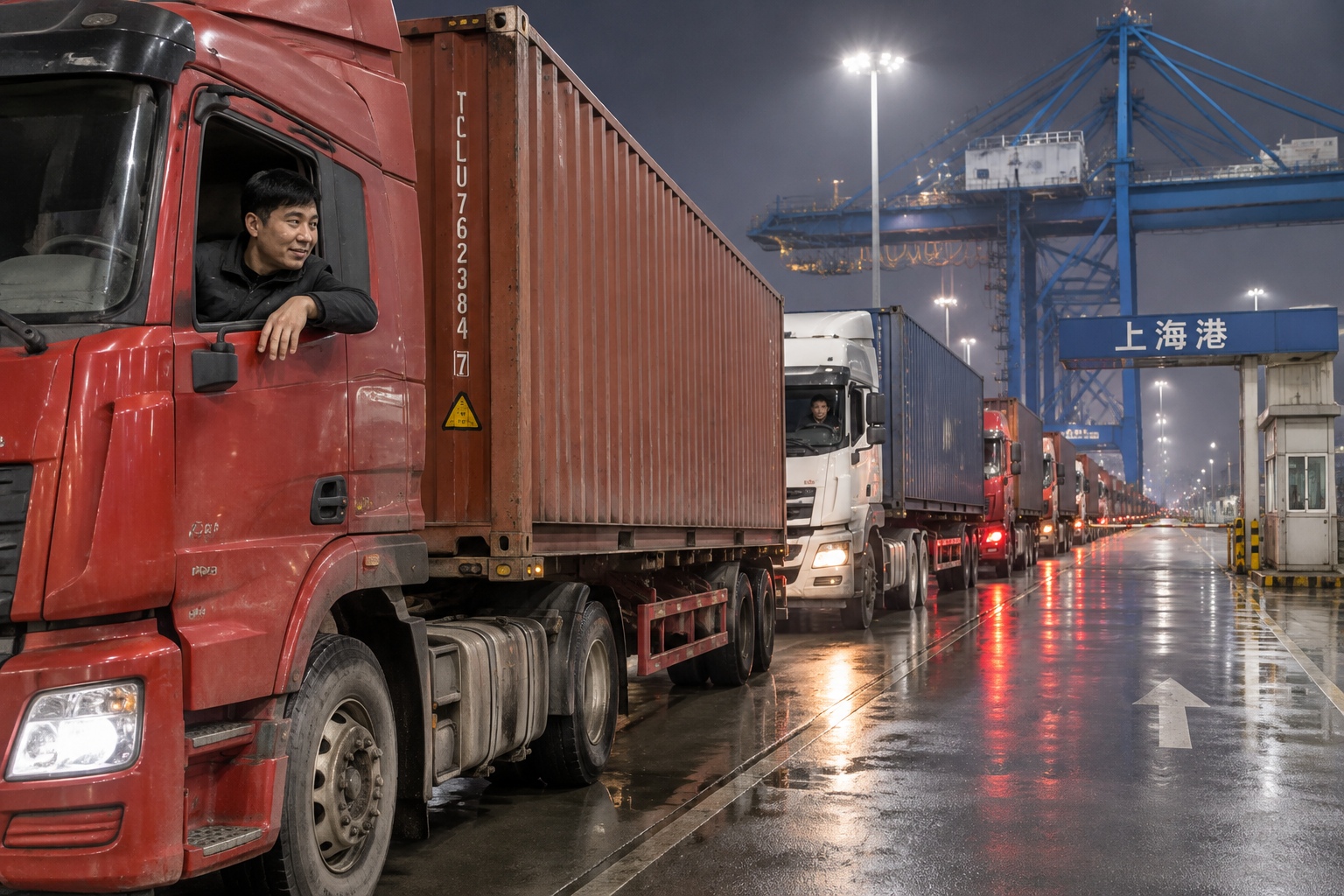
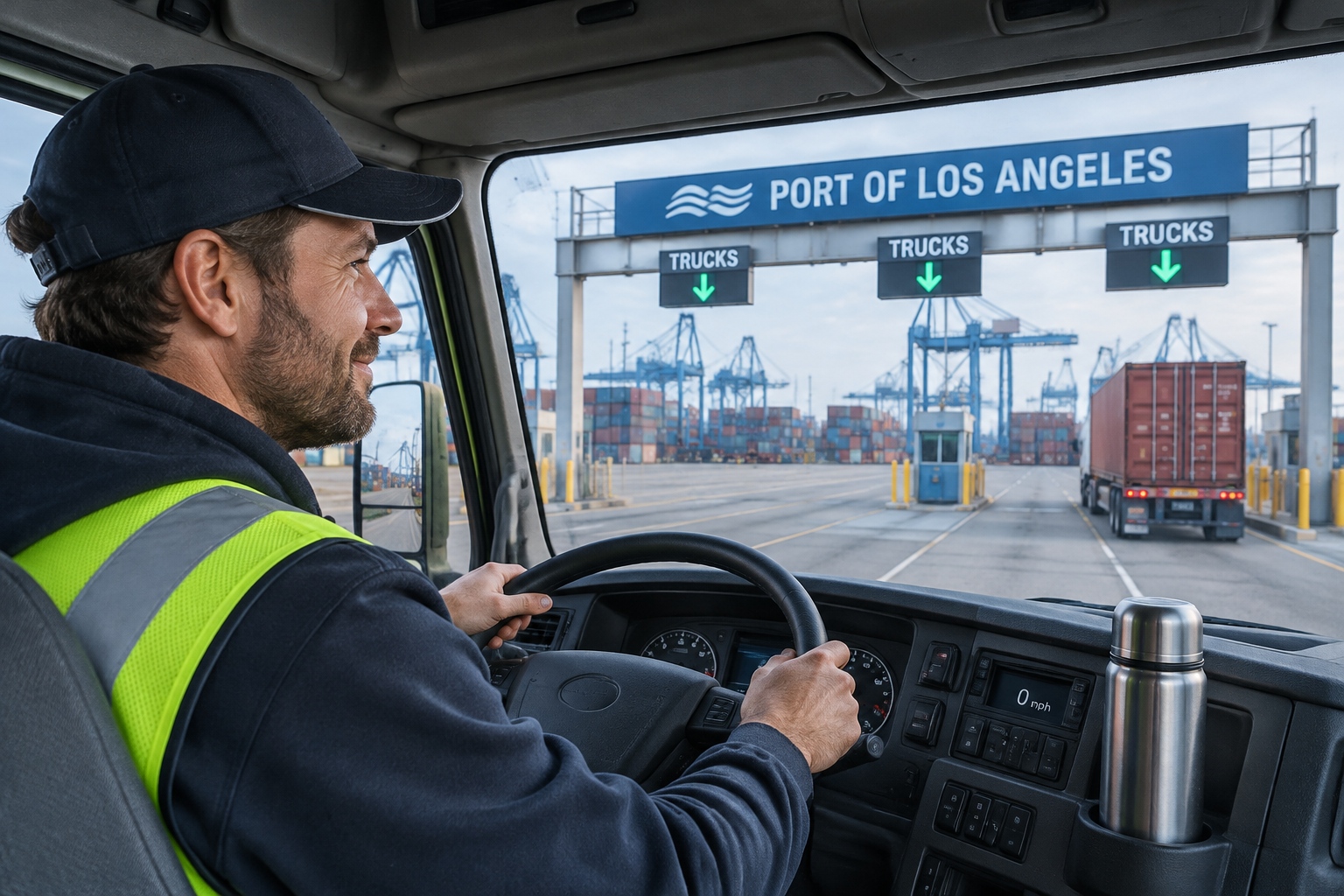
Wang Jianjun, 51, has driven containers between Shanghai’s warehouses and the Yangshan gate for nineteen years. His alarm goes off at 3:30. He is paid by the trip, and after diesel and tolls a good month comes to somewhere between 8,000 and 12,000 yuan, depending on how many runs he can book through the app that allocates gate slots.
That app is the biggest change in his working life. Ten years ago drivers queued at the gate first-come-first-served, sometimes for half a day. Now the slot lives on his phone, and missing it can cost six hours. “You learn the system better than you learn the road,” he says.
He has never been on a ship. Everything he knows about seaborne trade, he knows from the length of the queue.
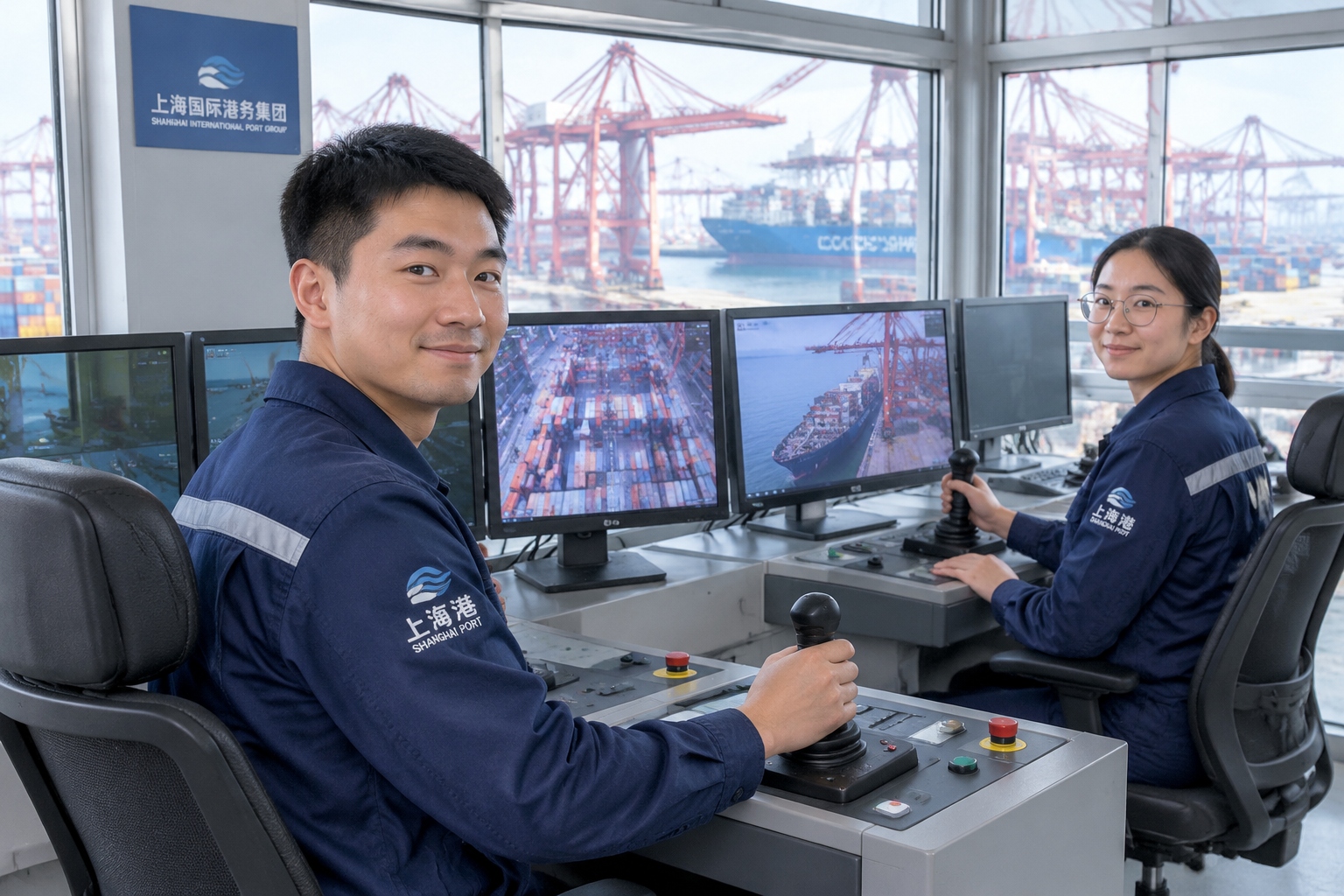
Inside the terminal, the rhythm is set by machines that do not get tired. At Qingdao’s automated container terminal, the gantry cranes run with nobody in the cab. Operators sit in an office building a few hundred meters away, each watching six or eight screens, joysticks in hand, moving boxes that weigh thirty tons. The terminal still employs people — arguably more of them in maintenance, electrical work and software than the old manual cranes needed. What changed is the job itself. A crane operator who once climbed forty meters twice a shift now takes a bus to an office and works in air conditioning.
Jobs That Don’t Look Like Global Trade
Most of the employment a port creates happens out of sight of the water. In Ningbo, Yang Lan runs a four-person freight forwarding desk. Her team books space on ships, prepares customs documents, and spends its days on the phone with trucking companies and overseas buyers. Her customers are small: furniture makers, bicycle assemblers, a trader in Yiwu who exports Christmas decorations to Brazil.
Her numbers tell a story the port statistics hide. “In early 2022 I could sell a container to Europe for more than 10,000 dollars,” she says. “On many routes now it’s under 3,000.” The shipping boom of 2021 and 2022 made some forwarders rich and then wiped out the ones who had signed long leases on warehouse space. Port work itself is steady; the business orbiting around it is not.
Why the Cherries Got Cheaper
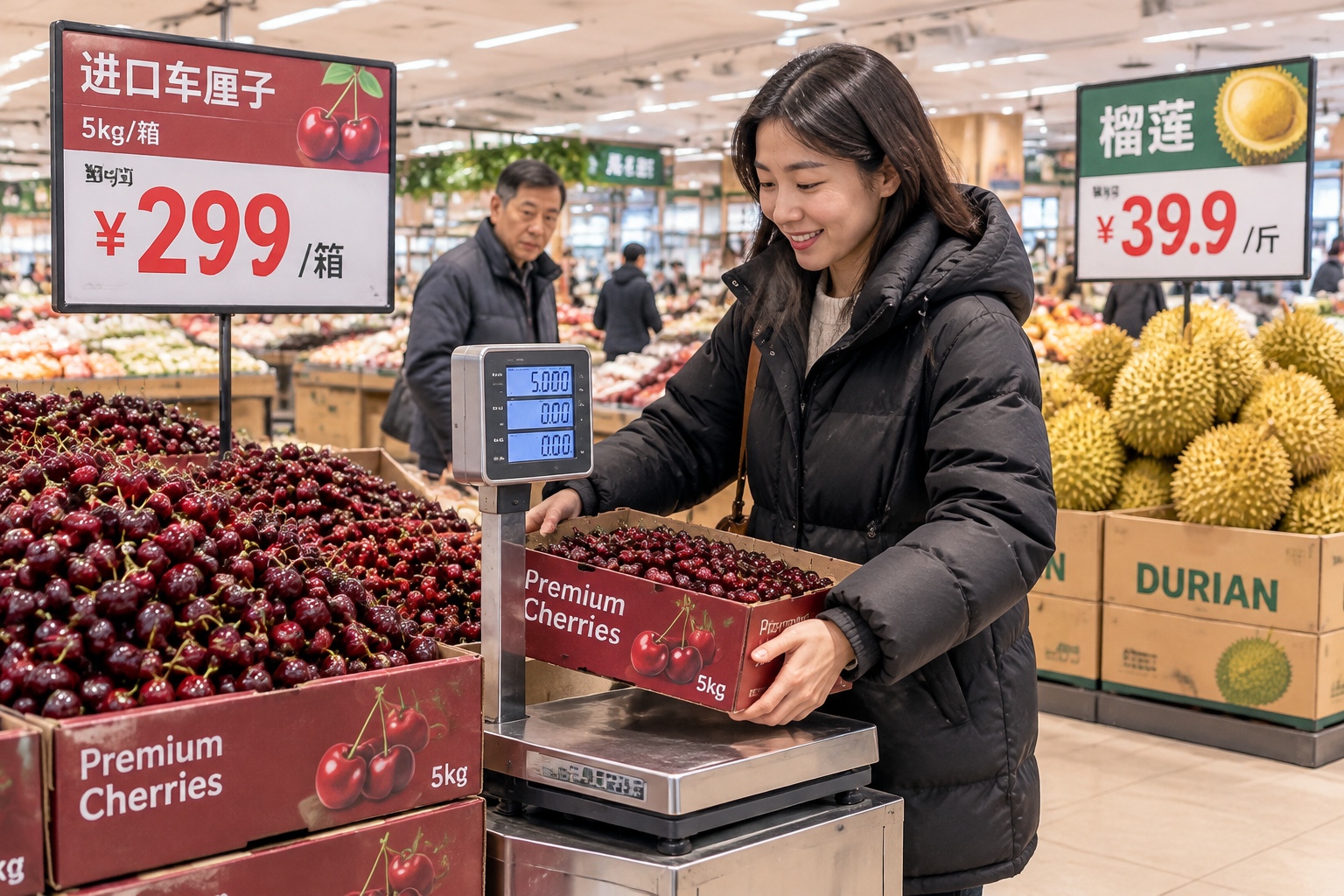
Walk into an ordinary supermarket in Chengdu in January and you will find Chilean cherries near the front, stacked in five-kilo boxes. They arrive on dedicated “Cherry Express” services that cross the Pacific in about 23 days, unloaded at Shanghai or Ningbo and moved inland on refrigerated trucks and trains. Twenty years ago, imported cherries were a gift item sold in a handful of cities at a price most families would not pay. Today they are a Tuesday purchase, and the price falls by half as the season peaks.
The same effect runs through durian from Thailand, beef from Brazil, wine, milk powder, salmon. Ports did not just move goods; they compressed the distance between a Chinese kitchen and a farm on the other side of the planet. The bill for that is paid partly at the checkout counter, and partly in the cold-chain warehouses and trucking companies that grew up to serve it.
The ships run the other way too, and that direction has changed faster. A container leaving Ningbo today is more likely to hold electric bicycles, solar panels, air conditioners or heat pumps than the toys and T-shirts of twenty years ago. The port is where you can watch a country’s export list being rewritten, box by box.
Cities Built Around a Gate
Lingang, the new town behind Yangshan Port, was mudflats and fishing villages when the bridge opened in 2005. It now has apartment towers, schools, a metro line that runs to central Shanghai, and a car plant. People who work at the port live there, and people who live there commute to the port. The district’s problem is no longer emptiness but the morning traffic on the one road out.
Shenzhen’s Yantian district is a stranger adjacency. The container terminal sits directly beside Dameisha and Meisha, beaches where families swim on summer weekends. From the boardwalk you can see cranes stacked against the hills; on the road behind, container trucks share lanes with tour buses. In Qingdao, the old port has been partly turned into a waterfront promenade, and the container traffic moved to a bigger terminal outside the city.

The Part That Doesn’t Fit the Brochure
Living near a port also means noise at two in the morning, dust on the balcony, and roads permanently loaded with trucks. When a typhoon comes, the bridge closes and drivers sleep in their cabs for a day or two. Neighbors complain about the traffic; the port authority builds sound barriers and reroutes night routes; the complaints continue.
There is an economic texture too. The 2021 boom pulled thousands of new trucks onto the road, and the 2023 slump left many of them idle. Drivers talk about automation the way workers everywhere do: they know the terminal needs fewer people per box, and they know the new jobs require certificates and computer skills that a 51-year-old cannot pick up in a month.
What the Statistic Looks Like From a Truck Cab
At 5:20 a.m., Wang finishes his noodles and puts the bowl back on the counter. The gate opens at six and he wants to be in the first group through. Behind him, the light comes up over the cranes, and the bridge is already full.
“I see the boxes,” he says. “I never see what’s inside.” Nineteen years of driving, and the world’s goods have passed within a meter of him without ever once being visible. That is probably the most accurate description of what eight of the world’s ten largest ports feel like from the inside: not a triumph on a chart, but a queue that starts before dawn and keeps moving.
Start the discussion at forum.chinacomes.com