

A quantum computer that doesn’t need a freezer
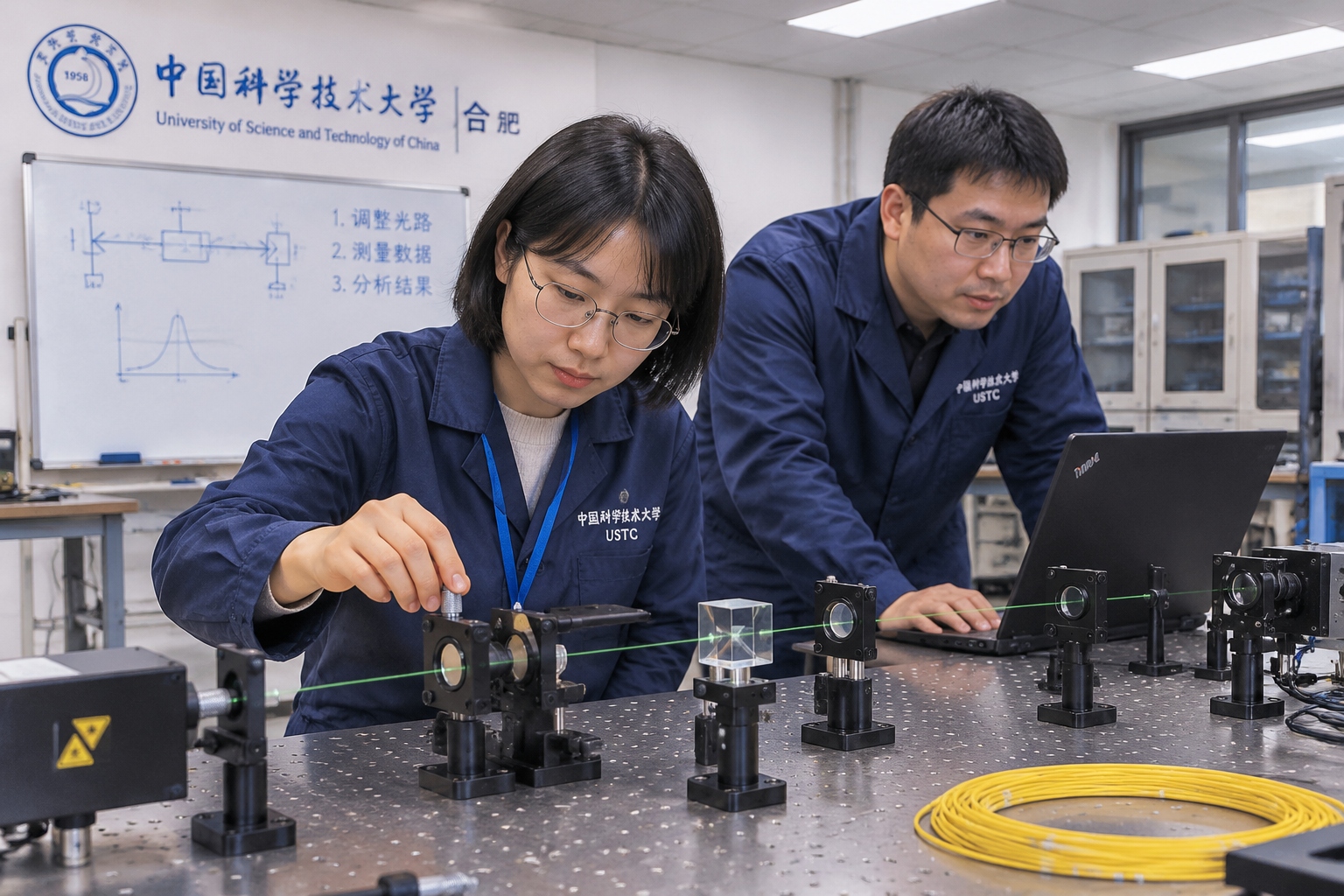
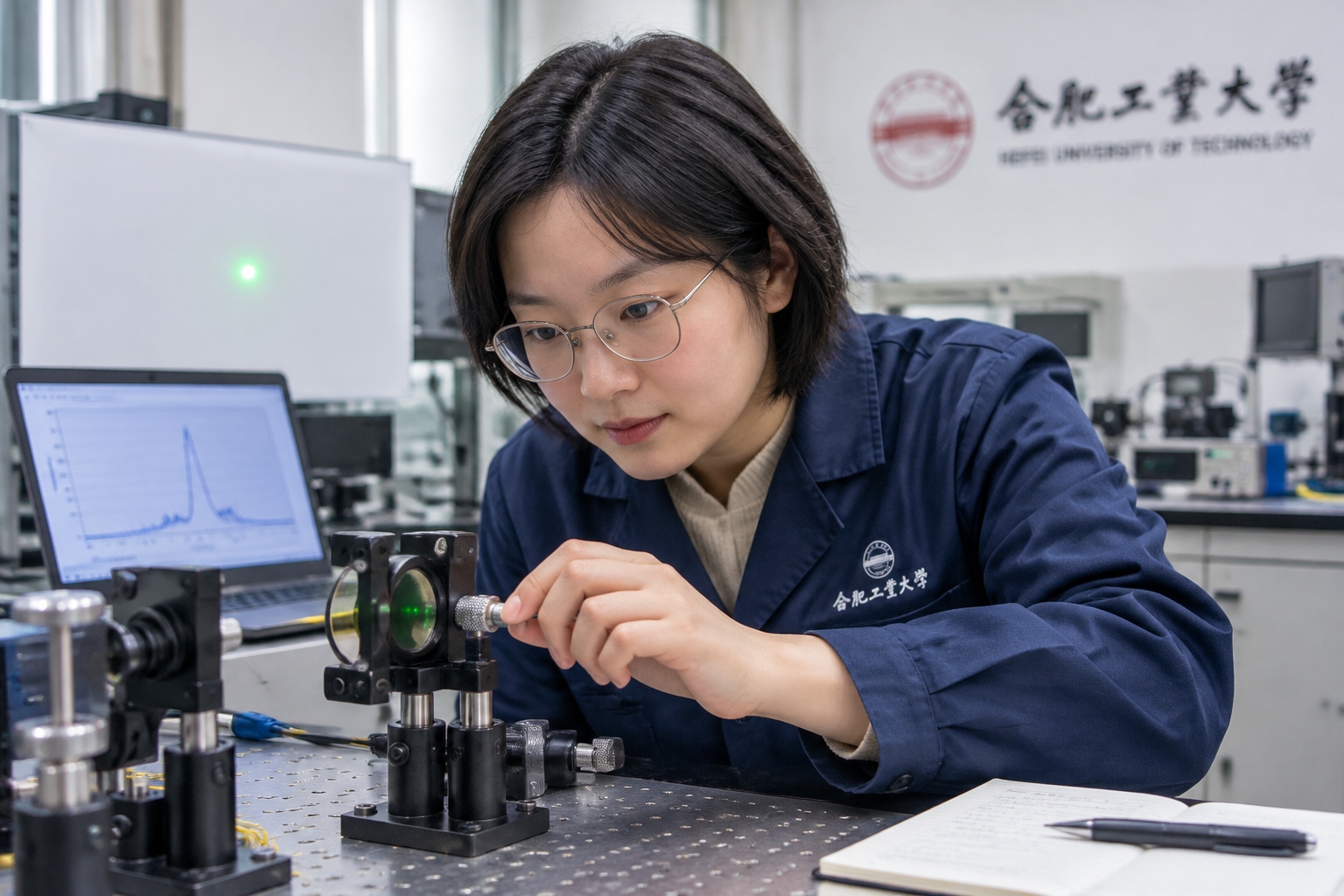
Inside a photonics lab at the University of Science and Technology of China (USTC) in Hefei, the equipment looks almost ordinary. A green laser. An optical table covered with mirrors, lenses and loops of fibre. A monitor at the far end, quietly logging how many photons arrived.
This is where Jiuzhang runs. It is one of a small number of machines whose builders claim it has performed a calculation beyond the reach of any classical supercomputer — and it does so without the gold-plated “chandelier” that hangs inside the dilution refrigerators used by Google and IBM, cooled to around ten millikelvin, a hair above absolute zero.
That contrast is a good way into the story, because the gap between the two kinds of machine is not a matter of engineering taste. It is a fork in the road.
Two ways to build a qubit
Think of a qubit as a coin spinning on a table. While it spins, it is neither heads nor tails, and that in-between state is where a quantum computer gets its power.
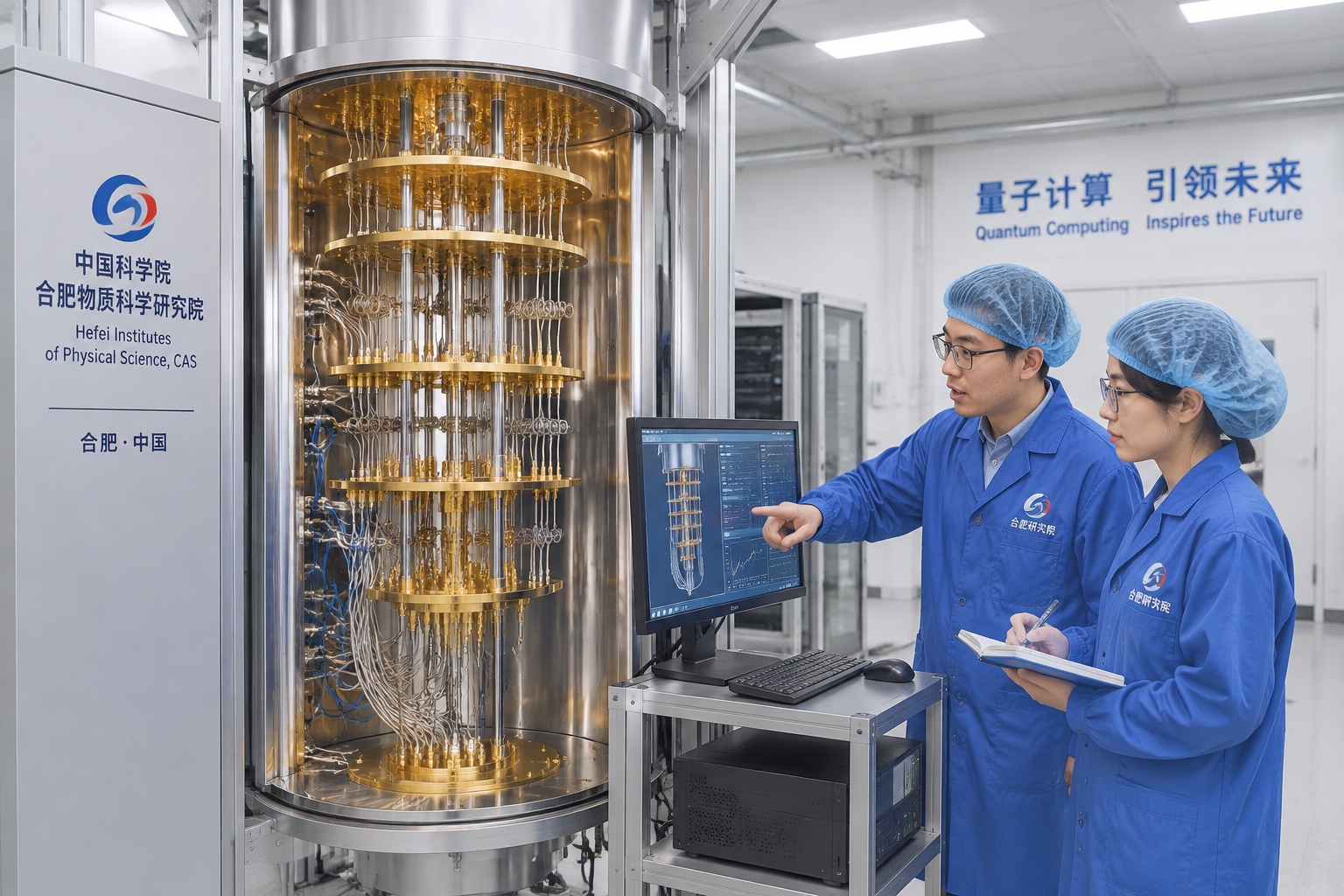
The trouble is that almost anything knocks the coin over: heat, vibration, a stray electromagnetic field. A superconducting qubit — the kind inside Google’s and IBM’s machines — is a tiny electrical circuit printed on a chip. It switches fast and can be wired together, but it has to be frozen and shielded from the world.
A photonic qubit is a particle of light. Light barely interacts with anything, which is exactly why it survives. Send a photon down a fibre for a hundred kilometres and it arrives more or less intact.
That same property is also the catch. A quantum computer needs its qubits to talk to each other, and photons are famously unsociable. Making two photons interact reliably is one of the harder problems in the field. This is the central trade-off of the photonic route: qubits that are easy to keep alive are hard to make cooperate.
What Jiuzhang actually calculates
Jiuzhang does not run software. It performs one task, called Gaussian boson sampling, and the task was chosen because it fits the hardware like a glove.
The recipe is roughly this: fire laser light through a crystal to produce “squeezed” light, pass it through a maze of beamsplitters and phase shifters, and count the photons that come out the other side. Each run produces a pattern — three photons in this detector, five in that one. Repeat it many times and you get a distribution.
That distribution is hard to predict. Photons are indistinguishable, and when several pass through the same maze at once, they interfere. Working out the exact probability of any given output pattern means tracking an enormous number of interference paths, and the difficulty climbs fast as you add photons and modes. Classical computers keep up with small versions. They struggle badly with large ones.
None of this needs a logic gate. That matters, because gates are the weakest part of photonic hardware. Gaussian boson sampling asks the machine to do the thing linear optics already does naturally — interfere light — and then measures the result. It is a benchmark, not an application.
Why this task and not something more useful?
Because it gives a clean, checkable answer to a narrow question: can this hardware produce a distribution that no classical machine can reproduce in reasonable time? That is a test of raw capability, and it is the question the Jiuzhang team answered in stages.
Three versions, three bottlenecks
Jiuzhang 1.0, December 2020
The first machine detected 76 photons. The team estimated that reproducing its output on a classical supercomputer would take billions of years — a claim other researchers soon challenged, arguing that smarter classical algorithms could close much of the gap.
Jiuzhang 2.0, October 2021
The second version detected 113 photons, and it was programmable: the optical circuit could be reconfigured instead of rebuilt for each experiment. That sounds like a small thing. In practice it moved the machine from a one-off demonstration towards an instrument.
Jiuzhang 3.0, 2023
The third reported 255 detected photons and a sampling time under a microsecond, against an estimated 20 billion years on the Frontier supercomputer. The team also reworked part of the optical design to cut loss and sharpen the interference.
Read the three together and a pattern appears: each version pushed photon number up, because photon number is the bottleneck. More photons mean more interference paths, which means a harder problem for a classical simulator. The team was not building a general computer. It was steadily widening one specific gap.
Those “quantum advantage” claims are moving targets, and it is worth saying so plainly. Classical simulation methods improve too, and some early claims have been narrowed by later work. The honest description is a race between two curves, not a finished scoreboard.
The hard parts
Photon loss is the big one. Every mirror, every fibre coupling, every detector has an efficiency below 100%, and a lost photon cannot be recovered. Scale up to thousands of components and the losses multiply.
Then there is the interaction problem. Universal quantum computing needs two-qubit gates, and photons do not interact with each other on their own. Photonic gates exist, but they are probabilistic and lossy, which makes error correction expensive.
One detail often lost in the coverage: the optical table may sit at room temperature, but the single-photon detectors at the end usually do not. They are cooled to a few degrees above absolute zero. “Room-temperature quantum computing” is a fair headline for the chip and a misleading one for the whole system.
Who else is running this route
China is not alone here, and the differences in approach are more interesting than any ranking.
Xanadu, in Toronto, demonstrated its own boson sampling machine, Borealis, in 2022, using a different architecture built on time-multiplexed squeezed light, and made it available through the cloud.
PsiQuantum, based in Palo Alto with a large team in Australia, has taken the most aggressive bet: build a million-qubit photonic machine using semiconductor fabs, and accept cryogenic cooling for the detectors. It has raised more than a billion dollars and is building a site in Brisbane.
Smaller players — Quandela in France, ORCA in the UK, QuiX Quantum in the Netherlands — sell smaller photonic processors and are hunting for paying users now.
Inside China, photonic work is concentrated at USTC and the labs around it, while superconducting machines come from a separate cluster of teams, including the company Origin Quantum in Hefei. The two camps watch each other closely, and both draw on the same broad national push.
What could it be used for first?
Honestly? Nobody knows yet, and anyone who says otherwise is selling something.
There are plausible directions. Gaussian boson sampling maps mathematically onto problems in quantum chemistry, such as the vibrational spectra of molecules, and onto certain graph problems, like finding dense clusters in a network. Those mappings are real, but none has yet beaten what a classical computer can do.
The nearer-term uses are more modest: certified random number generation, which is already a commercial product in China and elsewhere; simulating quantum systems; and serving as a test bed for the components a larger machine will need.
The street where this is happening

Yunfei Road in Hefei is nicknamed Quantum Street. It is not a science-fiction set. It is a wide urban road with a bike lane, a few noodle shops, apartment blocks and low office buildings carrying company logos. USTC is nearby, and so are institutes of the Chinese Academy of Sciences and a handful of quantum startups.
The cluster exists because of a specific arrangement: a strong university, sustained government funding, and a city government that decided quantum technology was worth building an industry around. It is the opposite of the garage-startup story, and it explains why progress here often looks like a run of papers rather than a product launch.
What “where it stands” actually means
Jiuzhang is proof that a photonic platform can reach a regime classical computers cannot easily simulate. It is not a computer you could program to do something else, and it will not replace a supercomputer, let alone a laptop.
The photonic case rests on two bets: that room-temperature operation and fibre compatibility make it cheaper to scale, and that the chip industry’s manufacturing can be borrowed. Its weakness is the same physics that gives it the advantage — light is hard to make interact.
The interesting question for the next few years is not which country is ahead. It is which platform turns out to be the right tool for which job, and whether loss and gates can be fixed before superconducting machines get good enough at error correction to make the comparison moot.
For the people in that Hefei lab, the work is more mundane than the headlines. Align the optics. Cut the loss. Detect one more photon.
Start the discussion at forum.chinacomes.com