

A very fast shutter, behind an ordinary fence
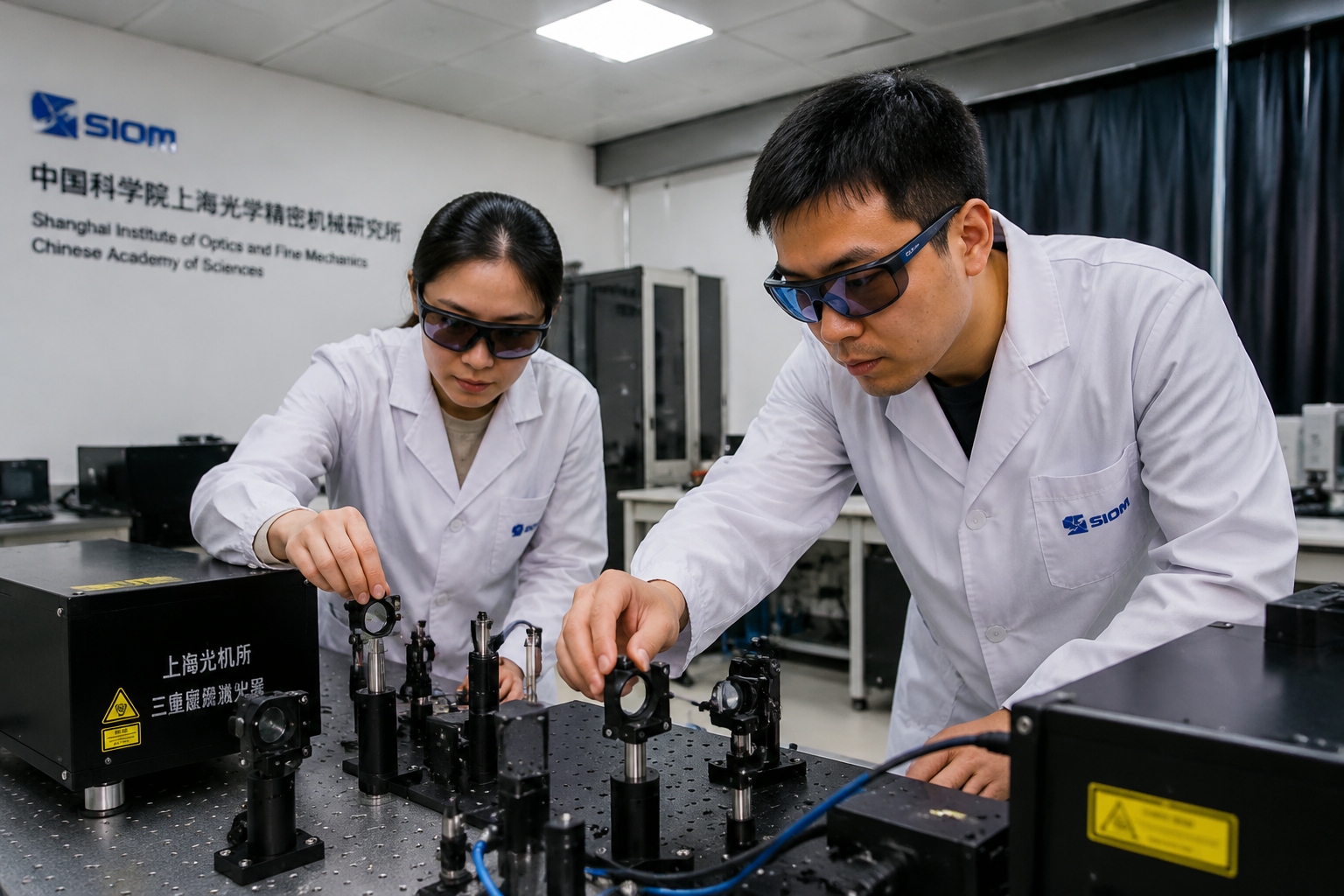
On a weekday lunch break at Songshan Lake in Dongguan, a group of engineers in dark polo shirts queues at a convenience store beside a construction site. They could be working at any office park in southern China. The site behind the fence is different: it is the home of the Advanced Attosecond Laser Facility, a national scientific infrastructure project that aims to generate light flashes measured in attoseconds—one billionth of a billionth of a second.
Ask what that means and the usual analogy is a camera shutter. A phone camera might freeze a running dog at 1/1000 second. A high-speed camera can catch a bullet at a millionth of a second. An attosecond is a thousand times shorter than a femtosecond, the timescale used to watch atoms vibrate in molecules. Put another way: one attosecond is to a femtosecond what a femtosecond is to a second. If one second were stretched to about 31.7 billion years, one attosecond would still be one second. The universe is about 13.8 billion years old. The comparison sounds absurd because it is.
At that scale, you are no longer photographing an object. You are trying to time the motion of electrons around nuclei and between molecules.
What an attosecond pulse actually is
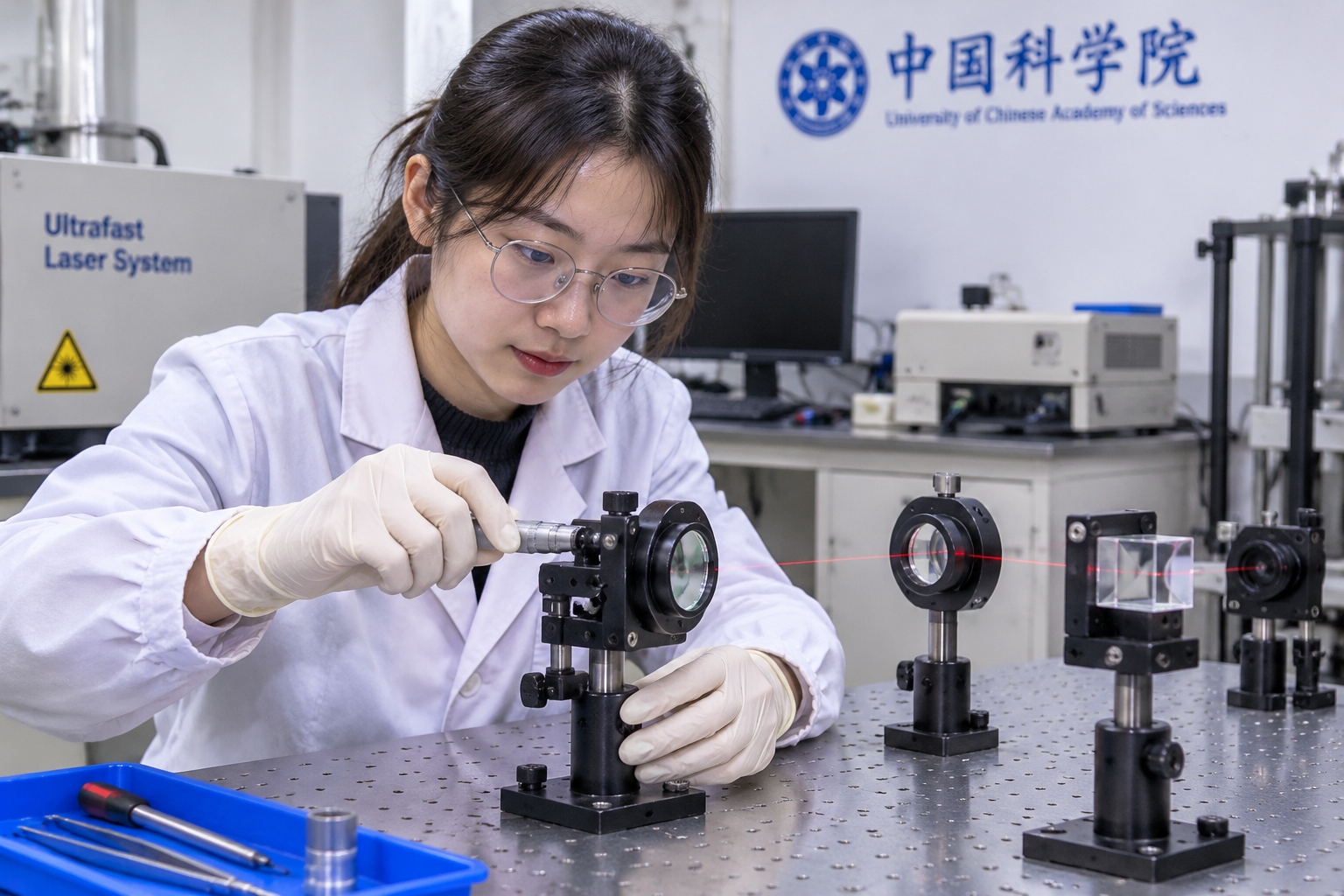
An attosecond pulse is not a camera with a faster sensor. It is a burst of light so short that it contains only a few cycles of an electromagnetic wave. In one attosecond, light travels about 0.3 nanometers—roughly the scale of an atom, not a room. Researchers produce these bursts by firing intense infrared laser pulses into a gas. The light field pulls electrons away from atoms and drives them back; the recombination emits extreme-ultraviolet light at high harmonics. The pulses can come in a train, or be isolated. The 2023 Nobel Prize in Physics went to Pierre Agostini, Ferenc Krausz and Anne L’Huillier for experiments and theory that made attosecond pulses possible. That is a useful reality check: the field is young, and the tools are still being refined.
The facility’s job is to make these pulses more stable, brighter and available to many experiments, not to produce a single viral image.
Why electron motion matters
Chemistry is often taught as balls and sticks, but bonds break and form because electrons rearrange. A solar cell turns light into current when an electron is kicked loose and travels. A catalyst speeds a reaction by changing the path electrons take. In quantum materials, resistance, magnetism and light emission depend on how electrons interact with each other and with the atomic lattice. In photosynthesis, the first charge separation happens astonishingly fast. If you can watch those first few attoseconds, you may learn why a reaction takes one route rather than another, or why a material loses energy so quickly.
This is not only curiosity. Better catalysts, more efficient electronics and new light sources could follow—but only after years of measurement, theory and failed attempts. The electron does not pose for the camera.
What the Chinese facility is built to do
Public reports say the Advanced Attosecond Laser Facility broke ground in early 2025 at Songshan Lake in Dongguan, Guangdong. It is led by the Chinese Academy of Sciences’ Xi’an Institute of Optics and Precision Mechanics, with a construction period of several years. The plan includes ultrafast laser systems and experimental stations for time-resolved studies. The phrase time-resolved is the key. Researchers do not take a single snapshot. They use a pump-probe method: one pulse starts a process, a second pulse arrives after a controlled delay, and the signal is repeated and averaged. By changing the delay, they build a stop-motion film of electrons. The facility’s value is in making that stop-motion film reliable, repeatable and open to teams from different fields.
A shared laser facility also has a practical rhythm. Teams apply for beam time, the scheduled hours on a scarce instrument. They arrive with samples, detectors and a plan. They often leave with calibration problems and a longer to-do list. The best facilities are judged by what users can do there, not by how impressive the lobby looks.
Potential applications—and the line between plan and discovery
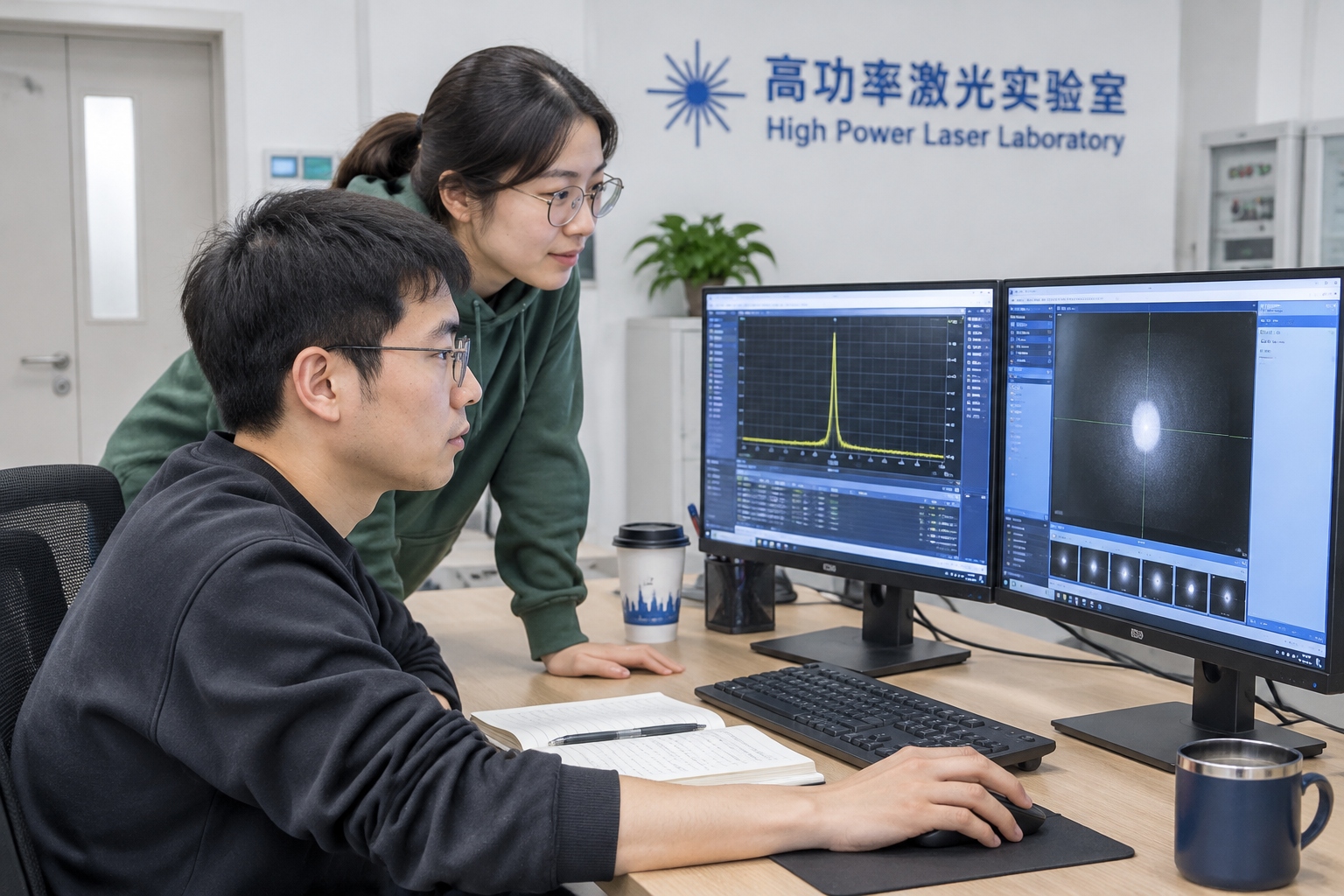
Possible uses are easy to list and easy to oversell. Attosecond experiments could study charge transfer in molecules, the first steps of photocatalysis, damage pathways in biomolecules after ultraviolet light, and the ultrafast response of quantum materials. They could also help test theoretical models of how electrons correlate in complex solids. Each of those is a research direction, not a finished product.
A facility is an instrument, like a telescope. Building a telescope does not guarantee a discovery; it makes certain observations possible. The same is true here. Reports of electron movies should be read as the goal of the instrument, not proof that scientists have already filmed every reaction. Construction, commissioning and scientific discovery are separate stages. The first two can be announced. The third takes longer and is often quieter.
The international context is a network, not a scoreboard
Attosecond science has no single national owner. European labs, including ELI-ALPS in Hungary and institutes in Germany, have been central. US and Japanese groups have made key contributions. China’s facility adds capacity in a field where demand for beam time is high and experiments are hard. It is reasonable to see it as part of a broader competition for scientific talent and instruments. It is less useful to turn it into a simple China versus the West story.
Big facilities are expensive and slow. The more important question is whether they attract international users, train young researchers, and produce results that others can check and build on. Science works through replication and argument, not through ribbon-cutting photos. A new laser hall matters only when a visiting PhD student can get a clean signal at two in the morning.

From construction to discovery
The gap between a building and a scientific result is filled with boring, necessary work: aligning optics, stabilizing temperature, cleaning vacuum chambers, calibrating detectors, writing control software, and repeating experiments until the error bars make sense. A laser that works once in a demonstration may need years to become a user facility that runs for thousands of hours. People matter as much as hardware. China has been training more laser and ultrafast science students, but experienced operators and instrument scientists are scarce everywhere. The facility will be judged by the experiments it enables, not by the size of its roof.
What to watch
For a visitor from outside China, the quickest way to misunderstand the project is to expect a finished miracle. The more accurate picture is a country building a very fast shutter and a place to use it. The electrons will not line up for a portrait. Researchers will spend years learning how to light them, time them, and read the blur. That is less cinematic than the headline, and more interesting.
Start the discussion at forum.chinacomes.com