
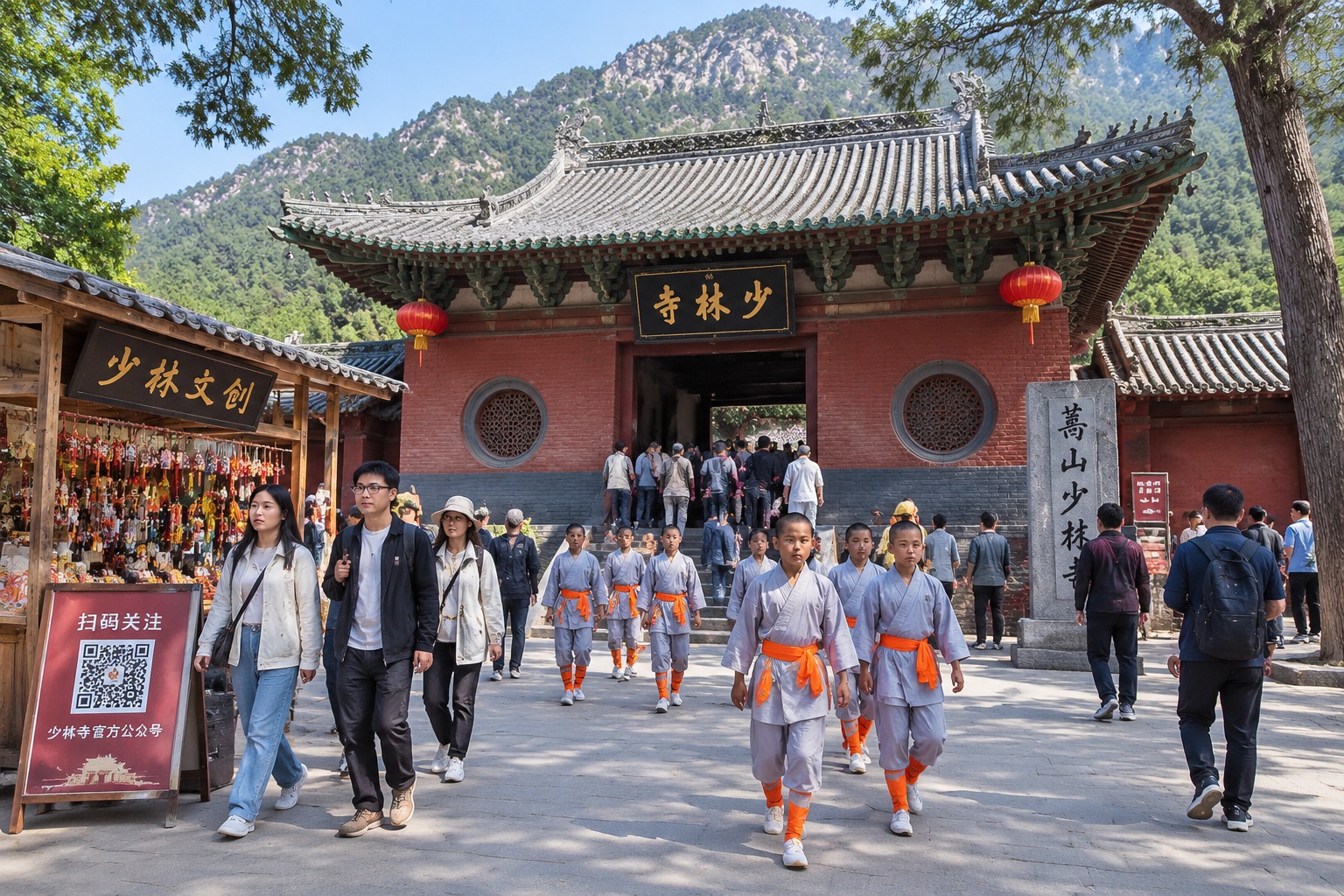

A Surprising Scene at the Temple Gate
"Scan to pay," says the young man in grey monk robes, holding up a smartphone with a QR code. He’s not asking for alms. He’s selling tickets for an evening kung fu show at the Shaolin Temple, the mythic birthplace of Chan Buddhism and Chinese martial arts. It’s a sight that might confuse someone expecting ancient silence — but for the millions of visitors who come each year, this is part of the experience.
The temple in Henan province’s Dengfeng city has become far more than a spiritual site. Around it, a whole industry has grown: martial arts academies that house tens of thousands of students, performance troupes that tour the globe, souvenir shops selling "Shaolin-branded" everything, and an army of social media creators broadcasting daily life in the temple area. Welcome to the kung fu economy.
How a Mountain Temple Built a Global Brand
Shaolin’s modern legend owes a lot to film, especially the 1982 hit "The Shaolin Temple" with Jet Li, and later TV series like "Shaolin Warrior." Suddenly, this ancient Buddhist temple became a marketable name for martial arts, discipline and Chinese culture.
But the real transformation didn’t happen on camera. In the 1990s and 2000s, the temple’s leaders began to organize a business structure around the Shaolin brand. Performance teams were sent overseas, cultural centers were opened in cities like Los Angeles and Vienna, and the temple itself became a large tourism operator. The Chinese government chipped in, building a grand temple gate, a visitor centre and a landscaped path through the forest. In 2010, a UNESCO heritage listing added another layer of global recognition.
Today, the temple has an official holding company that manages commercial operations, while the monks focus on religious life. Some locals joke that the monks are as likely to show up in business meetings as in the meditation hall.
The Real Engine: A City of Martial Arts Schools
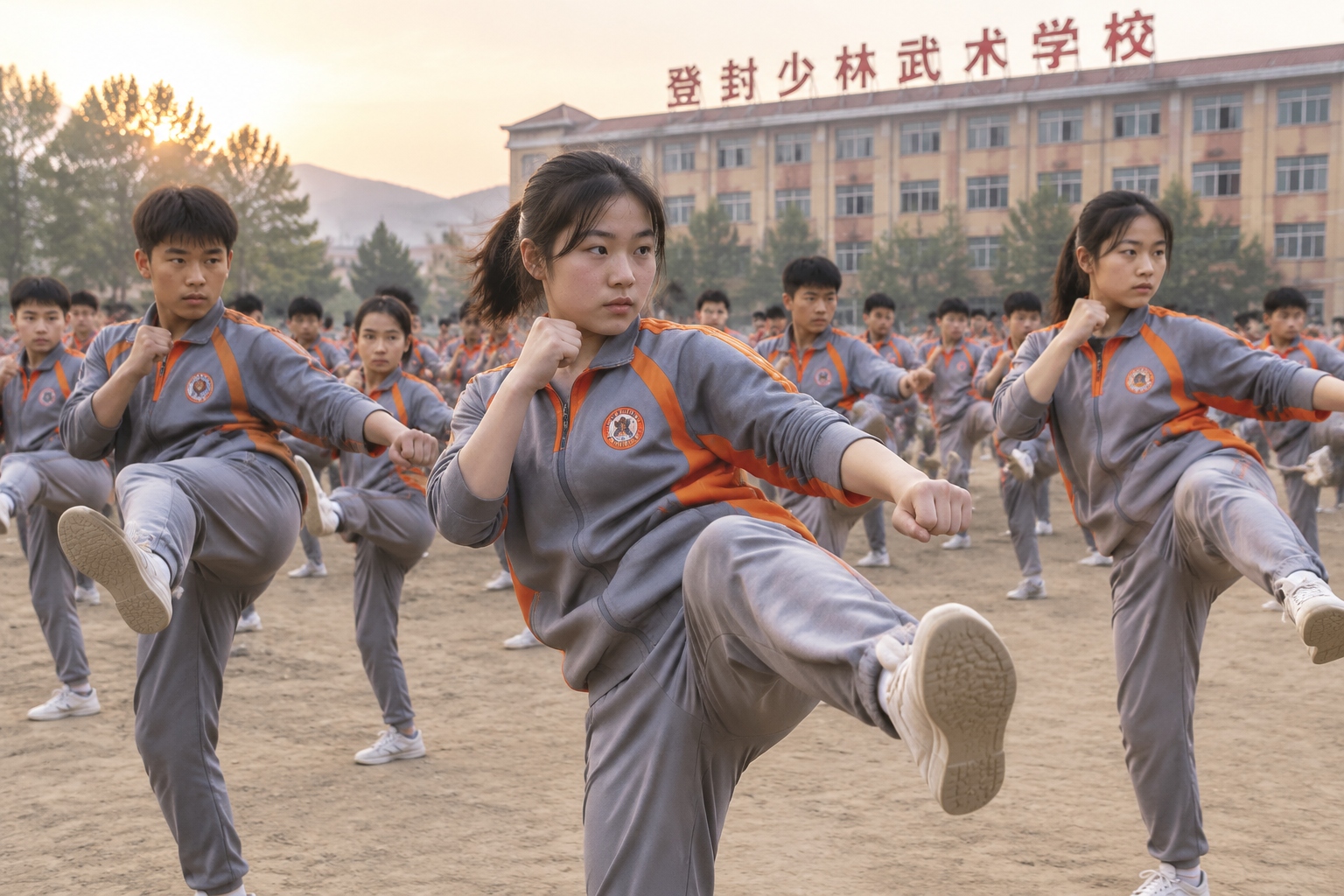
The biggest piece of the kung fu economy is not the temple itself. It’s the enormous chain of martial arts schools that stretch for kilometers along the roads leading up to the mountain. In Dengfeng city, locals estimate there are more than 100 registered martial arts academies, and their combined student body can reach 80,000 to 100,000 in peak years.
The largest, Tagou Martial Arts School, is often described as the world’s biggest martial arts school. It takes up a sprawling campus and has tens of thousands of resident students, many of them sent by parents who want their children to gain discipline, a job skill, and a possible career in performance, film, military service or martial arts instruction.
A Day in the Life
A typical student’s day starts at 5:30 a.m. with warm-up kicks and running, then a hearty breakfast, academic classes in the morning and several hours of martial arts training in the afternoon. Evenings are dedicated to more practice, often preparing for competitions or shows. It’s a grind, not a fantasy. Many kids arrive as young as eight, some have never lived away from home before.
The Stars of Tomorrow
Some students do become stars. Many have appeared in blockbuster movies, performed at Olympic ceremonies or joined the regular Shaolin performance troupe that puts on shows in the temple area every night. Yet for every success story, hundreds of students end up working as physical trainers, security guards, or fitness coaches. The path from the training ground to the spotlight is long and narrow.
But for families in poor rural areas, the martial arts school remains a relatively affordable door to opportunity. Tuition, room and board can add up to about 20,000 yuan per year (around $2,800) — a significant but not impossible cost. Some schools even offer free training in exchange for performing in local shows.
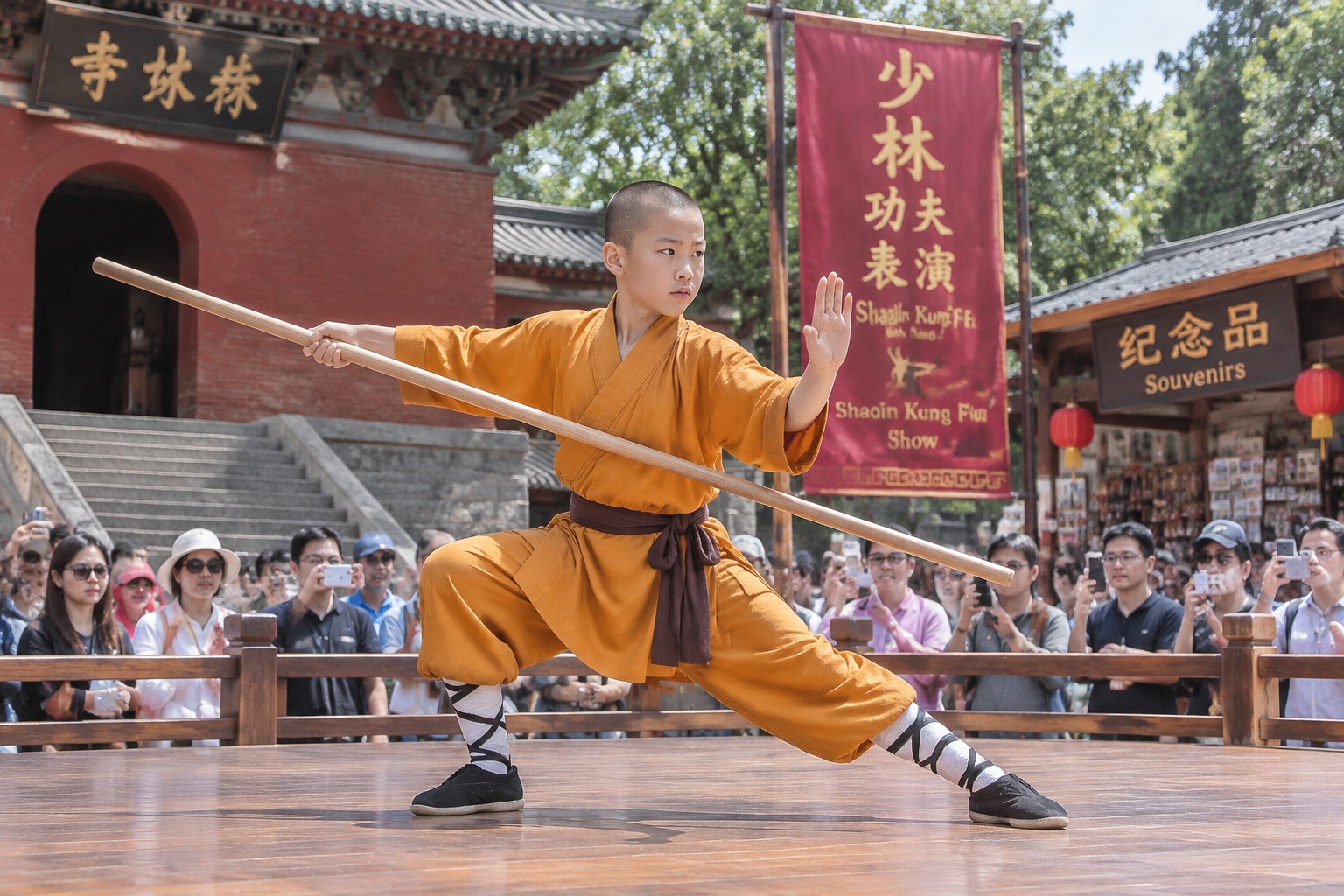
You Can Watch a Show, Take a Class, Buy a Sword
The temple grounds are full of options. The most spectacular is the "Zen Music Grand Ceremony," an open-air performance at the foothills with hundreds of performers, light projection and a live orchestra. A ticket can cost around 200 yuan (about $28), and it’s one of the main revenue streams for the area.
Smaller shows run throughout the day: martial arts demonstrations in the temple courtyard, daily at morning and afternoon times. In between, visitors can take a ten-minute kung fu "experience class" from a young instructor, dress up in yellow monk robes for photos, or browse souvenir shops. The range of goods is vast: swords (the golden, plastic-scabbard kind), prayer beads, books on Shaolin history, medicine balms and "Shaolin tea."
Because the temple name is so valuable, the official Shaolin company has registered trademarks for hundreds of product categories: clothing, shoes, hotels, restaurants, electronic games, and even soap. Licensing is a significant source of income. But the boundaries are fuzzy. Right outside the temple gate, dozens of independent vendors sell almost identical items without any official affiliation. For the visitor, it’s impossible to tell the difference.
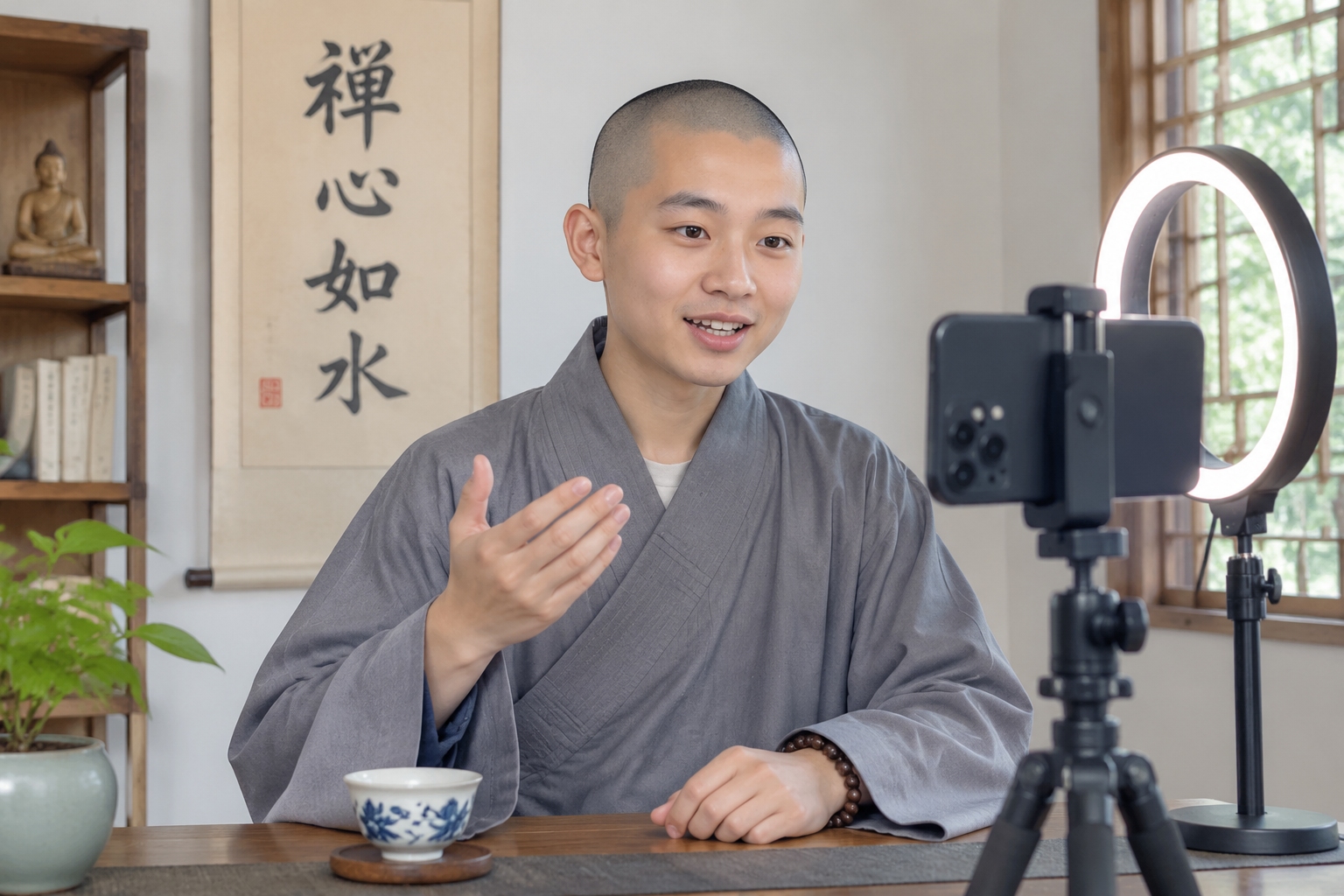
From Temple Stage to Phone Screen: Kung Fu Goes Online
The digital age has given the kung fu economy a new engine. On Douyin (China’s TikTok) and Kuaishou, you can find dozens of Shaolin-affiliated accounts posting daily videos. Some show monks doing full splits on a mountain peak; others film students doing synchronized martial arts drills while a drone follows them. The most popular accounts have millions of fans and generate income through live-streaming gifts, merchandise and even online course subscriptions.
One interesting offshoot is "online kung fu classes" offered by a temple-linked training center. For a monthly fee, subscribers get access to pre-recorded video lessons on basic stances, with virtual feedback based on movement detection. It’s not the same as living in the dorms, but it makes Shaolin reachable for people who can’t travel to Henan.
Some older masters are suspicious of the trend. They worry that breaking the discipline down into short clips oversimplifies a practice that used to take years to master. But many young instructors see it as a natural stage in the tradition’s evolution. As one coach told me, "If monks can drum, they can livestream."
A Brand Under Pressure
Not everything in the kung fu economy is polished. Around the temple gate, you’ll still meet "fake monks" — men in rented robes who offer to bless you or be your guide for a fee. Police crack down regularly, but they keep appearing because of easy money.
Then there’s the deeper challenge of sustainability. The temple’s commercial income depended heavily on ticket sales and performances, which collapsed during the COVID-19 lockdowns. In 2020, tourism revenue in the region fell by almost half. Some insiders question whether the business model has become too reliant on mass tourism and not enough on cultural depth.
There’s also an irony at the heart of it: a brand that sells "authenticity" is now carefully curated. The nightly shows look exciting, but they’re staged for tourists, not for pilgrims. Some Buddhist practitioners feel the temple has lost its quiet soul. Local authorities, on the other hand, see the kung fu economy as a crucial engine for employment and rural development. In Dengfeng, the mantra is "Shaolin carries the city."
How Far Can It Go?
The kung fu economy is at a crossroads. The global appetite for kung fu is still there, but competition from other cultural exports means Shaolin must keep innovating. In the past few years, the region has tried to diversify: building a sports science research park, hosting an international kung fu festival, and exploring virtual reality experiences for visitors.
The temple itself has also become more engaged with pop culture: a popular mobile game features a Shaolin character, and a Netflix-style drama about the temple is in production, according to local media reports.
But the biggest question remains whether the business can grow without losing the very thing it sells. A monk at the back of the meditation hall put it this way: "If people come only for entertainment, we are just acrobats. If they stay after the show and ask questions, then the business has succeeded."
For now, the kung fu economy keeps moving. At the shop by the temple road, a young woman carefully wraps a souvenir "Shaolin Sword" in bubble wrap. She says business is slower than last year, but she still believes in the brand. "People are always going to come for the dream, even if it’s a noisy one," she says with a half-smile.
That may be the most honest summary of all: the kung fu economy works as long as people still want to touch the magic. And for now, they still do.