

A City That Wakes Up Before the Border Does
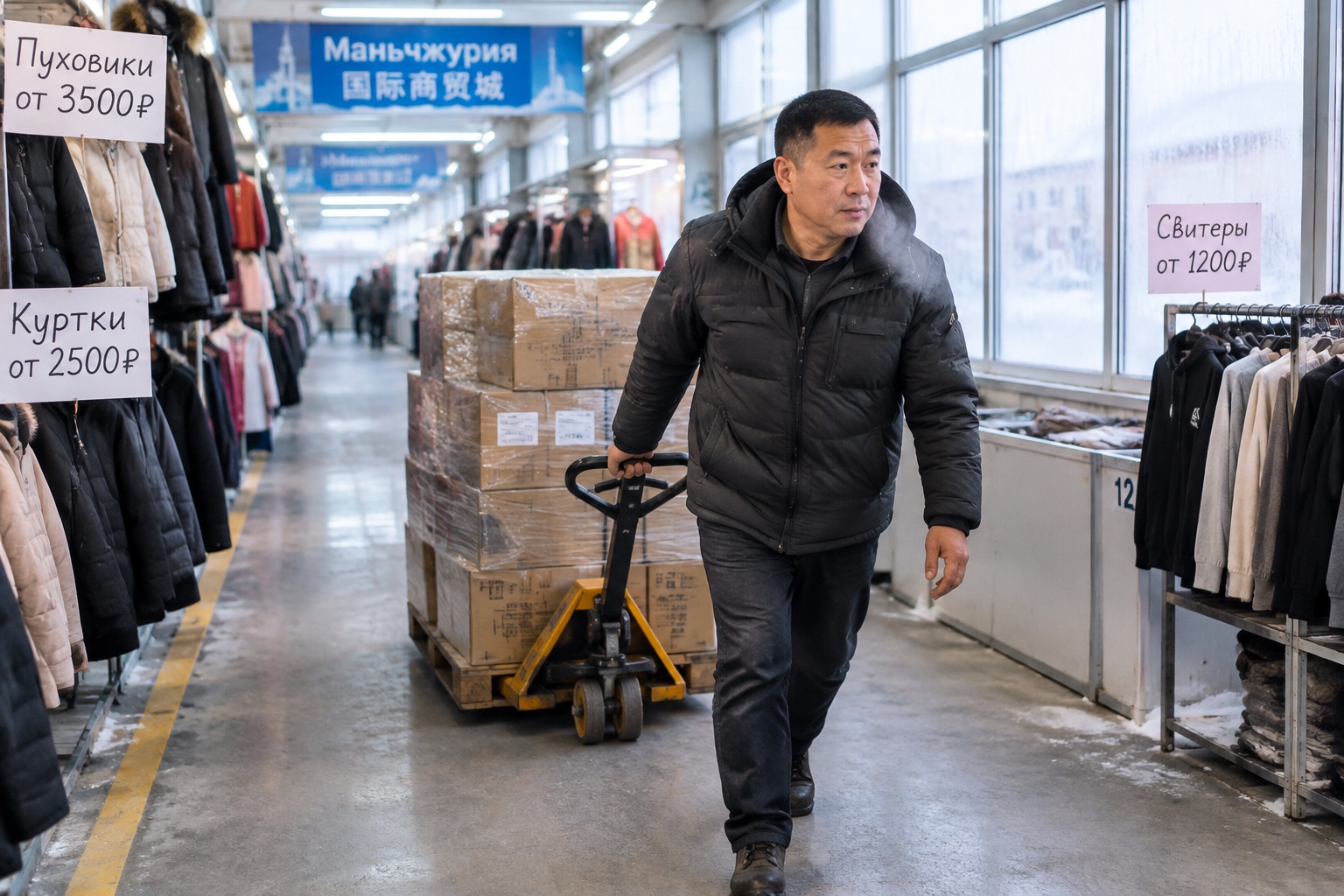
At 6:40 on a January morning it is close to -28°C in Manzhouli, and the sky still looks like wet slate. Wang Lixin is already inside the intercity trade market, hauling a pallet stacked with cartons of thermal underwear. His breath comes out in clouds. Two aisles over, a woman in a padded coat is rewriting prices on a whiteboard in Russian, using a marker she keeps warming against the radiator.
The first Russian buyers usually arrive a little after eight. By then the hall smells of instant noodles, floor disinfectant and diesel tracked in from the parking lot. A translator shouts a number across the aisle. Somebody laughs. A pallet jack squeals.
The postcard version of Manzhouli is a giant cluster of matryoshka dolls and a gate that tourists photograph. The working version looks like this: a wholesale hall at seven in the morning, where the price of a pair of socks is being argued over in three languages, and where the day’s mood depends on how long the trucks are waiting at the border.
Three Countries, One Aisle
Manzhouli sits in the far northeast of China’s Inner Mongolia Autonomous Region, inside Hulunbuir. It has roughly 150,000 residents. Directly north, a few kilometers across the line, is the Russian town of Zabaykalsk. Mongolia’s Dornod Province begins a short drive west. On a map, the city is a small knot where three countries almost touch.
That position explains a lot of what a visitor notices in the first hour. Shop signs run in Chinese and Russian. Trucks with Russian plates park along the service roads. Restaurant menus list borscht above the dumplings. Schoolchildren learn Russian the way kids elsewhere learn French or Spanish, and a local college trains Russian speakers who end up working for freight companies.
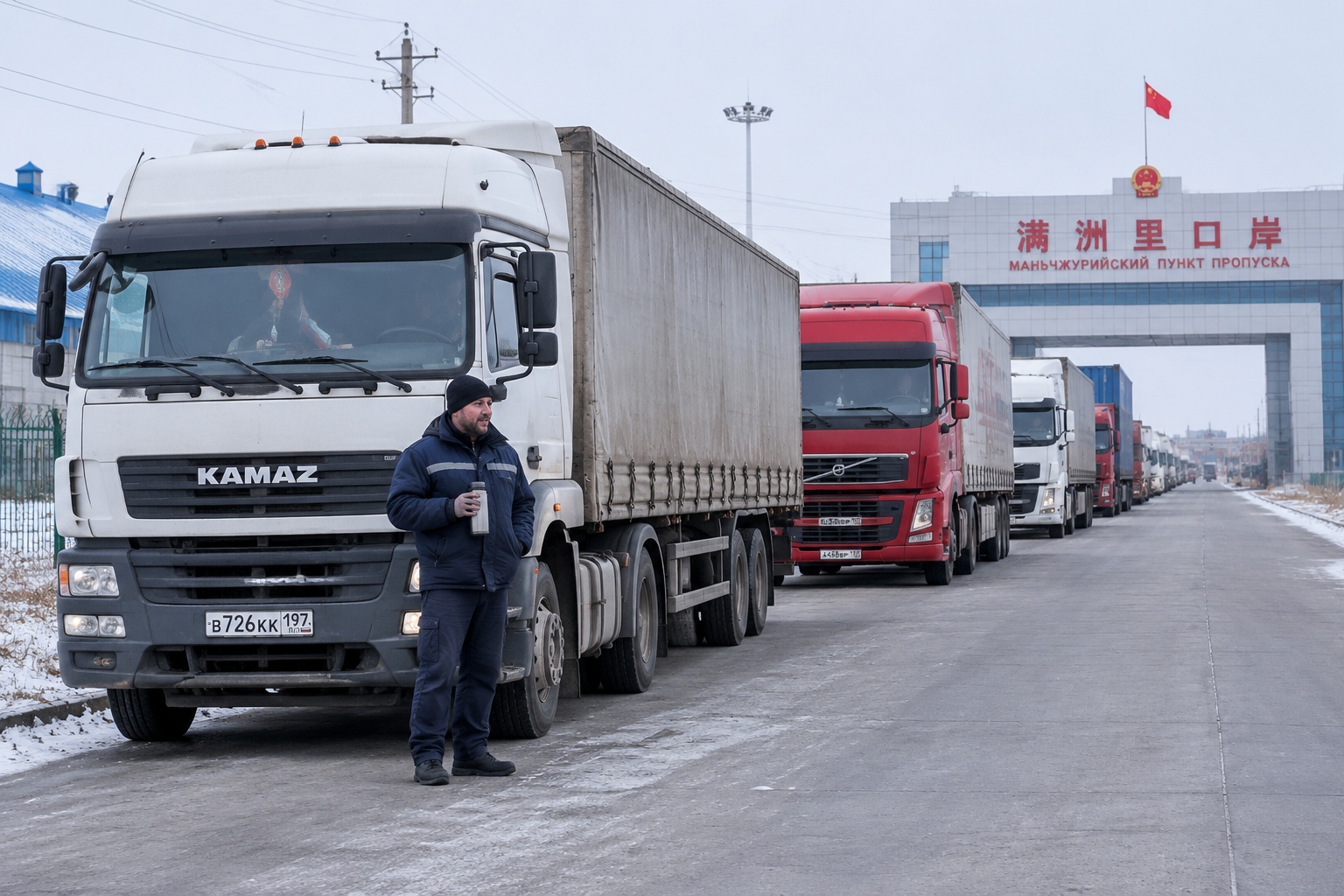
Policymakers call this stretch of the map the China-Russia-Mongolia Economic Corridor. It is a framework rather than a single road, and it sounds more abstract than it feels on the ground. On the ground it means freight forwarders, customs brokers, warehouse crews and stallholders, most of whom have never used the phrase and would describe their job simply as moving goods to the other side.
For readers from Europe or North America, the closest comparison is a border town like Laredo or a port district in Rotterdam, except that here the border is also a language line, a currency line and a heating bill. Winter runs from October to April. The cold is not background scenery; it is a factor in pricing, scheduling and what gets sold.
How a Wholesale Stall Actually Runs
Wang Lixin is 47 and came to Manzhouli from Shandong in 2008, when he was selling hardware out of a single container shop. Now he runs two stalls: thermal wear and socks in one, kitchenware in the other. His customers are mostly small Russian retailers who resell in Chita, Ulan-Ude and smaller towns along the rail line.
His year has a shape. September to November is the peak for anything warm, because buyers want stock before the Siberian winter locks in. Spring shifts to garden tools, tarps and cheap construction hardware. Summer brings tourist season and a different kind of customer, plus Mongolian traders picking up clothing and household goods.

Bargaining follows a pattern he has learned to read. Russian buyers often arrive in pairs: one negotiates, one works the calculator and watches the numbers. They will walk away from a price and come back an hour later. Wang counters by quoting a slightly higher number than he expects to get and holding it for a while. Neither side treats this as hostility. It is a script.
Payment has changed more than anything else. Fifteen years ago, deals were done in cash, sometimes in US dollars, and everyone carried a money belt. Now most settlements between Chinese suppliers run through ordinary domestic transfers, while cross-border payments go through bank accounts and licensed services. Many Russian buyers pay with UnionPay cards, which became more common after international card networks stopped working in Russia. Some still bring cash rubles and take the rate posted at the counter.
Ports, Trains and the Warehouse Clock
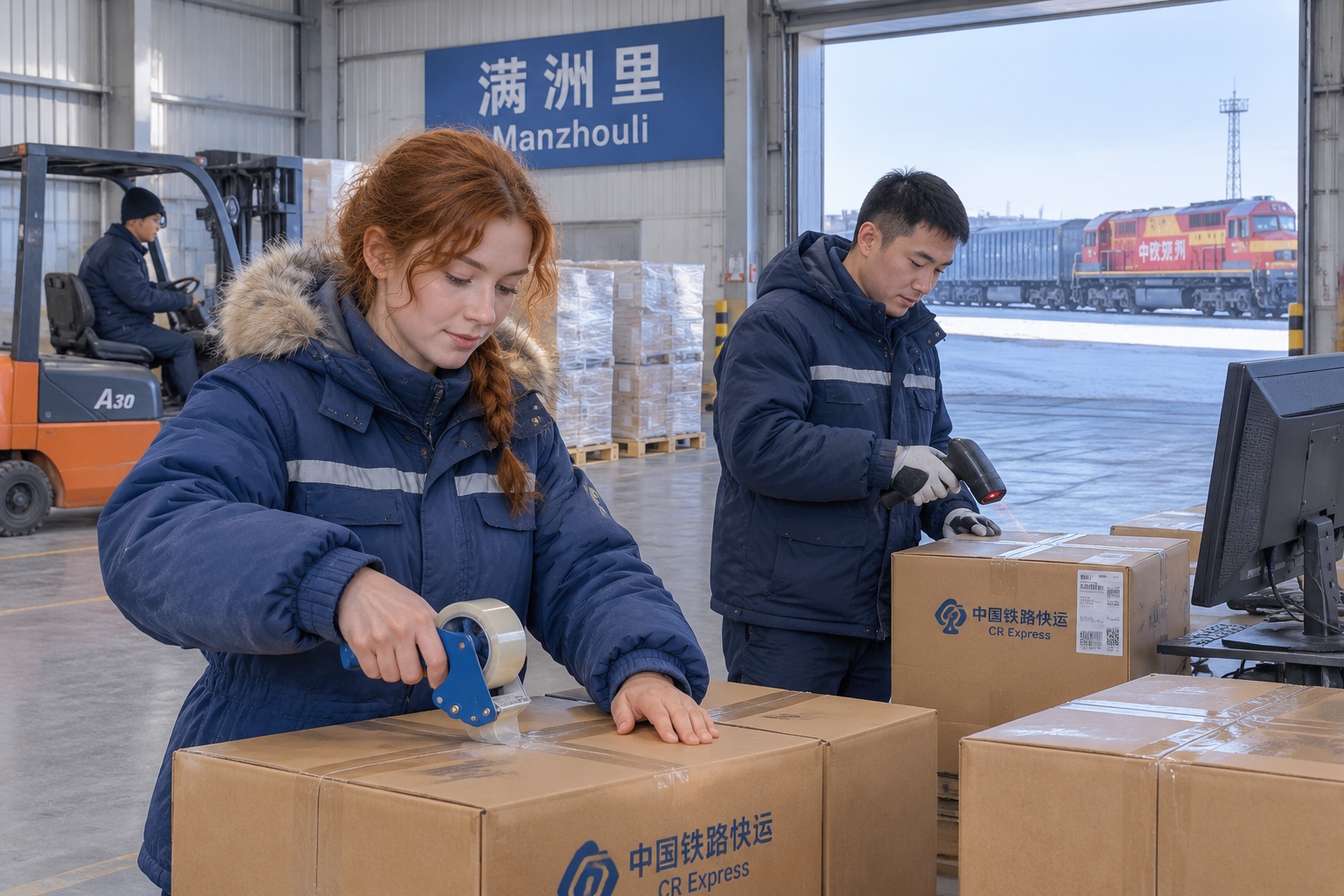
Behind the stalls is a logistics machine most shoppers never see. Manzhouli handles both road and rail crossings, and it is one of the main eastern gateways for China-Europe freight trains. In 2023, more than 4,000 of those trains passed through the port, carrying everything from electronics heading west to timber and fertilizer heading east.
For the small traders, the more relevant traffic is trucks. A consolidated load leaves Wang’s warehouse on the edge of town, crosses to Zabaykalsk, and then moves onward by rail or road. Peak season queues at the crossing can run for hours, and occasionally longer when paperwork goes wrong or a system goes down. Freight agents earn their fees by knowing which documents to prepare before the driver reaches the gate.
This is the part that shapes daily life most visibly. Warehouse shifts start early. Forklifts run until dark. Drivers eat at the noodle shops on the ring road at odd hours. When the crossing is slow, the whole city feels slightly backed up, the way a port town does when the ships are late.
Living Next Door to Another Language
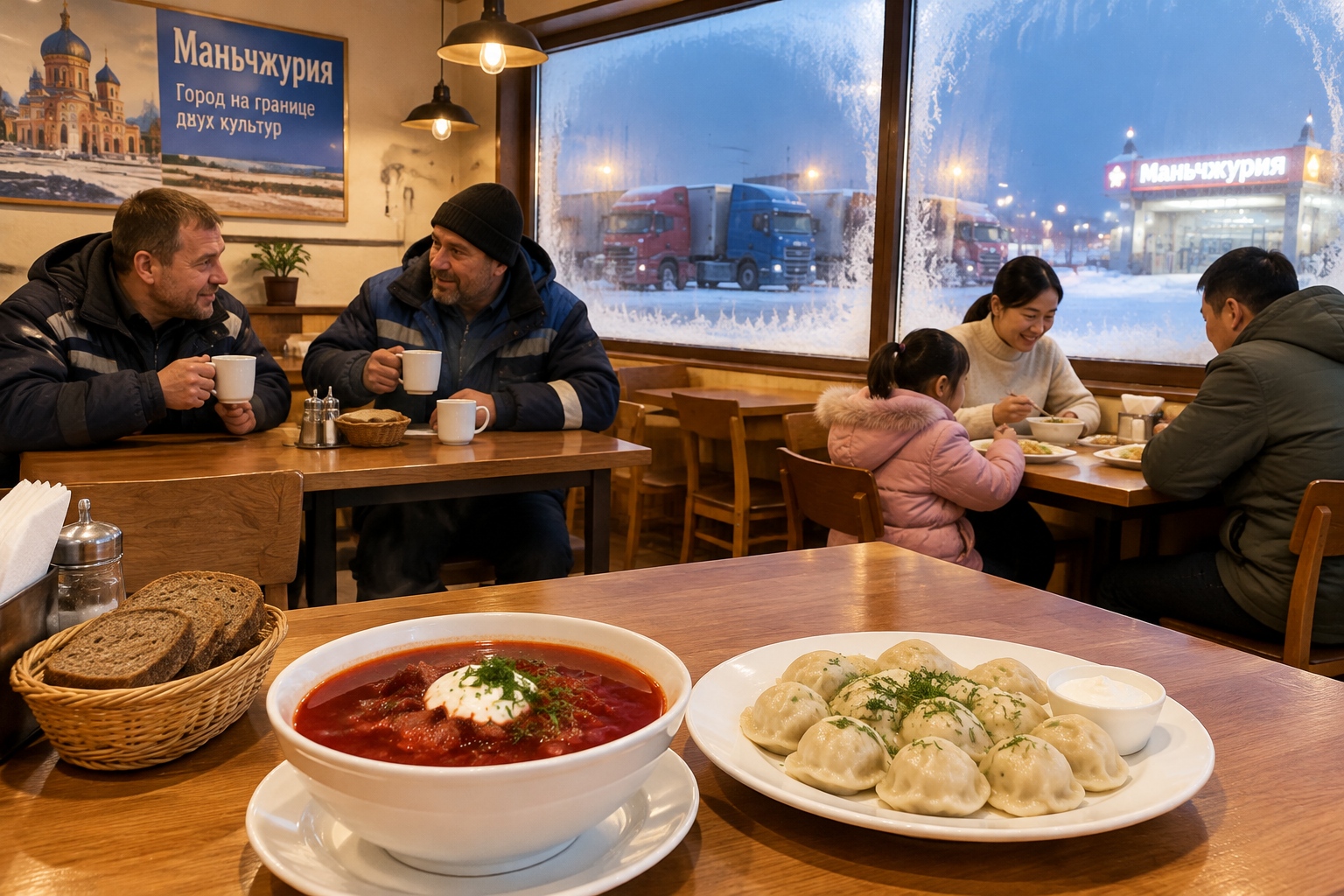
Manzhouli’s daily life is not only about freight. On the main commercial streets there are bakeries selling dark Russian bread next to shops selling frozen dumplings. A restaurant near the market serves borscht and pelmeni on one page of the menu and northeastern barbecue on the next, and on cold nights the tables fill with both truck drivers and local families.
Language is the everyday negotiation. Market Russian is its own dialect: numbers, colors, sizes, and about forty nouns that cover most transactions. Younger vendors switch to translation apps when the conversation goes beyond that, holding up a phone and speaking into it while the customer nods. Some shopkeepers have printed price lists in Cyrillic taped to the counter.
Payment habits split along the same line. Local residents use WeChat Pay and Alipay for almost everything, including vegetables and a haircut. Russian visitors often pay cash or card, and some shops post a ruble exchange rate by the door, updated by hand when it moves.
Young people here make choices that would look familiar to anyone from a small border town. Some stay and work as translators for logistics firms. Some run livestream sales aimed at Russian-speaking audiences, filming in a warehouse with a ring light and a coat rack. Others leave for Hailar or Harbin for university and come back, or do not.
Translation Apps, QR Codes and the Limits of Convenience
Technology has made the trade faster in ways that are easy to miss. A buyer photographs a sample, sends it to a supplier on WeChat, and gets a quote the same afternoon. Tracking numbers are checked on a phone rather than by phone call. Translation apps handle the parts of a conversation that used to require a hired interpreter, which matters for a small shop that cannot keep one on staff.

But the convenience has edges. Cross-border payment still runs into compliance rules that a market vendor cannot solve with an app. Card payments involve sanctions questions that neither side controls. And a great deal of trust still comes from repetition: a buyer who has shown up every September for eight years gets goods released before the money clears, and no software replaces that.
The Hard Parts
The exchange rate is the constant variable. Wang prices in yuan, but his customers earn in rubles, so a sharp move changes what they can afford and how much he can sell. Nobody in the market controls this, and everyone plans around it.
Winter is the second constraint. At -30°C, diesel gels, outdoor work slows, and shipping certain goods becomes risky because liquids and plastics crack. The cold also thins the tourist season to a few months, which means the city’s service economy runs on a short clock.
Then there is the border itself. The years when crossings were heavily restricted hit small traders, tourism and restaurants hard, and the recovery since 2023 has been uneven. Queues, documentation and shifting rules remain part of the job description. Anyone who describes this trade as frictionless has not spent a morning at the gate.
Closing the Day
At six in the evening, Wang pulls the shutter halfway down and counts the day on a calculator: three deals closed, one waiting on a bank transfer. The cartons of thermal underwear that did not sell will go out tomorrow on a truck whose driver he has known for years. He walks home past the bakery, where the bread is coming out of the oven and someone is arguing about the ruble rate in two languages at once.
That is roughly what a corridor looks like when you zoom in. Not a ribbon of infrastructure on a policy map, but a street where three economies meet, adjust to each other, and try again the next morning.