


A Ten-Day Route Through Four Very Different Chinas
Beijing · Xi’an · Chengdu · Shanghai — ten days, four cities, three high-speed train rides, and one country that refuses to fit into a single photo.
Most first trips to China ask you to choose one version of the country. This route gives you four. You will stand on a Great Wall watchtower before the tour buses arrive. You will look down into a pit holding 8,000 clay soldiers that the world did not even know about a century ago. You will watch a panda cub roll off a bamboo branch from ten meters away. And on your last night, you will stand on a Shanghai rooftop and look at a skyline that feels designed for 2050.
One Sentence, Four Cities
The point is not to tick off four famous names. It is to feel how differently daily life runs in each place. Beijing is imperial and horizontal: red walls, gray hutong roofs, and a central axis that has held its line for 700 years. Xi’an is older and earth-toned: a walled square where the Silk Road began and thirteen dynasties ended. Chengdu is slow: teahouses, bamboo chairs, and a city that seems to measure time by how many times someone has refilled your cup. Shanghai is vertical and sleepless: Art Deco stone on one bank, science-fiction towers on the other.
Travelers who visit only Beijing and Shanghai often go home thinking they have seen China. They have seen the two ends. This route gives you the middle — the part where most Chinese people actually live.
Why This Route Is Worth Ten Days
You see four different Chinas, not four versions of the same one
The contrast is the point. A hutong breakfast, a bike ride on Xi’an’s city wall, a teahouse afternoon in Chengdu, and a late-night Bund walk do not feel like the same country. That is exactly why the route works. You are not collecting landmarks. You are watching a huge country change its rhythm from city to city.
The three pictures in your head, in real life
The Great Wall, the Terracotta Army, and giant pandas. Not copies. Not theme parks. The actual ridge, the actual pit, the actual animals. Timing matters. We aim for a weekday opening at the wall, when the watchtowers are still empty. We get to the Terracotta pit in early light, before the big groups. And we reach the pandas at the 8 a.m. feeding window, when they are awake, greedy, clumsy, and far more entertaining than a sleeping ball of fur in a corner.
That is the difference between saying you have been somewhere and remembering it for thirty years.
The train ride is part of the sightseeing
China’s high-speed rail is not just transport. It is the thing you will keep bringing up at dinner for years. Beijing to Xi’an takes about four and a half hours. Xi’an to Chengdu takes about three and a half. At 350 km/h, the window shows terraced fields, factory yards, wheat fields, and new stations the size of airports. Four hours by the window can teach you more about modern China than a week of museums.
Day by Day
Day 1 · Beijing — Land, Breathe, Eat Duck
Arrive, drop your bags, and go straight into the hutongs by bike: gray brick, bicycle bells, laundry strung between courtyard gates, old men playing chess on overturned wooden crates. Dinner is Peking duck carved at the table — crisp skin dipped in sugar, meat rolled into thin pancakes with scallion and sweet bean sauce. You will be tired. Eat anyway.
Day 2 · Beijing — The Center of the World
Morning at the Forbidden City: 980 buildings, one continuous red wall, courtyard after courtyard, until your sense of scale gives up. Then climb Jingshan Hill opposite the palace for a view of layered golden roofs and a city axis that has run since 1420.
Day 3 · Beijing — See the Great Wall Properly
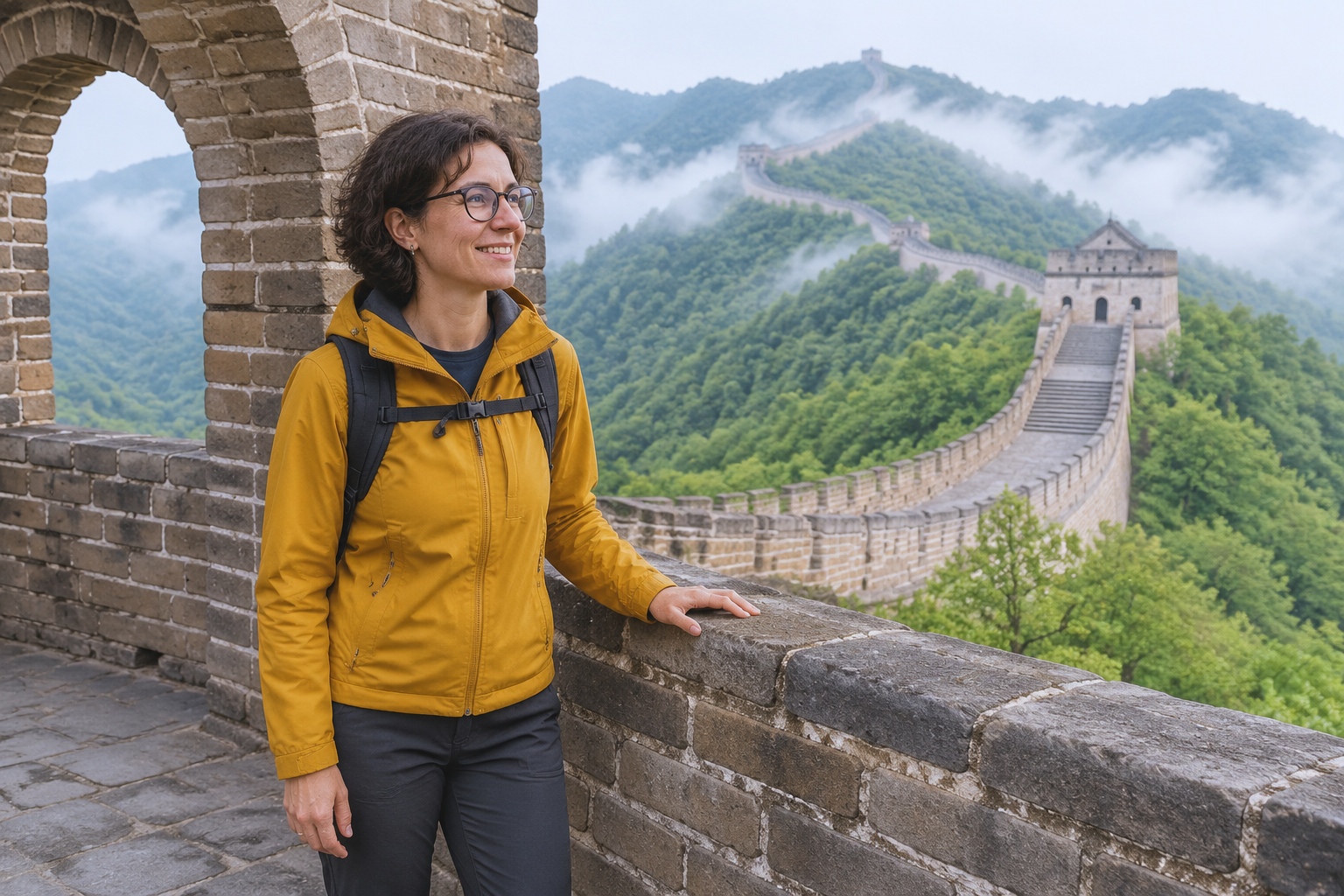
Drive two hours to Mutianyu or Simatai, then walk the ridge. Stone steps worn smooth by six centuries of feet. Watchtower after watchtower. The wall running in both directions until it disappears into mist. Go early. Stand alone in a watchtower for five minutes. Many people cry there. Nobody expects it.
Day 4 · Beijing — The China Outside the Palaces
Early morning at the Temple of Heaven: retired Beijingers dance, sing opera, practice sword forms, and write with water brushes on the stone tiles. Later, find a hutong teahouse and sit for an hour doing nothing. At night, go to Shichahai: lights on the water, bar music drifting over, the Drum Tower lit above the roofs.
Day 5 · Xi’an — Inside the City Wall
Take an early high-speed train to Xi’an. Rent a bike on top of the Ming city wall — 14 kilometers around, wide enough for cars, old city on one side, glass towers on the other. In the evening, head to the Muslim Quarter: lamb skewers, hand-pulled noodles slapped on the counter, persimmon cakes frying in oil, a hundred smells in 400 meters.
Day 6 · Xi’an — The Army
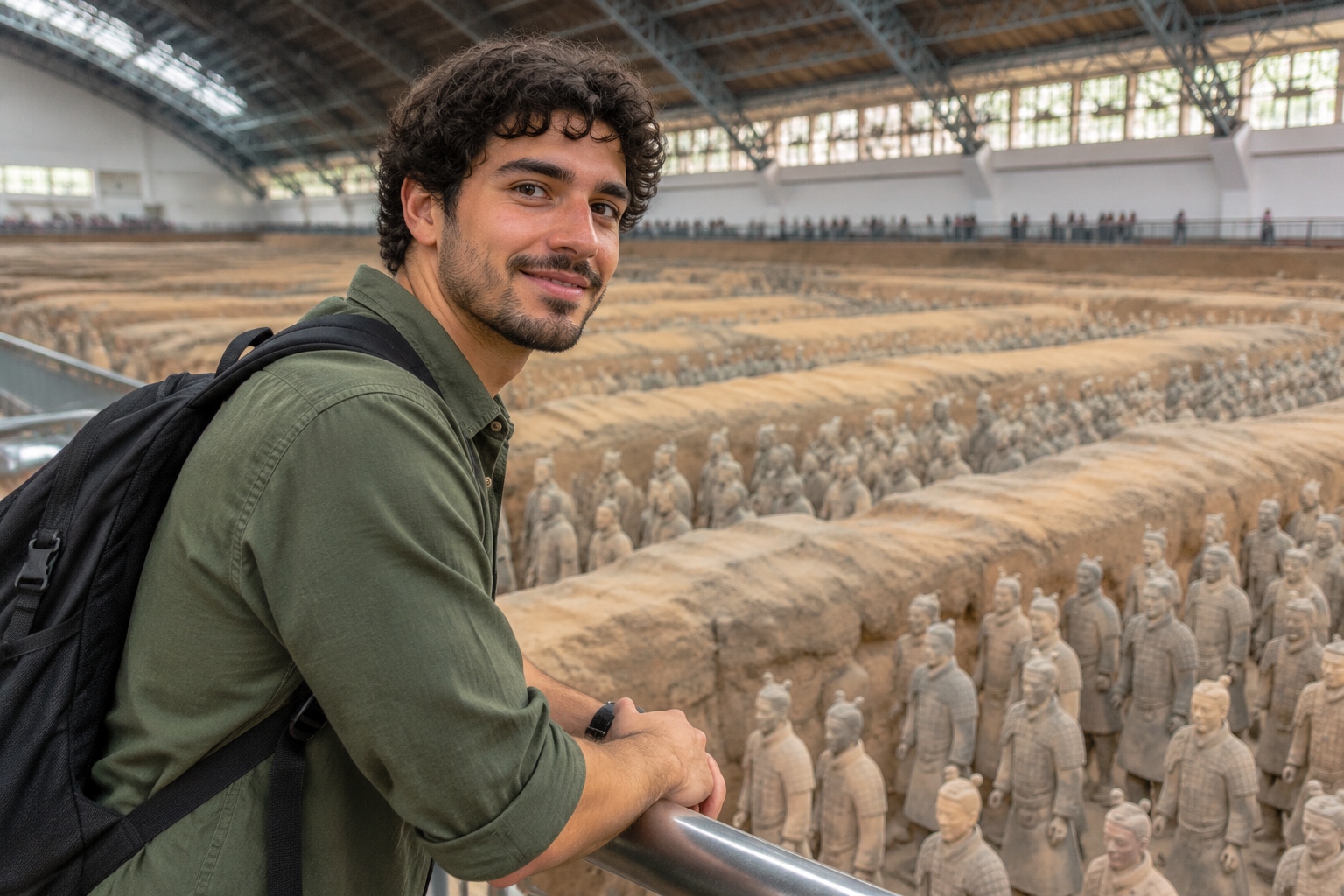
Go to the Terracotta Army early, while the pits are still quiet. Eight thousand figures, every face different, still in battle formation 2,200 years after they were buried to guard an emperor’s afterlife. Then the Shaanxi History Museum, which tells the same story again in bronze, gold, and Tang silver. At night, see the Big Wild Goose Pagoda lit up, with families and music filling the square.
Day 7 · Chengdu — Slow Down
Morning train to Chengdu. Go to Kuanzhai Alley: teahouses, snack stalls, a city visibly in no hurry. Your first serious Sichuan meal — mapo tofu that numbs your lips, twice-cooked pork, chicken in red oil. Order medium spicy. You will thank yourself.
Day 8 · Chengdu — Pandas and Tea
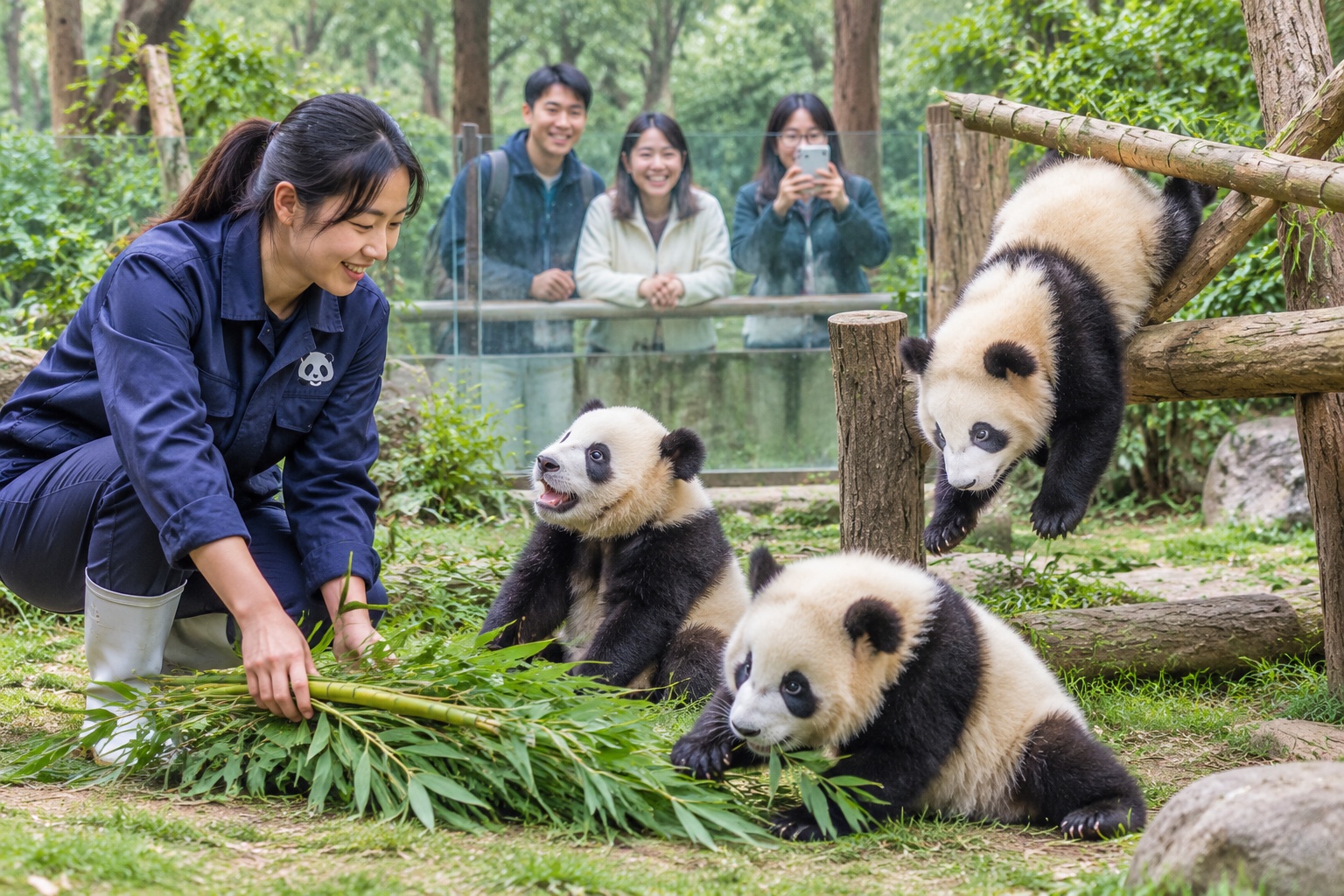
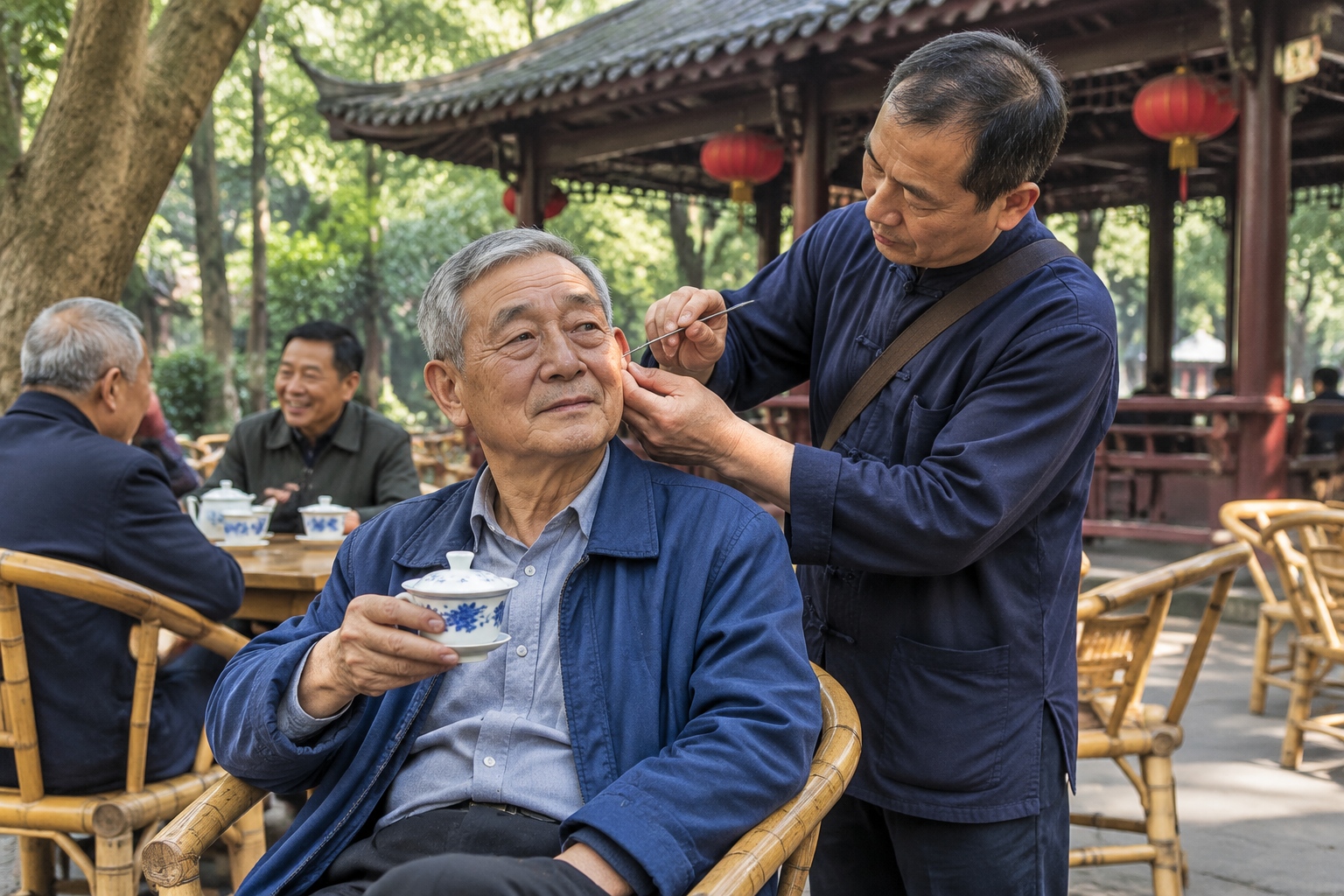
Enter the Panda Base when it opens. The keepers have just put out bamboo. Cubs wrestle, fall, climb, and fall again. In the afternoon, go to People’s Park: a bamboo chair, a lidded tea cup, and the famous ear cleaning — metal picks and tuning forks that sound frightening and feel like a small religious experience. Dinner is hotpot. You cannot leave Chengdu without it.
Day 9 · Shanghai — From the 1930s to 2050 in One Evening
Fly to Shanghai. At dusk, walk the Bund: colonial stone facades on your left, the Pudong towers across the river on your right — the widest hundred years in the world in one view. Then go to the plane-tree district: coffee, shikumen lanes, small shops. After dark, cross to Pudong and look up at the skyline from street level.
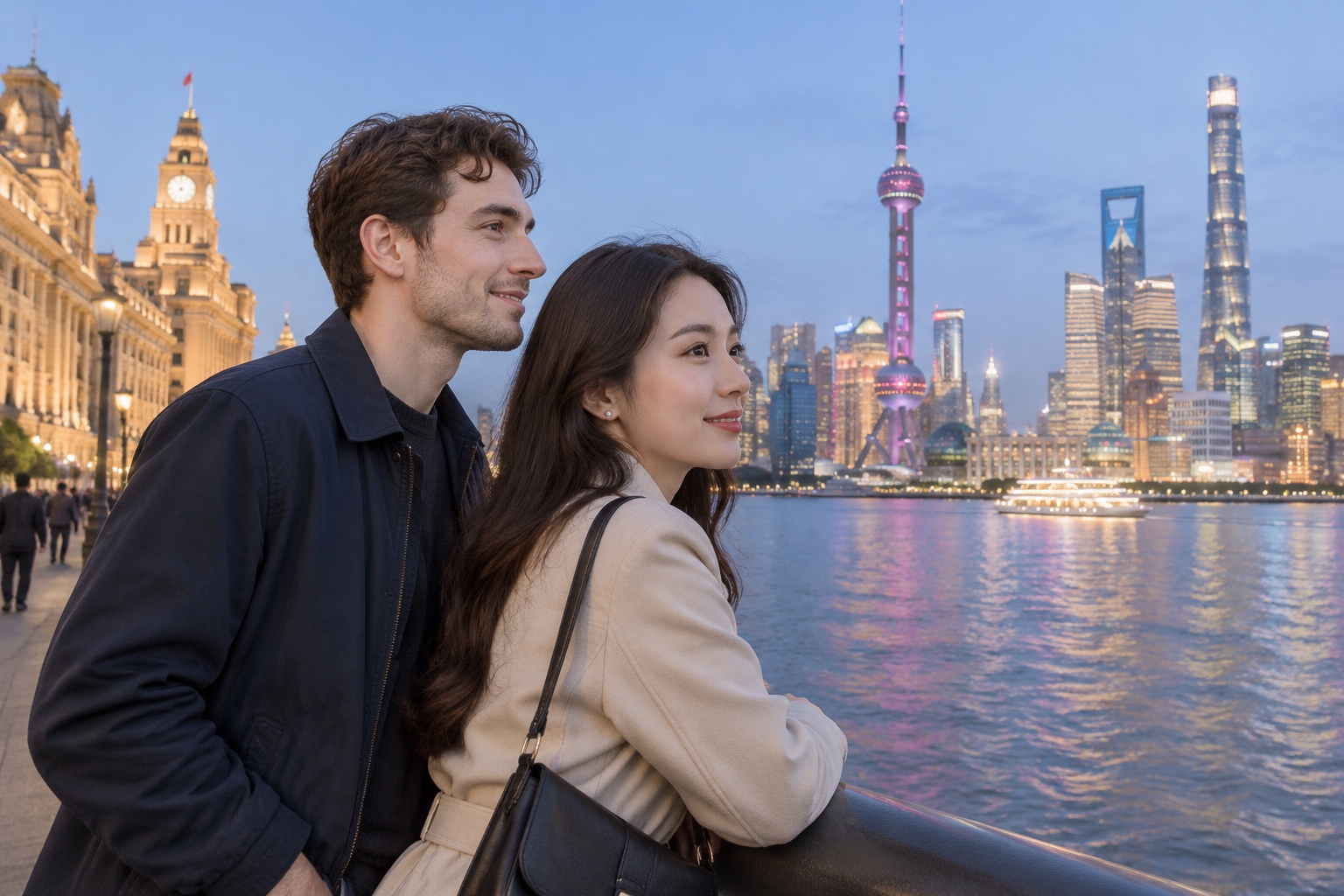
Day 10 · Shanghai — Old City, Then Home
Morning at Yu Garden: rockeries, koi, and the zigzag bridge built so ghosts cannot follow you. Go to Tianzifang for last gifts — silk, tea, porcelain — surprisingly good and surprisingly cheap. Then the airport, with a photo album you will not finish sorting for months.
Practical Notes
Pace: Comfortable, not rushed. At least two nights in each city except Shanghai. Most days involve 6–10 km of walking, and the ground is flat except on the Great Wall.
Best seasons: April–May and September–October. Spring brings flowers and mild weather; autumn gives clear air and the best light on the wall.
Food: You will eat very well. We mark spice levels in Chengdu in advance. Vegetarian and halal food are not hard to arrange in all four cities.
Who it suits: First-time visitors who want the landmarks without the big-bus feeling; couples and small groups; people willing to cycle through hutongs rather than watch from a coach.
Who it does not suit: Travelers who want a new city every day, or people who have already done Beijing and Shanghai and now want remote regions. For that, look at our Silk Road or Yunnan routes.
What You Actually Take Home
Not souvenirs. A set of very specific things: the sound of stone steps under your shoes on the Great Wall, the taste of red oil on a plastic table in Xi’an, an old man in Chengdu pressing your shoulder to show you how to hold a lidded tea cup, and the few seconds when the Bund lights come on and everyone around you — Chinese, French, Brazilian — goes quiet at the same time.
Ten days, four Chinas. A version of the country you will spend the next ten years trying to explain to people who were not there.