

Where the Desert Meets the Dynasties
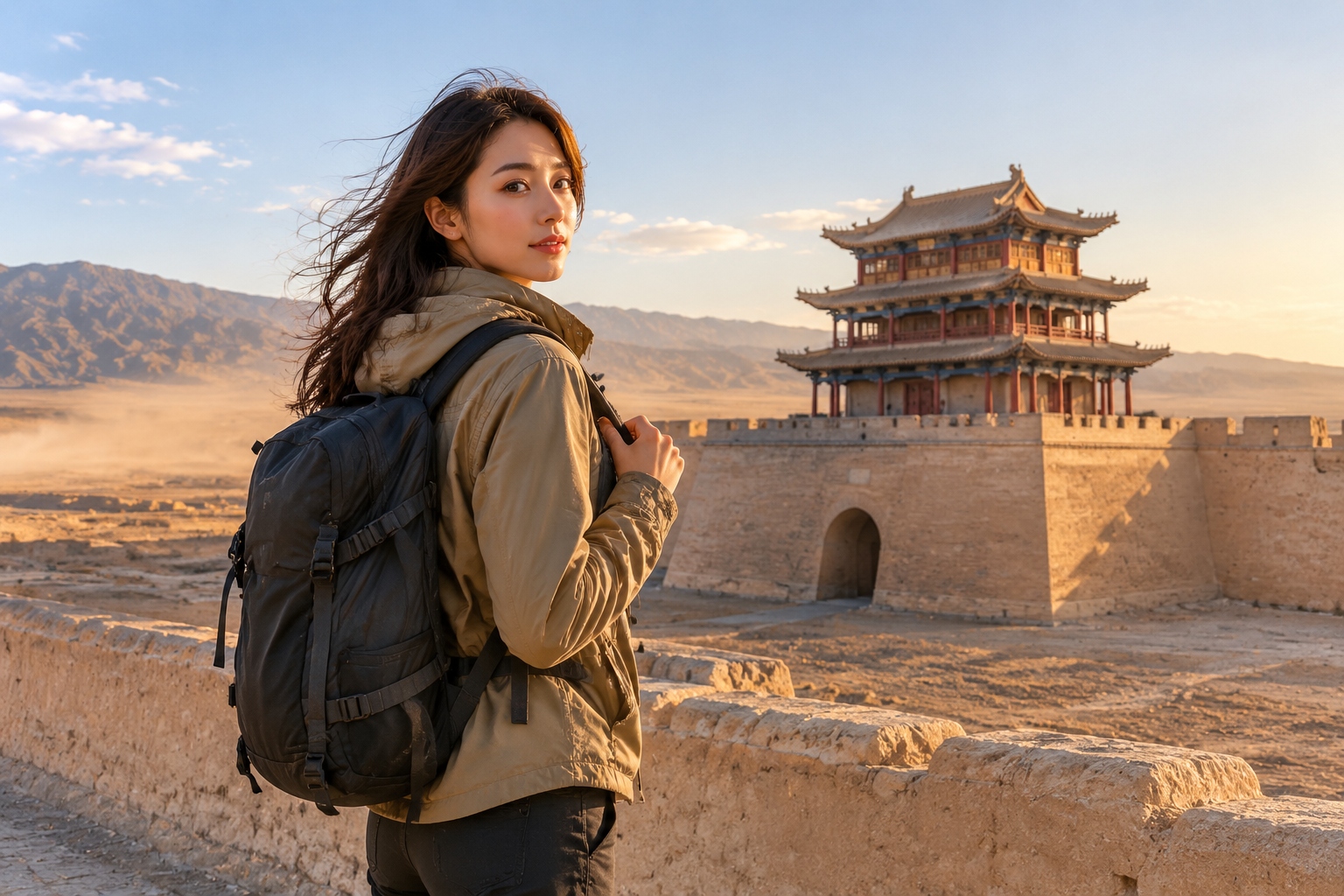
At Jiayuguan, late in the afternoon, the wind comes from the west with nothing to slow it down. The gate tower stands in the gap between two mountain ranges; beyond it, the Gobi stretches to the horizon. You can hear the flags snapping and your own footsteps on stone. For a moment, “the Western Regions” stops being a phrase from a history book. It feels like a direction.
This is the logic of the Northwest Silk Road route: Xi’an, Lanzhou, Zhangye, Jiayuguan, Dunhuang. Ten days, one corridor, five thresholds. It is not a trip built around ticking off landmarks, although the landmarks are extraordinary. It is a trip outward—from the old capital, across the Yellow River, into the narrow 1,000-kilometer passage between mountain ranges, and finally through the last pass into the desert.
Why This Route Still Feels Unreplaceable
Every stop looks like a film location, but the scenery refuses to repeat itself. At Xi’an, it is earth and terracotta. At Lanzhou, it is a river cutting through a city. In Zhangye, red and yellow rock ridges fold like compressed rainbows. At Jiayuguan, the fort sits against black mountains and empty gravel. In Dunhuang, sand dunes, cave murals and night skies take over. The visual density is high, yet nothing blurs together.
The route is also unusually empty for a classic Chinese itinerary. Drive two hours across the Gobi and you may not see a single house; wind combs the sand into fine lines. Then history returns at each stop: a Han-dynasty commandery, a Ming-dynasty pass, Tang-dynasty caves. It suits travelers who are willing to slow down and listen to stories rather than rush between photo spots.
And then there is the Mogao Caves. More than 700 caves, about 45,000 square meters of murals, continuous work from 366 AD across a thousand years. It is not simply a “sight.” It is one of those places in art history that has to be seen in person. The chance to see original caves is also limited: they are opened on a rotating basis for conservation. Go earlier and go later, and you may not see the same set.
First Threshold: The Old Capital · Xi’an (Days 1–2)
Xi’an is the starting point, and the only stop on this route that still feels like an imperial capital. Start on the city wall at night. It runs 14 kilometers, wide enough for cars, and when the lights come on the whole city looks like a lit seal. The next morning, go to the Terracotta Army. Eight thousand figures, each face slightly different, stand in a military formation from 2,200 years ago. In the afternoon, visit the Big Wild Goose Pagoda, where Xuanzang set out for India and later returned to translate sutras.
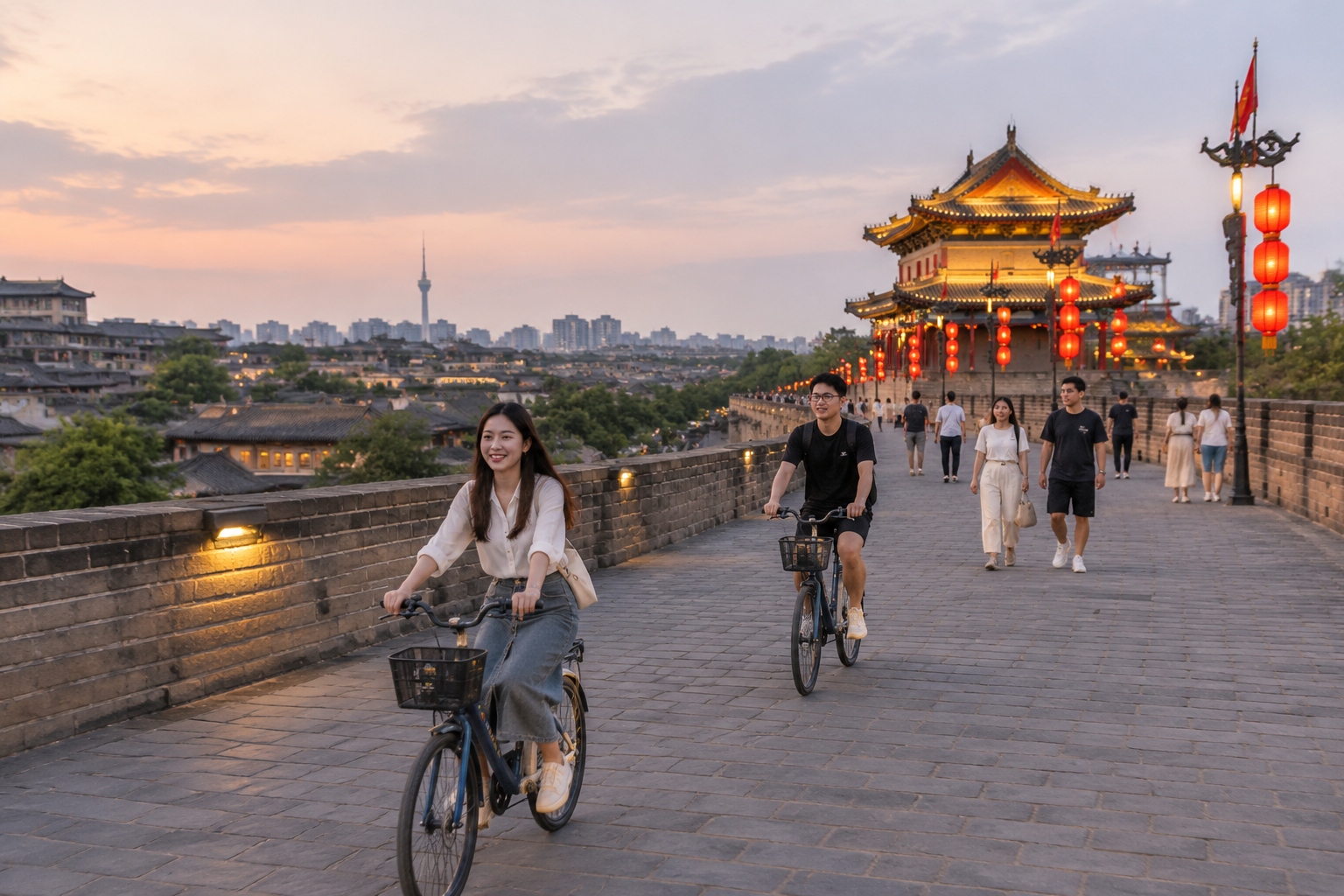
Practical notes: Enter the Terracotta Army as soon as it opens; see Pit 1 first, then Pits 2 and 3. The music fountain schedule at the Big Wild Goose Pagoda north square changes by season, so check before you go.
Second Threshold: The Yellow River · Lanzhou (Day 3)
A three-hour high-speed train takes you to Lanzhou. The city stretches along the Yellow River, which runs straight through the middle—still a rare sight in China. Walk across Zhongshan Bridge, built in 1909 with German steel beams and Chinese rivets, still in use after more than a century. Then eat a bowl of beef noodles near the bridge: clear broth, white radish, red chili oil, green coriander and scallions, yellow noodles. It costs less than ten yuan and takes ten minutes to finish.
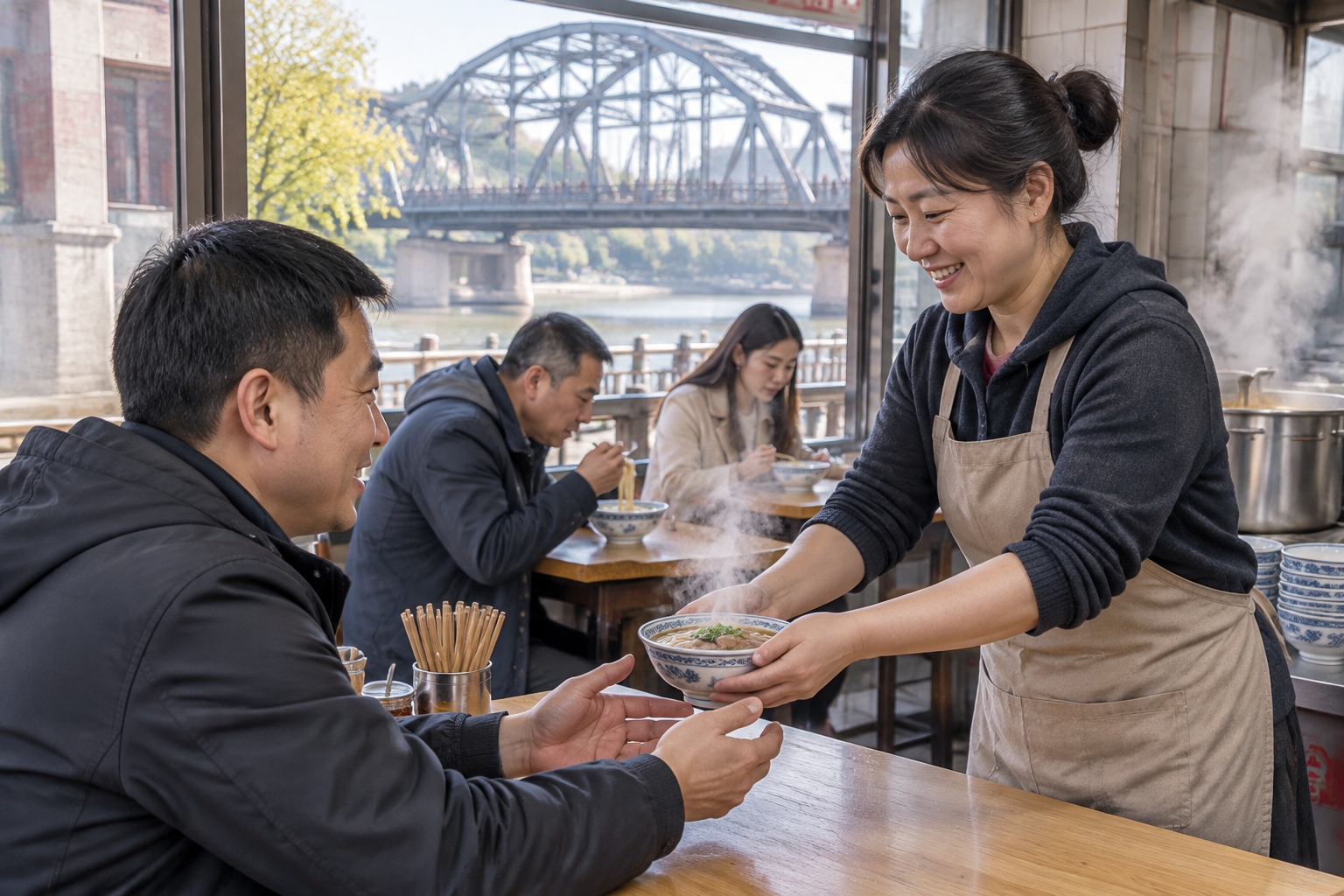
Practical notes: Beef noodles are breakfast and lunch; many shops close by late afternoon. When ordering, say “erxi” or “maoxi” to choose the thickness of the noodles.
Third Threshold: The Corridor · Zhangye (Days 4–5)
West of Lanzhou, you enter the Hexi Corridor. The Qilian Mountains rise to the south; the Heli and Longshou mountains lie to the north. Between them is a flat passage hundreds of kilometers wide. In the past, anyone traveling from central China to the Western Regions had to pass through here. Zhangye’s rainbow Danxia is best at dusk—layers of red, yellow, gray and white look like a flattened rainbow. In the twenty minutes after the sun drops behind the ridge, the colors suddenly saturate.
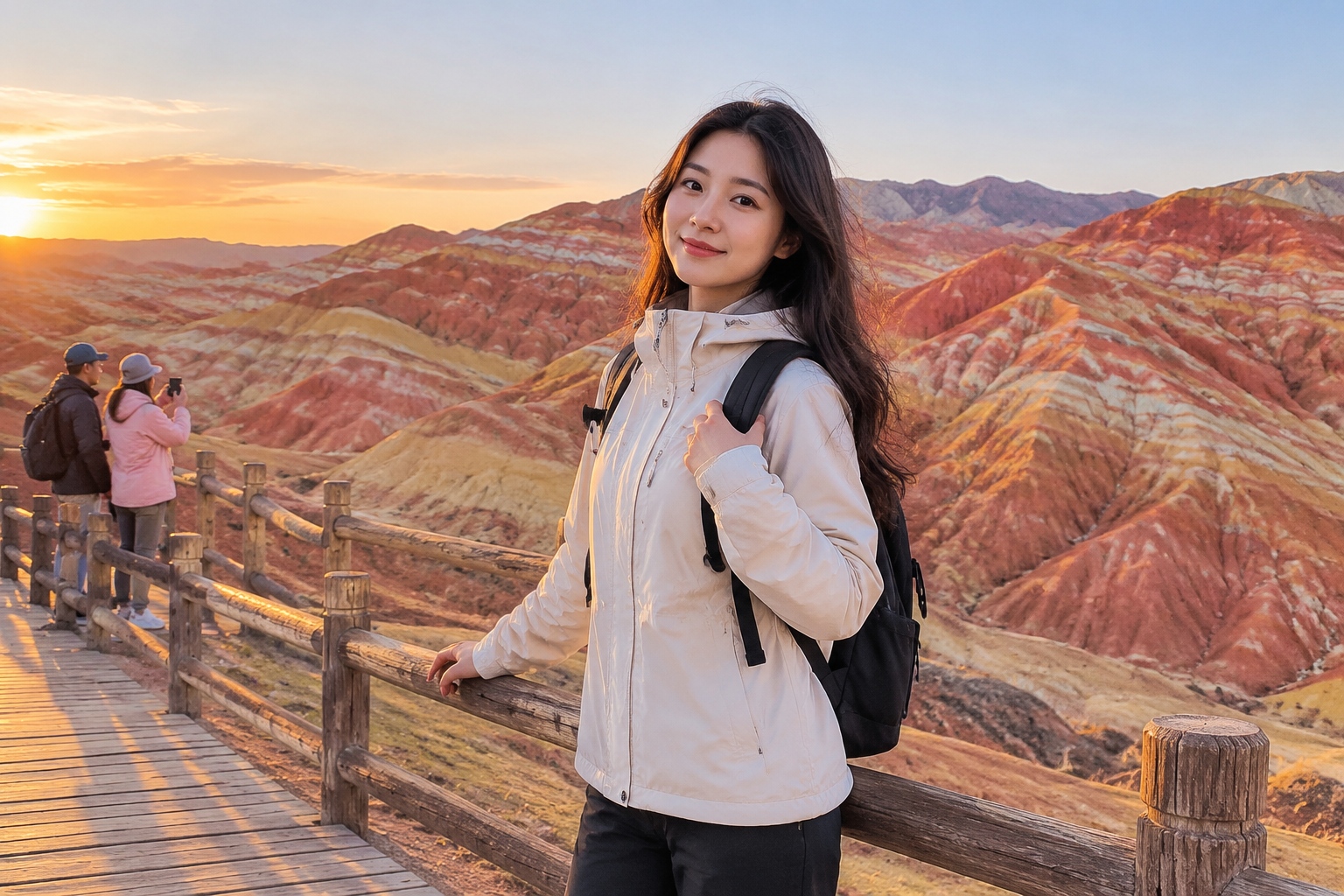
The next day, go to Binggou Danxia, where the rock shapes are stranger, like window lattices or palaces, and Pingshan Lake Canyon, a red gorge with almost no crowd. These are the “unseen” stops that make the corridor more than a transfer route.
Practical notes: Enter Zhangye Danxia about 90 minutes before sunset and go straight to the highest viewing platform. Shuttle buses stop at several points; get off where the light is best.
Fourth Threshold: The Pass · Jiayuguan (Day 6)
This is the westernmost end of the Ming Great Wall. “The First and Greatest Pass Under Heaven” is not an empty boast. The fort was built at the narrowest point between two mountain ranges. The gate tower has three levels; outside is the Gobi, inside is the old heartland. Stand on the tower and look west: there is nothing but wind and horizon. Nearby, the Overhanging Great Wall climbs a 45-degree slope of black mountain. Walking up will make your legs shake.
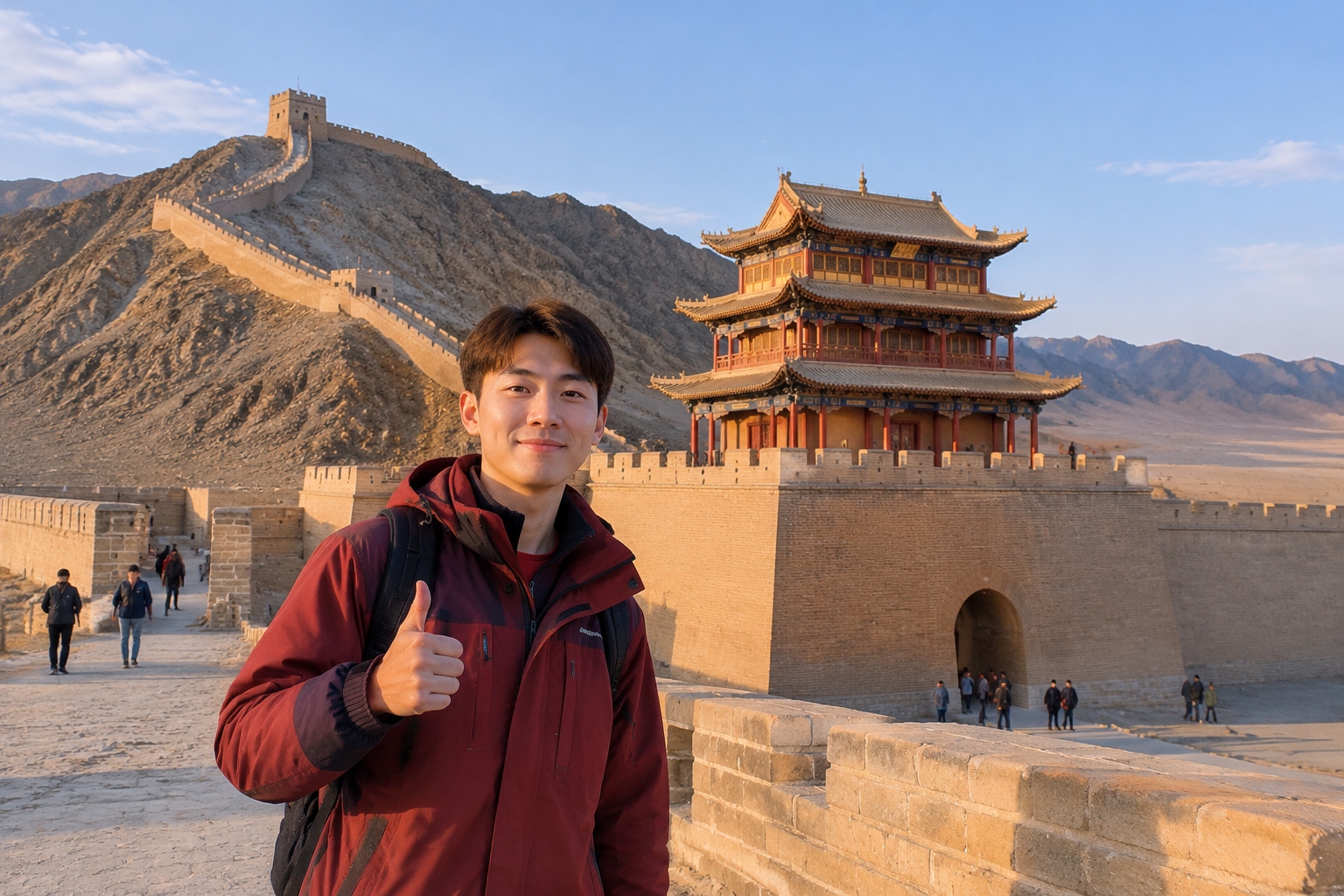
Practical notes: Late afternoon light is best for photographing the fort, and tourists leave quickly after sunset. The steps on the Overhanging Great Wall are steep; wear shoes with grip.
Fifth Threshold: The Door · Dunhuang (Days 7–9)
Dunhuang is the end of the route and, in ancient China, the doorway west. On the first night, go to Shazhou Night Market: donkey-meat yellow noodles, apricot juice, roast lamb ribs. Eat your way down one street.
The next morning, visit the Mogao Caves. Photography is forbidden inside; bags and cameras must be stored. A guide leads you through eight caves with a flashlight—flying apsaras, sutra illustrations, portraits of donors. The colors are mineral pigments, still vivid after a thousand years. In the afternoon, ride a camel at Mingsha Mountain. The caravan moves along the sand ridge in silhouette, the classic Dunhuang image.
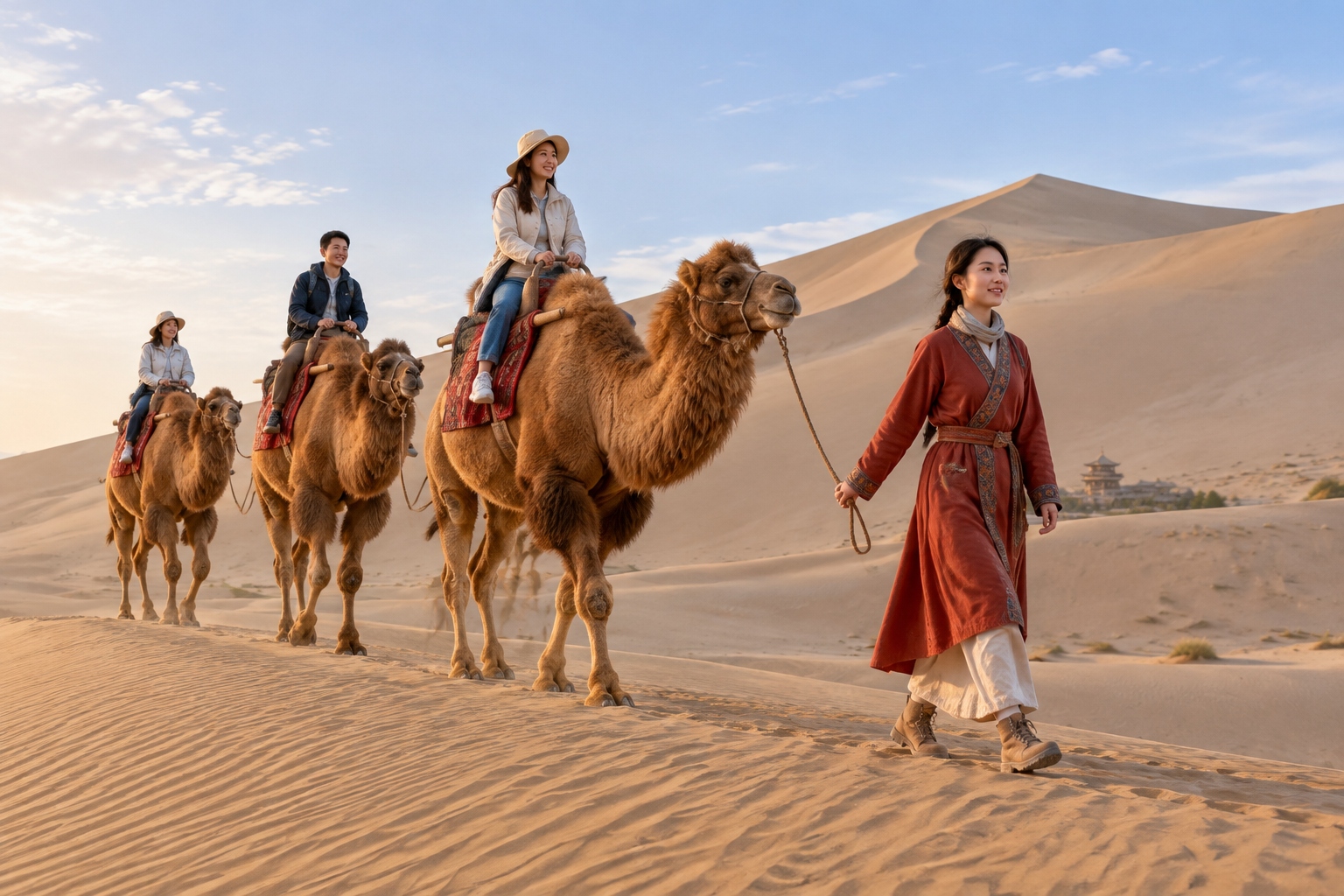
On the third day, go to Crescent Lake, a curve of water lying between sand mountains, then continue west to the Yardang “Ghost City,” where wind has carved earth platforms into the shape of a fleet. Stay for the stars—there is no light pollution, and the Milky Way looks like spilled salt.
Practical notes: Mogao Caves must be booked in advance; in peak season, tickets often sell out a week ahead. Enter Mingsha Mountain after 5 p.m. to avoid the strongest sun; bare feet are more comfortable in the sand.
Day 10: The Way Back
Fly from Dunhuang to Xi’an, Beijing or Shanghai. The trip ends, but the sense of distance stays with you.
What to Know in the Northwest
- It is dry. The air is dry all year; lips crack. Bring lip balm and moisturizer, and drink water before you feel thirsty.
- Temperatures swing. Thirty degrees by day and ten at night is normal. Dunhuang nights need a jacket. Sun protection—hat, sunglasses, sunscreen—matters more than you think.
- Drives are long. Three or four hours in a car in one day is normal in the northwest. The advantage is that the view outside never stops.
- Best seasons: May–June and September–October are most comfortable. July–August are hot but dark comes late and the stars are best. Winter is cold, but crowds are thin and Mogao tickets are easier.
- Book ahead. Mogao is one of China’s most planning-sensitive sites. Fix your dates early.
Who It Suits—and Who It Doesn’t
This route suits travelers interested in history, religious art and geography; photographers who want Gobi, Danxia, dunes and starry skies in one trip; people who like emptiness and do not mind long drives; and visitors who have already seen one China and want to see a China that does not look like the postcard version.
It does not suit travelers who want constant “buzz, convenience and polish” (county towns in the northwest are plain), people who cannot handle dry air and sun, or anyone who needs a café and nightlife every day.
What You Bring Home
Not only photographs, but specific kinds of emptiness: the sound of wind at Jiayuguan coming steadily from the west; the moment a flashlight sweeps across a Mogao mural and a small patch of blue lights up; camel bells swaying behind you at Mingsha Mountain; lying on a dune at midnight, shivering, not wanting to leave.
Ten days, from the old capital to the doorway. Afterward, you understand that China is not only the busy coast. It also has an entire west: quiet, huge and old.