

A Route That Only Exists in Winter
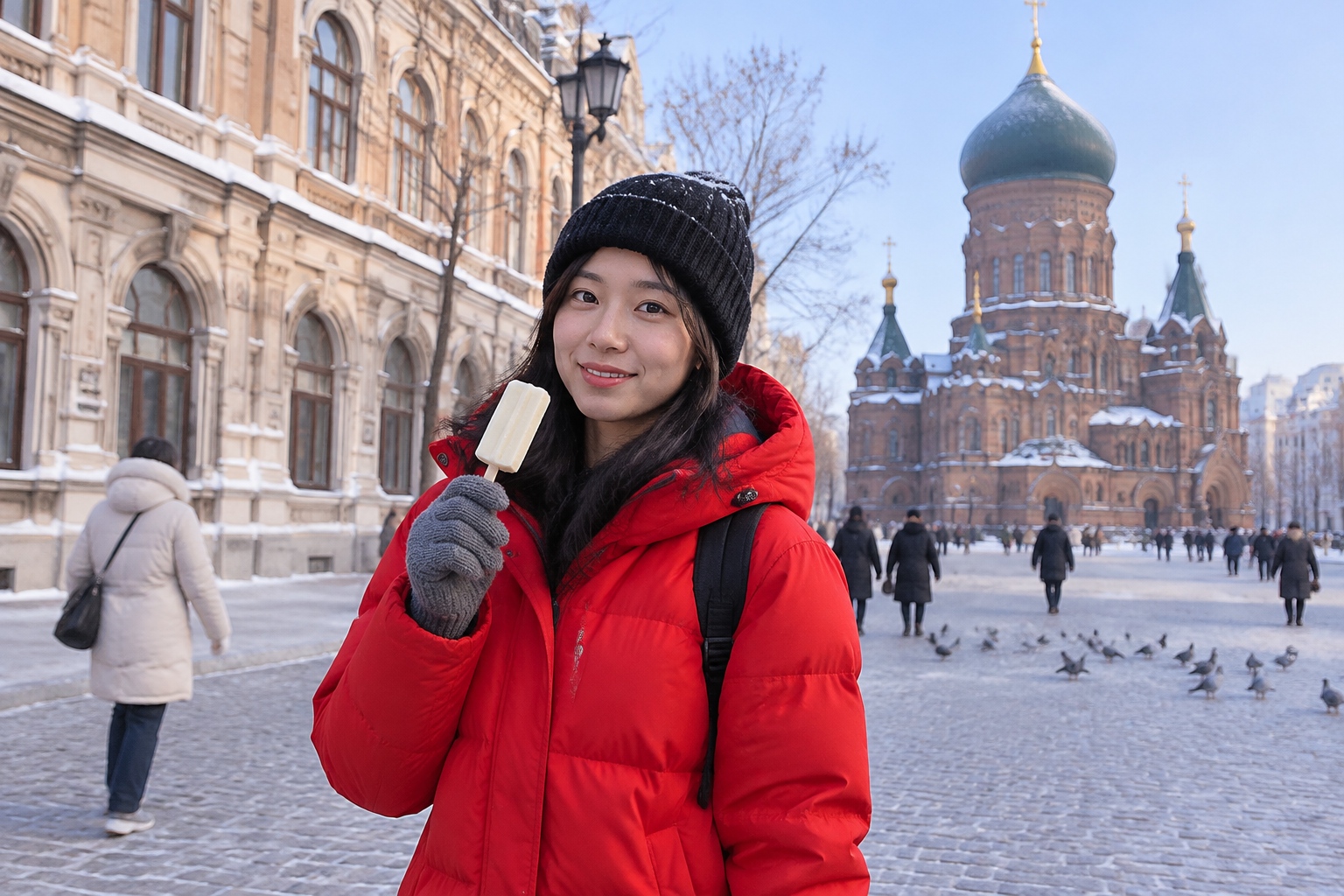
On Central Street in Harbin, a woman in a red parka stands in the minus 10°C air eating a Modaier ice pop. Snow sits on the windowsills of Russian-style buildings. Pigeons land near St. Sophia Cathedral at the end of the street. Nobody around her is filming a stunt. This is ordinary winter behavior in China’s northeast.
That picture matters because the route it belongs to has a hard rule: it exists only from December to February. Harbin, Yabuli, Snow Town, Jilin. Ice is cut from the Songhua River block by block. Snow builds layer by layer. Rime grows on trees only in the hours before dawn. Come in summer and there is nothing to see. This is not a route you can walk anytime. It is a season that opens for three months a year.
Cold Comes in Layers
In the northeast, cold is layered. Minus 10 and minus 30 show you different worlds. The route is really a temperature ladder. At minus 10, you walk and eat ice cream. At minus 20, your phone starts to die. At minus 30, your plans change because your eyelashes freeze.
Minus 10°C: Harbin by Day
Central Street’s cobblestones have been worn by a century of footsteps. Russian buildings line both sides, snow on the windowsills. Holding a Modaier ice pop at minus 10 is daily life, not performance. At the end is St. Sophia Cathedral, its green onion dome rising over the square, pigeons landing on the stones. This cold is bracing: your face stings, but walking feels good.
Minus 20°C: Harbin at Night
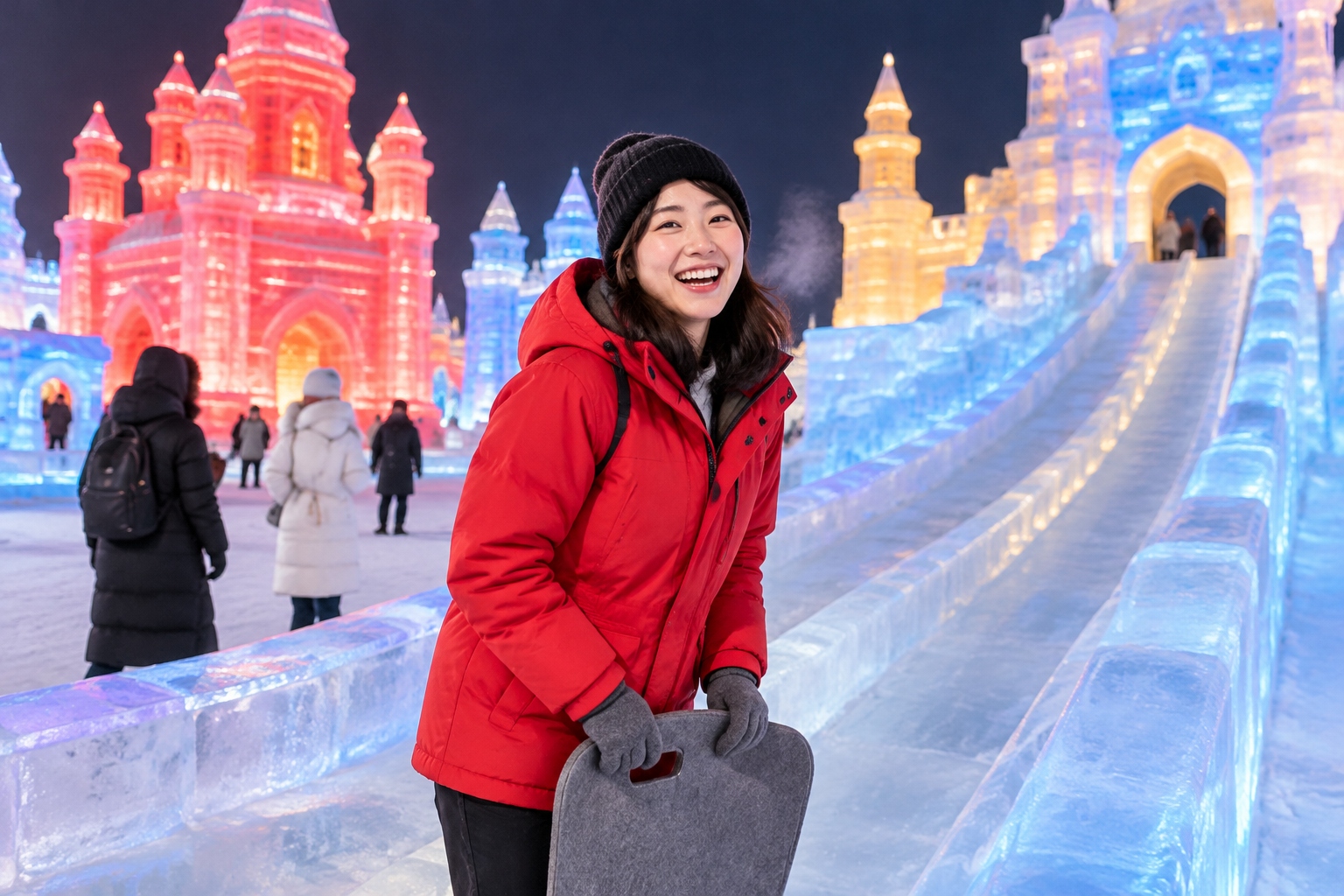
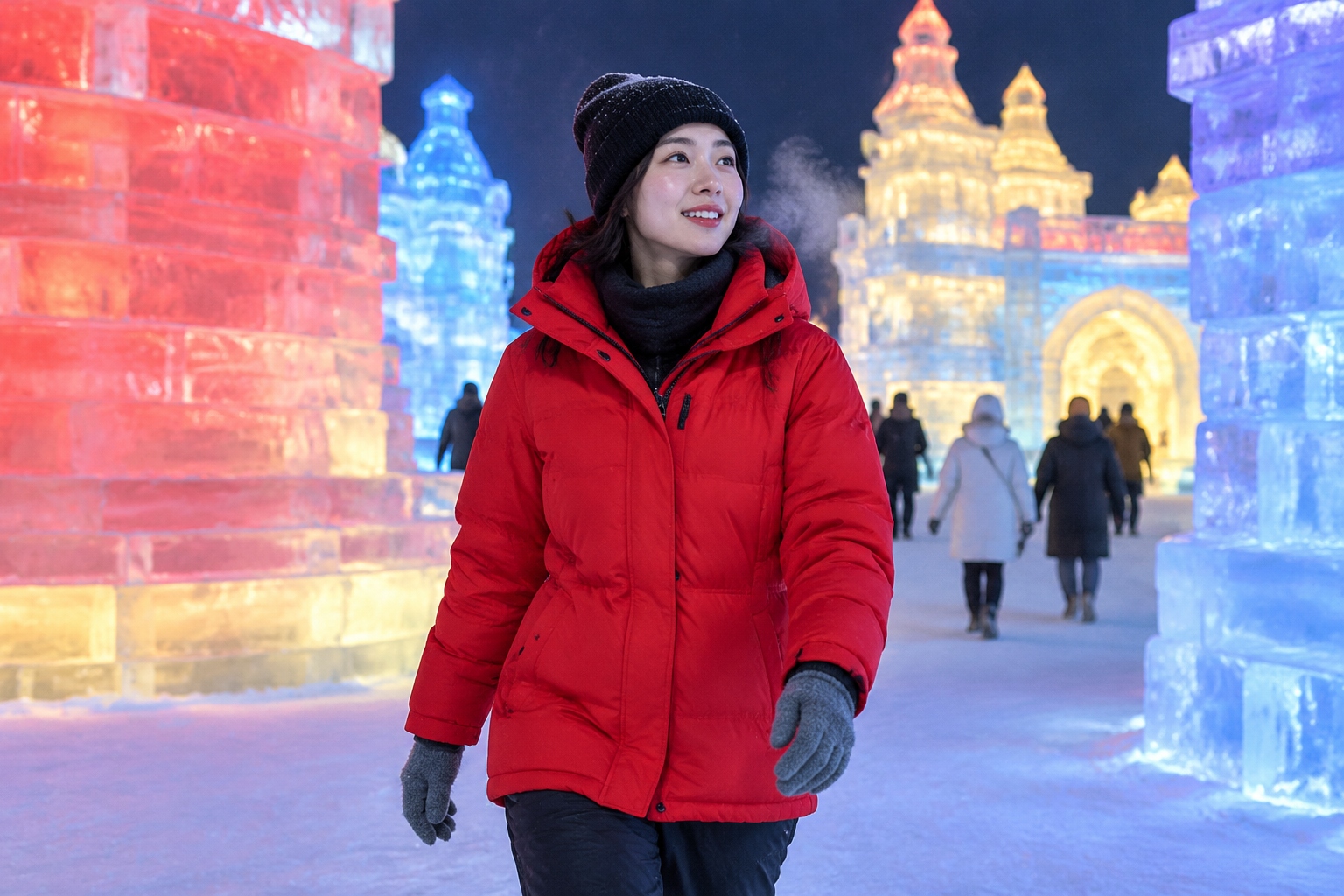
Day 2 brings the Ice-Snow World, the most fairy-tale night on the whole route. Ice bricks are cut from the Songhua River, hundreds of pounds each, stacked into castles, churches and slides, with lights buried inside. After dark they all switch on — red, blue, purple, gold. The ice is translucent, the light comes from within, and the whole city looks like it is made of sugar. You can queue for an ice slide and sit on a small felt pad. Watch your phone here: at minus 20, a fully charged phone can shut down after 20 minutes outdoors. Keep it close to your body, not in an outer pocket.
Minus 15°C: Snow Sculptures and a Proper Northeastern Meal
Day 3 at Sun Island Snow Expo is about snow, not ice: packed snow carved with shovels and knives. Daylight is best; the snow is white and the texture comes entirely from light. In the afternoon, sit down for a proper northeast meal — guobaorou, shazhucai, disanxian, and frozen pears. The pears are black and hard as stones. Soak them in cold water for half an hour, bite a hole, and suck the juice.
Minus 20°C with Wind: Yabuli
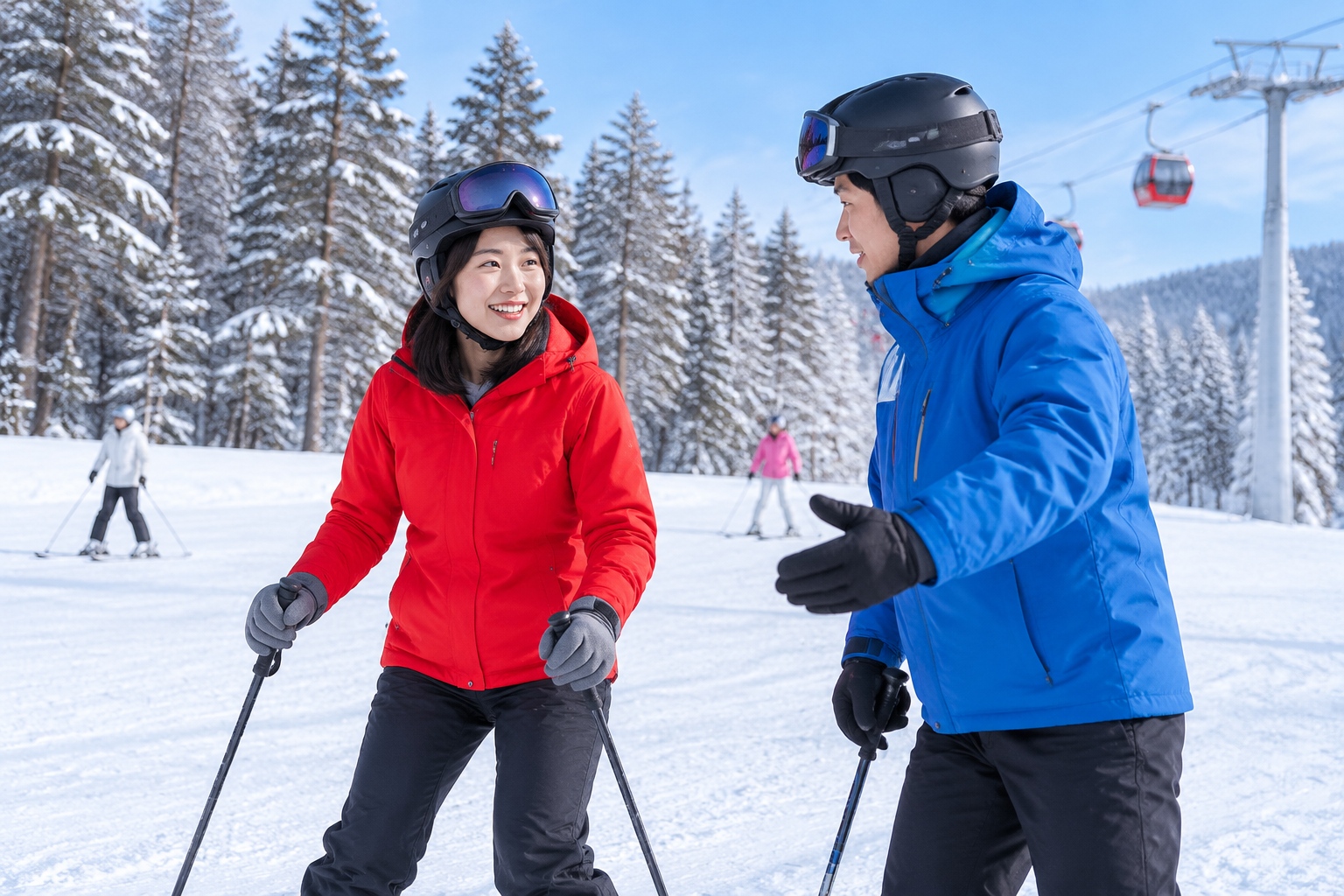
Day 4 is skiing. A private car from Harbin takes about three hours to Yabuli, one of China’s earliest and largest ski resorts, with runs from beginner to advanced. If you cannot ski, hire an instructor; two hours can teach you to brake and turn on a gentle slope. You fall twice and then you get it. The cold here is not the number but the wind. On the cable car, it finds every gap. Face mask, gloves, goggles — none are optional.
Minus 30°C: Snow Town at Night
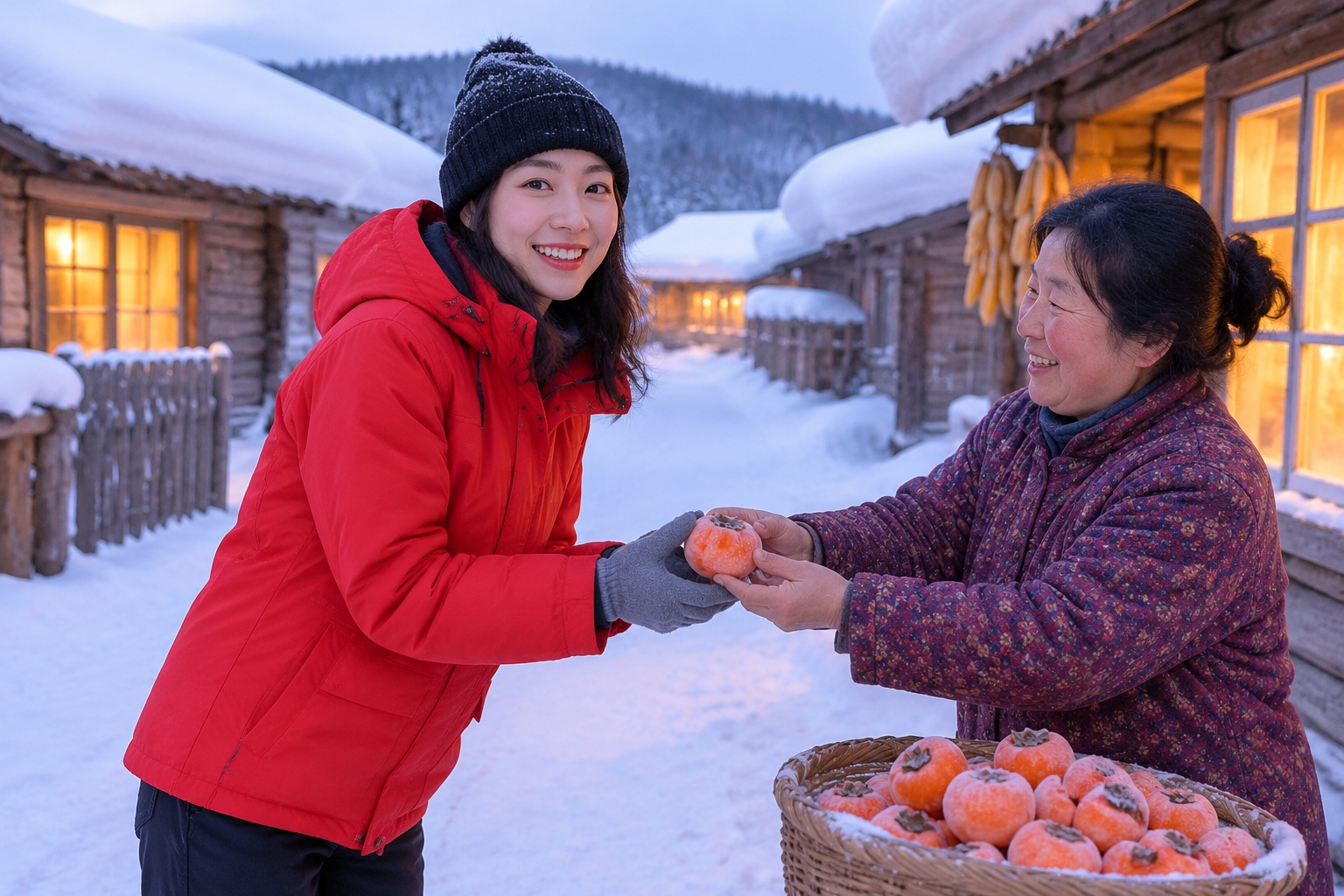
Day 5 is Snow Town. From Yabuli, continue southeast by private car, two or three hours on mountain roads, snow outside the window all the way. The place used to be Shuangfeng Forestry Farm. Snow falls seven months a year; roofs can carry more than a meter of it, pressed into round snow mushrooms. A row of wooden roofs wears white hats. At dusk the lights come on, warm yellow from the windows falling on the snow — the photo everyone has taken. When you stand inside it, you know it was not a trick. Later, a snow-field hot spring: minus 30 air, 40°C water, hair frosted in ten minutes, breath freezing on your eyelashes. Then a bonfire party. Strangers jump around the fire, nobody knows anybody, everyone is laughing. Dress right: three layers — a wicking base, fleece or down in the middle, windproof and waterproof outside. Shoes need thick soles, good grip, and one size larger to fit wool socks.
Minus 25°C: Jilin at Dawn
Day 6 is a two-hour high-speed train to Jilin City. The Songhua River runs through town. Because of upstream hydropower discharge, the river does not freeze in winter; vapor rises, meets minus twenty-something air, and condenses on trees along both banks as rime. Whole rows of willows turn into white coral. When the sun comes out and the wind blows, white flakes fall. Day 7 gives you two choices: another ski day at Beidahu, or an early trip to Rime Island for sunrise. Then leave from Changchun or Harbin airport. This cold is about waiting: rime depends on weather, not every day. We schedule two mornings to raise the odds.

The Most Memorable Part Is the People
Northeasterners’ warmth and humor stay with you longer than ice sculptures. In a Harbin taxi, the driver will ask where you are from, whether you have eaten, and then start telling you about his son’s job — all within five minutes. In a Snow Town farmhouse, the owner takes your wet gloves to the stove and slips you a frozen persimmon. On the Yabuli cable car, the uncle next to you teaches you how to stand and says, “Falling is not embarrassing. I have fallen a hundred times.” People here have a way of turning hard days into jokes. At minus 30, their solution is: wear more, eat more, drink more, talk more. You may feel for the first time that cold can be fun.
What to Pack for This Winter Route
Three-layer dressing: wicking base + fleece or light down + windproof outer. Avoid cotton base layers; they turn cold when you sweat. Bottoms: fleece-lined trousers + windproof outer trousers, more useful than two pairs of jeans. Shoes: thick sole, good grip, one size larger, with wool socks inside. Cold feet are the only real enemy on this route. Accessories: hat with ear flaps, neck gaiter, waterproof gloves (two pairs, one will get wet), ski goggles or sunglasses for snow glare. Electronics: two camera batteries, kept close to the body; a hand warmer taped to the back of your phone. Skin: hand cream and lip balm; wind will crack your face.
Who This Route Is For
For people who want to see a place that looks nothing like home; families with children (Snow Town and Ice-Snow World are magic for kids); ski lovers (Yabuli plus Beidahu gives two days); anyone who does not mind cold and is willing to dress like a ball. Not for people who hate cold — there is no indoor substitute on this route; older travelers with limited mobility, because snowy roads and icy steps are real; or anyone who mainly wants to look good in photos. At minus 30, looking good means being able to stand.
What You Take Home
Not the photos of ice sculptures, but specific body memories: frost on your eyelashes, the dull ache when you hit the felt pad at the bottom of an ice slide, the sweet water from the first bite of a frozen pear, hair freezing in the hot spring while you refuse to get out, and a stranger by the bonfire handing you a cup of warm baijiu. Seven days, minus 30. Afterward you realize: what you remember is not the cold. It is that you laughed all day in it.