
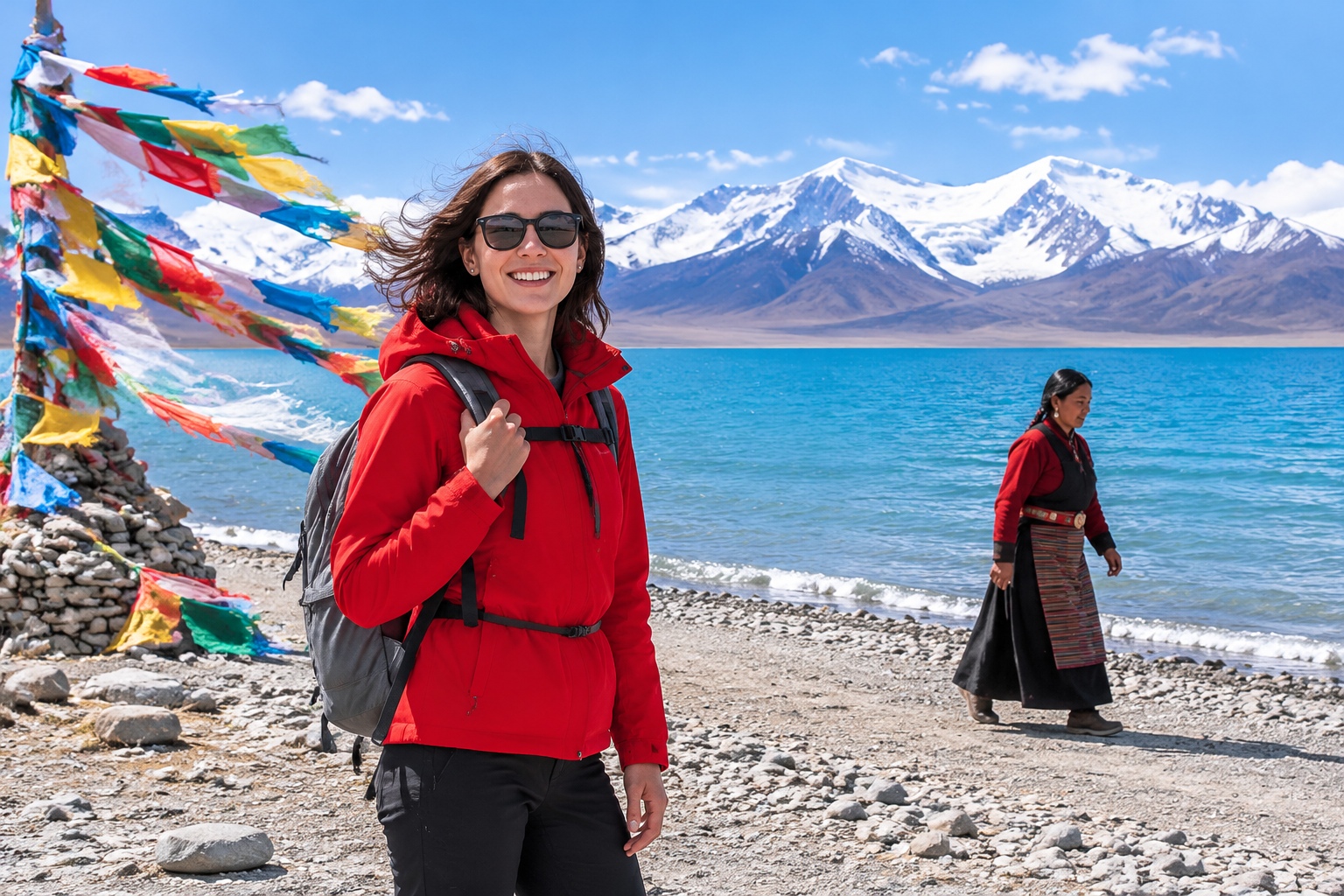

Why This Route Feels Different
On the third morning in Lhasa, I watched a traveler stop halfway up the stone stairs of the Potala Palace. She was not posing for a photo. She was breathing. At 3,650 meters, even a short climb can make your heart sound louder than the traffic below. That pause, more than any postcard view, is where this Tibet route begins.
This is not really a “see the sights” trip. It is a route that recalibrates your body and your sense of scale. The air holds about 60 percent of the oxygen you are used to at sea level. The sun burns your face. Walking up two floors can leave you standing still for a moment. Then you look up and the sky sits so low it feels like a blue cloth pressed against the mountains.
The order is deliberate: people first in Lhasa, then the lake, then the mountains. You start in the human world and move, step by step, toward the sky.
Why Eight Days Are Worth It
1. The scale does not fit in a photograph. It is not that photos look bad. It is that they have no weight. The red walls of the Potala Palace are hot under the midday sun. The wind at Namtso can push you off balance. At sunrise, the top of Everest turns gold before the rest of the mountain wakes up. You need to be there, measuring it with your body.
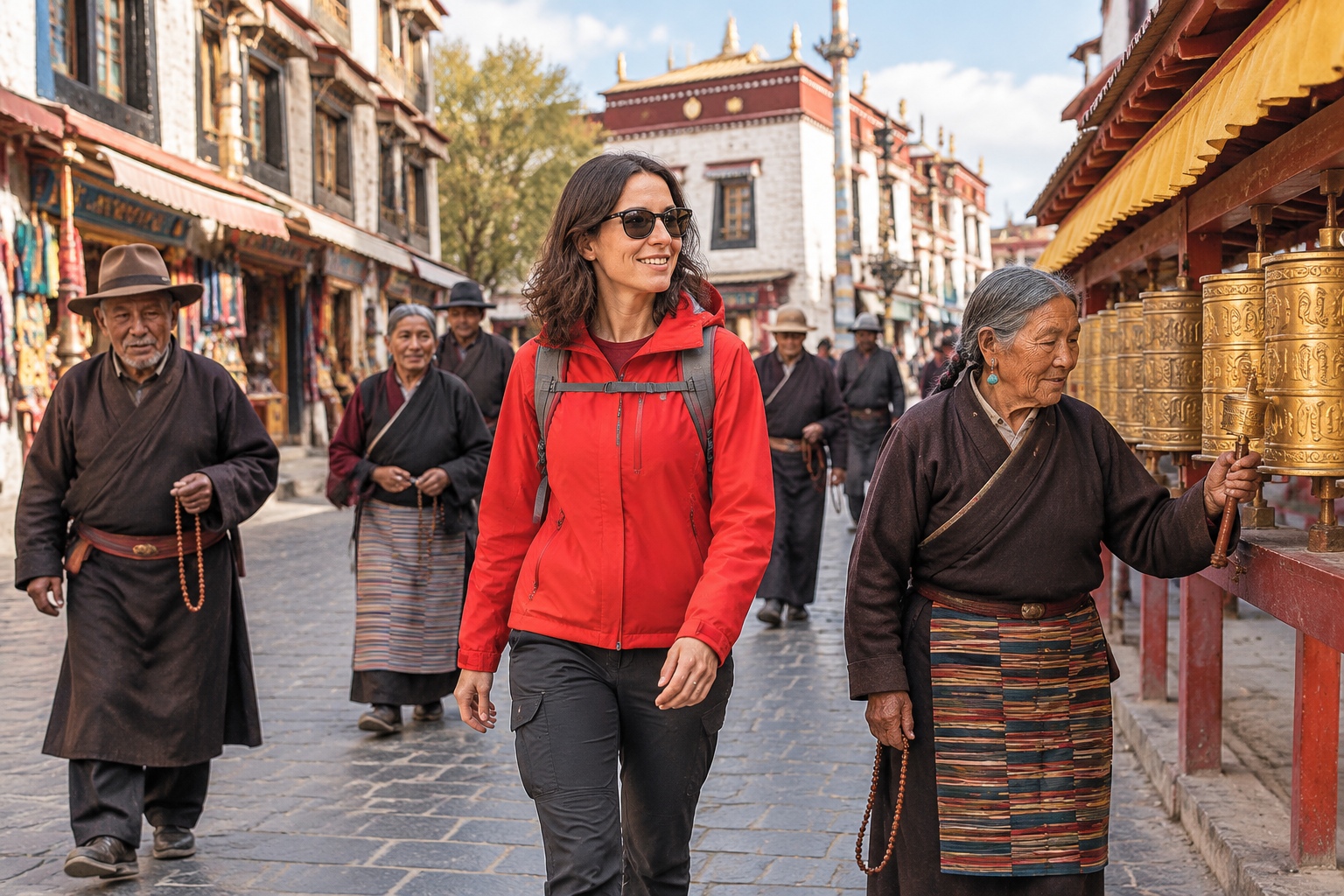
2. Faith here is alive, not staged. On Barkhor Street, the flow of pilgrims moves from morning to night. In front of the Jokhang Temple, people perform full-length prostrations until their foreheads darken. In the courtyard of Sera Monastery, monks gather in the afternoon to debate, slapping their palms together as if arguing about something that matters. You can stand nearby. No one minds. They are not performing for you.
3. Namtso and Everest are the headline acts. One is China’s second-largest saltwater lake, known in Tibetan as “the heavenly lake.” The other is the highest point on Earth. Putting both into one journey is the most extravagant thing about this route. The “unseen” part is not a secret coordinate on a map. It is the way these places enter your body when you arrive slowly enough to notice.
Lhasa: Learn to Slow Down First (Days 1–3)
Day 1: Do nothing. Fly into Lhasa at 3,650 meters and resist the urge to be efficient. Do not take a long shower. Do not drink alcohol. Do not run. Do not get excited. Walk slowly to the hotel, lie down, drink water. Altitude sickness is not a personality test. It is your body recalibrating its oxygen supply. Give it a day, and the next seven days will be easier.
The most common approach is to fly from Chengdu, Chongqing or Xi’an. You can also take the Qinghai–Tibet railway. It is slower, but the route passes through Kekexili and the Tanggula Pass. The landscape becomes part of the journey, so leave extra time.
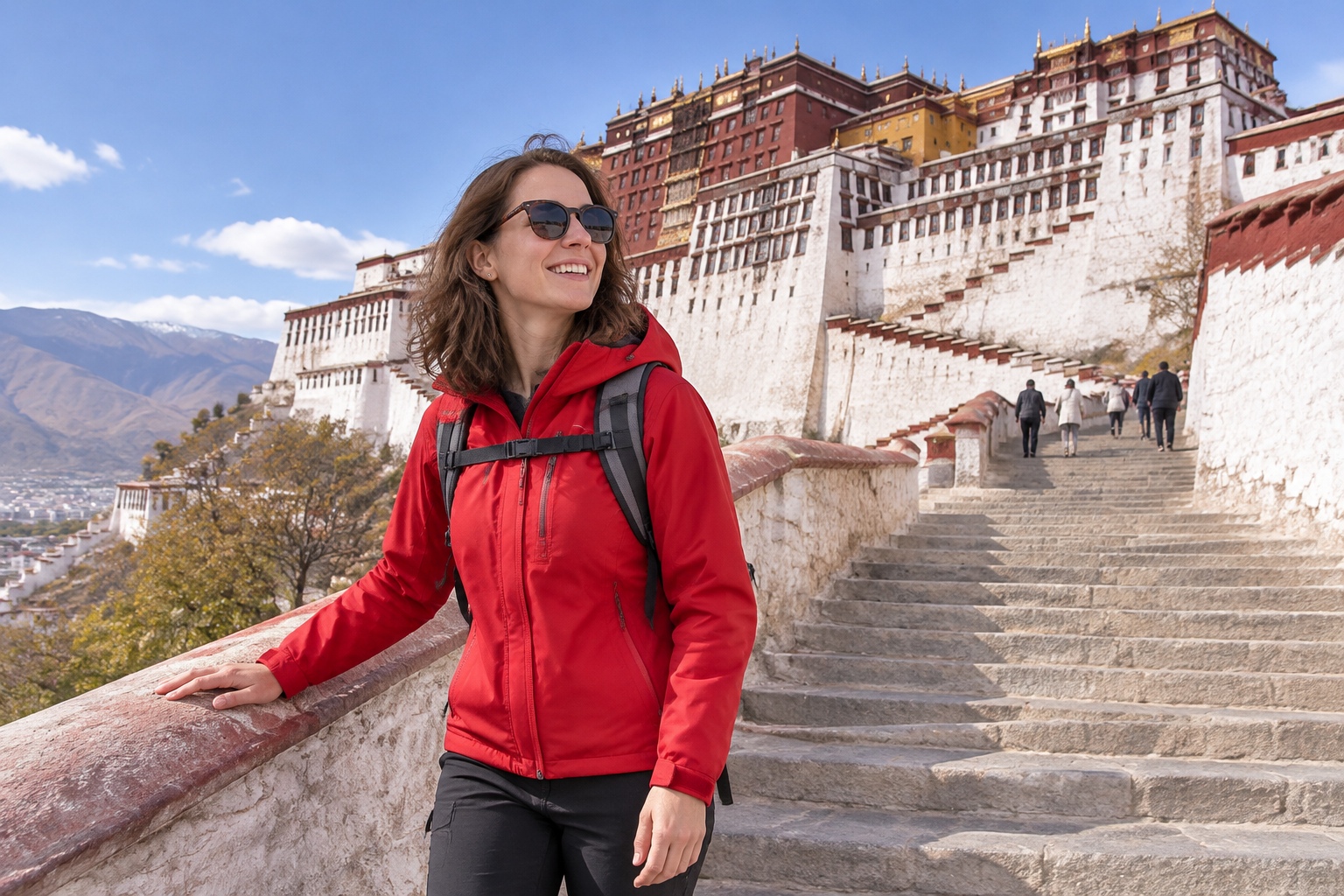
Day 2: The Potala Palace and old Lhasa. Climb the stairs in the morning, one layer at a time. Stop every few steps. The white walls are traditionally painted with a mixture of milk and lime; the red walls use a local grass. Visits are timed, so stay with your guide and do not wander off. In the afternoon, go to the Jokhang Temple. Outside, pilgrims prostrate on wooden boards worn smooth and shiny. Then walk Barkhor Street in a clockwise direction. The crowd will carry you along. Prayer wheels turn one after another. Older people count beads in their hands.
Day 3: Two monasteries. In the morning, visit Drepung Monastery, a white complex spread across the hillside and once the largest monastery in Tibet. In the afternoon, go to Sera Monastery for the monk debates. They usually start around 3 p.m. Monks face each other in pairs: one sits and answers, one stands and questions, clapping after each challenge. You do not need to understand Tibetan. The rhythm explains enough.
Small details: The Potala Palace and Jokhang Temple require advance reservations, and peak-season slots are tight. Photography is not allowed inside the monasteries, and you should remove your hat. At the debate courtyard, cameras are fine, but no flash and do not step between the monks.
Namtso: The Lake That Changes Color (Day 4)
Leave Lhasa and cross the Khande La Pass at 5,190 meters. The wind is so strong that opening a car door takes two hands. Then the road drops, and the lake appears: Namtso, 4,718 meters above sea level, so blue it looks less like water than a piece of sky that fell onto the plateau. Behind it, the Nyenchen Tanglha range holds a long line of snow.
Stay for sunset. The sun drops behind the mountains, and the lake shifts from blue to gray-blue, then purple, then dark. If you stay for the stars, you will be colder than you expect. But this is one of the best night skies in the country. The air is thin, so the stars look sharp, almost aggressive.
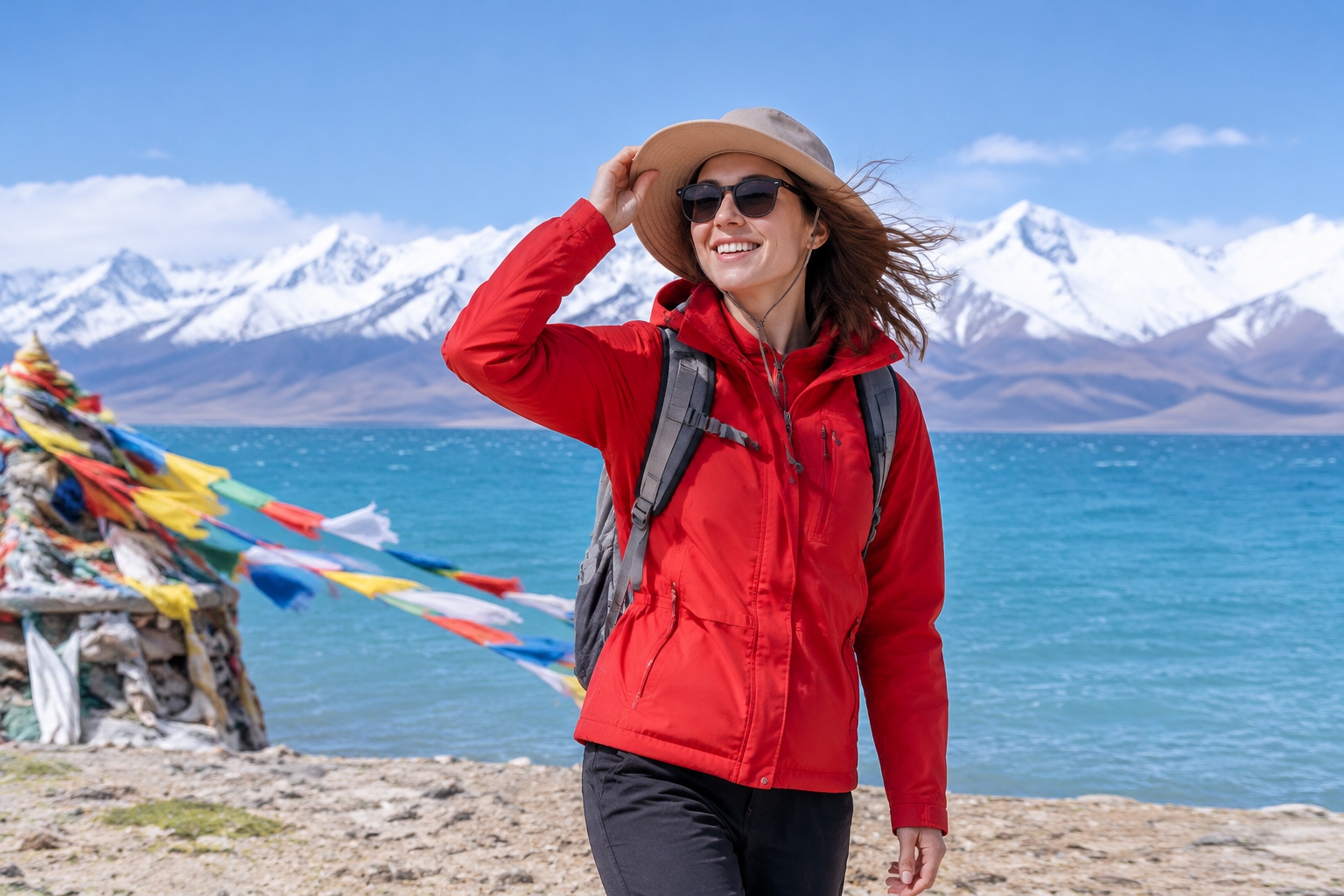
Small details: The lake is high and windy. Bring a down jacket and a hat. After sunset, the temperature falls fast. Do not try to prove how long you can last.
Shigatse and Everest: The Mountain at the End (Days 5–7)
Day 5: Shigatse. Head west along the Yarlung Tsangpo River. The valley narrows and opens, narrows and opens. The hills are earth-yellow; the river is jade-green. In Shigatse, visit Tashilhunpo Monastery, the seat of the Panchen Lamas. Inside, the giant Maitreya Buddha is more than 20 meters tall. Looking up makes your neck ache. Outside, the kora path circles the hill and takes more than an hour on foot.
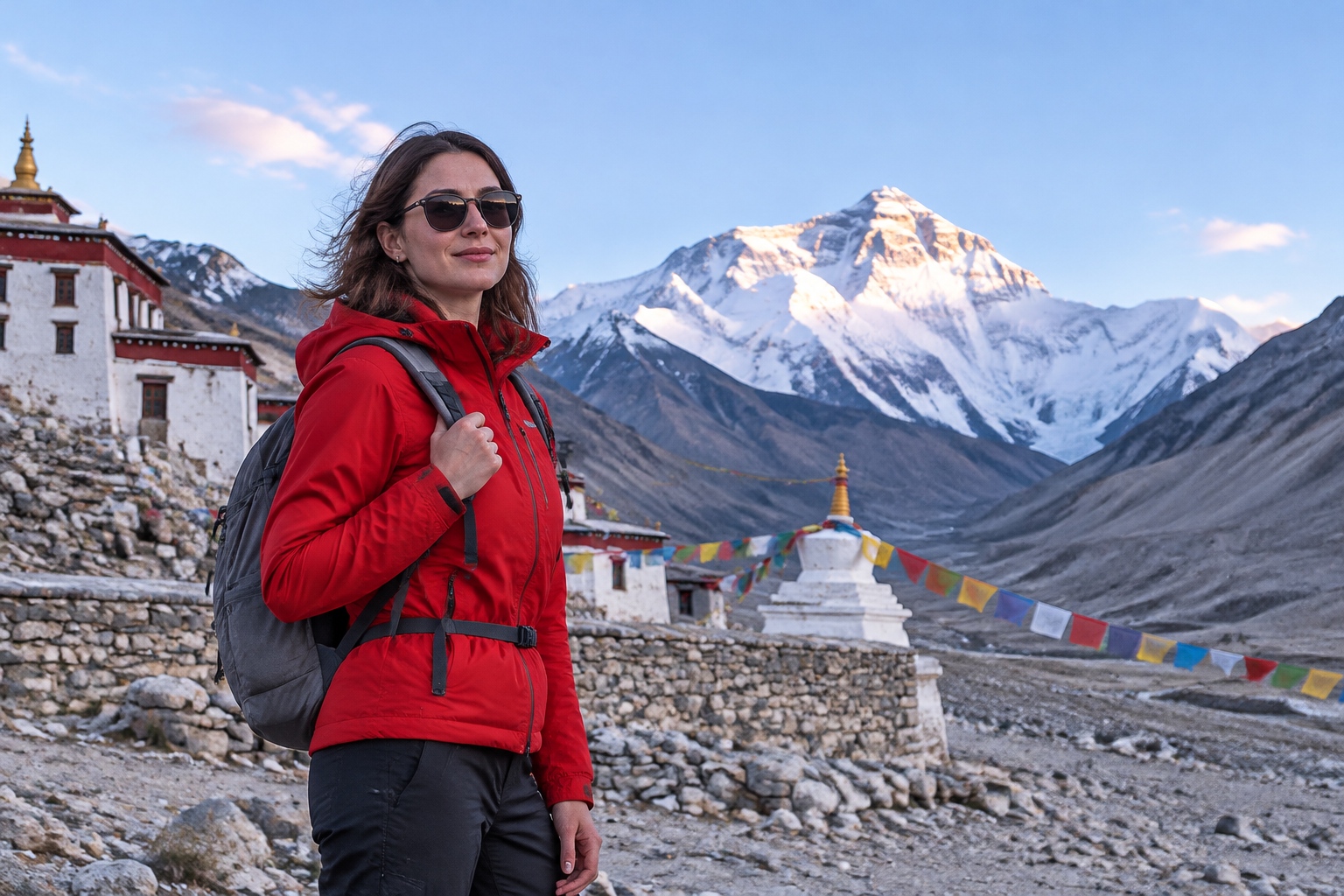
Day 6: Toward Everest. Continue south through Tingri. The road keeps pushing inward, and the mountains grow larger. By evening, reach Rongbuk Monastery, one of the highest monasteries in the world at about 4,980 meters. From here you see the north face of Everest for the first time: a white triangle standing behind all the other mountains.
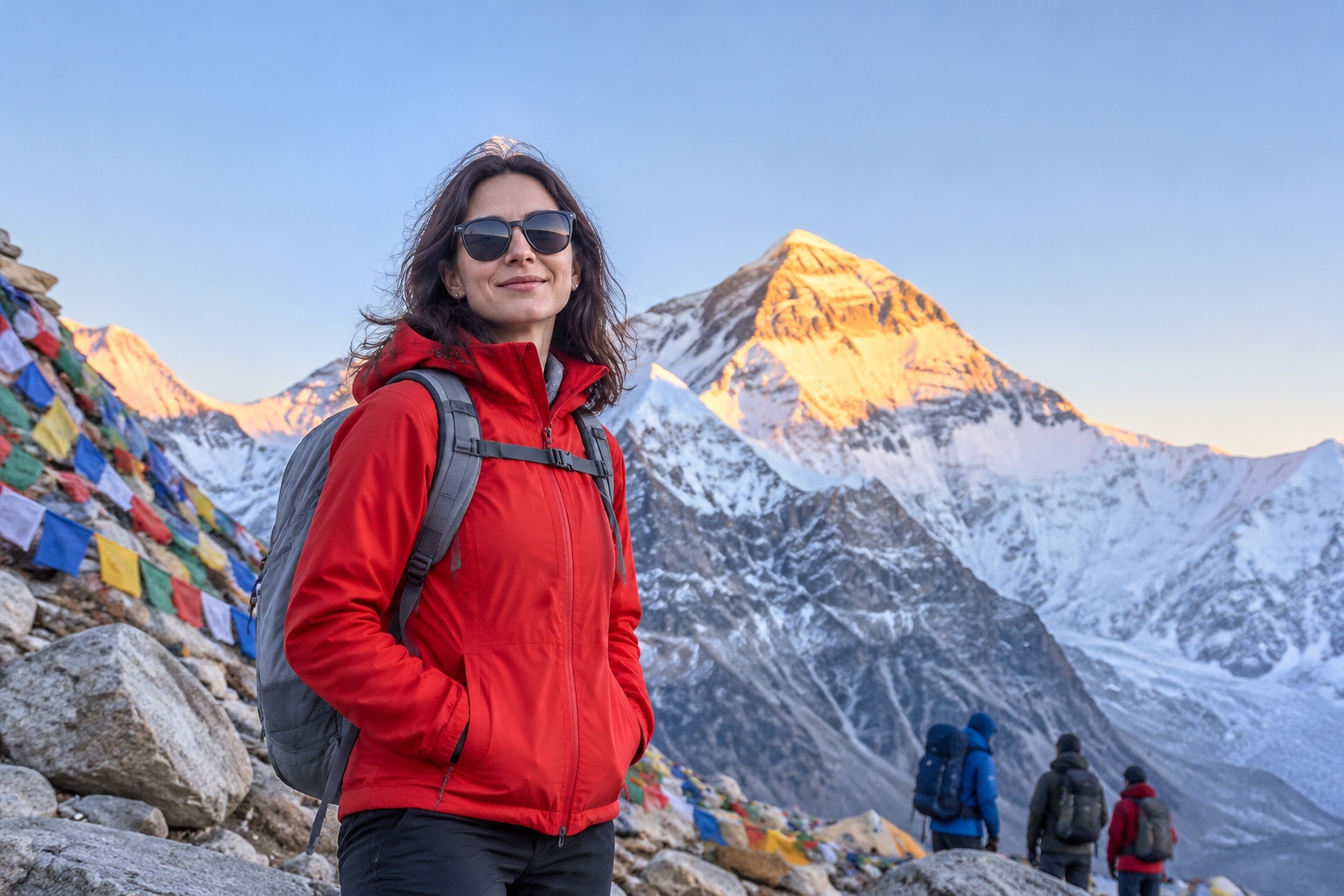
Day 7: Everest Base Camp. Wait for sunrise. First the summit is lit, a small piece of gold. Then the gold runs down the ridge. Within minutes the whole mountain is bright. Usually no one speaks. You hear shutters and breathing. At night, look at the stars again. At 5,200 meters, the Milky Way looks thick enough to touch.
Day 8: Return to Lhasa and depart. The long drive back gives you time to notice how different your breathing feels from Day 1.
Practical Notes for the High Plateau
Altitude. Headache, insomnia, shortness of breath and poor appetite are common. Walk slowly, drink water, avoid smoking and alcohol, and do not shower on the first night. If symptoms become severe — continuous vomiting, inability to walk, confusion — descend or use oxygen immediately. This is not a test of willpower.
Permits. Foreign travelers need a Tibet Travel Permit arranged through a licensed travel agency, and the Everest section requires an additional border pass. Agencies can handle this, but passport information must be provided in advance. Last-minute additions are not possible.
Season. April to June and September to October are the most comfortable. July and August are the rainy season, with more cloud and a higher chance Everest is hidden. November to March is cold, but the sky is clearest and the crowds are thinnest.
Sun. Ultraviolet light is intense. Sunscreen, a hat, sunglasses and lip balm are not optional. If you forget one, you will feel it.
Pace. Daily drives are not short, but the route is arranged as three days of acclimatization, two days around the lake, and three days in the mountains. It is not meant to be rushed.
Who This Route Is For
It suits: travelers who take the “once in a lifetime” idea seriously; people interested in Tibetan Buddhism and high-altitude geography; anyone basically healthy who can accept a few uncomfortable days; photographers who want four distinct subjects — the Potala Palace, Namtso, Everest sunrise and the night sky.
It does not suit: people with serious heart or lung conditions, uncontrolled high blood pressure, or pregnant travelers, who are generally advised not to go to high altitude; people who want a relaxed resort holiday; and anyone with only five or six days. Altitude needs time. Compress the route and it becomes suffering.
What You Bring Home
You may not come home saying, “I have been to Tibet.” You come home with moments your body remembers: the first time you stop to breathe on the Potala Palace stairs; being carried along Barkhor Street with a warm prayer wheel in your hand; the wind at Namtso blowing your hat off and making you laugh as you chase it; the five minutes at Everest sunrise when everyone in the car goes quiet.
Eight days, from 3,650 meters to 5,200 meters. You leave with a new understanding of the word “high.” It is not a number on a map. It is every breath you had to take.