


A Ten-Day Route That Changes Channels
The first time the road bends, you think someone has changed the screen. You are in northern Xinjiang, China’s far northwest, on a route that runs from Urumqi to Sayram Lake, Ili, Kanas and Hemu in about ten days. On paper the itinerary looks complicated. In practice it has one rule: keep changing channels.
Lake, grassland, snow mountain, birch forest—they do not arrive as separate stops. They play continuously. The car window is the screen, and nobody asks you to press pause.
Channel 1: The City (Days 1–2)
Day 1: Urumqi, or How Big This Place Is
Start at the Xinjiang Museum. It explains the next nine days: this land was never just a borderland; it was a crossroads. Greek patterns, Persian weaving and Central Plains silk have appeared on the same object. The famous “Five Stars Rise in the East, Benefiting China” brocade arm guard is palm-sized, and the characters are woven, not embroidered. Another floor holds the mummy exhibition; many people go quiet for a while after seeing it.
The point is not to memorize dates. It is to feel how many routes have crossed this land. Xinjiang is roughly the size of Iran, and the next few days will make that geography physical.
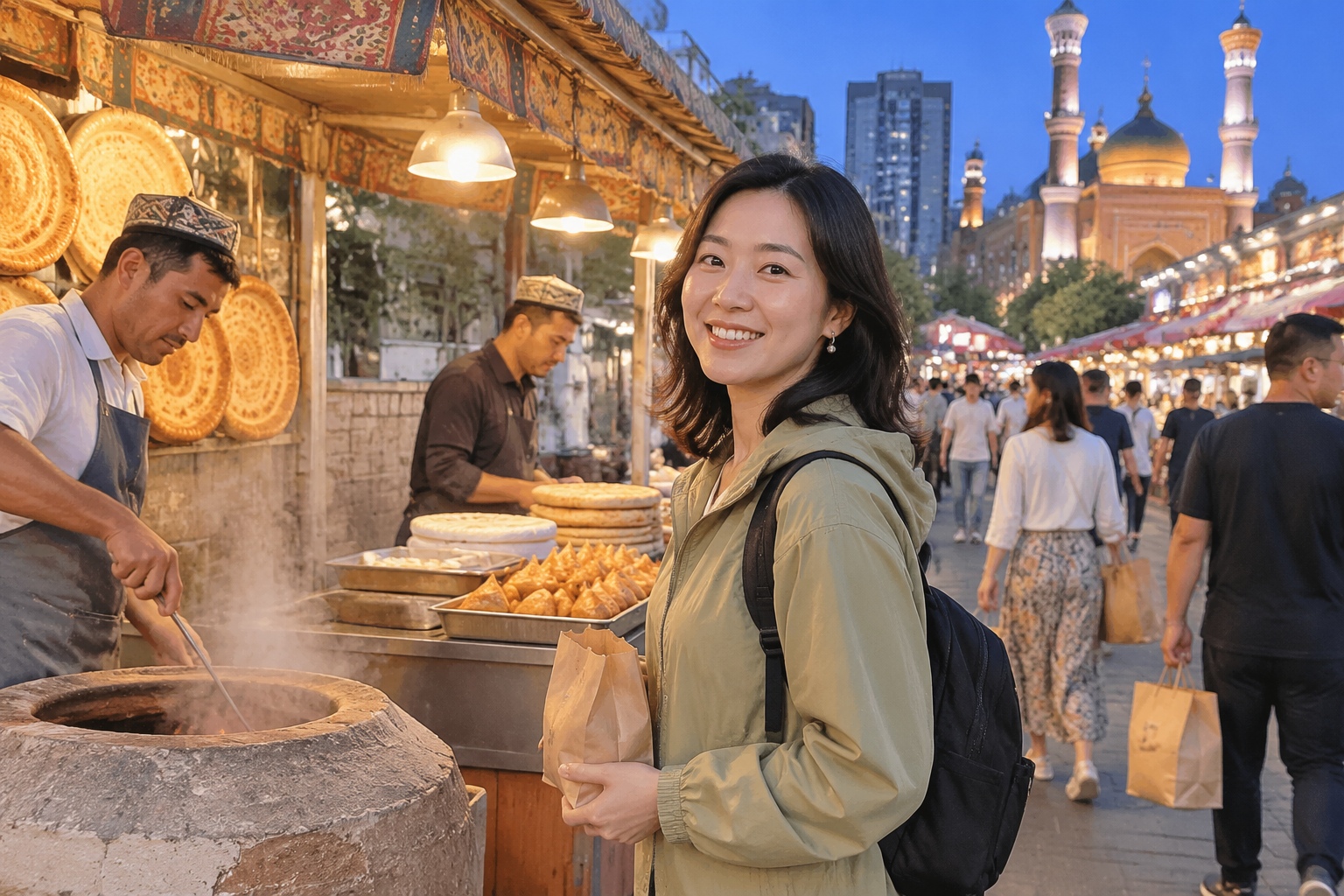
At night, go to the Grand Bazaar. It is touristy, but worth one visit: lines at the naan oven, lamb samsa oil soaking through paper bags. Remember that daily life here runs two hours later than Beijing. In summer it is still light at 10 p.m.; the night market starts around 9.
Day 2: Tianchi, the First Blue
In the morning, drive out to Tianshan Tianchi, about an hour and a half, altitude around 1,900 meters. In Chinese imagination it is Yaochi, the pool of the Queen Mother of the West. You do not have to believe the legend. Standing there, you understand why people invented it: a sudden blue above the snow line, surrounded by fir.
Back in the city, finish the museum. It is a rushed day, but the mountain is cooler in the morning.
Channel 2: Blue (Day 3)
Day 3: Sayram Lake, the Atlantic’s Last Tear
Drive west from Urumqi. The color outside the window fades: first the gray-yellow of Gobi, then suddenly—a whole sheet of blue.
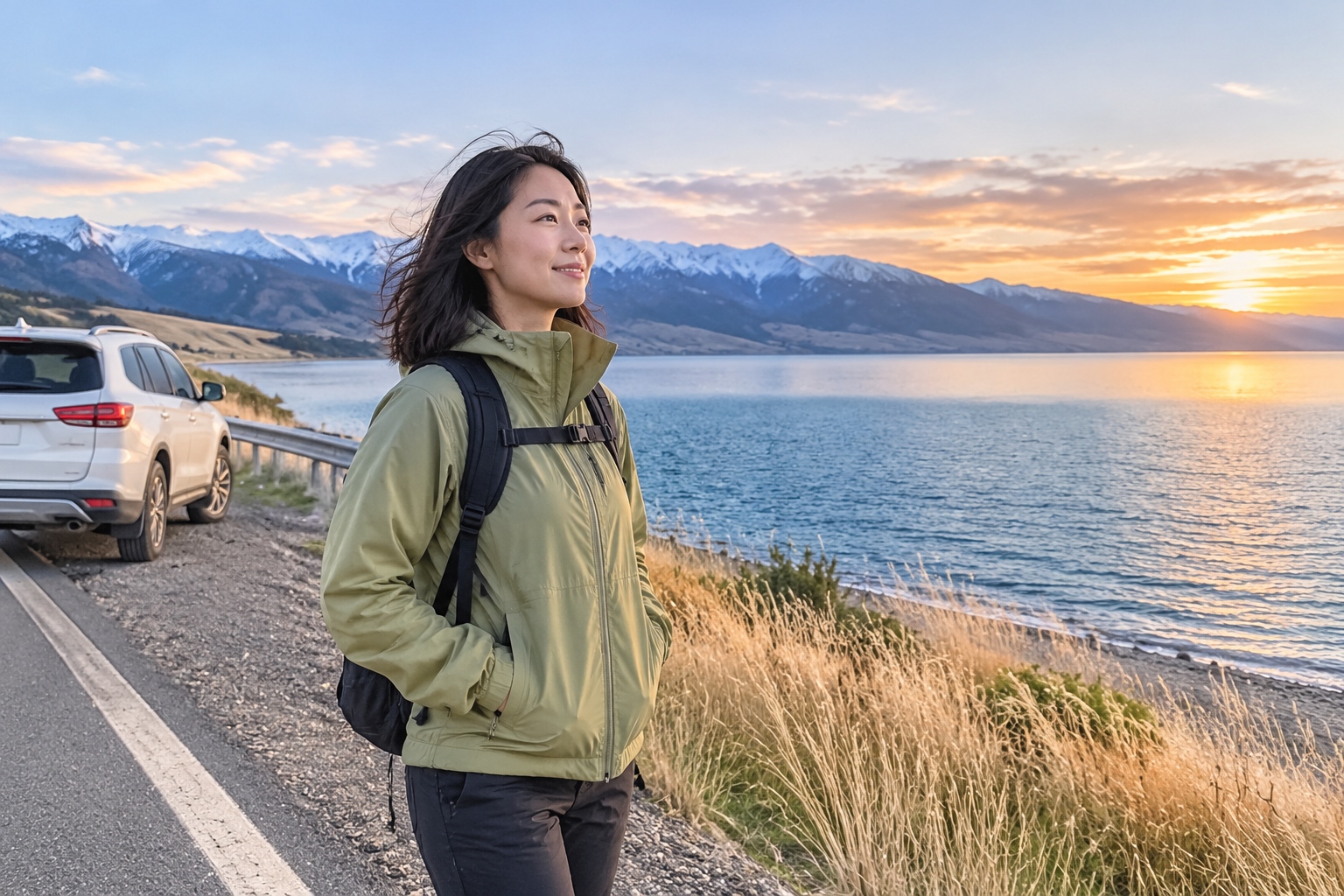
Sayram Lake is called “the last tear of the Atlantic.” Warm, wet air from the Atlantic travels east and is nearly spent here; the last moisture falls as this lake. It is one of Xinjiang’s highest and largest alpine lakes, clear enough to see stones near the shore.
The ring road is the point: about 90 kilometers, paved close to the water, easy to stop. It is windy, and the lake is several degrees colder than the city. Keep the windbreaker out of the suitcase. At sunset the lake splits into two colors—deep blue near shore, silver farther out. You will stop more often than you planned.
Channel 3: Green (Days 4–6)
Day 4: Nalati, Grassland in 3D
“Sky grassland” is not a metaphor. Nalati’s pastures are laid across ridges and terraces around 2,000 meters. You stand on one grassland and watch cloud shadows run across another below. The grass is not flat; it rolls and folds. Kazakh herders’ yurts are scattered among it, smoke going straight up.
Day 5: Kalajun, on Horseback
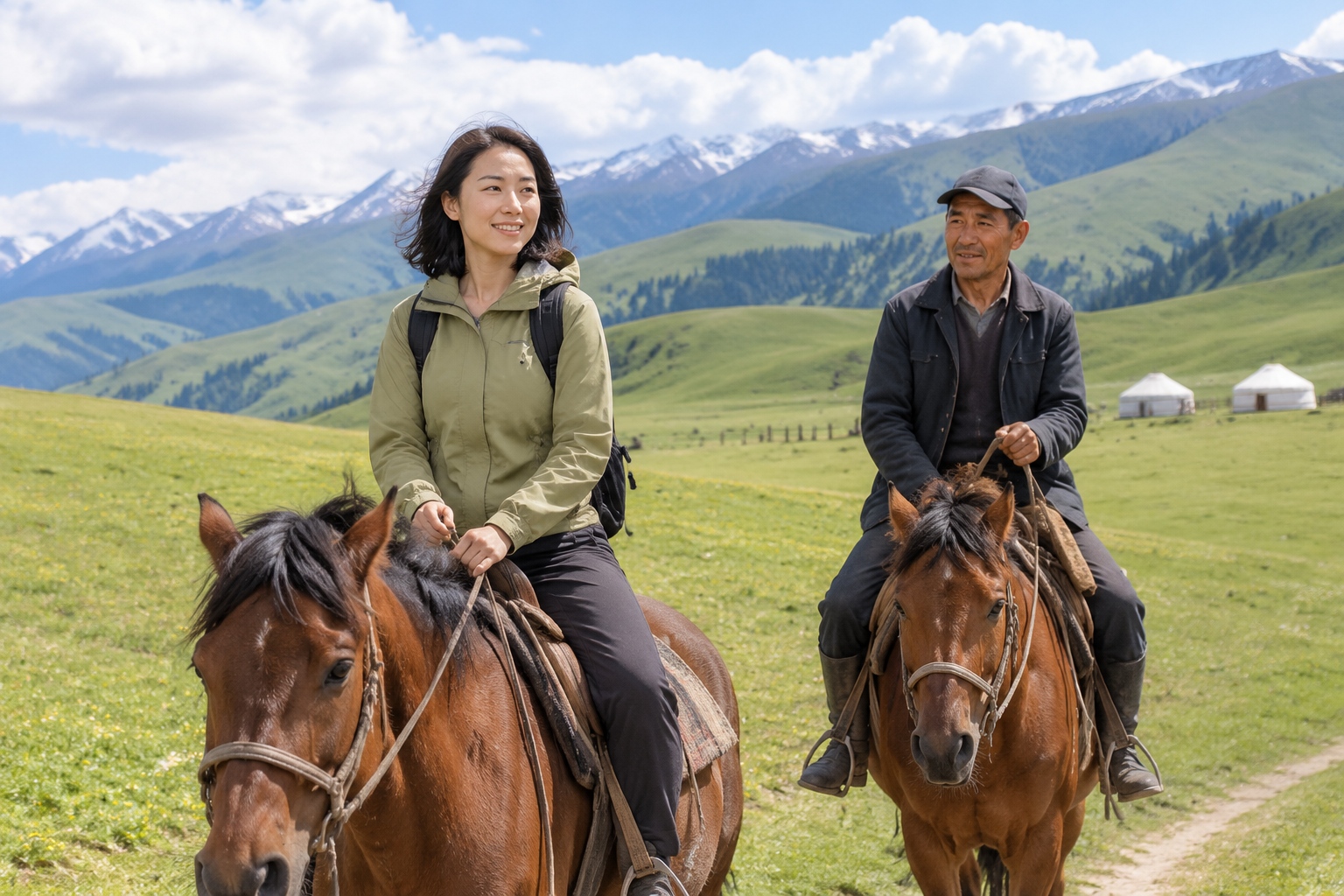
Kalajun is part of the “Xinjiang Tianshan” World Natural Heritage site. The draw is the curve: slopes pull in and open out in layers, grass shifting from fresh green to dark green. Today you ride—not a handler leading you in a circle, but a stretch of trail with a herder. The first ten minutes are tense; after that you do not want to get off.
Day 6: Lavender and a Yurt Dinner
Mid-June to early July, the Ili Valley’s lavender fields run in purple rows. This area sits at 43–44 degrees north, close to Provence. Not “China’s Provence”—just another place at the same latitude where purple flowers bloom.
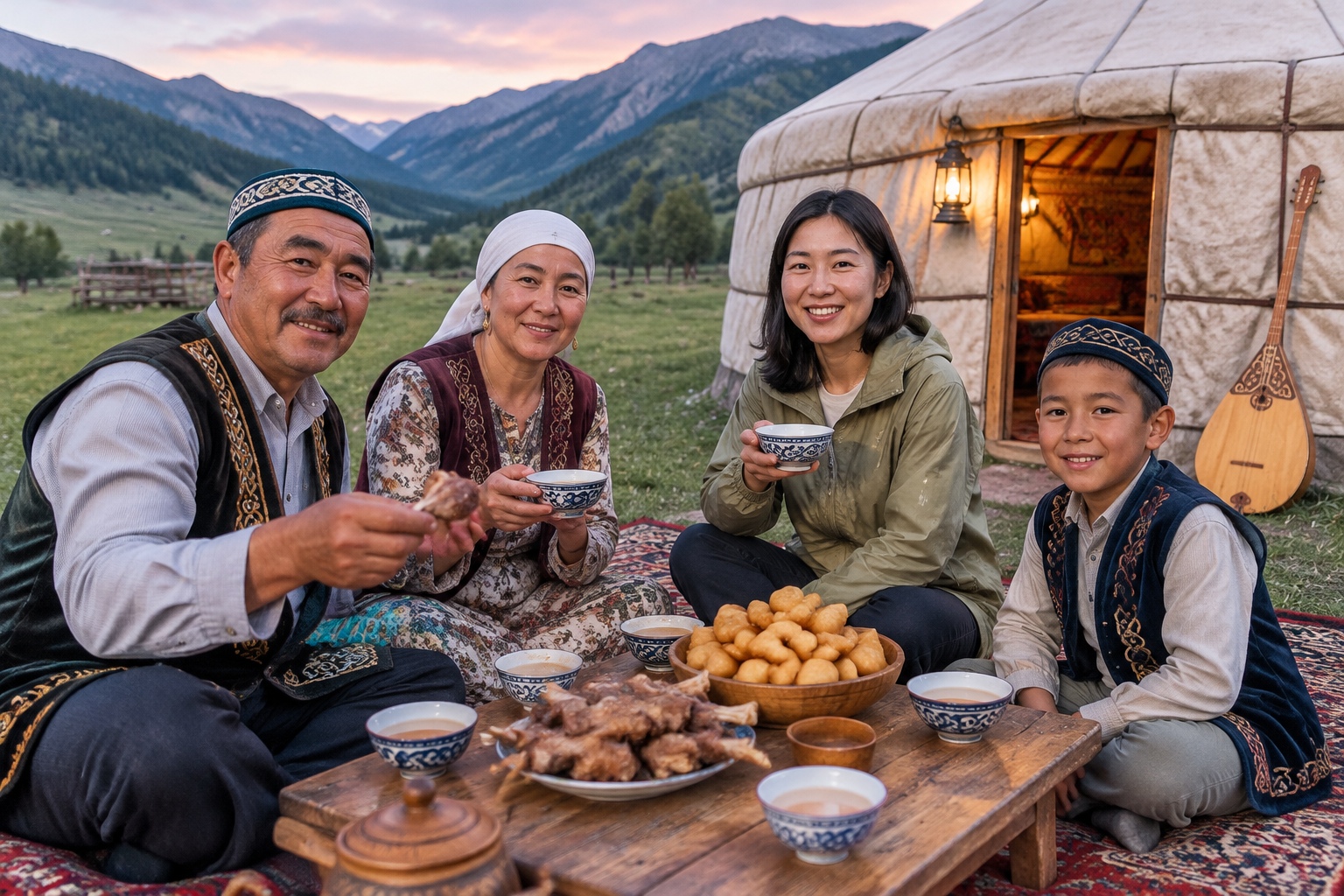
At night, enter a Kazakh yurt for dinner: hand-grabbed meat, kumiss, baursak (fried dough pieces), and salty milk tea. After dinner, dombra and the Black Horse dance. The host will pull you up. You do not need to know the steps. Wrong steps are fine. Louder laughter is better. This is not a show; it is dinner in someone’s home.
Channel 4: From Dark Green to Gold (Days 7–9)
Day 7: Kanas, a Lake That Changes Color
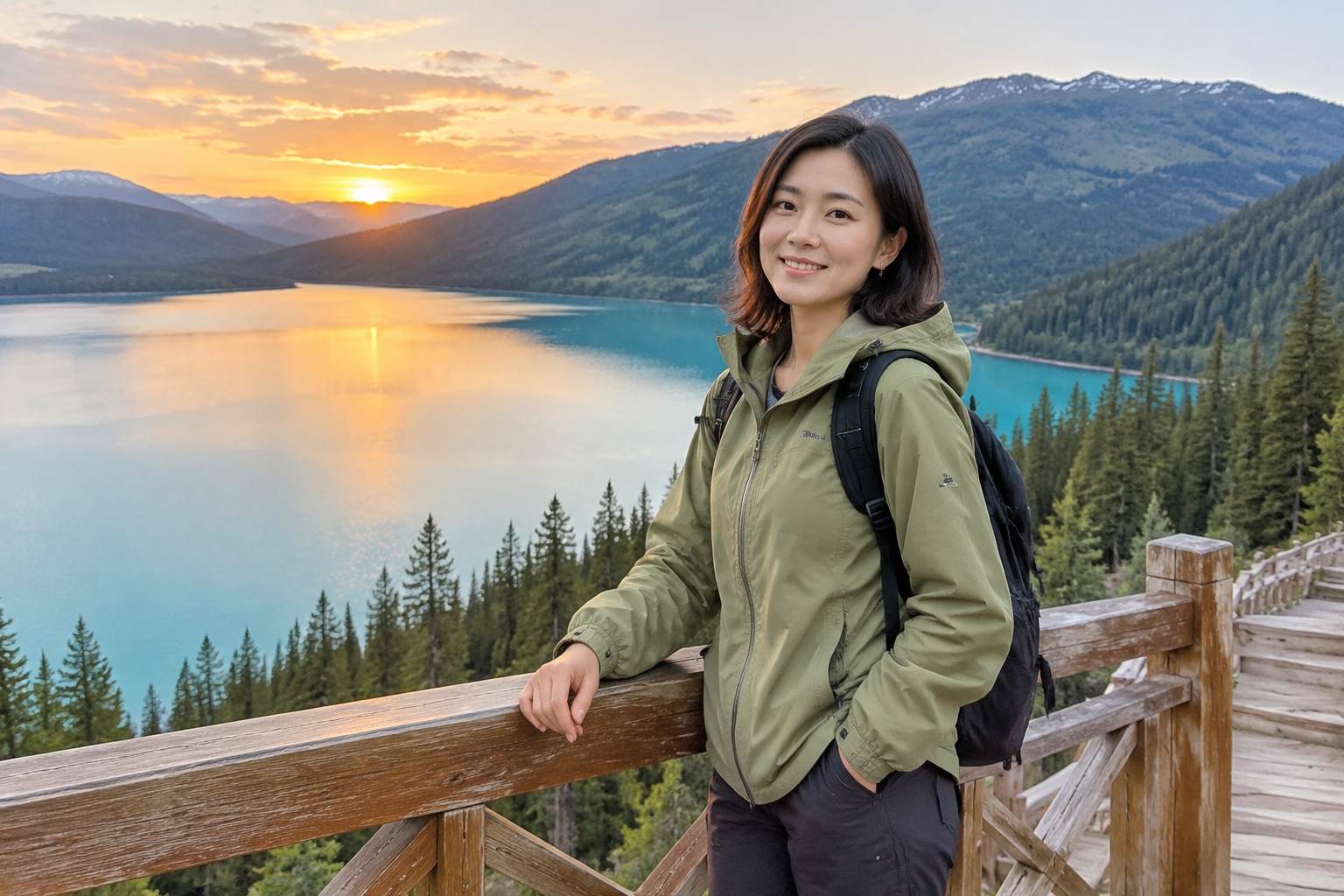
Fly from Ili back to Urumqi, then to Kanas or Altay. In one day you go from grassland to conifer forest. Kanas Lake changes with light and season: milky blue on a sunny day, dark green under cloud, gold all around in autumn.
Climb the Fish Watching Pavilion for sunset. There are a lot of steps. The lake has a “monster” legend; scholars tend to explain it as a very large taimen. The legend may not be true, but standing on the pavilion looking at that dark water, you hope it is.
Day 8: Hemu, Wooden Houses in Morning Fog
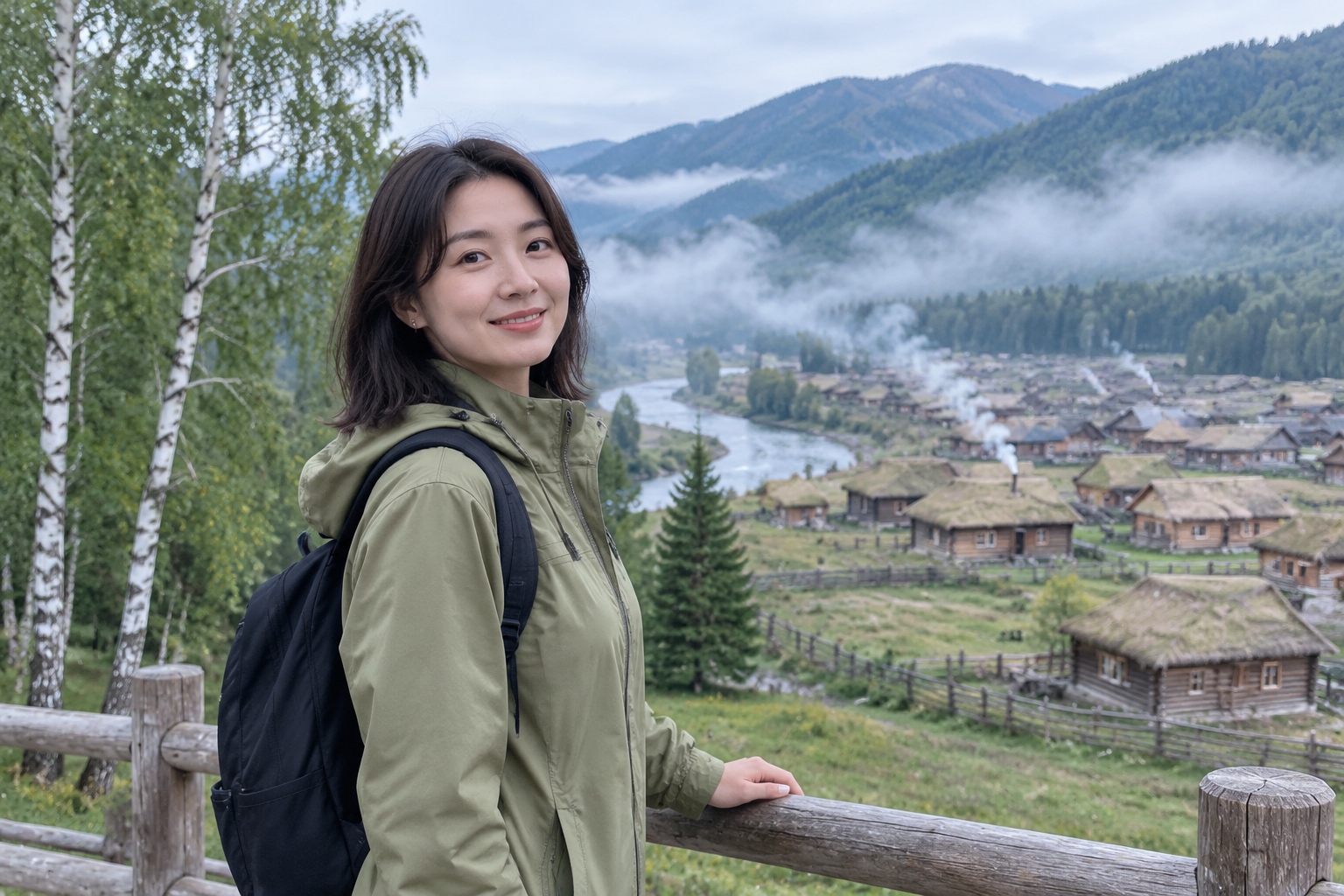
Hemu is a Tuvan village, houses built from logs, roofs weighted with earth. The key is to get up early: 6:30 to 7:30, fog from the river drifts into the village, chimney smoke mixes with it, roofs float out one by one. The viewing platform is on the hill behind the village, about a 20-minute walk up.
In the afternoon, the birch forest. White trunks with black horizontal marks, standing in groups like people with their backs to you. It is one of the few places on the route where the village itself is the attraction, not a list of sights.
Day 9: Hike or Ride, the Last Night
In the morning, hike or ride up to a platform overlooking the whole village and sit for a while. This is the last “do nothing” moment on the route.
At night, a bonfire. Northern Xinjiang’s sky has little light pollution; the Milky Way is a fuzzy band. Bring one more layer. Even in August, the night is only a few degrees.
Offline (Day 10)
Return to Burqin. Leave from Kanas or Altay airport. If your flight is in the afternoon, give two hours to the river night market. Grill cold-water fish from the Ertix River, open a local beer, and close the ten days.
Eating, Sleeping, Driving
Eating. Roast whole lamb is a ceremony, not daily food. Hand-grabbed rice has lamb and two kinds of carrot. Nang-pit meat is hung inside the naan oven to cook. Big Plate Chicken comes with belt noodles; the noodles are better than the chicken. Halal food dominates; pork is rare.
Sleeping. Normal hotels in cities; yurts on the grassland; wooden houses in Hemu. Both are experiences, not comfort: little soundproofing, limited hot water, thick quilts but cold nights.
Driving. Long stretches. The longest day is five or six hours. Charter a car between scenic areas; the driver is often the guide. Bring motion-sickness pills, water and high-calorie snacks. Most roadside toilets are pit toilets; bring tissues.
Before You Go
Drones: be careful. Xinjiang has strict controls; many scenic areas ban flights or require permission. This is the most “wallpaper” route and the easiest to get stuck on this rule. If you really want to fly, ask about permits ahead of time.
Carry your passport. There are checkpoints along the way, and gas stations require registration. It is not a hassle; it is normal. These rules are not aimed at tourists; they are part of daily logistics in a border region.
Four seasons in one day. Morning and evening temperatures can differ by more than ten degrees Celsius. Pack short sleeves and a thin down jacket. UV is strong; hat, sunglasses and sunscreen are not optional.
Time difference. Official time is Beijing time, but daily life runs two hours later: breakfast at 9, lunch at 2, dinner at 8 or 9, dark later.
Signal. Mountains and grasslands lose coverage. Download offline maps.
Season. June to September is best. Mid-June to early July for lavender. Mid-to-late September for golden birches, already cold. After October, some roads close for snow.
Who It Fits
Fits: people who like vast landscapes, road trips and waking up early for a photo; people who can sit in a car for hours; people genuinely interested in multiple cultures; people tired of city checklists.
Doesn’t fit: people looking for ancient monuments and historic cities—this route has almost no old towns; people with serious motion sickness; people who need the same hotel every night; people who define vacation as lying still. This route moves.
What You Bring Home
Not wool blankets and dried fruit. These: a palm-sized brocade in a museum, its characters woven; Sayram Lake splitting into two colors at sunset; cloud shadows running across Nalati; after half an hour on a horse, suddenly not wanting to get down; salty milk tea in a yurt and someone pulling you into a dance; 6:40 a.m. in Hemu, fog moving from the river into the village; and at night, looking up at that fuzzy Milky Way.
Ten days, five color schemes. You do not need to know how to take photos. The route keeps pushing the picture in front of you.