

Guizhou’s Secret Ethnic Route: The Part of China That Still Feels Hidden
Most first-time visitors to China build a route around the obvious postcard images: the Great Wall, the Shanghai skyline, the terracotta warriors. Guizhou rarely makes that first list. Even among Chinese travelers, this nine-day route through waterfalls, wooden villages and mountain songs is less famous than it deserves to be. That is part of its appeal.
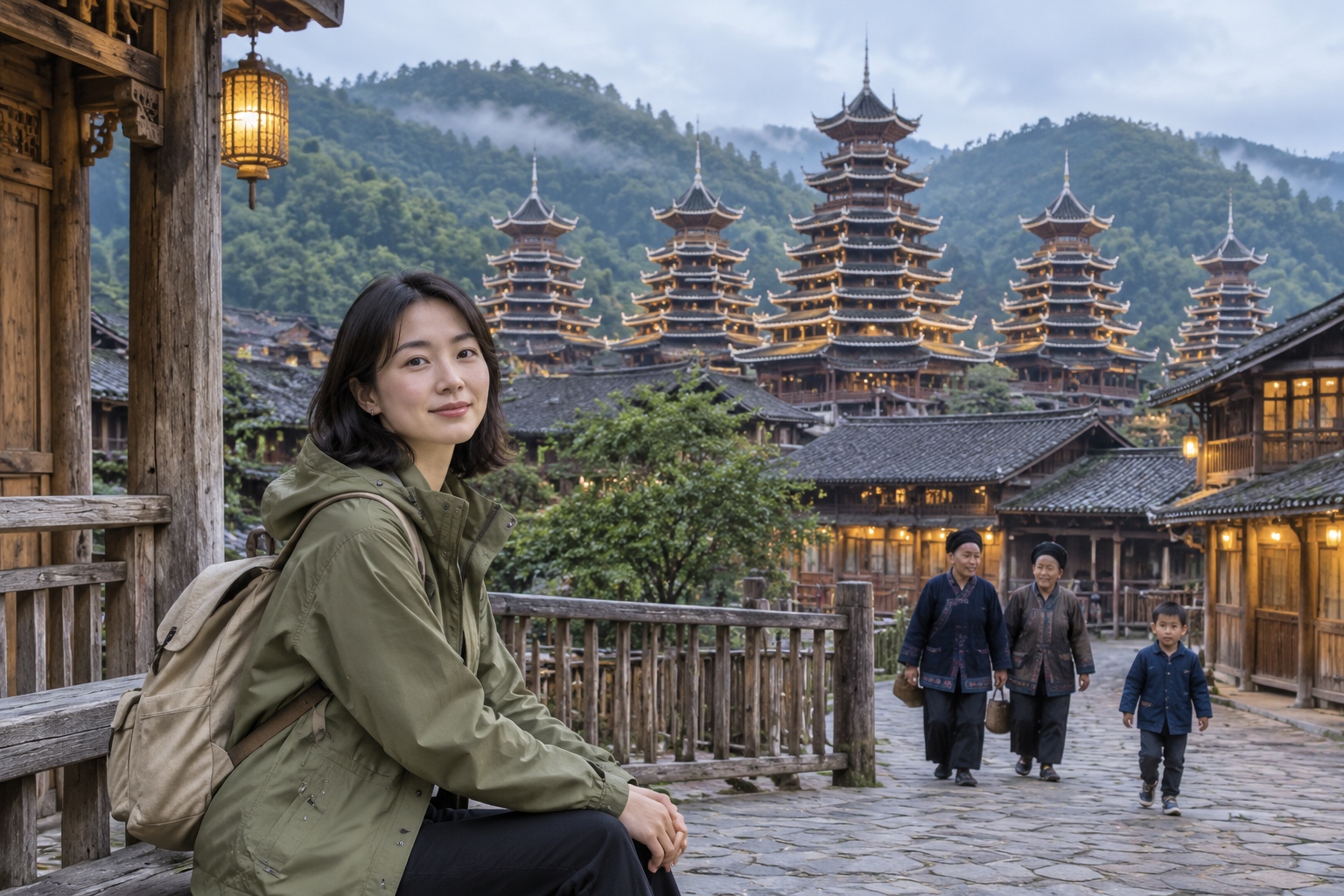
You do not travel it by landmark. You travel it by sound. For the first four days, the sound is water. Then it becomes human: drums under drum towers, silver ornaments knocking against each other, a Dong choir stacking harmonies without a conductor, and the whistle of a village football match drifting across a river valley.
Why Guizhou is China’s best-kept secret
Guizhou sits in southwest China, a province of limestone mountains, deep river valleys and karst caves. High-speed rail has made it far easier to reach than it used to be, but the region still feels less polished than China’s coastal cities. That is exactly why people come.
The route works as a loop: Guiyang, Huangguoshu, Libo, Zhaoxing, Xijiang and Zhenyuan. It is doable in nine days, though the drives between scenic areas are part of the trip. The roads bend, the weather changes, and the villages are lived-in rather than staged. If you want a China that looks and sounds different from the one in most travel brochures, start here.
The water days: Guiyang, Huangguoshu and Libo
Day 1: Guiyang and a town made of stone
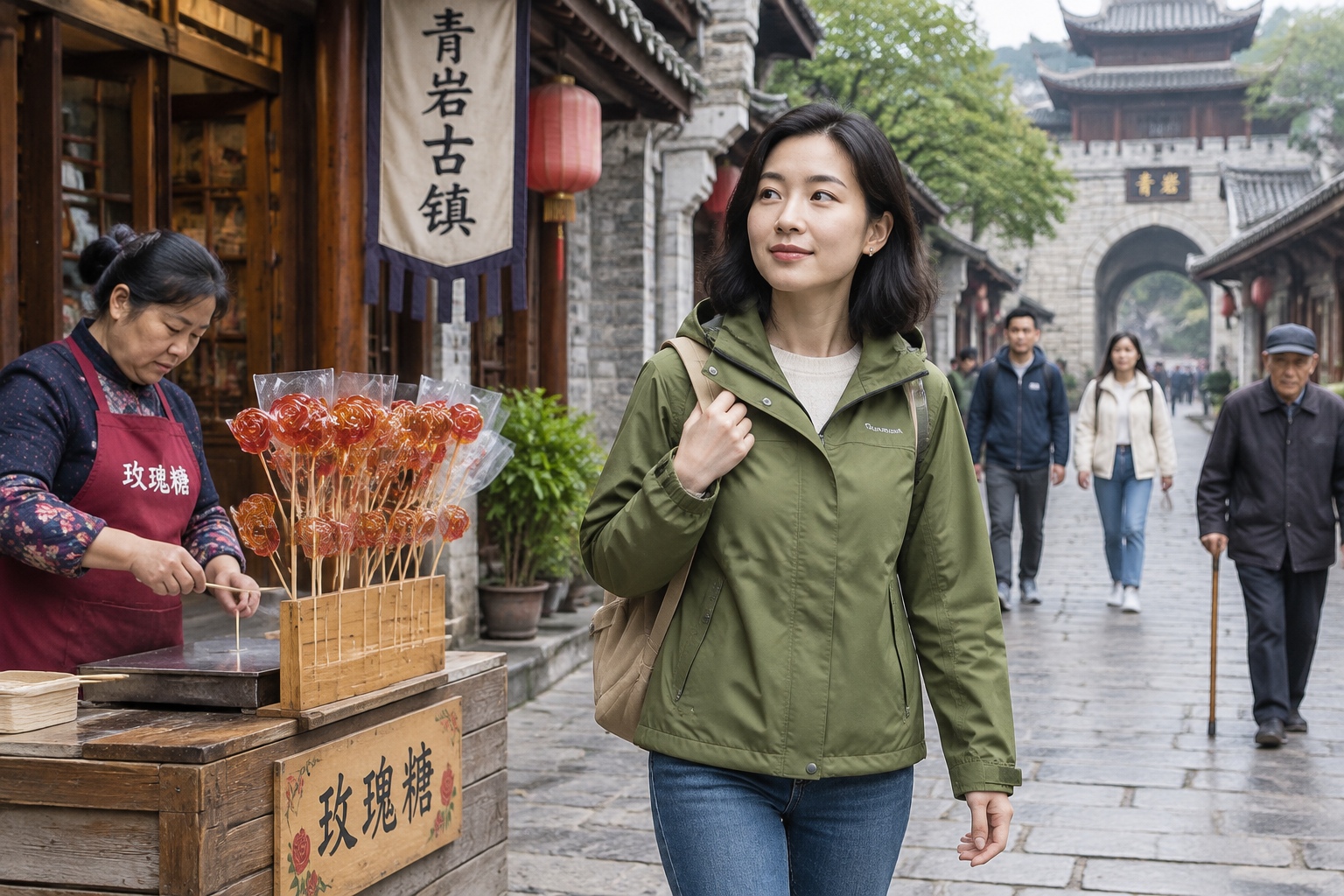
Start in Guiyang, the provincial capital, then take a day trip to Qingyan Ancient Town. Qingyan was a Ming dynasty garrison town, and much of it is built from stone. The flagstones have been polished by six centuries of footsteps. It also produced Guizhou’s first top scholar in the imperial exams; his former home is unexpectedly small, a courtyard that feels more like a family house than a monument.
For lunch, try braised pig’s trotters and freshly made rose candy. Back in Guiyang, dinner is sour fish soup. There are two kinds of sour broth: red, fermented from tomatoes, and white, fermented from rice water. It is sour rather than fiery. Drink a bowl of broth first. The dipping sauce often includes litsea cubeba oil, which tastes like lemon, pepper and pine resin all at once.
Day 2: Huangguoshu, where the water is louder than conversation
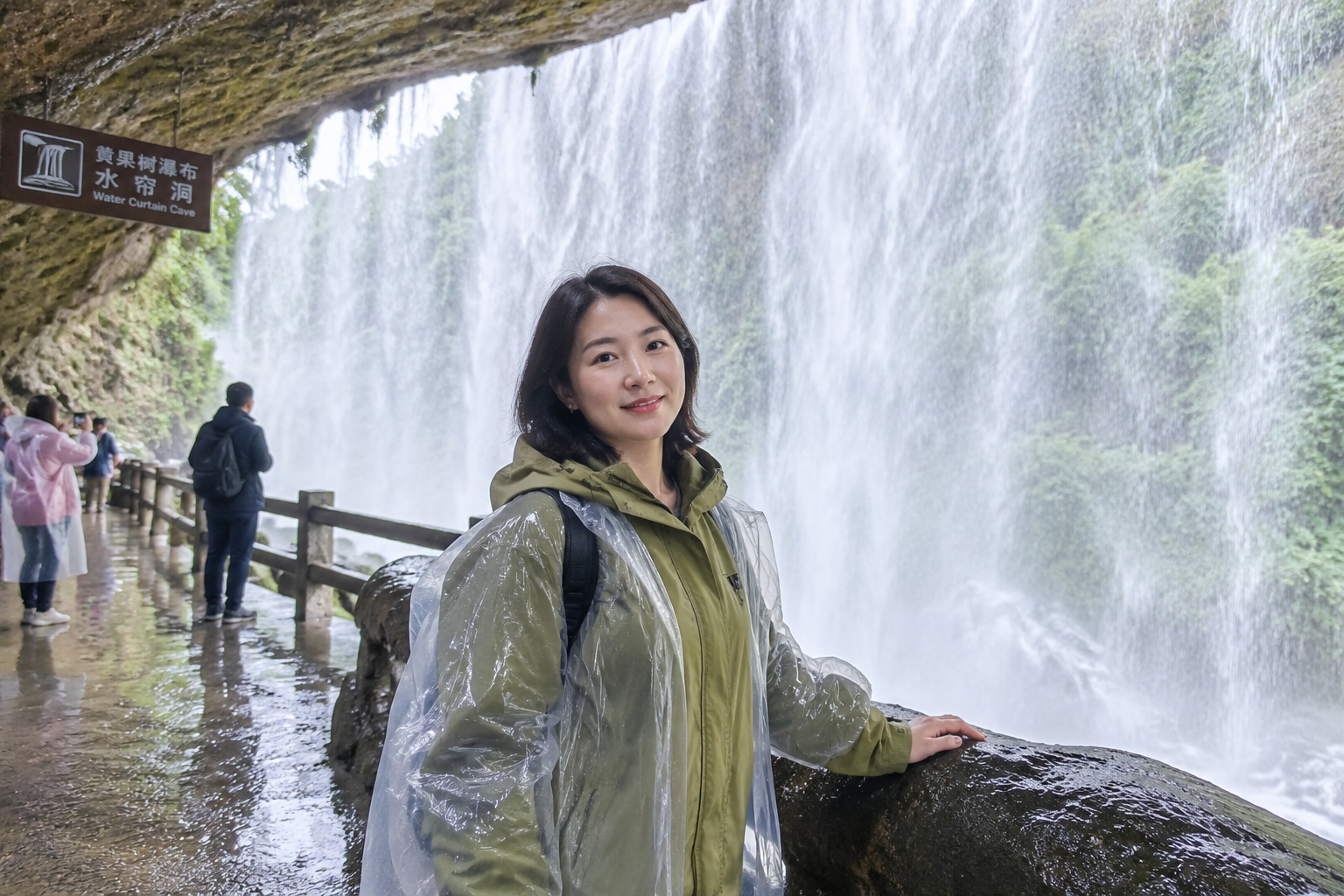
Huangguoshu is one of Asia’s largest waterfall groups. The main fall is nearly 80 meters high and about 100 meters wide. The height is impressive, but the real reason to go is that you can walk behind it. A cave path runs through the inside of the waterfall; from the opening, the water looks like a moving wall.
Go with the first group into the park and head straight to the main fall. When the crowd is thin, the sound is not just noise; it fills your chest. Mist soaks through clothes. A thin rain poncho is more useful than an umbrella.
Day 3: Libo, where the water seems the wrong color
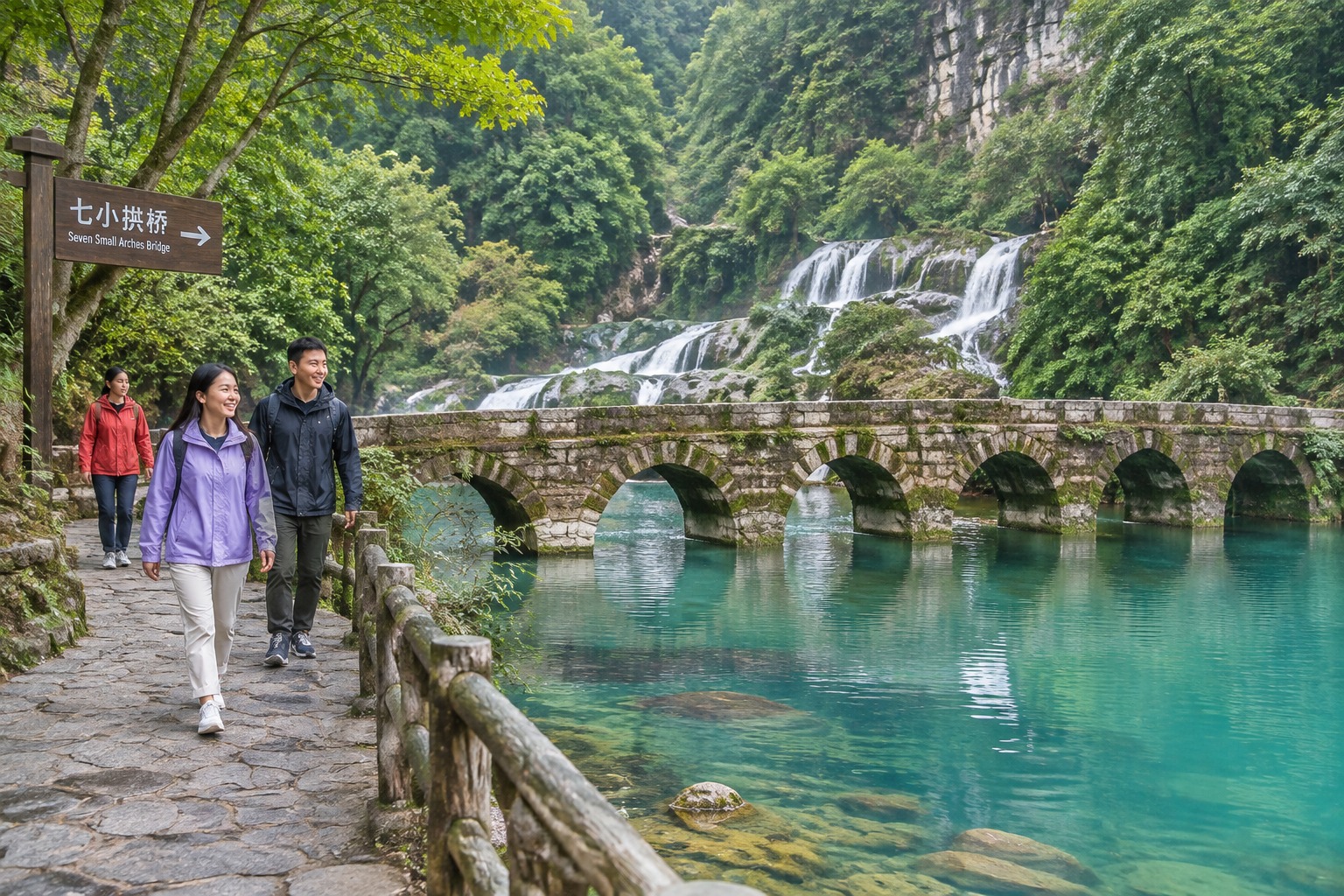
Xiaoqikong, or Little Seven Arch Bridge, is a water landscape inside a gorge. The bridge itself dates from the Daoguang period of the Qing dynasty. The water below is blue-green in a way that looks almost artificial. It comes from karst groundwater moving through limestone, picking up calcium carbonate; light scatters in the water and produces that color. Sunny days are best.
Inside the gorge, water steps down in layers. The sound is dense and close, completely different from the heavy crash of Huangguoshu.
Day 4: Big Seven Arch, a forest in the river, and an afternoon with your hands
At Daqikong, or Big Seven Arch, the highlight is a natural bridge: a whole section of mountain collapsed and left a rock span hanging over the river. It looks as if someone built a bridge where no bridge was needed.
The water forest is stranger. Trees grow directly from the riverbed. Take off your shoes and walk in; the water reaches your ankles. It is cold, the stones are uneven underfoot, and after ten minutes you will probably laugh. In the afternoon, try a Miao cultural workshop: learn a few notes on the lusheng, a bamboo reed instrument, or sit by a fire pit and drink oil tea.
The song days: Zhaoxing and the Dong villages
Day 5: Five drum towers, five families
Zhaoxing is a Dong village with five drum towers, each tied to one of five family clans. The names together read as “benevolence, righteousness, propriety, wisdom and trust.” The towers are built from wood without a single nail. Under each tower is the village living room: old men play chess, children run, and if someone strikes the drum, the whole village can hear it.
Wind-and-rain bridges sit at the edges of the village. They have roofs and benches and were originally shelters for travelers. In the evening, sit near a drum tower and wait for the lights to come on. Do nothing. That is the plan.
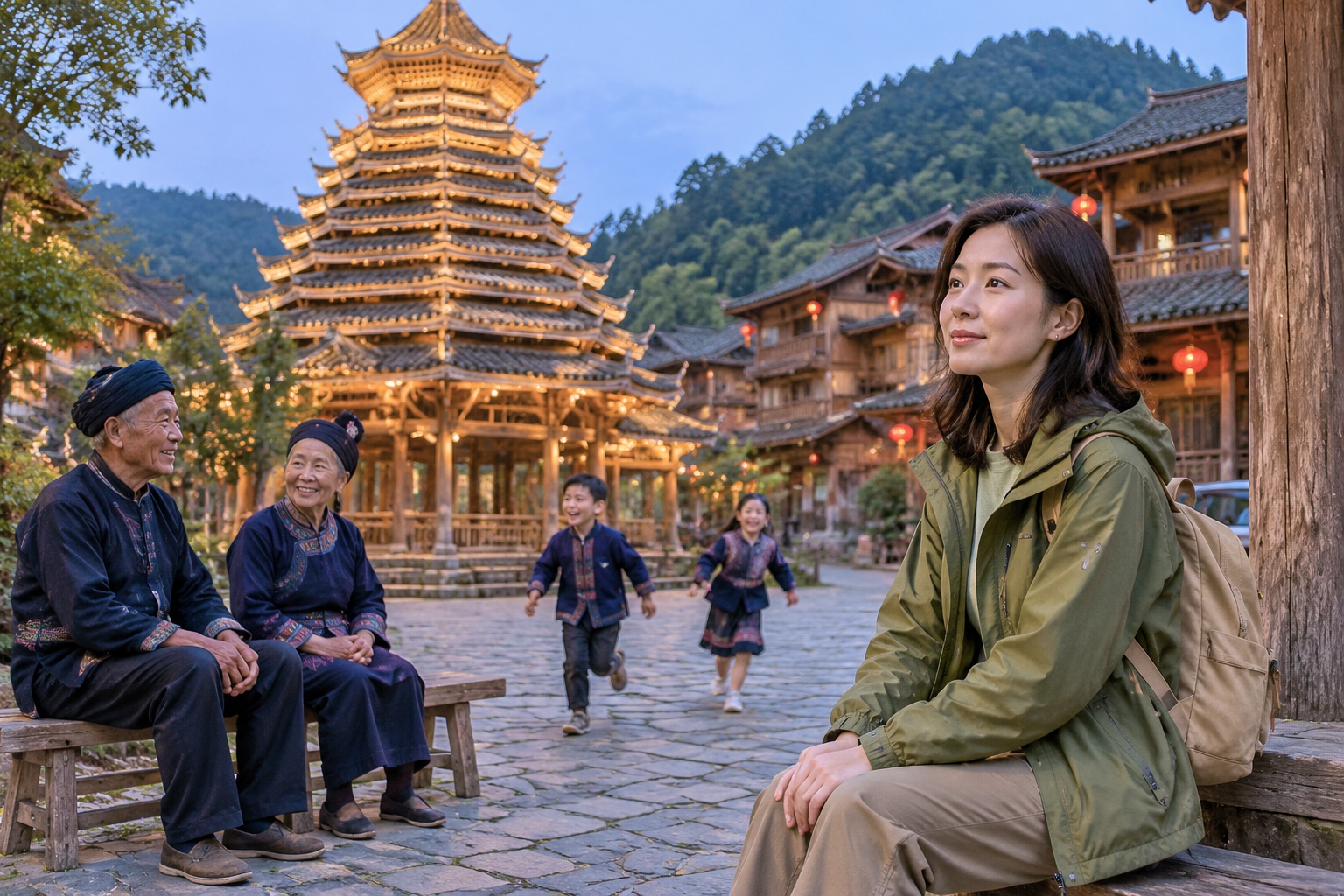
Day 6: Dong grand song and a long-table meal
Dong grand song is the emotional high point of the route, and it is real. It is polyphonic, unconducted and unaccompanied. A low voice holds the floor while a high voice suddenly rises above it, like a stone dropped into still water. UNESCO added it to the Representative List of the Intangible Cultural Heritage of Humanity in 2009.
Many singers are middle-aged or older. Younger people have left for work in cities. That fact is part of what makes the performance precious, and part of its reality. It is not a show invented for visitors.
Dinner is a long-table feast. Tables run from one end of the village to the other, loaded with cured fish, cured pork, sticky rice and sour soup. At some point comes the “high mountain flowing water” toast: several wine pots are linked, and rice wine pours from a height into your mouth. You are not supposed to hold the pot. If you do, you may be asked to drink again.
Silver, indigo and a thousand lights
Day 7: Xijiang, a valley of a thousand households
Xijiang Qianhu Miao Village is the largest Miao village in the world. More than a thousand wooden stilt houses spread from the valley floor up the hillside. The best twenty minutes are just before full darkness. The lights do not switch on together. One appears, then a patch, then the whole valley.
You will remember another sound too: silver. Miao women in festival dress wear silver crowns, silver locks on the chest and silver pieces along the hem. When they walk, the pieces knock together with a fine ringing. It is not just decoration. It is the sound of how many years a family has saved.
Day 8: Silverwork and batik, two mornings with your hands
Miao silver forging is a national-level intangible cultural heritage. Watching a silversmith work is quiet and absorbing. A silver ingot is hammered, heated and quenched until it is thin enough to let light through, then chased with fine patterns. A single crown can take months.
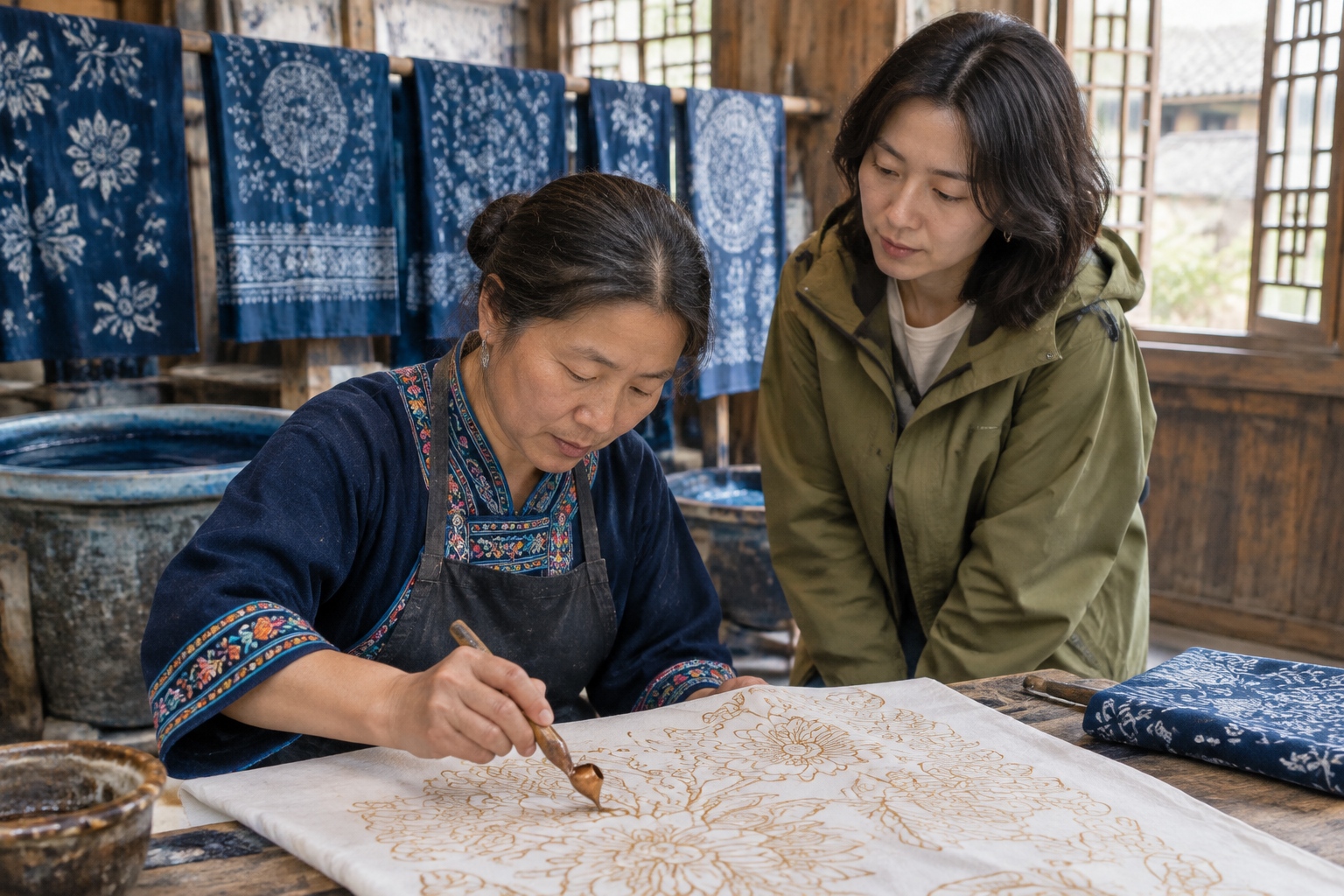
Batik is slower. A copper knife dips into beeswax and draws patterns on white cloth. The cloth is dyed repeatedly in an indigo vat. Where the wax cracks, blue seeps in and leaves hair-thin “ice patterns.” No two pieces are the same. You can paint your own scarf in about two hours.
The village football whistle: Village Super League and Village BA
This part is not fixed into the nine-day itinerary because the matches cluster on summer weekends. The “Village Super League” is in Rongjiang; “Village BA” is in Taipan Village. The players are villagers: fish sellers, shopkeepers, farmers. Tens of thousands of spectators may show up, banging basins, playing lusheng and holding up homemade pickles as support. Prizes include pigs, cows and sheep.
From Zhaoxing or Xijiang, both are in Qiandongnan and can be visited as a day trip. Check the schedule before you go. This is another side of rural China: not a performance for tourists, but something villagers do for themselves.
Back to the river: Zhenyuan and the way home
Finish in Zhenyuan. The Wuyang River makes an S-shaped bend and splits the old town in two. From above, it looks like a taiji diagram, though no one designed it; the water simply went that way.
Qinglong Cave clings to a cliff. Confucian, Buddhist and Daoist figures share the same building complex and have coexisted for centuries. Too many traveling merchants passed through here for anyone to afford a religious quarrel. At night, walk along the river and watch the lights fall into the water. The next day, fly out from Guiyang.
What to know before you go
Rain is part of the deal. Bring a rain poncho, not an umbrella. On mountain paths, beside waterfalls and on stone steps, you need your hands free. The rainy season makes the waterfalls strongest, but the water can turn muddy. Libo’s blue-green color needs sunshine.
Driving takes time. Guiyang, Anshun and Kaili have high-speed rail. Between scenic areas, private cars are the norm. Mountain roads curve; bring motion-sickness medicine if you need it.
“Spicy” here means sour-spicy. Fermented sourness is the base, not the Sichuan-style numbing heat. If you cannot eat chili, say “no chili.” The sour soup itself is not hot.
Village etiquette matters. You may meet a gate-blocking wine welcome. Saying “I don’t drink” is fine. Ask before photographing people, especially older people and children.
Stay in wooden houses, wear old shoes. Stilt houses have thin sound insulation; earplugs help. Stone paths are slippery when wet, so wear shoes with grip. Fitness and altitude are not the issue here.
Who this route is for
It suits travelers who have already seen one version of China and want another; people genuinely interested in ethnic minority cultures and willing to sit down and listen; and anyone who likes water, photography and lively shared meals.
It is not for travelers who only want famous landmarks, who need predictable hotel standards every night, or who want every hour of the day fixed in advance. Village guesthouses are clean, but they are not five-star hotel rooms.
What you take home
Not the silver or the batik, necessarily. You take home the moving wall of water outside the Huangguoshu cave; the moment someone strikes a drum under a Zhaoxing tower and the whole village looks up; the three seconds when the high voice in Dong grand song rises; the long-table toast with everyone watching; the twenty minutes when Xijiang’s lights come on one by one; and the ice pattern on a piece of cloth that no one can copy exactly.
Nine days, from the sound of water to the sound of people. The most expensive thing on this route is not the scenery. It is that the villages still let you in.