
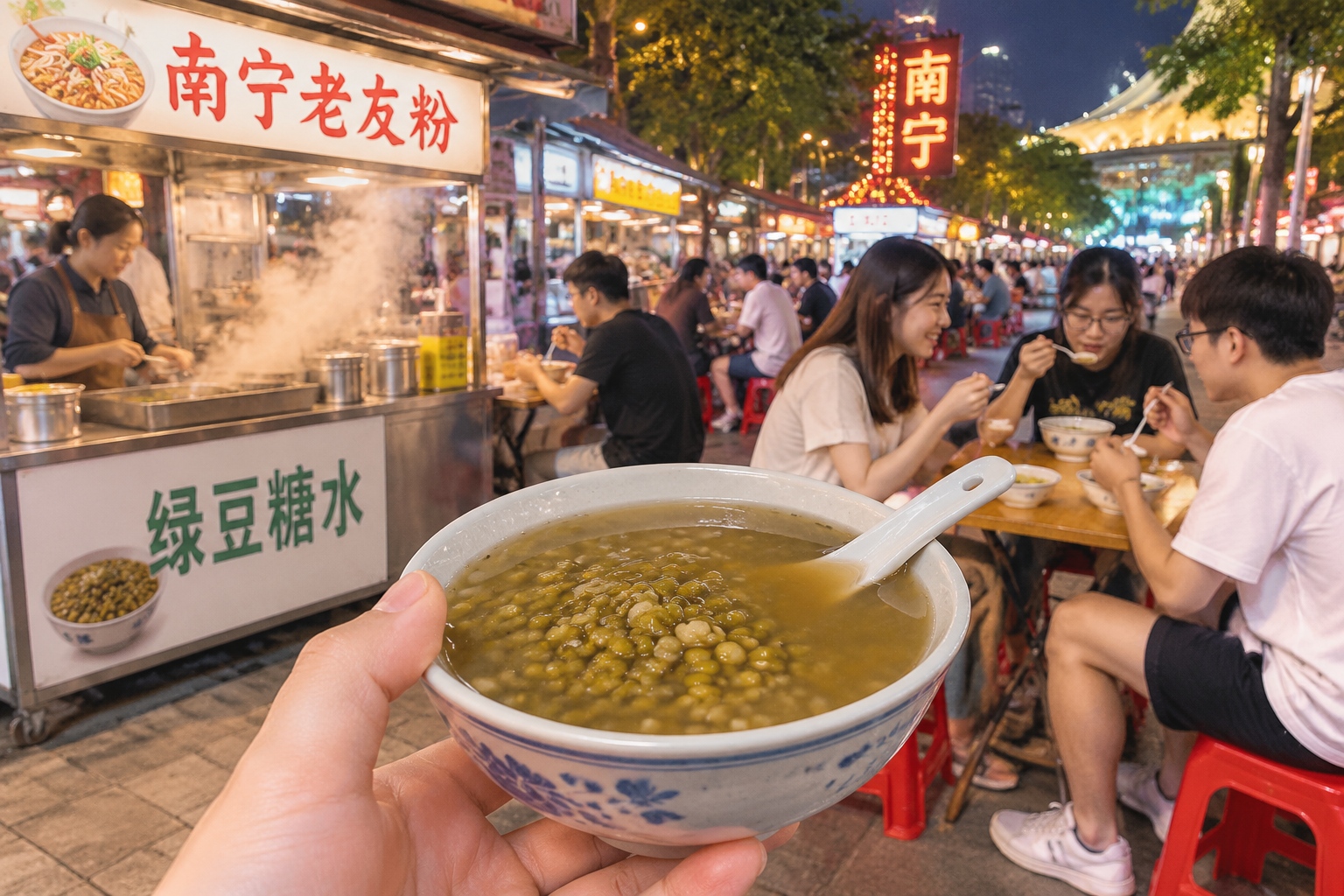

Walk into a typical Chinese metropolis like Shanghai or Beijing at 10 PM, and you might see skyscrapers glowing against the sky, delivery drivers racing through traffic, and high-end shopping malls still buzzing. But travel further south to Nanning, the capital of Guangxi Zhuang Autonomous Region, and the evening feels different. It is slower, stickier with humidity, and smells intensely of lemongrass, grilled meat, and sweet beans.
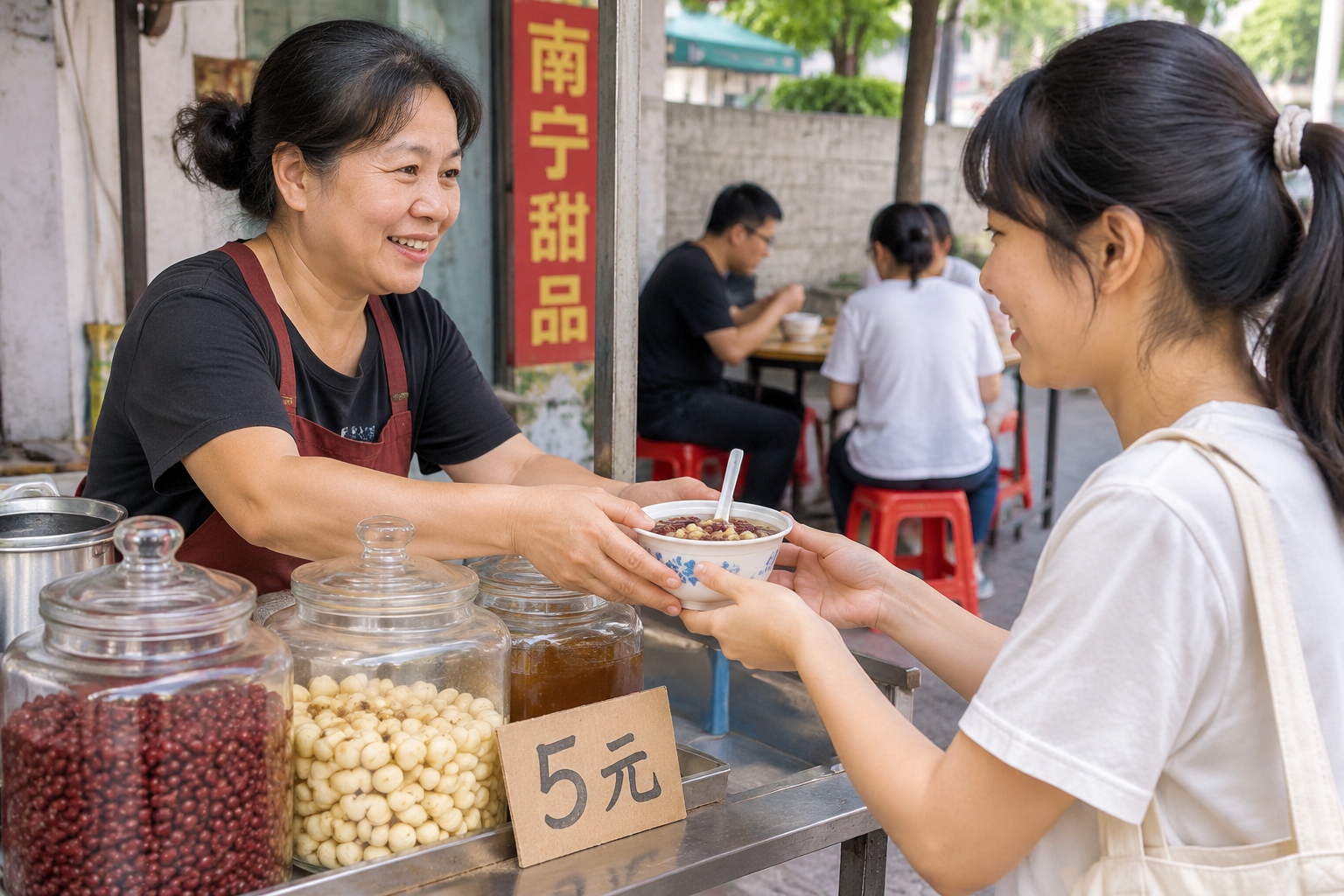
Here, the night market isn’t just a tourist trap; it is the living room of the city. And at the center of this social ecosystem sits something deceptively simple: tangshui, or Chinese dessert soup. A bowl costs about 5 yuan (roughly $0.70 USD). It sounds too cheap to matter, but for locals, that small bowl defines the temperature of their night.
Beyond Neon Lights: The Real Nightlife in Nanning
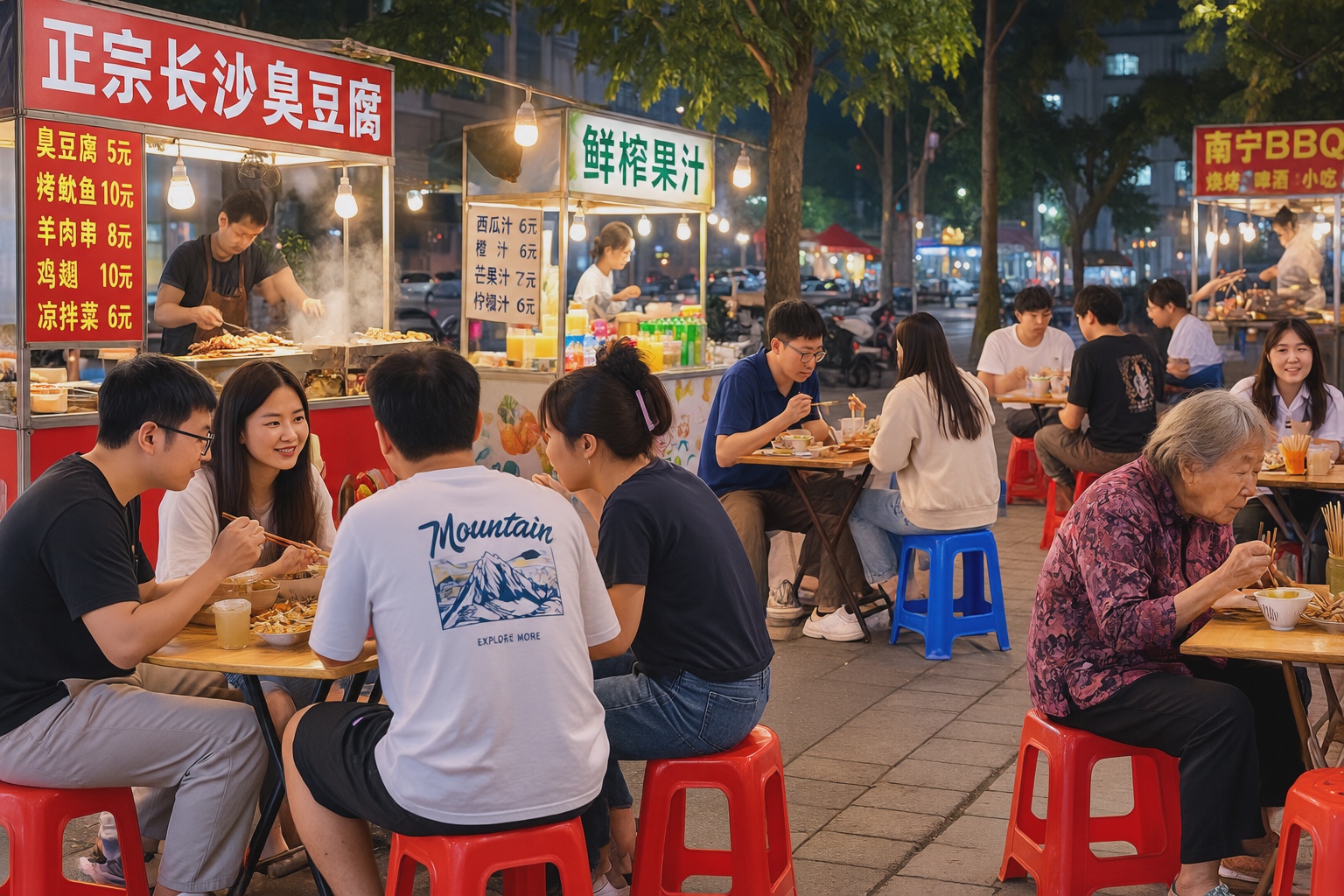
For many overseas readers, “nightlife” often implies bars, clubs, or expensive dining. In Nanning, nightlife is communal and low-key. As the sun sets, the humid air cools slightly, prompting residents to spill out of their apartments. They don’t dress up for a night out; they wear flip-flops, loose t-shirts, and shorts.
The streets come alive not with loud music, but with the clatter of woks and the hiss of steamers. The visual landscape is dominated by small plastic stools and folding tables. There is no pretension here. You might see a young engineer eating next to an elderly woman knitting. This mix of demographics is crucial. It breaks the stereotype that Chinese cities are only about high-speed growth and serious work. Here, in the glow of simple lightbulbs, people unwind.
The Social Slice: Who Drinks Tangshui?
Let’s look closer at a typical stall selling tangshui. The menu is short and seasonal. In summer, you might order mung bean soup for cooling or seaweed jelly for refreshment. In winter, it might be ginger milk pudding or red bean soup for warmth.
The customers tell the story of the city. There are office workers who have just finished overtime. For them, 5 yuan is a trivial expense compared to a coffee, but it offers something coffee cannot: a pause. They sit, slurp slowly, and chat about nothing in particular—the traffic, the weather, or family news.
Then there are students. In China, academic pressure is high. A bowl of sweet soup after evening self-study sessions is a small reward, a momentary escape from textbooks. Finally, there are the elderly. For them, the night market is a place to maintain social ties in a rapidly changing city. They know the stall owners by name. The interaction is not transactional; it’s relational.
The Logic of “Reverse Consumption”
You might wonder why young people, who are often stereotyped as materialistic, flock to these cheap stalls. This reflects a growing trend among Chinese youth called “reverse consumption.” It’s not about being poor; it’s about valuing utility and experience over brand prestige. A 5-yuan bowl of mung bean soup is authentic, tasty, and served without the markup of a branded café. It represents a pragmatic approach to happiness: finding joy in small, affordable things rather than chasing expensive status symbols.
Order Amidst Chaos: How Nanning Manages Its Night Markets
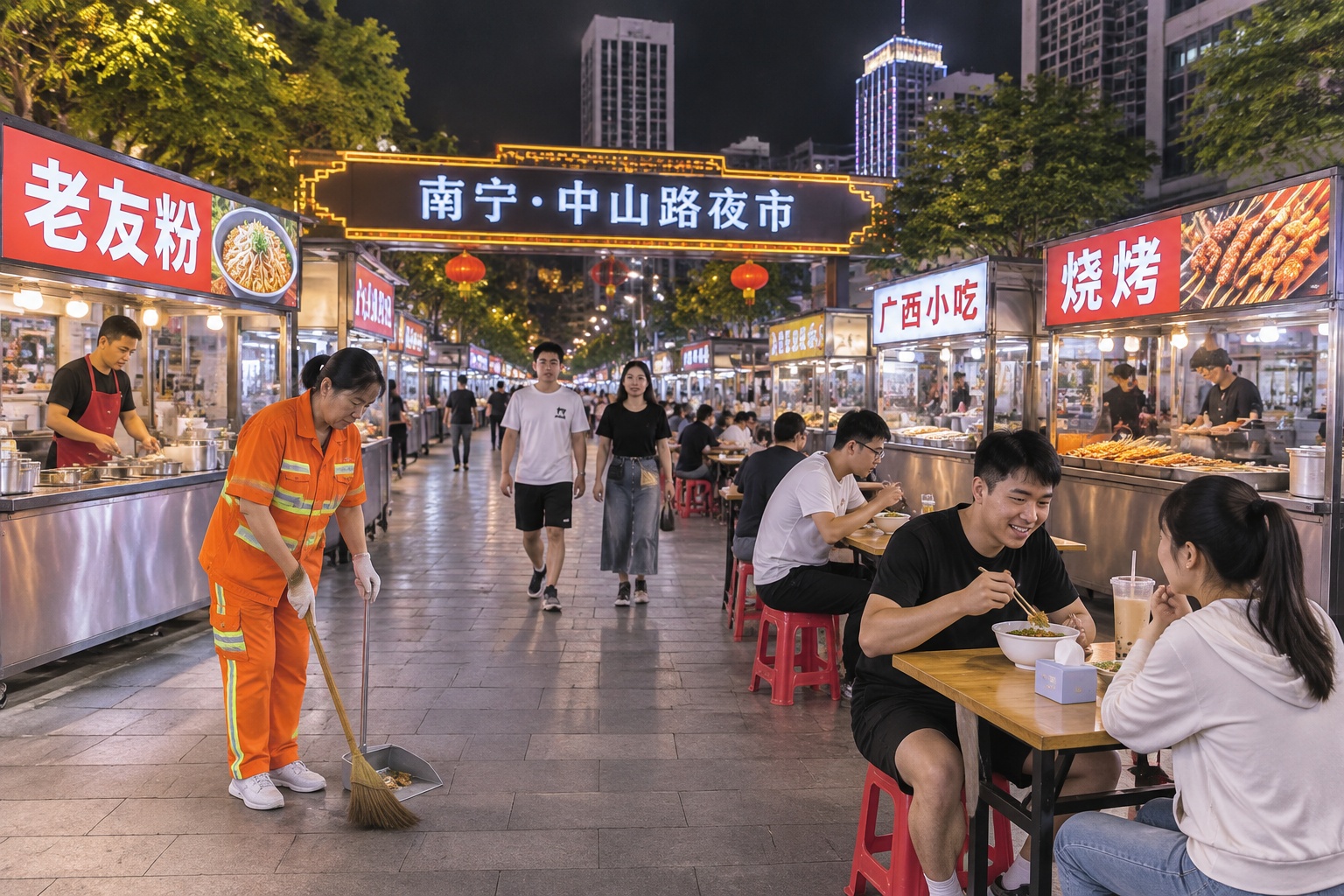
If you’ve ever visited street food markets in other parts of the world, you might expect chaos: litter on the ground, blocked sidewalks, and hygiene concerns. Nanning’s night markets offer a fascinating case study in urban governance.
The city government has adopted a model that balances vitality with order. Instead of banning street vendors, which often drives them underground or into less visible areas, Nanning designates specific zones for night markets. These zones are equipped with waste disposal systems and cleaning crews that operate immediately after the market closes.
Vendors are required to maintain hygiene standards, but they are not over-regulated to the point of killing the atmosphere. This “humanized” management approach acknowledges that street food is part of the city’s cultural DNA. It allows for a vibrant economy where small entrepreneurs can thrive without turning public spaces into dumping grounds.
Comparing with Global Night Markets
Compare this to night markets in Bangkok or Taipei, which are often heavily tourist-oriented and sometimes struggle with congestion and waste management. Nanning’s approach feels more integrated into daily life. It’s less about “performing” culture for tourists and more about serving the residents who live there. The cleanliness is visible, but so is the bustle. It’s a delicate balance that reflects China’s evolving capacity to manage complex urban environments.
More Than Food: Tangshui as a Cultural Symbol
Why does this matter? Because food is rarely just food. In Nanning, the 5-yuan bowl of tangshui is a symbol of inclusivity. It doesn’t matter if you are rich or poor, young or old; everyone sits on the same plastic stool and eats from the same ceramic bowl.
In a country undergoing rapid modernization, where skyscrapers replace old neighborhoods every few years, these night markets offer continuity. They provide a sense of belonging that concrete and glass cannot. When a resident talks about “the vibe” of Nanning, they aren’t talking about GDP growth or tech startups. They are talking about the smell of sweet beans in the evening air, the sound of neighbors chatting, and the freedom to enjoy a simple pleasure without judgment.
Conclusion: Finding Warmth in a Fast-Changing World
Nanning’s night markets remind us that modernity doesn’t have to mean sterility. A city can be advanced and efficient while still preserving its soul in the form of street food and community interaction.
For those curious about China, looking at the boardroom or the factory floor gives you one picture. But sitting down with a bowl of 5-yuan dessert soup gives you another—one that is warmer, more human, and surprisingly familiar. It’s a reminder that no matter how fast the world changes, people everywhere still crave connection, sweetness, and a place to call home.