
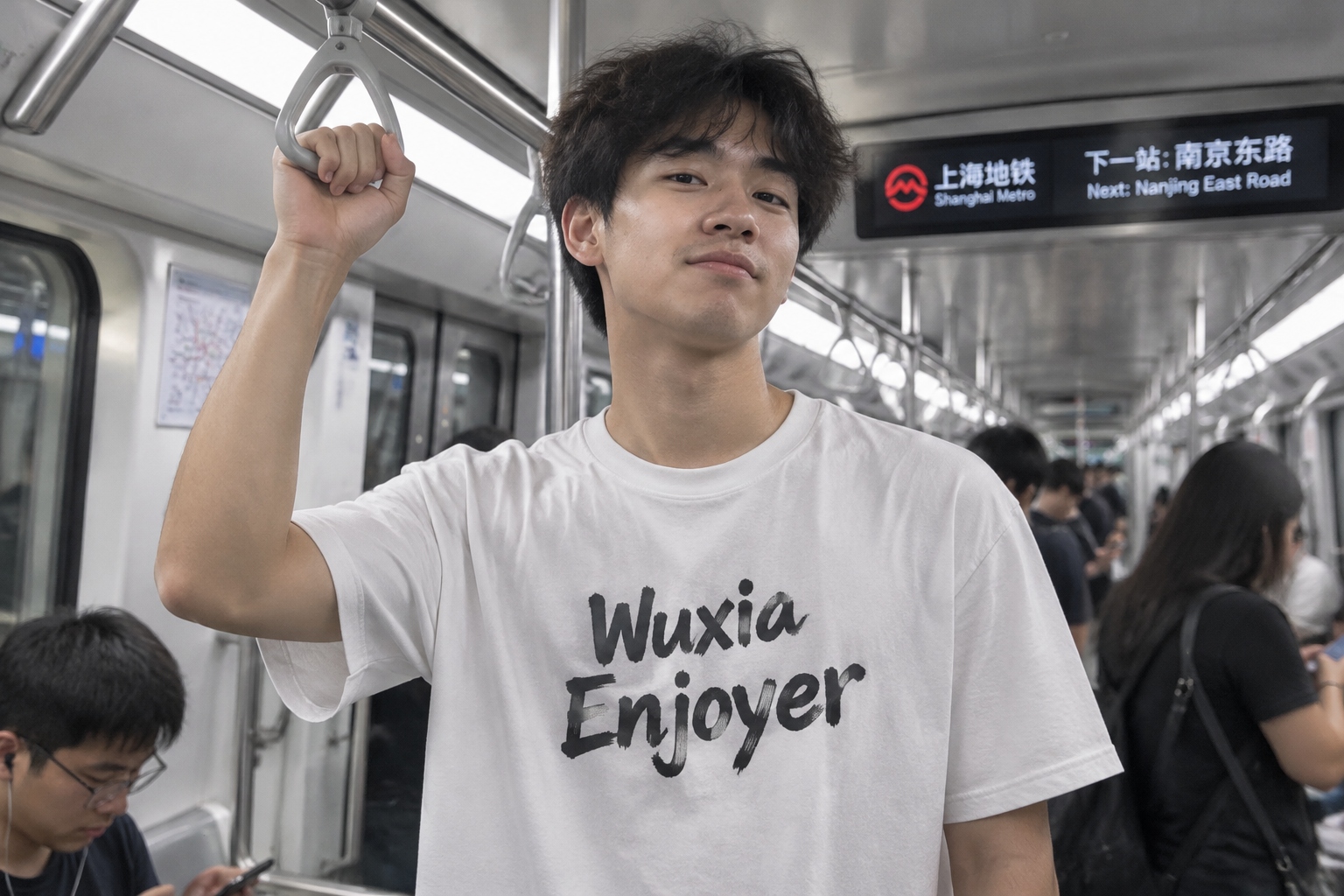

The T-Shirt on the Subway
If you take the subway in Shanghai during rush hour, keep an eye on the fashion. You’ll see suits, uniforms, and casual wear. But recently, a new type of graphic tee has popped up among Gen Z commuters. It doesn’t feature a cartoon character or a band logo. Instead, it says something simple in English: “Wuxia Enjoyer.”

The first time I saw one, I laughed. The font was bold, slightly retro, and unapologetically ironic. The wearer was likely a college student or a young office worker who probably couldn’t recite a single line from Jin Yong’s novels but wanted to signal that they were in on the joke. This is what happens when fandom identity gets packaged into cotton and polyester: it becomes wearable, shareable, and surprisingly profitable.
From Niche Obsession to Mainstream Merch
For decades, wuxia (martial hero fiction) was a literary genre rooted in Chinese history, philosophy, and martial arts culture. It was complex, dense with classical references, and often intimidating to newcomers. Reading Jin Yong or Gu Long required patience.
But look at the merchandise shelves in any modern mall in Beijing or Hangzhou today. The barriers have collapsed. You can buy T-shirts, tote bags, and even phone cases featuring phrases like “The Jianghu is Wide” or minimalist ink-wash paintings of swordsmen. These items aren’t just for hardcore fans; they are lifestyle accessories.
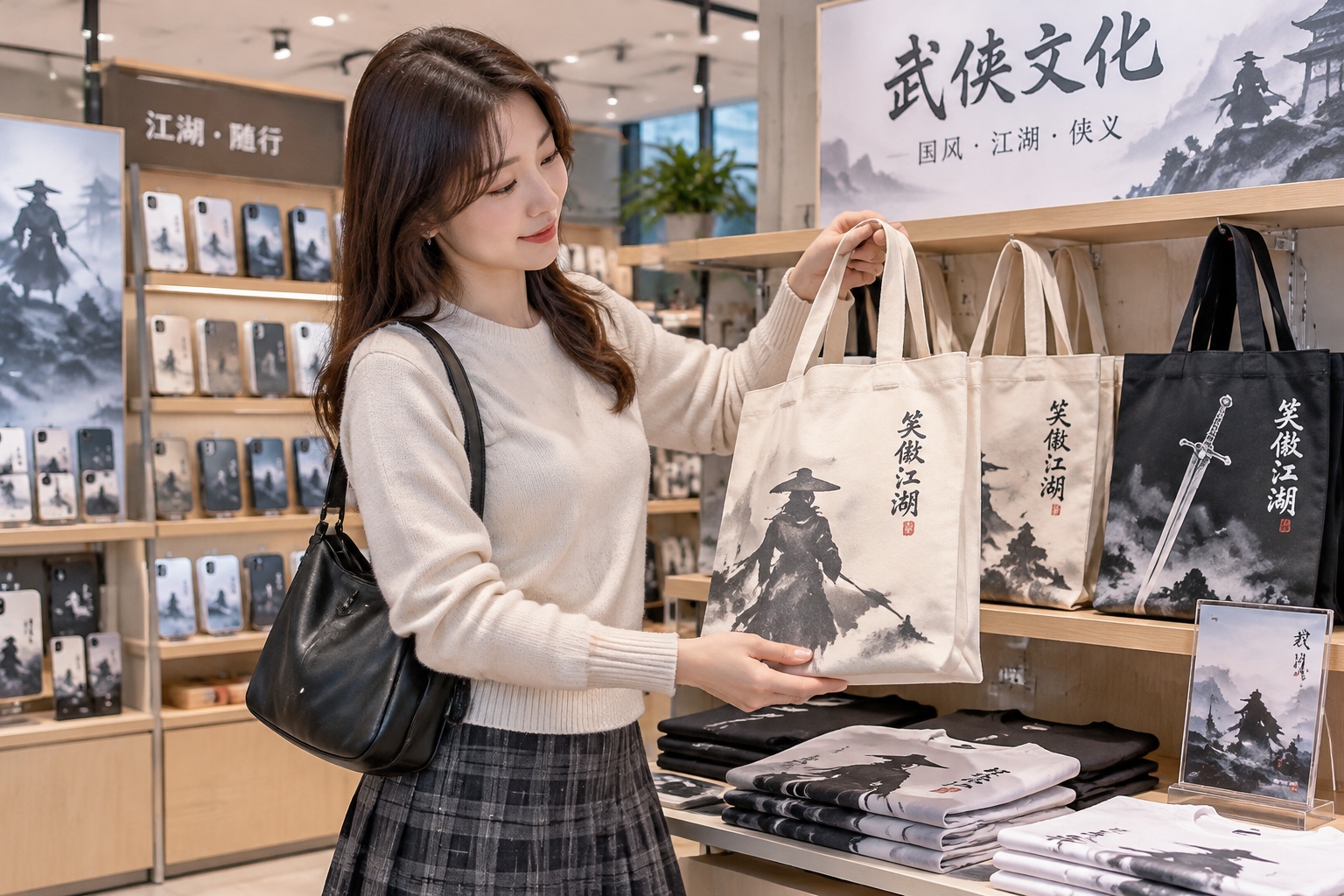
Why the shift? Partly because of globalization. Western audiences have discovered wuxia through movies and TV dramas like Crouching Tiger, Hidden Dragon or recent Netflix adaptations. But domestically, it’s also about identity signaling. For young Chinese urbanites, wearing a “Wuxia Enjoyer” shirt is less about proving literary expertise and more about aligning with an aesthetic: cool, detached, slightly mysterious, and deeply rooted in tradition yet perfectly modern.
The Gap Between the Shirt and the Soul
Here lies the tension. Does wearing a T-shirt equal understanding? Let’s be honest: for most people buying these shirts, the answer is no.
I asked a friend, Li Wei, who works in digital marketing in Shenzhen, why he bought his “Wuxia Enjoyer” tee. He shrugged. “It looks cool,” he said. “And it makes me seem interesting at parties. I’ve seen some of the movies. Is that enough?”
His honesty highlights a broader trend in modern consumption: symbolic participation. We don’t need to master the source material to participate in the culture. Buying the merch is the entry ticket. It’s similar to wearing a “K-Pop Stan” shirt without knowing all the lyrics, or carrying a tote bag from an art museum you haven’t visited yet.

This shallow layer of engagement isn’t necessarily bad. It lowers the barrier to entry. A teenager who buys a wuxia-themed hoodie might eventually pick up a novel because they liked the design. The commodity becomes a bridge, even if the traveler hasn’t started walking yet.
Commoditization as a Double-Edged Sword
The commodification of fandom identity has two faces. On one hand, it boosts global visibility. When a “Wuxia Enjoyer” shirt appears on a fashion influencer in London or New York, it sparks curiosity. It turns a niche cultural genre into a global aesthetic trend. This commercial success can fund better productions, higher-quality translations, and more accessible entry points for new fans.
On the other hand, there’s the risk of flattening. Wuxia is not just about sword fights; it’s about xia (chivalry), moral dilemmas, and the tension between individual freedom and social responsibility. If the culture is reduced to a slogan on a T-shirt, those deeper values risk being lost in translation.
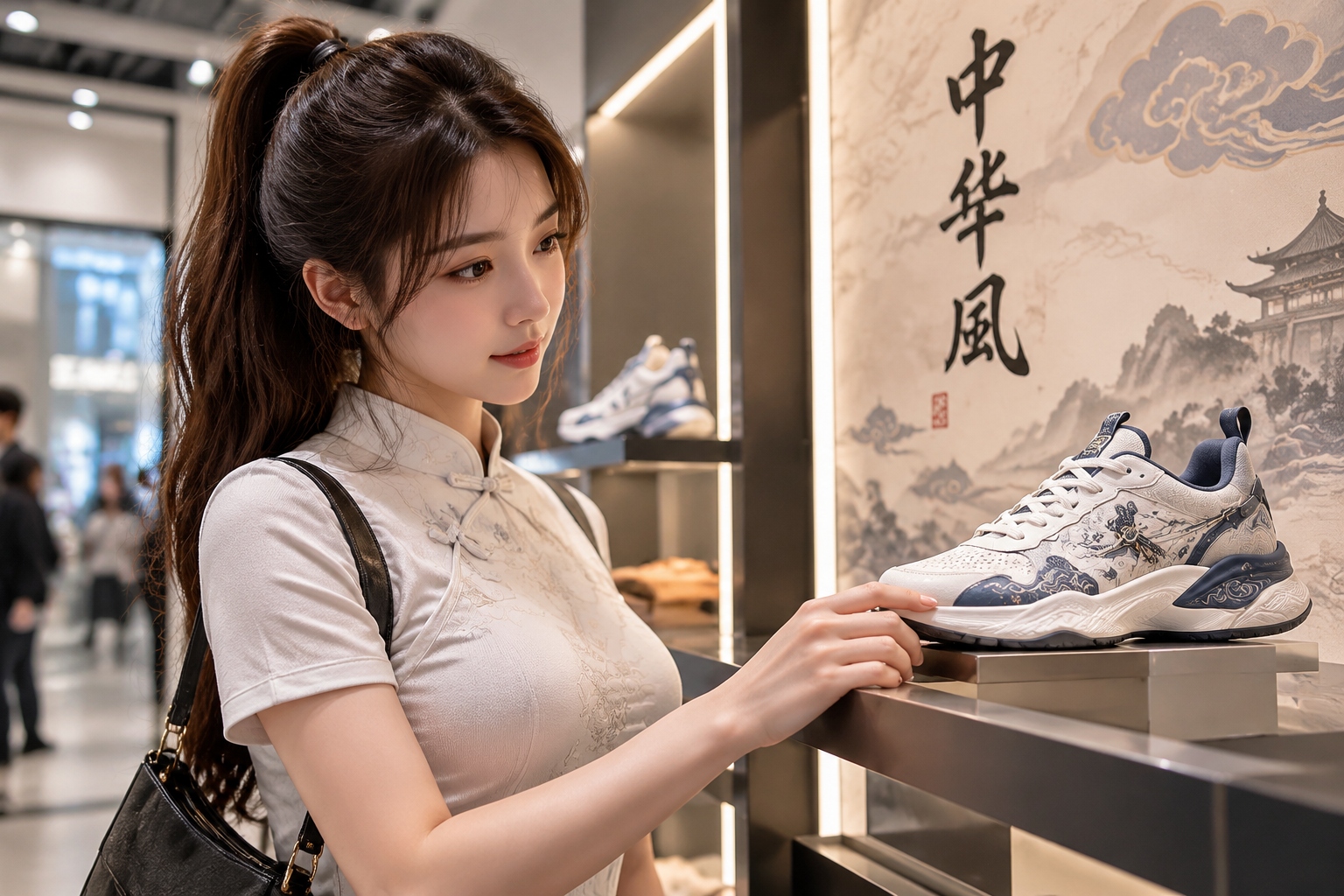
In China, this dynamic is visible in how brands collaborate with IP holders. A luxury brand might release a limited-edition wuxia-inspired sneaker. It sells out instantly. But does the buyer care about the philosophical underpinnings of the story? Probably not. They care about scarcity and status.
What This Means for Cultural Exchange
We should be careful not to judge these consumers too harshly. Culture has always spread through artifacts before texts. Think of how Japanese sushi became popular in the West long before most people learned to read kanji or understood the nuances of omotenashi (hospitality). The product came first; the understanding followed, sometimes years later.
The “Wuxia Enjoyer” T-shirt is a sign that Chinese soft power is finding new, playful channels. It’s not top-down propaganda; it’s bottom-up consumption. Young people are choosing to wear their identity on their sleeves—literally.
Final Thought: Wear the Shirt, Read the Book
If you’re reading this from outside China and you see someone wearing a wuxia-themed shirt, don’t assume they’ve read the classics. But also, don’t dismiss them as superficial. They are participating in a cultural moment.
For those inside China, the challenge is to ensure that the merch leads somewhere deeper. Can we design products that invite curiosity rather than just satisfying it? Can we make the transition from “wearing the shirt” to “reading the story” easier?
Until then, I’ll keep wearing my plain T-shirt. But I admit, if someone handed me a “Wuxia Enjoyer” tee at a party, I might just put it on. After all, looking like you belong to the Jianghu is half the battle.