
The Untranslatable World of Jianghu
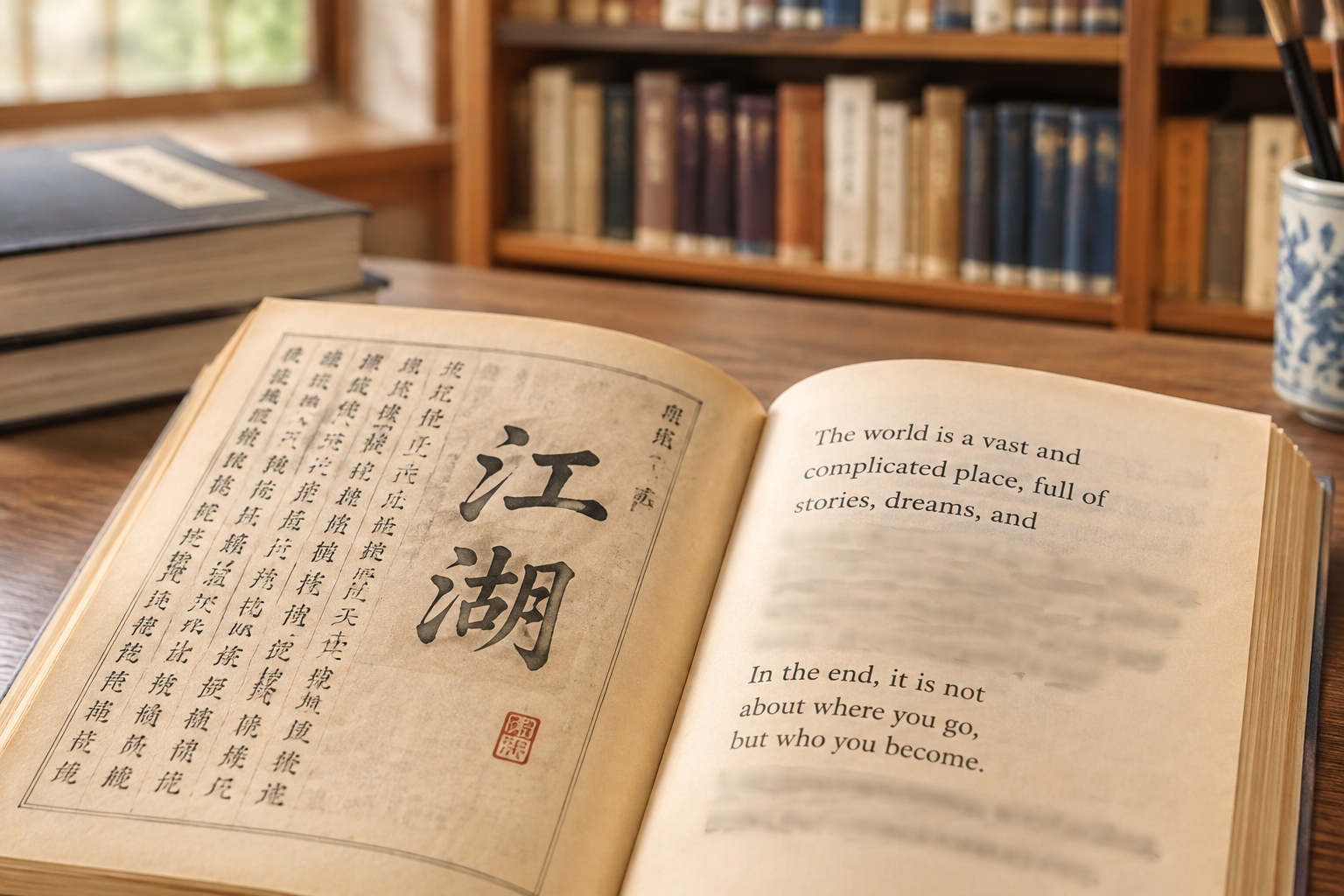
In a quiet café in Beijing, Li Wei, a translator specializing in Chinese literature, stares at a single word on his screen: jianghu. To a Chinese reader, this two-character term instantly evokes a complex web of social codes, underground economies, chivalric honor, and political rebellion outside the reach of imperial law. It is not just a place; it is a state of being.
To an English reader, however, jianghu is often reduced to “the martial arts world” or simply “rivers and lakes.” The latter is a literal translation that sounds poetic but means nothing in context. This gap represents the core challenge of translating wuxia (martial arts fiction) for a global audience. It is not merely a linguistic hurdle; it is a cultural chasm.
The Scale of Cultural Loss
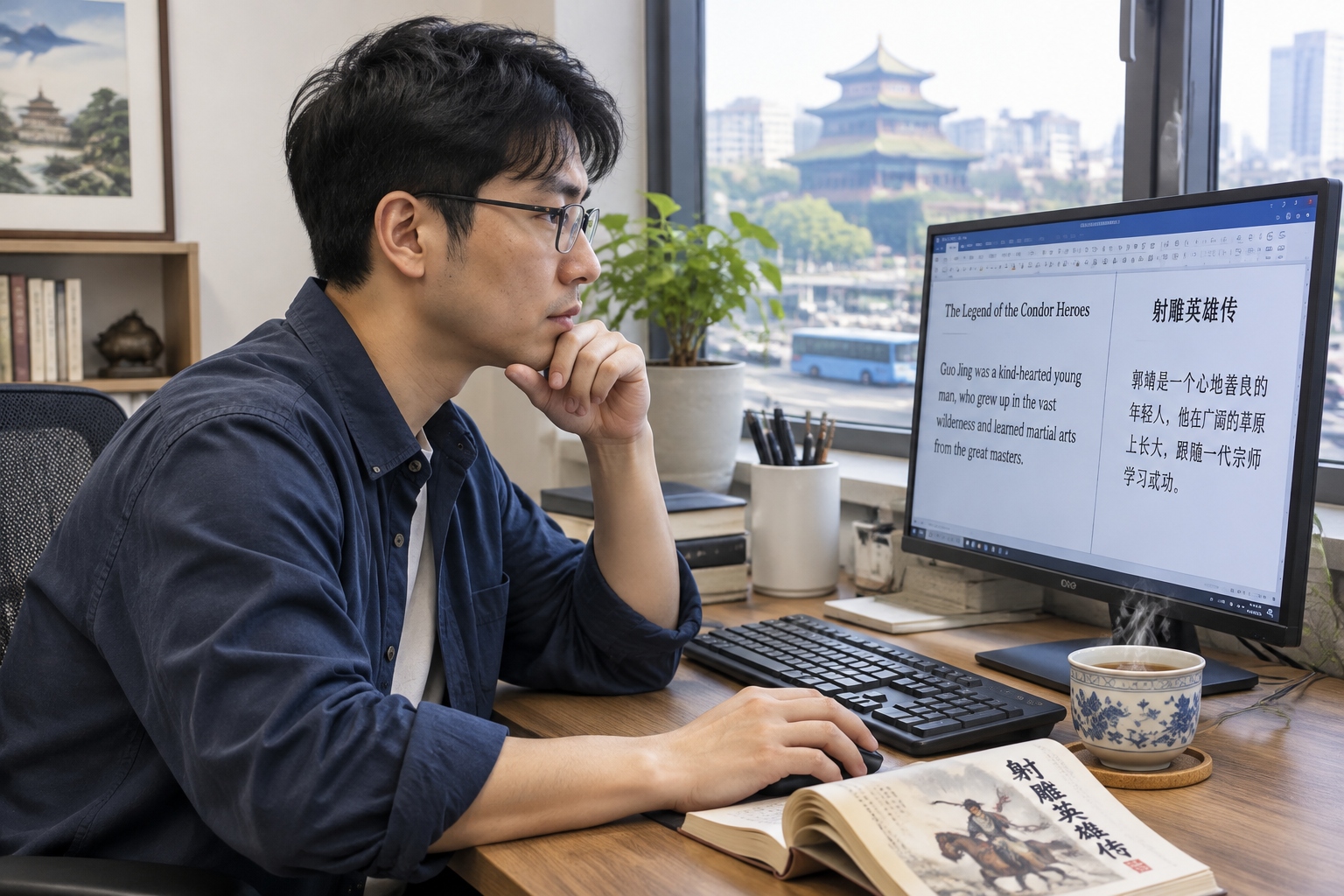
How much information disappears when these stories cross borders? A recent academic study analyzing the English translation of Jin Yong’s classic novel The Legend of the Condor Heroes revealed a startling statistic: approximately 21.1% of cultural information was omitted, simplified, or altered in the process. This includes historical references, poetic allusions, and specific martial arts terminology that carry deep resonance for native readers.
For overseas readers who have grown up with Star Wars or Japanese anime, wuxia offers a refreshing alternative to Western fantasy. However, without proper contextualization, the depth of these narratives can feel flat. The fight scenes are visible, but the philosophy behind them often remains invisible.
Decoding Key Concepts: Internal Force and Lightness Skills
The difficulty lies in concepts that have no direct equivalent in English. Take neili, commonly translated as “internal force” or “chi.” In Chinese culture, this refers to a cultivated energy derived from breathing exercises and meditation, believed to enhance physical power and health. It is grounded in Traditional Chinese Medicine (TCM).
In many translations, neili becomes a generic “energy blast,” stripping away the medical and philosophical roots that give it weight. Similarly, qinggong, often rendered as “lightness skill” or “wall-running,” fails to convey the Taoist idea of harmonizing with nature to defy gravity. The translator is forced to choose between accuracy and readability.
The Dilemma: Readability vs. Cultural Integrity
Translators face a constant tug-of-war. If they explain every cultural nuance, the book becomes a textbook, interrupting the narrative flow. If they simplify too much, the story loses its soul. Consider the term xia (hero/chivalrous person). In Western literature, this might be translated as “knight” or “vigilante.” But a knight operates under feudal law and religious duty, while a wuxia hero often operates outside the law, guided by personal morality and loyalty to friends.
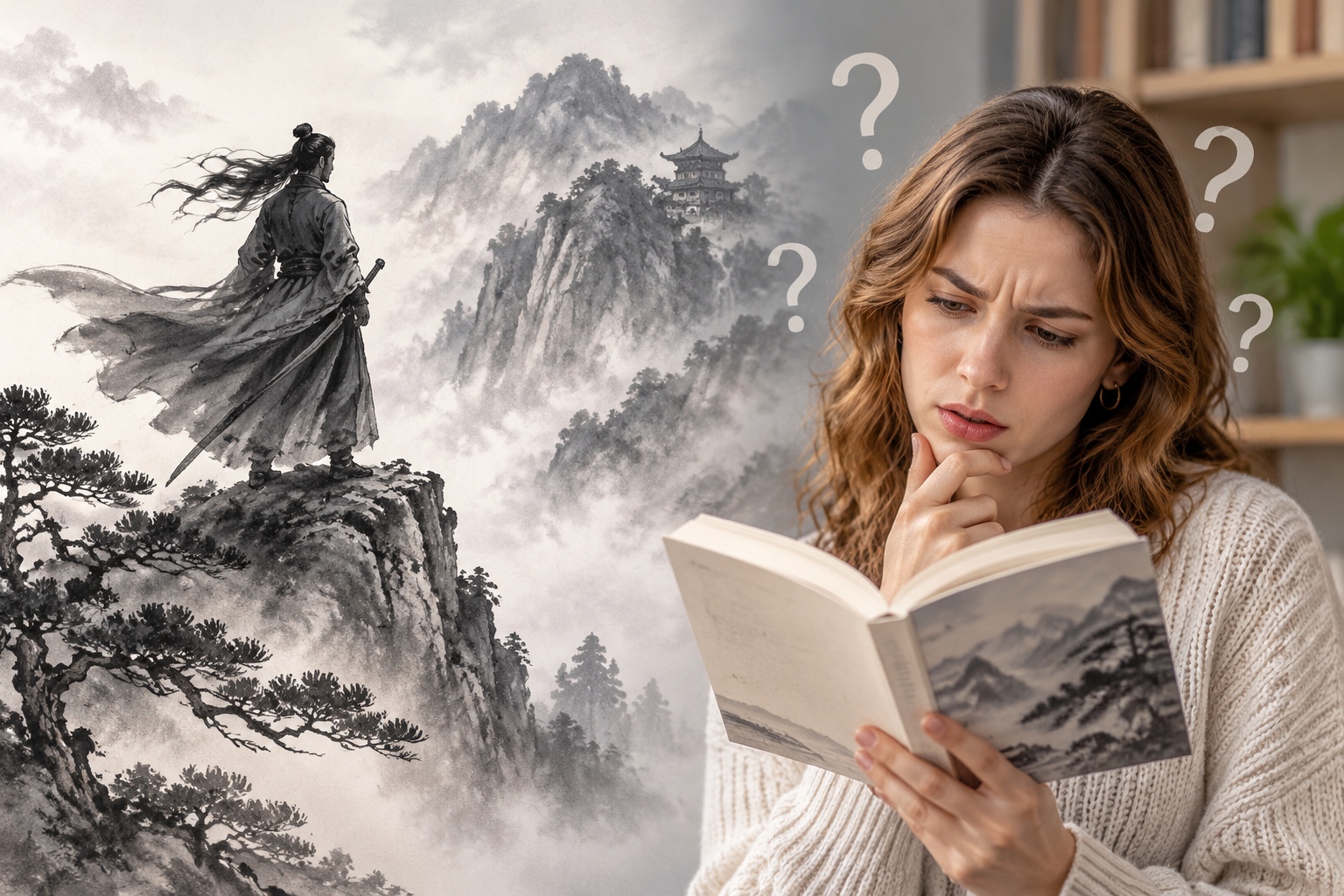
This distinction matters. When xia is translated as “knight,” Western readers subconsciously apply European medieval logic to Chinese stories. They expect clear good-versus-evil binaries. In wuxia, the lines are often blurred. A bandit might be more honorable than a government official. This moral ambiguity is frequently lost in translation, leading to misunderstandings about the characters’ motivations.
Why It Matters for Global Readers
The flattening of wuxia narratives affects how overseas audiences perceive Chinese culture. If jianghu is just “rivers and lakes,” readers miss the concept of a parallel society where justice is self-administered. This reflects a broader historical reality in China, where state power did not always reach every corner of society, leaving space for community-based ethical systems.
New translation strategies are emerging. Some publishers now use footnotes or glossaries to explain terms like qi and kung fu. Others adopt a “foreignizing” approach, keeping pinyin terms like jianghu untranslated but providing context through narrative. This respects the reader’s intelligence and invites them to learn a new conceptual framework.
Beyond Words: The Cultural Bridge
The challenge of translating wuxia is ultimately about building cultural bridges. It requires translators to be not just linguists, but cultural mediators. For readers, understanding these nuances enriches the experience. It transforms a simple adventure story into a window into Chinese history, philosophy, and social structures.
As Chinese literature gains more global attention, the demand for high-quality translations grows. The goal is not to make wuxia “readable” in the way Western novels are, but to help readers appreciate it on its own terms. When done well, translation doesn’t just transfer words; it transfers worlds.