

Before the visitors arrive
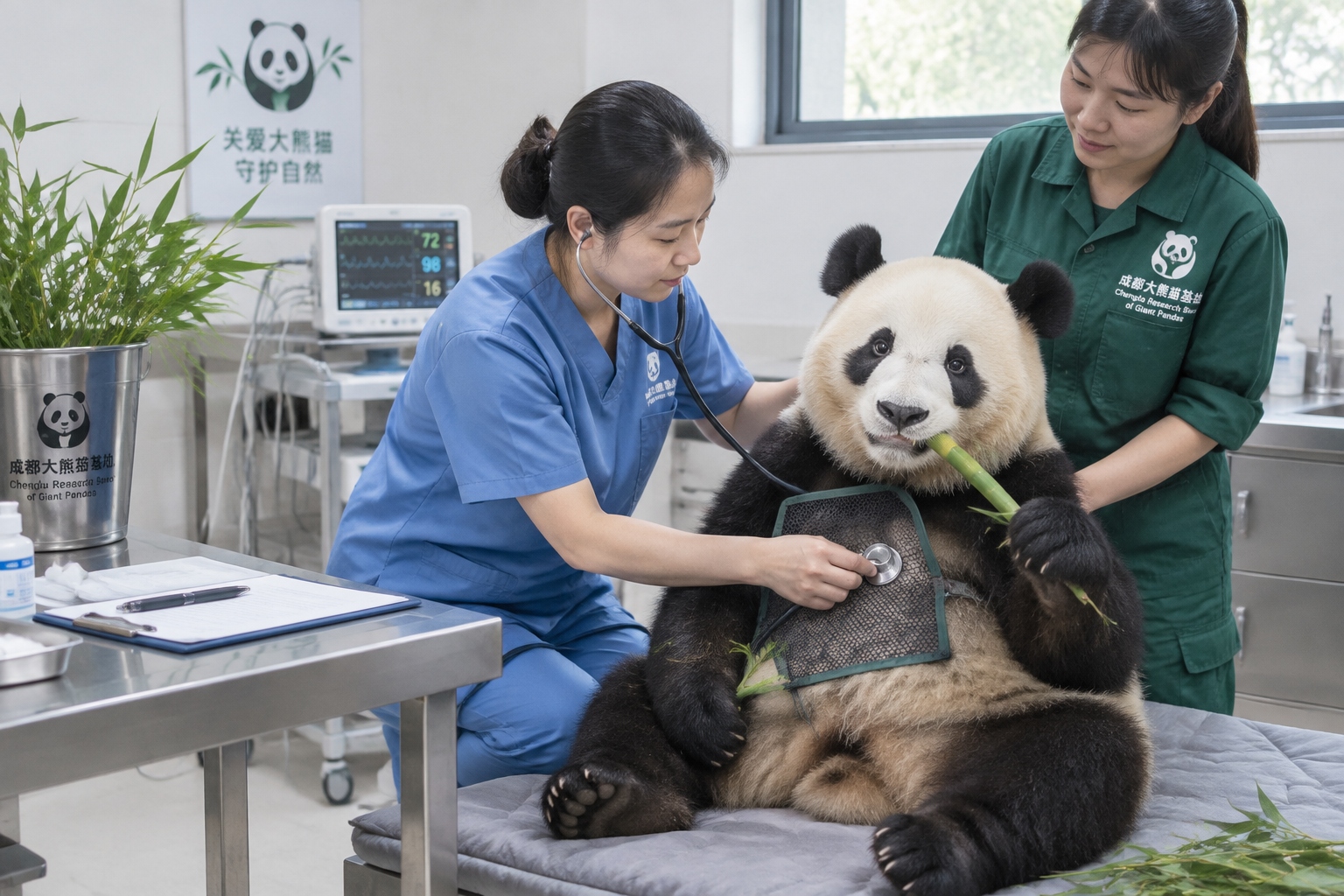
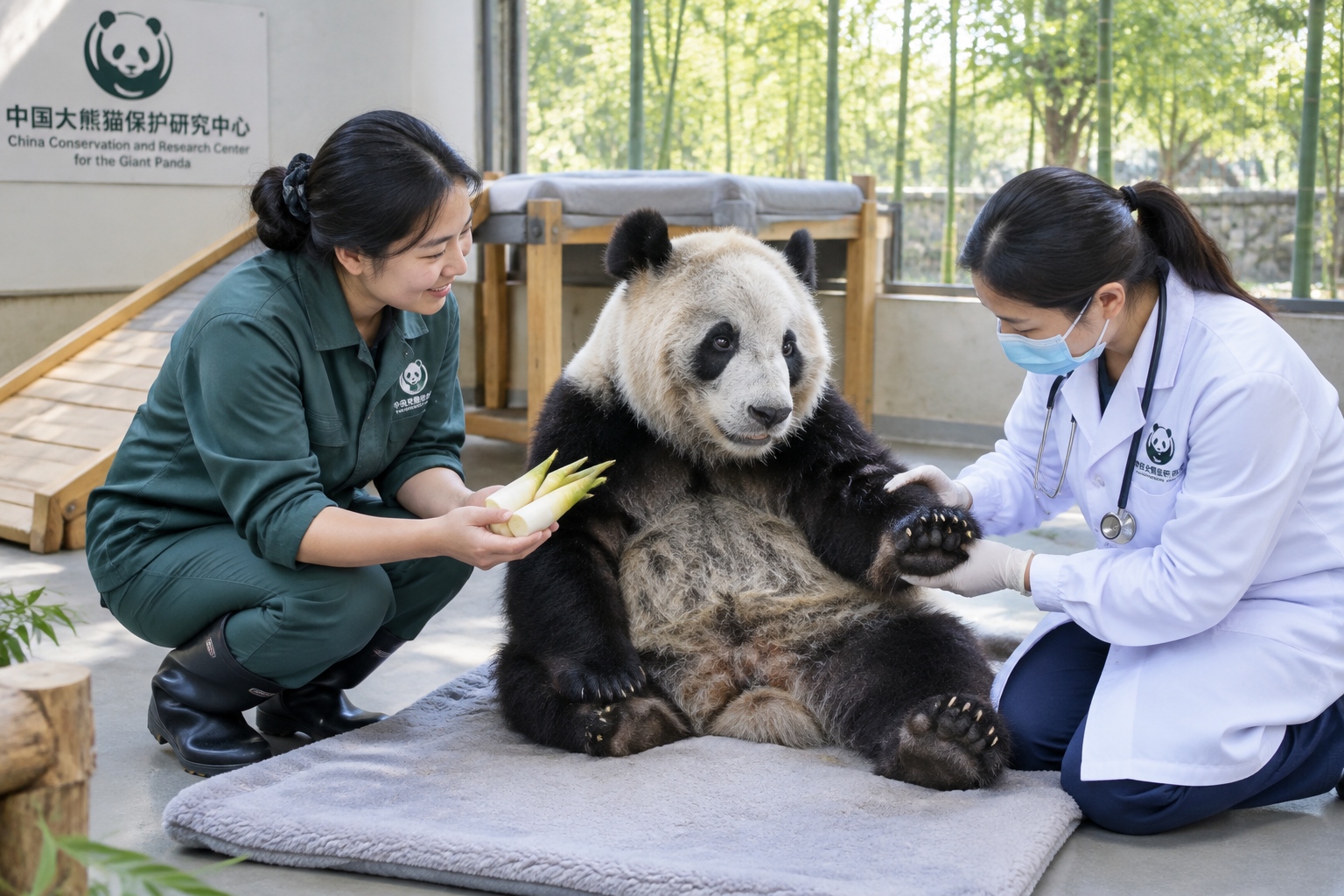
At 7:40 a.m. at the Chengdu Research Base of Giant Panda Breeding, the tour buses are still in the parking lot. Inside the veterinary clinic, the smell is bamboo, alcohol swabs, and the faint sweetness of apple slices. A stainless steel table is covered with a blue drape. A keeper taps a target stick against the mesh of an indoor enclosure. A 17-year-old female panda follows the stick, sits, and lifts a front paw. The vet swabs the pad. The panda keeps chewing a bamboo shoot. In less than two minutes, the blood draw is done. No anesthesia. No drama. The panda gets an apple slice.
This is the part of panda care most visitors never see. From the walkway, a giant panda looks like a black-and-white animal doing two things: eating bamboo and sleeping. From the vet’s side of the fence, it is a patient with teeth, gut, parasites, joints, and a medical chart that can run for decades.
Why a panda physical is not a simple checkup
Giant pandas are bears. They have the digestive system of a carnivore, but they eat a diet that is mostly bamboo. That mismatch shapes their health. Bamboo is low in nutrients and abrasive. A panda must eat for many hours a day. Its teeth wear down. Its gut microbiome is unusual. Its droppings are examined almost as often as its blood.
In captivity, Chinese panda bases keep detailed records for each animal. The global captive population is around 600 to 700 animals, while the wild population is estimated at more than 1,800. China downgraded the giant panda from “endangered” to “vulnerable” in 2021, but captive pandas remain a genetic and medical safety net. Each health check is also a data point for the species.
Vets watch for a handful of recurring problems:
- Dental wear and tooth disease. Bamboo is tough. Broken canines, worn molars, and gum problems can make eating painful.
- Parasites. The roundworm Baylisascaris schroederi is a major threat. Heavy infections can block the intestine or cause peritonitis.
- Digestive trouble. Vomiting, diarrhea, bloating, and changes in appetite are red flags.
- Age-related disease. Older pandas can develop arthritis, kidney or liver problems, heart disease, and cataracts.
None of these can be diagnosed by looking at a panda through glass. That is why the vet team relies on daily keeper notes, training, and periodic full exams.
The checkup starts with the keeper, not the vet
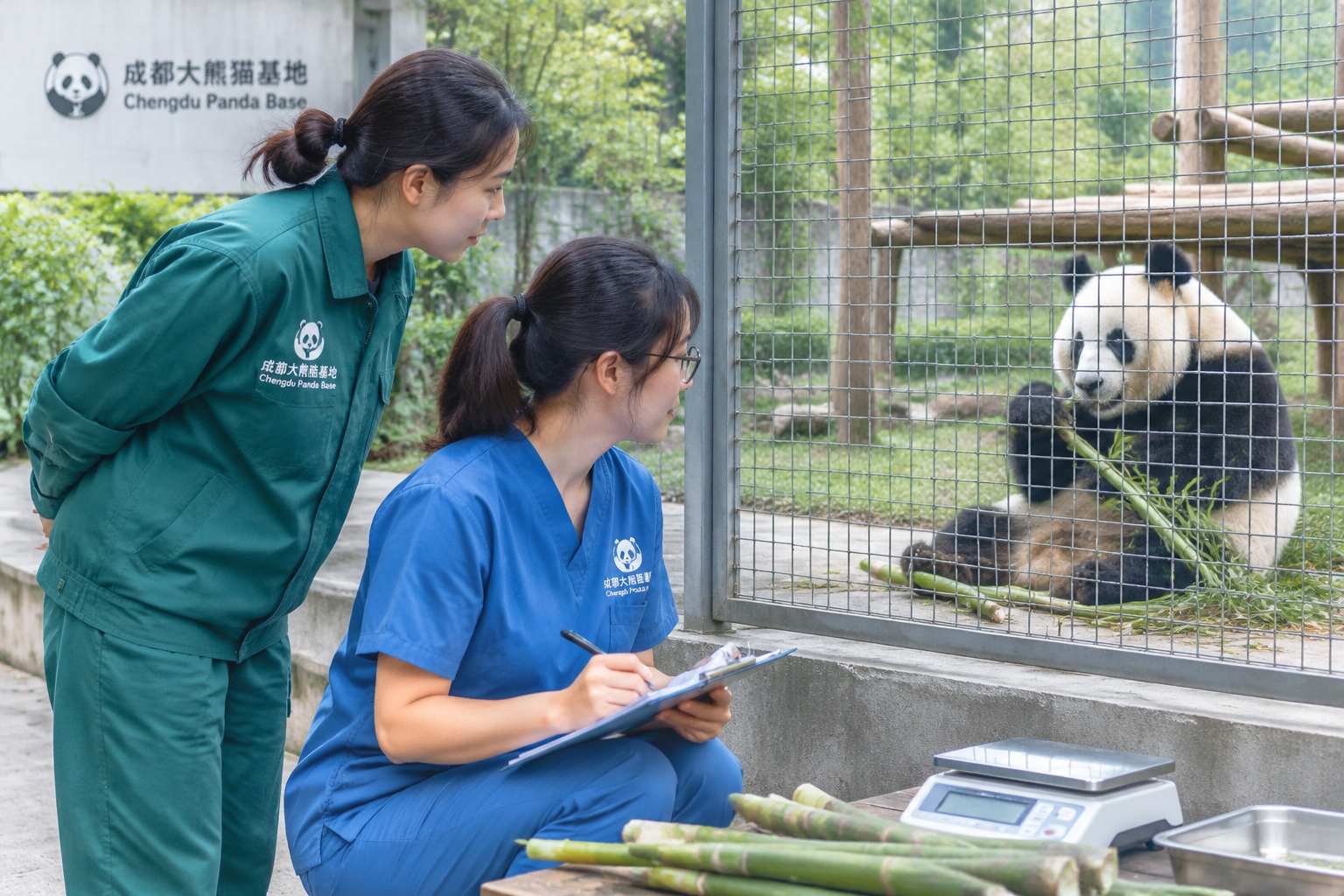
Long before a panda is called in for a physical, keepers are already collecting data. How much bamboo did it eat? How many droppings? What is the shape and color? Is the panda moving differently? Is it favoring a paw? Is it sitting in the same spot more than usual?
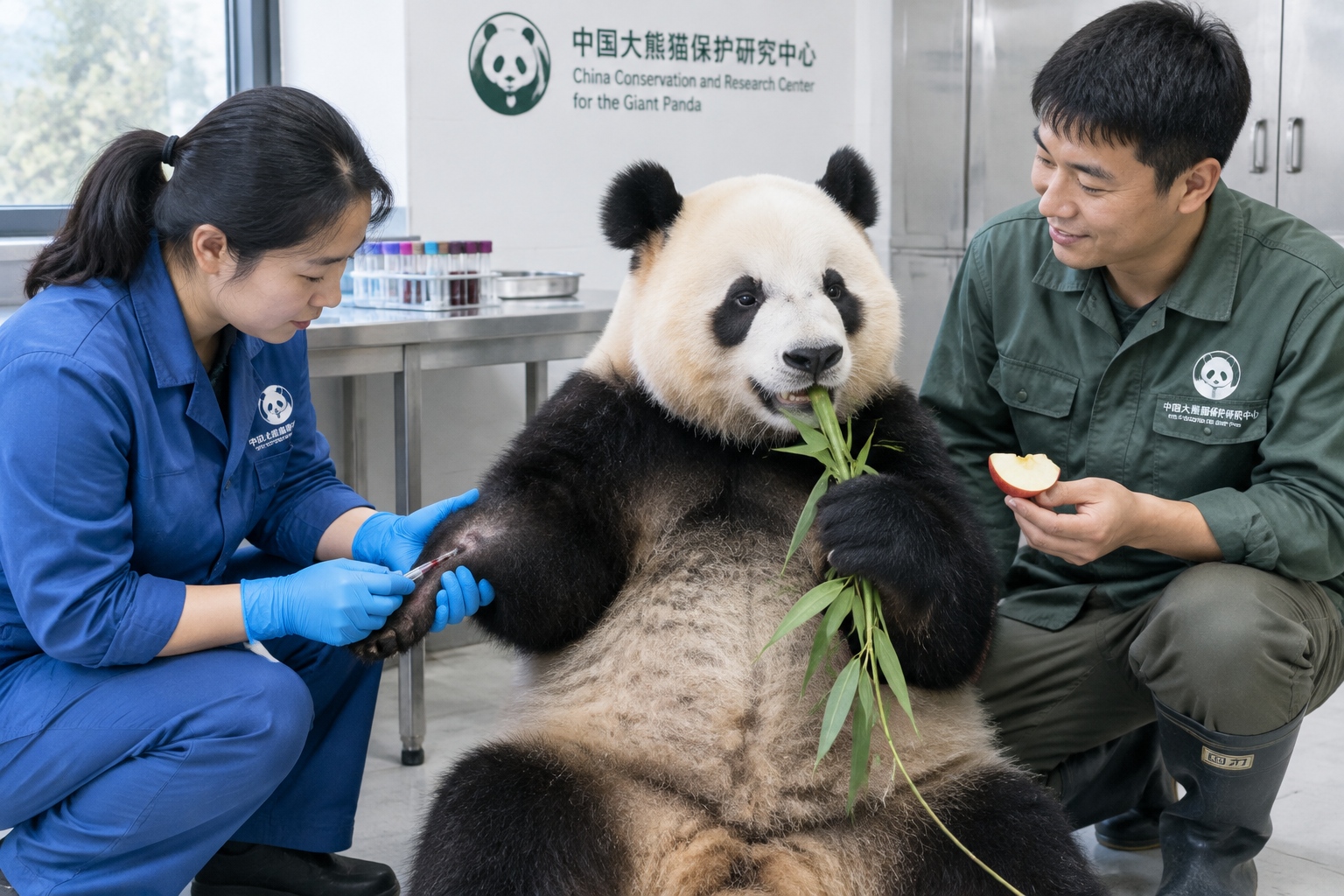
At many bases, keepers use positive reinforcement training. A panda learns to touch a target, stand on a scale, open its mouth, and present a paw. Honey water or apple slices are the reward. This is not just for show. A voluntary blood draw or injection can replace a risky anesthetic procedure. It also gives vets regular samples, so they can spot a trend before it becomes an emergency.
Step by step: a full panda health check
1. Observation and weight
The exam begins with the basics. A panda steps onto a platform scale. Weight loss or gain is tracked against its own history. A 100-kilogram panda that drops five kilograms in a month is a concern. The vet watches how it walks, how it sits, and how it breathes. The keeper notes whether it finished its bamboo overnight.
2. Physical exam and teeth
If the panda is trained, the vet may check its eyes, nose, ears, gums, and teeth while it is awake. A quick look inside the mouth can reveal broken teeth, tartar, or ulcers. For a deeper dental exam, anesthesia may be needed. Dental disease is not cosmetic. A panda with painful molars may stop eating enough bamboo, which quickly affects its weight and digestion.
3. Blood draw and lab work
Blood is usually taken from a front paw or an ear vein. The sample goes to a lab for a complete blood count and biochemistry panel. Vets look at liver and kidney values, blood sugar, electrolytes, and signs of infection or inflammation. In older pandas, these numbers are compared over years, not just against a normal range.
4. Ultrasound and imaging
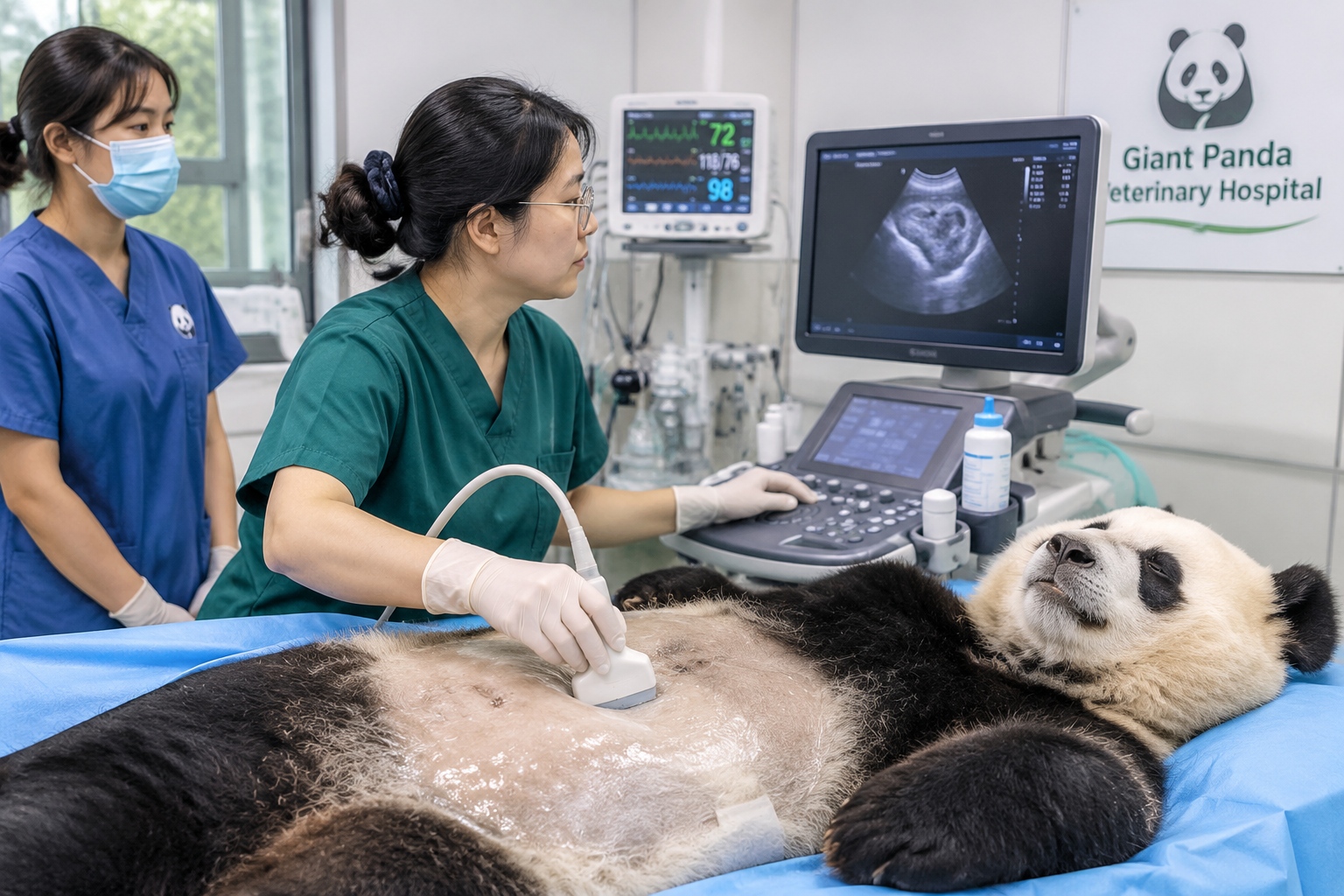
Ultrasound is used to check the heart, liver, kidneys, and reproductive organs. It is also how vets confirm pregnancy and monitor fetal development. For a full abdominal ultrasound, the panda is often anesthetized. The belly is shaved, gel is applied, and the vet moves the probe slowly while watching the screen. X-rays can reveal arthritis, dental problems, or swallowed objects. CT and MRI are less common, but some referral centers have them.
5. Anesthesia: when it is necessary
Pandas are large, strong bears. Even a cooperative panda cannot hold still for a dental X-ray or a full ultrasound. Anesthesia teams use drugs calculated to the animal’s weight and health status. A vet listens to the heart and lungs throughout. The panda is monitored until it wakes. The goal is to keep the procedure short and stress low.
6. Parasite screening and deworming
Fresh fecal samples are checked for eggs and parasites. Baylisascaris schroederi can be treated with deworming medication, but prevention matters. Keepers clean enclosures, manage bamboo sources, and watch for signs of intestinal blockage. A heavy parasite load can be fatal.
7. Vaccines and disease prevention
Pandas are vulnerable to some viruses carried by dogs, especially canine distemper. Vaccination protocols vary by facility and are not identical to those for domestic dogs. Quarantine for new arrivals, footbaths, limited human contact, and strict separation from dogs are standard. A panda with a runny nose or fever is isolated quickly. In a small captive population, one outbreak can set back years of breeding work.
The hardest part: aging pandas
In the wild, a giant panda may live 14 to 20 years. In captivity, many live into their late 20s or 30s. That success has created a new field: geriatric panda care.
Old pandas get stiff. Arthritis can make climbing and walking painful. Teeth may be worn flat. Kidneys and liver may slow down. Some develop heart disease or cataracts. Keepers adjust the diet: softer bamboo shoots, steamed vegetables, and supplements. Vets may prescribe pain relief. Enclosures are modified with ramps, low platforms, and soft bedding. In some bases, older pandas are housed near the clinic for easier monitoring.
A routine check for an aging panda may include blood pressure, joint assessment, dental cleaning, and a review of kidney values. The question is not just “Is the panda sick?” but “Can it still eat, move, and sleep without pain?”
What the public doesn’t see
Most panda vet work is not dramatic. It is a keeper writing down how many bamboo stalks were left uneaten. It is a vet comparing a blood sample from this spring with one from three years ago. It is a 20-minute training session to make a blood draw possible without anesthesia. It is a panda getting a slice of apple for holding still.
After the exam, the panda ambles back to its enclosure, climbs onto a platform, and starts eating again. The vet writes notes, labels samples, and calls the lab. The next appointment is already on the whiteboard. For visitors, the panda is a symbol. For the people in the clinic, it is a patient with a long medical history—and a good reason to keep the bamboo fresh.