

Introduction: A plastic basin beside a spring
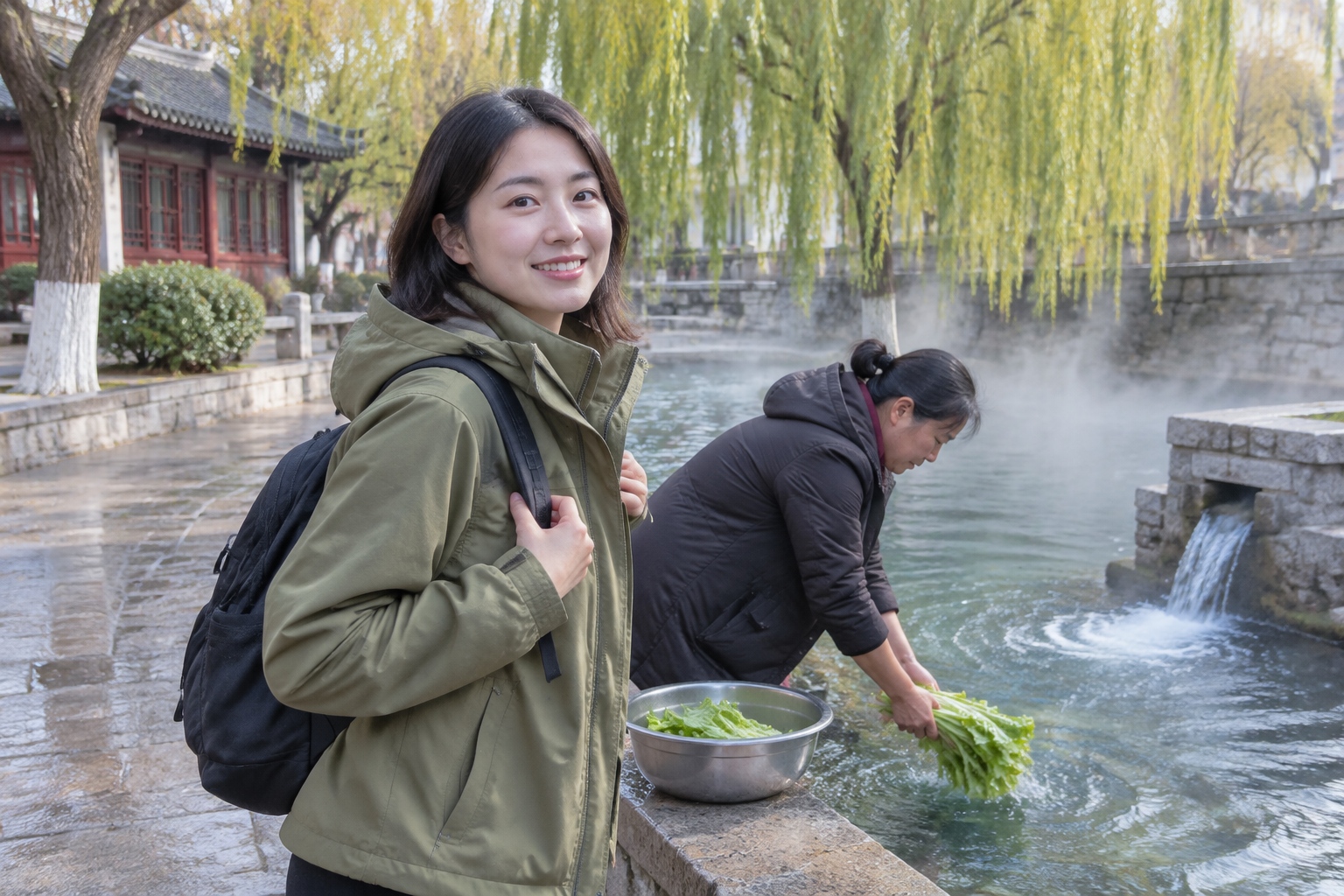
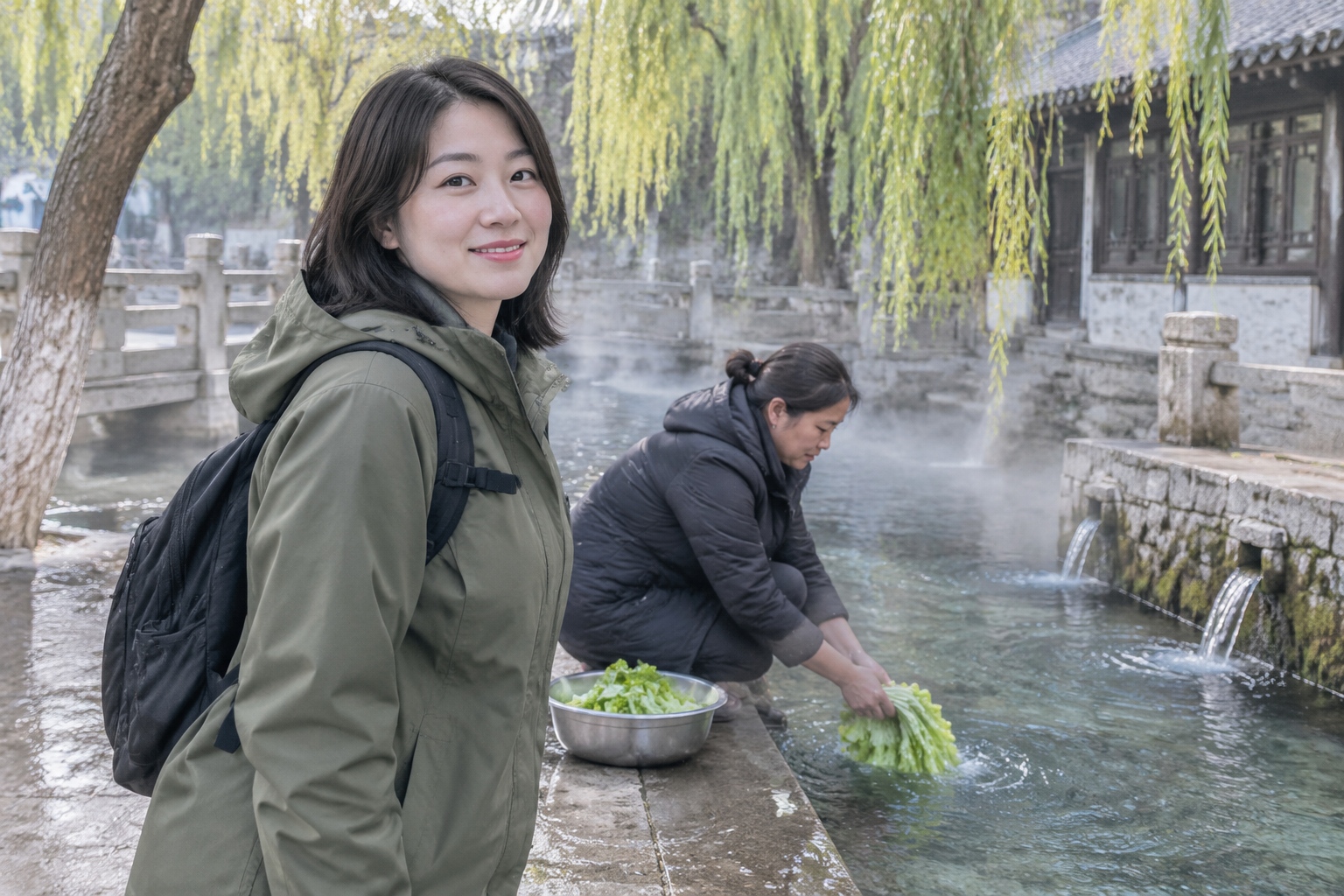
At 6:40 on a winter morning in Jinan, a woman in a padded coat crouches beside a spring-fed channel, rinses two heads of lettuce in the rising steam, and carries the basin back upstairs to cook breakfast. The air is below freezing. The water is about 18°C. This is not a scenic spot she has come to visit. It is the water at her doorstep.
That small scene is a useful way into Shandong. Most first-time visitors arrive with a list of monuments. This route follows something simpler: one line of water. It comes up from underground in Jinan, turns into cloud on Mount Tai, rests in a half-circle pool in Qufu, and ends in the Yellow Sea at Qingdao. Seven days, one water line, and a string of ordinary places where Chinese people have given water a meaning.
Why follow water through Shandong?
Mount Tai is not the highest of China’s five sacred mountains, but it is the one emperors climbed to speak to heaven. The Confucius Temple and family mansion in Qufu are the easiest doorway into Confucianism, because they turn abstract rules into roofs, courtyards and stone. Qingdao is the full stop: beer, seafood, sea wind, and a chance to put down the weight of the first four days.
Water is the thread. It gives the trip a shape that is easy to feel, even if you are not a history person. You can see it, touch it, and at the end, drink it from a plastic bag.
Jinan: water pushed up from underground (Days 1–2)
Baotu Spring is the first stop. Three springs push up from the bottom of the pool. The water does not flow out so much as rise and boil, which is why the name suggests jumping and rushing. The temperature stays around 18°C all year. In winter, mist sits on the pool while willow branches carry frost. Baotu is the best known of Jinan’s 72 named springs. The city has several hundred more with names, which is why people call it the City of Springs.
On day two, Daming Lake and the old city are enough. A couplet often used to sum up Jinan goes: four sides of lotus, three sides of willow; a city of hills, half a city of lake. In the afternoon, Furong Street is the busy snack street, but Qushuiting Street is the better walk. A channel runs past people’s doorways. Someone washes vegetables, someone plays chess, someone hangs out a quilt. This is what locals mean by spring water families: water is not a view here. It is tap water.
Eat three things: sweet porridge, which is actually a savoury millet flour soup; bazi pork, a slab of pork belly pressed over rice; and youxuan, a flaky spring-onion pancake best eaten hot.
Mount Tai: water becomes cloud at 1,545 meters (Day 3)
Mount Tai is 1,545 meters high. It is not the tallest of the five sacred mountains, but it is the one emperors repeatedly used for fengshan ceremonies: up to report to heaven, down to announce the result. When Chinese people say steady as Mount Tai, they are talking about cultural weight, not altitude.
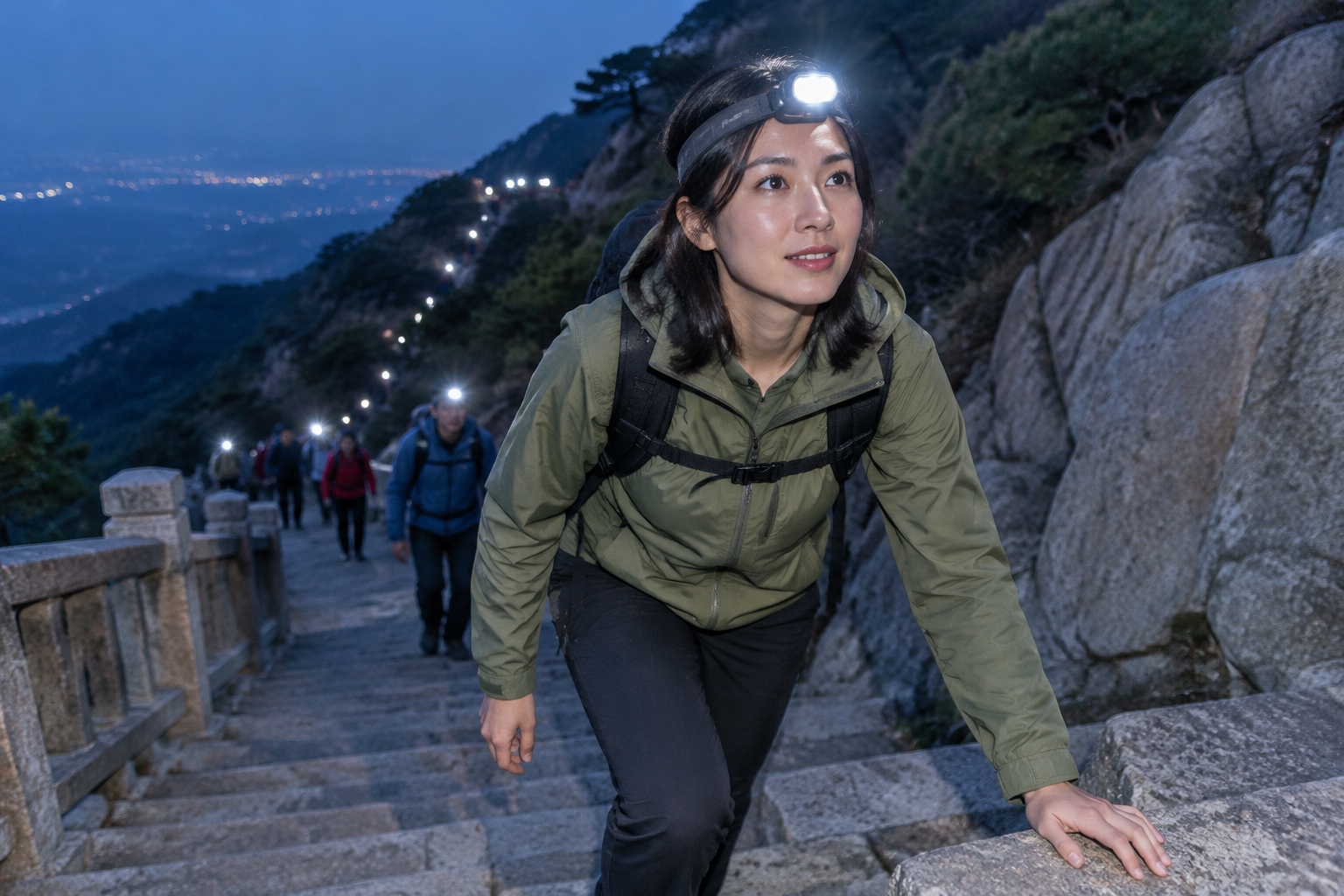
There are two ways up. The night climb starts around 10 p.m. at Red Gate and takes five or six hours. Headlamps draw a line up the mountain. The last stretch is the Eighteen Bends, more than 1,600 steps, steep enough that you stop looking up and watch your own feet. The other way is bus to Midway Gate, cable car to South Heaven Gate, saving the hardest two hours for the summit.
Either way, the top is about ten degrees colder than the base, and windy. Military coats can be rented at South Heaven Gate. Do not worry about how they look. You will be grateful for the half hour before sunrise.
Sunrise is at Jade Emperor Peak or Sunrise View Peak. Before the sun appears, the sea of clouds is grey-blue. A thin gold line comes through a gap, then the whole cloud field turns gold. Weather decides whether you see it. If you do not, the trip is not wasted. The inscriptions carved into the rock, from the Qin dynasty to the Republic, sit layer on layer like an open-air handwritten history.
Stay in Tai’an after descending. The next morning, a high-speed train reaches Qufu in about an hour.
Qufu: water held in a half-circle (Day 4)
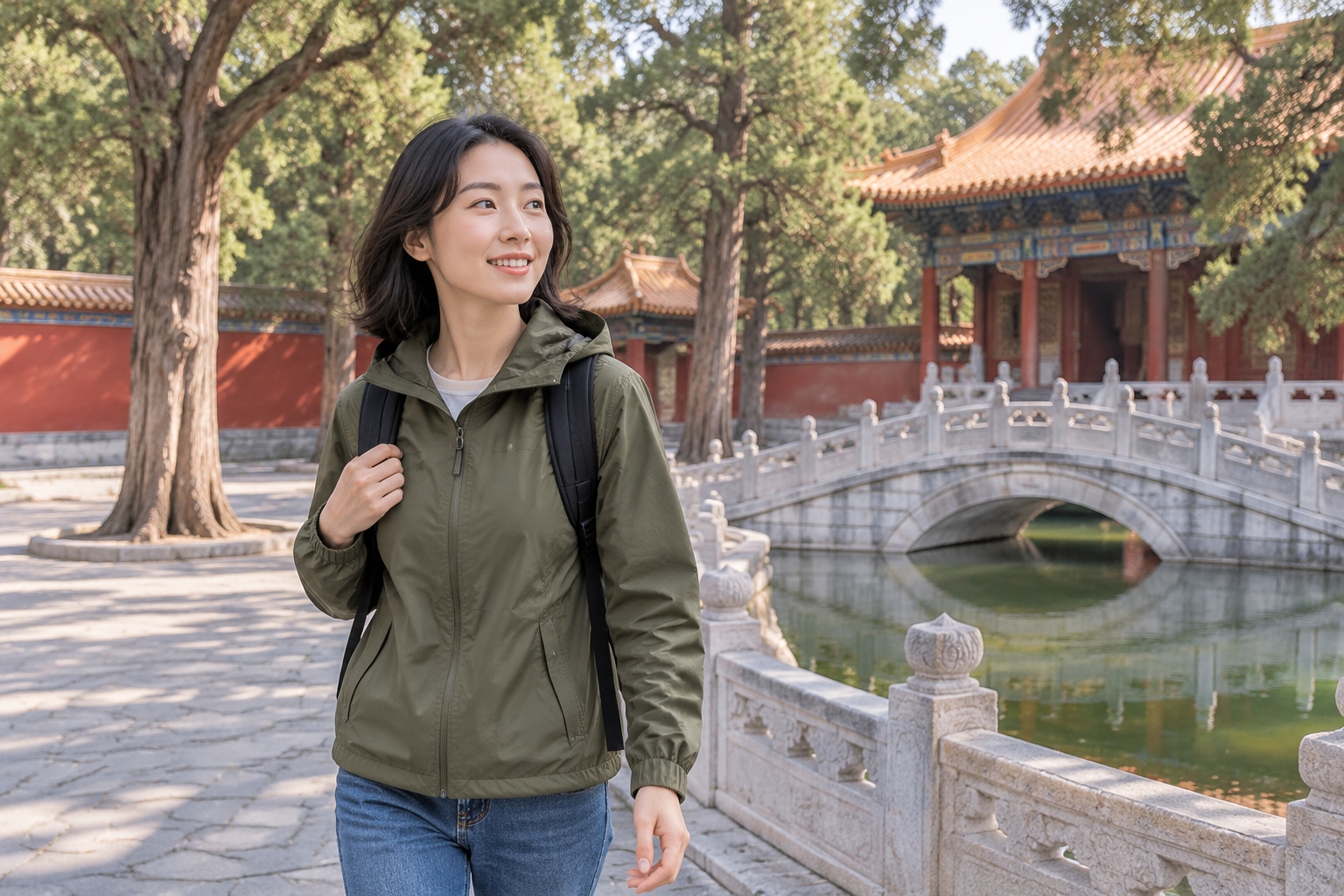
The first gate of the Confucius Temple is called the Wall of Ten Thousand Ren. How deep a person’s learning is gets measured by the height of a wall. Inside, past Lingxing Gate and Shengshi Gate, there is a half-moon pool called Banshui, with the Bishui Bridge over it. In the old school system, a student entering study was said to enter the pool. You walked around that half-circle of water before your education began. Here water is not scenery. It is a threshold.
In front of Dacheng Hall stand 28 stone columns with deep-relief dragons. Local story says that when emperors came to worship Confucius, the dragons had to be wrapped in red silk, because this family’s ceremonial status could not exceed the imperial palace. In front of the hall is the Apricot Altar, where Confucius is said to have taught.
Then come the Confucius Family Mansion and the Confucius Forest. The mansion was where his descendants lived, and where dynasties gave the family rank and responsibility. The forest is the cemetery of Confucius and his descendants: 2,400 years, more than 100,000 trees. In the forest is a spot called Zigong’s hut, where the student Zigong lived beside his teacher’s grave for six years. That six years explains Confucianism more clearly than any famous sentence.
The core is plain: do not impose on others what you do not want for yourself. It is not a religion. There is no god at the centre. It is about how people live with people: parents, friends, strangers. In a country where hundreds of millions live together, these rules shaped daily life earlier than law did.
Qingdao: water reaches the edge (Days 5–6)
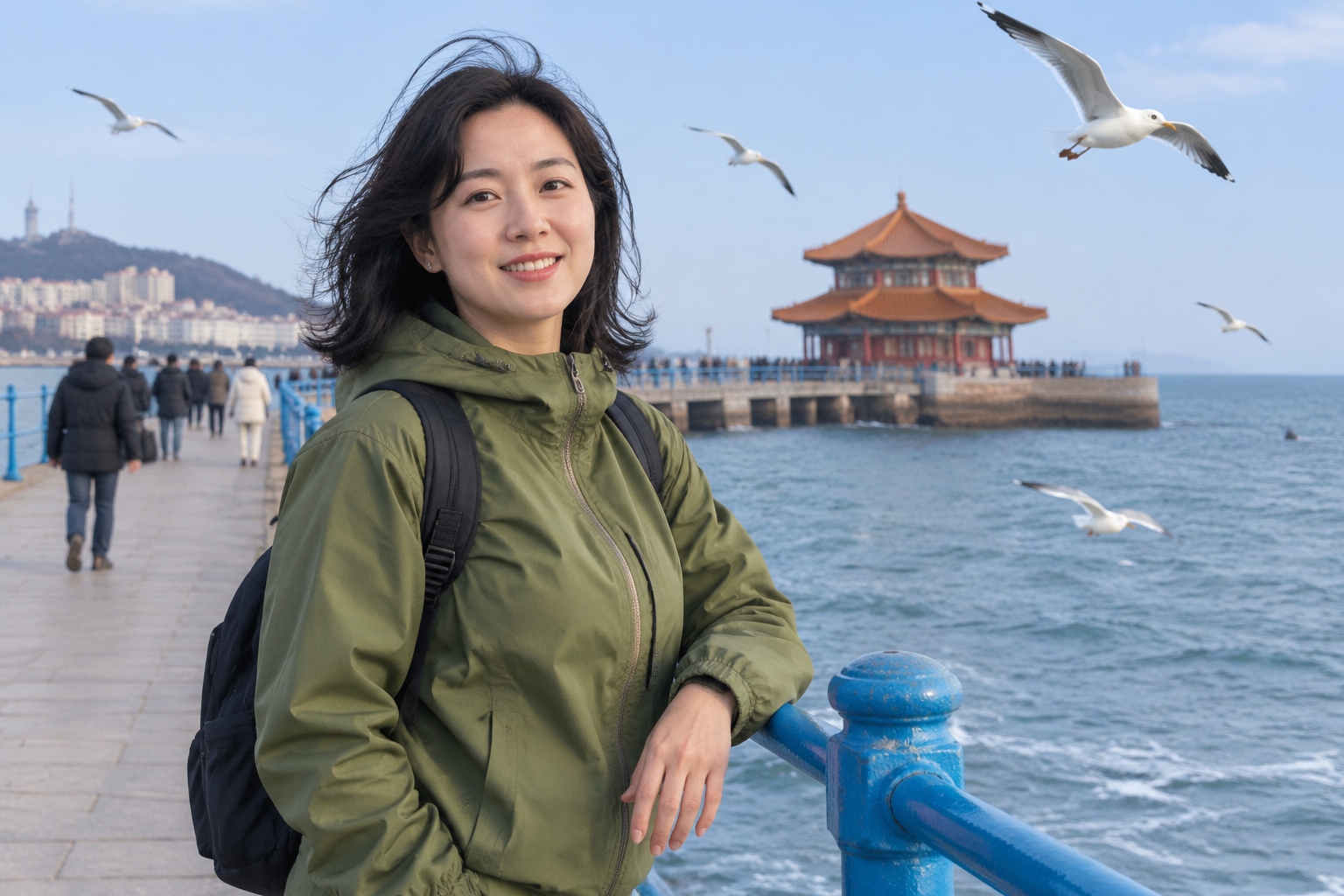
Day five is Zhanqiao Pier and Badaguan. Zhanqiao was built in 1892, a long pier reaching more than 400 meters into the sea, ending at Huilan Pavilion. In winter, seagulls crowd the railing. Badaguan is eight roads named after passes: Shanhaiguan, Jiayuguan, Juyongguan and so on. More than 200 houses line them, German, Russian, Japanese and Danish among them. Walk one street and you have turned half a European architecture album.
Day six is Laoshan. Old writers called it the best mountain on the sea: rock drops straight into the Yellow Sea, granite on one side, water on the other. Taiqing Palace is a Taoist site with more than 2,000 years behind it. Spring water from mid-mountain is said to make the best tea. At the foot of the mountain is the Laoshan mineral water plant.
Beer: water put into a bag (Day 6 afternoon–Day 7)
Back in the city on day six afternoon, go to the Beer Museum at 56 Dengzhou Road. The German-built brewery dates to 1903, and the equipment is still on the original site. The ticket includes two cups: one unfiltered draft, one regular draft. The unfiltered one is cloudy and slightly sweet. It lasts only a few days, which is why you can barely get it outside Qingdao.
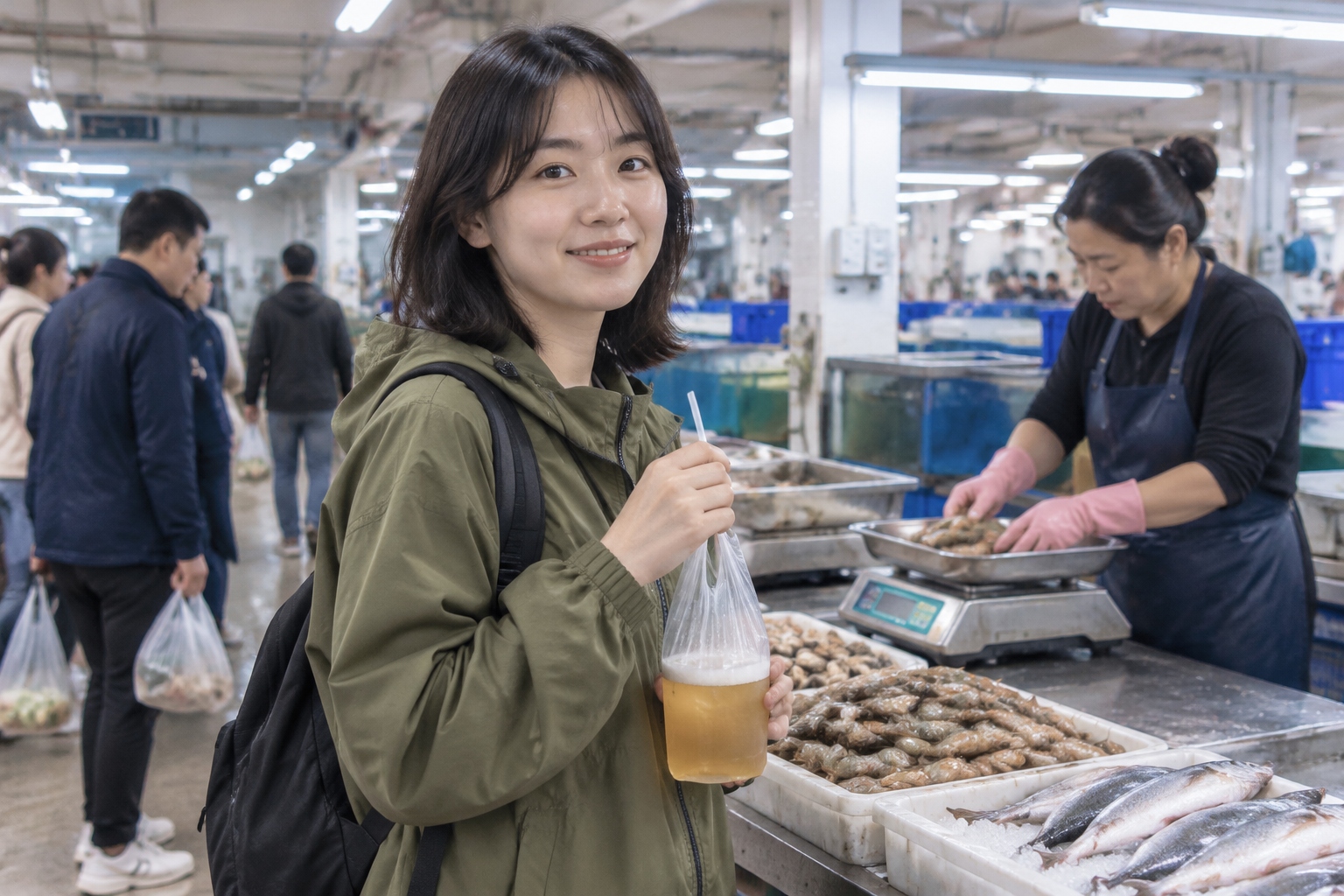
Day seven is seafood and bulk beer. Qingdao people buy beer by weight, pour it into a plastic bag, stick in a straw and carry it away. At lunch, go to a seafood market: clams, mantis shrimp, sea intestine, Spanish mackerel. Buy what you want, then take it to a nearby small restaurant and pay a cooking fee by weight. This is one of the least risky ways to eat seafood. Add a plate of spicy clams and a bowl of mackerel dumplings.
Fly out of Qingdao in the afternoon.
Five small things worth knowing
Prepare for the night climb
Bring a headlamp, not just a phone, gloves and a windproof layer. Coats and hot water are available at the summit.
Sunrise is a probability
Check the weather before you start. Cloud and mist are common on Mount Tai. Not seeing the sunrise is normal, so keep a buffer night in Tai’an.
Hire a guide in Qufu
The buildings in the three Confucian sites are mostly Ming and Qing. The value is in the rules and stories. Without a guide, you can walk through in two hours and miss most of it.
Ask seafood prices first
Have the vendor weigh it in front of you. Agree on the cooking fee by weight and write it on the order.
Transport
Jinan to Tai’an by high-speed train takes about 30 minutes. Tai’an to Qufu is about one hour. Qufu to Qingdao is about three hours. Fly out from Qingdao.
Who this route is for, and who should skip it
It suits people who are curious about how Chinese people think: why family, teachers and face matter. This line gives you answers in places, not lectures. It suits anyone who can handle one night climb or one early start, and anyone who likes seafood and beer.
It does not suit people who refuse to walk. Mount Tai can be done entirely by cable car, but the Confucian sites still take two or three hours on foot. It does not suit people who have no interest in old buildings or ritual, and only want natural scenery. And it is better to avoid July and August, when Qingdao is at peak season and the beaches are packed.
What you bring back
Not rubbings and sorghum candy. You bring back the three springs at Baotu pushing up from the bottom; the torch of the person ahead of you swinging on the Eighteen Bends; the moment the whole cloud field turns from grey-blue to gold and someone in the crowd says something quietly; the half-circle of Banshui Pool that you walk halfway around; the sound of wind through 100,000 trees in the Confucius Forest, like the sea; one empty road in Badaguan with only plane-tree shadows; and a plastic bag of beer carried back to the hotel.
Seven days. Water comes up from underground, rises into cloud, rests in a pool, and reaches the sea. At every stop, people in China have given it a name and a meaning.