
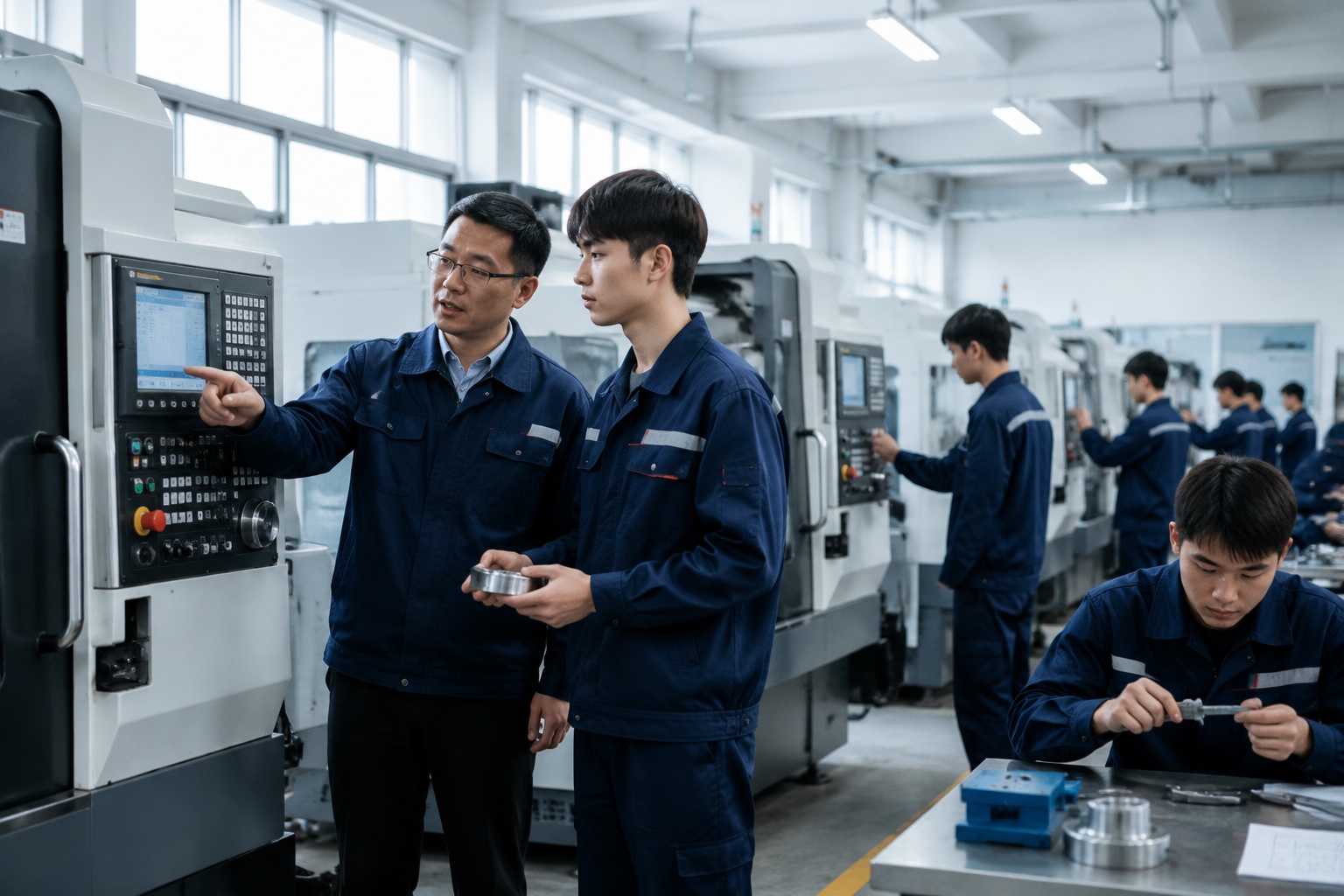

At 6:30 in the morning, in an industrial park in Changzhou, Jiangsu Province, 23-year-old Chen Jie walks into a smart factory. He is not a white-collar engineer. He is a graduate of a local vocational school, and his job is to set up CNC machines that cut metal parts for electric vehicle engines. The parts he inspects will soon be shipped to Europe.
Chen’s story is not unusual. In fact, it is part of a quiet revolution in Chinese education. While millions of parents still push their kids toward prestigious universities, hundreds of thousands of young people like Chen take a different path: vocational education. It is a system that many outsiders don’t understand, but it helps explain how China became the world’s manufacturing powerhouse.
This is not just about training workers. It is about building a talent pipeline that connects classrooms to factories, and turning the largest education system on Earth toward the needs of an economy in transition.
What Is Vocational Education in China?
In China, vocational education has two main levels. The first is secondary vocational school, often called ‘zhongzhuan’ (中等专业学校), which students attend after junior high school, around age 15. The second is higher vocational education, known as ‘gaozhuan’ (高等专科) or vocational undergraduate colleges, usually taken after high school. Together, these institutions form the largest vocational training system in the world.
According to the Ministry of Education, there are roughly 10,000 secondary vocational schools and over 1,500 vocational colleges in China, enrolling around 30 million students. To put that in context, that’s more than the entire population of Australia. The scale is staggering.
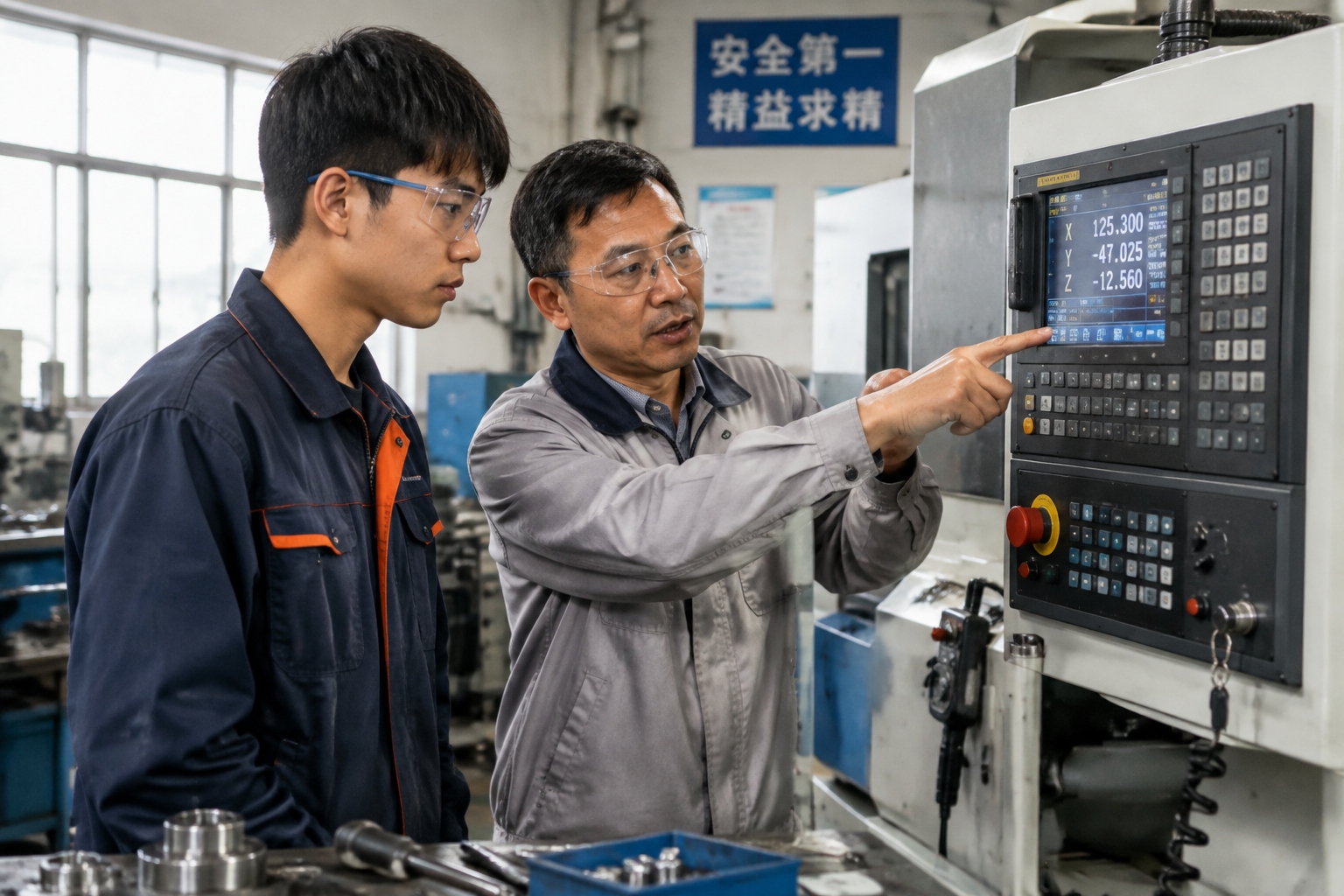
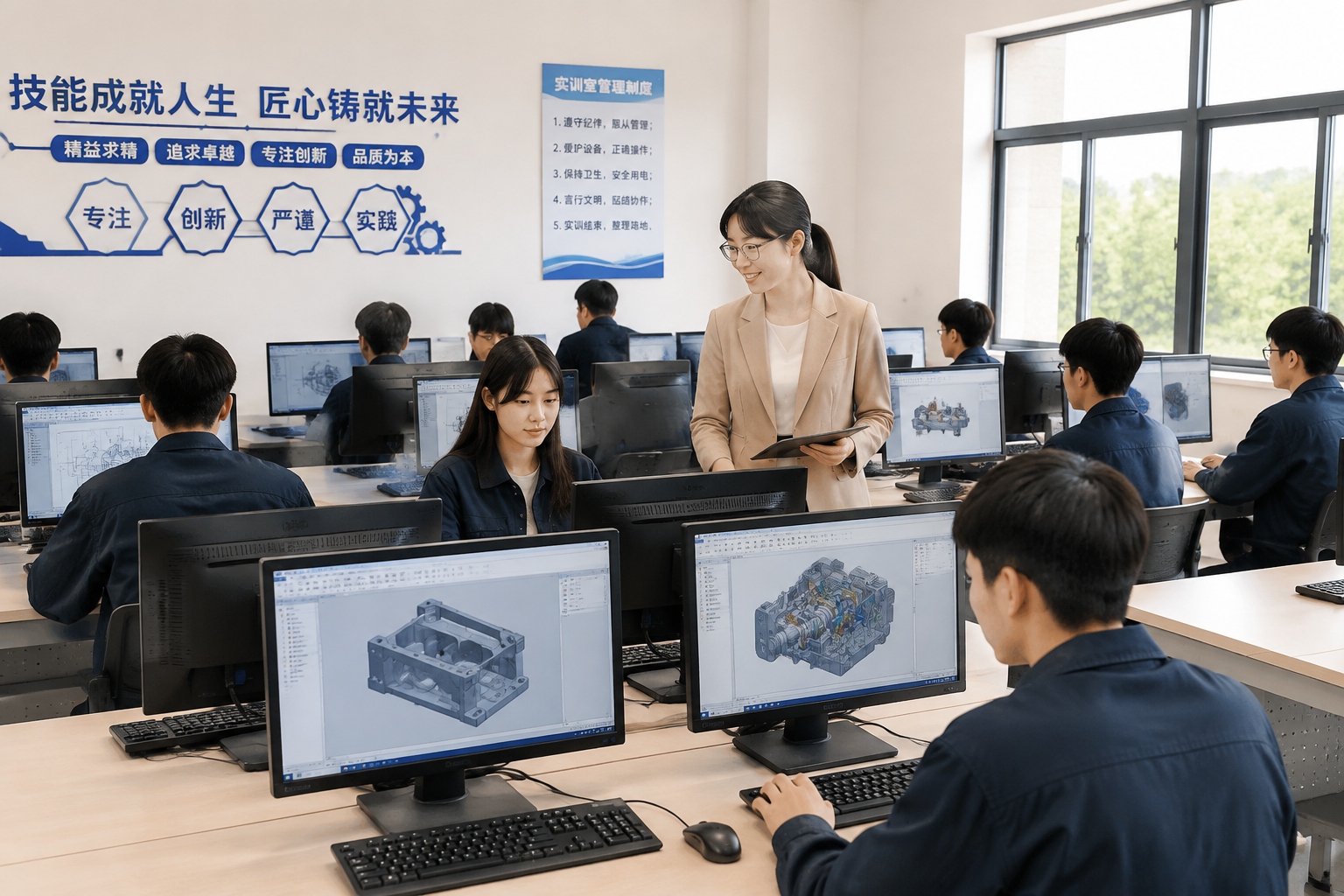
These schools are not like the old stereotypes of ‘trade schools’ in some countries. Some are modern campuses with workshops that mimic real factories, where students learn to operate lathes, weld robots, program PLC controllers, or design circuits. Courses cover everything from automotive repair and nursing to artificial intelligence and cloud computing.
Why China Needs a Vocational Army
China’s manufacturing sector has long been the world’s factory, but the days of cheap labor are fading. An aging population and rising wages mean the country can no longer compete on cost alone. Instead, it wants to move up the value chain, producing sophisticated goods like electric cars, robotics, and medical devices. That requires a different kind of worker: one who can program a machine, interpret data, and fix problems on the spot.
Meanwhile, university graduates are abundant. In 2024, a record 11.8 million students graduated from Chinese universities, but many cannot find jobs that match their majors. The unemployment rate for young people has repeatedly hit record highs. Vocational schools, on the other hand, offer a direct path to employment. In many good schools, the job placement rate exceeds 98%. This is why the government is betting on vocational education to solve both the skills gap and youth unemployment.
The shift is already visible in the country’s export data. In 2023, China surpassed Japan as the world’s largest auto exporter, with many of those vehicles being electric. Behind that milestone are not only engineers but thousands of technicians who learned their skills in vocational schools, assembling batteries, welding frames, and troubleshooting electronics.
How Do Schools and Factories Work Together?
Chen Jie attended Changzhou Vocational High School, which partners with a local electric vehicle parts manufacturer. This is called an ‘order-based class’ (dingdan ban). Companies tell schools what kind of workers they need, and schools adjust their curriculum. Students spend regular time in the company’s workshop, learning directly from experienced mentors.
One famous example is the cooperation between Shenzhen Polytechnic and tech giant Huawei. They jointly run an ‘ICT Academy’ where students get hands-on training with Huawei’s network equipment and even earn certificates recognized by the company. Another is BYD, the EV maker, which sponsors ‘BYD classes’ in many vocational colleges, teaching students about battery technology and electric motors.
This model resembles Germany’s dual vocational training system, but with Chinese characteristics. Many schools invite factory engineers to teach part-time. ‘I learned more in one month at the factory than in a whole year of theory,’ Chen recalls.
There’s also a newer trend called ‘modern apprenticeship’. In 2023, over 1,000 Chinese vocational schools joined pilot projects where students sign contracts with companies and graduate with a job waiting. Companies even sponsor their tuition in exchange for a commitment to stay for a few years.
Who Goes to Vocational School? And What Do They Think?
For a long time, vocational schools were seen as a last resort for students who ‘failed’ the high school entrance exam. Parents would rather their kids attend a weak university than a strong vocational school. But that attitude is slowly shifting, especially among working-class families who care about job security.
Chen Jie felt this pressure. When he announced his choice, his father was silent. But after Chen got a job offer with a monthly salary of 8,000 yuan (about $1,100) plus benefits, his father began telling neighbors about his son’s ‘smart choice.’ In many Chinese cities, skilled technicians now earn as much as or more than average white-collar workers. The manufacturing industry faces a shortage of over 20 million skilled workers, so employers are competing by offering higher wages and better perks.
Students themselves have mixed feelings. Some see vocational school as a way to become independent early. Others still carry the stigma. But with more chances to move upward, the appeal is growing.
Take Wang Mei, Chen’s classmate. She never liked sitting at a desk all day. At vocational school, she discovered a talent for robot programming. After graduating, she worked at a factory for three years, then used her savings to start a small repair business. Now she employs eight people and often visits her old school to recruit interns. ‘Nobody in my family expected this,’ she says with a laugh.
How Is Policy Reshaping the Future?
The Chinese government is investing heavily in improving vocational education. In 2019, the State Council issued a key document known as the ‘National Vocational Education Reform Implementation Plan’ (sometimes called ’20 Measures for Vocational Education’). It pushed for more flexible learning, closer industry ties, and the ‘1+X certificate’ system, where students can earn one diploma plus multiple skill certificates.
In 2022, China updated its Vocational Education Law, the first revision since 1996, to stress that vocational education is ‘equally important’ as academic education. While there is still a long way to go, the law officially removed the ‘dead end’ for vocational students by allowing them to take a separate college entrance exam and enter vocational undergraduate programs. Chen’s classmate Wang Mei did exactly that. She is now studying robotics engineering at a vocational university in Nanjing.
The government has also injected huge sums of money. Central and local budgets for vocational education have grown by more than 20% each year since 2020. Many schools are upgrading their facilities: buying industrial robots, setting up 3D printing labs, and building virtual reality training rooms.
Challenges That Remain
Even with these changes, problems persist. Some schools are poorly managed, with outdated equipment and teachers who have never stepped inside a factory. Funding is uneven: coastal provinces like Guangdong and Jiangsu are far ahead of rural inland provinces. And many parents still prefer a mediocre academic degree over a vocational diploma.
There is also a mismatch between what schools teach and what automation demands. As factories become smarter, workers need more digital skills. Some vocational schools are too slow to upgrade their programs. Teachers are another weak spot: many are academics who lack hands-on experience. The government has tried to address this by introducing ‘double-qualified teachers’ (双师型) – instructors who must hold both a teaching certificate and a professional skill certificate. But the shortage remains acute.
Another issue is the ‘glass ceiling’ for vocational graduates in state-owned enterprises and government jobs. Although policies encourage equal treatment, in practice, many positions still require a bachelor’s degree from an academic university. Vocational graduates often find that their options for promotions are limited. This is gradually changing, but very slowly.
Social stigma is perhaps the hardest obstacle. In a culture that prizes degrees from elite universities, vocational students often feel looked down upon. As one student in Guangzhou told me, ‘When I say I go to a vocational school, people’s eyes change.’ Changing that attitude will take a generation, not just a policy.
The Talent Code
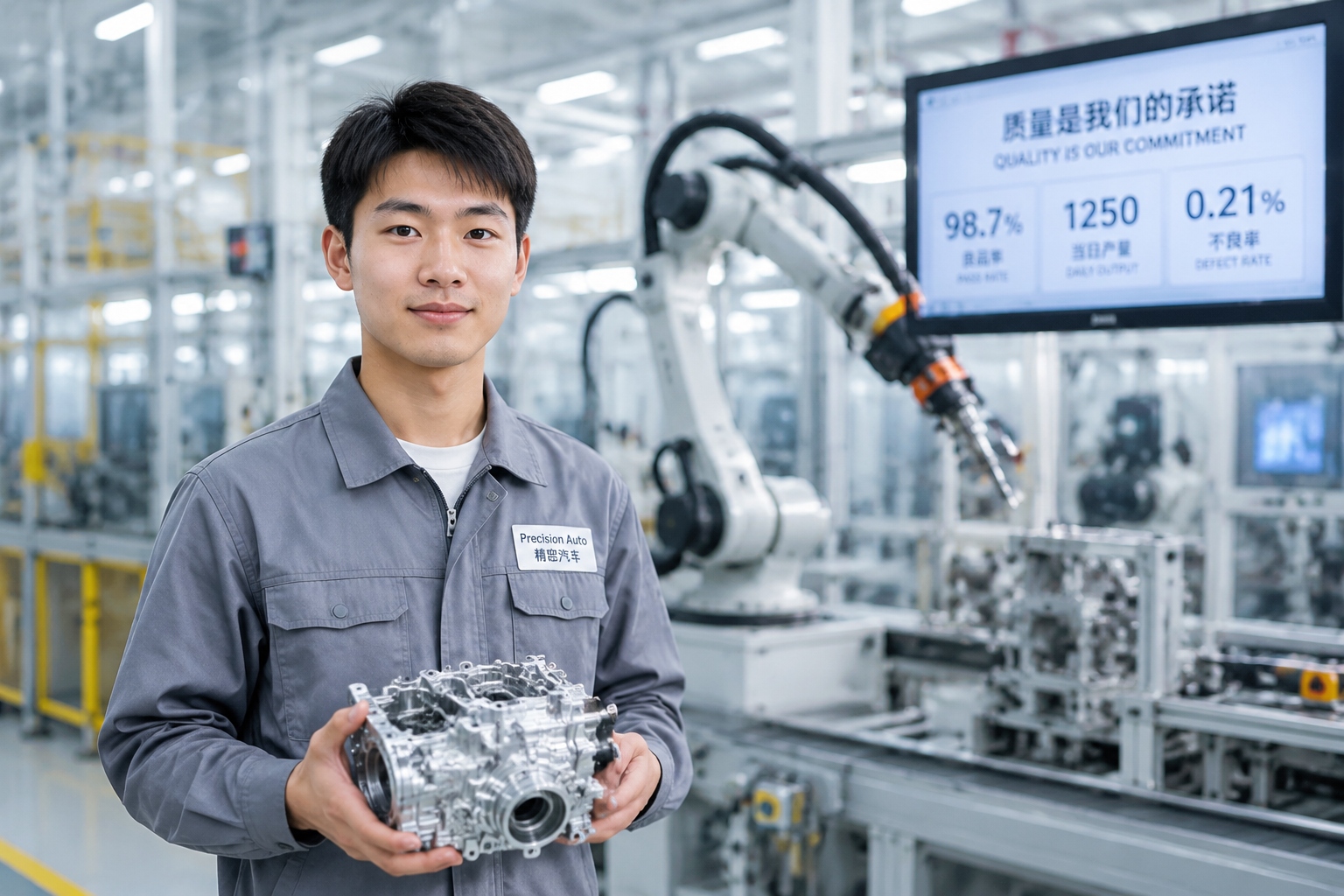
Chen Jie recently got a promotion to team leader. His factory exports components to Europe, and he often checks the quality of parts that will go into electric cars on German highways. ‘I’m not a genius,’ he told me, wiping oil from his hands, ‘but I have a skill that people need. That’s something.’
China’s manufacturing rise is often explained by cheap labor or government subsidies. But behind every smartphone, battery, and EV is a person like Chen Jie, trained in a vocational school. The talent code of ‘Made in China’ is not written in a boardroom. It’s written in workshops, on production lines, and in the steady hands of millions of young Chinese who took an alternative path. It is messy, imperfect, and still evolving, but it is undeniably working.
Start the discussion at forum.chinacomes.com