
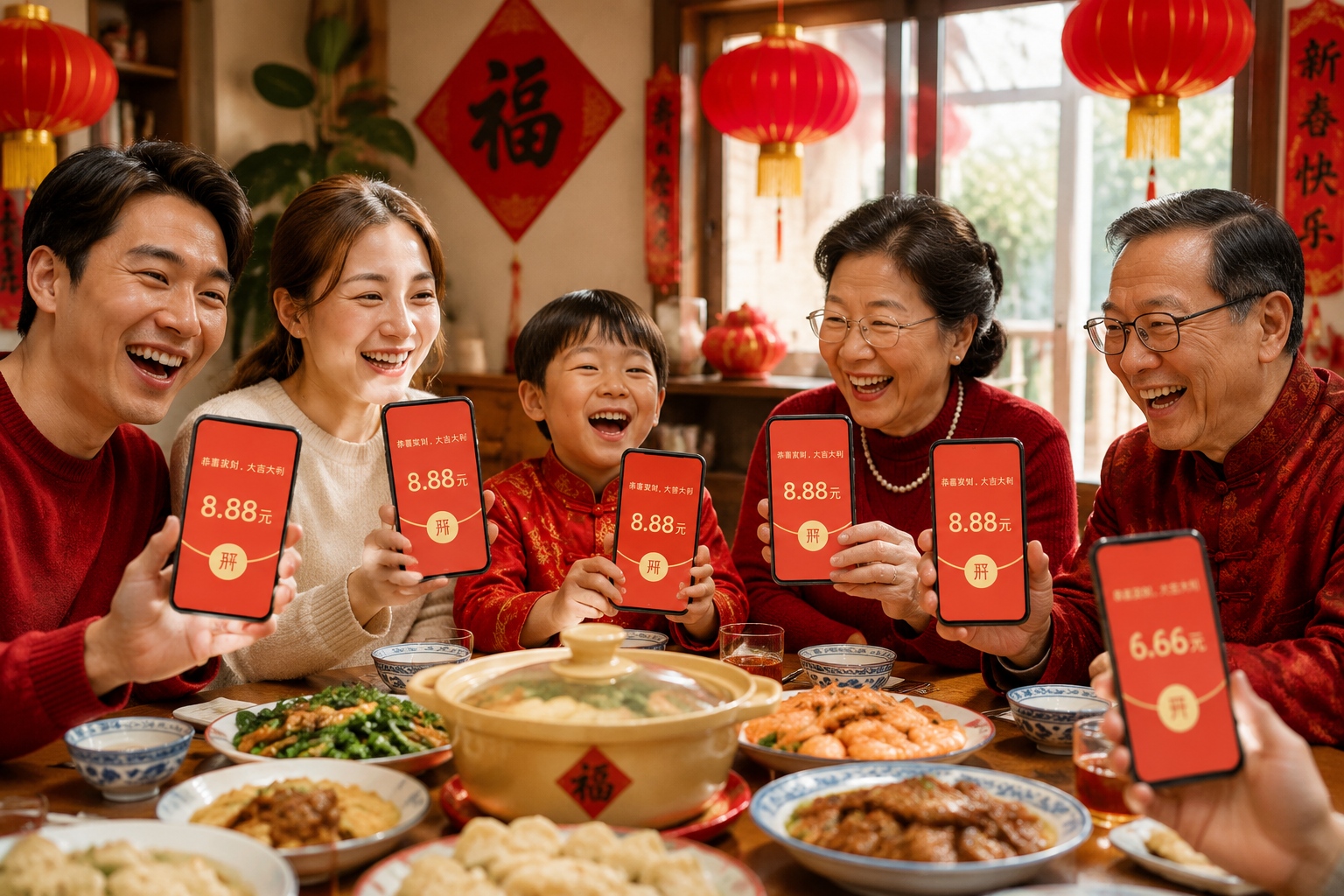

If you have ever been added to a WeChat group during the Chinese New Year, you’ve likely witnessed a scene that seems baffling at first: a red packet drops into the chat, and within seconds, every member dashes to tap it, followed by a cascade of emoji and “thank you, boss” messages. As a foreigner, you might wonder: why all the fuss over a few yuan? Why not just transfer money directly? The answer reveals a deep cultural layer: in China, a red packet is not merely a transfer of cash. It is social currency—a tool to strengthen relationships, express emotions, and even entertain.
What Makes a Red Packet Different from a Bank Transfer?
A bank transfer is straightforward: you send a precise amount, it lands in someone’s account, done. But a red packet (hongbao in Mandarin) is wrapped in a red envelope, traditionally symbolizing good luck and warding off evil spirits. In the digital age, WeChat has reinvented this custom, making it instant, playful, and oddly addictive. When you send a red packet via WeChat, you are not just moving money. You are making a gesture—a wish for prosperity, a thank you, or even an apology. Unlike a flat transfer, a red packet can carry a personalized message, and its “red” color is believed to attract good energy. There is also an element of surprise: the randomly split “lucky” red packets mean each person gets a different amount, turning the act into a game.
The Two Types of WeChat Red Packets
WeChat offers two basic types. The first is a fixed-amount red packet, where the sender sets the total and the number of recipients, and everyone gets an equal share. The second is the “lucky split” or “grabbing red packets” mode, where the sender sets a total amount and the number of receivers, but each person gets a random portion. This unpredictability fuels the excitement. It’s like a lottery combined with a gift, and it encourages rapid interaction. In group chats, this becomes a social icebreaker: someone drops a large but split packet, and for a few minutes, everyone is engaged, chatting, and sending thankful stickers.
Lucky Numbers and Taboos: Why 8 Is Great and 4 Is Avoided
Numbers carry deep meanings in Chinese because of homophones. The number 8 (ba) sounds like “fa” (财富, wealth), hence making 8 a symbol of prosperity. People love amounts like 88, 888, or 8.88—it’s a wish for affluence. On the other hand, 4 (si) sounds like “si” (死, death), and is avoided in red packets as much as possible. Similarly, 6 (liu) sounds like “溜” (smooth), representing smooth progress, so 66, 666, or 16.66 are popular. For lovers, numbers like 520 (wo ai ni) and 13.14 (one life, one lifetime) are romantic. In weddings, you’ll often see amounts like 1314, 8888, or 1999 (a play on “be together for long”). Understanding these number codes will help you avoid an awkward faux pas.
The Art of Snatching Red Packets in Group Chats
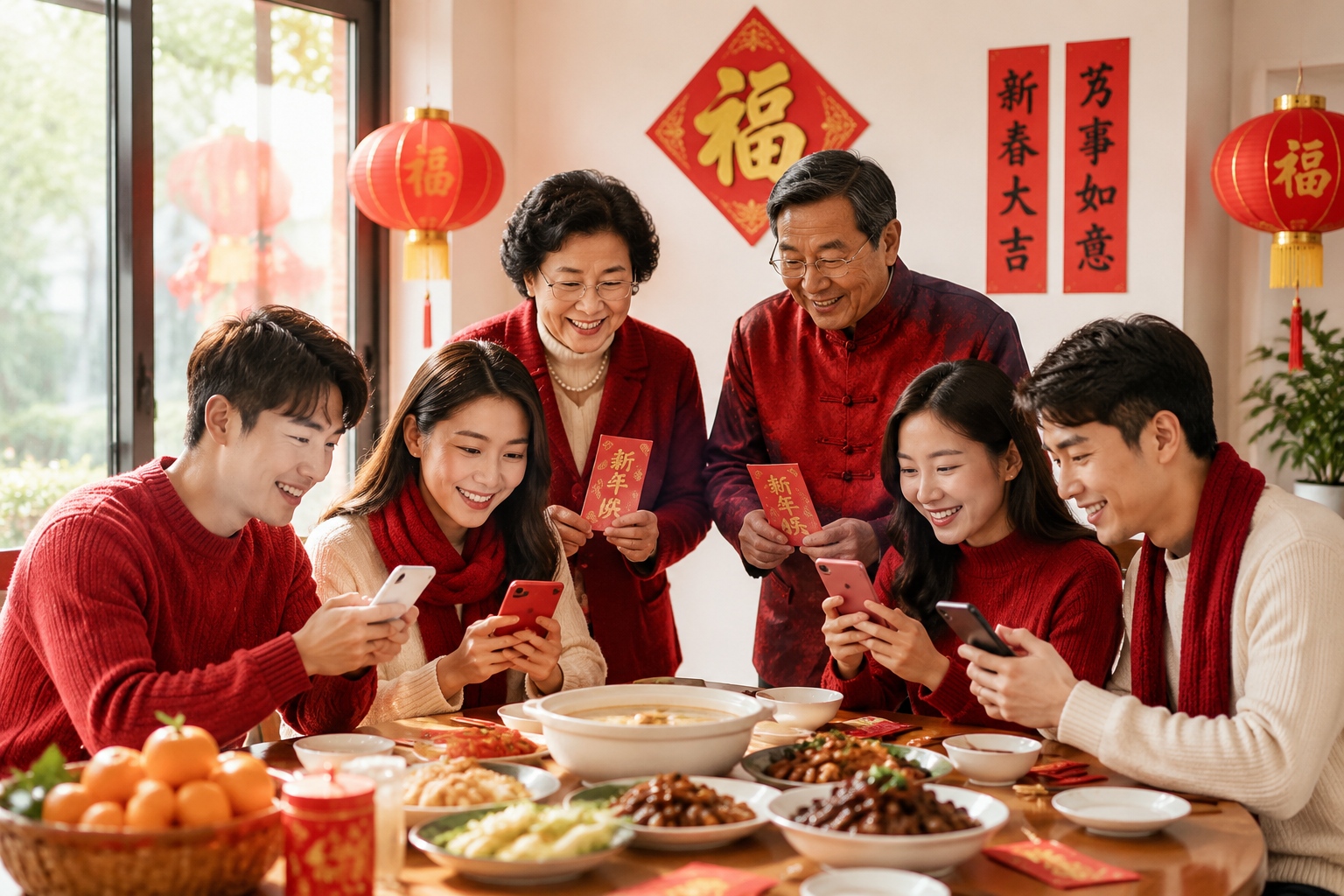
In Chinese group chats, grabbing red packets is not just about money—it’s about engaging with the community. When someone drops a “lucky red packet”, people tap quickly; the faster you are, the better your chance of securing a larger slice. But there’s etiquette: you shouldn’t just grab and disappear. A well-mannered participant will thank the sender, often by a sticker showing a person bowing or the classic “谢谢老板” (thanks, boss). Some groups even enforce a rule that whoever gets the highest amount must send the next red packet, keeping the game alive. This practice turns a transaction into an ongoing social ritual.
When You Must Send a Red Packet
While red packets are common year-round, certain occasions make them almost compulsory. Knowing when and how much to send can be a tricky dance.
Weddings: The Expectation of “Red Envelopes”
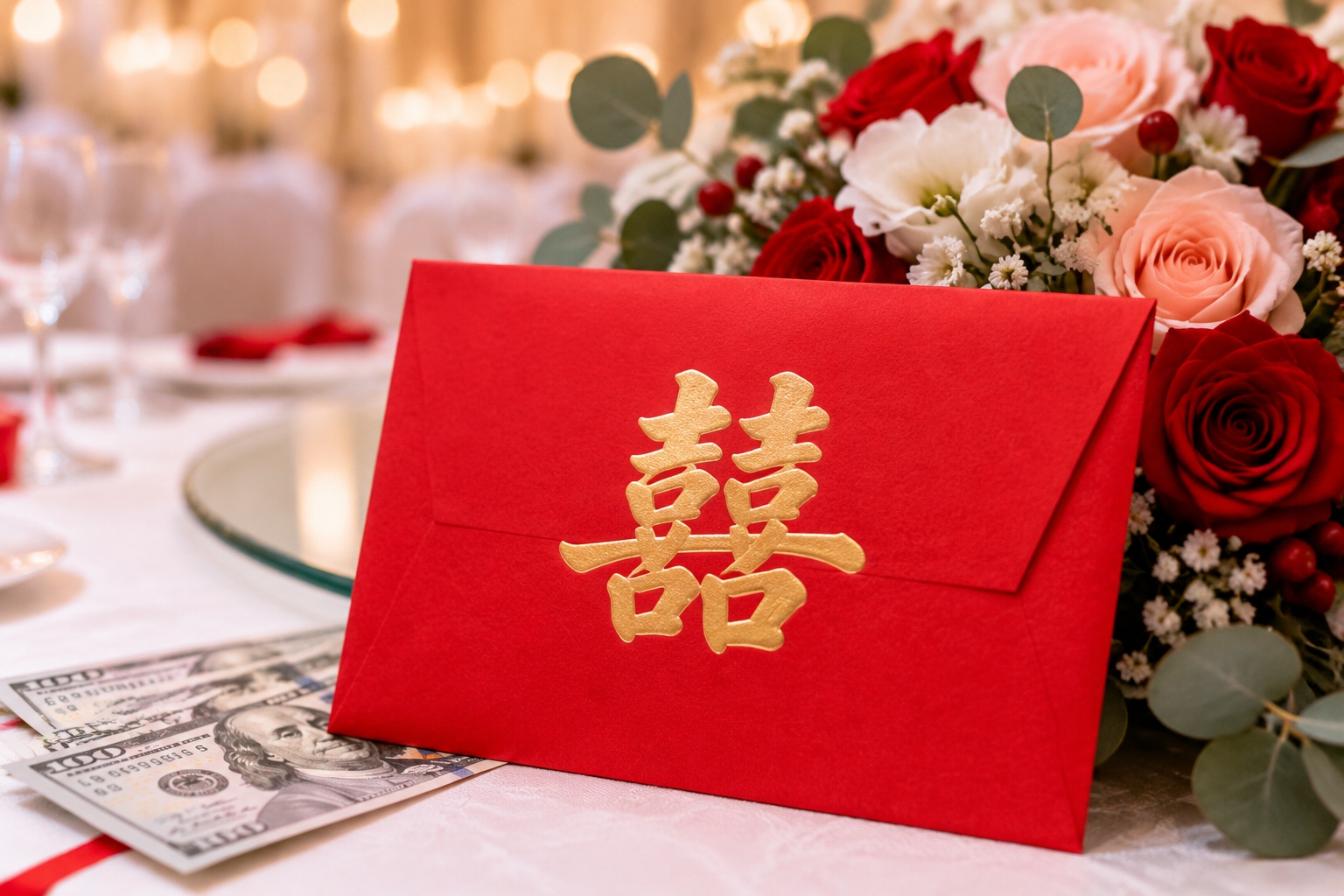
When you attend a Chinese wedding, you are expected to give a red packet, known as “份子钱” (fen zi qian). This is not a random gift; the amount is carefully chosen, often in even numbers or numbers with lucky connotations. You write your name on the envelope, and the couple’s family records it, because they will return the favor when you marry. Urban standards range from 200 to 1000 yuan or more, depending on your relationship and the hotel’s class. It’s customary to align your gift with whatever is considered normal in your social circle.
Spring Festival: A Time for Blessings
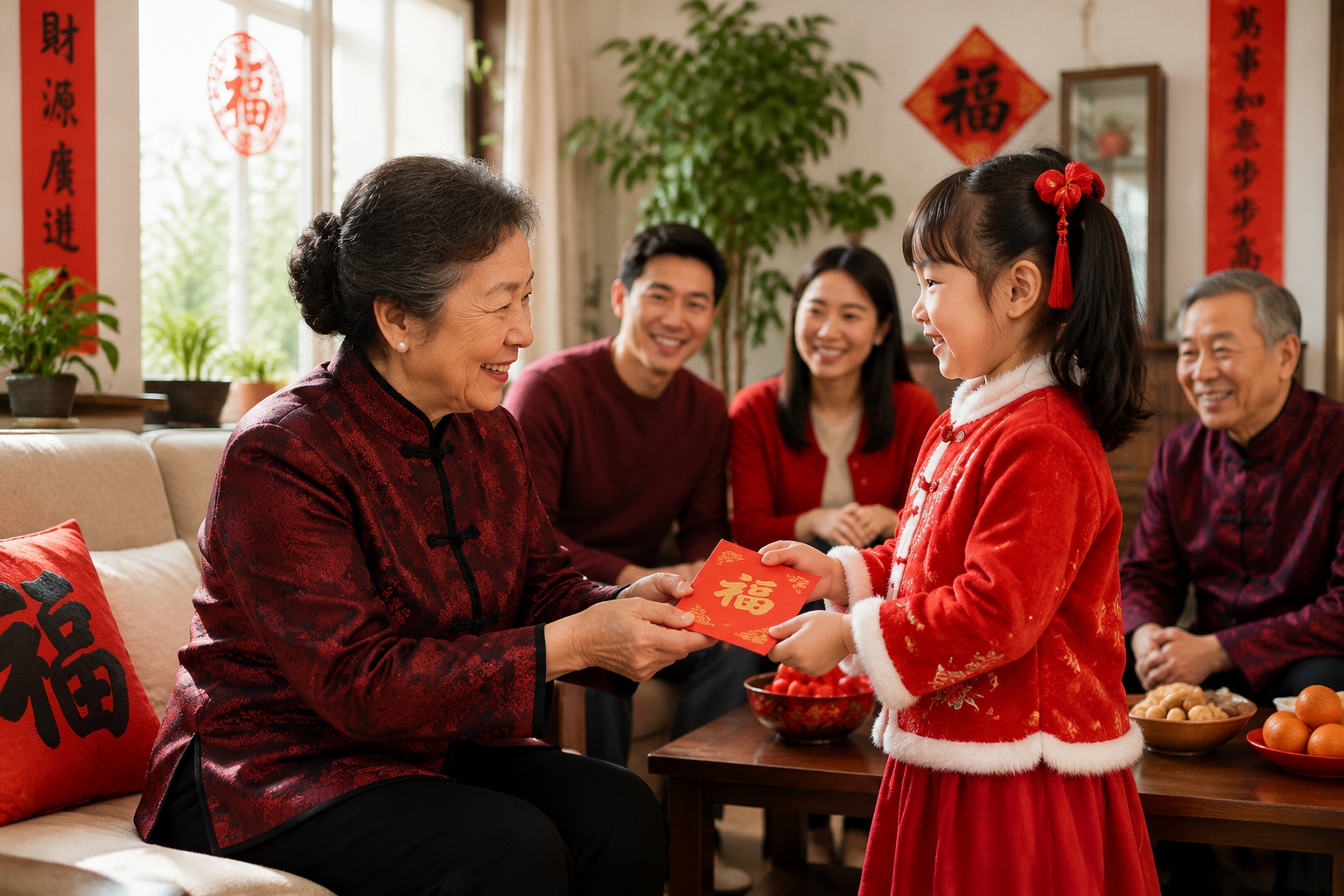
During Chinese New Year, the most iconic red packet is the “压岁钱” (yasui qian), given by elders to children. It is believed to protect the young ones from evil spirits. In the workplace, many bosses distribute “开工红包” (kaigong hongbao) to employees on the first working day after the holiday, wishing them a good year. Busy families now use WeChat to send red packets to relatives who live far away, maintaining the tradition with a tap.
Gratitude and Small Favors
Red packets also serve as a modern way to say thank you. If a friend helps you move, a nurse who took care of you, or a technician who fixed your phone, you might send a small red packet as a token of appreciation. It is not seen as a bribe, but as a polite gesture—provided the context is personal and the amount is modest. However, be cautious in professional or government settings, where such gifts could be misconstrued. In those situations, it’s better to use other forms of appreciation.
How to Respond When You Receive a Red Packet
The moment you receive a red packet, the obligation to respond kicks in. If you open it privately, a simple “谢谢” (thank you) is nice, but for a stronger impression, you can add “恭喜发财” (wish you prosperity) or “祝您健康” (wish you health). In group chats, the standard is to send a thank-you sticker or a short phrase like “谢谢老板” even if you don’t know the sender’s title. If you get a surprisingly large amount, it’s polite to send a red packet back (of similar or slightly lower value) to share your luck. This reciprocity strengthens the bond.
A Practical Guide for Foreigners: How Much to Send and How to Avoid Awkwardness
If you are new to China, here are tips to navigate red packet etiquette without embarrassment.
How to Send Your First Red Packet
Use WeChat’s red packet feature, not the regular transfer, because the layer of wrapping and the game element matter. When you are in a group, you can choose the “lucky split” mode with a small total (like 10 yuan for 5 people). This shows you are being social, not just donating money. For a personal thank-you, a fixed amount like 18 yuan (a lucky number) or 88 yuan works well. Always add a short message, such as “happy birthday” or “thanks for your help”.
Deciding on the Amount
The amount depends on the occasion and your relationship. For a co-worker’s wedding, 300-500 yuan is often okay; for a close friend, 888 yuan is a grand gesture. During Spring Festival, give children 50-200 yuan based on family custom. Never send amounts containing 4, and avoid sending single digits if you want to show seriousness. If you’re unsure, observe what others give or ask a Chinese friend. It’s better to be slightly generous but heartfelt than to follow a strict number.
Conclusion: The Real Value of Red Packets
Red packets are a fascinating window into how Chinese society manages relationships. They blur the line between money and sentiment, turning a simple transaction into an opportunity to connect. For anyone living or traveling in China, mastering the red packet is a small but significant step toward understanding the culture. So tap, thank, and send—you’ll soon find that the joy is not in the cash, but in the connection.
Start the discussion at forum.chinacomes.com