
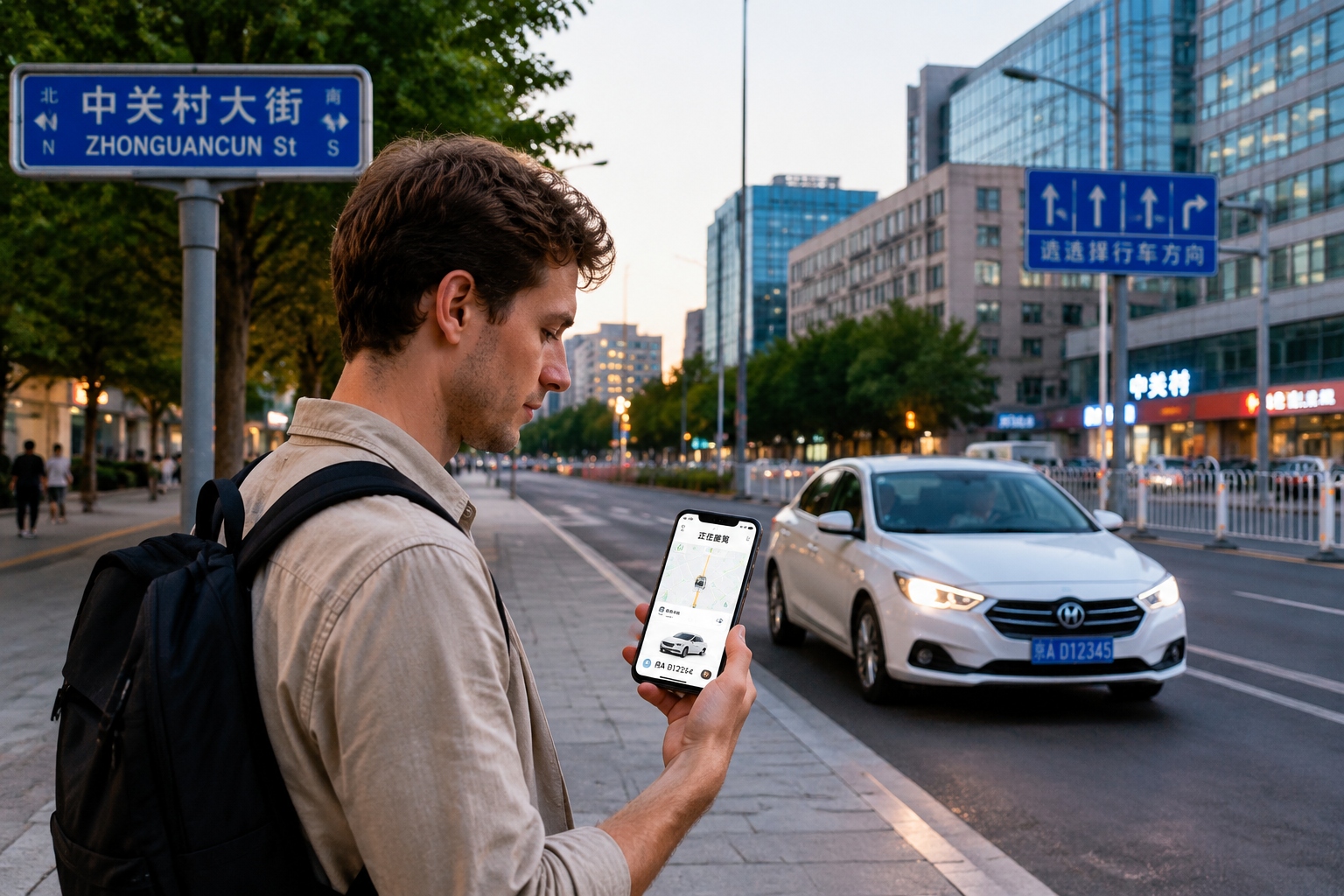

One Evening in Shanghai: A Ride-Hailing Puzzle
Marta, a product designer from Mexico, landed at Shanghai Pudong Airport for her first business trip. At 10 p.m., she opened the ride-hailing app her Chinese colleague had recommended. Within seconds, a driver accepted her order. Then the app froze on an identity verification screen: “Please upload your passport.” Marta was confused — she had already entered her passport number during registration. Why ask again? She had just hit China’s two-step identity check, which many first-time foreign users don’t expect.
This guide walks you through everything you need to know to use ride-hailing services safely and smoothly in China: how to get verified, what safety features exist, how to handle payment and receiving an invoice, and where to go if something goes wrong.
Getting Verified: Registering with a Passport
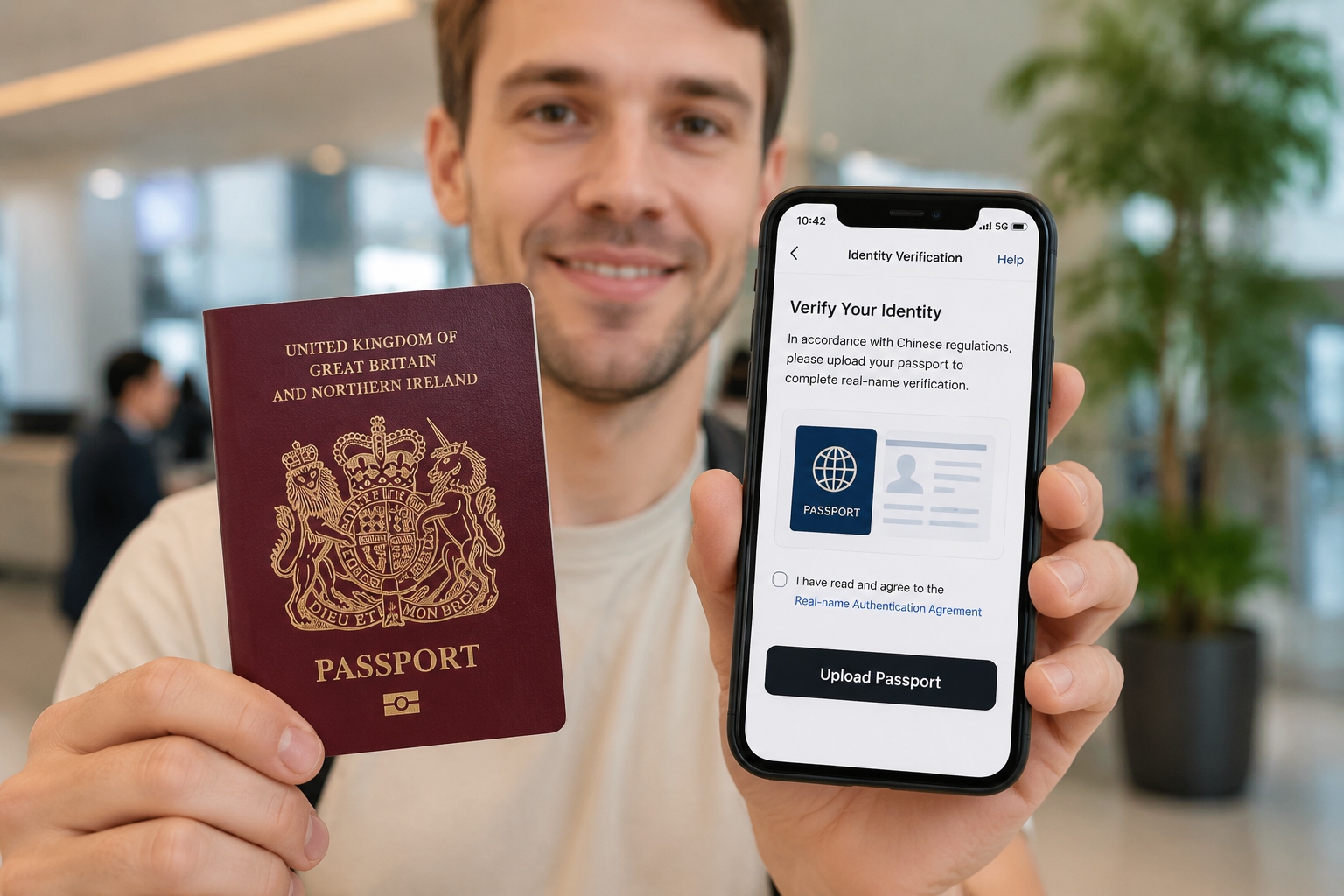
China’s ride-hailing platforms, including Didi Chuxing, Cao Cao, and T3, require all passengers to complete a real-name verification. Chinese citizens can verify with their national ID number. For foreigners, the accepted documents are usually your passport (still valid) or a Foreign Permanent Resident ID Card. Some platforms may also accept your Foreigner’s Work Permit details during the registration step, but the final authentication always involves the passport.
Step-by-Step Verification in the App
Most mainstream ride-hailing apps have an English interface (change the language in Settings). Follow these steps:
- Open the app and register with your international phone number. Note: A China SIM card or a number that can receive SMS while roaming is recommended, since you’ll need to receive an SMS code for login and driver contact.
- Go to “Profile” → “Identity Verification” (实名认证).
- Select “Foreign Passport” as your document type and enter your full name exactly as it appears on your passport.
- Take clear photos of the passport’s biodata page and, if required, an in-app selfie. The system compares the photos automatically.
- Approval usually takes from a few minutes to a few hours. In some cases, the facial recognition step may give foreign users trouble—it’s known to be picky with non-Asian features. If that happens, don’t retry too many times; instead, contact the in-app customer service chat and ask for manual review.
Common Pitfalls and How to Solve Them
- Name mismatch: If your passport has a middle name or a hyphen, enter it without extra spaces. If you have a long name, the system may truncate it; in that case, contact customer service to complete verification manually.
- Expired passport: You cannot verify with an expired passport. Renew it first.
- Multiple documents: If the app doesn’t have “Foreign Passport” as an option, try switching the app language to Chinese, because the English interface sometimes hides that option.
Why Foreigners Can’t Easily Become Ride-Hailing Drivers
One question often comes up: “If I live in China, can I drive for Didi on weekends?” The short answer is: almost never. China’s ride-hailing regulations for drivers are strict. A driver must have:
- A valid Chinese driver’s license (not an international driving permit), obtained at least three (or in some cities five) years before applying.
- A local residence permit or household registration (hukou) in the city where they want to drive. In first-tier cities like Beijing, Shanghai, and Guangzhou, this residency requirement is often more rigid.
- No serious traffic violations or criminal records.
Most foreigners hold a visa valid only for study or work, which is not enough to establish residency for ride-hailing driver registration. A few exceptions exist, but they are rare. So while you can easily request a ride, almost every driver you meet will be Chinese.
Safety Features Every Passenger Should Use
China’s ride-hailing platforms are legally required to record the driver’s license plate, vehicle type, and driver identity. Use the safety tools described below—they are not just for show.
Before You Get In: Check the Car and the Driver
- Match the license plate. In the app, the car’s plate number is shown. Walk to the car and confirm the plate matches the one in the app. Also check the car’s make and model. If they don’t match, refuse the ride and cancel via the app.
- Verify the driver’s identity. Many apps show the driver’s face photo. You can also see a “human verification” button that shows a recorded or live video of the driver on demand. Tap it to compare the real driver’s face with the one inside the app.
- Share your trip with a trusted person. Before starting the ride, tap the “Share Trip” button in the app. Your contact will receive a link with your real-time location and trip details.
During the Ride: Emergency Features
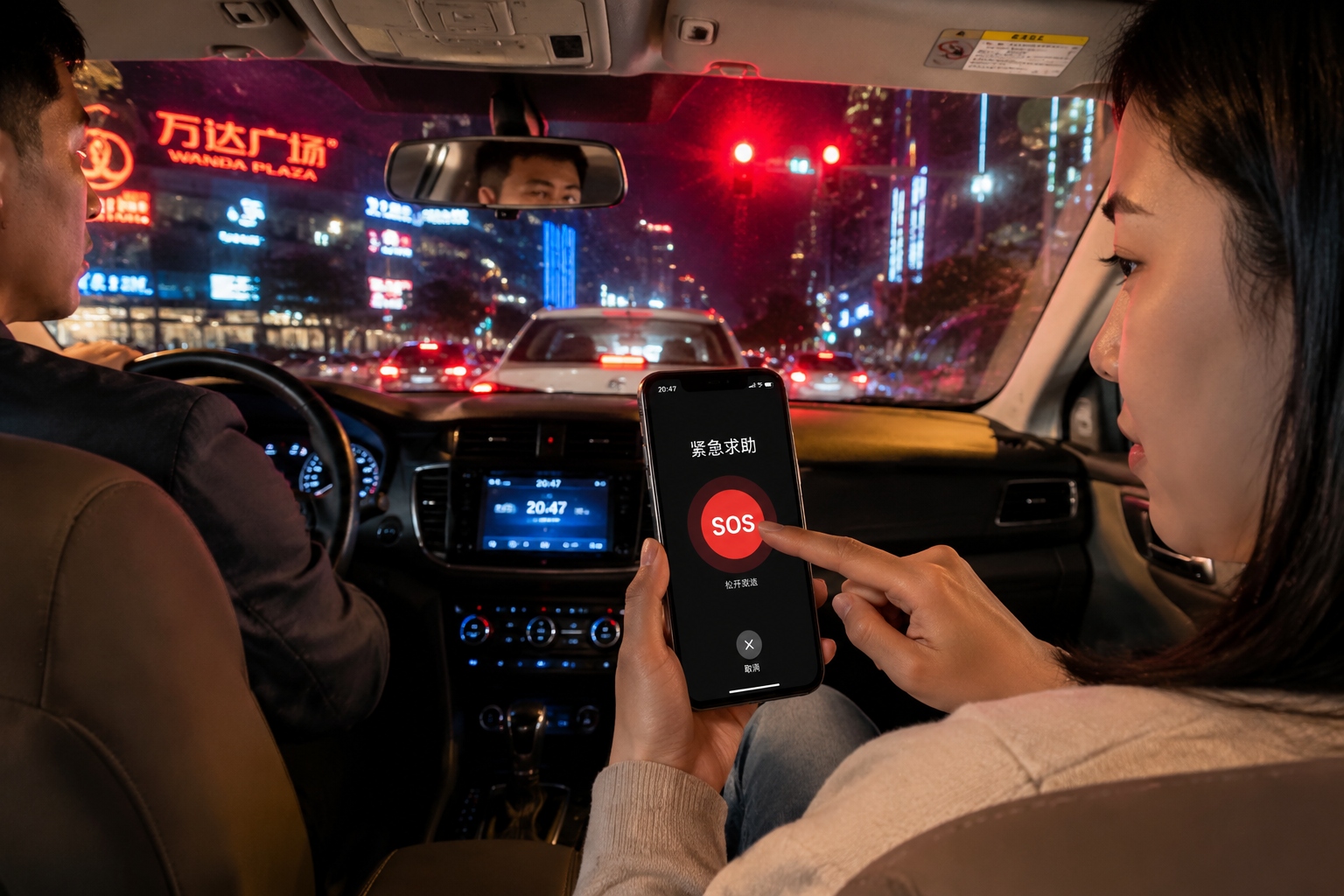
- SOS button. All Chinese ride-hailing apps have a conspicuous “SOS” or “Emergency” button on the main ride screen. Tapping it will alert the platform’s security team and share your location with the authorities.
- Schedule a late-night callback. If travelling late at night, some apps let you set a time after which the platform will call you to check if you’re safe.
- Watch the route. The app shows the planned route. If the driver deviates significantly, ask him or her in a calm tone. Use the in-app text chat or automatic translation if you don’t speak Chinese.
Payment and Pricing: What You Need to Know
China is moving towards a cashless society. Most ride-hailing passengers pay via Alipay or WeChat Pay. The ride-hailing apps themselves let you bind either a Chinese bank card or some international credit cards, but not all foreign credit cards are accepted. A practical workaround is to top up your Alipay “tour pass” balance (a service for overseas travelers) or ask a Chinese friend to pay for you and settle in cash.
Adding a Payment Method
- In the app, go to “Wallet” or “Payment Methods.”
- If you hold a mainland Chinese bank card, enter the card number through the secure gateway.
- If you only have a foreign card, try selecting “Alipay” and link the foreign card there, or use the Alipay Tour Pass function.
- Many apps also allow a “Pay by Others” option, where a QR code is deducted from a friend’s account.
Receipts and Fare Disputes
You can request an electronic invoice after each trip. Go to “Bills” or “Trip History”, select the trip, and tap “Apply for Invoice”. The invoice is sent to your email. For business travellers this is essential for reimbursement.
If you believe you’ve been overcharged, first check the route—if the driver took a detour, you can file a claim in the app within 48 hours. The platform will calculate the estimated fare for the more direct route and refund the difference. If the issue cannot be resolved via the app chat, call the in-app customer service line.
What to Do If Something Goes Wrong
When you have a complaint about a ride (e.g., a trip not ending, a lost item, a billing error, or a serious safety incident), here are your channels in order of urgency:
- In-app customer service. Open the app, find the trip, tap “Help” or “Customer Service”, and describe the issue. Nearly all platforms offer human agents available 24/7. If the interface is in Chinese, use a simple formula: “英语客服”, which means “English customer service”. Many platforms have English-speaking staff at peak times.
- Phone hotline for the platform. Didi’s domestic hotline is 400-000-0999 (Chinese). Since 2021, Didi’s international line is +86-400-000-0999 for English. Other platforms list their numbers in the app under “Contact Us”.
- National transport complaint hotline: 12328. This is a government-run hotline for transport services across China. Dial 12328 (or +86-12328 if outside China) to complain about a driver, an app, or fare issues that the platform didn’t solve. The hotline has local offices in most cities; English support is limited, but you can ask them to transfer you to an English-speaking operator. If it’s an emergency call police by dialing 110.
Keep your trip receipt number handy. For serious incidents, ask a Chinese-speaking friend or colleague to call with you.
Bridging the Language Gap
Drivers in Chinese cities usually speak only Chinese. To reduce the language barrier, most ride-hailing apps have built-in text chat with automatic translation. What if you don’t want to type on a small screen? Here are ten useful Chinese phrases you can say or show the driver:
- 你好 (nǐ hǎo) – Hello.
- 请带我到这个地址 / 这个地址 (qǐng dài wǒ dào zhège dìzhǐ) – Please take me to this address.
- 请在这里停 (qǐng zài zhèlǐ tíng) – Please stop here.
- 左转 / 右转 (zuǒ zhuǎn / yòu zhuǎn) – Turn left/right.
- 请开空调,可以吗? (qǐng kāi kōngtiáo, kěyǐ ma?) – Please turn on the air conditioner, okay?
- 请开行李箱 (qǐng kāi xínglǐ xiāng) – Please open the trunk.
- 请开慢一点 (qǐng kāi màn yìdiǎn) – Please drive slower.
- 你能帮我联系客服吗? (nǐ néng bāng wǒ liánxì kèfú ma?) – Can you help me contact customer service?
- 我没有现金,我用手机支付 (wǒ méi yǒu xiànjīn, wǒ yòng shǒujī zhīfù) – I have no cash, I pay by phone.
- 谢谢 (xièxiè) – Thank you.
If all else fails, use a translation app and hold your phone up to the driver. A polite smile does the rest.
Remember: You Are Not Alone on the Road
China’s ride-hailing ecosystem has matured into one of the world’s most regulated and feature-rich systems. For foreigners, the key to a smooth experience is proper identity verification and getting the safety features set up before the car arrives. Take two minutes to set your emergency contacts and payment method before you step outside—it will save you a headache later. And when something unexpected happens, remember the magic number 12328 and your app’s in-house support.
Safe riding, wherever you go in China!
Start the discussion at forum.chinacomes.com