

An Afternoon Without a Plan
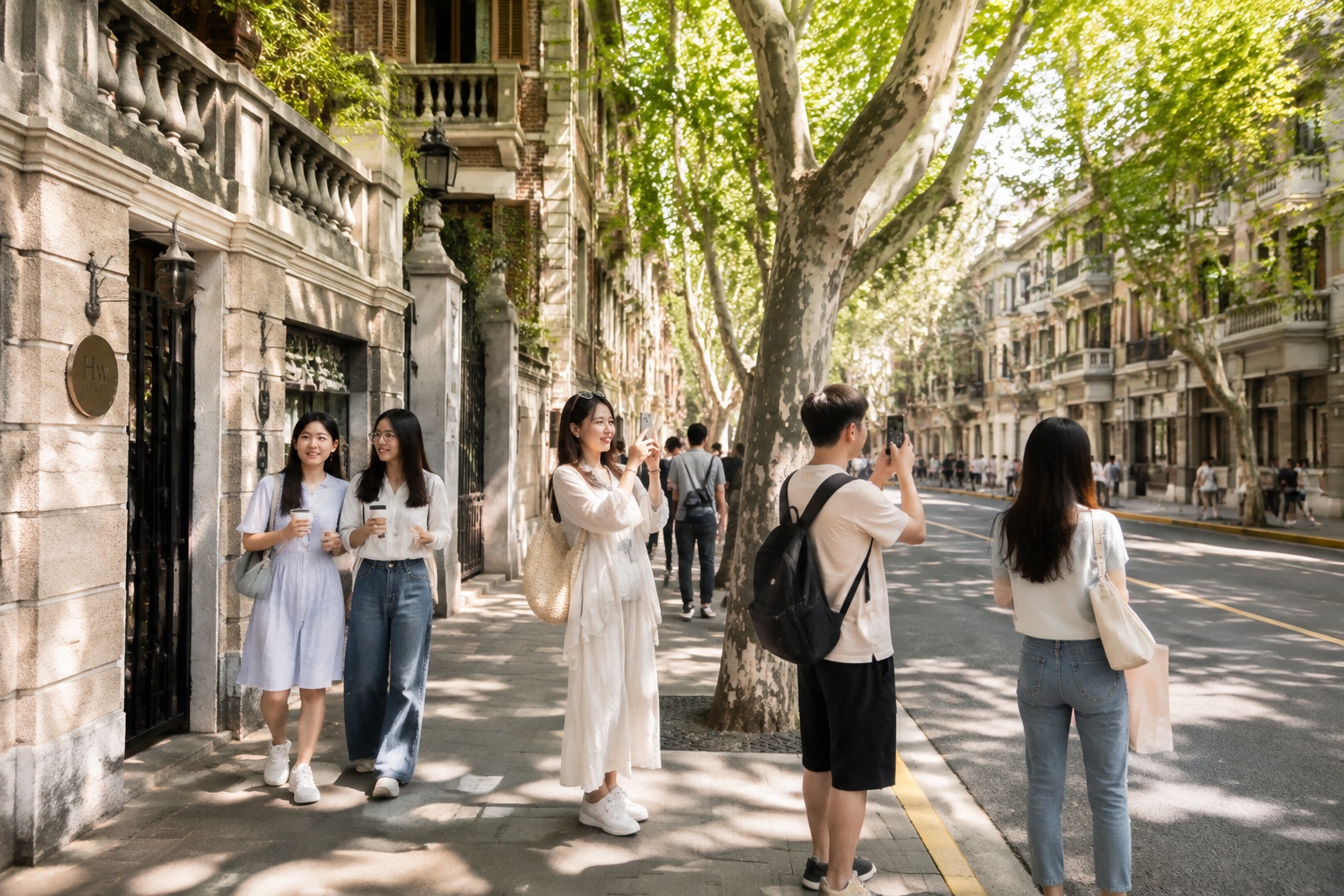
On a mild Saturday afternoon, Shanghai’s Wukang Road is a living postcard. Sunlight filters through plane-tree leaves, dappling the pavement where young people drift in twos and threes. They hold paper cups of coffee, laugh at a small joke, and stop to photograph a wild climbing rose on a century-old wall. No one seems to be walking anywhere specific. They are walking everywhere, slowly, with no destination beyond the next corner.
“This is our weekend now,” says 26-year-old Lin Xiaoxiao, a graphic designer who used to spend Saturday nights in a neon-lit club. “We swapped the bar line for a walking line. It’s cheaper, and you actually see the city.”
Lin is part of a movement that has swept through China’s urban youth in the last two years. Unlike clubbing, which revolves around loud music, expensive drinks, and a crowded dance floor, this new “citywalk” culture is rooted in quiet observation, unhurried conversations, and the freedom to wander without a script.
What Is ‘Citywalk’ Anyway?
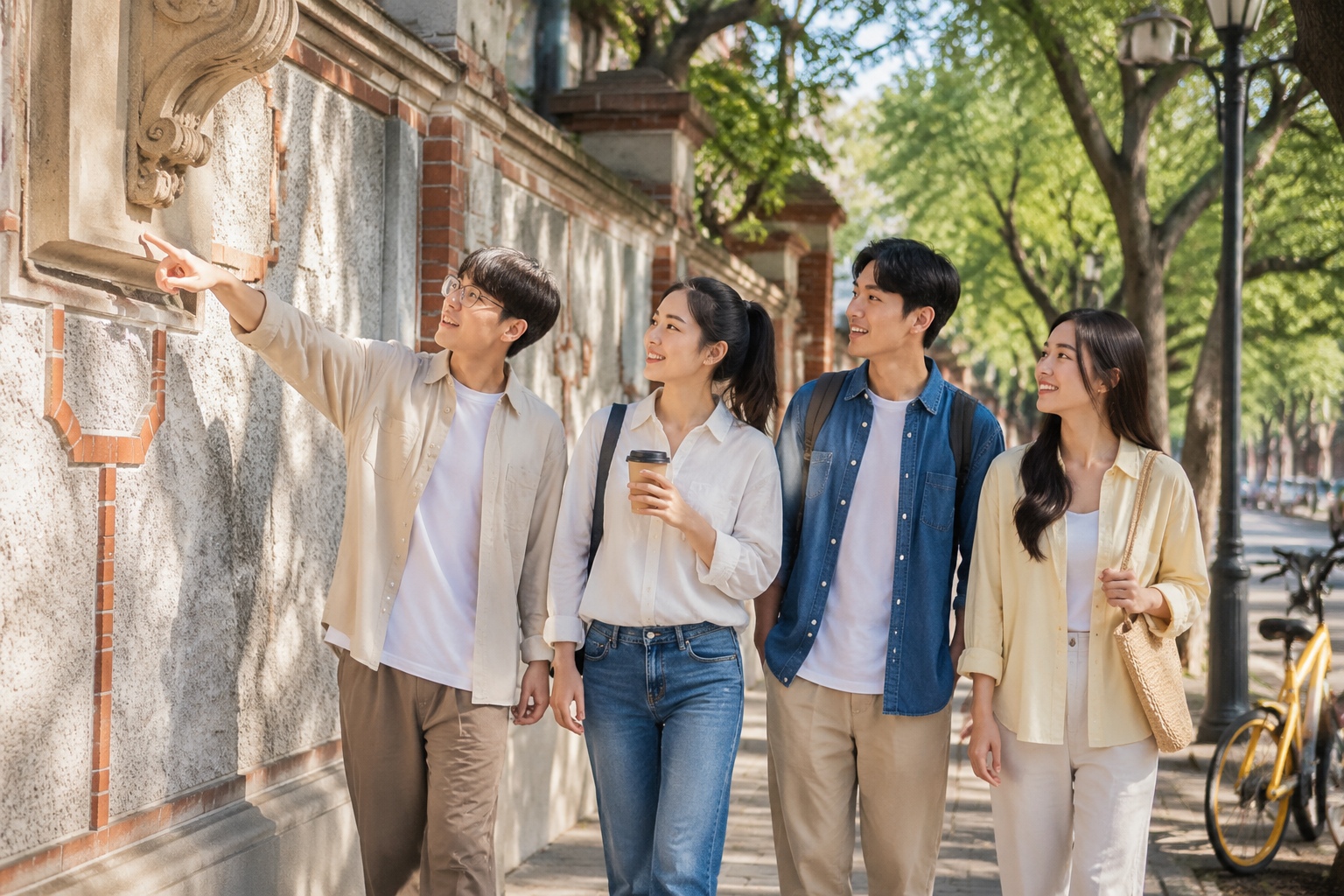
The term “citywalk” is a simple transplant from English, but in China it has taken on a life of its own. To the initiated, it means walking through a city with no fixed agenda, letting curiosity be the guide. Sometimes it’s a planned route around historic landmarks; more often it’s an aimless drift through backstreets and hidden courtyards. The destination isn’t the point. The point is the walking itself.
On Xiaohongshu (Little Red Book), China’s Instagram-like lifestyle platform, the hashtag #citywalk has racked up billions of views. Young influencers post maps of their favorite routes, annotated with café recommendations and photo spots. There are citywalk “styles”: some prefer a fast-paced “street run,” others favor a contemplative “photowalk.” There are even citywalk meetups organized through group chats, where strangers converge to explore a neighborhood collectively.
The contrast with nightlife could not be sharper. Nightclubs demand money, energy, and a high threshold for noise. Citywalk requires only comfortable shoes and a water bottle. It happens in daylight, costs next to nothing, and leaves participants feeling refreshed rather than drained. For a generation navigating economic uncertainty and social anxiety, that is a significant part of the appeal.
The Quiet Hunger for Slow Reality
Why would a generation known for its 24/7 digital presence trade screens for sidewalks? Psychologists who study urban behavior see it as a reaction against anxiety and screen fatigue.
“We spend so many hours inside, that when we finally step out, we forget how to relate to physical space,” says Wang Yue, a 32-year-old urban researcher in Beijing. “Walking restores a sensory connection—the smell of rain on asphalt, the sound of a peddler’s cart, the feeling of sun on your skin. These are tiny ‘reality emergencies’ that pull us back to the present.”
This hunger for the real is also a response to the isolation of the pandemic years. As cities reopened, young people sought out parks, streets, and lanes that had been emptied for so long. They found a renewed intimacy with their neighborhoods. Citywalk became a way to “re-enter” the city at eye level, not as a consumer rushing from one store to another, but as a resident drifting through shared spaces.
“At a club, you’re on your phone half the time, posting stories,” says 27-year-old teacher Chen Jie. “On a citywalk, you’re looking up, pointing at a mosaic tile, or wondering what that slanted roof is. It’s a form of meditation for people who can’t sit still.”
Where the Streets Become a Living Room
No place better exhibits this trend than Shanghai’s Former French Concession, especially the triangle formed by Wukang Road, Anfu Road, and Hunan Road. Once a quiet residential area, it has become an open-air social hub. Independent bookstores, vintage shops, and specialty coffee carts line the streets, turning a simple walk into a feast of discoveries. On weekends, the sidewalks are so packed with strolling groups that even the coffee shops add extra stools outside.
A local resident, 45-year-old Aunt Zhang, sells homemade candied fruit from a small cart on Hunan Road. “Ten years ago, this street was for cars,” she says, shaking her head. “Now it’s all these kids walking and taking pictures. I don’t mind—they buy my hawthorn sticks and tell me to smile.”
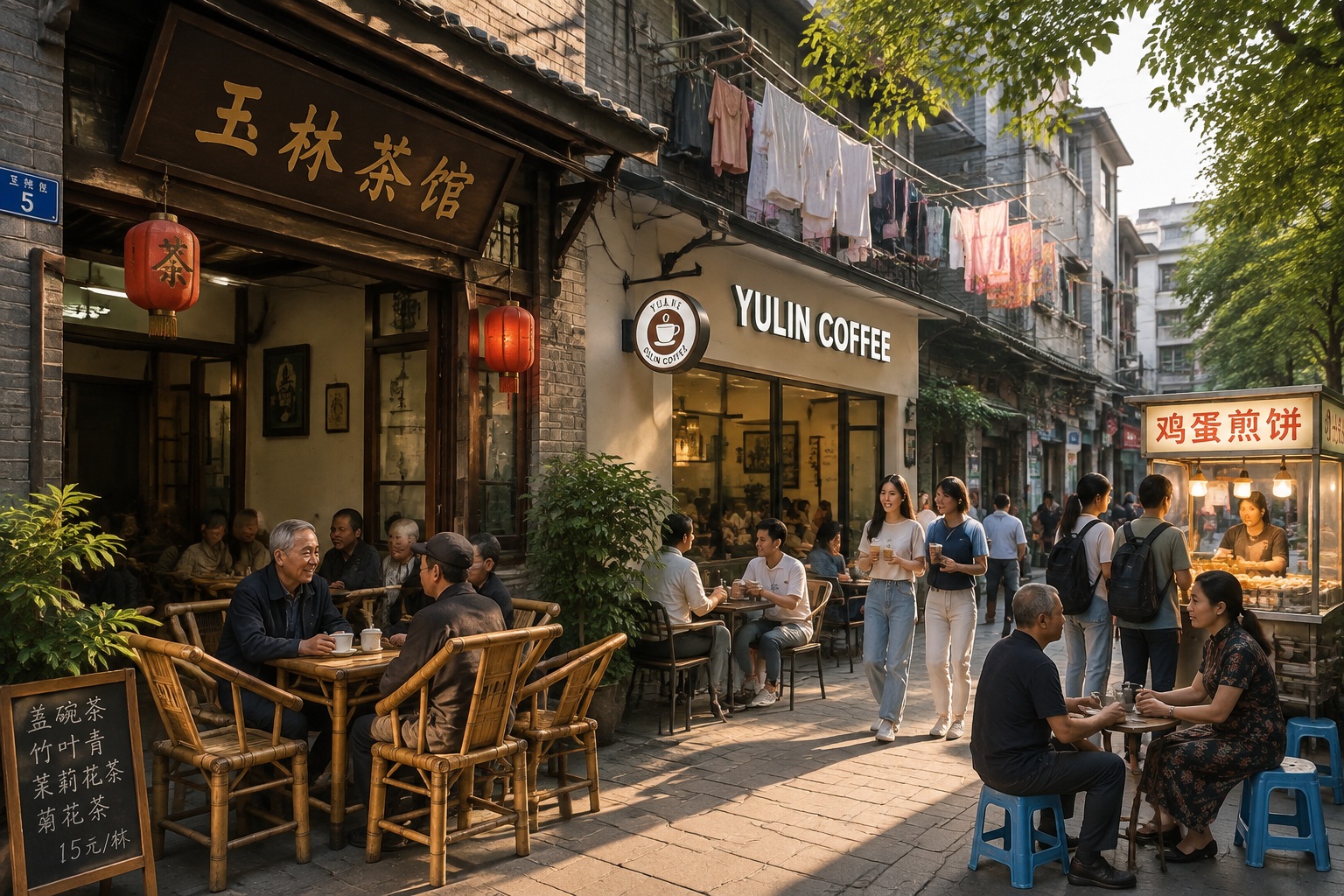
Chengdu offers a different flavor. In the renovated residential blocks of Yulin, old architecture sits next to new “guochao” brands and teahouses. Residents and visitors mingle in the same alleys, buying egg pancakes from grandmas while hipsters pose with latte art. The pace is slower, more chaotic, and arguably more humane. Here, citywalk often morphs into a bar crawl—not of nightclubs, but of teahouses and coffee stalls that spill onto the sidewalk.
Citywalks have also spawned organized meetups. Apps and social groups advertise themed routes: “Coffee crawl,” “Art deco architecture,” “Street food hunt.” These are not guided tours in the traditional sense—the leader simply points at a direction and everyone starts walking. The route is just a suggestion; the real experience is the collective rhythm of stepping into the unknown.
The Ripple Effect on Planners and Shopkeepers
The citywalk boom has not escaped the attention of urban planners and commercial landlords. Walking routes are being actively promoted as a form of urban renewal. In Shanghai, the government launched “walkable blocks” initiatives, widening sidewalks and improving lighting in historic districts. Developers are redesigning shopping streets to feel more like village lanes, with benches and trees instead of faceless plazas. Street furniture makers have seen a surge in orders for durable benches and leaning rails.
Shopkeepers are adapting too. A barista in Shanghai told me that her café now stays busier on weekend afternoons than Friday nights. “People come in groups, order one drink, and stay for an hour, chatting. We added a small bench outside for those who want to sit and watch the walkers go by.” Some restaurants have even introduced “citywalk menus” with small bites designed for eating while strolling. Bicycle shops have added “citywalk accessories” like reflective vests and phone straps.
But the most significant impact may be on the idea of the street itself. In the past, the sidewalk was merely a corridor between destinations—a place to get from A to B. Now it’s becoming a destination in its own right. Citywalk has turned sidewalks into living rooms, stages, and galleries, and many urban planners are rethinking their designs around pedestrian flow instead of vehicle speed.
Walking Together, Even When Alone
What makes citywalk different from a mere solitary stroll is its social layer. I joined a group of strangers on a Saturday walk in Shanghai’s Xuhui district. There were nine of us, all under 35, all carrying nothing but phones and water bottles. The route had no name, only a starting point: “Meet under the camphor tree across from the library.”
Within twenty minutes, we were sharing recommendations for buns and complaining about office life. By the end of the two-hour loop, two participants had exchanged contacts and promised to visit a comic book store together. It felt like a club meeting, but with moving around.
“In a nightclub, you shout over the music and connect through alcohol,” says Liu Wei, a 31-year-old finance analyst who now walks every Sunday. “Here, you connect through the city. If you spot a hidden courtyard and point it out, that’s a conversation starter. We are building a community based on shared observation, not shared consumption.”
Community doesn’t require permanence either. One organizer I spoke with, 28-year-old Xiao Yang, runs a semi-monthly citywalk group in Chengdu. “Sometimes thirty people show up, sometimes three. It doesn’t matter. The point is that for a few hours, we form a tiny, temporary neighborhood. When we pass a bench and an old woman is feeding cats, someone will stop and pet them. We become characters in each other’s street stories.”
Reclaiming the Street, Not Conquering It
Some commentators have described citywalk as a quiet act of reclamation. The word “reclaim” might suggest taking back spaces from cars or developers, but for most walkers it’s gentler than that. It’s about feeling entitled to be there, to linger, to not be a customer but a citizen.
“We aren’t marching in protest; we’re just using the pavement the way it was meant to be used,” says a 24-year-old fashion stylist who has turned citywalk into a weekend routine. “The street is a shared room. The more we walk it, the more it feels like ours.”
This quiet occupation is visible in the comfort of people’s bodies. They slouch on steps, lean against trees, sit cross-legged on the ground—postures that are rare in a city that often prizes efficiency. They are not there to consume or perform, but simply to exist. That sense of belonging, perhaps, is the real destination of any citywalk.
By dusk, Wukang Road glows with warm lamplight. A group of friends sits on the curb, passing a bag of roasted chestnuts. Passersby weave around them without annoyance. This is the city at eye level, reclaimed not through force, but through the sheer, joyful act of putting one foot in front of the other.
Start the discussion at forum.chinacomes.com