

A Panda Head with Sunglasses: Meet the Classic
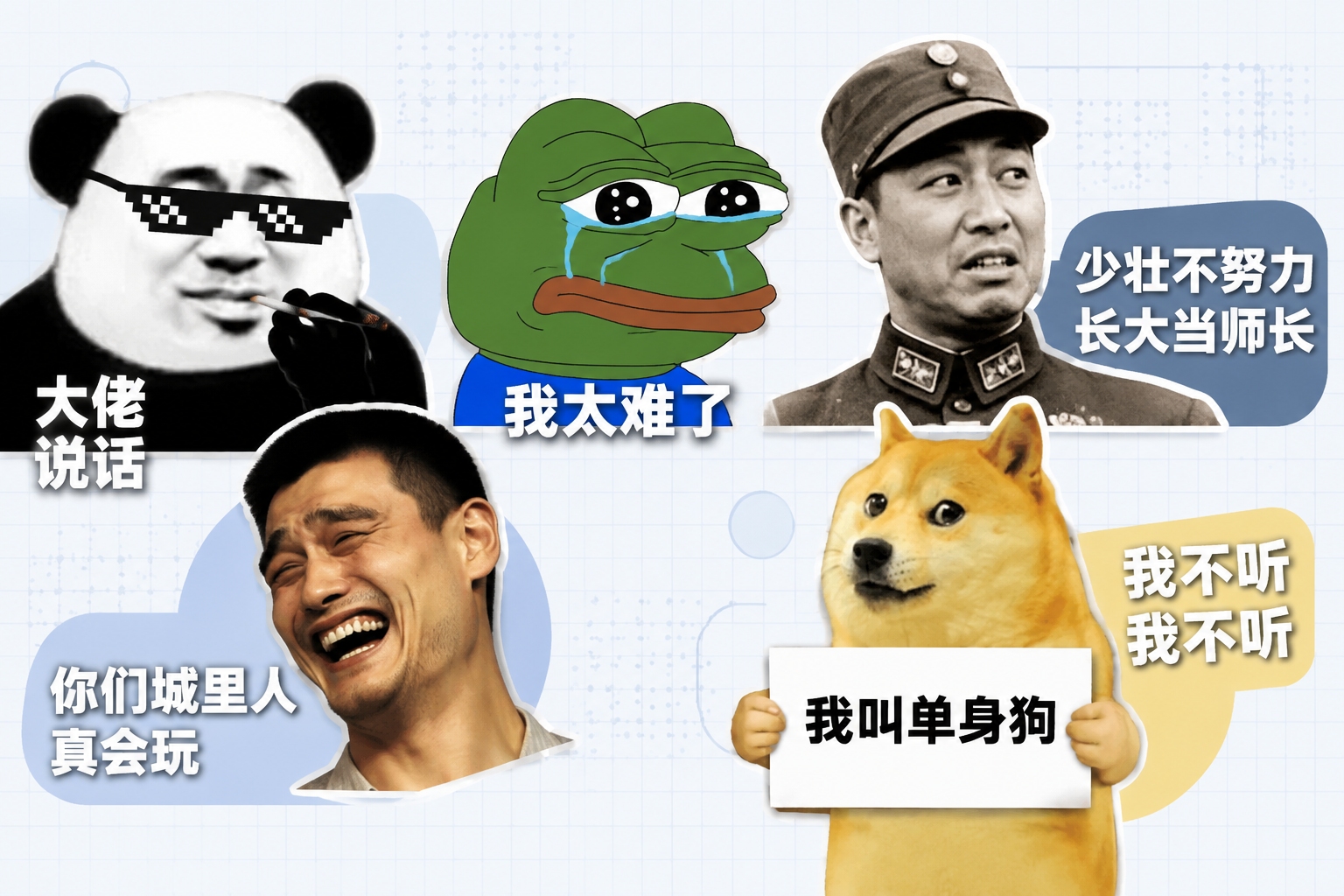
If you’ve ever been in a Chinese group chat, you’ve probably seen it: a black-and-white panda face, drawn in simple lines, wearing a pair of round sunglasses. Above its head, a line of bold white text reads something like “I’m just watching the show.” That’s the Panda Head meme — one of the most enduring and versatile templates in China’s meme universe.
Unlike the reaction images Westerners use (think Drake’s “Hotline Bling” or distracted boyfriend), Chinese memes often rely on heavily stylized, low-resolution characters with text pasted on top. They are less about capturing a perfect facial expression and more about remixing stock illustrations into a shared joke. The panda head, for instance, originated from an old Japanese anime screenshot, but Chinese netizens repurposed it—adding oversized sunglasses to signal “indifference” or “I see through it.” This template alone has spawned tens of thousands of variants, covering everything from work complaints to relationship dramas.

Where Did All These Characters Come From?
Chinese memes often borrow from three main sources: classic cartoon characters (like the panda, or the yellow duck from a children’s show), popular anime (Naruto, One Piece), and—most interestingly—celebrity reaction shots. For example, Zhang Xueliang, a veteran TV host, has a famous expression of grimacing disapproval that became the “Disgusted Zhang” meme, used to mock bad news or stupid ideas. Similarly, Yao Ming‘s laughing face is China’s equivalent of the “laughing crying emoji”—a go-to for anything hilarious.
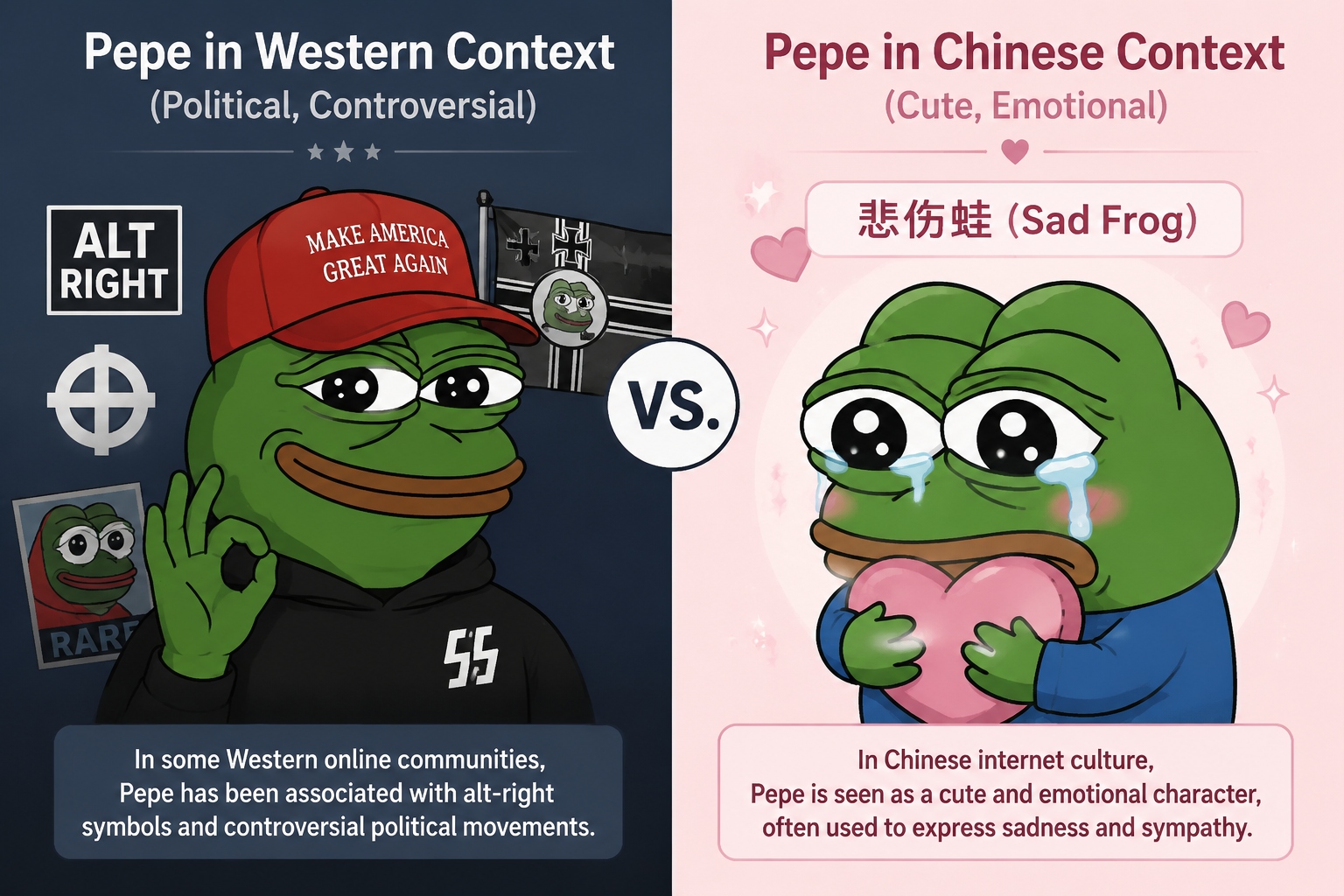
But the most fascinating case is the localization of Pepe the Frog. In the West, Pepe was co-opted by far-right groups and largely disappeared from mainstream use. In China, Pepe morphed into a cute, teary-eyed “Sad Frog” (or shang wu wa), representing everyday sorrows like failing an exam, being single, or working overtime. Chinese netizens stripped away the political baggage and turned Pepe into a universal symbol of self-deprecating humor. This contrast alone tells you a lot about how different internet cultures treat the same raw material.
The Secret Sauce: Irony, Self-Deprecation and Group Belonging
Why do Chinese memes look and feel so different? The core is irony and self-mockery. In a society where direct confrontation is often avoided, memes provide a safe outlet. A young office worker might not say “My boss is unreasonable” to her colleagues, but she can post a panda head saying “I pretend I’m working hard” and everyone laughs knowingly. The humor lies in the gap between the exaggerated face and the everyday truth.
Another key element is group resonance. Memes are not just jokes; they’re inside jokes for entire generations. For example, the “996 work schedule” meme (working 9 am to 9 pm, six days a week) spread like wildfire because millions could relate. When a meme captures a shared frustration—like the difficulty of buying a house, the pressure of get-togethers during Chinese New Year, or the awkwardness of being asked about your salary—it becomes a social glue.
These memes also fill gaps that language leaves open. Chinese has rich slang, but memes can convey layers: a single image can express sarcasm, empathy, or resignation without a single word. That’s why a picture says a thousand words in WeChat—it’s faster than typing and often funnier.

Chinese Memes vs. Western Memes: A Clash of Visual Cultures
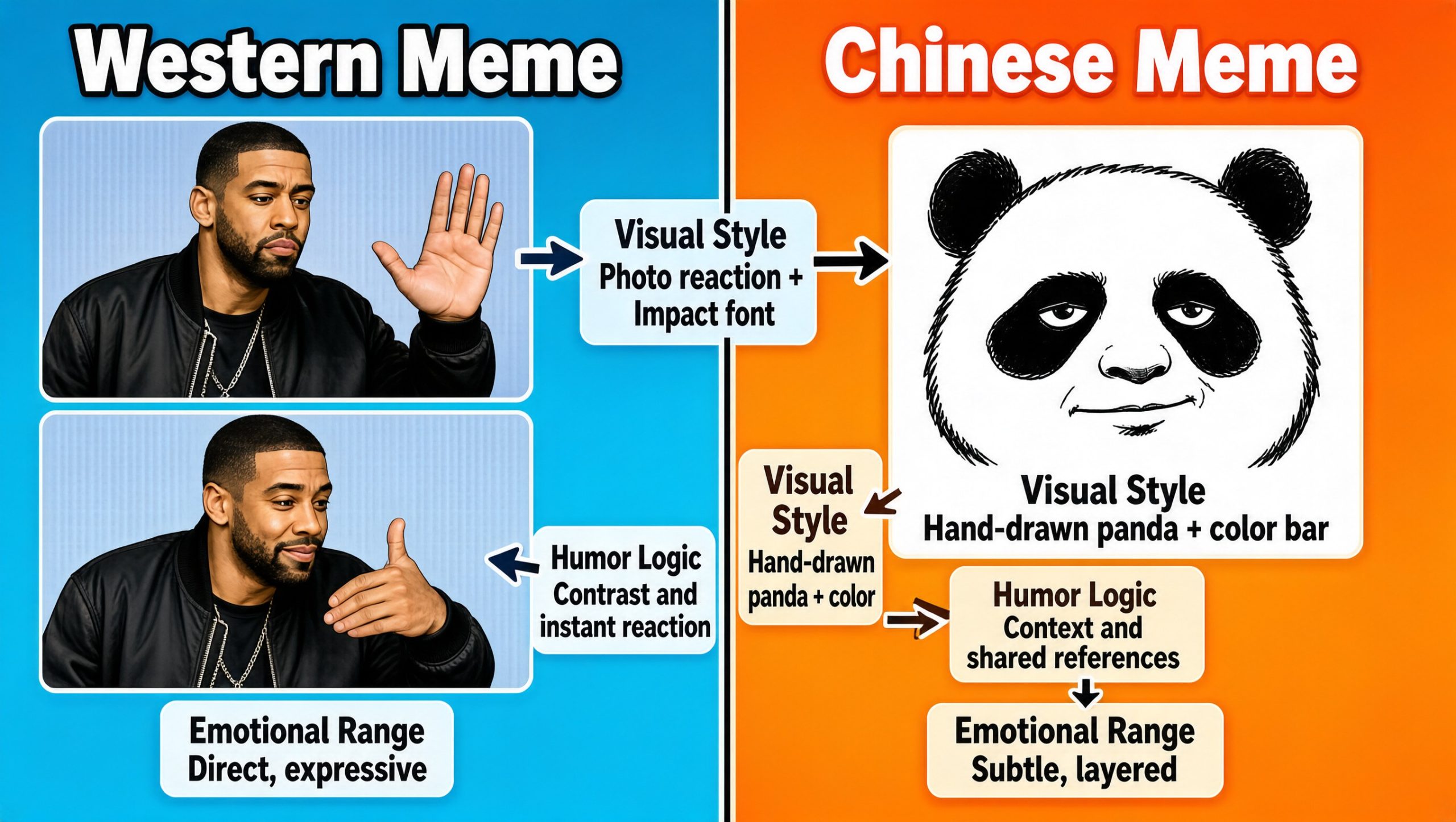
If you compare a typical Western meme (a photo with Impact font) with a Chinese one (a drawn character with white text on a colored bar), the differences jump out. Let’s break it down:
Visual style: Western memes often use high-resolution photos of real people or scenes; Chinese memes favor low-res, hand-drawn, or repurposed anime art. This is partly due to historical internet speeds—early Chinese netizens with slow connections needed lightweight images, and the tradition stuck. But it’s also aesthetic: the crude drawing invites customization and feels less serious.
Humor logic: Western memes tend to be direct and punchy (e.g., “This is fine” dog in a burning room). Chinese memes are more layered and indirect. They often require cultural context: for instance, the meme “Ge You lying down” (from a 1990s sitcom) symbolizes giving up on life’s rat race. Without knowing the source, a foreigner might just see a man lounging on a sofa.
Emotional range: Chinese memes cover a wider spectrum of everyday emotions—especially embarrassment, social anxiety, and passive aggression. In English internet culture, sarcasm is common, but Chinese memes take it further: a meme might say “I’m fine” while the character is clearly crying, mirroring the cultural norm of saving face while privately venting.
Another difference is the remix culture. Chinese meme templates are often built around a single character (like the panda, or the yellow dog “Cheems”—yes, the local version of Cheems also exists). Instead of creating new images, users swap the text, making each iteration feel like a variation on a theme. This creates a shared visual vocabulary: once you know the panda, you can “read” any panda meme instantly.
Memes as Digital Folklore: Building Identity in the WeChat Era
Today, memes are more than jokes—they are a form of digital folklore, passed down through screens. For Chinese Gen Z, sharing a meme is a way to say “I belong.” When you post a niche meme from a game or a TV show, you signal your tribe. The most popular memes become shorthand for experiences that words fail to capture.
Think of the yellow dog with the sign (a Chinese adaptation of the Japanese doggy meme): it’s often used to express helplessness or a “whatever” attitude. Or the crying cat (a cat with tears streaming), which is the Chinese equivalent of the English “crying face” but used more ironically. Each of these characters has a backstory that only regulars know, reinforcing a sense of community.
Moreover, memes are a pressure valve. In a fast-paced, high-pressure society, they allow people to laugh at their struggles together. The famous “It’s okay to be a salted fish” meme (being a salted fish means being lazy and unmotivated) has become a rallying cry for those rejecting overwork. It’s comedy, but it’s also a quiet protest.
Understanding Chinese memes is therefore a window into the soul of China’s internet users. They are not just silly pictures; they are a language of resistance, bonding, and self-expression. Next time you see a panda head with sunglasses, you’ll know: that’s not a random image—it’s a shared story.

Start the discussion at forum.chinacomes.com