
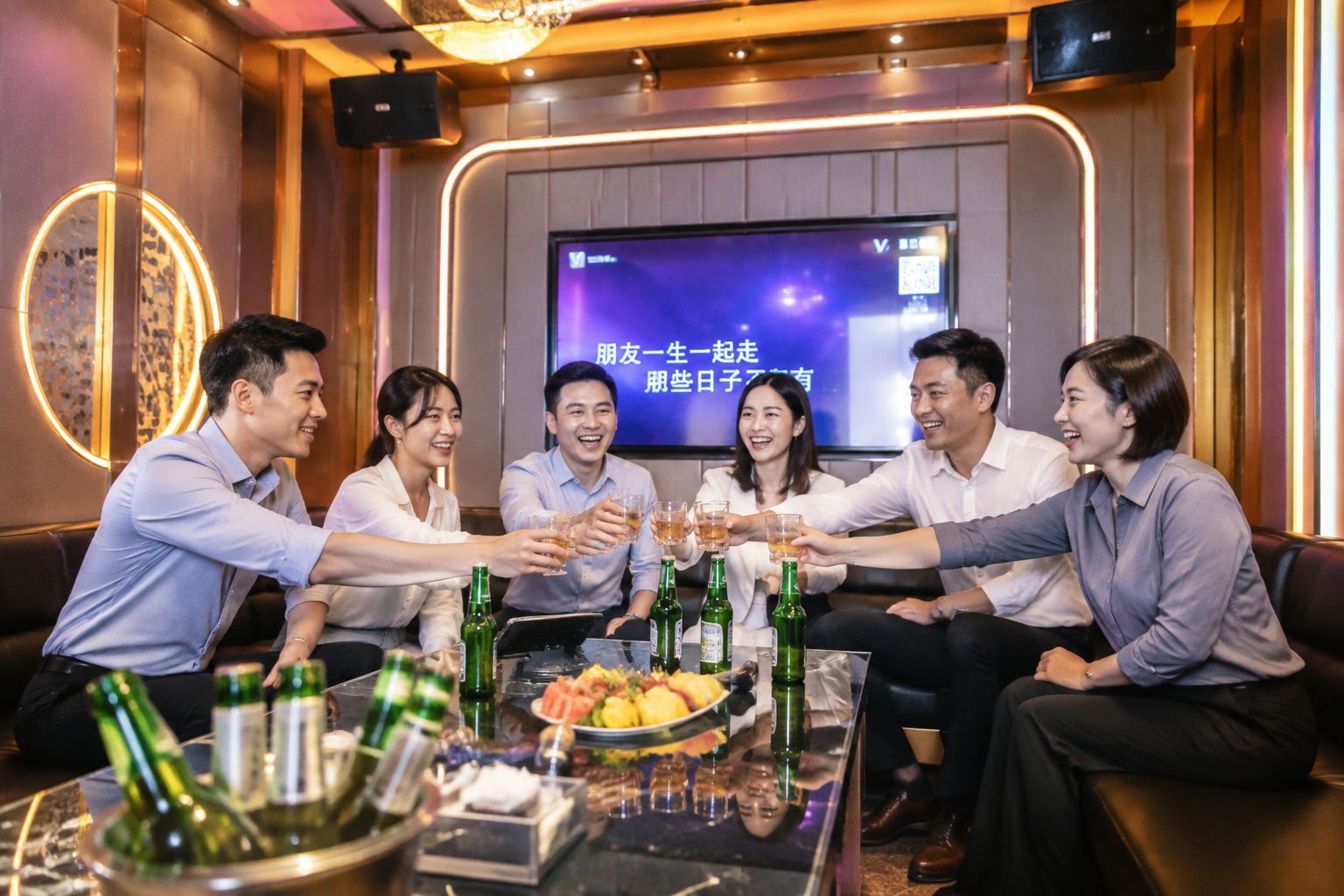

A First-Timer’s Introduction to the Chinese KTV Meeting
When Sarah, a marketing executive from London, stepped into a KTV private room in Beijing for the first time, she expected a night of casual singing and drinks. Instead, she found herself in the middle of a contract negotiation. On one side sat her Chinese partner, a factory owner from Zhejiang; on the other, his sales director. A giant screen glowed with a song queue, but no one was rushing to grab the microphone. The opening move was not a handshake but a question: “What would you like to drink?”
That moment explains a lot about how business is actually done in China. KTV—short for karaoke TV—is not just an entertainment venue. For millions of professionals, it is an extended meeting room, a social buffer, and a pressure-release valve all in one. The private rooms, with their leather sofas, neon lights, and glass coffee tables, may look like party spaces, but they are often where the real decisions take shape.
Why Not a Boardroom? The Private Room as a Neutral Zone
In many Western countries, business gets done over coffee, lunch, or the occasional after-work drink. The setting is usually semi-public: a café corner, a restaurant table, a bar with clinking glasses. In China, the equivalent after-hours space is often the KTV private room. The key difference is the illusion of privacy. Behind a closed door, everything stays off the record—no waiters hovering, no curious colleagues, no potential eavesdropping. This sense of enclosure allows people to speak more directly, joke more freely, and test attitudes without the risk of losing face in front of a larger group.
There is also a matter of hierarchy. In a boardroom, titles are visible. In a KTV, titles are temporarily suspended. The senior executive who controls the budget might also be the worst singer in the room. That vulnerability becomes a bridge. When a boss picks up the microphone and butchers a 1980s classic, the team laughs together. The formal distance shrinks. Western visitors often find this confusing: how can serious negotiations happen in a place where people are expected to sing badly on purpose? The answer is precisely that the setting allows for a controlled let-down of guards, making it easier to read character and build trust.
The Unwritten Rules: Who Sings First, Who Pours the Wine
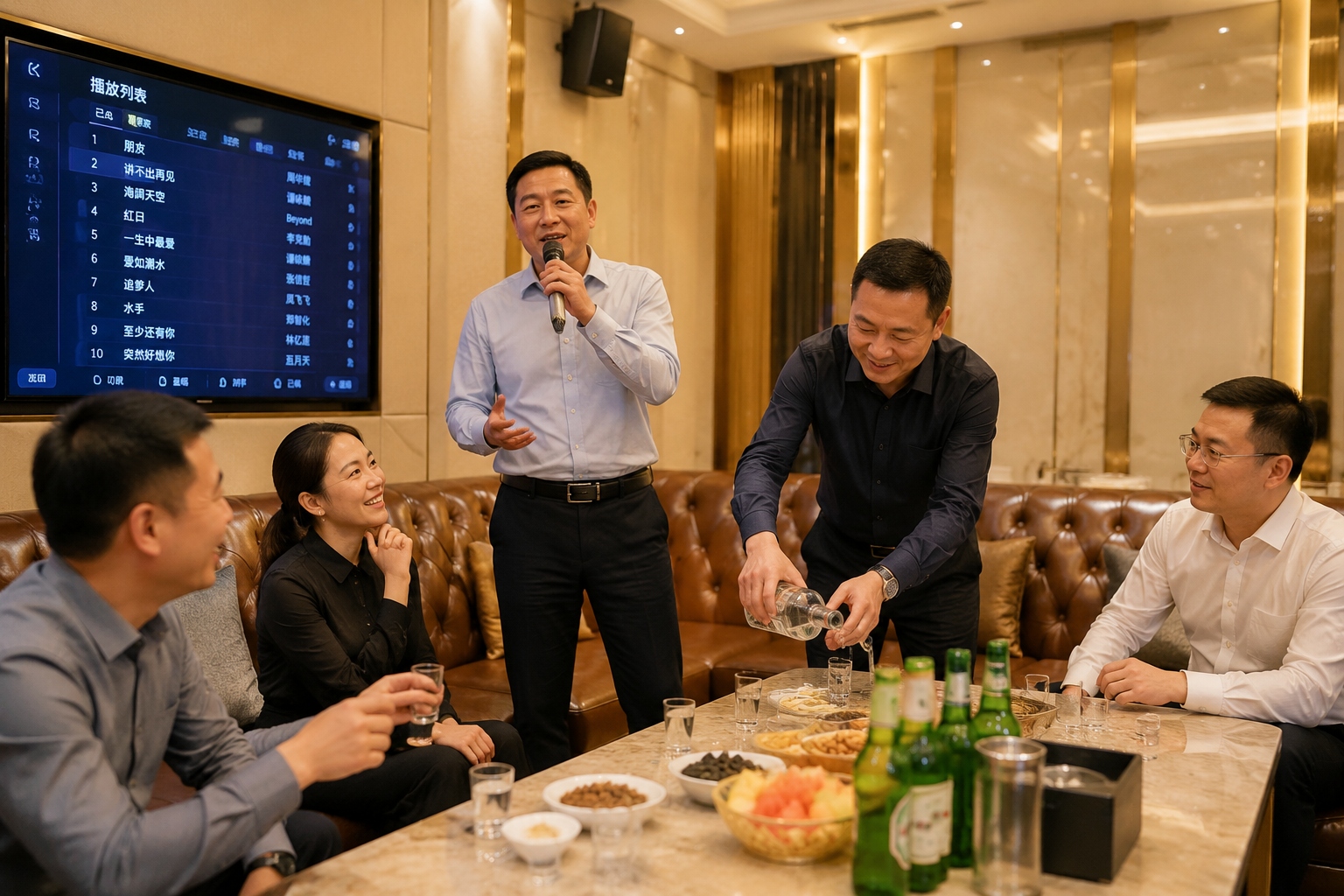
If you are a foreign visitor entering a Chinese business KTV, you might be tempted to treat it like a Western pub night. But there is a clear etiquette that can make or break the evening. The first rule is about the order of songs. The host, usually the person who arranged the meeting, will typically open with a song after the guests are settled. It is a way of warming up the room. Guests are not expected to take over the machine; instead, the host and the guest of honour alternate turns. A younger or junior member should never commandeer the microphone before the senior people have had their moment.
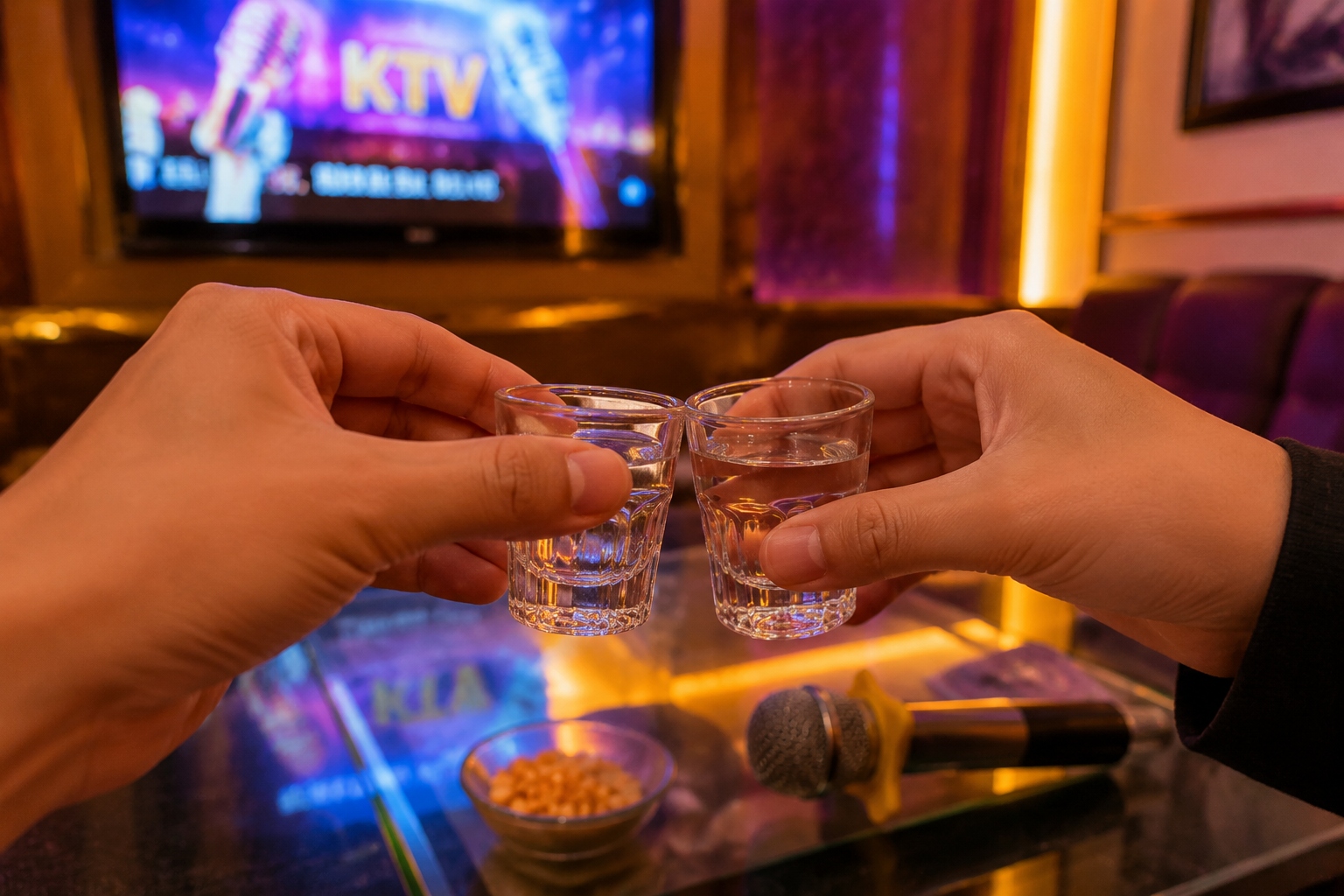
Then there is the toast. In a KTV room, the glassware is small and the liquor is usually baijiu, a powerful clear spirit that can hit 50 percent alcohol by volume. But here is the clever part: the toast is a conversation, not just a permissive sign. You raise your glass, touch the rim of your senior’s glass, and say something meaningful. The length of the toast and the words used are opportunities to show respect, express gratitude, or hint at business terms. For many Chinese professionals, the ability to handle alcohol gracefully—without losing composure—is a sign of maturity and trustworthiness. Western guests are not expected to match every drink, but they are expected to participate in the ritual.
The Host’s Role: Power, Face, and Hospitality
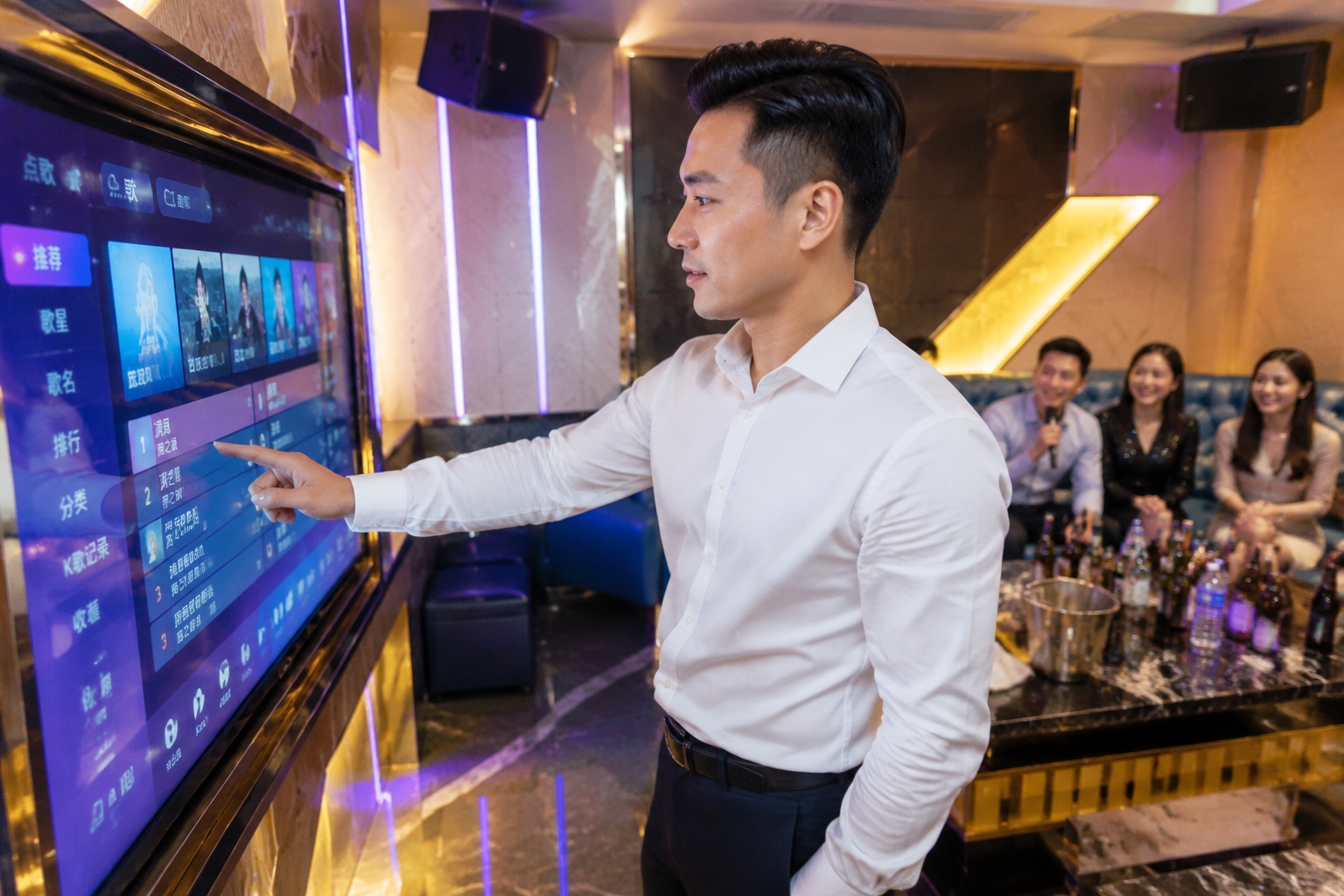
The person who books the KTV room is usually the person with the most at stake in the relationship. The host is responsible for everything: the selection of the venue, the order of the songs, the flow of drinks and snacks, and the overall mood. This role mirrors the philosophy of mianzi, or face, which governs much of Chinese social interaction. The host gains face when guests are comfortable and happy. A successful evening means the guests walk away feeling respected, entertained, and perhaps slightly indebted. In a sense, the KTV host is a very efficient social operator—someone who can turn a business meeting into a memorable experience.
It is also worth knowing that the KTV room has its own internal hierarchy. The seat furthest from the door is often reserved for the most senior person or the guest of honour. The host usually sits near the door, close to service, and can control the rhythm of the room. These details may seem trivial, but for a foreign visitor they are small signals about who matters. In the West, we might see these as theatrical; in China, they are part of the soft code that keeps relationships stable.
A Deal Sealed with a Bottle: From Toast to Contract
Picture this: a mid-sized electronics distributor in Guangzhou wants to secure a long-term supply deal with a new factory. The formal meeting happened in the afternoon, and the numbers were roughly agreed. But the real test comes that evening in a KTV. The distributor’s sales director selects a carefully curated playlist, mixing classics from the 1990s with a few modern hits. The factory owner, who is known to be a fan of Teresa Teng, is offered her songs early. Midway through the night, the distributor makes a subtle toast: “We have known each other only a few hours, but your integrity feels familiar. Let us make this partnership last.” The factory owner smiles, raises his glass, and drinks. That single gesture becomes the informal contract. The next morning, the official documents are signed without further delay.
This sequence is not a cliché; it happens every day across China’s business landscape. The KTV provides a cover for testing trust. People say things in the private room that they would never put in an email. They gauge reactions, read body language, and use humour to address awkwardness. For foreign entrepreneurs, understanding this ritual can mean the difference between closing a deal and watching it slip away.
What Foreign Visitors Should Know Before Entering a KTV
If you are invited to a business KTV in China, treat it as a serious professional occasion, not a casual night out. Dress neatly, arrive on time, and be prepared to stay for at least three hours. Eat something before you go—alcohol is often consumed before food arrives. When you sing, pick a song that is widely known and not too difficult. Do not be afraid to make mistakes; in fact, a little self-deprecation can work in your favour. Accept the toasts with both hands, and when you offer a toast, keep your glass lower than the senior person’s glass. This simple gesture shows respect and is noticed.
Finally, remember that the KTV is a mirror of a broader Chinese cultural logic: the most important information is not always spoken in the boardroom. It is felt in the rhythm of a song, the warmth of a pour, and the laughter that fills a private room. Once you understand that, you will be ready to do business in China—one song at a time.
Start the discussion at forum.chinacomes.com