

A Tale of Two Rainy Seasons
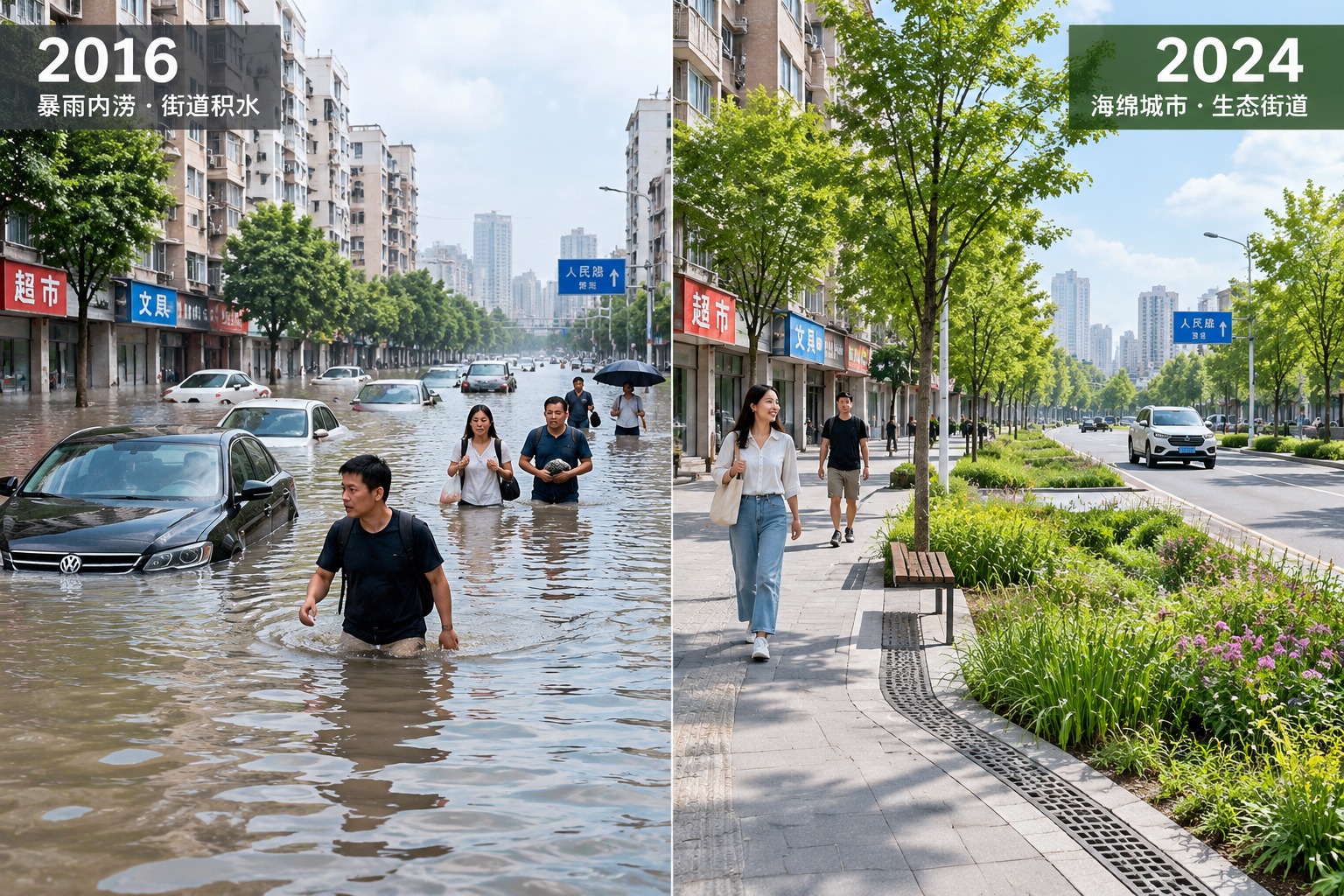
In July 2016, after a torrential downpour, a major avenue in Wuhan — a city of 11 million in central China — turned into a river. Cars were submerged up to their windows. Residents waded waist-deep through muddy water. The term “urban flooding” became a household phrase across China.
Fast forward to July 2024. Another record-breaking storm hit the same avenue. This time, the water drained within an hour. Streets remained passable. Traffic resumed quickly. What changed? Wuhan had rebuilt its entire drainage system not as pipes and pumps, but as a “sponge city.”
What Exactly Is a Sponge City?
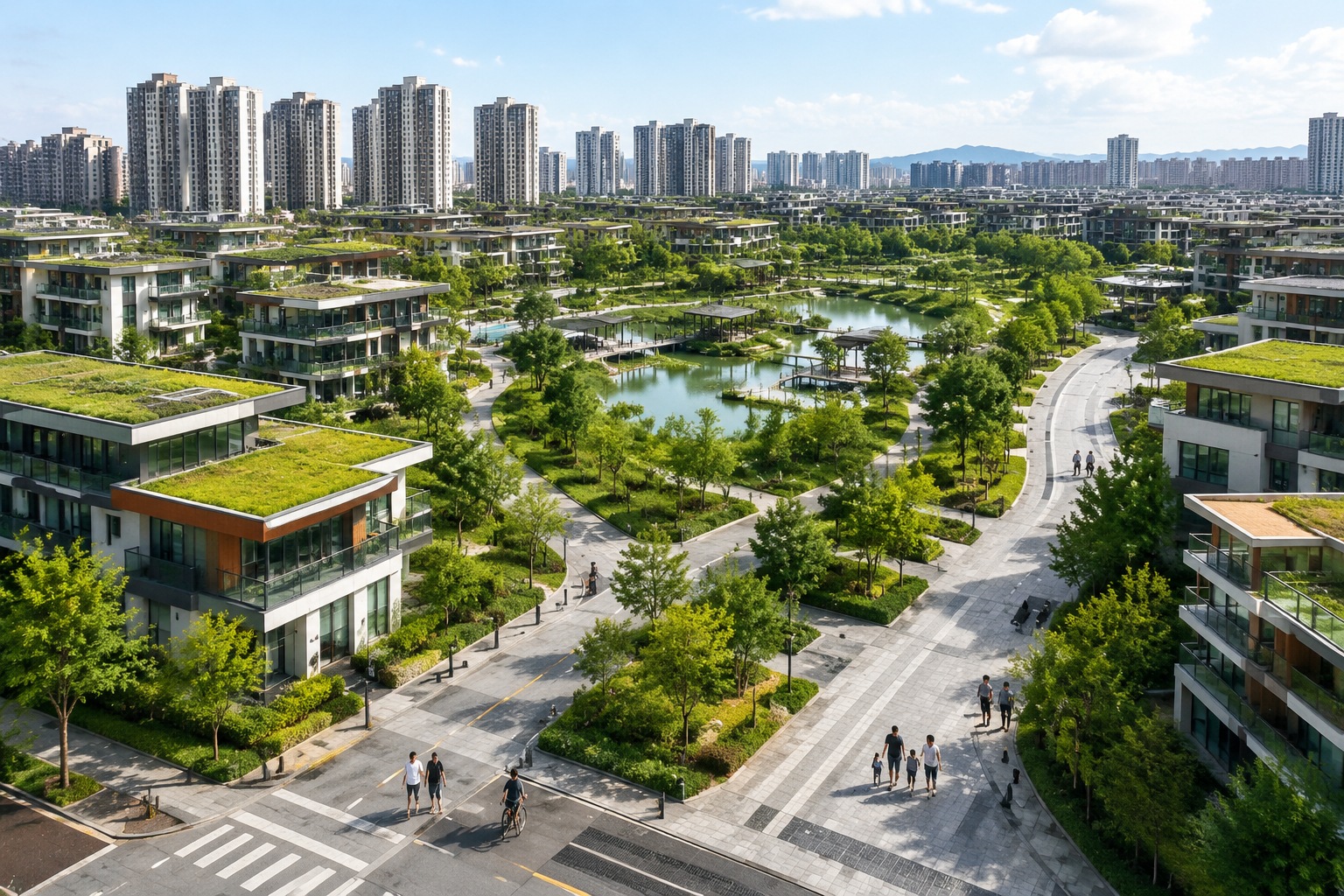
The sponge city concept, pioneered by Chinese urban planners around 2014, flips the traditional approach to stormwater management. Instead of trying to channel rain away as fast as possible (which overwhelms drains), sponge cities absorb, store, and reuse rainwater on-site — like a giant sponge.
Three key techniques work together:
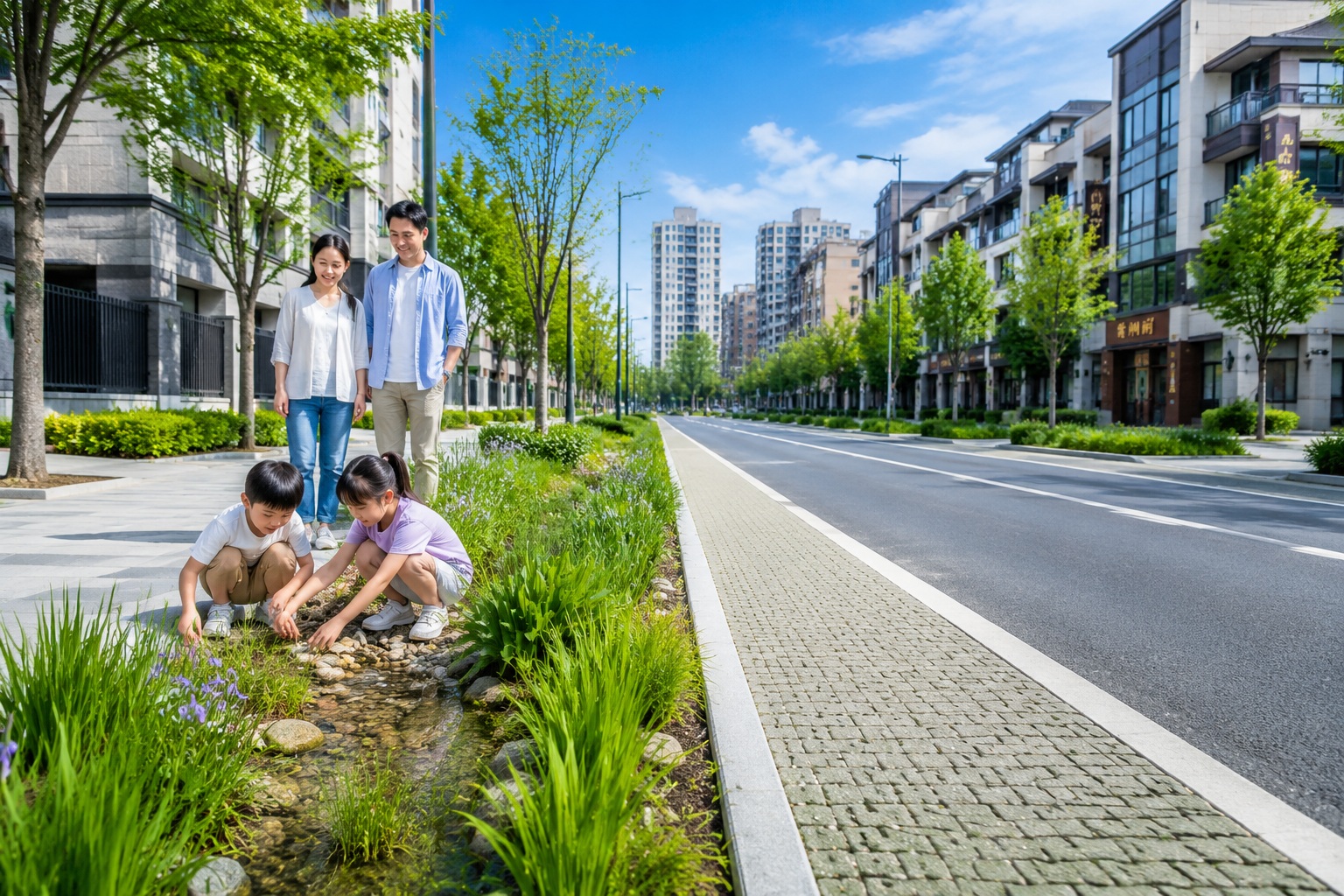
- Permeable pavements. Sidewalks, parking lots, and even some roads are paved with porous materials — concrete or bricks with tiny gaps — that allow rainwater to seep through to the soil below. A typical permeable pavement can absorb 3 to 5 inches of rain per hour.
- Rain gardens and bioswales. Along streets and in parks, sunken green areas collect runoff from roofs and roads. Plants and soil filter pollutants, and the water slowly infiltrates or flows to storage tanks. A single 100-square-meter rain garden can handle up to 10 cubic meters of stormwater.
- Underground reservoirs and cisterns. Beneath parks, plazas, and sports fields, large concrete tanks store excess rainwater. This water is later used for irrigation, street cleaning, or released slowly into rivers to prevent flash floods. Shanghai’s Lin-gang sponge area alone has underground storage capacity of 120,000 cubic meters — equal to 48 Olympic swimming pools.

From Lab to Neighborhood: How It Works
I visited a residential block in Zhenjiang, a city in Jiangsu province that was among the first national pilot sponge cities. The community manager, Ms. Chen, showed me the transformation. “Before, every summer we would sandbag the entrances and children would miss school because of flooded roads,” she said. “After the retrofit in 2017, even during Typhoon Lekima in 2019 — one of the strongest in decades — the worst we saw was a few puddles.”
The block’s original concrete was replaced with permeable bricks. Sunken gardens were planted along the edges of parking lots. A underground cistern (150 cubic meters) collects water from rooftops and irrigates the community garden. The total cost was about 2 million yuan (≈$280,000) for a 3-hectare area — roughly 7% more than conventional drainage, but with long-term savings on flood damage and water bills.
Engineer Li Wei, who designed the system, explained: “We don’t fight nature — we give it space. Every sponge element is connected: the permeable road feeds the rain garden, the rain garden feeds the cistern, and the surplus slowly drains into the municipal pipe network. It’s a decentralized system that distributes risk.”

Scaling Up: National Impact
China has invested over 100 billion yuan (≈$14 billion) in sponge city construction since 2015. By 2023, more than 60 cities had completed pilot projects covering over 20,000 square kilometers. The results are measurable:
- In Shenzhen, sponge areas reduced surface runoff by 40–60%.
- In the capital’s pilot district, the average flood depth decreased from 45 cm to under 15 cm during heavy storms.
- Nationally, sponge city projects have reduced annual flood losses by an estimated 30%.
These are not just statistics. For a small business owner in a flood-prone street, a 30% drop in risk can mean the difference between staying open or closing down after a rainstorm.
Why China Chose This Path
The shift to sponge cities is driven by two undeniable realities: rapid urbanization and climate change. China’s urban population grew from 36% in 2000 to 65% in 2023. As cities expanded, impermeable surfaces — roads, parking lots, rooftops — multiplied, making traditional drainage insufficient. Meanwhile, extreme rainfall events have become 20% more intense over the past three decades, according to the China Meteorological Administration.
The sponge city approach is not a quick fix — it’s a long-term investment in resilience. It requires integrating water management into every new development and retrofitting existing neighborhoods. But the payoff is immense: not just fewer floods, but cleaner groundwater, greener public spaces, and a cooler urban microclimate (the evapotranspiration from rain gardens can reduce local temperatures by 2–3°C).
It also changed the way engineers think. Traditional drainage is “gray” — purely concrete pipes. Sponge cities add “green” — soil, plants, and natural processes. This hybrid approach is now being studied by cities from New York to Mumbai.
A New Normal
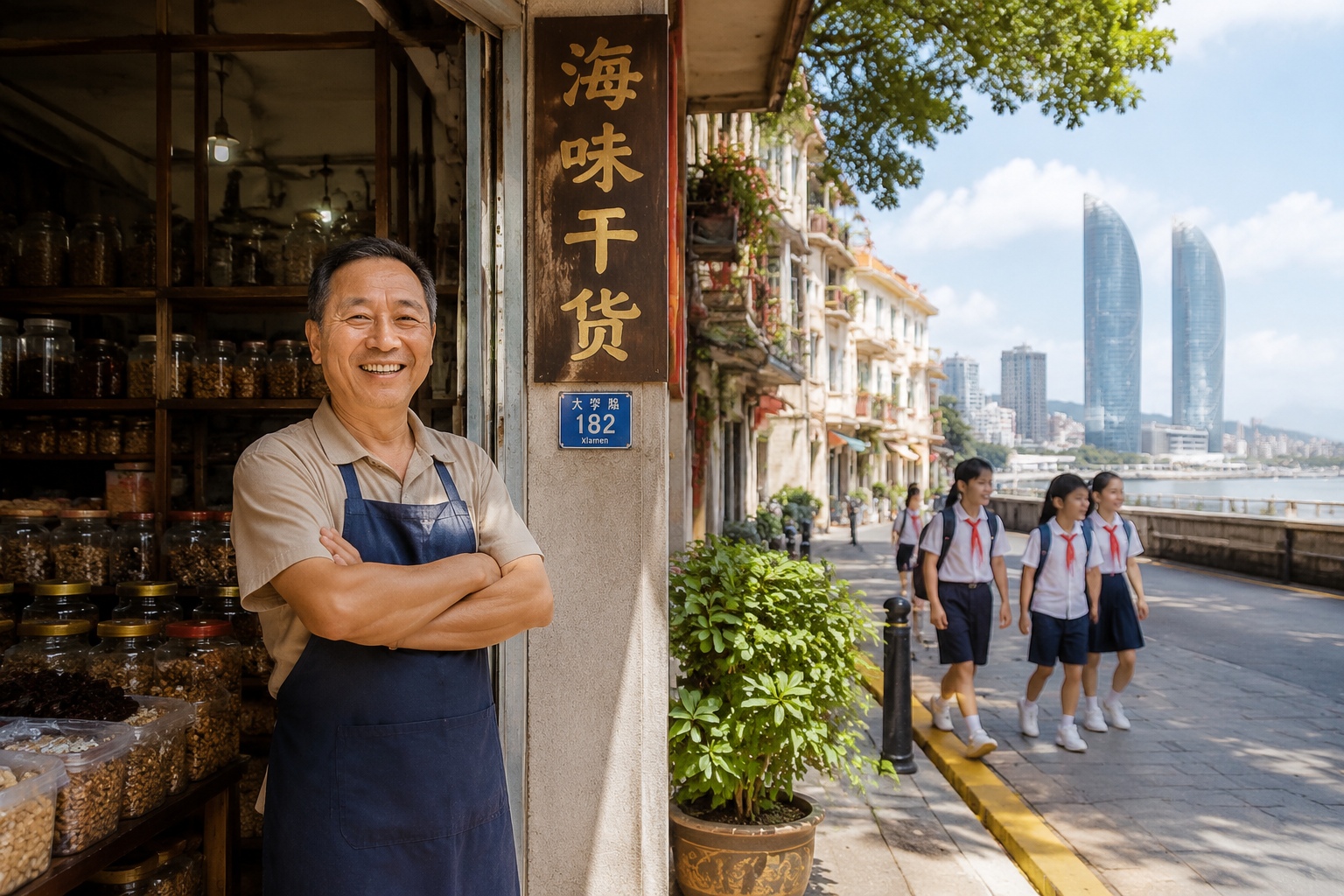
Ask any resident of a sponge city pilot area whether it works, and you’ll hear a different story than the gloom of a decade ago. “I don’t worry about rain anymore,” said Mr. Zhang, a shopkeeper in the pilot district of Xiamen. “When I see storm warnings, I just close the windows. The street outside used to be a river. Now it stays dry.”
The sponge city isn’t a magical cure — extreme events can still overwhelm any system. But it gives cities a fighting chance. And for millions of Chinese now living in sponge neighborhoods, the idea of “permanent flood prevention” is no longer a slogan. It’s a dry pair of shoes after a torrential rain.
Start the discussion at forum.chinacomes.com