

A Store You Might Walk Past—Unless You Are Hungry
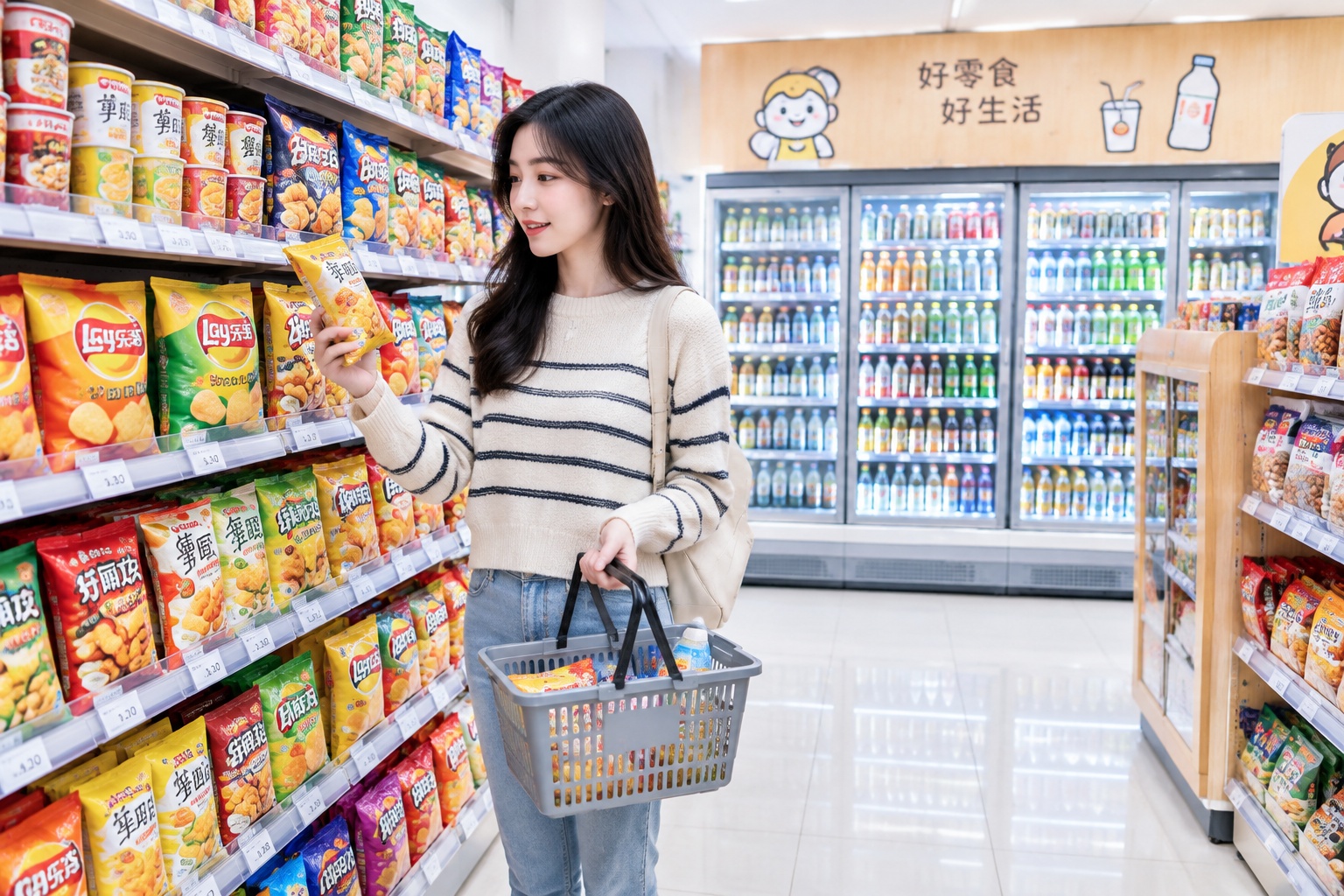
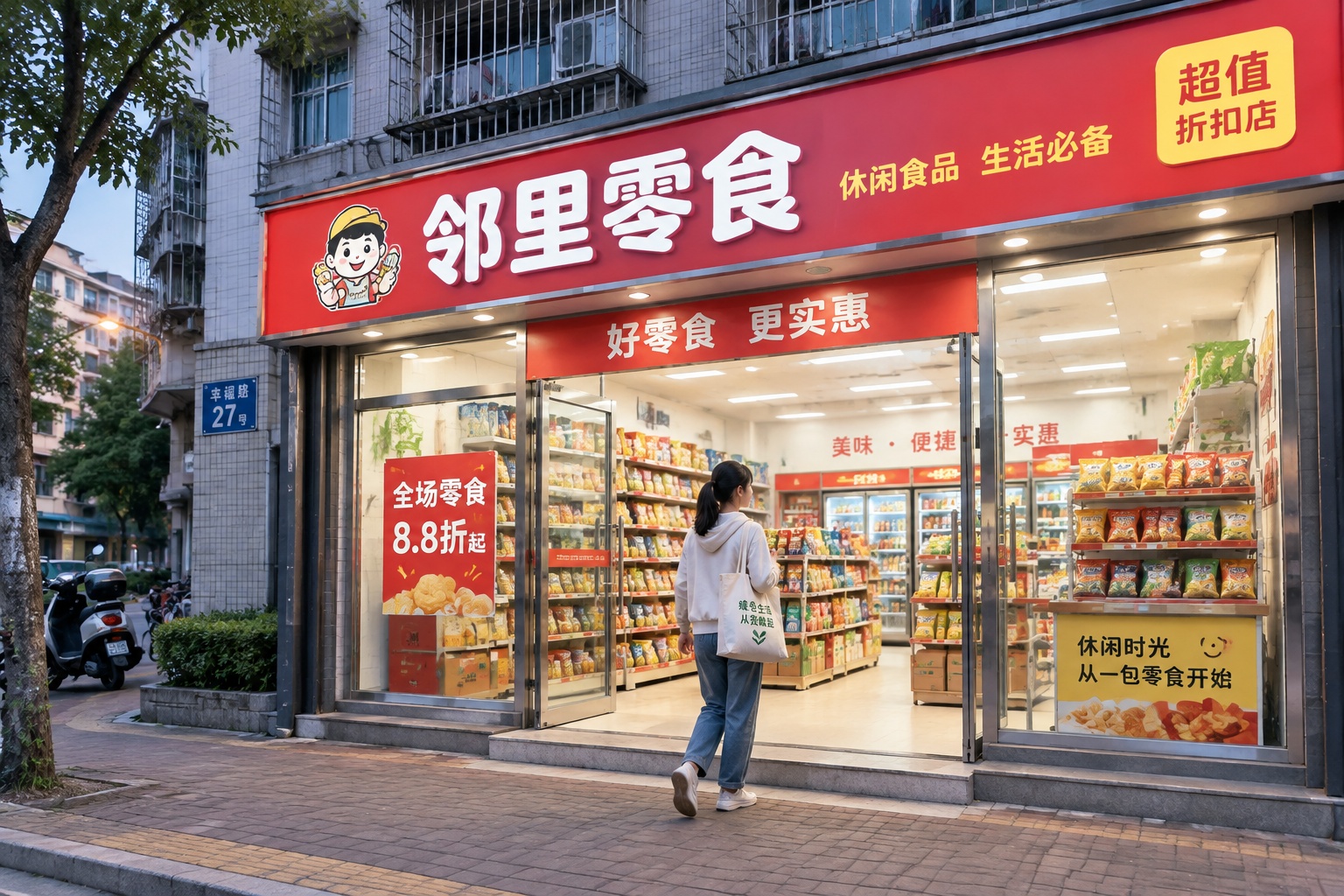
At around 8 p.m. on a hot summer night, a 24-year-old office worker in Changsha, south-central China, walks into a brightly lit storefront below her apartment building. The sign says “Snacks Are Busy.” She picks up a basket, grabs a packet of spicy dried bean curd, a bag of salted egg yolk cookies, and a jasmine-tea drink. At the counter she pays 23 yuan—about $3.20—with her phone. “I just wanted to try something new,” she says. That simple impulse explains a meaningful transformation in Chinese retail.
This kind of store is called a 零食量贩店 (língshí liàngfàn diàn), a “snack volume shop.” The term liàngfàn was borrowed from Japanese retailing and originally described volume-based wholesale pricing. In today’s China it refers to stores that keep prices low by moving huge amounts of small packaged snacks.
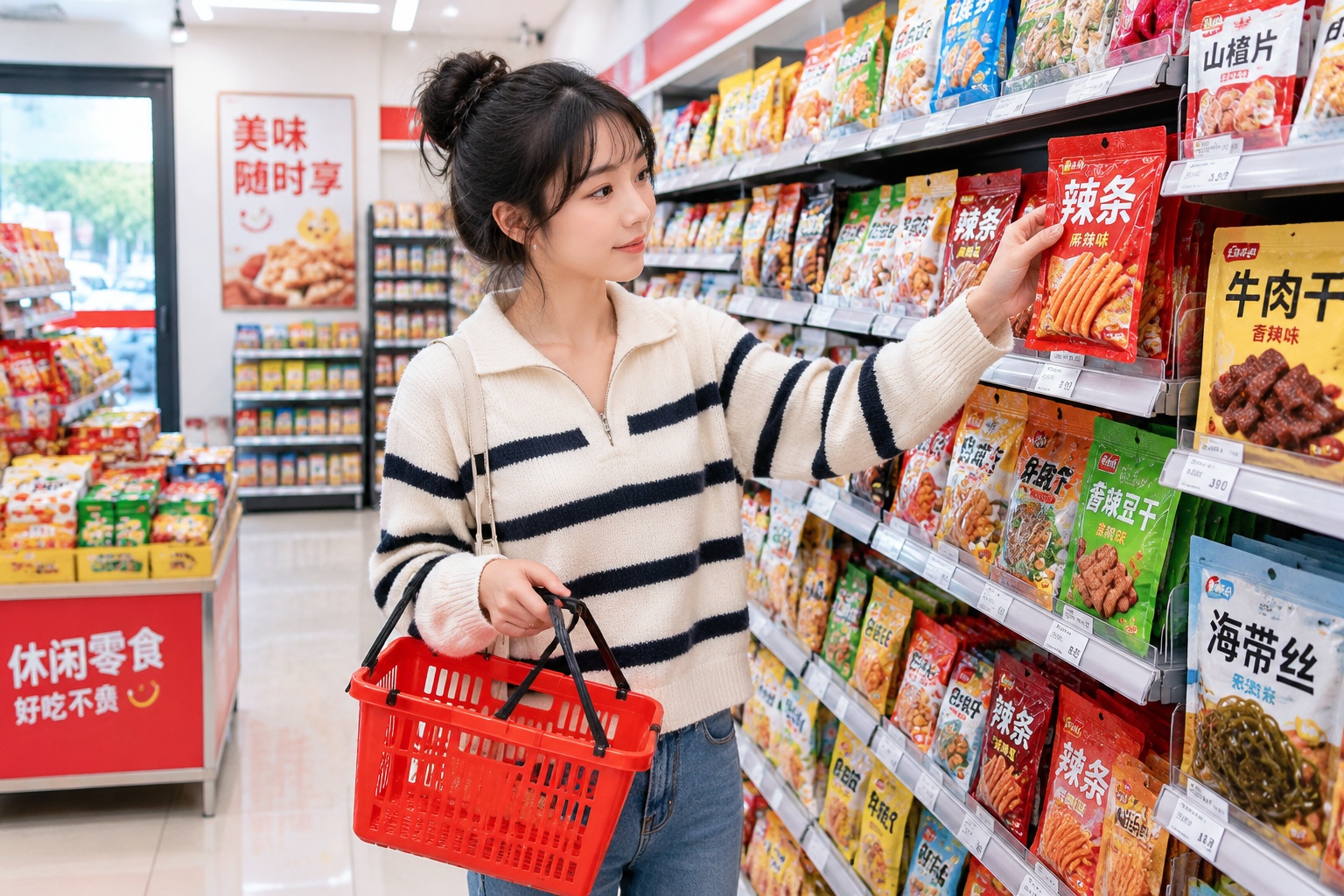
If you are used to an American dollar store, the first difference is obvious: there is no cleaning aisle, no mop or laundry detergent. If you are used to a European hard discounter like Aldi, you will also see something unusual: no fresh produce and no bakery. Instead, every wall is covered with potato chips, spicy snacks, biscuits, nuts, dried fruit, candy, and instant noodles, plus a cooler with yogurt and bottled tea. The store sells almost nothing except things you can eat immediately.
Not Your Dollar Store, Not Your Aldi
American dollar stores serve communities that need cheap household essentials. They are wide in range and practical in use. Chinese snack volume stores are the reverse: a narrow product range, an indulgent purpose, and a location on busy streets near apartment towers and schools. The typical customer is not stocking a pantry. They are looking for a small treat for after work or after class.
The price structure is different too. Dollar Tree has its single, predictable price point. These Chinese stores have no uniform price; most items cost 1, 2, or 5 yuan, which is about 14 to 70 U.S. cents. A basket with eight snacks often costs less than a movie ticket or a café drink. Because no one needs to spend a lot, the act of choosing feels more like play than like bargain hunting.
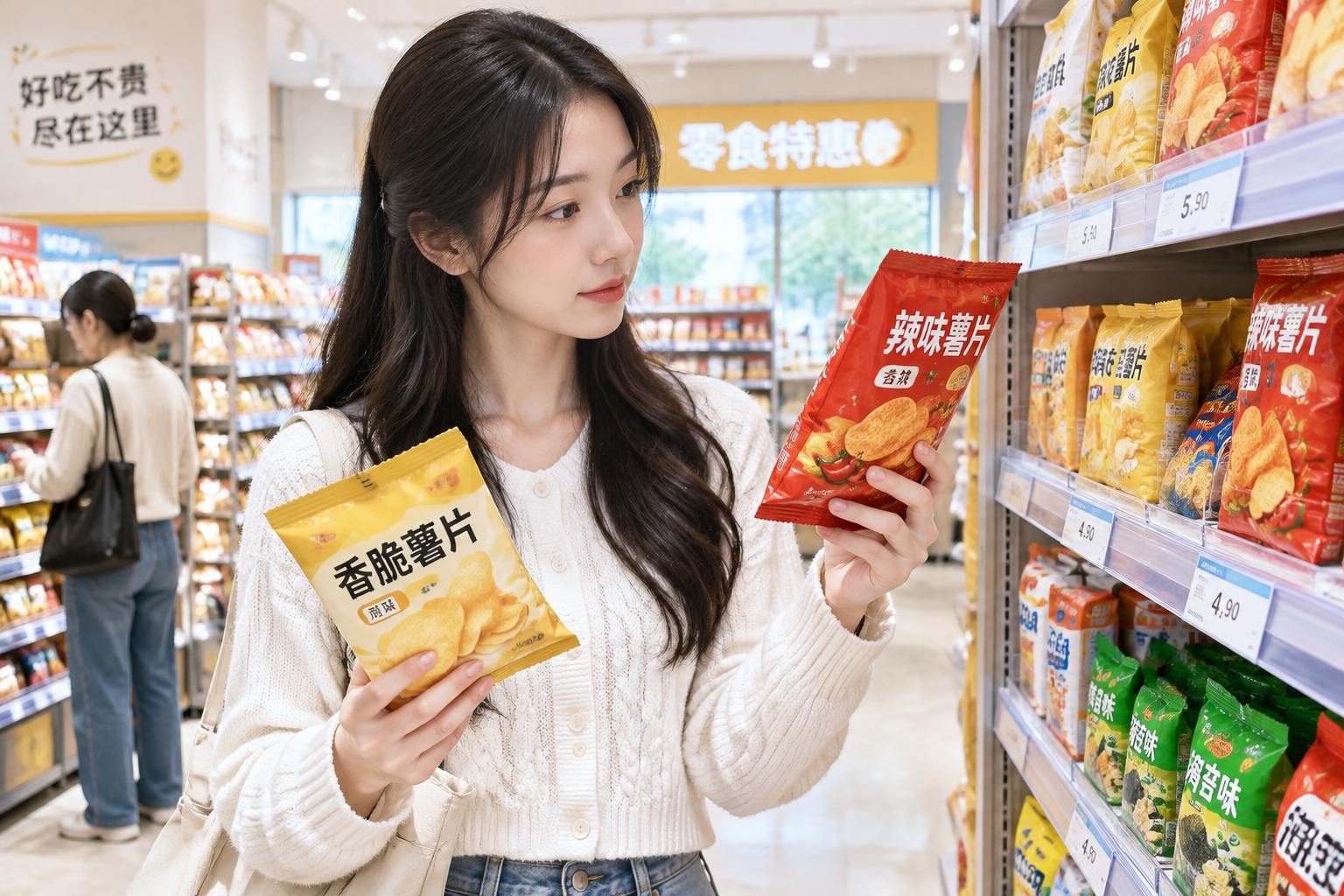
There is a little bit of Aldi in the model: known national brands such as Lay’s and Oreo are sold at very thin margins to pull people in. The profitable lines are often “white-label” snacks made by small factories and sold under names you have probably never heard. But unlike grocery staples, snacks are entertainment. A row of unfamiliar chip flavors becomes an invitation to explore.
Why Young Chinese Consumers Are Hooked
For a young person living in a Chinese city, a snack store satisfies three needs at once. It is cheap, but not in a shameful way; a transaction under 30 yuan feels more like a casual reward than a financial decision. It is convenient; the shop is not in a faraway shopping center but often in the pedestrian path between a metro station and home. And it is never boring; because many products come from regional Chinese factories, the inventory changes quickly.
This continuous novelty creates a treasure-hunt feel. One week you see lemon-and-pepper potato chips; the next week a fruit-tea-flavored candy appears. The store wants you to test a new item for 2 or 3 yuan. Manufacturers want shelf space, and shoppers want small cheap surprises. E-commerce is often cheaper for buying a family-size box, but it cannot satisfy a craving in the next ten minutes.
The Low-Price Economics, in Plain Language
How can a store sell a bag of chips for 2 yuan without losing money? It comes down to scale. Regional chains such as Lingshi Henmang, which started in Changsha, and Zhao Yiming, a fast-growing rival, expand city by city. Once a chain has hundreds of stores in one region, it can go to a food factory with a very large order and ask for a much better price. It also bypasses traditional distributors. The store then uses well-known brands as “bait” and makes most of its profit from items that have not been heavily advertised.
This is similar to Aldi’s private-label strategy, but the emotional result is different. When Aldi sells private-label tomatoes, you save money on something ordinary. When a Chinese snack store sells private-label spicy chips, the experience feels closer to discovering a new flavor. You are not just buying cheaper food; you are testing a product made exclusively for that chain. Samples are often available to reduce the risk.
The Not-So-Shiny Side of the Boom
Such fast growth creates problems too. The format is easy to copy, and crowded residential areas can end up with several snack stores on the same street. As these chains begin to saturate cities, some franchisees struggle, and local business reports include stories of closures. Some chains are already responding by adding frozen food, fruit, and daily necessities—which brings them closer to normal mini-supermarkets.
This is not a simple success story. It is an ongoing process of trial and error, which is typical for Chinese retail.
A Cheaper, More Playful Store
For an overseas visitor, the most thought-provoking part may be the cultural positioning of cheapness. In many countries, discount stores carry a certain social stigma or at least a utilitarian image. Chinese snack stores do not feel like the place you go when you have to cut back. The bright lights, tiny prices, and playful discovery attract young workers who are employed and connected, not just low-income households. It is a dollar-store price feel without the dollar-store soul.
If you want to understand China through retail, imagine taking the low cost discipline of Aldi, the colorful curiosity of a candy shop, and the ordinary walkability of a corner store, then putting them together in one bright, snack-filled room. That is what the snack volume stores are offering to millions of Chinese customers: a small and cheerful everyday luxury, at a price that makes it easy to say yes.
Start the discussion at forum.chinacomes.com