
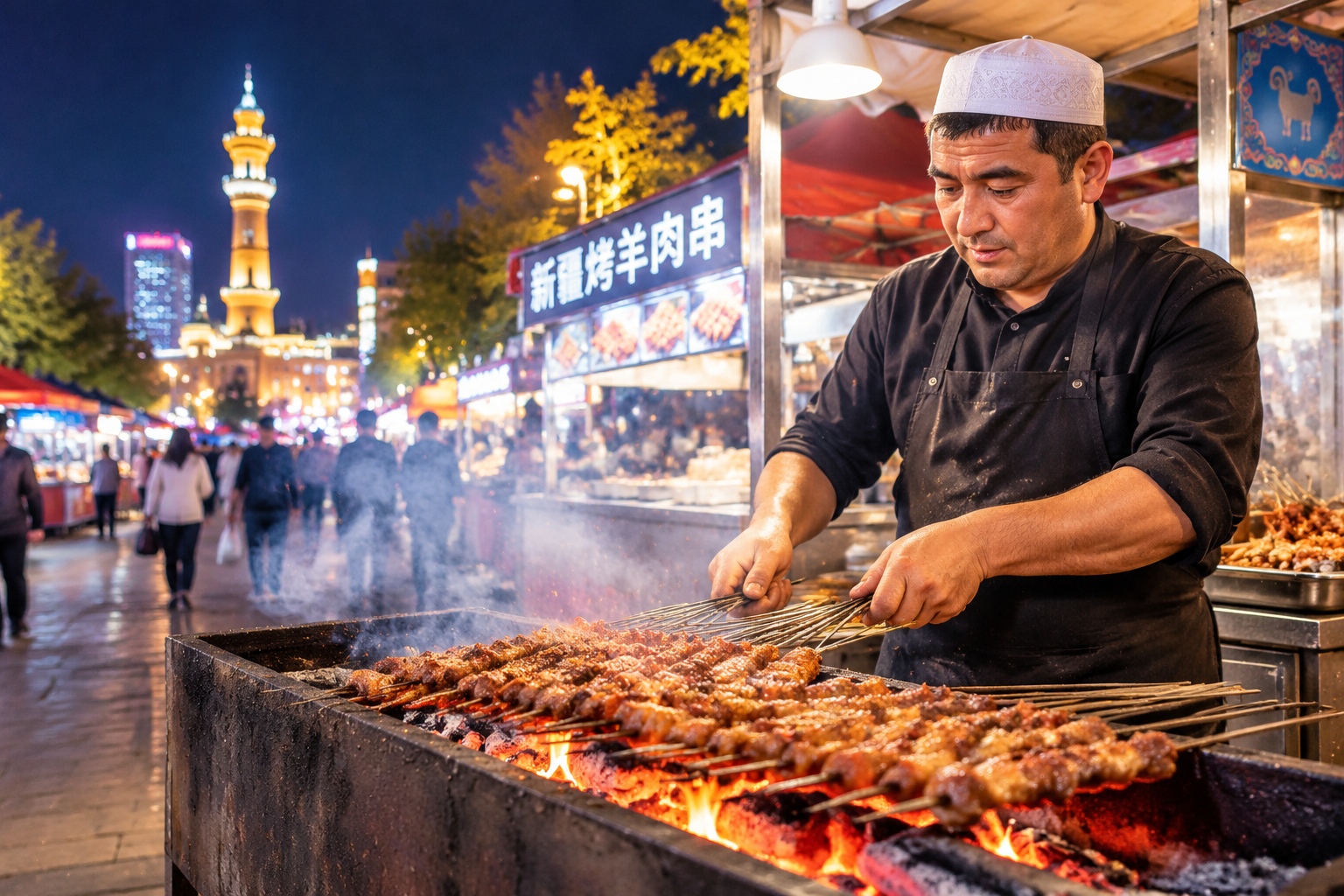

If you ever wonder what ten thousand tiny fires smell like, just wander into a night market in Urumqi around 7 p.m. The smoke hangs in golden swirls, and the sizzle of skewers over hot charcoal is so loud you could almost taste it. There, behind a small metal cart with a polished counter, stands Aydar — a tall man in a white cap and an apron that has slowly turned grey from years of smoke and splatter. He’s been running his lamb skewer stall for a decade. The only thing that really changed, he says, is the speed of the orders.
The Day Starts at 3 p.m.
Long before the first evening customer, Aydar receives a delivery from a farm about 100 kilometers away, which is still the same as it was in his father’s day. But the way he pays for it is different. His phone pings, a bank transfer goes through, and the vendor at the other end sends back a voice message with a small “OK, bizaar” — the local word for “done.”
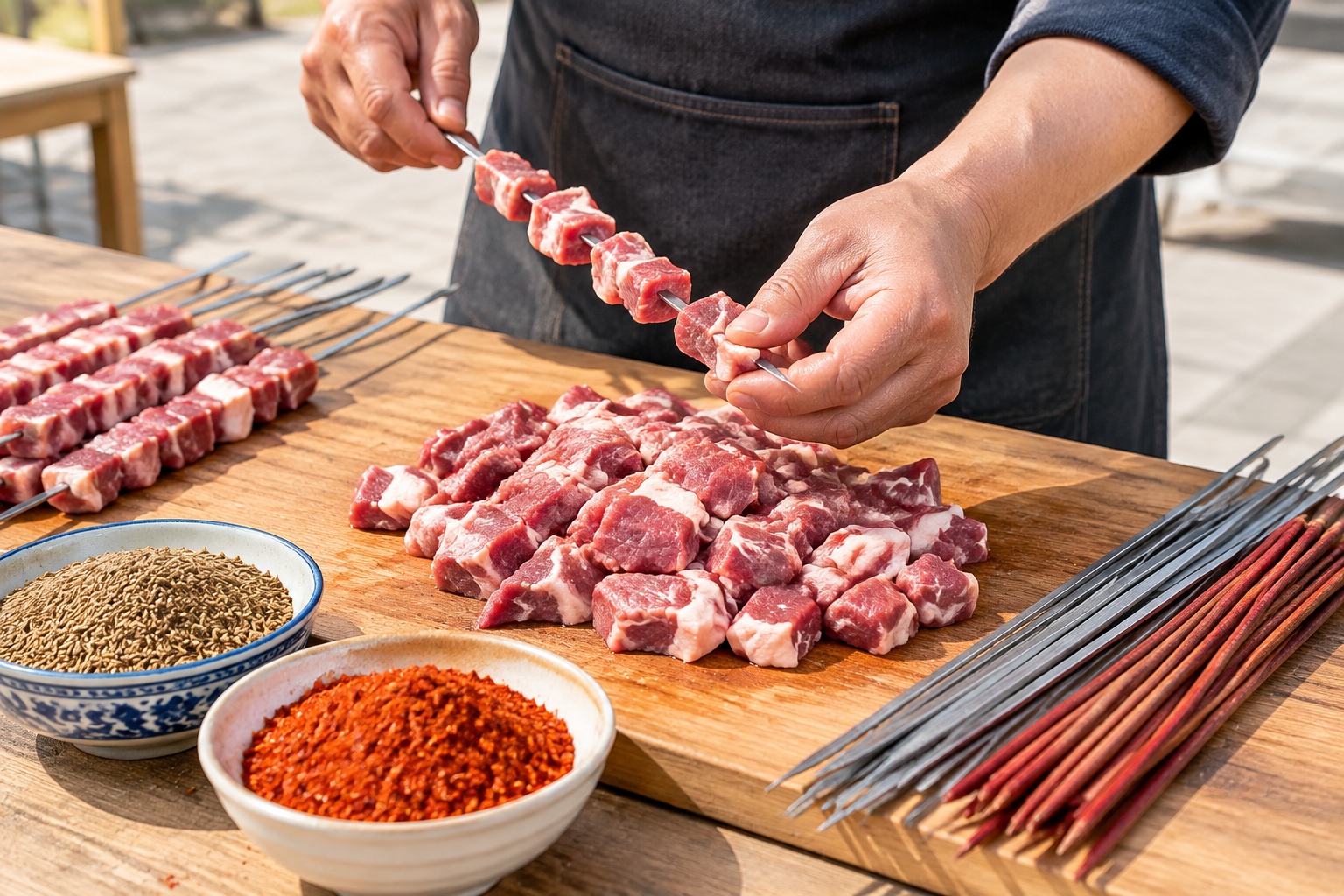
On the cart’s cutting board, Aydar cubes the lamb into perfect pieces, about the size of a domino. He always leaves a strip of fat on each cube. “That fat is insurance,” he says. “It will keep the meat soft and later, when it drips into the fire, it will make that beautiful flame you see in the movies.” Knife work is quick and steady. Around 4 p.m., he starts threading the cubes onto flat metal skewers. He pushes the meat loosely, leaving air gaps so the heat can circulate. He also has a bucket that smells woody. Inside, red willow branches are soaking in water, ready for customers who want “old-style” barbecue. “Most of the time, people ask for metal. It’s fast and clean. But a few times a week, someone comes and wants the willows, maybe a tourist from Shanghai,” he says.
The Fire Show
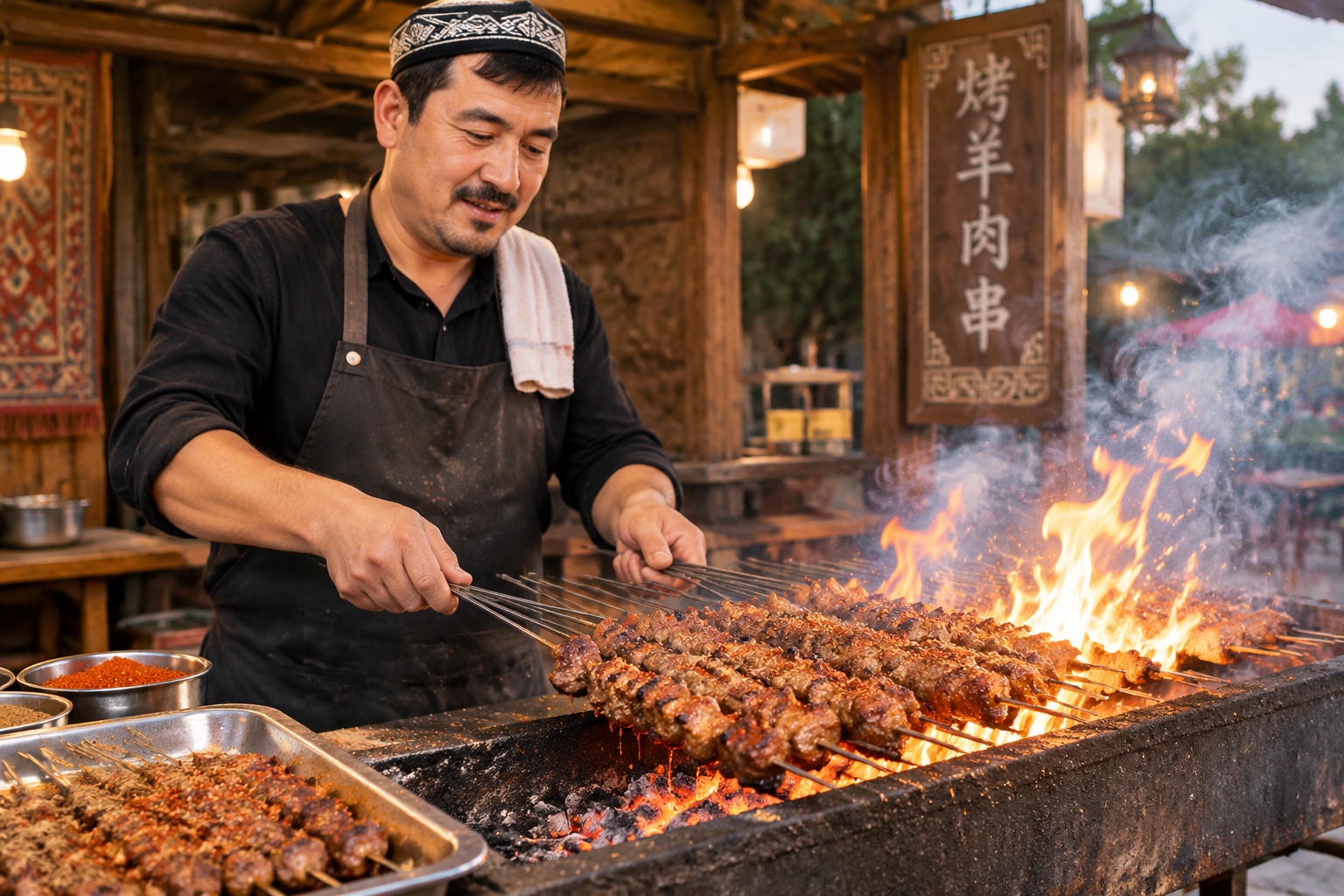
At 6:30, Aydar lights the briquettes inside a long, wheeled grill. “You don’t want a blazing flame,” he explains. “You want grey-white coals with a steady heat.” He fans them with a plastic tray until the surface glows like a tiny city. Then the lamb goes on, twelve skewers at a time.
His hands move with a rhythm that is almost musical. He flips the skewers between two hands, turning each one a quarter-turn before moving to the next. When the oil from the lamb hits the coals, small pulses of flame erupt, and the smoke turns sweet with a slight caramelized scent. “The fire is a part of the band,” Aydar says. “But we are the conductor.”
Seasoning follows a strict sequence: salt first, to open the pores; then cumin, which he crushes in his palm; finally chili powder during the last minute. Cumin and chili never touch the same hand — they have different dancing partners, as he puts it. The result is a glossy, charred edge and a juicy center.
The Crowd and the Code
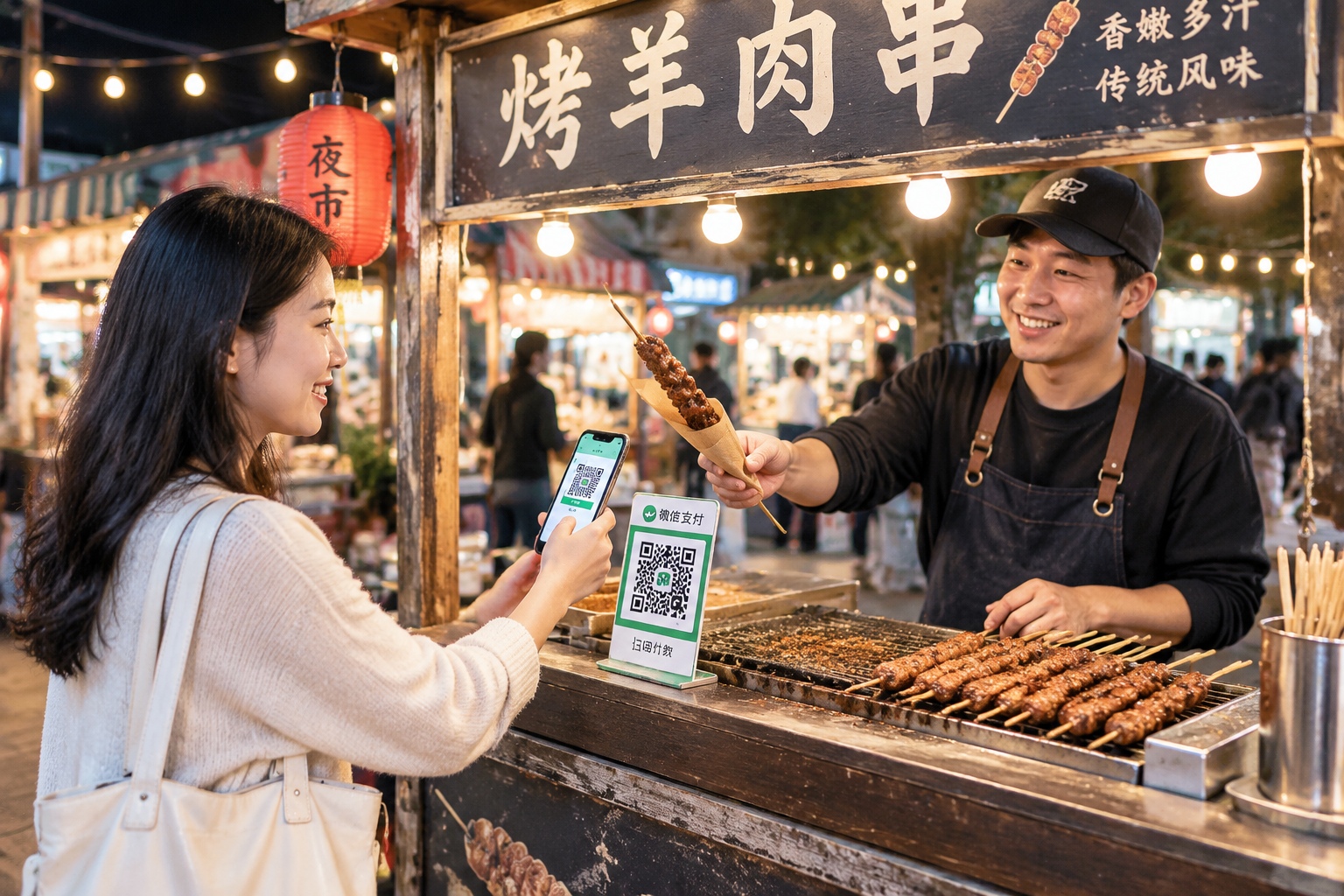
By 8 p.m., the space in front of the stall is a small, hungry crowd. Most people scan the QR code taped to the front side of the cart. Aydar hears the ding-ding of payment notifications as often as the sizzle of lamb. He also receives online delivery orders on a secondary phone sitting in a leather holder. The delivery riders get priority, because their customers are waiting at home, but sometimes a rider and a line customer order the same set, and Aydar lets the rider take the first batch. “That smells bad for the waiting customer, but the rider will be gone in two minutes,” he says with a shrug.
He still keeps a small wooden box with coins and paper bills for the older customers who don’t trust phones. “That is my retro corner,” he says. A University student who comes three times a week orders ten skewers and a yogurt drink. She pays with her phone without looking at the code. The restaurant of an old man who sits on a nearby stool emits no sound, but a greedy nod tells Aydar everything.
One of the most memorable moments this week was a French tourist who asked if the lamb was halal and if the red willow tasted like something. Aydar laughed and gave him a willow stick skewer for free. “The Frenchman took a photo of the stick like it was an art piece,” he says. “Then he bought three more with iron. That’s okay. The wood taste is part of the story, but the metal lets you taste the meat better.”
The Smoke and the Phone
Around 10 p.m., a short pause. Aydar sits on a low stool, holds a glass of milky tea, and picks up his phone. His wife’s video call shows their five-year-old son dancing in the kitchen. “Papa, I want lamb skewers too!” the boy says. “Come tomorrow, and you’ll get the fatty piece,” Aydar replies. He smiles, and the fatigue in his eyes is gone for a moment.
He doesn’t miss the old days when he had to count notes at the end of the night. The digital payment system has brought him not only convenience, but also the ability to make data-driven decisions: he can see which days are busiest, which topping is most popular, and when to order more meat. “I used to just guess,” he admits. “Now the phone tells me. But the taste is still the same skill.”
End of the Night
At 1 a.m., the last skewer is sold. Aydar uses tongs to lift the grill grates, scrapes them clean, and then splashes water on the charcoal, producing a dramatic hiss. He counts today’s income: about 2,400 yuan, or roughly 330 US dollars. The payment system has already calculated it, so it only takes a minute. He covers the stall with a blue tarpaulin and wheels the cart to a small storage room nearby. Tomorrow the cycle begins again.
As he walks back to his apartment, his phone lights up with a customer review: “Best lamb skewers in town. The cumin has rhythm.” He laughs, writes back “Thank you,” and disappears into the quiet street.
Why Lamb Skewers Matter
In a city like Urumqi, lamb skewers are more than street food. They are a form of social glue. They bring together students on a budget, office workers on a break, and tourists from across the country. They are also an economic engine: small vendors like Aydar support farms, delivery platforms, and even charcoal producers. And they are a living link to the region’s ancient Silk Road history, where the combination of meat and cumin has been passed down through generations.
For Aydar, it’s not always a glamorous job. His apron is stained, and smoke follows him home. But the fact that he can now run the business with his phone in one pocket and a chunk of money in the other is, he says, a good thing. “The old ways brought us here. The new ways let us stay in the same spot while the world keeps moving.”
Start the discussion at forum.chinacomes.com