
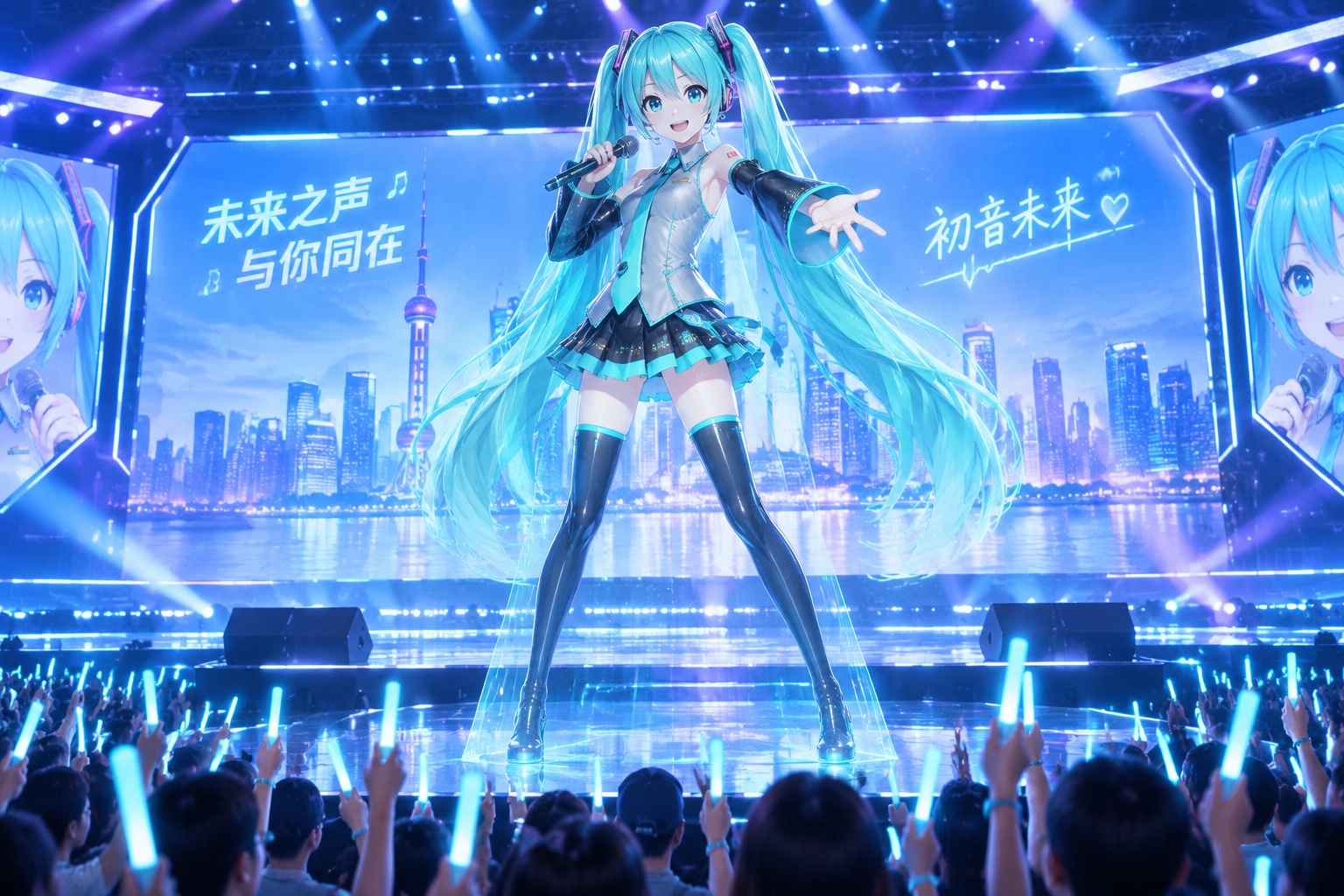

Shanghai, a Friday night in 2023. The venue is packed with young people waving glow sticks. On stage, a girl with cyan twin-tails is singing a gentle ballad. She bows, tells a joke, and the crowd roars. The only unusual thing: the girl is not physically there. She is a full-body projection — a hologram interacting with her fans in real time. In China, she is one of the most famous singers you’ve never heard of: Luo Tianyi. A virtual idol with millions of followers, she has also become a symbol of a much bigger shift in digital entertainment.
Luo Tianyi is not a person but a character created from 3D models, motion capture, and synthesized voices. She started as a local version of Japan’s Vocaloid, but has grown far beyond that. Along with virtual influencers like AYAYI, who looks like a glamorous real-world fashionista, and Skyler, who rose to fame on short-video apps, these “digital humans” are becoming some of China’s most popular celebrities. And they are at the center of a debate: can a being that doesn’t exist be the perfect idol?
The Making of a Virtual Idol
Virtual idols are not a new invention. Japan’s Hatsune Miku has been performing since 2007. But what used to be a niche subculture has become a serious industry in China. Part of it has to do with technology: modern vocal synthesis, real-time motion capture, and AI-powered animation make these characters look and behave almost like humans. AYAYI, for example, was created by a Shanghai startup using a combination of 3D scanning and CGI. She posts lifestyle photos on Xiaohongshu and interacts with followers as if she were a human influencer.
Luo Tianyi, meanwhile, is built around a vocal software engine — fans can even compose songs for her. But in China, she has been elevated by an entire production ecosystem: music labels, animation studios, and manufacturing partners who turn her into everything from dolls to rice cookers. She has appeared in TV productions, performed at major galas, and even “collaborated” with real stars.
What makes these figures distinct is the way they are designed. A virtual idol can be engineered to have no bad habits, no political opinions, and no exhausting presence. They are, from the start, intellectual property. This makes them highly attractive to companies.
Why “Never Having a Scandal” Became a Selling Point
In recent years, Chinese audiences have watched dozens of real-life celebrities fall from grace. Tax evasion, lawsuits, secret marriages, offensive comments, and worse. The phrase “塌房” (tā fáng) — literally “collapsed house” — has become a viral term for when a celebrity’s image crashes. Fans lose their idol, and brands lose their investments overnight. In contrast, virtual idols are “never built to fall.” They don’t age, don’t break laws, and don’t have private lives that can be exposed.
That safety is what brands are paying for. According to research firms, China’s virtual human market was estimated at more than 30 billion yuan in 2023, and projections suggest it could exceed 100 billion yuan by the end of the decade. Telecoms, beverage companies, fashion houses, and even city governments have signed virtual idols as spokespersons. With a virtual ambassador there’s no risk of a late-night scandal. Every statement is scripted; every behavior is monitored.
But the appeal goes beyond risk management. Virtual idols are also flexible. They can be everywhere at once: performing in one city, appearing in a livestream with a real celebrity, and hosting a brand event in another, all in the same day. And because they are digital, they can be updated instantly — new clothes, new looks, even new personalities.

This isn’t to say that they have replaced humans in every role. The idol economy still thrives on real people. But virtual humans have carved out a particular niche: when you want the perfect messenger for a brand, you need a perfect messenger who can’t mess up.
From Concerts to Endorsements: The New Performing Economy
Luo Tianyi’s concerts are not just local fan events. She uses an augmented reality stage, with cameras and rendering software that let her “be” in multiple cities at once. In 2021, her “virtual” concert reportedly drew millions of viewers online. At the same time, she can be a spokesperson for a bank, a food company, or a tech brand — a seamless blend of PR and entertainment.
Some of the most interesting partnerships now mix virtual and real stars. During the 2023 Chinese Lunar New Year, a popular TV show brought together a CGI princess and a real singer in a duet. Another brand placed a virtual idol “inside” a live supermarket run with a celebrity. These interactions are designed to make the virtual feel more human and the human seem more spectacular. The result is a distinct form of hybrid performance.
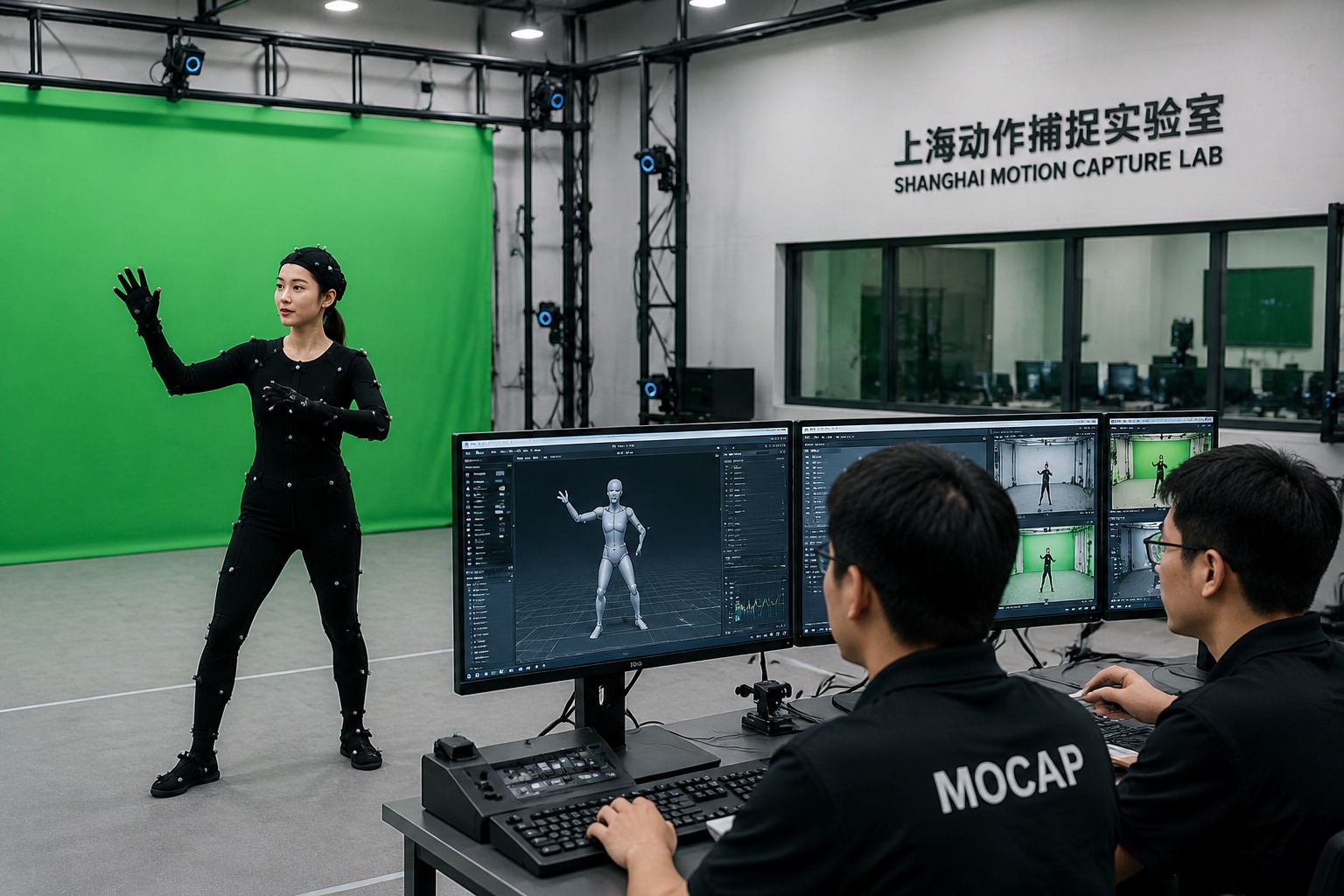
Behind the scenes, this is a highly engineered process. Every smile, gesture, and line of dialogue is designed by a creative team, often working with motion-capture actors whose movements are translated into the digital avatar. It’s not quite traditional animation, not quite live performance. It’s something in between.
The Emotional Connection: What Fans Actually Feel
Fans of virtual idols often defend them passionately. “She has never hurt anyone. She is always warm and encouraging,” says Liu, a 22-year-old student from Chongqing, who attends Luo Tianyi’s livestreams. Liu says she knows the idol isn’t real, but that’s precisely why she feels safe: “There’s no pressure of being judged in a parasocial relationship, because she doesn’t have a real ego.”
A producer who works with virtual influencers explained it in more practical terms. “You aren’t just making a character. You’re building an emotional container,” he said. “Fans pour their own feelings into it. The idol becomes whatever they need it to be.”
That emotional container is often designed with therapeutic elements. Some virtual humans are built specifically to encourage lonely young people, or to promote mental health. They stay positive, never criticise, and are available at any time. This makes them particularly appealing in a society where young people face intense educational and job pressure, and where many feel disconnected from traditional social circles.
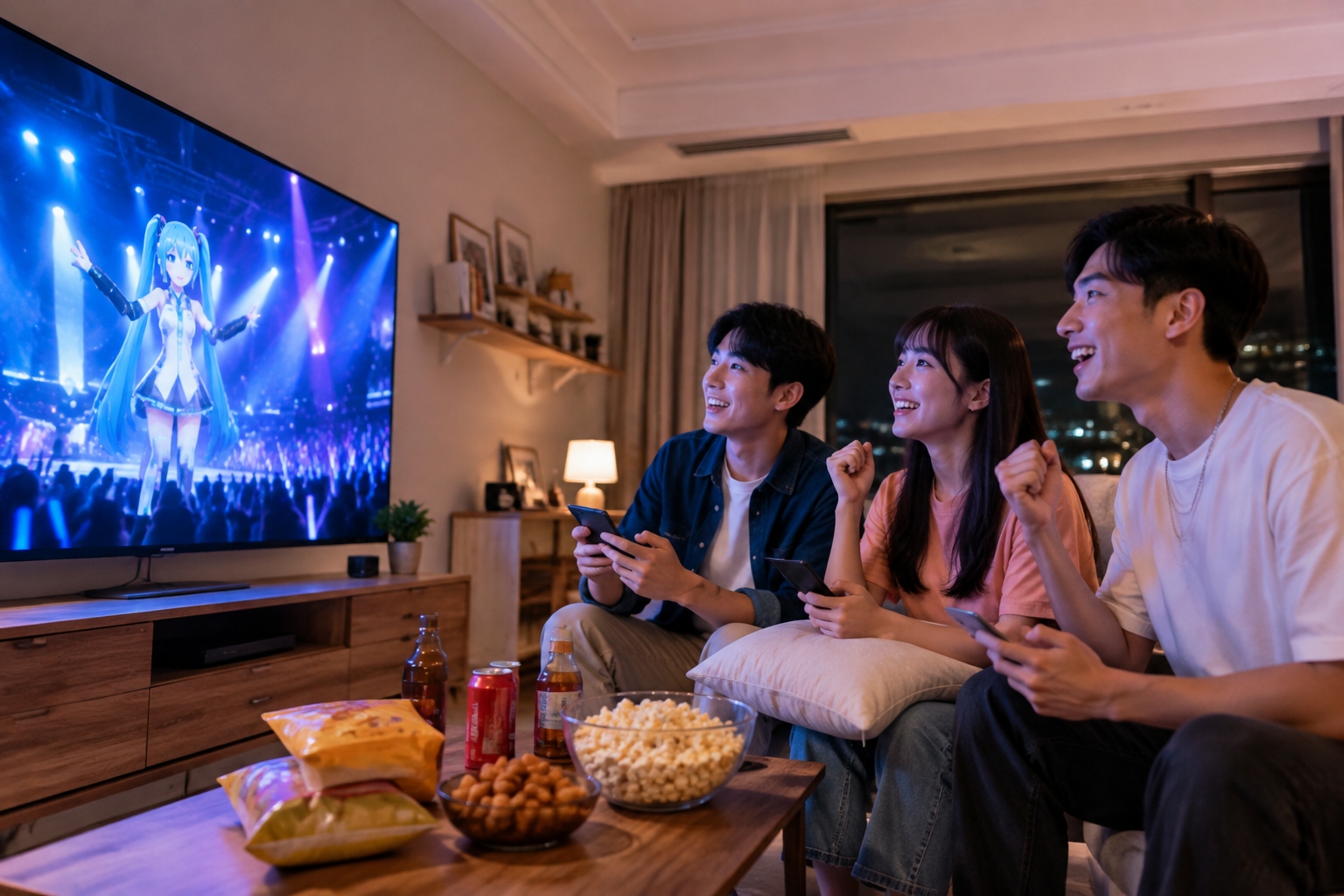
But there is also a serious question lurking here. If people are learning to love someone who can’t truly love back, what does that mean for human relationships? Some psychologists warn that relying too much on effortless virtual connections could make real social interactions feel harder. So far, most fans seem to keep a line between fantasy and reality, but the line is becoming harder to define.
Where Are Virtual Humans Going Next?
As AI models get more powerful, virtual idols are becoming more interactive. Some are already using large language models to hold unstructured conversations with fans, not just pre-scripted lines. In the next few years, we can expect virtual humans to move steadily closer to the uncanny valley, becoming more responsive, more expressive, and potentially more comforting.
They will also become more embedded in daily life. In China, virtual humans are being tested as tourist guides, banking assistants, and even next-day “digital twin” companions for the elderly. The boundary between a character and a service is starting to blur.
Yet the entertainment industry shouldn’t romanticise this. A virtual idol is an intellectual property asset, owned by a company. Its lifeline depends on server maintenance and copyright law. When interest fades or the company moves on, the “idol” can simply disappear. That’s a kind of fragility too — one that fans can easily forget.
Maybe the real question isn’t whether virtual idols can be “better” than human celebrities. It’s whether the desire for perfection is something we should feed. For now, millions of young people in China are choosing comfort over uncertainty. And they’ve found it in a person who isn’t really there. That’s not a warning or a triumph — it’s just the latest chapter in how we tell stories about ourselves.
As the lights go down in that Shanghai hall, Luo Tianyi waves and the crowd screams. They know she’s pixels and code. But for a few hours, she’s alive. And maybe that’s enough.
Start the discussion at forum.chinacomes.com