

China Comes
0
  • Home
  • Explore
    • Playbook
    • Tastes
    • Unseen
  • Discover
    • Pulse
    • Decode
  • Voices
  • Future
    • Futures
    • China EV
    • China AI
  • Connect
    • China Services
    • Contact Us
    • Forum
    • Log In
[email protected] China is moving fast. Come and discover it with us.
China Comes
China Comes
China Comes
  • Home
  • Explore
    • Playbook
    • Tastes
    • Unseen
  • Discover
    • Pulse
    • Decode
  • Voices
    'China Is a Continent Disguised as a Country': A Two-Week Trip That Broke a Korean Traveler's Map
    ‘China Is a Continent Disguised as a Country’: A Two-Week Trip That Broke a Korean Traveler’s Map
    A Sichuan Couple Who Ran a Sweet Tea House in Lhasa for Ten Years: Speaking Tibetan, Drinking Tea, Making Friends
    A Sichuan Couple Who Ran a Sweet Tea House in Lhasa for Ten Years: Speaking Tibetan, Drinking Tea, Making Friends
    China Has 600+ Cities and No One Can Remember Them All: A Chinese Teacher's Classroom Experiment
    China Has 600+ Cities and No One Can Remember Them All: A Chinese Teacher’s Classroom Experiment
    Living with Monks in Wudang: Uncovering the Real Martial Arts Spirit
    Living with Monks in Wudang: Uncovering the Real Martial Arts Spirit
    How My Neighborhood Voted to Install an Elevator
    How My Neighborhood Voted to Install an Elevator
    Previous Next
  • Future
    • Futures
    • China EV
    • China AI
  • Connect
    • China Services
    • Contact Us
    • Forum
    • Log In
0
Trending Now
The Visual Language of Chinese Memes, Explained

The Visual Language of Chinese Memes, Explained

August 30, 2026
From ¥7,000 to ¥29 Million: The Magic Comeback of a 'Bad Movie'

From ¥7,000 to ¥29 Million: The Magic Comeback of a ‘Bad Movie’

August 23, 2026
Citywalk Is the New Clubbing: How Young Chinese Are Reclaiming Their Streets

Citywalk Is the New Clubbing: How Young Chinese Are Reclaiming Their Streets

August 30, 2026
From Hanfu Revival to Everyday Wear: How Guochao Is Leading Young Chinese Back to Tradition

From Hanfu Revival to Everyday Wear: How Guochao Is Leading Young Chinese Back to Tradition

August 29, 2026
China Comes China Comes
  • Home
  • Explore
    • Playbook
    • Tastes
    • Unseen
  • Discover
    • Pulse
    • Decode
  • Voices
    'China Is a Continent Disguised as a Country': A Two-Week Trip That Broke a Korean Traveler's Map
    ‘China Is a Continent Disguised as a Country’: A Two-Week Trip That Broke a Korean Traveler’s Map
    A Sichuan Couple Who Ran a Sweet Tea House in Lhasa for Ten Years: Speaking Tibetan, Drinking Tea, Making Friends
    A Sichuan Couple Who Ran a Sweet Tea House in Lhasa for Ten Years: Speaking Tibetan, Drinking Tea, Making Friends
    China Has 600+ Cities and No One Can Remember Them All: A Chinese Teacher's Classroom Experiment
    China Has 600+ Cities and No One Can Remember Them All: A Chinese Teacher’s Classroom Experiment
    Living with Monks in Wudang: Uncovering the Real Martial Arts Spirit
    Living with Monks in Wudang: Uncovering the Real Martial Arts Spirit
    How My Neighborhood Voted to Install an Elevator
    How My Neighborhood Voted to Install an Elevator
    Previous Next
  • Future
    • Futures
    • China EV
    • China AI
  • Connect
    • China Services
    • Contact Us
    • Forum
    • Log In
0
Trending Now
The Visual Language of Chinese Memes, Explained

The Visual Language of Chinese Memes, Explained

August 30, 2026
From ¥7,000 to ¥29 Million: The Magic Comeback of a 'Bad Movie'

From ¥7,000 to ¥29 Million: The Magic Comeback of a ‘Bad Movie’

August 23, 2026
Citywalk Is the New Clubbing: How Young Chinese Are Reclaiming Their Streets

Citywalk Is the New Clubbing: How Young Chinese Are Reclaiming Their Streets

August 30, 2026
From Hanfu Revival to Everyday Wear: How Guochao Is Leading Young Chinese Back to Tradition

From Hanfu Revival to Everyday Wear: How Guochao Is Leading Young Chinese Back to Tradition

August 29, 2026
How to Use Chinese Social Media for Business: WeChat Official Accounts, Douyin, Xiaohongshu, and Bilibili
Home » How to Use Chinese Social Media for Business: WeChat Official Accounts, Douyin, Xiaohongshu, and Bilibili
Playbook

How to Use Chinese Social Media for Business: WeChat Official Accounts, Douyin, Xiaohongshu, and Bilibili

Posted by admin September 10, 2026
Share on
READ NEXT
Understanding the Chinese Calendar: How Locals Track Time, Food, and Health

Why Chinese Social Media Feels Different

Imagine a weekday morning in Chengdu. A young woman checks her WeChat while waiting for her coffee. She scrolls through an article about backpacking in Yunnan, then opens Xiaohongshu to read reviews of a new sunscreen before buying it. Later, during lunch, she watches a 30-second Douyin video of a local restaurant’s new spicy hotpot dish. In the evening, she watches a 20-minute Bilibili video about mechanical keyboards. Four apps, four intentions, and all of them are places where brands can reach her.

Contents
Why Chinese Social Media Feels Different
WeChat Official Accounts: Your Base Camp for Customer Relationships
Douyin: Attention That Converts Inside the Video
Xiaohongshu: The Review and Discovery Engine
Bilibili: Building Deep Brand Loyalty with Young Chinese
Building a Multi-Platform Strategy
Final Advice

For any business exploring China, social media is not an optional add-on. It is the main street, the shopping mall, the TV, and the word-of-mouth tool rolled into one. But how do you actually use it? Let us break down the four platforms that matter for marketing: WeChat Official Accounts, Douyin, Xiaohongshu, and Bilibili. Each has its own rules, culture, and business logic.

Chinese office workers scrolling social media apps on their phones in a Shanghai plaza
Chinese consumers switch between several social apps every day, and each app has a different job.

WeChat Official Accounts: Your Base Camp for Customer Relationships

WeChat is everywhere in China. People use it to chat, call, pay, book taxis, order food, and read news. It is less like Facebook plus WhatsApp and more like an entire mobile operating system for daily life. For brands, the core tool is the WeChat Official Account (公众号, or Gongzhonghao). It works like a newsletter and a customer service portal rolled into one.

When someone follows an Official Account, your content appears inside the same app where they already talk with friends. That makes your message feel more like part of the social stream, not a paid ad. But WeChat is strict. It does not tolerate buying fake followers easily, and the algorithm rewards quality over hype.

What grows an account? Content that solves a problem. A beauty brand explains how to pick skincare products for sensitive skin; a small appliance maker shares smart-home tips. Many businesses also link their Official Account with mini-programs for booking, ordering or loyalty cards. This turns an article channel into an ongoing customer relationship.

Consider an international coffee chain opening its first store in Shanghai. It can create an Official Account and offer a free coffee in exchange for a follow. Once a person follows, the brand can send exclusive promotions to that follower inside WeChat’s native feed. Since the user opted in, the click-through rate can be much higher than a typical display ad. Official Accounts are like owning an email list, but with a smaller chance of being ignored.

That is why many foreign brands set up WeChat first and only later extend to other platforms.
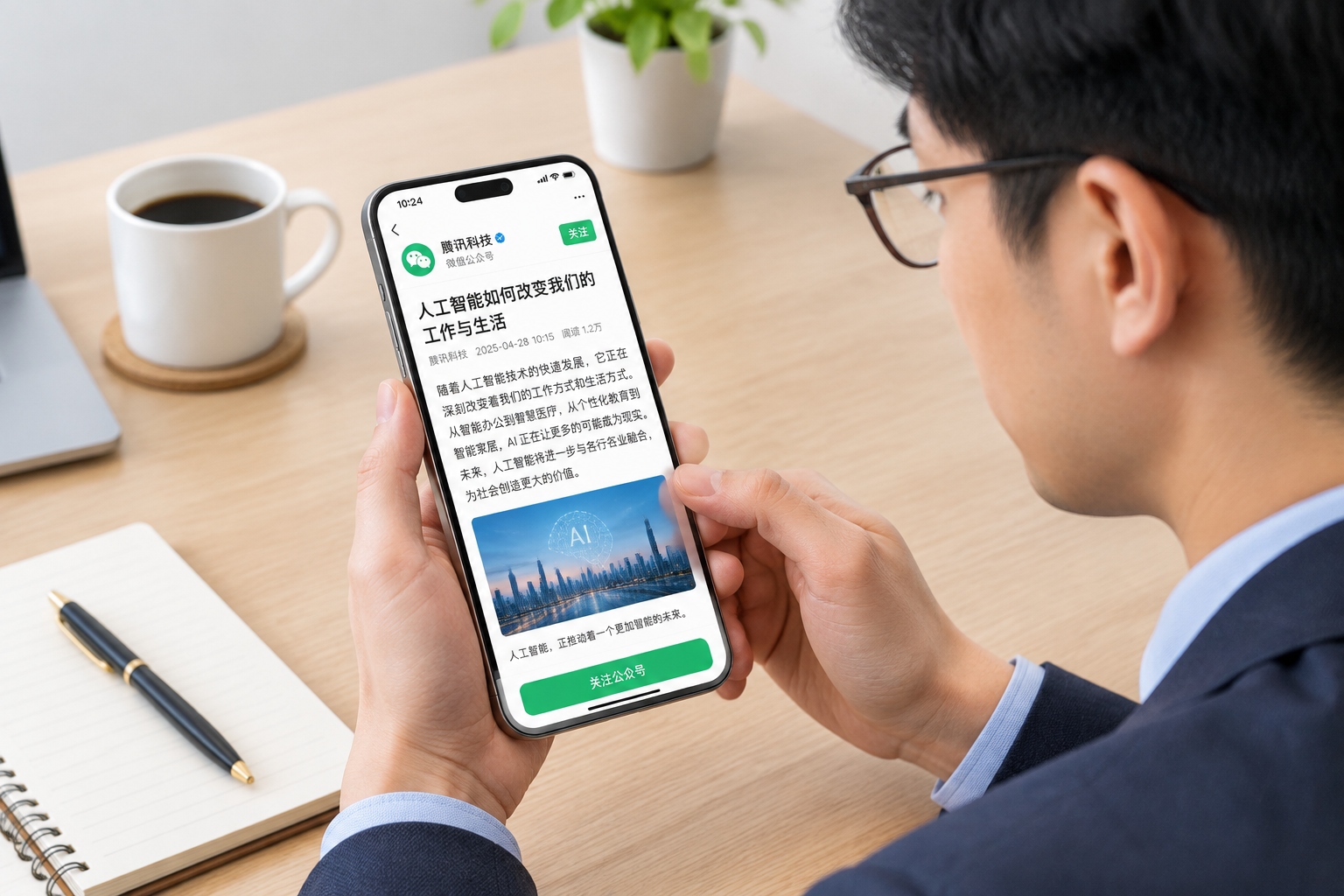
Reading a WeChat Official Account article on a smartphone at an office desk in China
A WeChat Official Account allows brands to send articles and promotions directly to people who chose to follow them.

Douyin: Attention That Converts Inside the Video

If WeChat is where you build trust, Douyin is where you create urgency. Douyin, the Chinese version of TikTok, has more than 700 million daily active users. Full-screen videos play endlessly, and people do not just watch: they can buy in the same app. This is Douyin’s key difference from TikTok.

In 2023, Douyin’s e-commerce sales continued to explode, forcing brands to set up official enterprise accounts (蓝V). With an account, you can post short clips, go live, and place shopping links directly in every video. The purchase journey is almost frictionless.

The most popular content follows the grass-planting idea: plant a desire in a fun way. A travel blogger pulls a lightweight umbrella out of a backpack just as a storm hits. A mom shows how a portable blender makes a smoothie in thirty seconds. Viewers laugh, save the video, or tap the little yellow shopping bag to buy immediately.

Not every product suits Douyin. Snacks, cosmetics, gadgets, clothes and low-to-mid price items work well. Big decisions like furniture or financial products need more trust, often built through live-streaming sessions where hosts answer questions in real time and offer limited discounts. Some top hosts generate millions of dollars in a single evening.

For a new foreign brand, the first experiment should be small. Search for competitors and read the comments below their videos. Then publish a handful of short test videos. Let the algorithm react. If a video passes 10,000 organic views, study why. Douyin rewards videos that keep people inside the app, so aim to be entertaining, useful, or surprising.
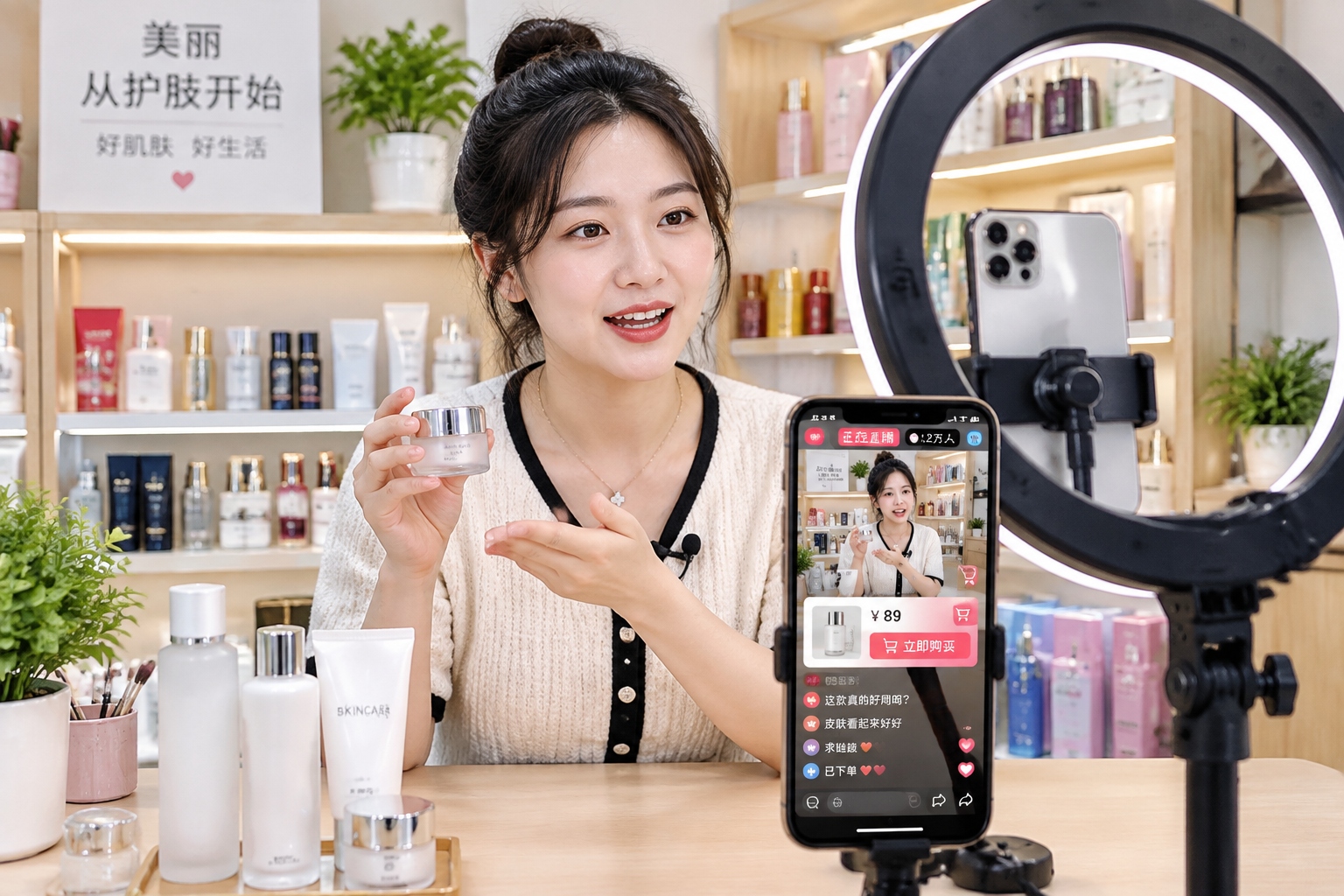
Chinese shop owner livestreaming beauty products on Douyin from her local store
Douyin goes beyond fun clips: brands use live streams and shopping links to sell while viewers watch.

Xiaohongshu: The Review and Discovery Engine

Many non-Chinese users compare Xiaohongshu, the Little Red Book, to a mix of Instagram, Pinterest and TripAdvisor. It is a space where users share real experiences through photos, short clips, and written notes. Before buying almost anything, young Chinese consumers search Xiaohongshu first. They want to know which product really works and which one is another overhyped internet failure.

Marketing on Xiaohongshu is more subtle. The platform is famous for its grass-planting model, but the best grass is not an ad. It looks like a genuine review from a credible person. Suppose you sell skin-care products. Instead of one glamorous launch film, you might invite fifty micro-bloggers to sample the cream and show their routines over two weeks. They post about how it feels, what it does, and why they use it in the evening. Those posts are saved by users and pulled up later, when they need to buy. Unlike ads, a good Xiaohongshu note can keep attracting views for years.

What sells well there? Cosmetics, fashion, home decor, mother-and-baby items, fitness and travel experiences. Products that require research before purchase are perfect. The tone resembles peer advice. And many local shoppers take this tool so seriously that they search across hundreds of notes before buying.

To do it, combine a few big key opinion leaders (KOLs) with many ordinary consumers. Micro-users with two thousand followers often generate higher trust than a mega star. But the platform has gotten strict about fake reviews, so your interest is in honest storytelling, not scripting every line. Check the comments — they will teach you more than any marketing manual.
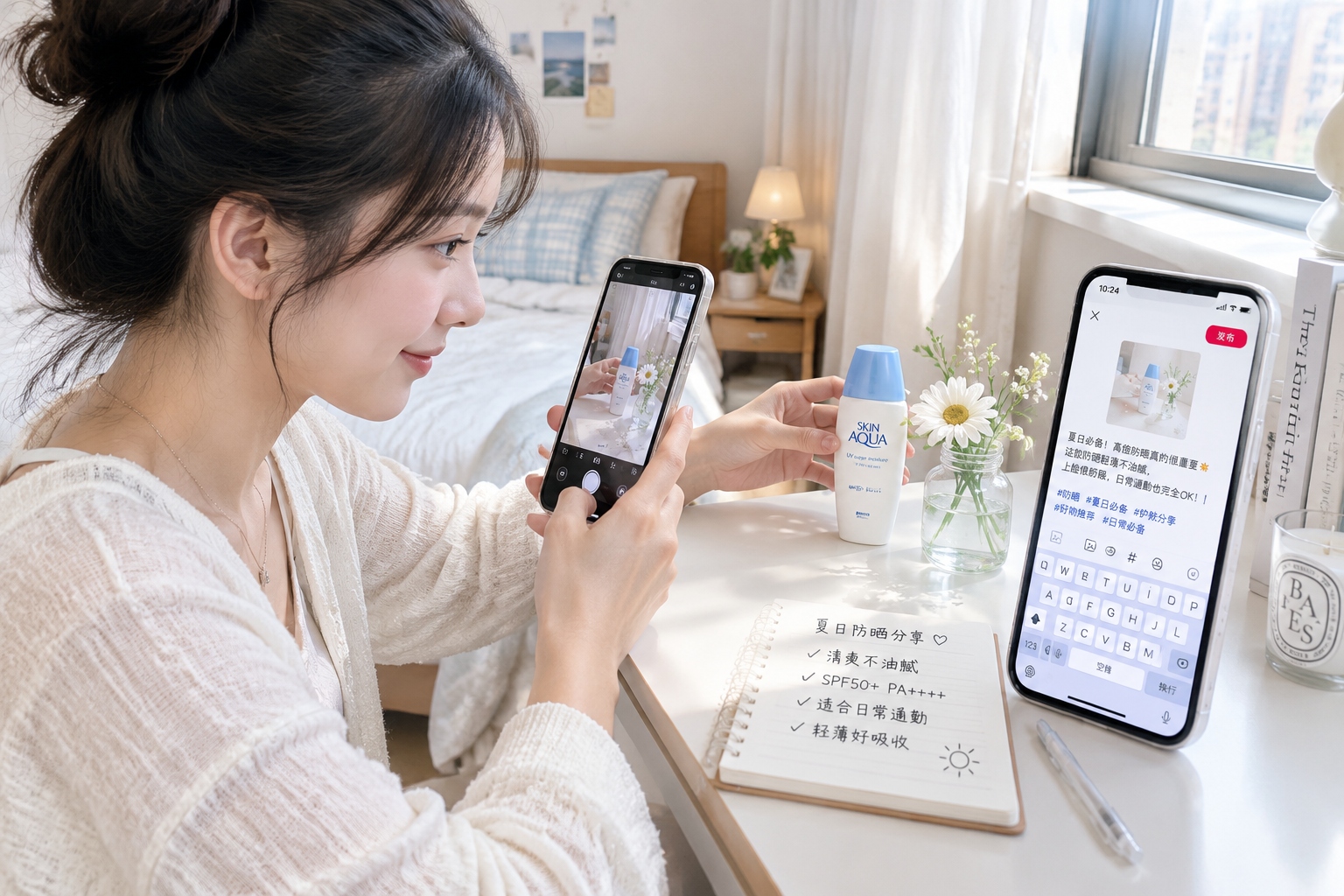
Woman photographing a skincare product for a Xiaohongshu review post in her bedroom
On Xiaohongshu, product notes look like advice from a friend, but they have a long life in search results.

Bilibili: Building Deep Brand Loyalty with Young Chinese

Bilibili, often called B站, started as a platform for anime and gaming fans. Today its content spans technology, education, lifestyle, music and social commentary. What makes it special? The culture. On-screen comments called danmaku fly across the video synchronously, creating a group-watching experience. Users are mostly between 18 and 30 years old, well educated, and unforgiving toward marketing tricks.

But brands that approach Bilibili thoughtfully can build a powerful fan community. Because videos are longer, typically 10 to 30 minutes, they allow for depth. A headphone company can post a technical teardown. A food brand can make a mini-documentary about soy sauce fermentation. A car maker can contribute to debates about safety engineering. The content is educational, fun, and non-salesy in its feel.

One ritual is the triple click (三连): users who like a video also share it and save it. Creators ask viewers to give a triple click to support, which boosts the video in Bilibili’s ranking. For a foreign company, having a video that receives thousands of triple clicks means you have earned respect from a skeptical audience.

Start by simply watching. Read the comments; they are often sharper than the video itself. Hire a local content team that speaks the community’s humour. Avoid polished PR speech. On B站, authenticity wins over production value.
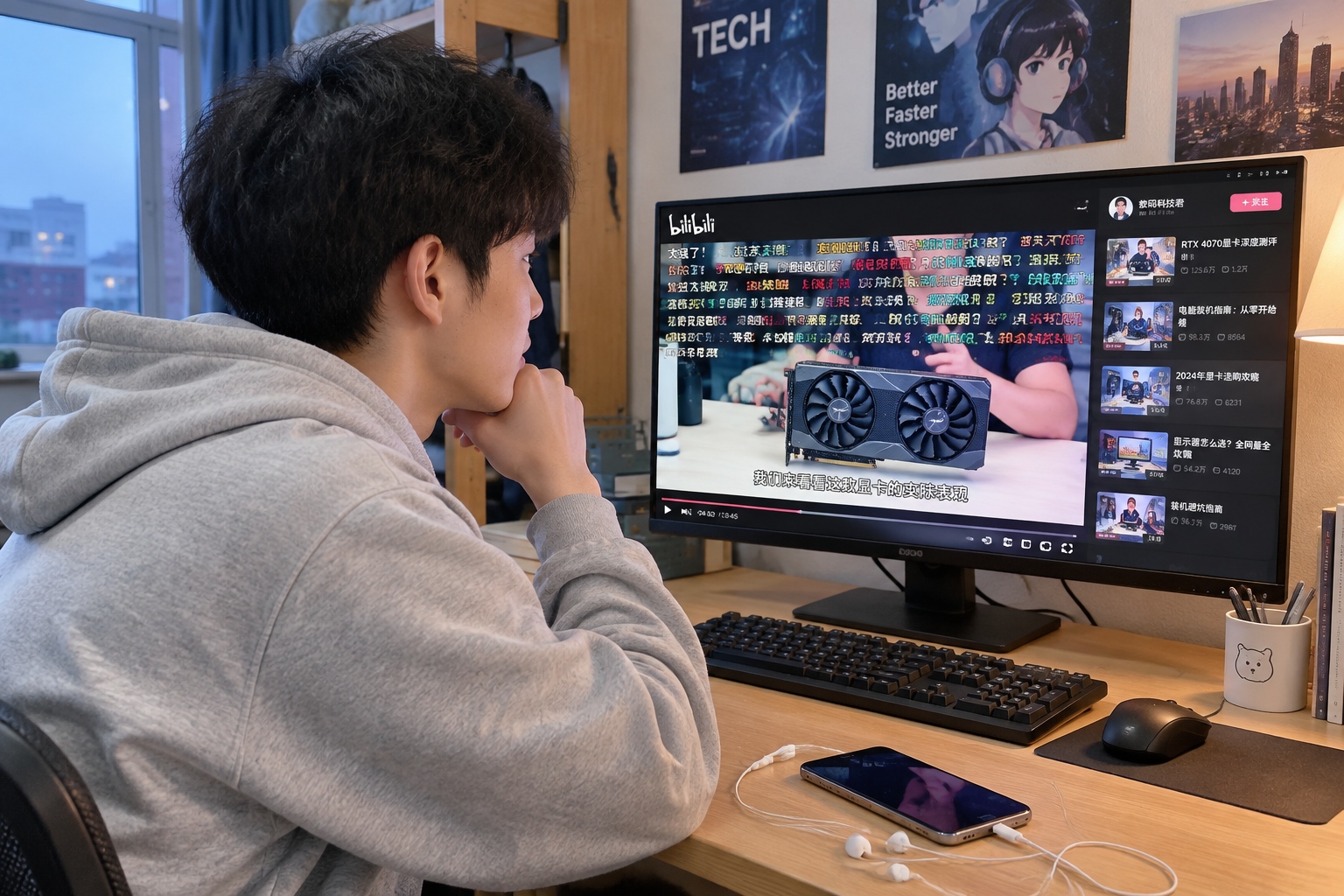
Young Chinese student watching Bilibili with bullet-style scrolling comments on a computer screen
Bilibili’s danmaku comments make viewers feel like they are watching together with thousands of other people.

Building a Multi-Platform Strategy

Every platform has its job. In our experience:

  • WeChat Official Account is the asset you own — a CRM and content home base.
  • Douyin is the high-reach channel that triggers impulse sales.
  • Xiaohongshu is the place for pre-purchase research.
  • Bilibili is where you build the deep trust that leads to loyal brand advocates.

The platforms work together in a loop. A user sees an entertaining Douyin video and clicks your profile. There they find an account link to a WeChat mini-program, where they leave their phone number for a free sample. Then they open Xiaohongshu to check if the brand is reviewed. Meanwhile, a B站 documentary explains why your factory is environment-friendly, further lifting trust. This kind of ecosystem needs planning, not just posting the same content everywhere.

A realistic roadmap for a foreign brand:

  1. Spend two to four weeks observing each platform.
  2. Create an official account on WeChat, then register on Douyin and Xiaohongshu.
  3. Publish three months of content focused on value for your customer: tutorials, local insights, honest comparisons.
  4. Hire local agencies or freelancers to optimize the wording and visuals.
  5. Set aside a small media budget for tests on Douyin or Xiaohongshu, measure click-through and conversion.
  6. Once you find what works, increase investment and expand to Bilibili for deeper fan engagement.

Final Advice

Chinese social media rewards patience and humility. You are entering a system where people have very high expectations for genuine interactions. They have seen every kind of advertising trick, so spend time listening first. Talk to your local friends, colleagues, or retailers. Ask them: which account would you follow? What content would you save? Why would you trust a brand in this sector?

The ordinary scene from Chengdu we started with reveals something important: Chinese consumers are not harder to impress. They are simply smarter at comparing notes across platforms. Your job is to give them a truthful reason to remember you. When you do, the four platforms become a growth machine.

Join Chinacomes
Spread the love
Tags: Bilibili branding China social media guide Douyin marketing WeChat business WeChat Official Account Xiaohongshu marketing

What’s your reaction?

Love
0
Sad
0
Happy
0
Sleepy
0
Angry
0
Wink
0
Share on
Share on Facebook Share on X Share on Pinterest Share on Reddit Share on VKontakte Share on Telegram Share on Email
Previous Article Peach Blossom Festival in Nyingchi: Blooms Paint the Valley, and a Monba Girl's E-Commerce Dream Peach Blossom Festival in Nyingchi: Blooms Paint the Valley, and a Monba Girl’s E-Commerce Dream
Next Article Staying Connected in China: eSIM, VPN, and Internet Access for Foreign Visitors Staying Connected in China: eSIM, VPN, and Internet Access for Foreign Visitors

Start the discussion at forum.chinacomes.com

Leave a Review

Cancel reply

Your email address will not be published. Required fields are marked *

Please select a rating

Follow US:

Popular Posts

The Cold CEO Goes Global: Why Western Audiences Are Hooked on 'Billionaire Falls for Me'
The Cold CEO Goes Global: Why Western Audiences Are Hooked on ‘Billionaire Falls for Me’
Tesla's Shanghai Gigafactory in 11 Months: Inside the Hidden Infrastructure Behind 'China Speed'
Tesla’s Shanghai Gigafactory in 11 Months: Inside the Hidden Infrastructure Behind ‘China Speed’
2.5 Hours from Seoul to Busan, 8.5 Hours from Beijing to Guangzhou: How Koreans Relearn Distance in China
My Job at a German Factory in Taicang: A Chinese Engineer and a German Manager Debug the Same Line
German Bread, Chinese Classes, and Factory Shuttles: A Day in Taicang’s German Business Town
93 Times Bigger Than Korea: What the Numbers Actually Say About China's Size
93 Times Bigger Than Korea: What the Numbers Actually Say About China’s Size

You Might Also Enjoy

Understanding China's Export Control Law: Compliance for Foreign Companies
Playbook

Understanding China’s Export Control Law: Compliance for Foreign Companies

China's Export Control Law, effective since December 2020, regulates dual-use goods, military products, and nuclear technology. Foreign firms buying sensitive ...

Posted by By admin September 21, 2026
Repatriating Salary from China: Documentation, Reporting, and Compliance Tips
Playbook

Repatriating Salary from China: Documentation, Reporting, and Compliance Tips

A practical guide for expatriates in China who want to send salary home legally. Learn what documents you need, how ...

Posted by By admin September 21, 2026
China's Data Security Law: Data Classification and Compliance for Foreign Enterprises
Playbook

China’s Data Security Law: Data Classification and Compliance for Foreign Enterprises

China’s Data Security Law introduces a three-tier data classification system that applies to foreign-invested companies. Learn how to identify important ...

Posted by By admin September 21, 2026
Beijing Beyond the Forbidden City: A 7-Day Itinerary for Business Travelers
Playbook

Beijing Beyond the Forbidden City: A 7-Day Itinerary for Business Travelers

You can finish a business trip to Beijing in boardrooms and chain hotels. Or you can use these seven days ...

Posted by By admin September 21, 2026

About Us

As a platform driven by curiosity and first-person experiences, our mission is to break down the information barriers and show you the authentic face of contemporary China.

We bypass the preaching and focus on the genuine voices of ordinary people, fascinating cultural contrasts, and the breathtaking speed of modern innovation.

Latest Posts

New Finds at Sanxingdui: How the Ancient Shu Sacrificial Pits Are Rewriting China's Bronze Age Map

New Finds at Sanxingdui: How the Ancient Shu Sacrificial Pits Are Rewriting China’s Bronze Age Map

September 21, 2026
In Kashgar's Old City, a Uyghur Craftsman Hammers a Copper Pot into a Thousand Years of Echoes

In Kashgar’s Old City, a Uyghur Craftsman Hammers a Copper Pot into a Thousand Years of Echoes

September 21, 2026
The Sandstone Pillars of Zhangjiajie: How a Real-Life Pandora Changed a Small City

The Sandstone Pillars of Zhangjiajie: How a Real-Life Pandora Changed a Small City

September 21, 2026

Categories

China EV (1) Decode (277) Futures (194) Playbook (369) Pulse (284) Tastes (192) Uncategorized (1) Unseen (255) Voices (175)
  • About Us
  • Privacy Policy
  • Cookie Policy
  • Terms of Use
  • China Services
  • Contact Us
  • Forum
Chinacomes © Copyright 2022 -2026

Our website uses cookies to improve your experience. Learn more about: Cookie Policy

Accept