

Introduction
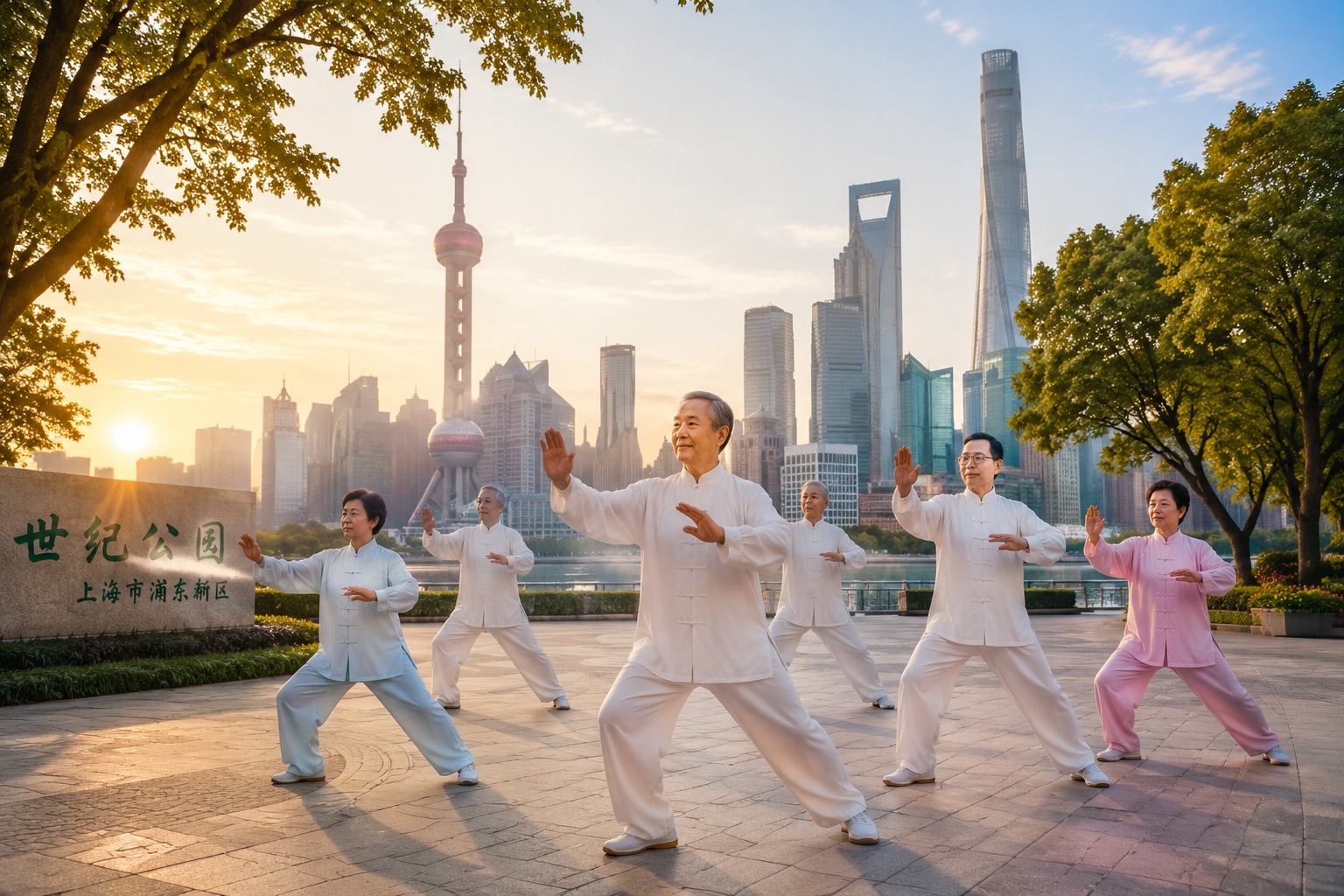
At 6:15 AM, the sun has barely cleared the high-rises surrounding Chaoyang Park in Beijing. On a patch of dirt near the lake, a group of about 20 people moves in slow motion, their arms tracing invisible circles. They are practicing Bagua Zhang, an internal martial art known for its circular footwork. The only sounds are the shuffling of feet and the occasional bird call. No one is shouting “Hi-yah!” – that’s the movies.
This is where real kung fu lives today. Not on cinema screens, but in the morning routines of China’s elderly population. And increasingly, in a completely different setting: afternoon and evening fight clubs packed with young office workers, students, and entrepreneurs looking for a physical outlet.
The Park: A Silent Discipline
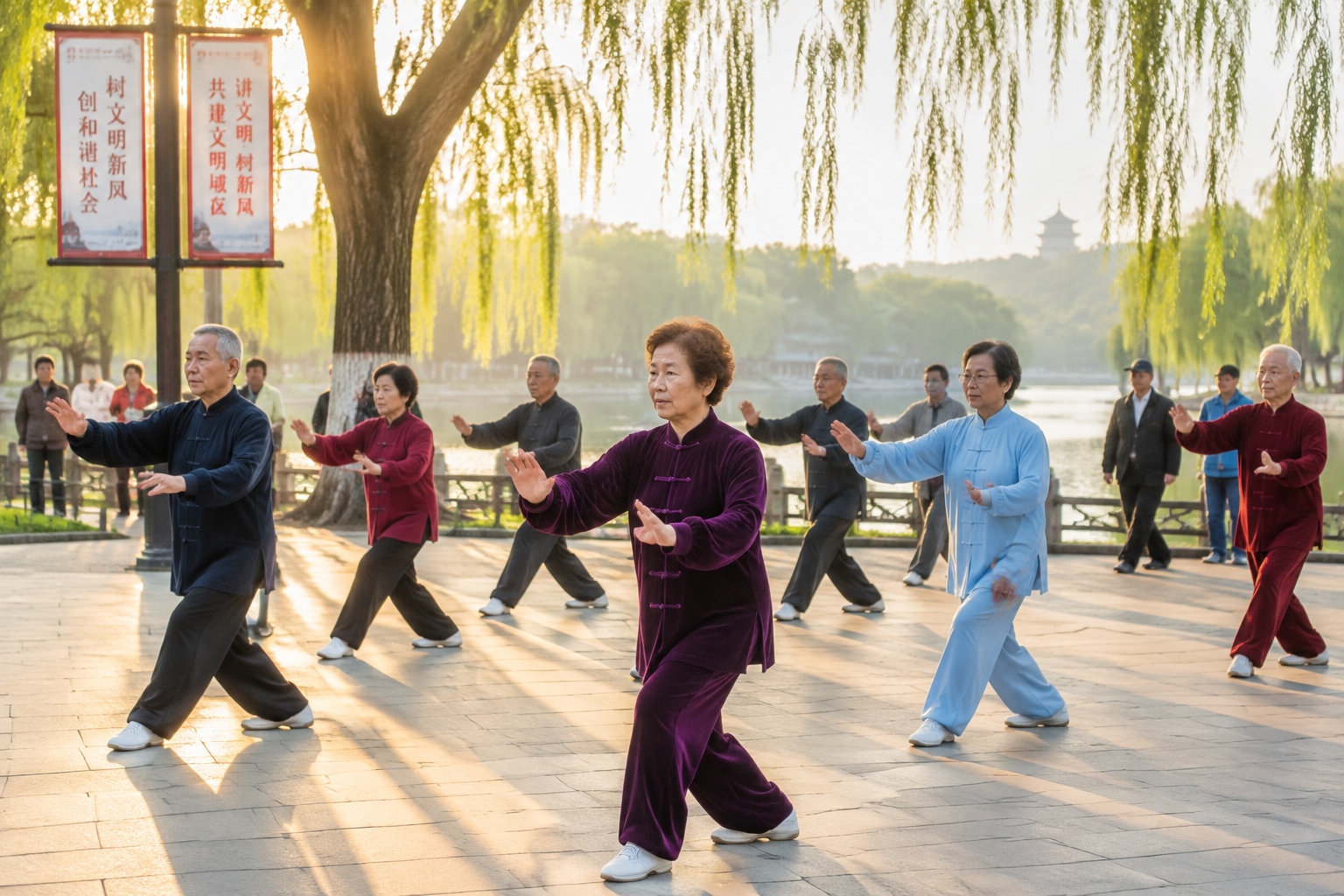
In almost every Chinese city, parks become martial arts dojos before breakfast. In Shanghai’s Fuxing Park, tai chi practitioners gather under plane trees. In Chengdu’s People’s Park, groups practice sword forms. In Guangzhou’s Yuexiu Park, you’ll find elderly men and women doing slow-motion punches that look more like dance than combat.
These practitioners are not training for a fight. Most are retired, in their 60s or 70s. They come for health, community, and a sense of continuity. “I started tai chi after my hip surgery,” says Li Weimin, 68, a regular at Chaoyang Park. “The doctor told me to move gently. My grandfather practiced this same form. It connects me to him.”
The movements are ancient – some styles trace back 400 years – but the motivation is thoroughly modern: living longer, staying active, and managing the chronic diseases of old age. Government data shows that over 40% of Chinese over 60 regularly practice some form of traditional fitness, including tai chi, qigong, or bagua. That’s roughly 120 million people.
The Fight Club: Punching for Release
If the park represents the slow, meditative side of kung fu, the youth fight clubs are the opposite. They are loud, fast, and often underground. In a converted warehouse in Shenzhen, a group of 20-somethings gathers three nights a week for what they call “mma julebu” – mixed martial arts club.
Wang Jing, 26, a software engineer, started coming six months ago. “My job is sitting in front of a computer all day,” he says, wrapping hand tapes. “This is the only time I feel completely alive.” The session begins with shadow boxing, then partner drills, then sparring. By the end, everyone is drenched in sweat, some with light bruises. No one wears a gi; they train in t-shirts and shorts.
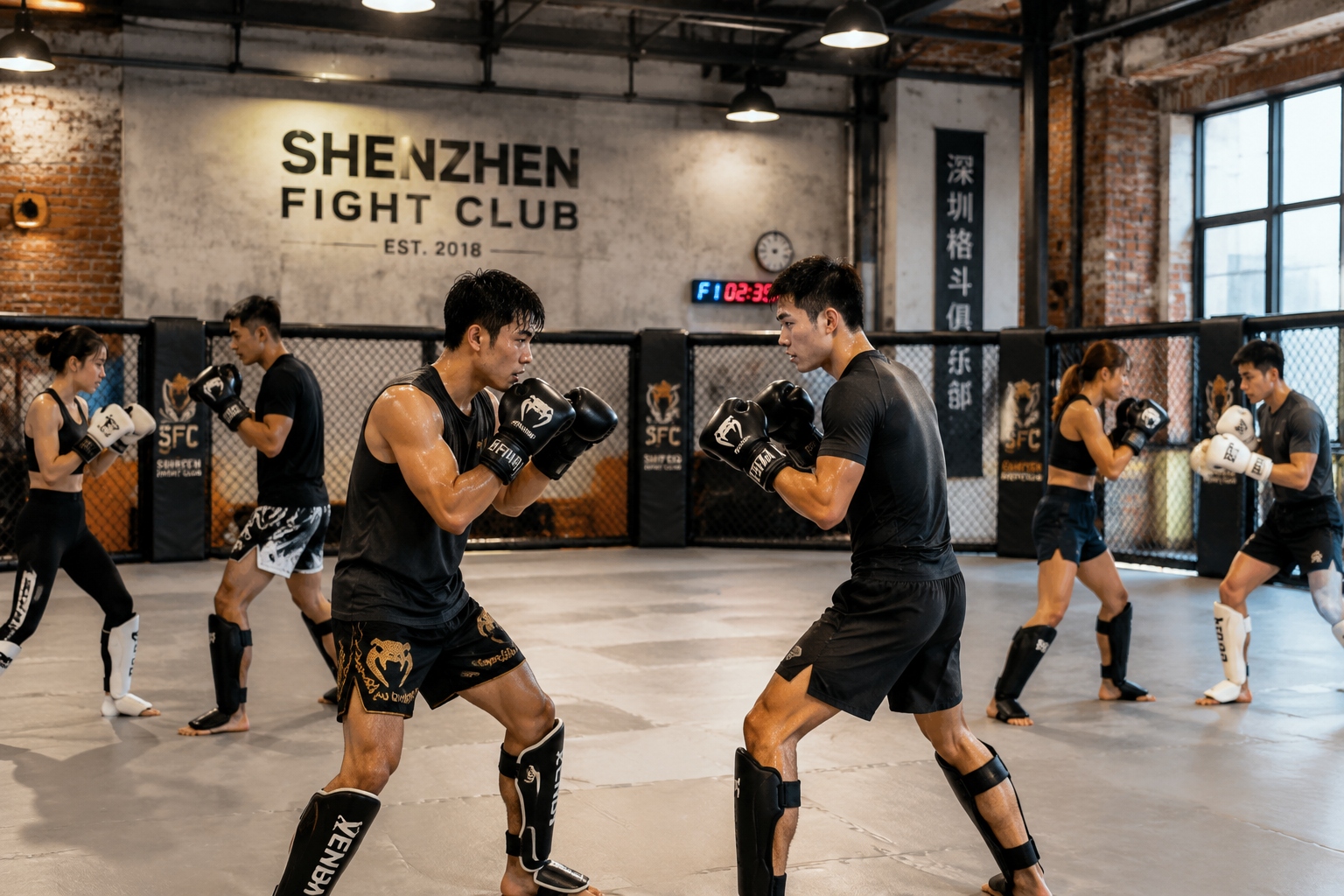
These clubs are semi-commercial: members pay a monthly fee of about 300-500 yuan ($40-70). Many are run by former professional fighters or kung fu practitioners who have adapted traditional techniques for modern fitness. “We teach them the basics – punches, kicks, takedowns – but more important is the discipline,” says Chen Hao, 32, the club’s founder. “They come here for stress relief, but they leave with confidence and respect for the art.”
The boom in fight clubs is part of a larger fitness trend in China. According to a 2023 report, the country’s combat sports market grew by 25% year-on-year. Boxing, Muay Thai, and MMA gyms have sprouted in cities, attracting young professionals who want something more intense than running on a treadmill.
Meanwhile, in Chengdu, a different kind of club is emerging – one that blends traditional kung fu forms with modern fitness. At the “Wing Chun Lab,” founder Zhang Wei, 40, teaches students the principles of centerline theory and chain punches, but with a focus on core strength and cardiovascular conditioning. “Young people don’t want to spend years learning forms without seeing practical results,” Zhang explains. “So I shortened the curriculum and added sparring from day one. They see progress every week.” His club has over 200 active members, mostly aged 22 to 35.
From Tradition to Modern Wellness
What unites the park practitioners and the fight club members is a search for wellbeing – physical, mental, and social. But the expression differs drastically. For the elderly, kung fu is a gentle maintenance of health and heritage. For the young, it’s a high-intensity release from the pressures of urban life: long hours, competition, and digital fatigue.
This shift mirrors broader changes in Chinese society. The country has moved from an agrarian civilization where martial arts were sometimes a matter of life and death, to a hyper-urbanized, service-oriented economy where kung fu has become a lifestyle choice. The traditional master-disciple relationship is giving way to paid memberships and drop-in classes. The emphasis has moved from combat effectiveness to physical fitness, mental health, and self-expression.
Still, the core values remain: discipline, respect, perseverance. “Many of my students don’t know the history of the moves,” says Chen Hao. “But they feel the difference after training. They stand taller. They focus better at work. That’s kung fu too.”
This dual existence – slow and fast, old and young – is precisely why kung fu endures. It adapts. In Shanghai, a startup called “Kung Fu+” offers online classes that teach tai chi for stress reduction, targeting tech workers. In Beijing, a luxury hotel now includes morning tai chi sessions on its rooftop. Kung fu is becoming a wellness brand.
Conclusion: A Living Tradition
Kung fu is not dying. It is quietly hiding in plain sight. In parks, in warehouses, in community centers, and in high-rise gyms. It has adapted to the needs of each generation – from combat technique to health regimen to stress management.
For younger Chinese, reconnecting with kung fu is often a way to touch something authentic in a rapidly changing world. It’s a physical link to a past they didn’t experience, but whose values still resonate. As Li Weimin, the 68-year-old park practitioner, puts it: “It doesn’t matter if you do it slow or fast. What matters is that you keep moving.”
And so they do – at dawn under the trees, and at night under fluorescent lights.
Start the discussion at forum.chinacomes.com