

Introduction: The Saturday Afternoon Ritual
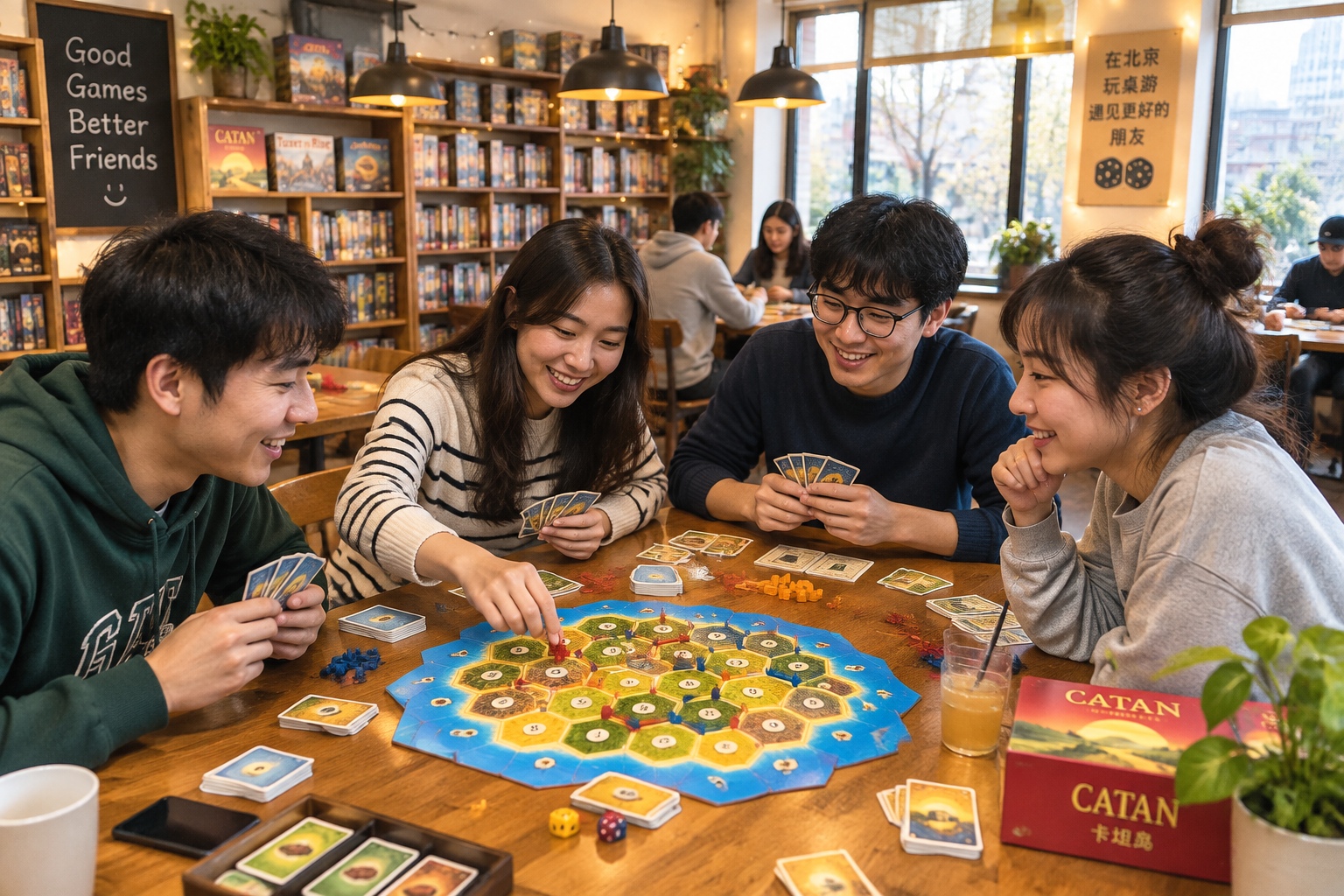
The light is warm—a mix of late afternoon sun filtering through sheer curtains and the soft glow of amber pendant lamps. A dozen small tables are scattered across the room, each occupied by clusters of young people leaning in, talking, laughing. The sound is a layered hum: dice rolling, cards shuffling, exaggerated accusations in a game of Werewolf, the occasional triumphant shout. This is a board game cafe in central Beijing, and it’s nearly full at 2 p.m. on a Saturday.
Among the crowd, 23-year-old graphic designer Liu Yiran sits with four friends around a board of Catan. She tells me they come here almost every other weekend. “We used to meet up and just stare at our phones,” she says, placing a settlement tile. “Here, you have to actually talk. You read faces, you bluff, you celebrate together. It feels… real.”
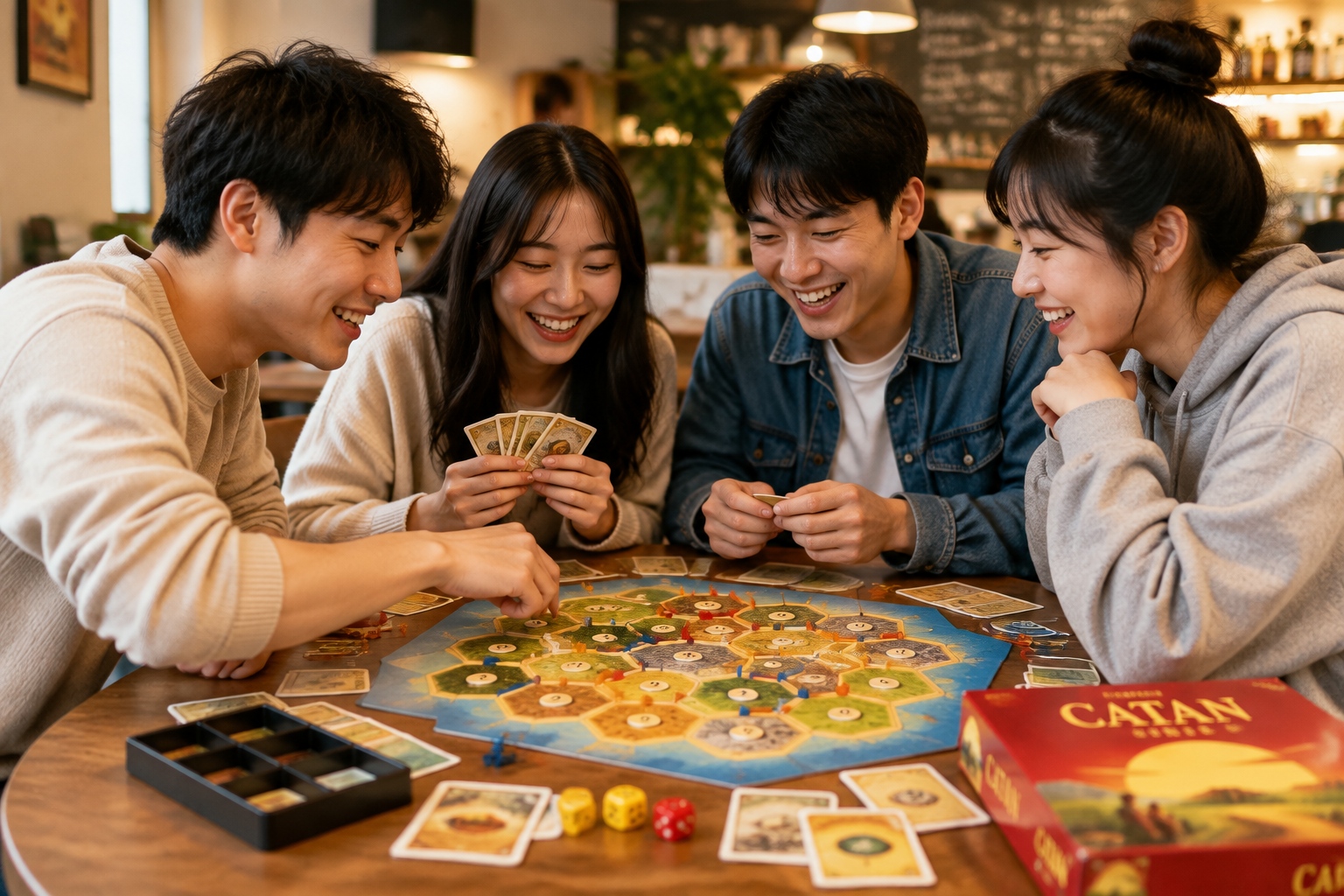
Liu’s sentiment echoes across China’s urban centers. As the country’s Gen Z—born after 1995—navigates an increasingly digital social landscape, a growing number are turning to analog experiences. Board game cafes, once a niche hobbyist hangout, have become mainstream weekend destinations. Industry estimates suggest there are over 30,000 such venues nationwide, with Beijing alone hosting more than 1,500. For many young Chinese, these cafes are not just places to play games; they are third spaces where friendship, romance, and community are built on shared laughter and friendly rivalry.
The Pull of Real Interaction in a Digital World
China’s Gen Z spends an average of 7.5 hours per day on their phones, according to a 2023 report by the China Internet Network Information Center. Social media, short videos, and mobile games dominate their free time. Yet a growing restlessness with digital saturation is palpable. “Online chat feels like work now,” says Chen Wei, a 25-year-old software engineer. “You have to respond instantly, or people get upset. In a board game cafe, you’re present. You can take your time, read the room, laugh at someone’s bad move. It’s lower pressure and higher reward.”
This longing for unmediated connection aligns with a broader cultural shift—from the hyper-efficient, screen-mediated socializing of the 2010s to a rediscovery of slow, embodied experiences. Board games, by their nature, demand patience, turn-taking, and verbal negotiation. They create a shared narrative that unfolds over an hour or two, a bounded time where participants commit to being together.
From Werewolf to Catan: Games as Social Glue
Walk into any board game cafe in China, and you’ll likely hear the phrase “天黑请闭眼” (Close your eyes, the night falls)—the canonical line from Werewolf (狼人杀), a social deduction game that has been a staple for years. With its emphasis on deception, argumentation, and reading body language, Werewolf is a natural icebreaker among strangers. “It’s perfect for first dates or group blind dates,” jokes Zhang Ziyi, a 27-year-old marketing manager who met her boyfriend at a cafe. “You learn a lot about someone from how they lie.”
Alongside Werewolf, Catan (卡坦岛) remains a perennial favorite for its balance of strategy and luck. Newer imports like Azul and Splendor appeal to those who prefer quieter competition. Most cafes maintain libraries of 200–500 games, with staff trained to recommend and teach. “When a new group comes in, I watch their vibe,” says cafe owner Li Ming, 31. “If they’re loud and rowdy, I give them Werewolf or Coup. If they’re more introverted, maybe Patchwork or Ticket to Ride. The game is just an excuse to connect.”
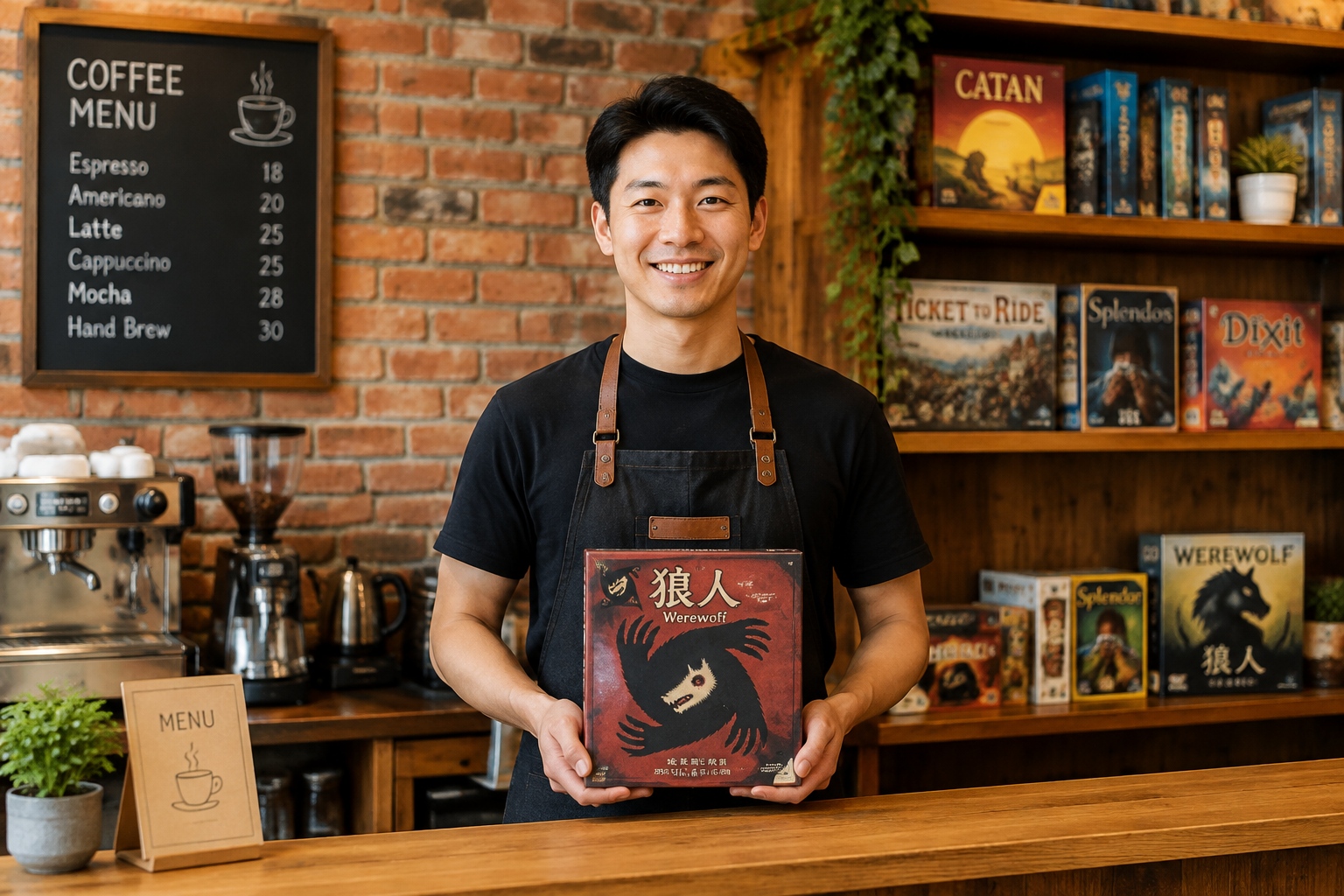
Li Ming opened his cafe, “The Dice Club,” three years ago after quitting a tech job. He wanted a space where people could slow down. “I noticed my friends and I would go out for dinner, then everyone would immediately pick up their phones. I thought, ‘What if I curate an environment where the phone is irrelevant?’ So I designed the space with good lighting, comfortable chairs, and a strict no-phone policy during games. It’s not about banning screens—it’s about making the alternative more appealing.”
The business model is straightforward: an entrance fee of around 60–80 RMB (about $8–$11) for unlimited play, plus food and drinks. Most customers stay for three to five hours. Weekend slots often require reservations a week in advance. Li Ming estimates his cafe sees 300–400 visitors on Saturdays, with a waitlist of another 100. “We’re profitable, but more importantly, we’re a community. Regulars know each other by name. Some have formed D&D groups here, others just come to read a book at the bar if they don’t find a game. It’s become a living room for the neighborhood.”
The Rise of the Third Place in Urban China
Sociologist Ray Oldenburg coined the term “third place” to describe informal public spaces—cafes, bars, parks—that host regular, voluntary, and inclusive social gatherings. In China’s rapidly urbanizing cities, where small apartments and long commutes discourage home entertaining, such third places have particular resonance. Board game cafes fill a gap between expensive commercial spaces (restaurants, shopping malls) and the often-isolating digital realm.
The trend is especially visible in cities like Shanghai, Chengdu, and Shenzhen, where new cafes open weekly. Many are aesthetically designed with Instagrammable interiors—exposed brick walls, neon signs, game-themed murals—but the core appeal remains the same: a low-cost, high-engagement social experience. “I don’t want to spend 300 RMB on a dinner just to catch up with friends,” says Liu Yiran. “Here, for 60 RMB, I get four hours of fun and real conversation. It’s a steal.”
Not all cafes thrive. Some fail due to poor game selection or a lack of atmosphere. But the ones that succeed tap into a deep need. “Our customers tell us that coming here feels like being in a college dormitory again,” says Li Ming. “They’re not just playing games; they’re reclaiming a part of their youth that’s lost in the grind of adulthood.”
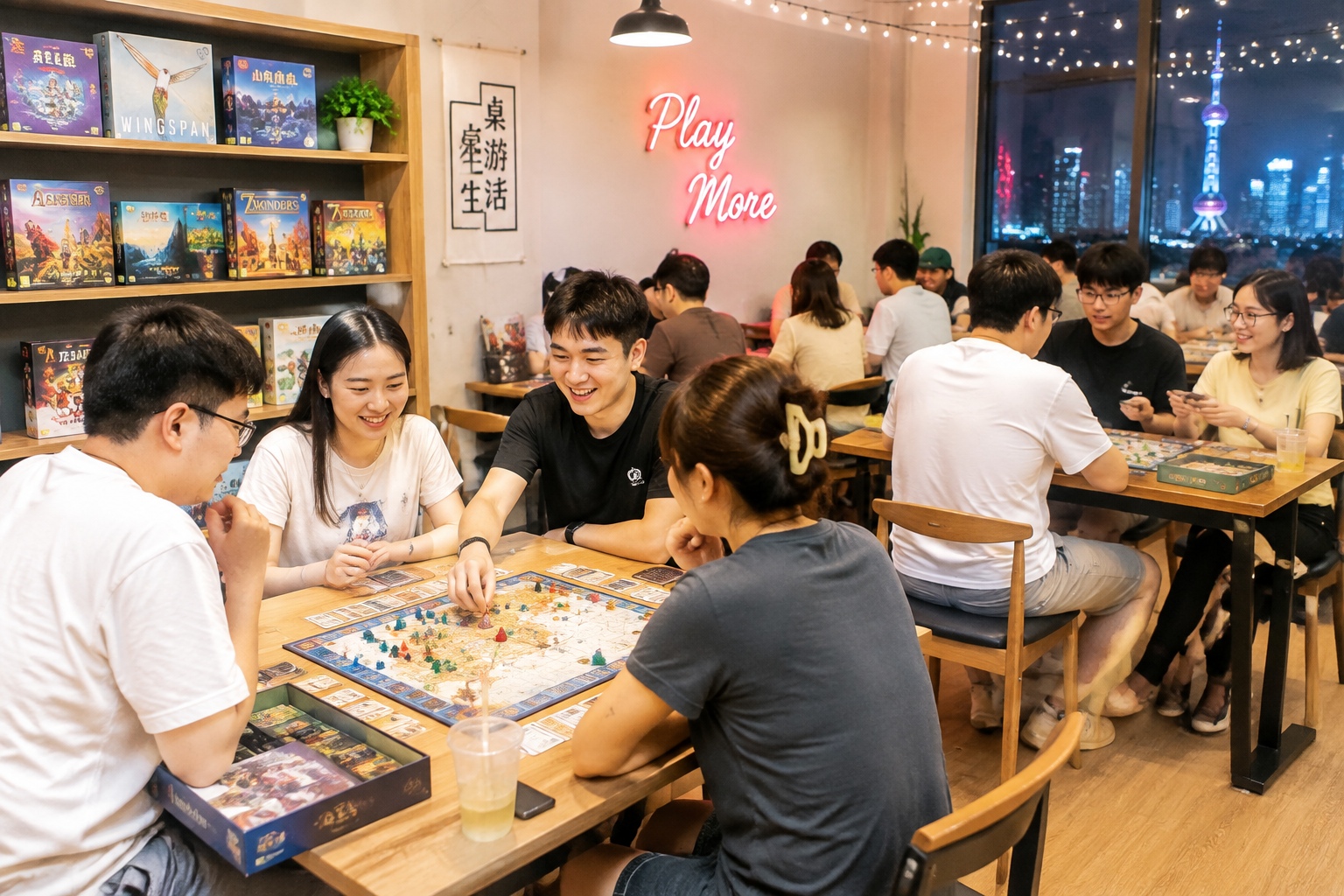
China’s board game cafe scene is still evolving. Some venues have started hosting themed nights—murder mystery parties, Dungeons & Dragons campaigns, even board game tournaments with cash prizes. Others integrate digital elements, like a cafe in Shenzhen that uses QR codes to track game rules and scores. But the fundamental equation remains: in a world of infinite digital distractions, a simple wooden board and a deck of cards can be the most powerful draw.
Conclusion: A Weekend Ritual Worth Keeping
As dusk falls, the cafe’s lights grow brighter. Liu Yiran’s group finishes their second game of Catan, groaning as one friend edges ahead with the longest road. They debate whether to start another round or grab dinner. “Let’s play one more,” she says, reaching for the dice. Outside, the street hums with traffic, but inside, time seems to slow down—one roll at a time.
For China’s Gen Z, board game cafes offer a sanctuary from the always-on digital life. They are places where laughter isn’t measured in likes, and where the most important screen is the one you look at across the table. In a city of millions, these small, candle-lit spaces foster the kind of intimacy that algorithms cannot replicate. And that, perhaps, is the real game worth playing.
Start the discussion at forum.chinacomes.com