

A 30-metre descent, a 599.1-metre climb
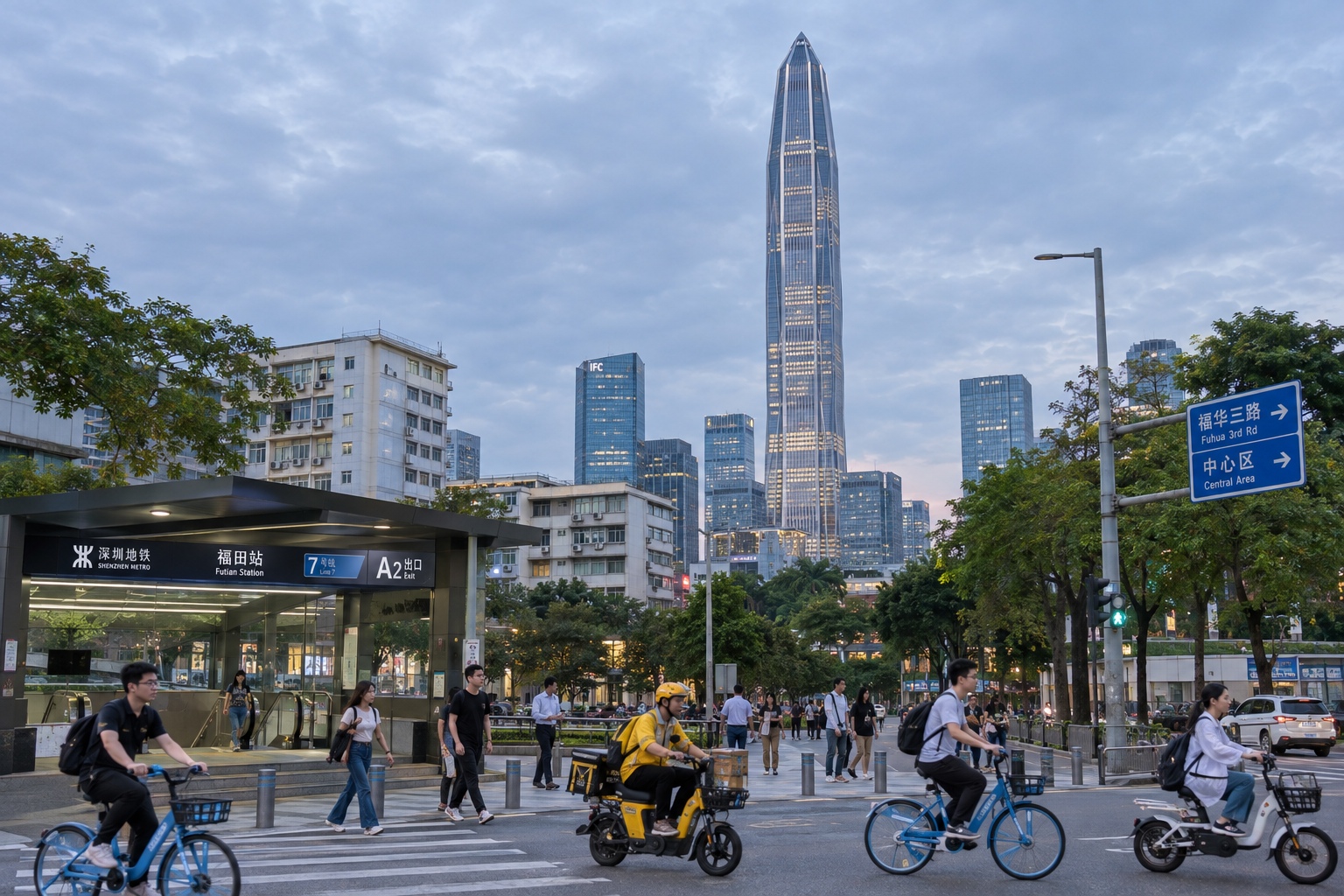
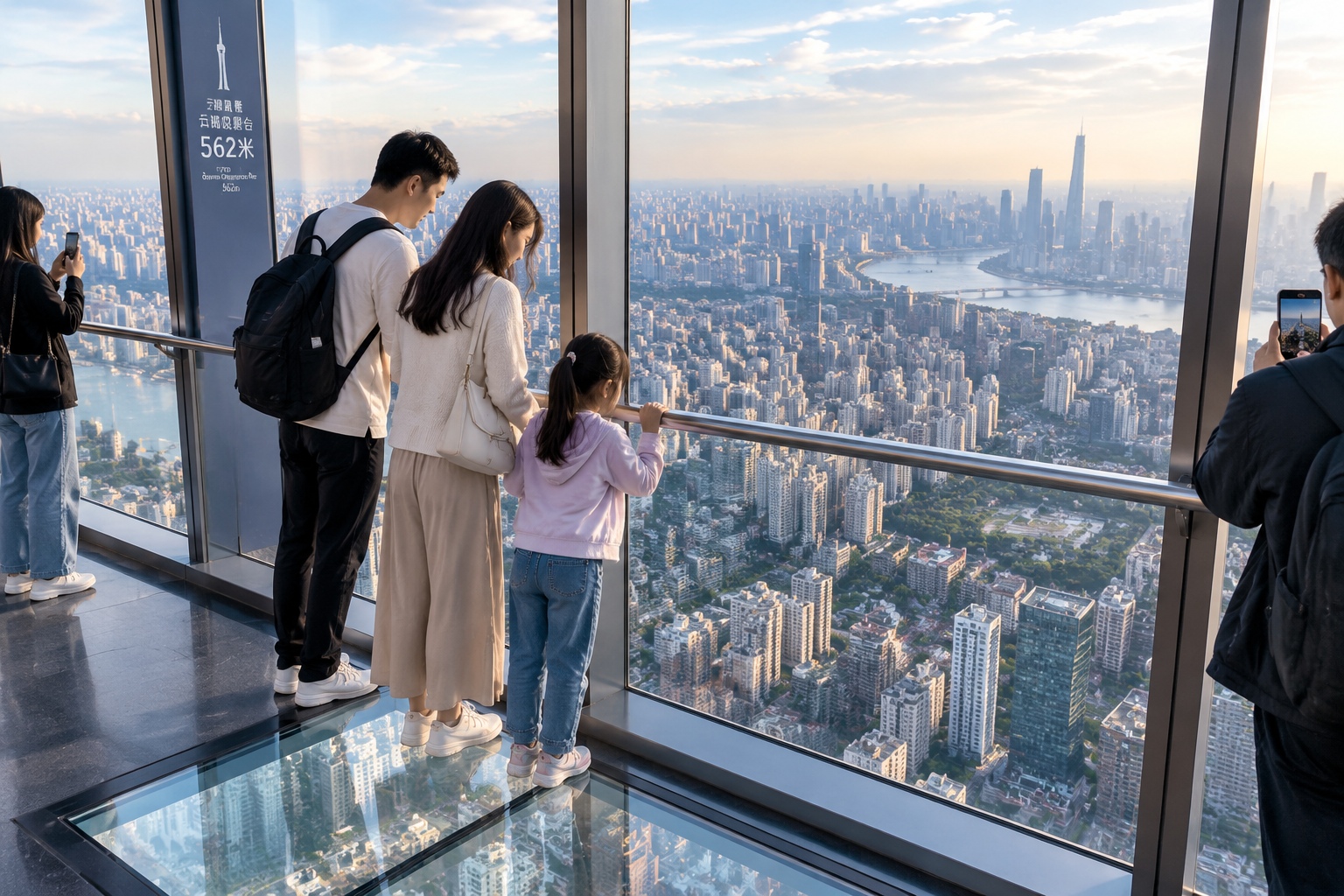
Step off a high-speed train at Futian station in central Shenzhen and you are roughly 30 metres underground, in a concourse of shops and ticket gates that happens to sit beneath one of the densest office districts in China. Walk a few minutes, take a lift, ride for under a minute, and you are 562 metres up on the 116th floor of the Ping An Finance Centre, looking south towards the Hong Kong border.
That short vertical hop is a fair summary of how Shenzhen works. The city puts its transport underground, its money in the sky, and treats altitude as an ordinary part of the working day rather than a spectacle.
What 599.1 metres actually means
The Ping An Finance Centre is 599.1 metres tall. As of 2023 it was the tallest building in Shenzhen, the second tallest in China after Shanghai Tower (632 metres), and among the five tallest in the world. Whether you call it fourth or fifth depends on the date and the rulebook: Kuala Lumpur’s Merdeka 118, at 678.9 metres, was completed in 2023 and pushed Ping An down a place on most lists. Height records have always had an expiry date, and any “tallest” claim is a snapshot rather than a fact.
The tower was commissioned by Ping An, one of the world’s largest insurers, designed by the American firm Kohn Pedersen Fox, started in 2009 and finished in 2017. The original plan was 660 metres including a spire. It was cut to 599.1. The reason given was airspace: flight paths into Shenzhen Bao’an International Airport cross the western part of the city, and a 660-metre tower was judged to be in the way. The building stops 0.9 metres short of 600, which makes the number look less like a design choice than a ceiling imposed from somewhere else.
Why a 45-year-old city needed a tower this size
For readers outside China, one background number matters here. In 1979, the place now called Shenzhen was a county town of about 30,000 people on the Hong Kong border. In 1980 it became the country’s first Special Economic Zone, an experiment in letting foreign investment and private business operate under rules that applied nowhere else. Today its registered population is around 17.8 million (2023), with estimates of 20 million or more actually living there at any moment. Its GDP passed Hong Kong’s in 2018 and reached roughly 3.68 trillion yuan, about US$510 billion, in 2024.
The city is also young in the literal sense: the average age is commonly put at around 32 or 33, the result of four decades of migrants arriving in their twenties for work in electronics, finance, logistics and, more recently, electric vehicles and batteries.
That growth created a land problem. Shenzhen’s administrative area is about 2,000 square kilometres, roughly a third of Shanghai’s, and mountains and reservoirs take a large bite out of what is left. Futian, where the tower stands, is a small, tightly packed grid sitting on several metro lines and an underground high-speed rail terminus. If you want to add hundreds of thousands of square metres of office space where the trains already run, the only direction available is up.
Inside the vertical city
The tower is less one building than a stack of them. The podium holds a shopping mall. Above it, the office floors are split into zones: you ride to a sky lobby, cross it, and take another lift to your floor. At the top, the Free Sky observation deck occupies the 116th floor, with a glass floor, a small exhibition about the city, and an adult ticket costing roughly 180 yuan, about US$25. Prices change, so check before you go.
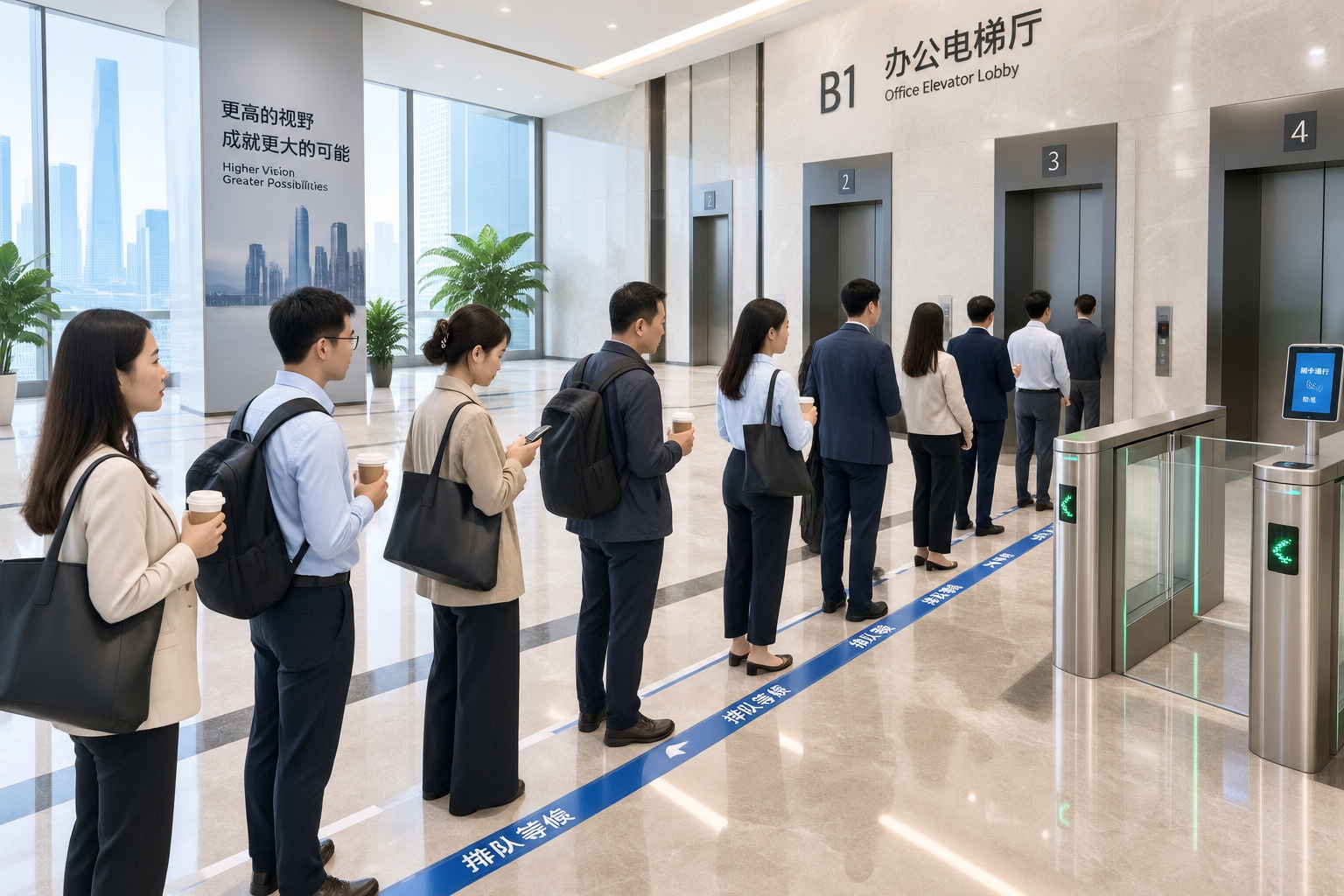
Between 8:40 and 9:15 on a weekday, the ground-floor lift lobby is the most honest portrait of the building: hundreds of people in office clothes, coffee in hand, standing inside lines taped to the floor. There is nothing dramatic about it. It is simply the daily cost of putting something like 15,000 desks in one place.
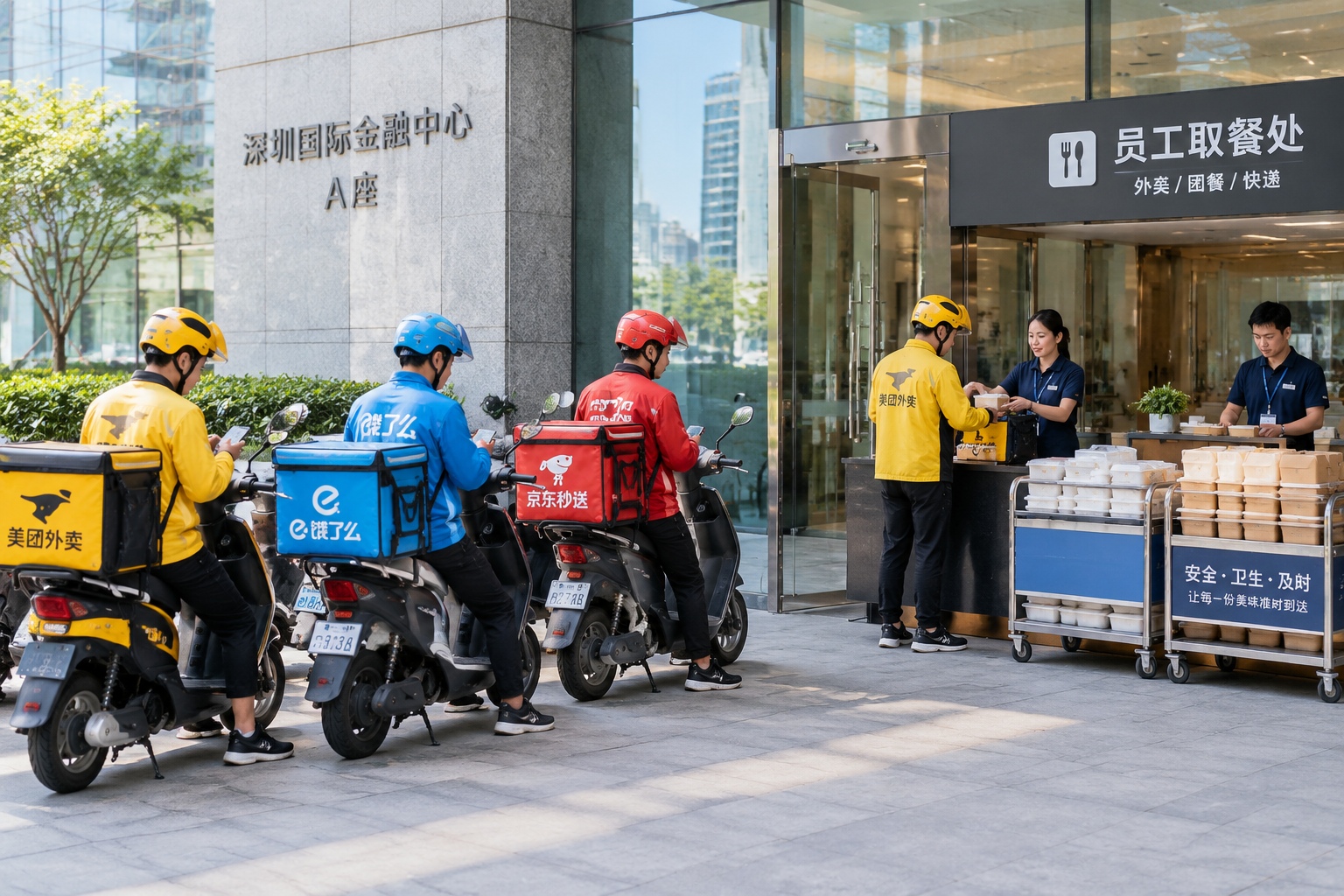
Lunchtime is equally revealing. China’s food-delivery platforms made ordering lunch to the office routine, and supertall towers adapted — courier lifts, pick-up counters, insulated bags stacked on trolleys. Walk past the back of the podium at 12:30 and you are watching lunch being run like a small airport.
Under the marble there is a harder reality. Shenzhen’s Grade A office market has been oversupplied for years; citywide vacancy has run above 20 per cent, higher than in Beijing or Shanghai, with rents falling. Ping An’s tower is anchored by its owner and stays busy, but across the road the picture is more mixed. A 599-metre building is a confident statement about the future; the market it stands in is a reminder that confidence and demand are not the same thing.
What you see from 562 metres
The view justifies the ticket. To the south, the green hills of Hong Kong’s New Territories and the Shenzhen Bay bridge. To the west, the towers of Nanshan, home to Tencent and a cluster of hardware and drone companies. Below and to the north, urban villages — grids of six- and seven-storey buildings standing an arm’s width apart — still pressed against the edges of the financial district, full of cheap noodle shops, phone repair stalls and rented rooms.
Shenzhen’s air has improved enough that the view is usually clear. Particulate pollution has fallen sharply since the 2010s, with annual average PM2.5 concentrations in the high teens to low twenties in recent years — clean by the standards of a Chinese megacity, and the reason the deck can sell a view rather than a haze.
On typhoon days the deck closes. In September 2018, when Typhoon Mangkhut crossed the Pearl River Delta, people working high in the tower filmed light fittings swinging. The building was designed for that — two heavy tuned mass dampers near the top counter the sway — but it is a reminder that height is not free.
Suzhou’s Gate of the Orient: the same ambition, different land
To see how much of a skyscraper is decided by its plot rather than its architect, put Ping An next to the Gate of the Orient in Suzhou, roughly 1,200 kilometres to the north-east.
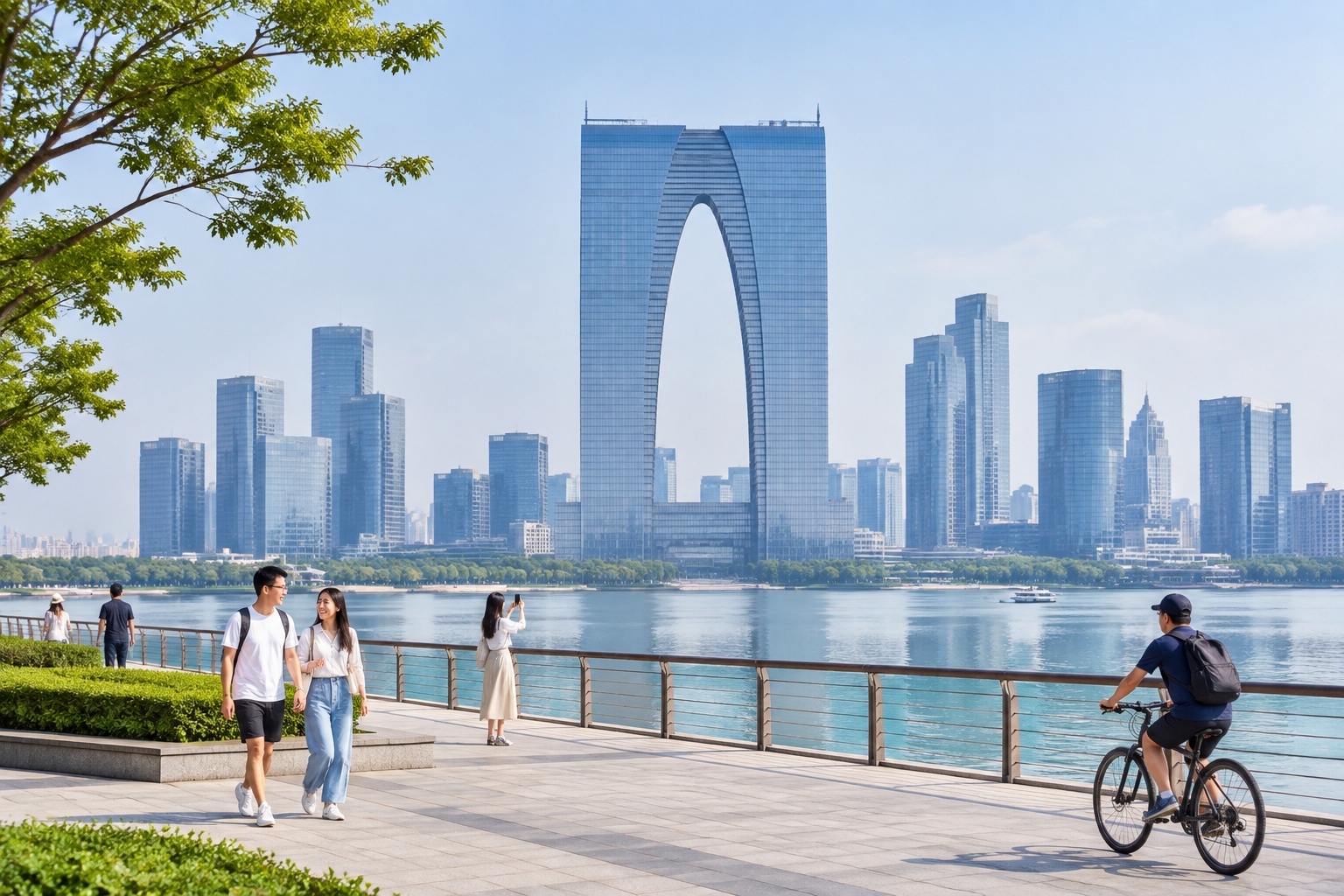
The Gate of the Orient is 301.8 metres and 68 storeys, completed in 2015 to a design by RMJM. Its shape is two legs joined at the top by an arch — literally a gate, framing the sky above Jinji Lake. Within weeks of the design being published, locals nicknamed it the trousers building, which is the sort of thing that happens to any tower trying to be a symbol.
The two buildings express two land arguments. From the 1990s, Suzhou built its new city on the flat farmland and lakeshore of the Suzhou Industrial Park, with a plan and room to spare, so its towers could afford to be sculptural — to make a view rather than consume a plot. Futian had no such room. Ping An sits on a transit interchange, and its job is to swallow commuters as much as to be looked at. Suzhou also carries a second identity: the gardens and canals of the old town, and a thousand-year-old pagoda on Tiger Hill. Its skyline is a conversation between two eras. Shenzhen has no old town to argue with. Its past is 45 years long, and most of it is still standing.
The bill for going up
Vertical cities carry costs that visitors rarely notice. The ground floor of Ping An is mostly lobby, driveway, security barriers and mall entrance; the plaza around it is pleasant but carefully managed. The messier street life of the district happens in the urban villages ten minutes away, not at the foot of the tower. That is the trade: a supertall creates a great deal of floor area and very little street.
It also internalises everything. People who work high up describe days when they never touch the pavement — canteen, gym, bank counter, dry cleaner, dentist, all indoors. Convenient, and slightly sealed off. Then there is time: lifts, sky lobbies, queues, and the fire drill that means walking down thirty floors to a refuge floor. For the people inside, the numbers that matter are not 599.1 or 562. They are the minutes between the 60th floor and a bowl of noodles.
A number that expires
Read everything above with a date attached. As of 2023, Ping An was Shenzhen’s tallest, China’s second tallest and among the world’s five tallest, and it has already slipped at least one place since. “Tallest” is itself contested: architectural height, roof height and highest occupied floor are three different measurements, and ranking bodies treat them differently. A comparison without a year is not much use.
Shenzhen, meanwhile, has largely stopped talking about height records. Its public arguments are now about metro extensions, affordable housing targets and what to do with the urban villages that give the city its texture. Partly that is a maturing economy being careful with money. Partly it is a shift in what a city thinks progress looks like.
At half past six on a weekday evening, the lift lobby empties and the plaza fills: commuters heading down into the metro, couriers waiting with insulated bags, a few office workers choosing the mall over home. Above them, 599.1 metres of glass and stone keeps working. The more interesting question is no longer how high it goes, but how well the system underneath it runs.
Start the discussion at forum.chinacomes.com