

The Trail at 11 p.m.
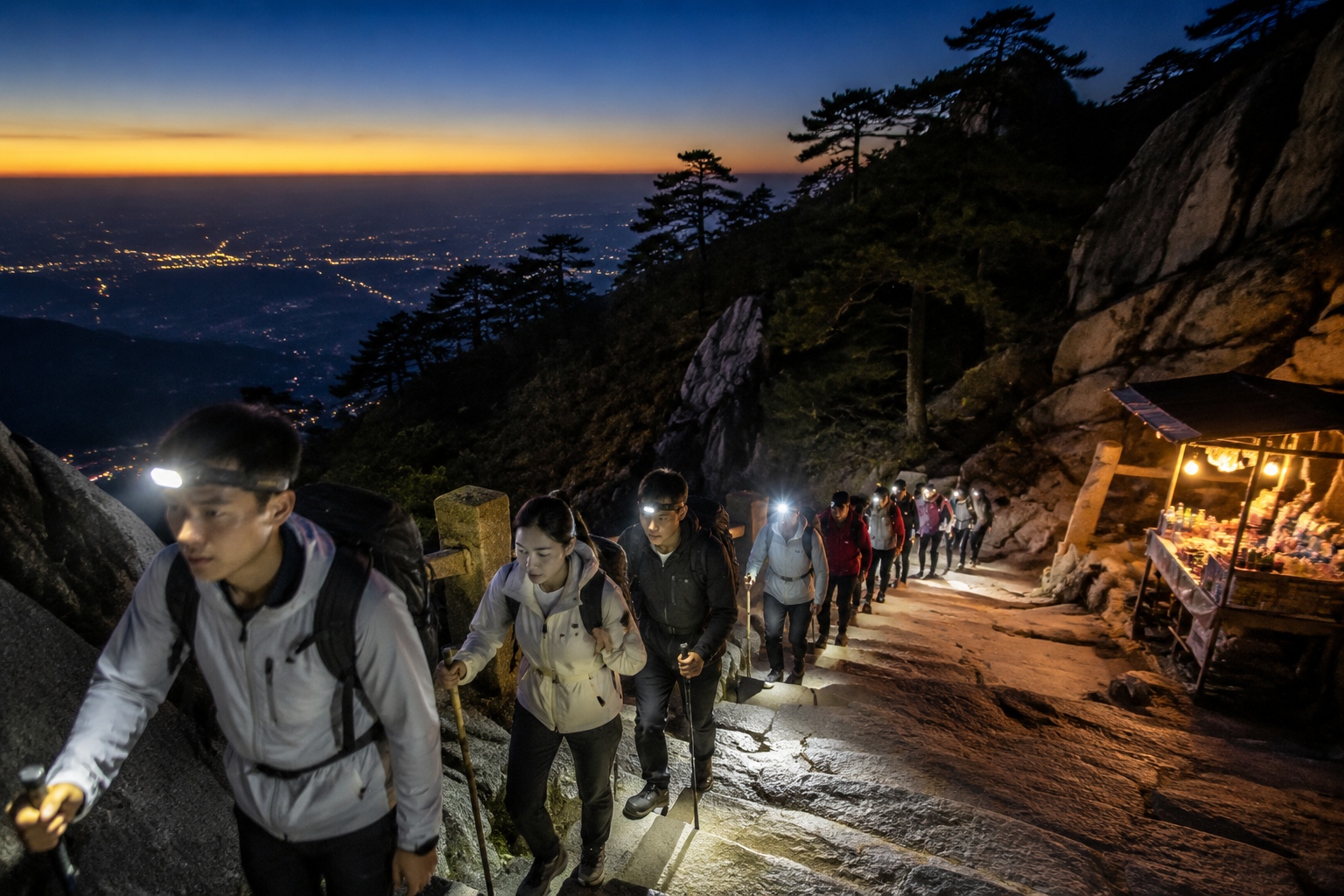
At the foot of Mount Tai in Tai’an, Shandong, the night doesn’t feel quiet. Lines of young people and a few gray-haired walkers stretch past the stone arch of Hongmen, each holding a flashlight or a phone. Vendors sell bamboo walking sticks for 5 yuan and offer to lend padded army-green coats for the climb. Someone ahead shouts, “Let’s go — before the summit gets crowded!”
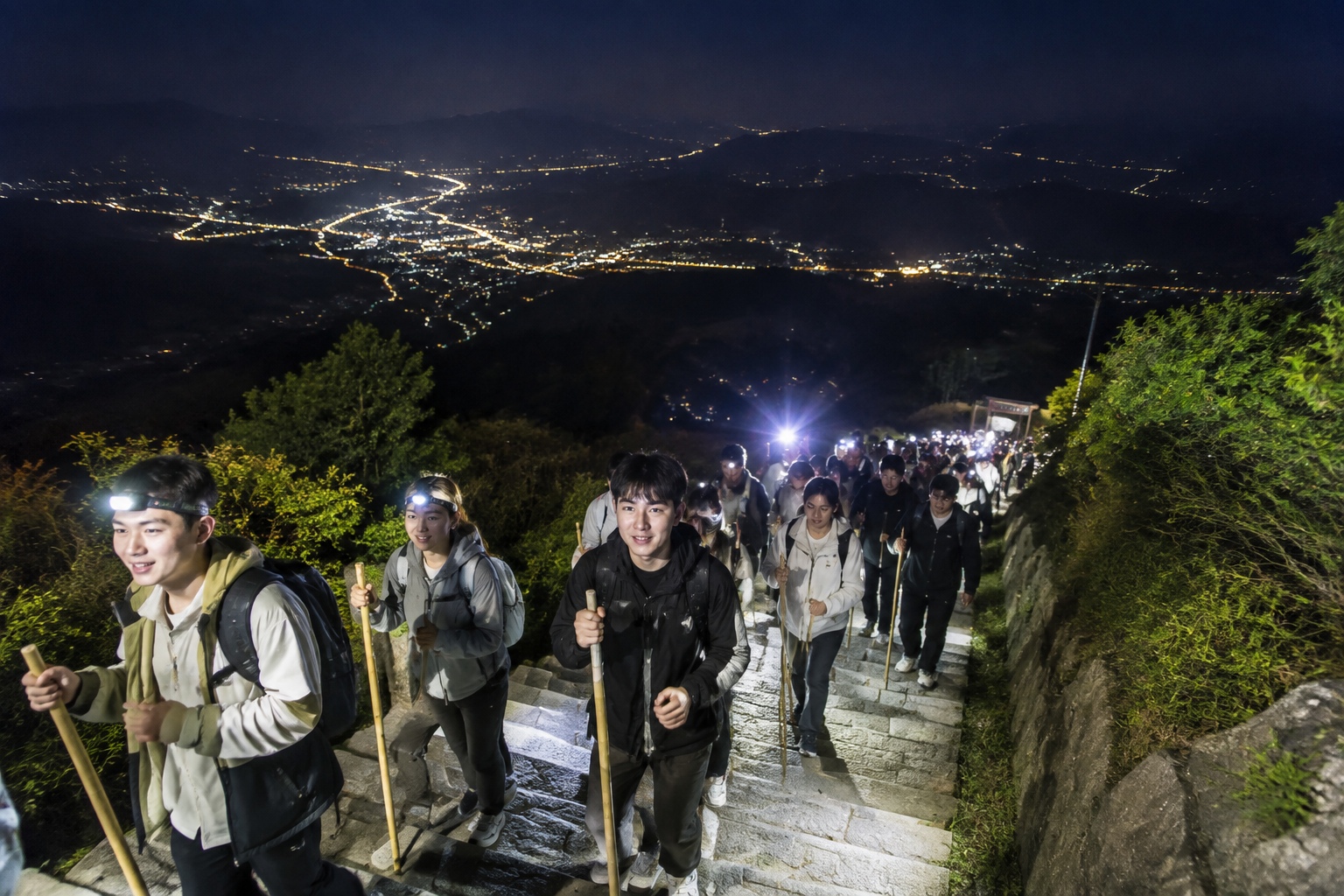
This is the usual scene for a Mount Tai night climb. Every week, thousands of hikers—most of them Chinese, from students in university groups to parents carrying sleeping children on their backs—leave the city street behind and begin a 4-to-6 hour walk up more than 6,000 stone steps. They are heading to the 1,545-meter peak for one reason: to watch the sun rise above the clouds.
Why Mount Tai? A mountain with a long memory
Mount Tai’s status in Chinese culture is hard to overstate. Known as the “Number One Mountain under Heaven”, it was where emperors once climbed to perform ceremonies to heaven and earth. Poets from Confucius onward wrote about its slopes. But the people on the path tonight are not here to repeat an ancient ritual. They’re here for something personal: a sunrise, a challenge, a night spent with friends.
For many young people, seeing the sunrise at the summit has become a kind of modern pilgrimage. Social media feeds fill with short videos of the glow hitting the peak. “I saw the exact same sunrise TikTok had been recommending to me all month,” a university student from Qingdao joked as she adjusted her backpack.
A river of lights on stone steps
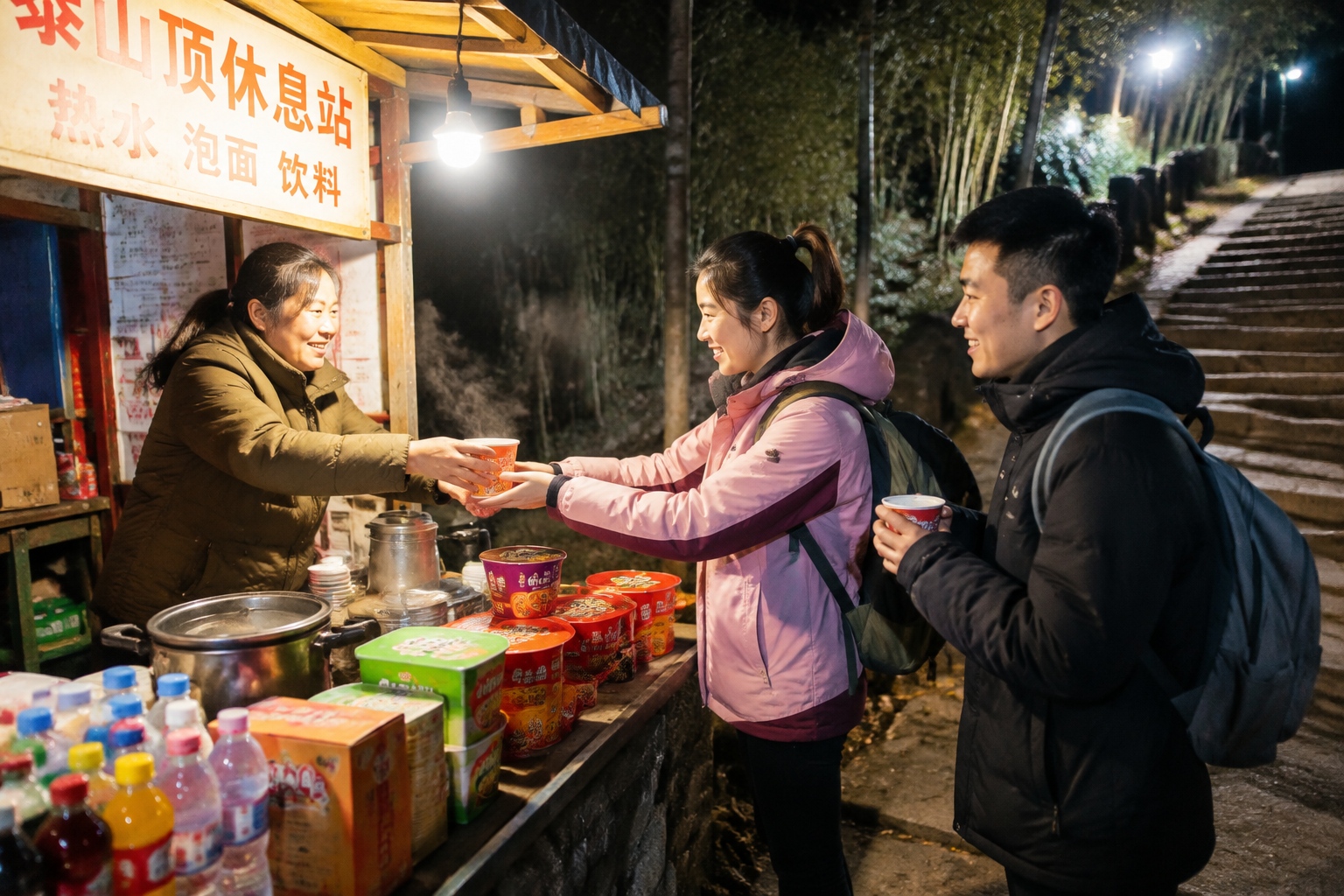
Wide at first, the path is lined with small shops selling hot tea, sausages and instant noodles. You pass cheerful stalls where shopkeepers call out prices and hikers stop to warm their hands. As you climb further, the trail narrows. The stone steps become steep and uneven, arranged by hand over centuries.
Night hiking changes how you experience the mountain. You can’t see the valley below, only the dark shapes of pines and the uneven earth under your feet. Your world is reduced to the light in front of you. The trail is a river of bobbing lights—white phone flashes, yellow headlamps, green laser pointers some hikers use to find their group.
Ming, 24, says this is her third time climbing Mount Tai. “The first time in college, I cried when I saw the sunrise. The second time I came with my parents. Now I’m showing a friend from the UK.” She laughs. “Each climb feels different because I’m different.”
Near the midpoint, at Zhongtianmen, a group of retired hikers drinks soy milk. One man, a retired teacher from Beijing, says he has climbed the mountain more than twenty times. “My father used to say, ‘If you climb Tai Shan, your worries become small.’ He meant the view, but also the effort. When you’re moving upward for hours, you have no choice but to let go of everything else.”
The moment the sun breaks
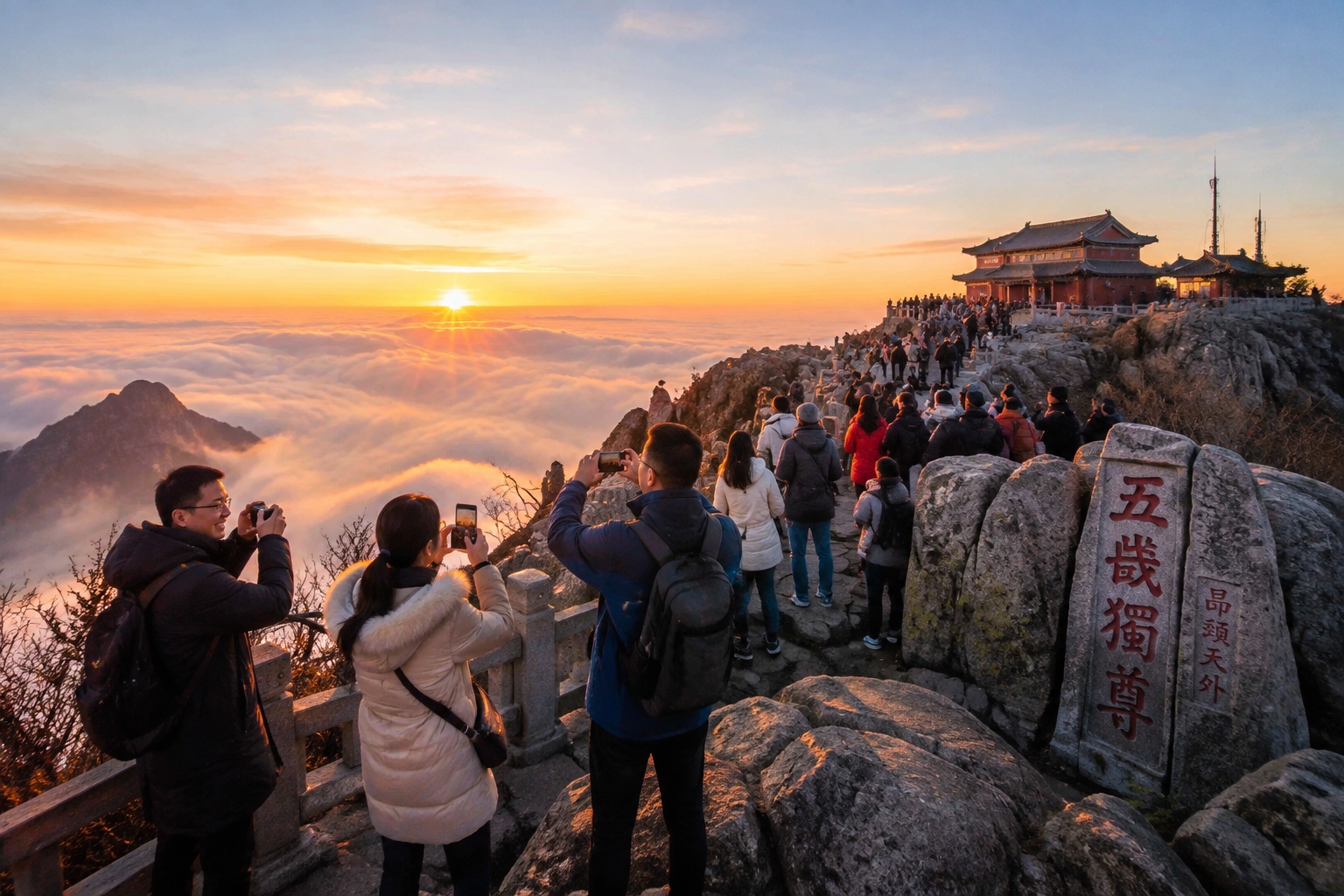
By 4 a.m., the air is thin and cold, even in summer. At the South Gate to Heaven (Nantianmen), the wind cuts through rented coats. Hikers spread out along the rocks, finding spots facing east. Someone sets up a small tripod; a couple opens a thermos of hot tea. Conversations grow quiet.
Then the first crack of light appears. It’s not dramatic at first—a thin orange line above a deep blue sea of clouds. But within minutes, the sky turns gold. As the sun climbs higher, a wave of phones rises with it. People stop talking. Some call home. A stranger next to me, a railway worker from Henan, looks at his phone and says, “Worth it.”
The view is not always perfect. Some mornings are cloudy and the sun appears only as a pale disc through the fog. Even so, the atmosphere at the summit is the same. People cheer, take group photos, and sit together as the light warms the grey stone.
Practical tips for climbing Mount Tai at night
If you’re thinking of doing it yourself, here’s what to know:
- Where to start: Hongmen (Red Gate) at the foot of the mountain in Tai’an. It’s the traditional route. You can take a high-speed train to Tai’an, then a short taxi ride to the gate.
- How long: Most hikers take 4 to 6 hours from Hongmen to the summit, depending on fitness and crowd.
- What to wear: A light base layer and a warm jacket. Temperatures at the top are often 10°C colder than at the base. Renting a padded coat at the bottom or at Nantianmen is cheap and practical.
- What to bring: Flashlight or headlamp, water, high-energy snacks, and a backup battery. A walking stick—sold at the gate for a few yuan—eases the knees on the descent.
- Safety: Stick to the main trail. There are rest stops and shops all along the route. If you need help, ask the staff at the ticket gates or at the cable car station near the top. Don’t climb in rain if you can avoid it, and be careful on the steep “Eighteen Bends” section.
The easiest way down is by cable car from the summit area to Zhongtianmen, then a bus to the base. If you’re fit, the walk down takes about 3 hours and gives you a completely different view of the mountain.
More than a sunrise
A night climb up Mount Tai is not a luxury tour. It’s a shared physical effort that feels a little like an all-night sleepover for adults. You arrive tired, cold, and above all, awake. And when the mountain finally lets you see why you came, the feeling is not just about the sun. It’s about being one of many ordinary people who decided to take the long, hard path to the top together.
Start the discussion at forum.chinacomes.com