
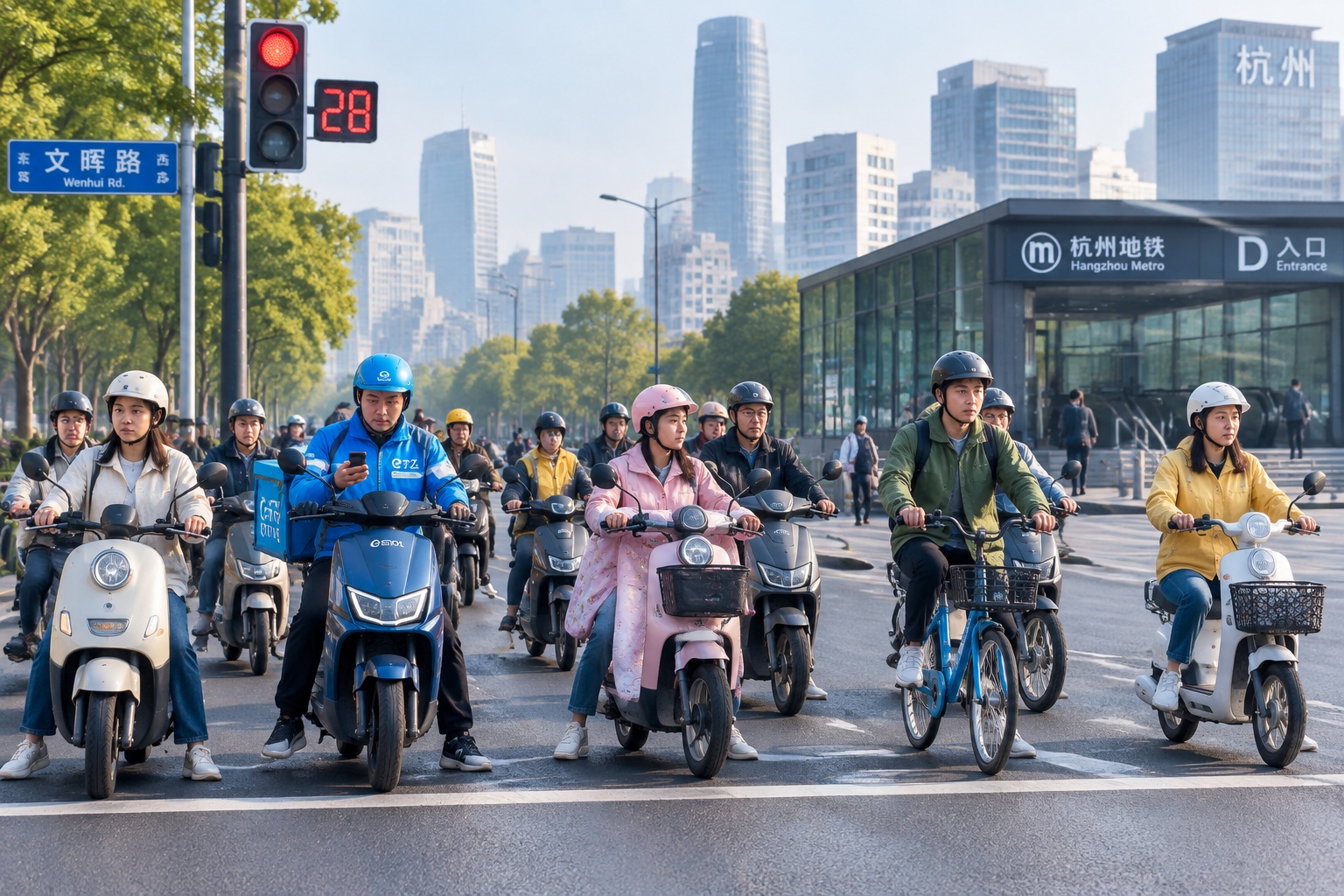

7:45 AM at a Hangzhou Intersection
The light turns green. A low hum rises, then swells into a mechanical roar. From the waiting area behind the white line, a hundred electric scooters surge forward like a school of fish. They fan out across the intersection—some turning left, most going straight, a few veering right. The air smells of morning dew and faint exhaust. A delivery rider in a blue jacket checks his phone while steering with one hand. A woman in a floral dress balances a crate of vegetables on her rear rack. A teenager with earphones weaves between them. For fifteen seconds, the intersection is a river of metal and plastic, and then it empties, leaving only the quiet tick of the traffic light counting down.
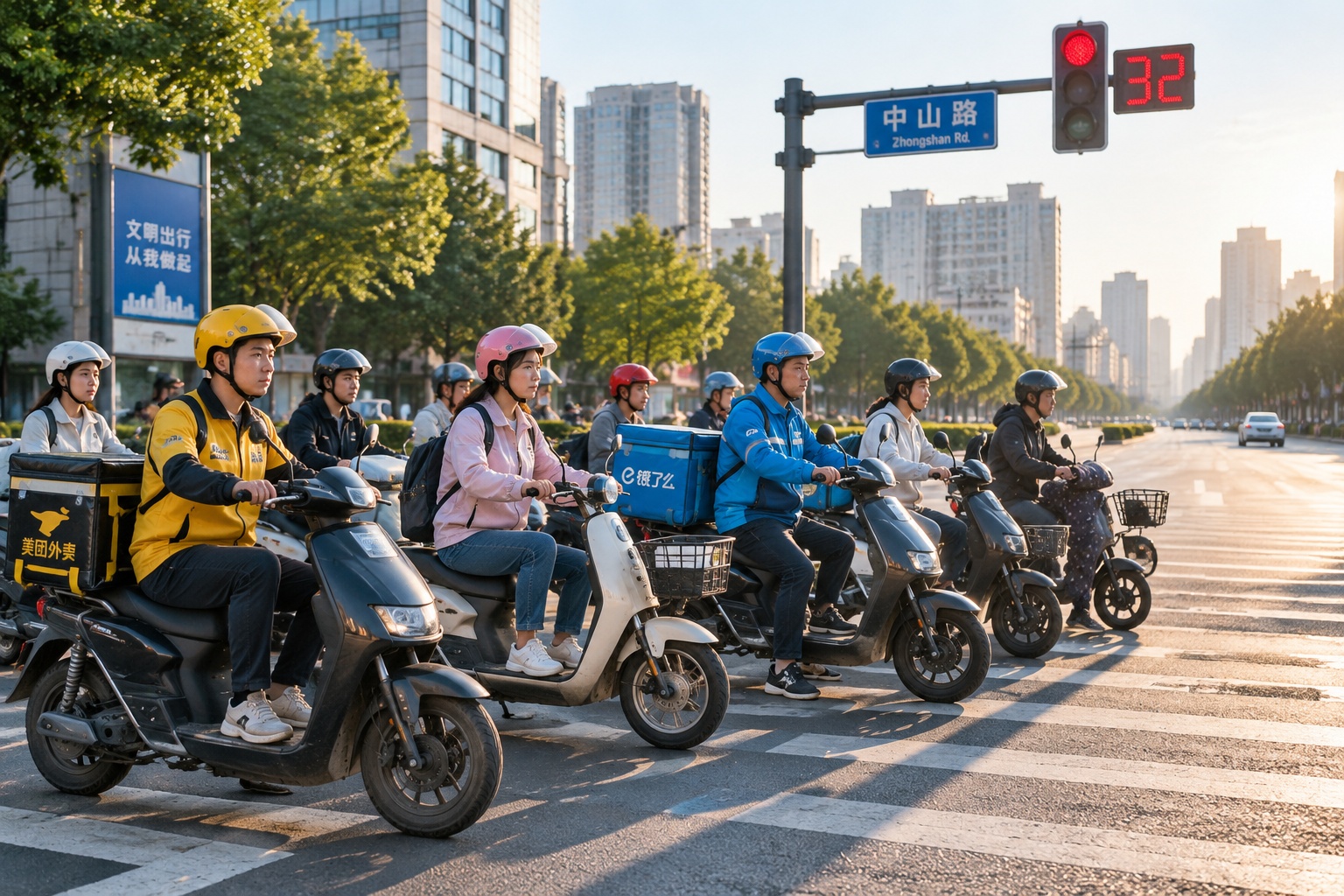
To an outsider, this might look like chaos. But watch for a few minutes, and patterns emerge. The riders don’t collide. They adjust speed, angle, and position with subtle nods, hand signals, and the occasional bell. It’s a dance that happens thousands of times a day in every Chinese city, and it works.
The Numbers Behind the Swarm
China has over 350 million electric bicycles, according to the Ministry of Industry and Information Technology. That’s more than the entire population of the United States. In Hangzhou, a city of 12 million, there are more than 3 million registered e-bikes. They are not a niche hobby; they are a primary mode of transport for commuting, shopping, and deliveries.
Why so many? The answer is practical. E-bikes are affordable—most cost between 1,500 and 3,000 yuan ($200–$400). They require no license plate in many cities, though regulations are tightening. They can navigate narrow alleys and bike lanes that cars cannot. And for the last mile—from subway station to home, from restaurant to customer—they are faster than walking and cheaper than taxis.
The Rules of the Road
Since 2019, China has enforced a national standard for electric bicycles. To be classified as a non-motorized vehicle, an e-bike must have functioning pedals, a top speed of 25 km/h, and a weight under 55 kg. Anything faster or heavier is considered an electric moped, requiring a license and registration. In cities like Hangzhou, helmets are mandatory for all riders. Traffic police regularly set up checkpoints, and fines for violations range from 20 to 50 yuan.
But regulations alone don’t create order. At major intersections, you’ll find dedicated non-motorized vehicle lanes, often separated from car lanes by physical barriers or painted lines. There are also waiting areas—sometimes shaded—where riders can stop before the intersection. In Hangzhou, some intersections have a “left-turn waiting zone” that allows e-bikes to make a two-stage left turn, similar to pedestrian crossings. Some cities are experimenting with ‘electronic fences’ that use GPS to limit e-bike speeds in certain areas, or to prevent them from entering pedestrian zones.
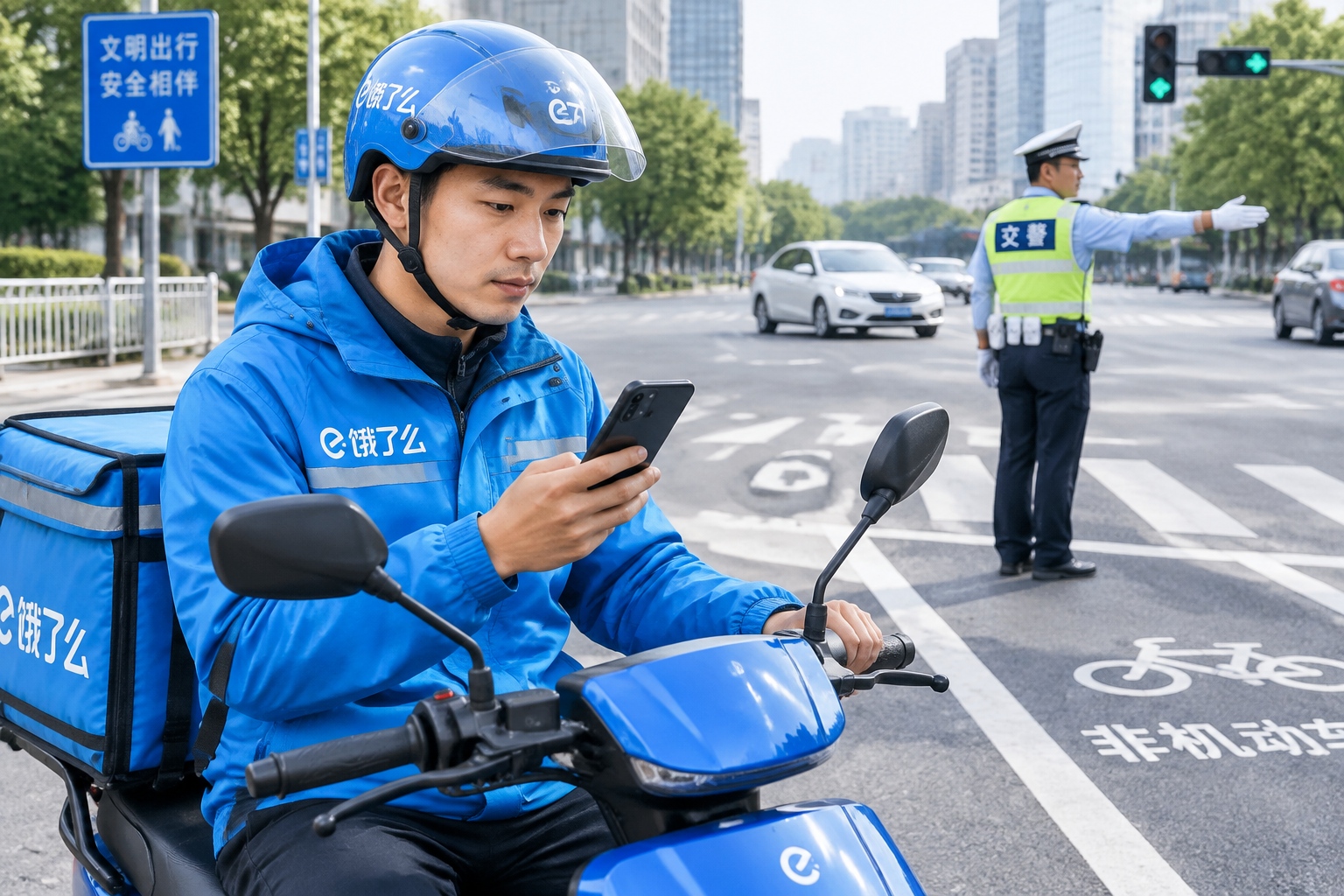
The real magic, however, is self-enforcement. Riders learn the rhythms of each intersection. They know which traffic lights have shorter cycles, which corners have blind spots, and how to merge without stopping. “You have to think ahead,” says Li Qiang, a 32-year-old delivery rider for Meituan. “If you wait for the green light to move, you’re already late. You watch the countdown, you position yourself, and when it changes, you go. But you also watch the cars. They don’t always stop.”
The Economics of E-Bikes
The e-bike boom is not just about commuting. It underpins a vast delivery economy. Meituan and Ele.me, China’s two food delivery giants, employ millions of riders. Each rider covers dozens of kilometers a day, weaving through traffic to meet tight deadlines. For many, the e-bike is a stepping stone to a better life. “I came to Hangzhou from a small village in Anhui,” Li Qiang says. “I didn’t have a degree. But I can ride. I make 8,000 to 10,000 yuan a month. It’s enough to send money home.” The average delivery rider in Hangzhou earns about 7,000 to 9,000 yuan a month, according to industry reports, though hours are long and weather can be brutal.
Small businesses rely on e-bikes too. Fruit vendors, couriers, repairmen, and cleaners all use them to move goods and reach customers. In many neighborhoods, the morning e-bike rush is followed by a second wave: parents taking children to school, balanced on the back of a scooter.
The Police Officer’s View
Officer Wang has been directing traffic at the Wenyi Road intersection for three years. He stands on a raised platform, wearing a white cap and a reflective vest. His job is to manage the flow of e-bikes, cars, and pedestrians. “It’s like conducting an orchestra,” he says. “You have to anticipate what everyone will do next.”
He admits that enforcement is challenging. “There are too many e-bikes and not enough police. We can’t catch everyone. But we focus on the dangerous violations: running red lights, riding on the wrong side, carrying passengers.” He says that public awareness has improved. “Five years ago, people didn’t wear helmets. Now, most do. The fine is small, but the shame is big.”
Officer Wang also points to infrastructure improvements. “We’ve added more waiting areas and clearer lane markings. The city is trying to make it safer.” He gestures toward a group of riders waiting patiently. “Most people want to follow the rules. They just need clear guidance.”
How It Compares to the West
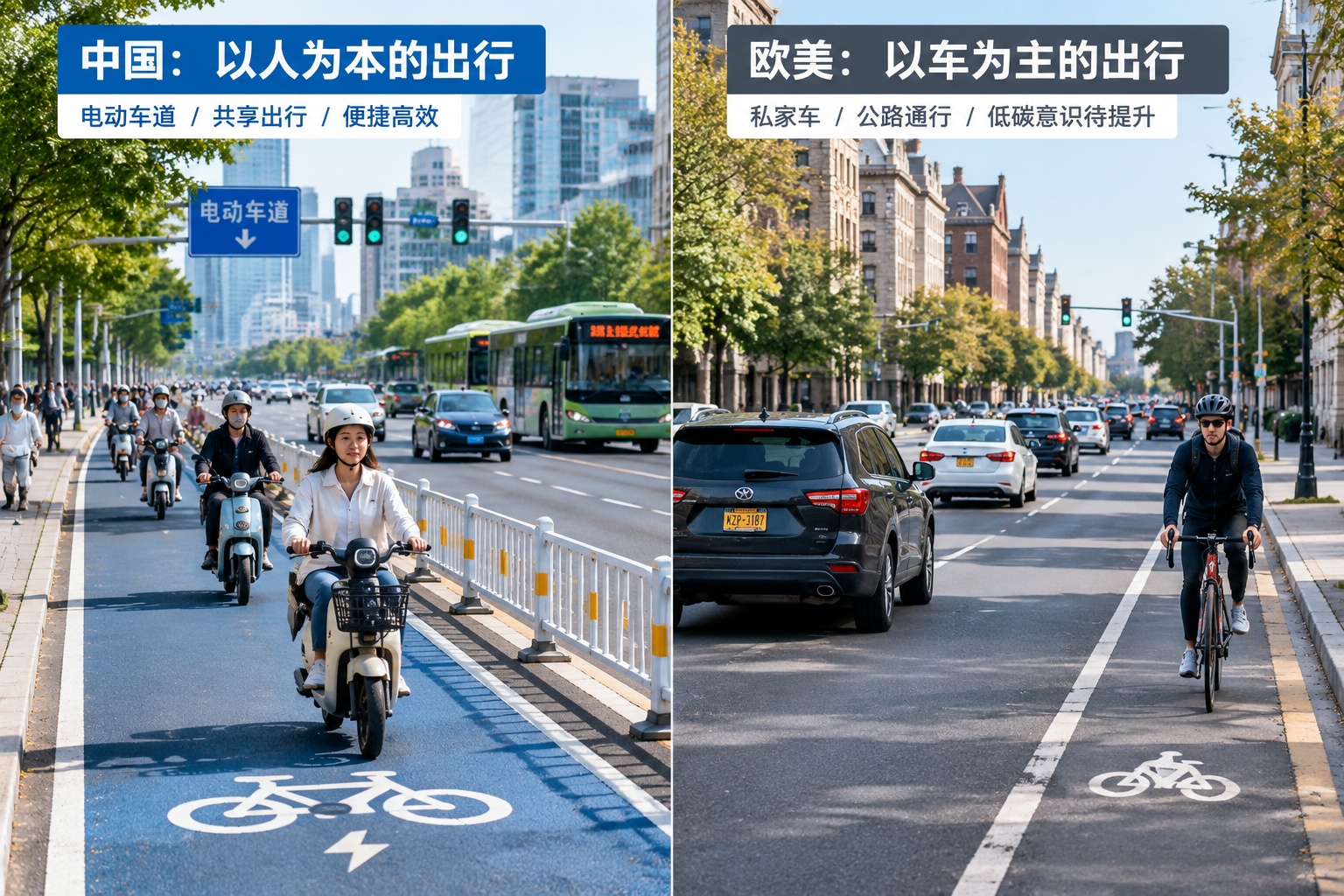
In most Western cities, the car is king. Roads are wide, parking is plentiful, and e-bikes are a novelty. In Amsterdam, bicycles dominate, but they are mostly pedal-powered, and the infrastructure is designed for them. In New York or London, e-bikes are growing, but they often share lanes with cars, leading to conflict. In Paris, a recent referendum banned e-scooters, but e-bikes remain less regulated. The difference is scale: Chinese cities are simply denser, making e-bikes a necessity rather than a choice.
China’s approach is different. E-bikes are not an afterthought; they are a central part of the urban transport system. The sheer volume forces cities to adapt. Dedicated lanes, waiting areas, and traffic signals tuned for slower speeds are common. This creates a “capillary” system that moves people efficiently through dense neighborhoods.
Of course, it’s not perfect. Accidents happen. Regulations are sometimes ignored. But the system evolves. When a new problem emerges—like delivery riders speeding—cities respond with new rules, like requiring helmets or limiting speeds. It’s a constant negotiation between order and chaos.
The Order Within the Chaos
Back at the intersection, the light turns red. The river of e-bikes stops, forming a dense but orderly crowd behind the white line. Riders check their phones, adjust their helmets, and chat with neighbors. A woman sells steamed buns from a cart on the corner. The smell of soy milk and fried dough drifts over the crowd. When the light turns green again, the river flows on, smooth and relentless.
This is the rhythm of Chinese cities: fast, dense, and adaptive. It may look chaotic, but it works. And for the millions who rely on e-bikes every day, it’s not just transport—it’s freedom.
Start the discussion at forum.chinacomes.com