

Two Stories, One Tower
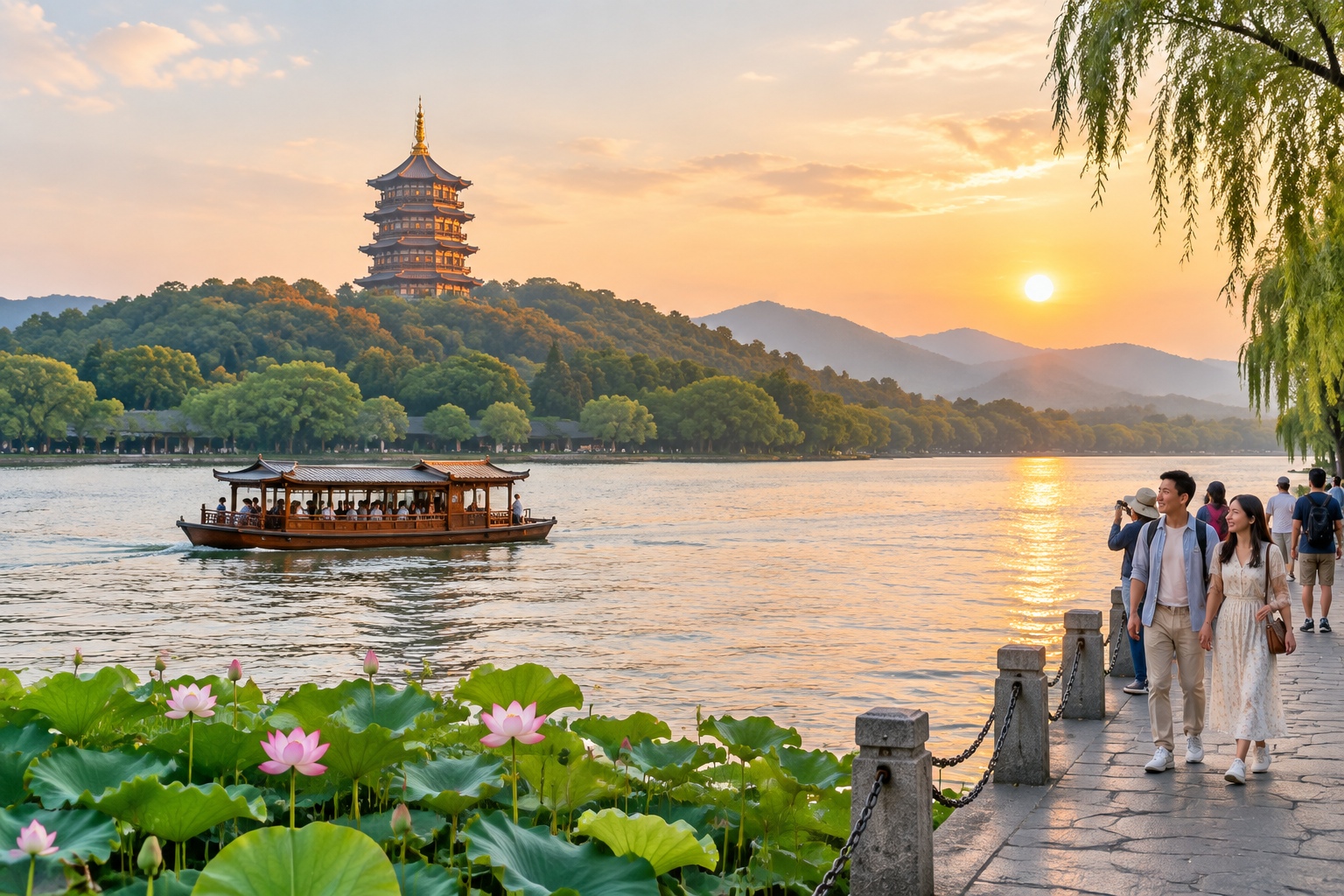
On September 25, 1924, the Leifeng Pagoda fell down. It had stood on the south shore of West Lake, in the city of Hangzhou, for almost a thousand years. Then, one afternoon, it simply came apart.
No earthquake. No war. Partly fire: a Ming-dynasty blaze in the 1550s had burned away the wooden outer floors and left a brick core standing. But mostly people. For decades, locals had been carrying its bricks home.
The belief was that a brick from Leifeng Pagoda brought luck to silkworms, and silk was serious business in this part of China. A pagoda is made of bricks. By the 1920s the tower was hollow, and the writer Lu Xun published two essays about its collapse that Chinese students still read in school.
Here is the odd part. Even after the building was gone, the tower kept working. It had a second life in a story.
The Snake Under the Tower
Ask anyone in China about Leifeng Pagoda and you will get the same answer: that is where the White Snake was imprisoned.
The Legend of the White Snake goes roughly like this. A white snake spirit spends centuries cultivating until she can take human form. She becomes a woman named Bai Suzhen, comes to Hangzhou, and falls in love with a pharmacist named Xu Xian. They marry. A monk named Fahai decides the marriage is unnatural and sets out to destroy it, and in the end he traps Bai Suzhen under Leifeng Pagoda. In many versions her son grows up, passes the imperial examination at the highest level, and returns to free his mother.
It is one of China’s best-known folktales, alongside the Butterfly Lovers and the Cowherd and the Weaver Girl. You will find it in opera, in cartoons, and in a 1993 television series that is still rerun every summer and probably did more than anything else to fix the image of this pagoda in modern minds.
One thing worth knowing: the story did not start with the pagoda. The earliest versions, from the Tang dynasty, are about a snake and a man and include no tower at all. The pagoda was written in later, and by the Qing dynasty the two were inseparable. So the relationship runs both ways. The legend made the tower famous, and the tower gave the legend an address you can actually visit.
Overseas visitors sometimes ask whether people really believe it. Mostly the answer is no, in the same way Italians do not expect to meet Romulus. But Chinese culture tends to keep folklore and history in the same drawer instead of separating them. A temple can have real monks and a story about a snake spirit. A pagoda can have real 10th-century bricks and a fictional prisoner. Nobody finds that contradictory.
What Happened to the Ruins
For 78 years there was nothing on Xizhao Hill but a mound of bricks. Then, in October 2002, a new pagoda opened on the site.
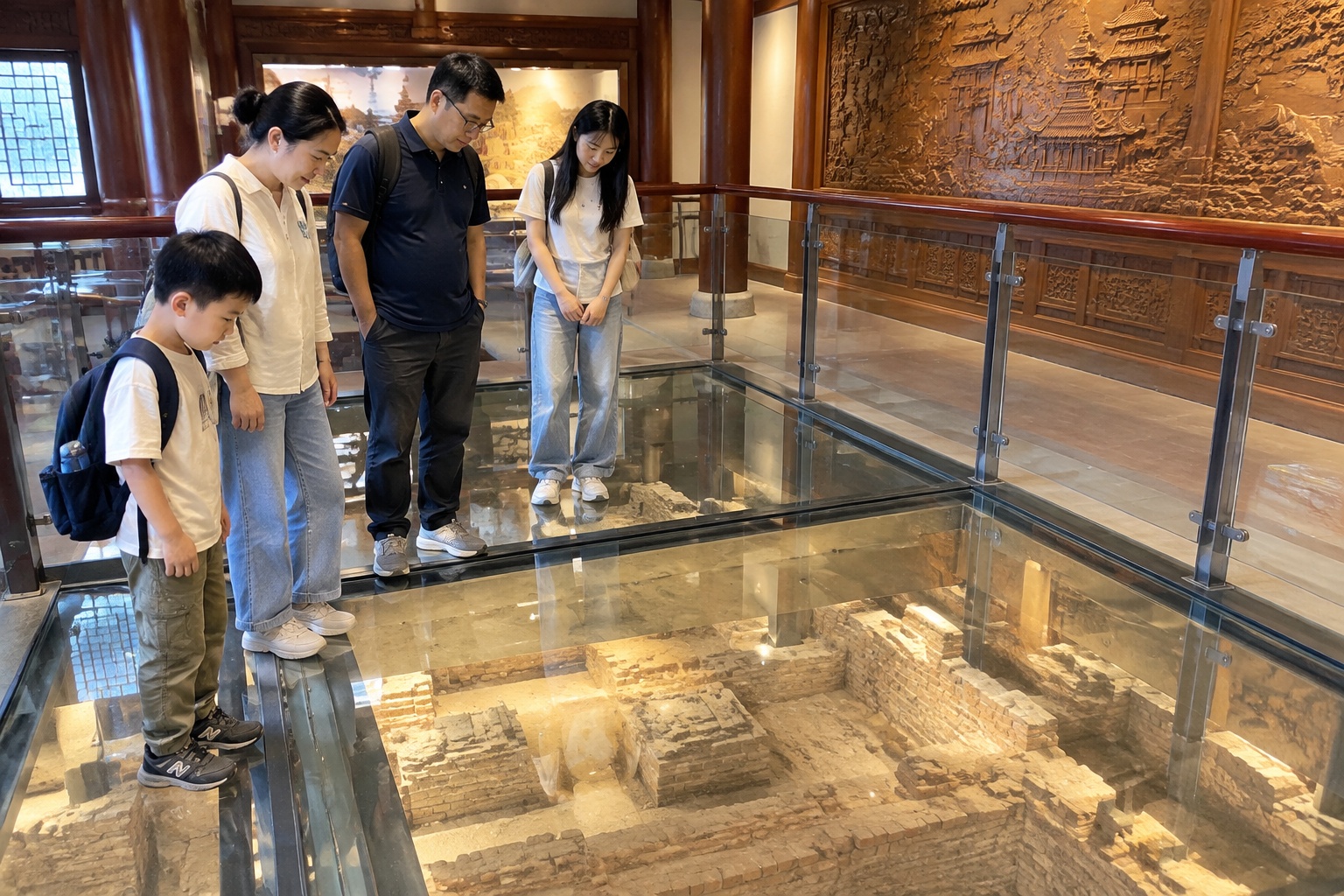
It is not a replica. It is a modern building, steel frame and copper tiles, about 72 meters tall and five stories high, designed to sit over the excavated remains of the old tower. The original brick base is preserved inside. You can walk across it on a glass floor and look straight down at masonry laid in the 970s, when the pagoda was built by a king of the Wuyue kingdom.
This is where visitors tend to split. Some find it a smart solution: the ruins are protected, the site is usable, and you do not have to choose between archaeology and a view. Others find the escalators, and the elevator up to the top floor, a bit much for a place with this much history.
Both reactions are fair. It helps to know before you arrive, because the experience is closer to a well-run museum than to climbing an ancient tower.
The View From the Top
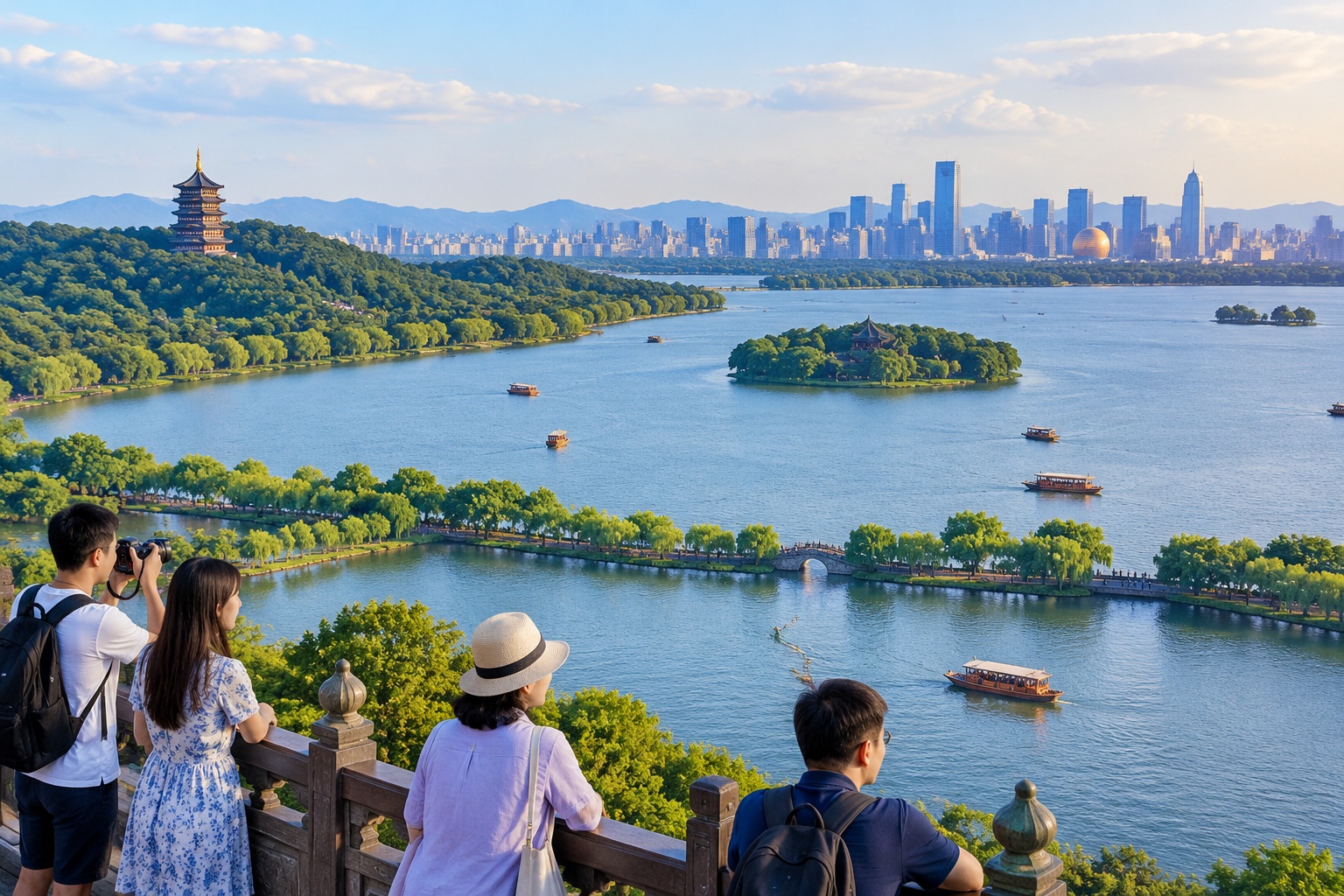
The top floor is why most people come. West Lake opens up below: the water, the causeways, the small wooded islands, the boats. On the north side of the lake you can see Baochu Pagoda, slim and stone-colored on its hill, the one Leifeng is always paired with in old sayings. Further out, the office towers and apartment blocks of modern Hangzhou.
Go at the end of the day if you can. Leifeng Pagoda in Evening Glow has been on the official list of the Ten Scenes of West Lake since the Southern Song dynasty, roughly 800 years ago. The list is a kind of poem with addresses: ten specific places, ten specific hours, ten specific weather conditions. Leifeng’s slot is sunset, when the brick and the copper tiles go warm and the light comes across the water.
When the pagoda collapsed in 1924, that scene disappeared from the list for 78 years. It came back in 2002, which is a strange thing to say about a sunset, but there it is.
Around the Base: Runners, Tea, and an Old Temple
The pagoda is not a sealed-off monument. It sits inside the everyday loop of the city.
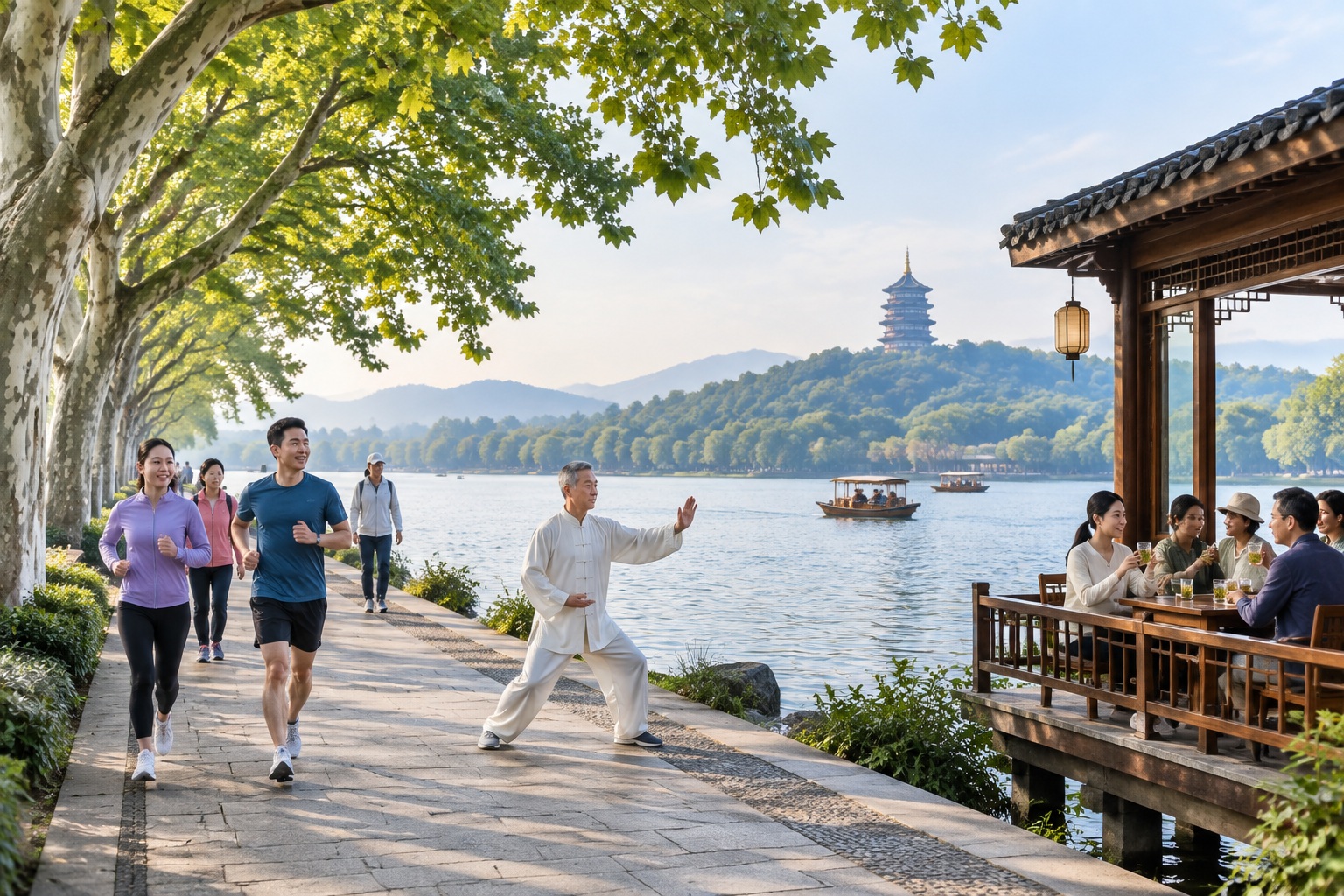
Early morning, the Su Causeway, the long tree-lined path across the lake, fills with runners. Retired people gather in the parks near the south shore to sing opera, practice tai chi, or play cards. Boatmen row visitors out to the islands. A few hundred meters from Leifeng Pagoda, past the lotus ponds, is Jingci Temple, a working Buddhist temple founded in the 950s, whose bronze bell gives the Ten Scenes another entry: Evening Bell at Nanping Hill.
And tea. Hangzhou is Longjing tea country, and the hills just behind West Lake are where some of the most expensive green tea in China grows. Around the lake you will find tea houses where locals sit for two hours over one glass, refilling it with hot water, and nobody rushes them.
This is the part visitors often miss. People come for the legend, take the photo from the top floor, and leave. The better version is to walk the south shore on foot: pagoda, temple, causeway, tea.
If You Go
Tickets are around 40 yuan, or about US$6. Prices and hours change with the season, so check before you go, especially because last entry matters if you want the sunset. Escalators run from the entrance plaza up to the pagoda base, and there is an elevator to the top floor, so the climb is easy. Weekday evenings are far calmer than weekends. The pagoda sits on the south shore of West Lake, a short walk from Jingci Temple and roughly 20 minutes on foot from the Su Causeway.
Inside, on the lower floors, wood carvings and displays retell the White Snake story. That is a reminder that this building is doing two jobs at once: archaeological site and stage for a fairy tale.
Why a Rebuilt Tower Still Matters
There is a fair argument that a 2002 building with escalators is not the Leifeng Pagoda of a 1924 photograph. That is true.
But cities need shared reference points, and this one works on several levels at once. It is a real archaeological site. It is a piece of folklore that almost every Chinese person can tell you from memory. And it is a viewpoint that shows you, in a single sweep, the lake UNESCO listed in 2011 and the skyline of one of China’s fastest-moving tech cities.
On a Sunday evening you can stand on the top floor, look down through glass at bricks laid a thousand years ago, and look up at the joggers still circling the lake. Both are Hangzhou. The tower just happens to be the place where you can see them at the same time.
Start the discussion at forum.chinacomes.com