


You land in Shanghai on a Monday, meet clients until late afternoon, and yet by evening you are on a bullet train to Hangzhou. Outside the window, the landscape turns from concrete towers to tea hills and small lakes. The carriage is so stable you can still reply to emails. This is standard practice in China, where the high-speed rail network now totals more than 40,000 km and turns business hubs into day-trip cities.
For visiting professionals, that opens the door to combining work with a weekend escape. Below are five itineraries used by local business travellers, each pairing a commercial centre with a nearby leisure destination, plus tips on how residents like to relax.
1. Shenzhen Tech Fair + Guangzhou Old Town
Business: Shenzhen is southern China’s hardware and innovation hub. Most large tech fairs gather in Futian’s convention district, where the working day runs from 9 to 9. You can escape the glass-and-steel downtown on a 29-minute train ride to Guangzhou.
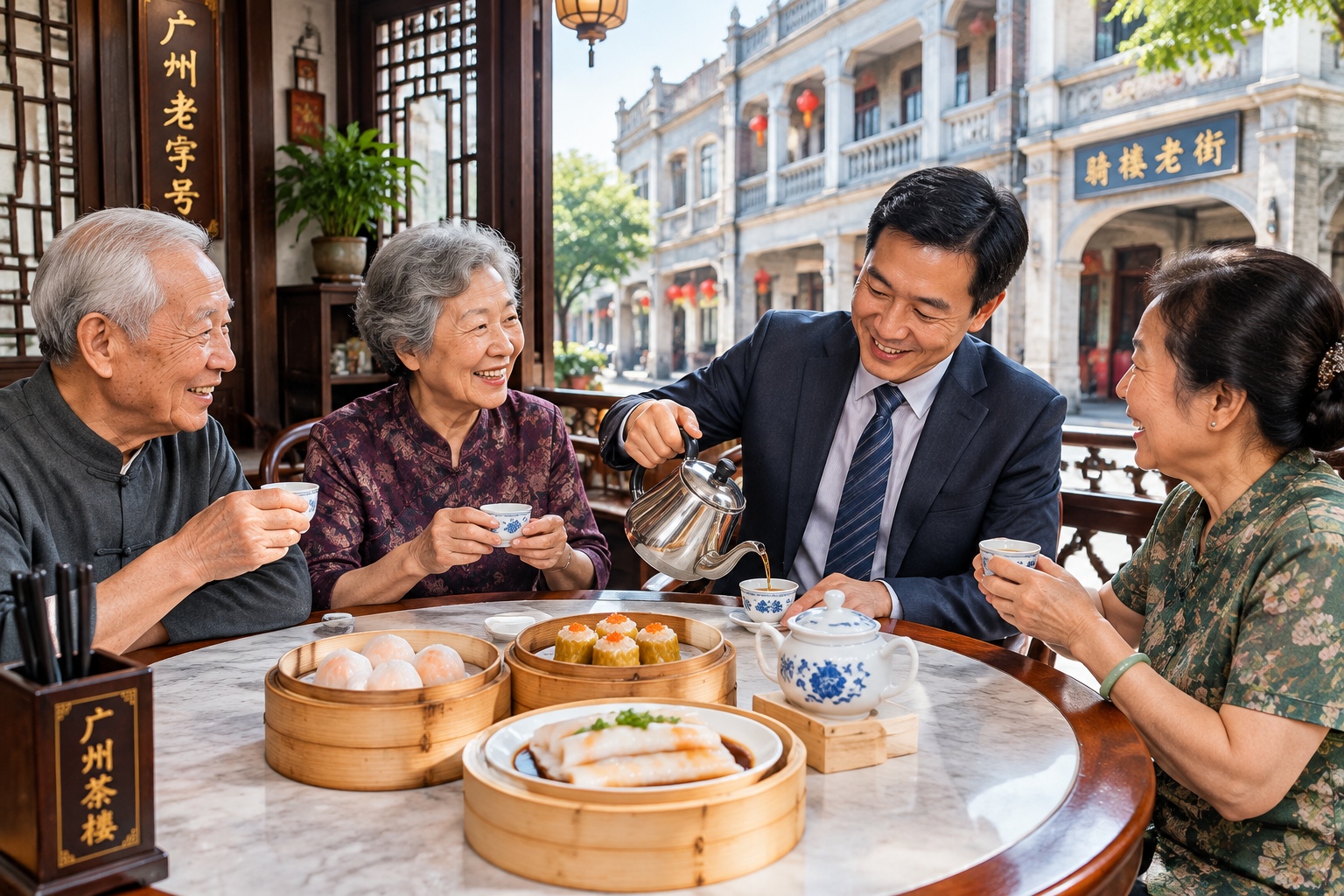
Leisure: Stay in Yuexiu or Liwan, the old Cantonese neighborhood. On Sunday, join locals for yum cha at Panxi or Dian Dou De – ordering har gow, steamed rice rolls and egg tarts while tea is poured continuously. Afterwards stroll along colonial Shamian Island, then shuffle over to People’s Park to watch elders play Chinese chess under banyan trees.
Pacing tip: Leave Shenzhen on Friday evening, return Sunday night. Trains leave every 10 minutes, so no fixed schedule is needed.
2. Shanghai Meetings + Hangzhou West Lake / Moganshan
Business: Shanghai is the financial nerve centre, with most meetings in Pudong or Jing’an. Schedule them tight: many Chinese hosts work happily until 16:00 if you tell them you have a train to catch.
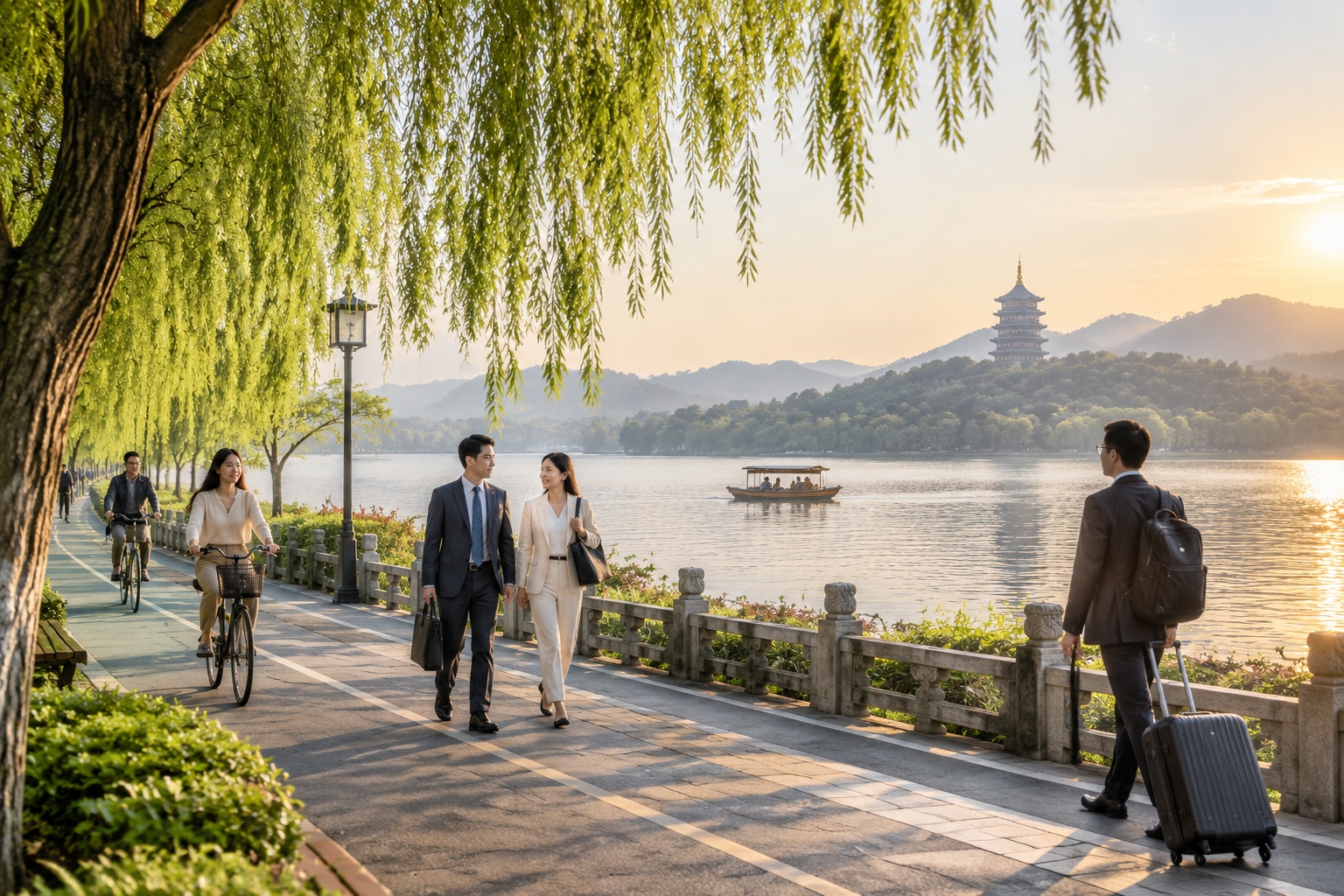
Leisure: The bullet train from Hongqiao to Hangzhou East takes only 45 minutes. At West Lake, walk or bike along the Su Causeway before the tour groups arrive. For a different pace, go deeper into the hills to Moganshan, once a 1920s summer retreat for expats and now a weekend escape filled with bamboo and boutique villas. Hangzhou locals’ habit is to end the day with a stroll around the lake, then sit down for Longjing tea – do the same at a lakeside teahouse.
Pacing tip: Take the last train after a Friday lunch meeting; you’ll have two full days in the mountains, then return early Monday for another meeting. High-speed service starts at 6:00.
3. Beijing Headquarters + Xi’an City Walls
Business: If your trip is about industry policy or tying up contracts with Chinese conglomerates, Beijing is the address. Corporate campuses and government ministries are scattered across town, so allow a full day of meetings there. In the evening, wander into the hutong lanes around Shichahai for quiet Peking duck or live music.
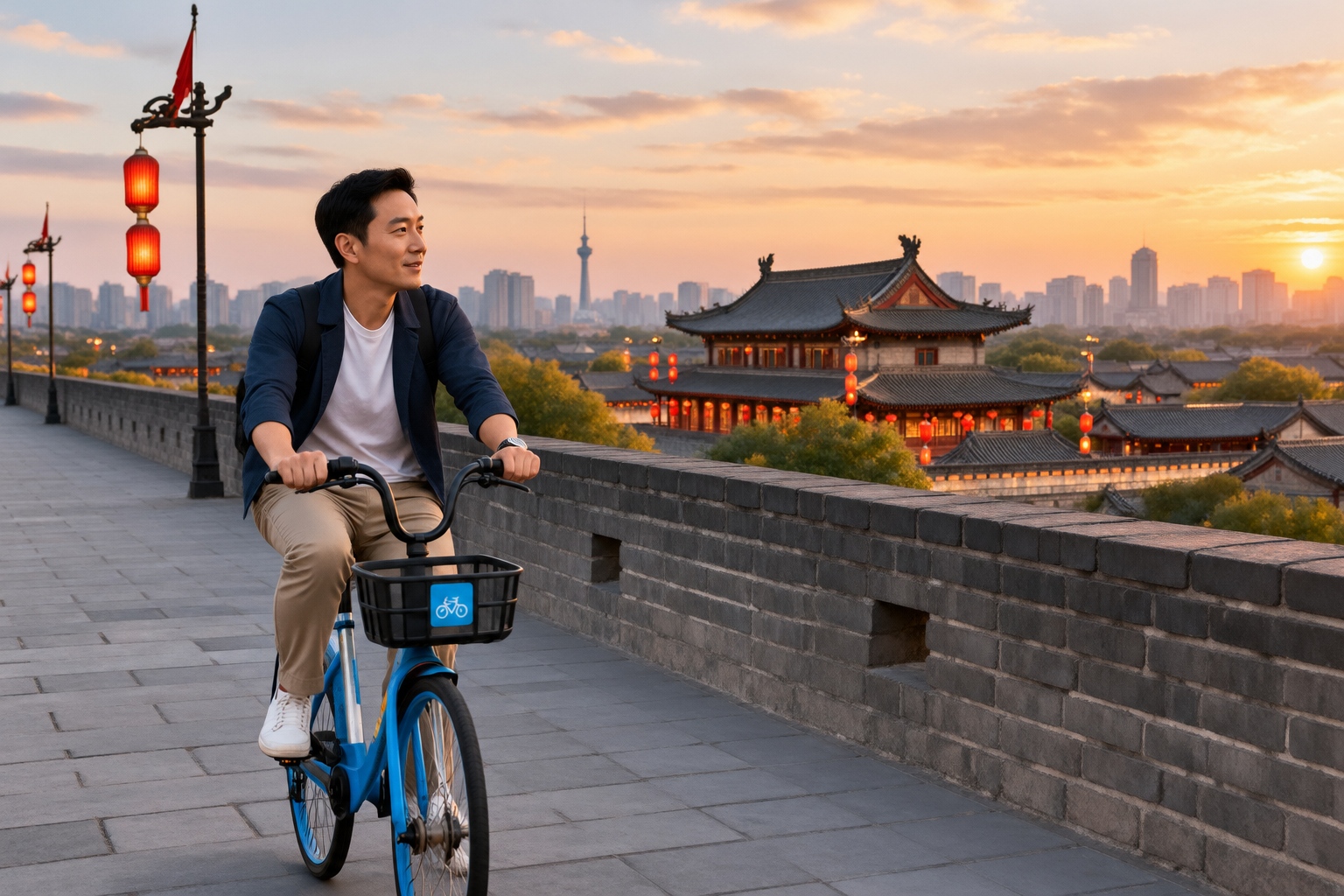
Leisure: Book a high-speed ticket to Xi’an (around 4.5–6 hours by HSR, or fly for under two hours). Start Saturday at the Terracotta Warriors, then ride a bicycle along the Ming Dynasty city wall at sunset. That night stroll through Muslim Quarter for lamb skewers and flatbread. Xi’an locals treat dinner like a ritual and many old shops stay open until midnight.
Pacing tip: If time is very limited, fly round trip on the weekend: take Friday’s red-eye, return Sunday afternoon. Don’t miss the chance to stay in a courtyard-style hotel near the wall.
4. Chengdu Site Visits + Chongqing Hotpot Evenings
Business: Chengdu has evolved from a laid-back capital to a hotspot for tech, gaming and new-energy projects. Business partners here may invite you for lunch or a digital tea – essentially a relaxed talk in a meeting room or teahouse. Focus your meetings on the Tianfu New Area’s innovation campuses.
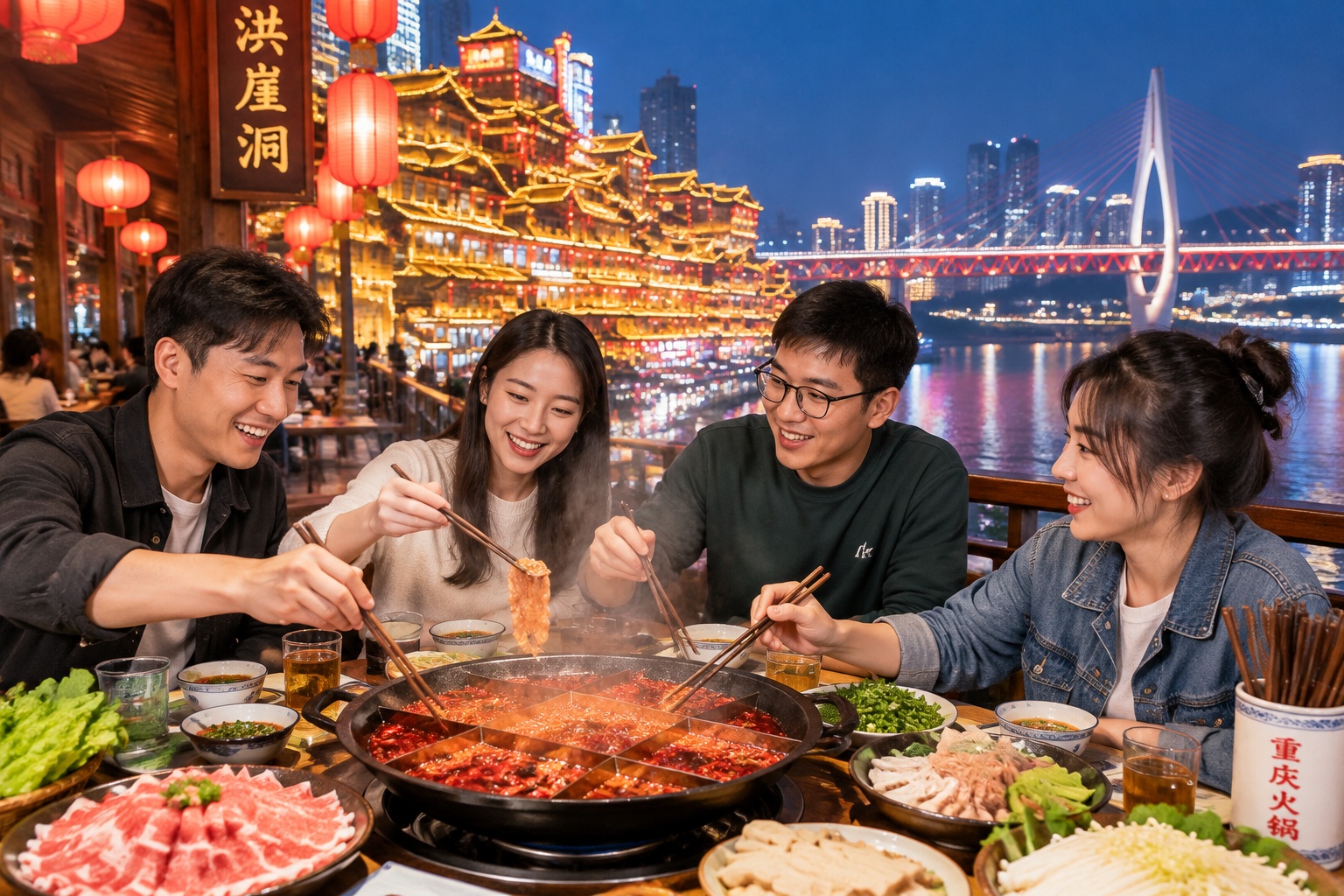
Leisure: Take the 1-hour-15-minute HSR to Chongqing, a vertical megacity that rises on mountains and rivers. Night views from Hongyadong are spectacular, but locals go for something deeper: a nine-grid hotpot that can include pig brain or tripe. After dinner, join the crowds walking along Nanbin Road, where riverside restaurants glow with neon and cold beer.
Pacing tip: The train runs until 22:00, so use your evening instead of wasting a full day. Many business people take the 19:00 train and are in the Chongqing nightlife by 20:30.
5. Kunming Talks + Dali and Lijiang Weekend
Business: Kunming, capital of Yunnan, is the gateway to Southeast Asia and a base for agritech and tourism projects. Deal-making often involves spending a day with ministry officials or local government, so add buffer time to your schedule. The city’s many parks, like Cuihu Green Lake, offer a pleasant meeting place for walking discussions.
Leisure: The two-hour HSR ride to Dali transports you to a lake-and-snow-peak setting. Rent an electric bike to circle Erhai Lake past villages of the Bai ethnic group. If you have extra time, continue to Lijiang’s UNESCO-listed old town, with cobbled lanes and ancient water channels. Locals love this whole region for slow weekends, and you will see office workers from Kunming here with their families.
Pacing tip: This extension demands at least three days. Choose one of the two destinations if pushed: Dali for tranquil landscapes, Lijiang for nightlife and cultural performances.

The efficiency code: link cities on HSR’s clock
To make these trips smooth, use the HSR city duo logic: pick a business hub and a city 1–2 hours away that has a contrasting character. Shenzhen-Guangzhou, Shanghai-Hangzhou, Chengdu-Chongqing, Nanjing-Suzhou and Beijing-Tianjin all work well for a weekend course. Buy separated tickets on the official 12306 APP (English version available) or use Ctrip if you need English support. Leave several windows open for same-day changes. If your schedule is fluid, avoid the check-in queues and book high-speed trains instead of domestic flights for distances under 600 km. And remember: in China, staying productive doesn’t mean avoiding a walk in the park or a late dinner in another city. The locals do exactly that – squeezed between meetings and Monday mornings.
The point is not to turn business travel into tourism, but to use the speed of connecting transit to keep some of your human rhythm. Take the slower moments, eat a river-side bowl of noodles, let the city’s old streets become a map for tomorrow’s appointment.
Start the discussion at forum.chinacomes.com