


One Buyer Who Acted Too Late
Picture a young product developer from Brazil. She has designed a clever, reusable water-bottle filter. She flies to a trade fair in Yiwu, finds a factory that says it can produce the mold, and shares her technical drawings without a signed agreement. Two months later, the factory is selling the same filter under its own brand on an e-commerce platform. The developer believes she cannot do anything because China is too far and IP protection is too weak.
That belief is outdated. China has an increasingly detailed intellectual property system that works, but it rewards advance preparation. If you plan to source from China, your actions before you share drawings or order samples matter far more than the luck of finding an honest partner. This guide walks you through the essentials of trademark, patent, and border protection, and explains how the enforcement steps actually operate today.
China’s IP Landscape Today: Stronger, but Rules-First
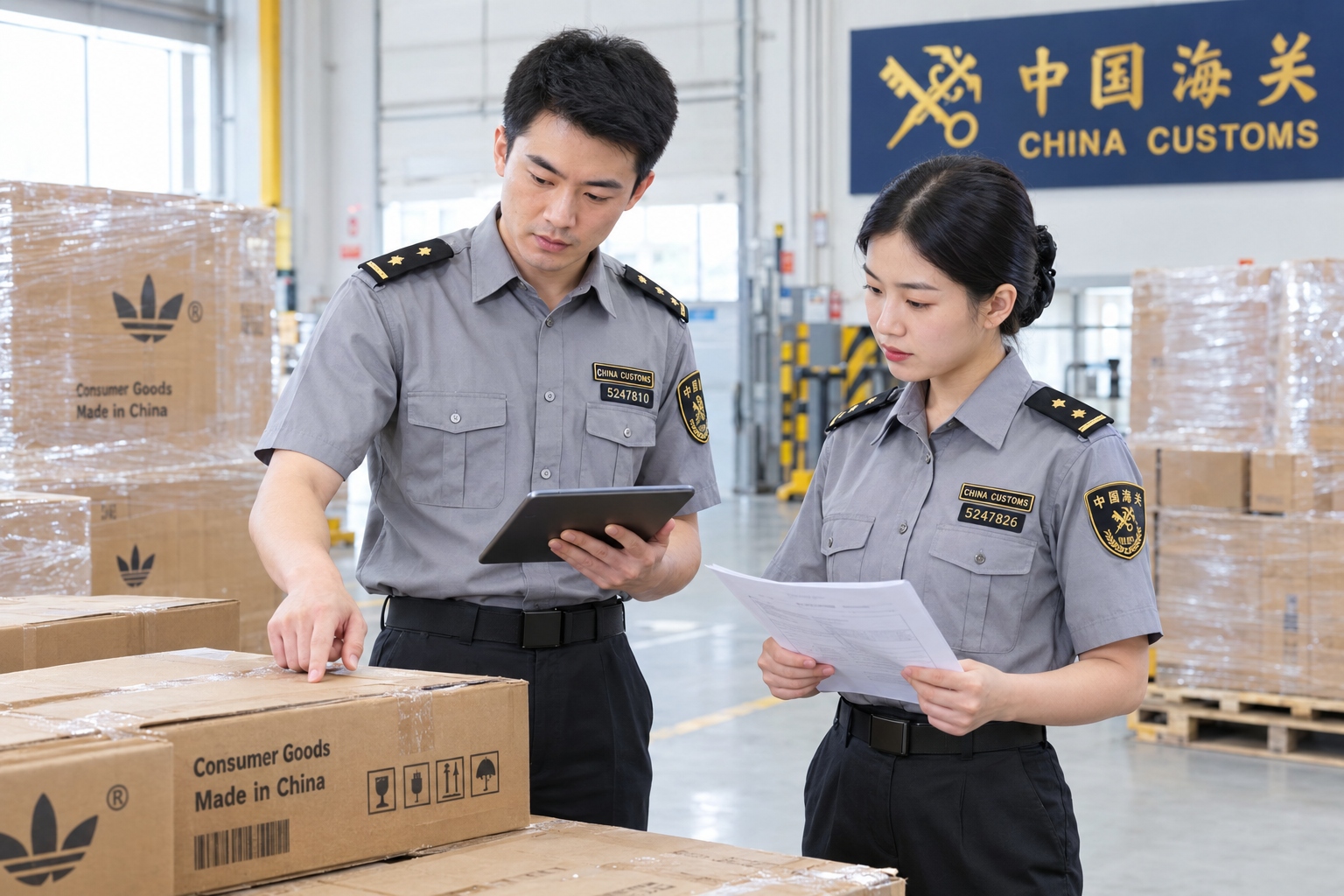
China has built an extensive IP legal framework over the past few decades. The main pillars are the Patent Law, the Trademark Law, the Copyright Law, and the Anti-Unfair Competition Law. These are enforced through CNIPA (China National Intellectual Property Administration), local market supervision bureaus, customs, and a specialized intellectual property court system that has been expanding since 2014.
The law books have also changed. The 2020 Patent Law introduced punitive damages up to five times the actual loss caused by intentional infringement, and extended design patent protection to 15 years. The 2019 Trademark Law revision strengthened rules against bad-faith filings and raised the statutory damages cap. China is a member of the Paris Convention, the Patent Cooperation Treaty (PCT), the Madrid System for trademarks, and the Berne Convention for copyright. In 2022, China joined the Hague System for industrial designs, meaning that you can now include China in one international design application covering many countries.
What does this mean for a foreign buyer? It means Chinese authorities will respect priority dates from your home patent or trademark applications, as long as you enter the Chinese national phase on time. It also means having a registered right in China is the most reliable way to stop a copying factory. The bigger danger is not that the law ignores you; it’s that you fail to understand the first-to-file rule and start registration too late.
Register Your Trademark in China Early
China follows a first-to-file trademark system. If you sell products in the United Kingdom for two years but someone else registers the same mark in China for identical goods, that person legally owns the mark, even if you have built a brand in a foreign market. To prevent abuse, the 2019 amendments introduced mechanisms to challenge trademarks filed in bad faith, but fighting a squatter is slower and more expensive than simply filing early.
You have two main ways to obtain a Chinese trademark:
- File directly with CNIPA through a qualified Chinese trademark attorney.
- File through the Madrid System and designate China in your international application.
A direct application costs roughly CNY 300 (about USD 40) for one class, if approved. The process usually takes nine to twelve months. Madrid designation may take a little longer but gives you a single application covering multiple countries. Whichever you choose, be sure to cover the classes matching your actual products and services. If you have a well-known English brand, also consider registering the Chinese character transliteration and your logo design, as squatters often target these separately.
One more practical detail: Chinese trademark law does not depend on public use in the same way as U.S. law. Registration is the key. Once your mark is registered in China, you can record it with customs and use it in e-commerce platform takedown requests.
Patent Protection: File Before You Publicly Disclose
China offers three types of patents. Your choice depends on the product and how fast you need protection.
Invention patents cover new technical solutions and products, and can last up to 20 years. They undergo substantive examination, so the process takes three to five years on average. Utility model patents protect the shape or structure of a product and last 10 years. They are examined in a lighter way and can be granted in six to twelve months, making them attractive for mechanical or consumer products that won’t change quickly. Industrial design patents protect your product’s visual appearance, including pattern and color combinations. A revised law extended their protection to 15 years from the earlier 10-year term, bringing China in line with international standards.
Be extremely careful about disclosure. If you show your new product design in a Kickstarter campaign, an exhibition, or even a social media post before you file a patent application in China, that public disclosure becomes “prior art” and can invalidate a later patent. The rule is called absolute novelty. If you have already filed for a patent in your home country, you can file in China within 12 months and claim the earlier filing date using the priority rule from the Paris Convention. For designs, the priority window is six months. If you have no home filing yet, submit the Chinese application first, or at least before you begin negotiating with factories.
The 2022 entry to the Hague System adds an easier path for industrial designs. You can now file one international design application with WIPO and designate China along with other member countries, so overseas firms no longer need to file separately in China through a local agent.
Use Contracts That Set Clear Ownership Rules
Knowing the legal framework is not enough. When you approach manufacturers, you should have a written paper trail before disclosing any sensitive information. Two documents are central to protecting your procurement project:
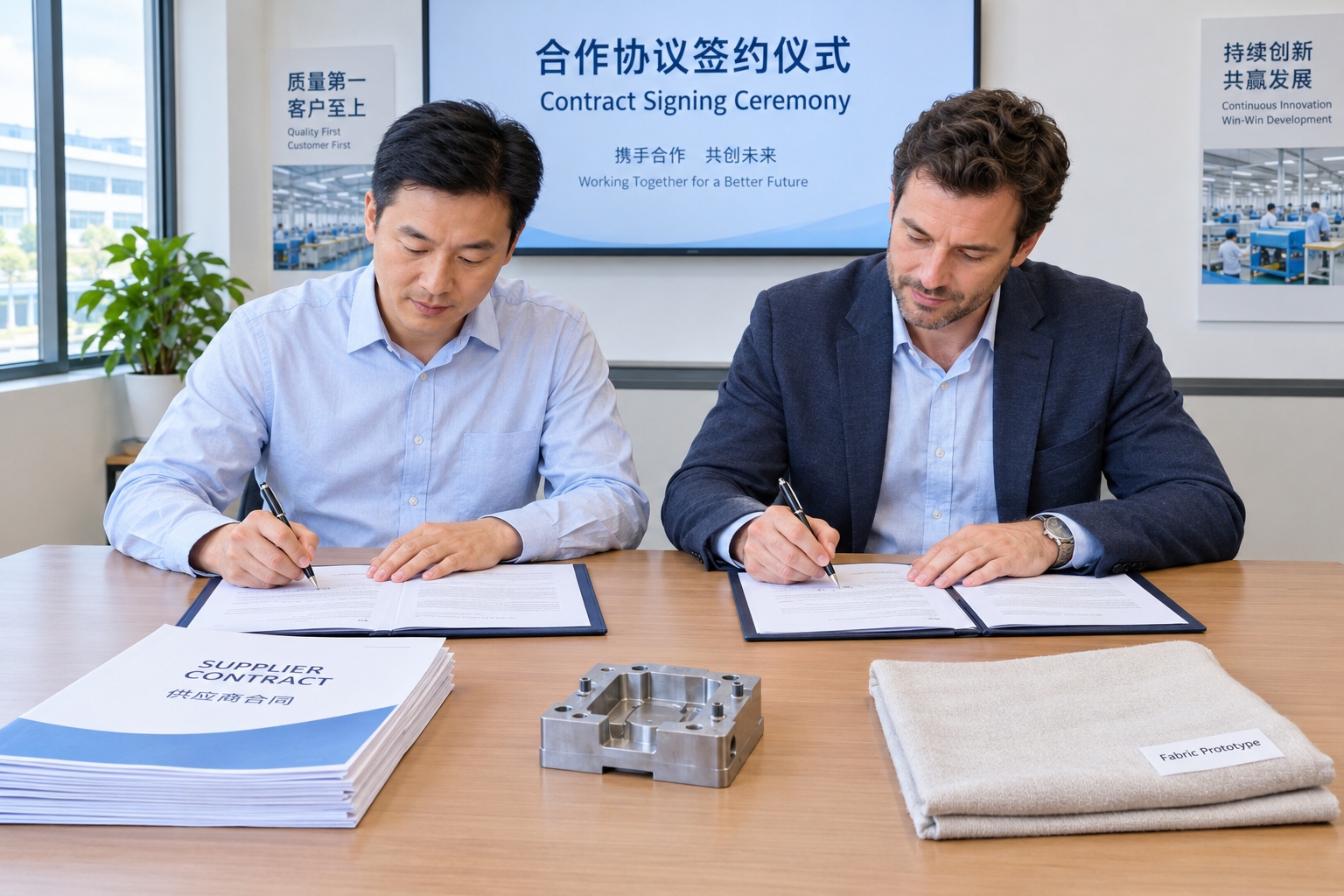
A non-disclosure agreement (NDA) prevents the supplier from misusing your confidential manufacturing details or product specifications. An NDA is enforceable under Chinese law, but enforcement is easier if it is signed by a specific legal entity, not just by a salesperson, and if it clearly defines what information is confidential.
A product development and supply agreement should go further. It must state who owns the final design, the tooling, and any improvements made during production. Many factories will propose that they own the tooling because they paid for it. Do not accept this silently. Your contract should say: all work product, including drawings, patterns, molds, and prototypes created specifically for you, is owned by you. Add a non-circumvention clause that forbids the factory from selling the same or similar products to third parties. Finally, include a clause on independent development: the supplier must not use your IP in other clients’ orders, and if it does, it commits breach.
Dispute resolution is also important. Many foreign buyers put arbitration clauses in their contracts. The China International Economic and Trade Arbitration Commission (CIETAC) is a respected institution, and parties can also choose arbitration in Hong Kong or Singapore. Civil litigation in mainland China is possible, but enforcement of a judgment can be smoother if you have a comprehensive contract plus a registered IP right.
Use Customs Recordation to Stop Export of Fakes
One of the most underused enforcement tools is China Customs IP protection. You can record your trademark, patent, or copyright with the China General Administration of Customs. The recordal is valid for 10 years and is free of charge. Once recorded, customs officials can proactively suspend shipments that they suspect contain infringing goods.
This makes sense for any sourcing agreement because counterfeit goods often leave China before you even discover them. A recorded trademark gives customs officers a reason to stop a container at Shanghai or Shenzhen and notify you. You will have a short period, usually 10 working days, to confirm whether the goods are genuine and, if not, to apply for detention. Customs may also destroy the goods if the right holder gives certain guarantees.
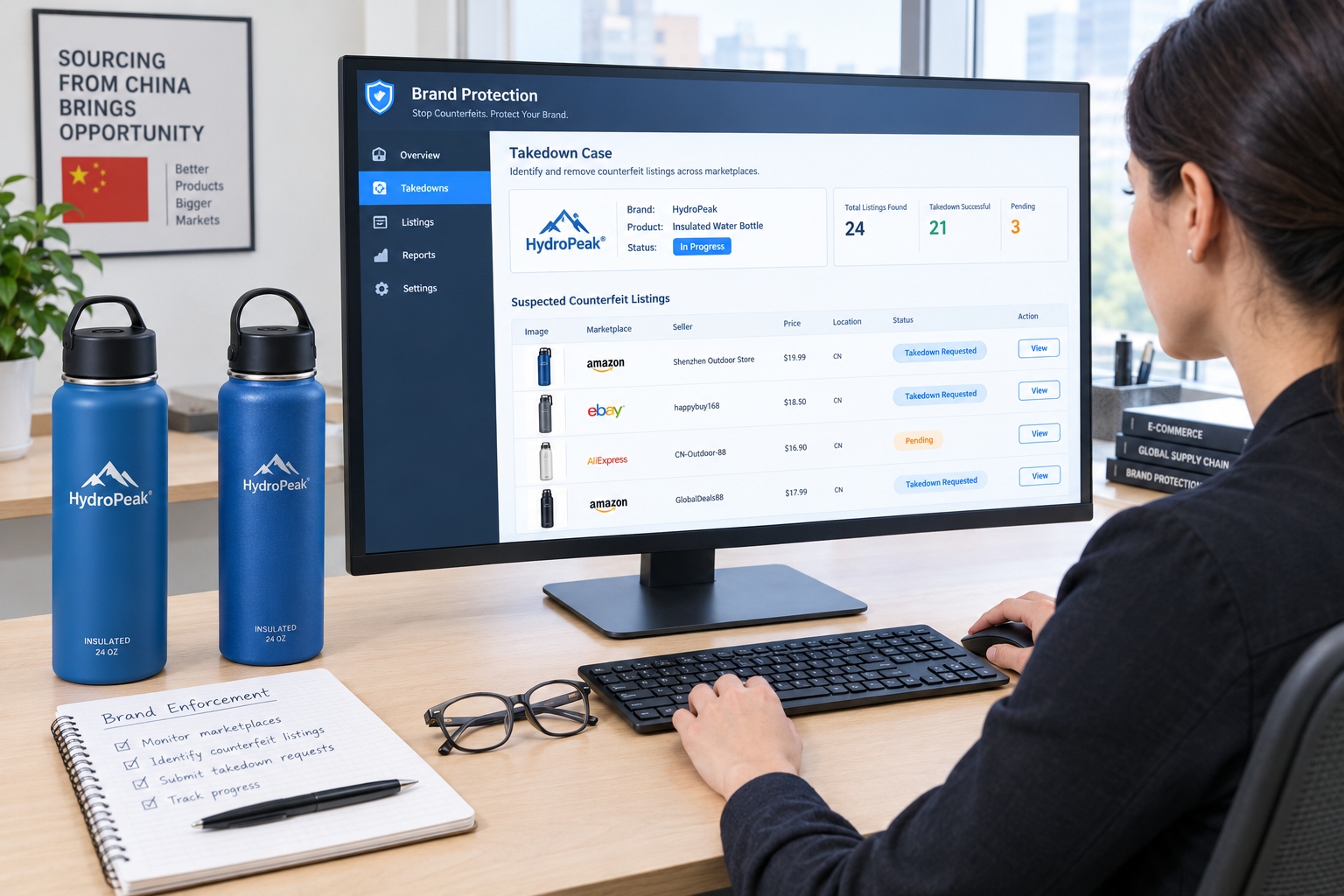
Online marketplaces also offer practical enforcement. Major platforms like Alibaba’s Taobao and Tmall operate IP protection portals where you can submit your Chinese registration certificate. If you find an unauthorized listing, you can lodge a takedown complaint. The platform generally removes the listing within a few business days if your documentation is complete. Combining customs recordation and e-commerce takedown ensures that fakes are stopped both before export and in the digital channels where buyers initially find them.
If You Discover Infringement: Your Response Path
Seeing a copycat product is upsetting, but you have several options. The speed and cost vary, so choose the route that best matches your goal.
Administrative complaint
Local market supervision bureaus have the power to raid a factory or storage site based on a substantive complaint. If they find infringing goods, they can seize and destroy them and impose a fine. This avenue can be quick, sometimes within several weeks, and is often used for clear-cut trademark violations. You will need to show proof of your registered right and evidence that the product is identical or confusingly similar.
Customs seizure
If your IP is in the customs recordal system, you can ask customs to hold a suspected shipment. This approach stops the infringement in transit and provides a strong negotiating lever. It is especially valuable when the factory denies writing you or hidden inventory remains.
E-commerce takedown
For online sellers, filing a takedown request with the platform is usually the fastest way to stop an individual seller. Keep records of the product links and screen captures, and record the chatter with the seller to show who is the maker. The platform will often ask for test purchases and compliance samples.
Civil litigation
If the infringer is making real profits and selling at scale, a court lawsuit can award damages and stop production. Chinese courts have become more willing to issue preliminary injunctions and evidence preservation orders. In one notable direction, the 2020 Patent Law allows for punitive damages that can reach five times the calculated compensation for intentional infringement. Successful litigation requires evidence: notarized online offers, purchased samples, receipts, bank records, and correspondence between you and the factory. Because everything goes through the court, hiring an experienced Chinese IP lawyer is recommended.
A Practical Checklist Before You Source from China
The rules may feel heavy, but they reduce to a few routine actions.
- Search the Chinese trademark database to see if your mark is already taken, then file a trademark application in China before you send any drawings.
- File at least a patent application for the novelty you plan to manufacture, and do not publish your idea publicly before filing.
- Use the Paris Convention priority or PCT route to claim an earlier date if you already filed abroad.
- Ask each supplier to sign a mutual confidentiality and product development agreement defining who owns the final IP.
- Record your registered trademark and patents with China Customs.
- Build and store evidence of your original product, such as dated files, correspondence, and prototype samples.
- Decide in advance which legal route is most likely if one of your factories exits the comfort zone.
No legal system automatically protects you without action. In China, the IP framework has become a real tool for businesses that know how to use it. The buyer who registers early, uses contracts carefully, records customs protection, and reacts swiftly to fakes is no longer re-entering the Wild West. She is following a path that many foreign companies have already travelled successfully.
Start the discussion at forum.chinacomes.com