


On my first business trip to Shanghai, my colleague stopped me in the hotel lobby. ‘You’re not going in empty-handed, are you?’ She handed me a small box of Dragon Well tea. ‘Just say it’s from your hometown.’ Later, I watched her present it with both hands and a slight nod. The client didn’t open it immediately, but his face lit up. From that moment, I understood: in China, business gifts are not about the cost. They are a warm signal that you’ve remembered the person behind the contract.
Whether you’re meeting a manufacturing partner in Shenzhen, a minister in Beijing, or a long-time contact over lunch in Hangzhou, knowing the unspoken rules of gift giving can make or break the relationship. This guide covers when to give, what to choose, what to avoid, and how to present your gift the right way.
When Gift-Giving Matters in Chinese Business Culture
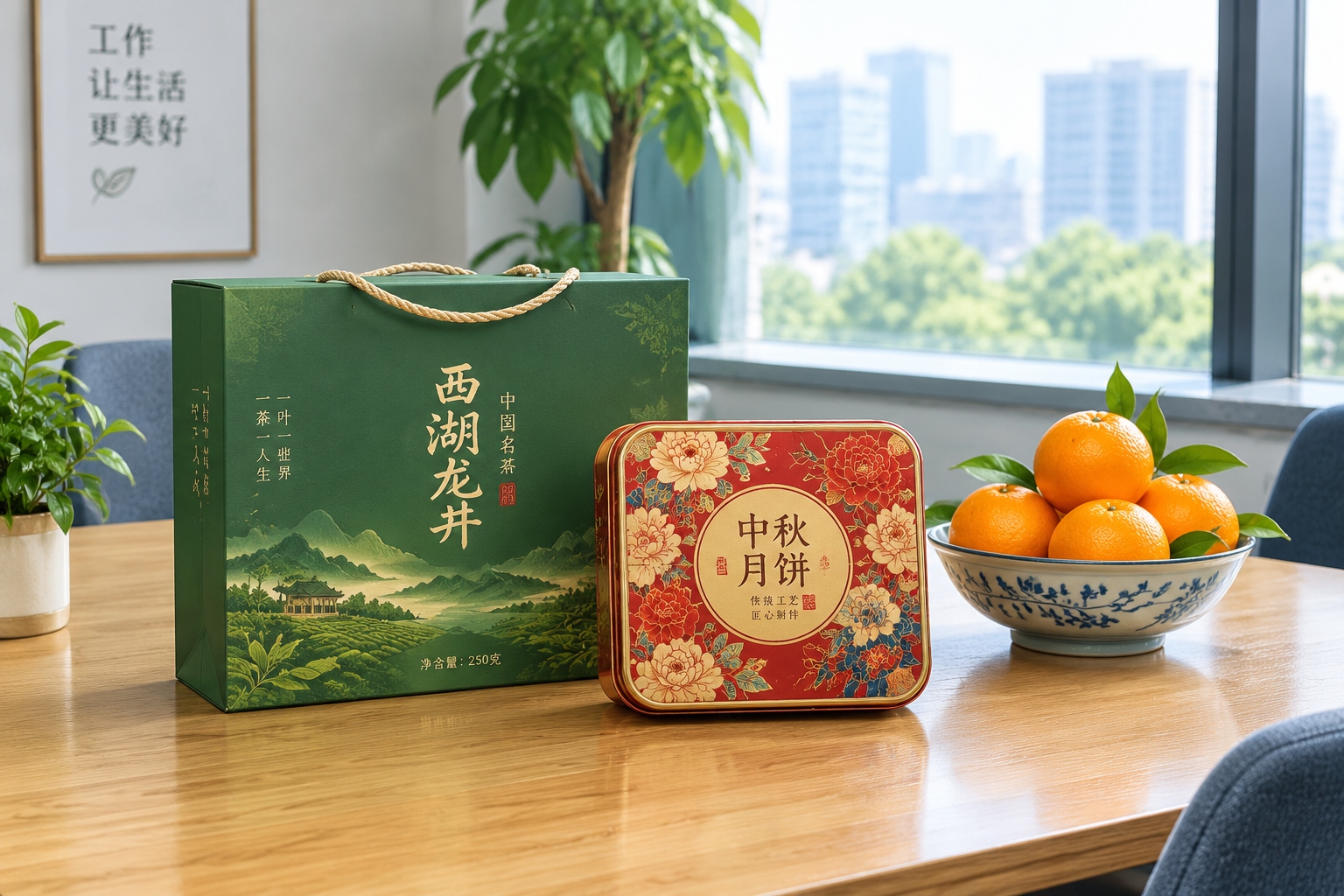
Gift giving in Chinese work settings is not a daily ritual. It’s reserved for moments that mark a relationship. Most often, you’ll see gifts exchanged around two major festivals: the Spring Festival (Chinese New Year) and the Mid-Autumn Festival. During these holidays, business partners often give each other mooncakes, fruit baskets, or tea as a gesture of appreciation.
Other natural moments include:
- After a significant deal is signed or a milestone reached.
- Before a long-term partnership begins.
- When visiting a client in their office for the first time or meeting their team in person.
- If you are invited to your Chinese business partner’s home.
- On special occasions like a partner’s birthday or their company’s anniversary (if you know it).
That said, not every meeting requires a present. If you’re in a formal negotiation with several people, passing out individual gifts may be awkward. Instead, consider hosting a dinner or giving a token to the whole team. In initial encounters, a gift is not expected; it’s better to focus on your proposal.
Choosing the Right Gift: Value and Meaning
When selecting a gift for a Chinese business contact, keep three principles in mind: appropriate value, cultural symbolism, and useful intent.
1. Keep the price moderate. An expensive gift can look like a bribe, especially in government or procurement contexts. A cheap, careless gift can seem disrespectful. Generally, the sweet spot is something thoughtful yet practical, from 100 to 500 RMB (about $15 to $70) for clients, and a bit more for close partners. If your company has a policy, follow it strictly.
2. Go for auspicious symbols. Chinese culture adores gifts with lucky colour and meaning. Red and gold are considered lucky; dates, cakes, or pastries representing roundness or reunion are popular. Tea is always a safe choice, especially a high-quality variety like Longjing (Dragon Well), Tieguanyin, or pu’er. Tea is associated with health and harmony, and one from a specific region adds a personal story.
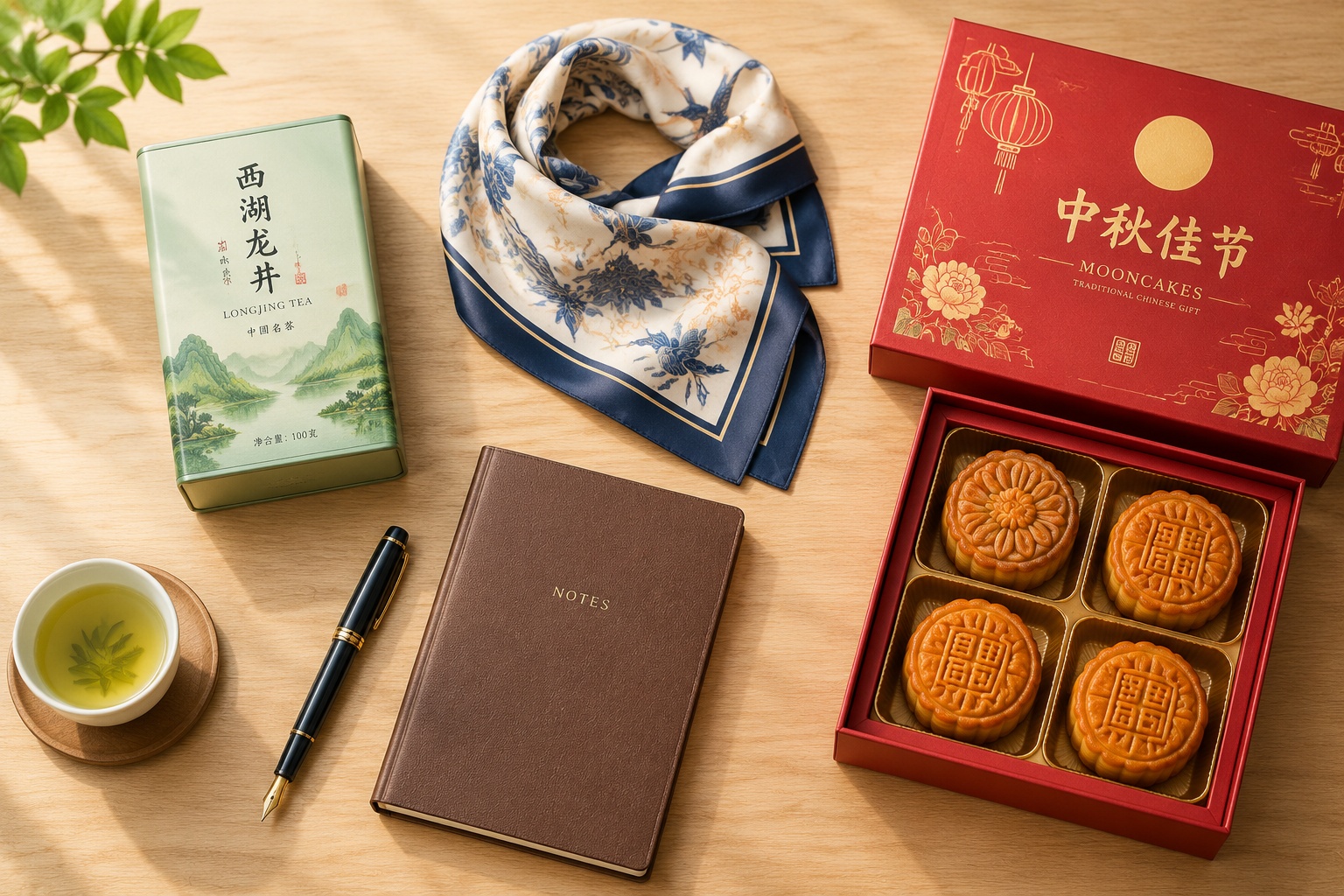
3. Choose something with local character. If you are from another country, bring something that represents your region—a box of quality shortbread, a bottle of wine from your province (unless alcohol is an issue), a well-made notebook or a luxury pen that looks elegant but not flashy. If you are in China, buy local specialties from your own city to give to contacts in another city.
Some more safe ideas:
- Fruit baskets (especially when visiting a home)
- High-quality tea set or a thermos cup
- Scarves, ties, or leather gloves
- Desk accessories like a paperweight, a business card holder
- Calendar or planner with tasteful artwork
The key is to show that you’ve put thought into the recipient’s taste and needs.
What to Avoid: The Gift Taboos You Don’t Want to Break
I once heard a story about an expat manager who gave his Chinese partner a beautiful wall clock to decorate the new office. Everyone went quiet. It wasn’t until later that he learned ‘送钟’ (sòng zhōng), ‘to give a clock,’ sounds like ‘to attend one’s funeral’ in Mandarin. The friendship never fully recovered. This is one of the most dangerous taboos, especially for older generations.
Other gifts to steer clear of:
- Umbrellas (伞, sǎn) sound like ‘separation’ or ‘breaking apart.’
- Pears (梨, lí) sound like ‘separating’ (相离). Avoid giving them as a whole fruit.
- Shoes (鞋, xié) can sound like ‘evil’ (邪) or stepping on someone in another reading. In modern business, it’s less taboo but still risky when you’re with older clients.
- Green hats (绿帽子) have a very specific insult—it means your wife is cheating on you. No one, ever, should receive a green hat.
- Sharp objects like knives, scissors, or letter openers symbolize cutting connections.
- White or black flowers are reserved for funerals. If you bring flowers, choose red or yellow.
- Gifts in sets of four because ‘four’ (四, sì) sounds like death (死). This applies to bottles, objects, and even the quantity of items.
Many Chinese people are worldly enough to know that a gift is just a gift, but don’t risk it on a first meeting. When in doubt, avoid items that have a negative homophone or are traditionally funereal.
How to Present the Gift: The Unspoken Rules
How you give is as important as what you give. In a business context, here are the gestures that will make you look like a thoughtful professional:
Give in private, when possible. Public gift giving can embarrass the recipient. It may make it seem like you’re trying to buy favor or show off. If you have a one-on-one meeting, present it near the end after the business talk. If not, see if you can step aside for a moment.
Use both hands. Always pass the gift with both hands. If you receive a gift, also take it with both hands. This shows respect and sincerity.
Minimize the price. When you hand a gift, say something like: ‘This is just a little local specialty. I hope you enjoy it.’ Never say, ‘I paid a lot for this.’ In Chinese etiquette, talking about price makes you look vulgar and may make the recipient uncomfortable.
Do not insist if they refuse. Chinese politeness often starts with an offer of refusal. ‘No, no, it’s really not necessary.’ If they refuse once or twice, still try once with a gentle smile: ‘Please accept it as a friendly token. I’ve brought it all this way.’ If they still refuse, don’t push. There may be company rules against accepting gifts.
Don’t force them to open it. In the West, we often open presents on the spot. In China, recipients often set the gift aside to open later, especially in a business environment, to avoid pressure to react. Don’t expect a big show of delight; a warm thank-you is enough.
Wrap it well. Appearance matters. Use red or gold wrapping paper, and avoid white, black, and blue in a funeral context. You can also give a branded gift bag from the store—it’s acceptable and often expected.
When They Return a Gift: The Polite Exchange
In China, gifts are often reciprocated. If your business partner offers you a present, accept it with both hands and thank them. It may be delivered the next time you meet, or right away. Do not gesture and say ‘It’s too much.’ Instead, say, ‘This is very thoughtful. I greatly appreciate it.’
In some situations, the other side may refuse your gift even if they want it, as part of ceremony. They might say, ‘No, no, we can’t accept this.’ If after insisting once or twice you sense a true ‘no’, don’t push. However, if they accept after two gentle attempts, it means they are happy to. Do not appear relieved; simply smile and move on.
If you receive a gift and later feel you need to reciprocate, don’t do it immediately and don’t give anything of higher value—that can be an uncomfortable escalation. A small, thoughtful counter-gift, perhaps at the next holiday, works best.
A Practical Gift List to Keep Handy
When you’re in a rush, here’s a cheat sheet of safe, thoughtful gifts for business acquaintances in China:
| Occasion | Safe Gift |
|---|---|
| Spring Festival | Premium tea, fruit basket, gift hamper with festive packaging |
| Mid-Autumn Festival | Mooncakes (low-sugar version if health conscious), fruit |
| Visiting an office | Good-quality pen, branded notebook, a mini tea set |
| Visiting a home | High-quality fruit, fine tea, wine (if known drinker) |
| Thank you after a deal | Local specialty from your country, desk accessory |
Conclusion: The Real Gift Is Your Respect
Business in China runs on relationships, and relationships are fed with small gestures. These gestures are not about showing wealth or showering someone with products. They say: ‘I see you as a human, and I appreciate our connection.’ A gift that you selected with care and delivered with respect is more memorable than the most expensive watch or wine.
If you remember just one thing: when in doubt, go for good tea. Then give it with both hands, a straight back, and no mention of its price. You’ll find that Chinese business partners will warm to you faster than any spreadsheet can do.
Start the discussion at forum.chinacomes.com