

Copycat, Then Something Changed
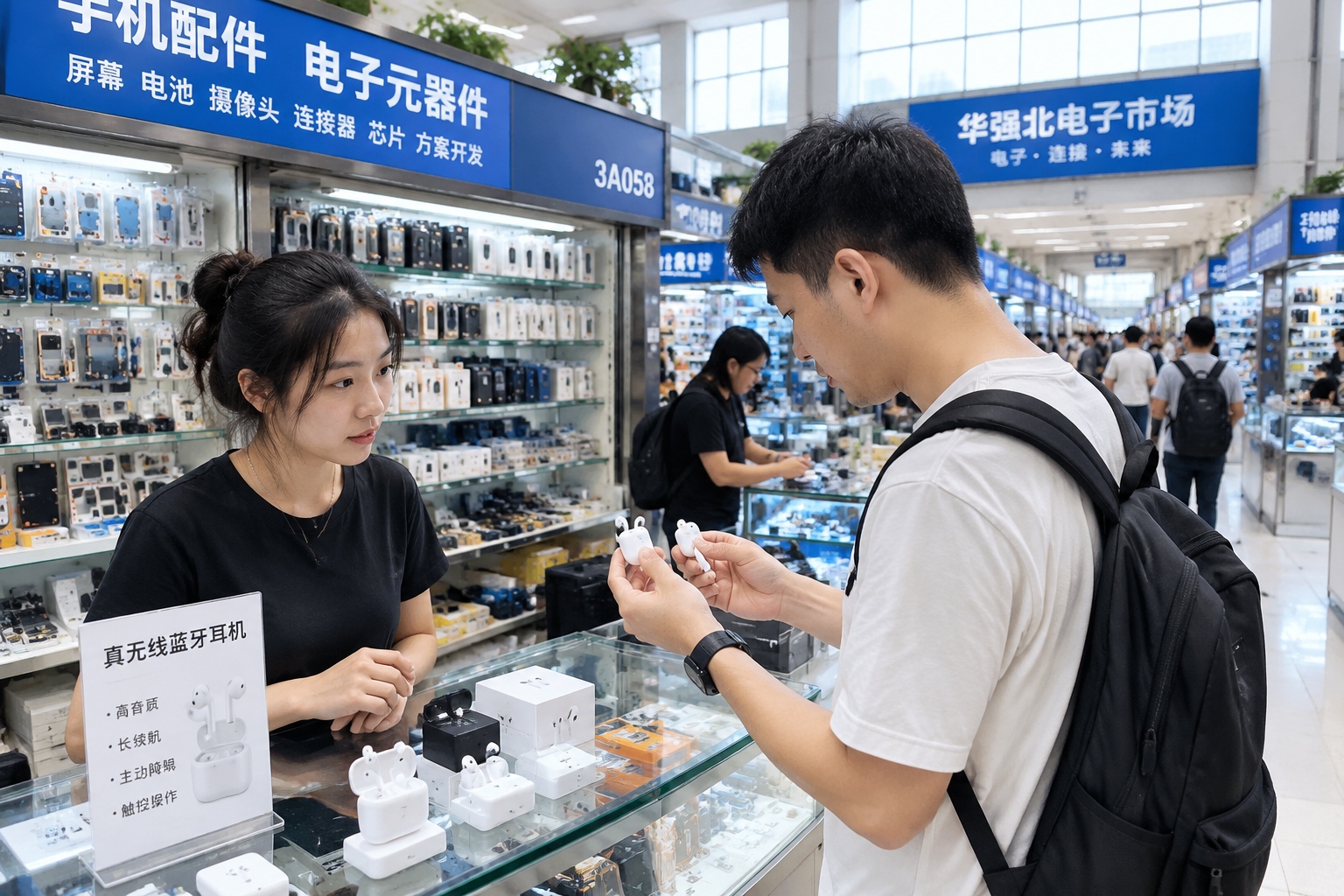
A decade ago, “copycat China” was a label printed in almost every Western tech review. If you wandered deep into Shenzhen’s Huaqiangbei electronics market, you could find counterfeit smartphones that looked exactly like the latest iPhone or Samsung, sometimes months before the official product was released. The global conclusion seemed simple: Chinese factories could imitate everything but invent nothing.
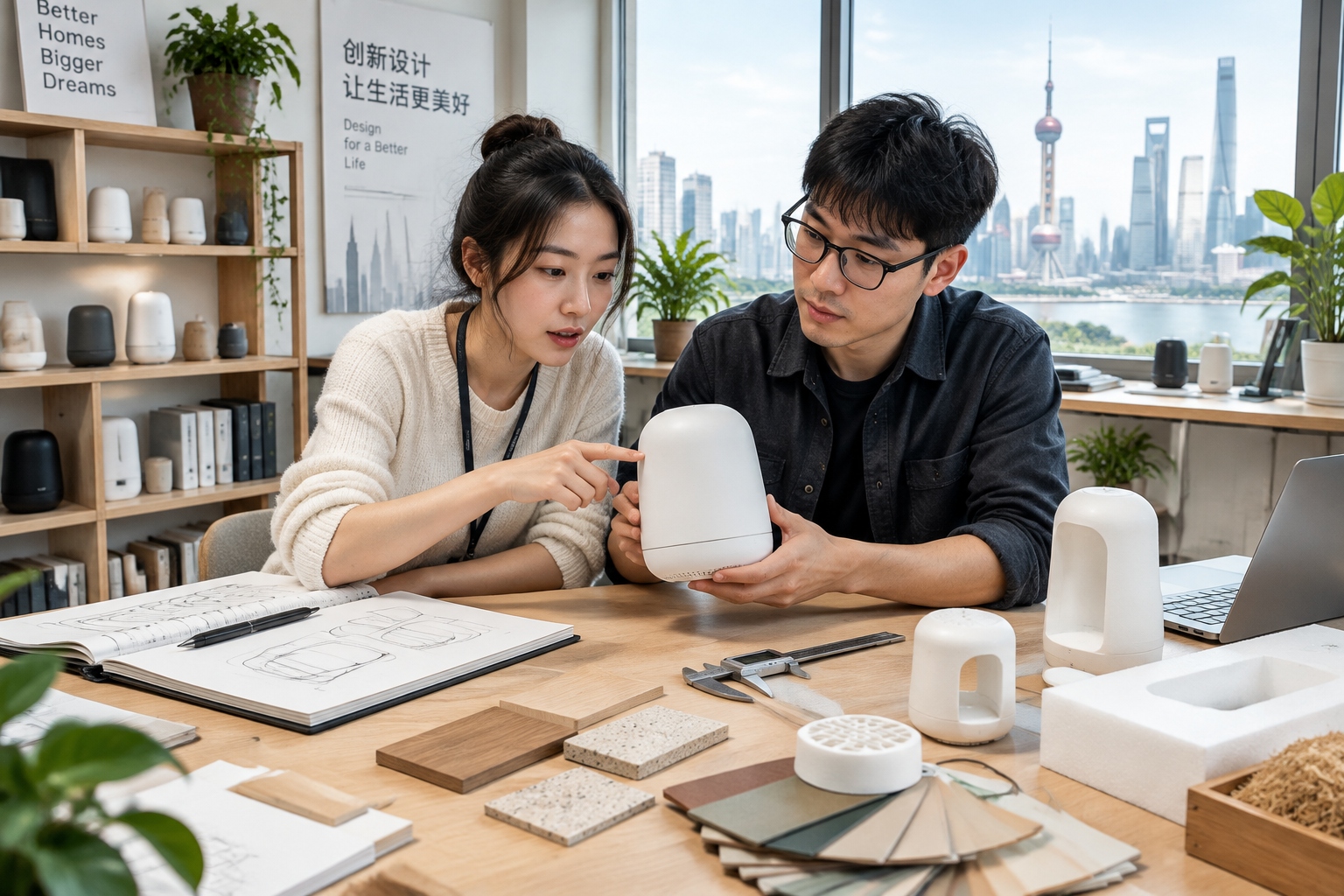
Walk through the same streets today. Fake phone booths are still there, but they share the crowded aisles with drone repair shops, original audio brands and smart-home showrooms. Young hardware entrepreneurs are testing their own designs in small spaces. Team meeting rooms are full of plastic models for robotic vacuums, e-scooters and kitchen tools that look nothing like the Western equivalents.
It did not change overnight. And it did not follow a state directive from above. The shift came from a mix of tough factory experience, global competition, educated talent and a domestic market that stopped accepting poorly designed goods. To see how it happened, I spent weeks inside product-design studios from Shenzhen to Shanghai, listening to the people who were there.
“Make Ours Look Like This”
Zhou is a design director at a household appliance company in Foshan, one of China’s manufacturing capitals. He started in 2005. “My first boss put a photo of a Philips vacuum cleaner on the table. He said: ‘Make ours look like this.’ We didn’t call it stealing; we called it benchmarking.”
That method, he says, worked for a while. Chinese factories had cheap labor and disciplined production lines. They could copy the shape, adjust the plastic compound and still earn a margin. But the bigger lesson was invisible: “We didn’t understand why a product should look a certain way. We never asked about the user.”
Between 2008 and 2015, Western brand managers often sent finished products to factories in Guangdong and asked them to reproduce them at lower cost. Zhou did those jobs. “We designed the internal structure, solved noise and heat problems, even improved waterproofing. But our name was nowhere. Honestly, we didn’t expect it to be anywhere.”
What finally broke the habit? Zhou points to three changes: Chinese consumers getting angrier at cheap local products; a few domestic tech companies succeeding at design; and an industrial culture that gradually learned to value its own long manufacturing experience. “By 2016, I had enough experience in manufacturing to restructure a product line from scratch. That’s when engineering became design for me, not just molding.”
When Xiaomi Turned White Boxes into Chinese Icons
A single product can trigger a mindset change. In 2015 Xiaomi released the Mijia rice cooker. It looked like a soft white cylinder on the outside, with a rounded profile and no visible screws or labels. Inside, it could connect to a phone and learn how to cook rice from different provinces. Japanese reviewers gave it attention, not because it was cheap, but because it had a point of view.
Xiaomi built an entire ecosystem around that visual patience. The same design language—matte white, soft curves, simple details—appeared in air purifiers, electric toothbrushes and bathroom scales. These objects weren’t perfect, but they changed the expectation for what Chinese hardware could feel like.
That “less but better” approach was adopted by smaller companies. “Suddenly, I got clients asking me to skip decals and LED strips,” said Lu, a Guangzhou industrial designer. “They wanted fewer seams and better materials. In 2010 that request would have been a joke.”
What Chinese Designers Actually Care About
So how different is a Chinese design studio’s process today? I put the same question to several designers who have worked for both Chinese and European clients. Here are the honest answers.
1. We start with the apartment, not the mood board
A Shanghai-based design lead, who moved from Scandinavia three years ago, said European design research often begins with culture or lifestyle. Chinese teams begin with a specific built environment. “How many square meters is the kitchen? Who is the oldest person using the air conditioner? Does the mother-in-law live in the same home?” she explained. “That context is essential and it makes Chinese design pragmatic.”
2. The product needs to do more
Another designer in Shenzhen called platform customisation “a Chinese advantage”. “Consumers expect one device to serve multiple scenarios—a small robot that maps your home, mops and empties dust into a charging station. That’s not just a gadget; it is a full-house chore assistant. We design for that complexity, while Western brands sometimes aim for elegant simplicity.” He added, “But complexity must feel simple.”
3. We no longer worship international awards
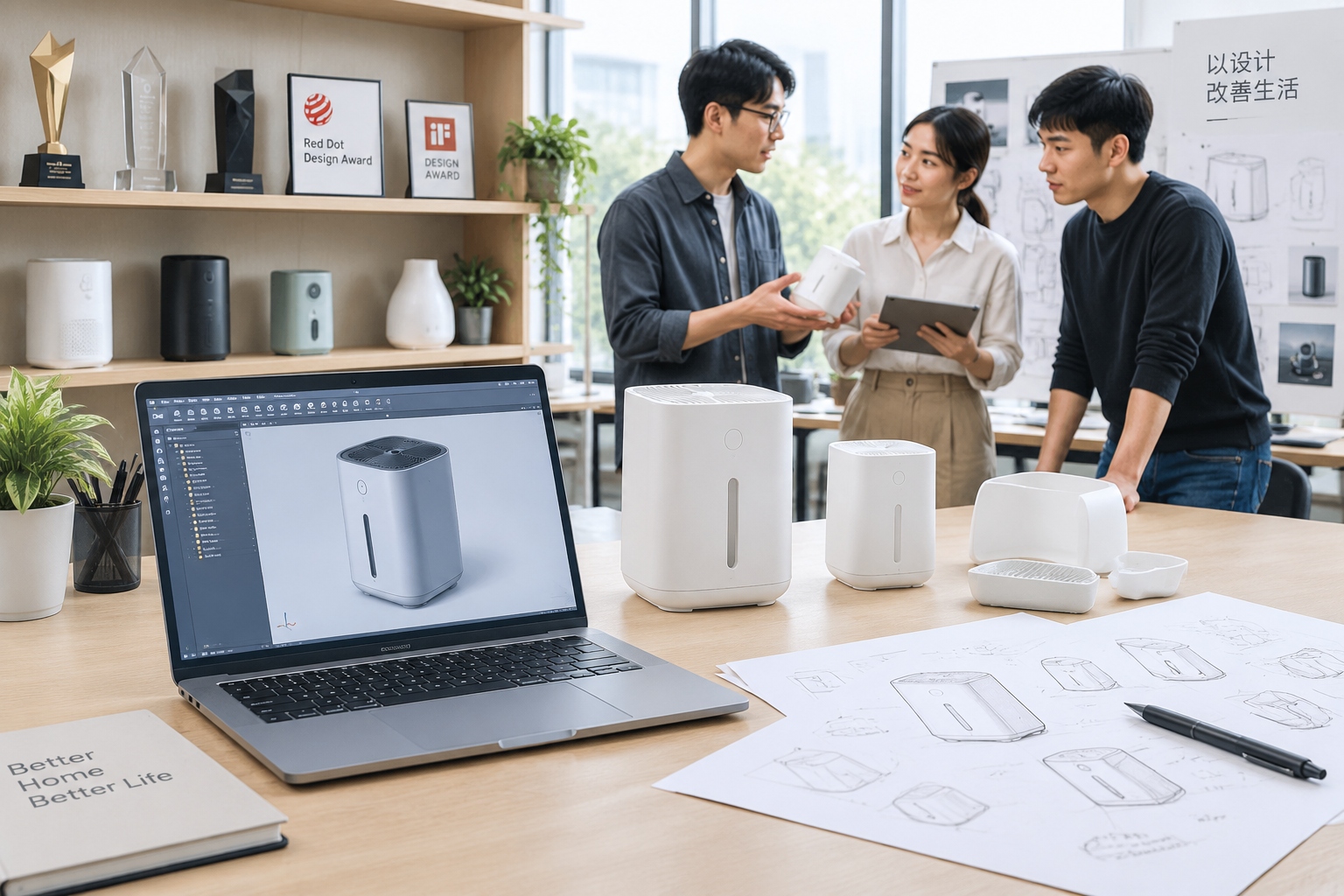
“Every design student used to dream of an iF or Red Dot trophy,” said Yang, who runs a small studio in Beijing. “But those awards now have dozens of Chinese winners every year. You get one and you think: nice, but did anyone use it?” He still submits designs, but the deeper drive is to make products that can survive online reviews, cold calls and user abuse.
Evidence Beyond Vibes
What does the data say? China has been the world’s top filer of industrial design applications for more than ten consecutive years, with more than half of the global total in some years (WIPO). Many experts caution that raw application numbers include defensive uses. But combine them with a second number: exports of original consumer hardware continue to reach every global market.
Design award statistics tell a similar but softer story. In the 1990s, almost no Chinese names appear on the Red Dot or iF winners pages. By the late 2010s, Chinese companies and design consultancies are among the most listed. Flip through any recent international design annual: Chinese studios regularly occupy a significant space in almost every category.
That shift is also visible at trade fairs. Five years ago at Berlin’s IFA, Chinese companies were often tucked into budget corner booths. Today brands like Midea, TCL, Roborock and Huawei open large pavilions near the entrance. Their industrial design is compared with the best of Europe and Korea.
Ancient Porcelain and Rice-Husk Plastic
What finally gave Chinese design its own vocabulary? Some designers point to a return to materials and concepts from Chinese culture.
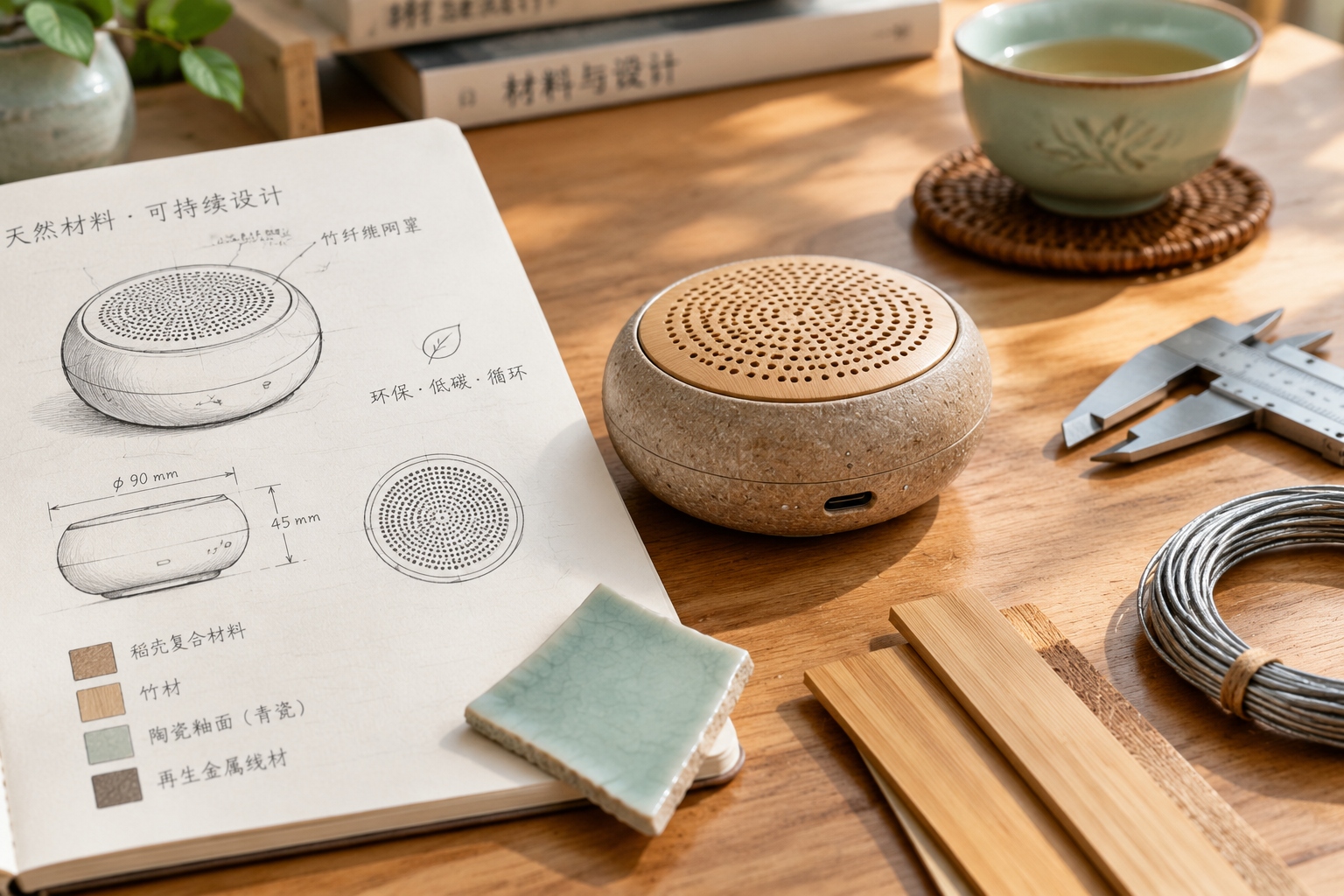
In a studio outside Shanghai, I held a portable speaker shell made from rice husks mixed with recycled plastic. The finish felt warm and coarse, unlike the cold smooth metal of most gadgets. A founder explained: “We didn’t choose it to look ecological. We chose it because it can be molded cheaply and disassembled easily. But the texture feels familiar—it recalls a woven basket or old wooden surfaces that your grandmother touched.”
Another industrial designer I spoke with, Zhao, makes premium tea-brewing machines in Hangzhou. He studied German product design, but now looks at Song dynasty porcelain for inspiration. “Porcelain used to be the most practical and refined material in the world. The maker kept only what the hand needed. I want the same discipline,” he said. His newest machine has an asymmetrical steam vent and a ceramic glaze surface that mirrors the way old teapots age.
Reverse Influence: How Chinese Ideas Spread
Today Chinese-designed products influence the entire world. The most obvious case: floor cleaning robots. Ecovacs and Roborock created self-cleaning docks and auto-empty stations; Western competitors like iRobot had to respond. In consumer power accessories, Anker and Baseus changed the way compact chargers and external batteries look and perform; their practical shapes are now copied by brands in the United States and Europe.
Perhaps the most interesting reverse export is “design for density”. Chinese design’s focus on small apartments and multi-generation homes has produced appliances and furniture that fit narrow, crowded cities everywhere. As housing prices rise in London, San Francisco and Lagos, global consumers look for products that work in small spaces. The Chinese response—foldable, multifunctional, app-connected—looks more relevant than ever.
But Chinese designers remain pragmatic. “We still search for our own voice,” said Lu. “We can’t copy Scandinavian or Japanese style because our streets, kitchens and families are different. That forced us to create a language. Now that language is becoming visible.”
A Long Way, But Still Moving
Last month I visited a small factory on the edge of Huizhou. In a sample room, there were stacks of plastic models, each embodying a product idea: a stackable water purifier, a desktop compost bin, an electric scooter with a drone cradle. Not every product will make it to market.
As I left, a woman at the front desk was drawing on a tablet—a concept for an oven with a traditional Chinese medicine setting. I asked if she was a designer. “Not yet,” she said with a smile. “But the factory manager lets us spend one day a week on our own experiments. He says if the idea works, we will build it.”
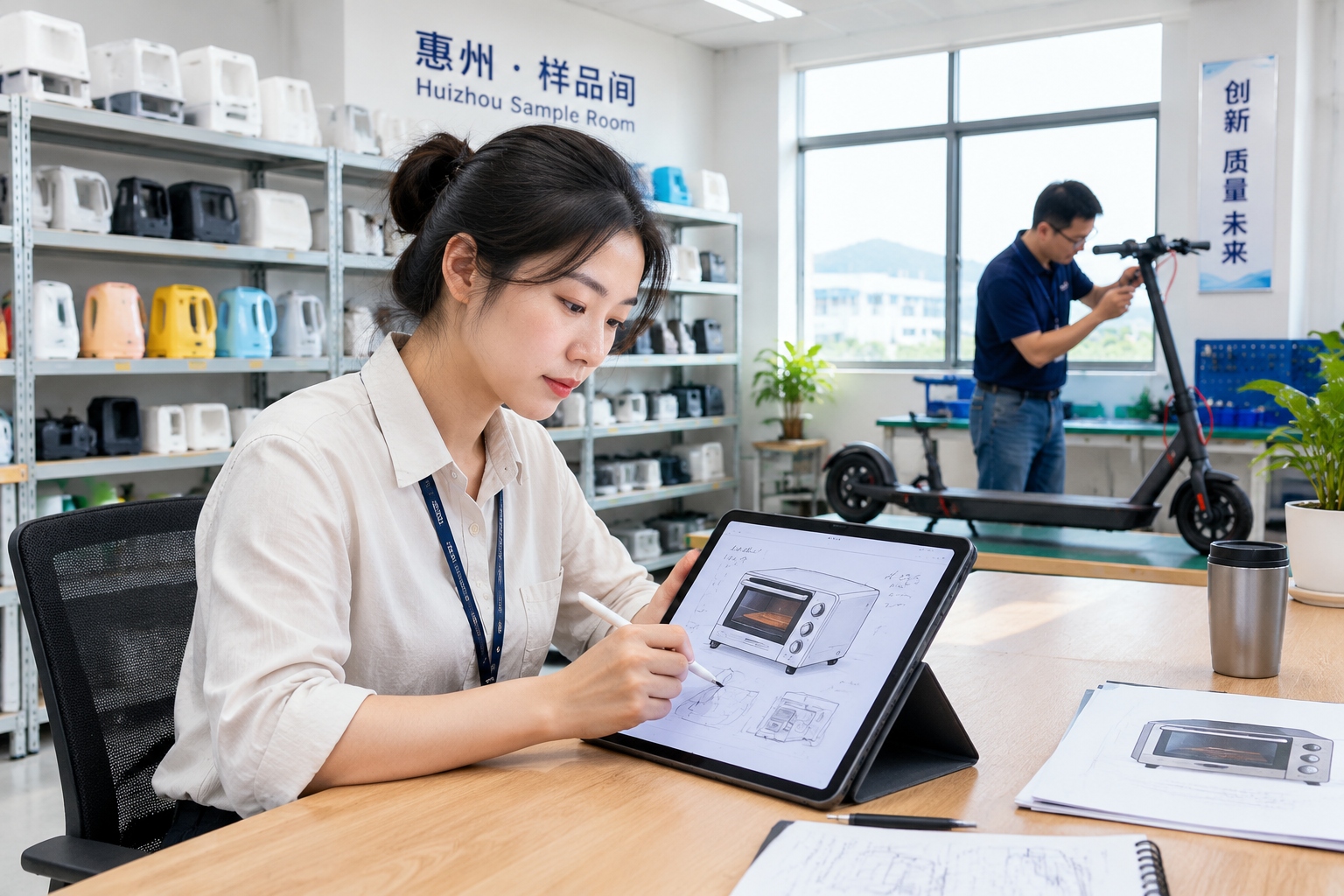
Maybe that is the simplest definition of progress: Chinese factories no longer ask what object to copy. They ask what object should exist next. If a Chinese product design philosophy is slowly taking shape, it starts with this conversation inside factories and studios.
Start the discussion at forum.chinacomes.com