

Morning in Kashgar: The Scent of a Thousand Baked Buns
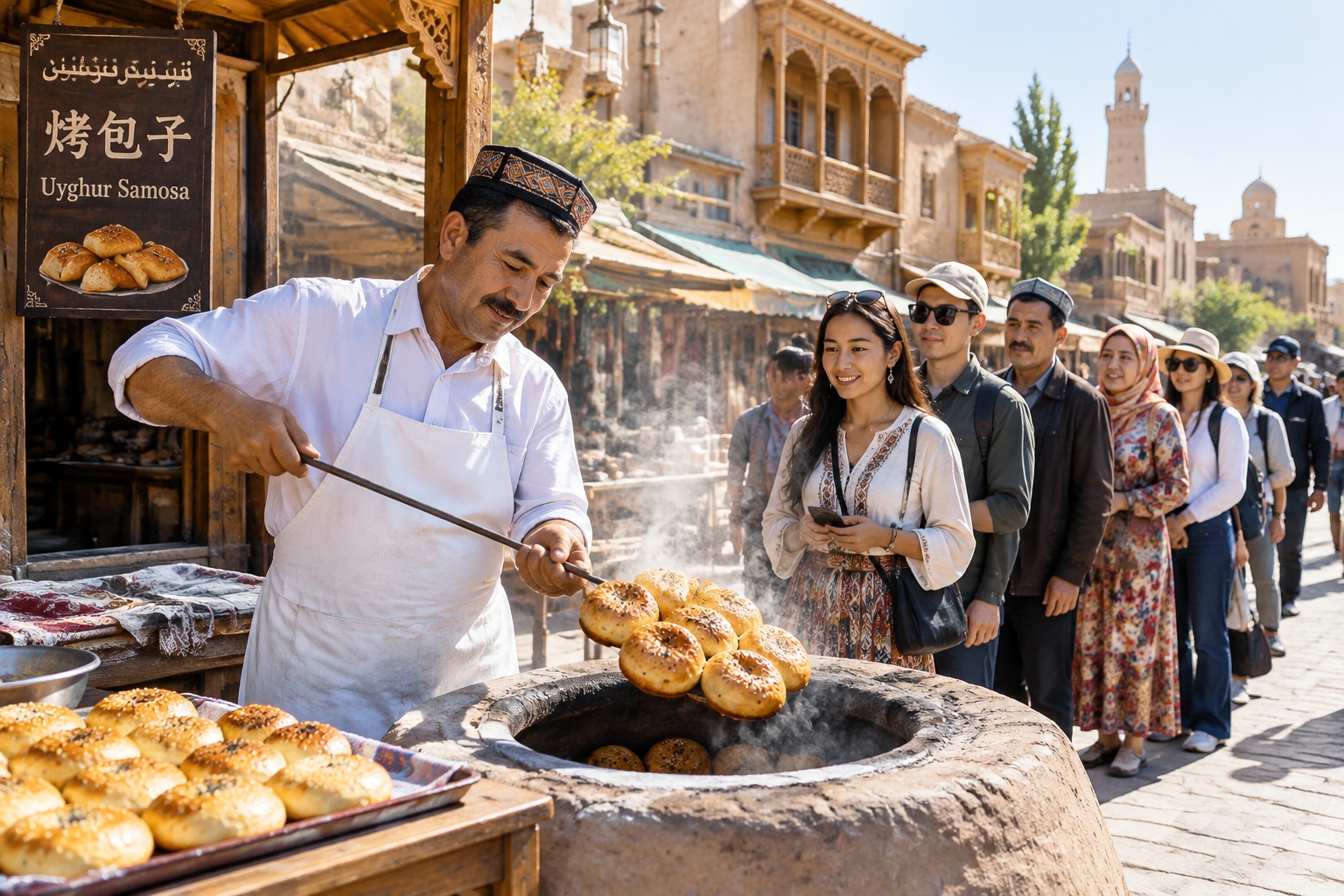
At six in the morning, when the sky is still a cold blue, Abduwali is already bent over his tandoor. The clay oven has been burning for an hour, and the first batch of samosas is stuck to its walls, hissing and blistering. A queue is already forming on the narrow street—a few taxi drivers, a group of construction workers, and one very determined woman with a large suitcase. She has come from Urumqi just to eat here. ‘The last time I had it,’ she says, ‘was twelve years ago.’
Abduwali does not answer. He is too busy slapping a new ball of dough flat, spooning in the lamb mixture, and pinching the edges shut with a speed that looks like magic. By the time he pulls the first batch out with a long iron hook, the smell of cumin and charred flour has spread across the alley. The woman with the suitcase smiles. She is in the right place.
Not Your Indian Samosa
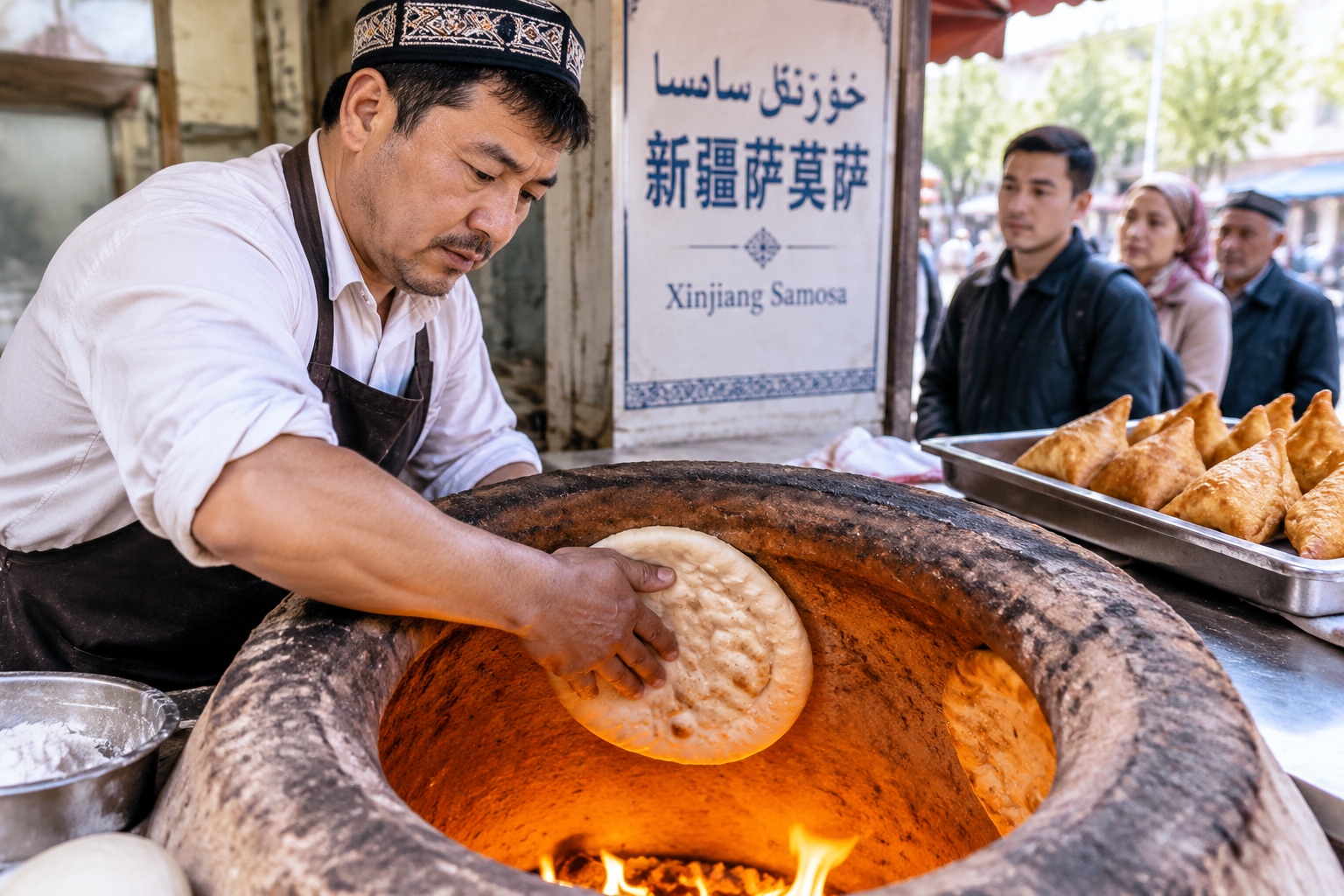
Let’s get one thing straight: a Xinjiang samosa is not the triangular, deep-fried pocket you may know from Mumbai or London. It is a fist-sized bun, golden and plump, with a crust so crispy that it shatters when you bite. The filling is a simple, old-school combo: minced lamb, chopped onions, cumin, salt, and a little pepper. Sometimes a touch of lamb fat is thrown in for luxury. The bun is slapped into a scorching clay tandoor, sprinkled with water, and baked until the outside is a blistered wonder and the inside is a juicy, aromatic mess.
In Kashgar, this is breakfast. It is also lunch, and dinner, and the thing you eat when your friend says ‘I know a place.’ It is street food that has been around for centuries, but it’s not some museum piece—it is the daily fuel for taxi drivers, shopkeepers, and tourists who just stumbled out of a hotel.
The word ‘samosa’ might make you think of a crunchy snack served with chutney. Here, it is eaten with your hands, dipped in vinegar with a sprinkle of chili powder, and washed down with milky tea. No fork. No ceremony. Just a paper bag and a satisfied grunt.
The Man Behind the Tandoor
Abduwali is 49 years old, with hands that look like they have been baked as many times as his samosas. His father sold samosas in this same spot in the 1970s, when the road was dirt and the market was a few donkey carts. Abduwali took over in 1998, after working as a truck driver for a decade. ‘My father said, ‘You’re wasting your life. Come make bread with me.” He laughed at the time. Now he laughs because he has been making bread for twenty-five years, and he can’t imagine anything else.
His father, who died five years ago, still hovers over the stall. ‘I used to stand here with him when I was seven, holding a stick to wave off flies,’ Abduwali says. ‘The stall was just a wooden cart then. Now I have a proper counter with a glass case. But the tandoor is the same one. My father bought it from a potter in Turpan in 1972. It is older than me.’
Each night, he prepares the dough and the filling in his small kitchen, about a kilometer away. At 4:30 a.m., he jumps on his electric scooter and rides to the stall. By five, the tandoor is lit. By six, the first customers are arriving.
His two helpers are his nephew and a neighbor’s son. Both are under twenty. They knead dough and wash baskets while Abduwali works the fire. ‘They don’t trust me with the tandoor yet,’ the nephew says with a grin. ‘I burned my arm once. Now I understand. It’s a serious machine.’
The Secrets: Dough, Fat, and Fire
Ask Abduwali for his recipe and he’ll wave a floury hand. ‘No recipe,’ he says. ‘I just know.’ But after watching him, you start to see the patterns.
For the dough, it’s flour, water, salt, and a splash of vegetable oil. The trick is kneading it until it’s smooth and then letting it rest for at least half an hour. The filling is where things get serious. He uses about 70% lean lamb and 30% fat—the fat is essential because it melts during baking and creates that luscious juice. Onions are chopped by hand, never ground. Cumin is generous. Salt is measured by feel.
Then comes the tandoor. He heats it with wood for about an hour until the inner walls are nearly white. If you touch the clay at that point, it would burn your skin instantly. He picks up a ball of dough, flattens it, adds the filling, and seals the edges with a twist. With a quick move, he reaches into the oven and slaps the bun onto the white-hot wall. In seconds, a row of buns is clinging to the clay, and he sprinkles water to make steam. He closes the iron lid and waits.
The first batch comes out in about ninety seconds. The buns are doubled in size, their bottoms decorated with sooty spots from the clay. One split open as he pulls it out, and the juice drips down the tongs. He puts it on a small plate and pushes it towards me. ‘Your first one. No charge.’
He tells me the hardest part is judging the fire. ‘On a windy day, the heat goes crazy. On a cloudy day, it drops. Every day is a little different. You have to listen to the clay.’ He taps the tandoor with a metal hook. ‘This old thing tells me what it needs.’
A Thousand Buns a Day: The Math
Abduwali’s tandoor takes forty buns per batch. Each batch takes about ten minutes, including slapping and pulling. That is a theoretical maximum of 240 buns per hour. He sells from seven in the morning to two in the afternoon, then again from five to eight. On a busy day, he easily goes through thirty-five to forty batches—over 1,200 buns. On a slow day, he still sells around eight hundred. When I ask him about the ‘thousand a day’ claim, he just nods. ‘You counted the queue yourself, right?’
The math works out. At three yuan each, that is over three thousand yuan in sales a day—roughly four hundred dollars. But the expenses add up: flour, lamb, onions, charcoal, rent for the stall, and wages for his two helpers. Still, he is making a decent living. The helpers are an older nephew and a neighbor’s son, both learning the trade. ‘They will probably open their own stalls one day,’ Abduwali says. ‘Good for them. As long as they don’t do it on this street.’
He also has to deal with the rhythm of the week. Monday is packed because markets are busy. Friday is lighter, but the afternoon rush is bigger after prayers. On a hot summer day, sales dip at noon—nobody wants to stand next to a furnace. But then evening comes, and the queue starts again.
The Regulars: A Cross-Section of Xinjiang
The line changes throughout the day. In the morning, it’s mostly workers and taxi drivers. At noon, office workers and students appear. In the evening, families come, and the queue is calmer, more patient. A young man in a delivery uniform rushes over and orders ten buns to go. ‘I’m so late,’ he mutters, checking his phone. But he still waits. Where else can you get something this good for three yuan?
One regular, a retired history teacher named Rahman, comes every Tuesday for a bun with extra fat. ‘When I was a kid, there was a stall here run by an old man who always gave me the burnt one for free,’ he says. ‘Now I pay for the privilege.’
Another regular is a young woman in a hijab who rides a pink scooter. She orders two buns, takes a selfie with them, and leaves the second bun for a homeless man who sits at the corner. Abduwali does not charge her for the second bun. ‘Small kindness,’ he says.
Tourists are a different story. They often arrive with guidebooks and leave with their hands full of grease. One German couple took forty buns to go, saying they would ‘bring them back to Berlin.’ Abduwali looked worried. ‘They won’t be crispy,’ he said. They did not care.
Phones, QR Codes, and the New Economy
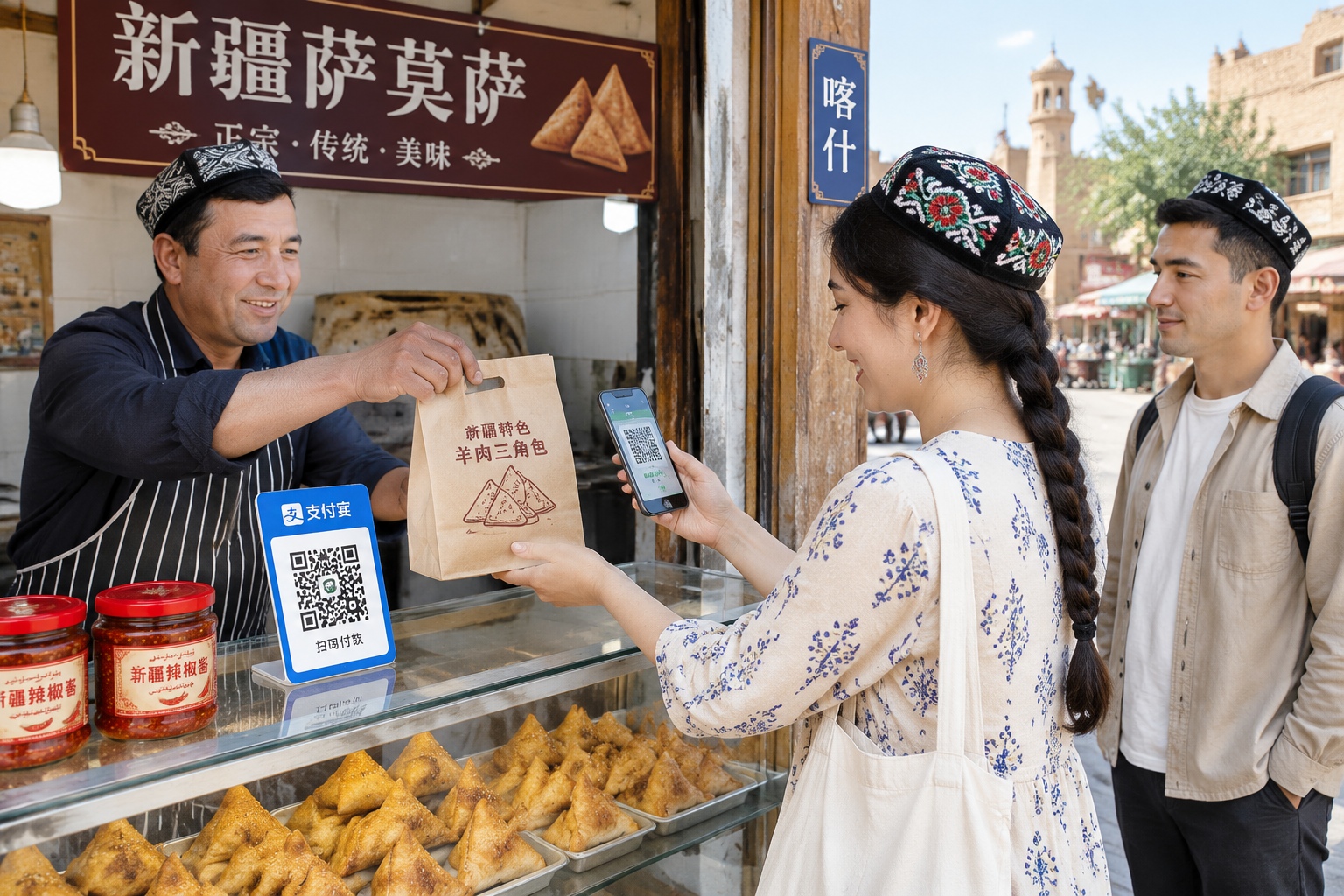
Ten years ago, Abduwali kept a wooden box full of cash under the counter. Now that box is full of old receipts and a smartphone. He has a QR code printed on a small plastic card, taped to the front of the stall next to a jar of chili sauce. ‘Sometimes people pay with their watch,’ he says, shaking his head. ‘I don’t even know where they tap. My daughter tried to show me. I still don’t get it.’
The phone also lets him see what the world thinks. His daughter once sent him a video of a popular food blogger tasting a samosa and crying, ‘I can’t believe I’ve been missing this my whole life!’ Abduwali laughed. ‘That girl was from Chengdu. She said it’s like her city’s spicy food, but with more lamb.’
He even gets orders on his phone now. A delivery app sometimes sends couriers who buy in bulk and pack them in thermal bags. ‘I don’t know how that works. They just ask for a hundred buns and pay the same price. I wrap them in paper and they’re gone.’
The Tandoor’s Travels: A Bite of Central Asia
Watching Abduwali work, you realize that this little oven connects China to a much wider world. The tandoor—or tonir, as it is called in Uyghur—is found all over Central Asia, from Uzbekistan to Pakistan. The samosa itself probably traveled thousands of miles along the Silk Road, changing shape and filling along the way. In China’s Xinjiang, it settled as a golden bun with lamb and cumin. In India, it became a tiny, crispy triangle with potatoes. The same idea, different locals.
That history is alive on the streets of Kashgar. The old city, with its mud-brick walls and carved wooden balconies, is now a tourist magnet. But for every tourist with a selfie stick, there are a dozen locals just buying their daily bread. The samosa stall is part of that rhythm—it does not cater to the camera. It just serves the neighborhood, and the neighborhood keeps it going.
Conclusion: The Real Secret
On the surface, this is a story about bread and lamb. But it is really about how a city eats, works, and changes. The tandoor hasn’t changed much since his father’s time, but everything around it has: the payment system, the customers, even the way the samosas are talked about online. Abduwali doesn’t have a marketing plan or a social media account. He just keeps the fire hot, the dough fresh, and the queue moving.
‘The secret? There is no secret,’ he says, handing a bag of samosas to a customer who has been waiting for twenty minutes. ‘You cook well, you treat people right, and you don’t take a day off. That’s it.’ Then he turns back to the tandoor. The morning rush is just beginning.
Start the discussion at forum.chinacomes.com