
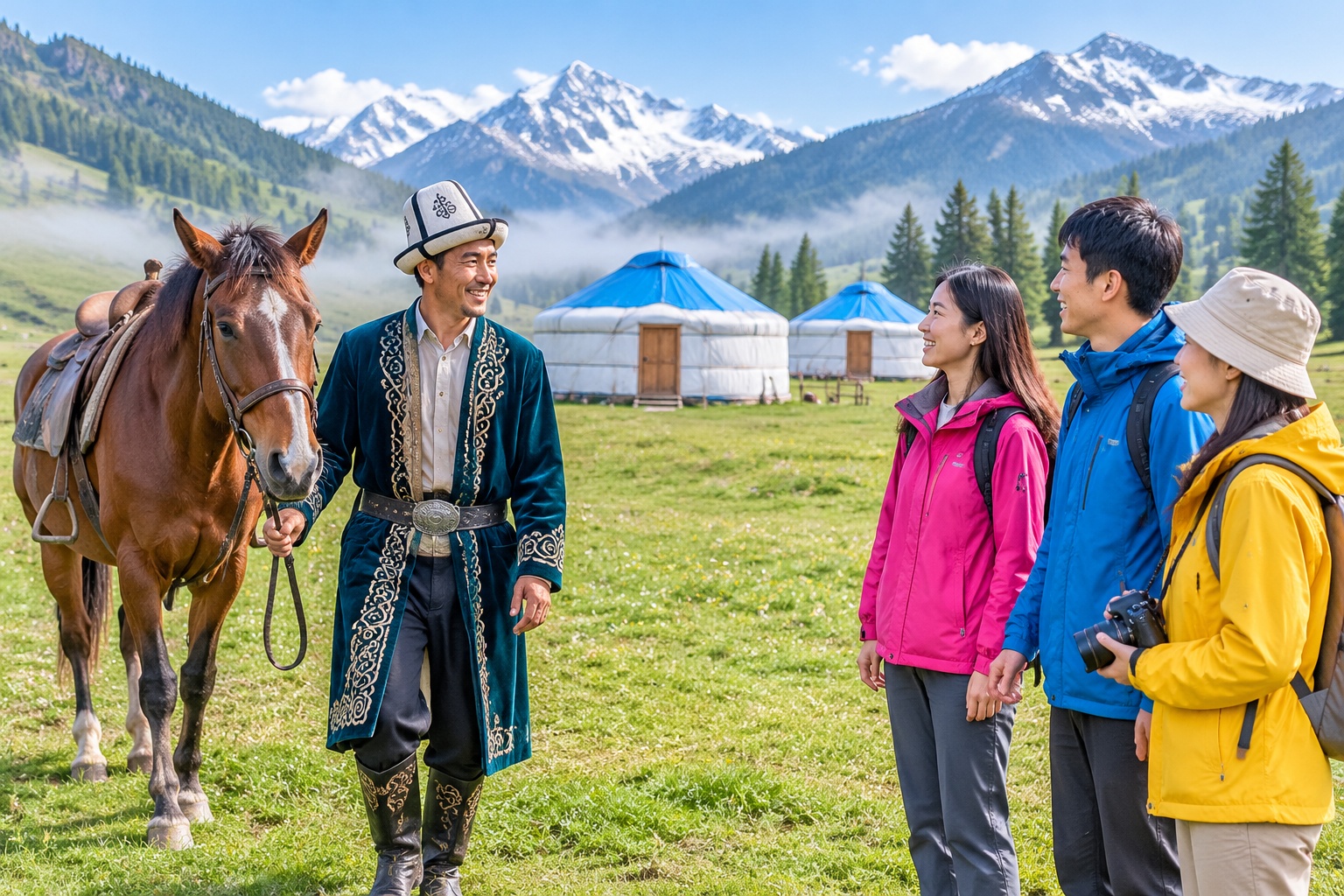

At 5 a.m., the valley is still in shadow. Aibek, a Kazakh herder in his early 40s, crouches beside a mare, milking it into a shiny aluminum bucket. The air smells of grass and damp soil. Across the pasture, his wife, Aysana, lifts a blue plastic tarp from the yurt’s entrance, releasing a puff of smoke from the stove inside. In three hours, the first group of tourists will arrive. They want to ride horses, drink fresh kumis, and see how a nomadic family lives.
Altay Prefecture sits in the far north of Xinjiang, a strip of land bordered by Russia, Mongolia, and Kazakhstan. It is a landscape of steep mountains, alpine meadows, and dense forests. The Kazakh herders here have followed the same rhythms for centuries: move to high pasture in summer, retreat to protected valleys in winter, and live off sheep, horses, and cattle. But in the past ten years, that rhythm has changed. Again and again, the yurt door swings open to visitors.
When the Yurt Opened to Guests
Aibek’s family still maintains its herd — about 250 sheep and 40 horses. In May, they moved to this summer pasture, a green bowl surrounded by snowy peaks, about forty kilometers from the nearest town. Before tourism, this meadow was just for grazing. Now, three yurts sit in a curved line near the creek. One is the family’s living space. The other two are guest rooms, furnished with carpets, low wooden tables, and thick quilts.
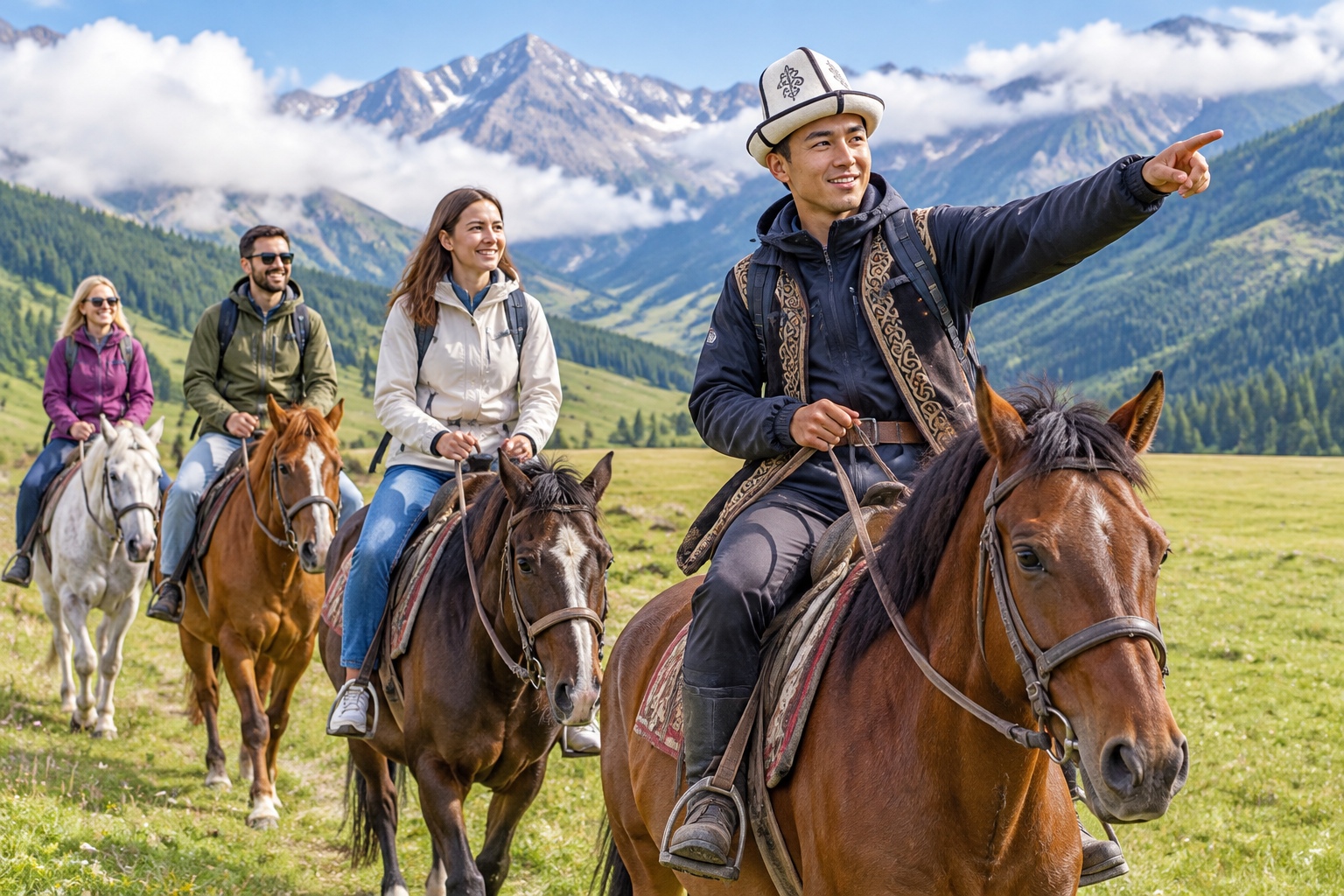
Aibek doesn’t see himself as a hotel owner. “We are first herders,” he says, pouring my tea into a small porcelain cup. But the summer months force him to play both roles. Mornings are for livestock: milking, counting sheep, checking for wolves. Afternoons are for guests: outfitting horses for rides, leading small groups to a waterfall, or simply sitting and answering questions about his life.
Watching him adjust a saddle while explaining his seasonal migration to a tourist from Shanghai, it’s clear this is a delicate balancing act. The old ways haven’t disappeared, but they now share the calendar with bookings, comments, and five-star reviews.
Money Flows in New Ways
Ten years ago, income for Aibek’s household depended on a single moment: when the lambs were sold to livestock merchants in late autumn. That one sale covered the family’s yearly expenses — food, clothing, school fees, and the occasional trip to the hospital. If the winter was harsh and the herd died, the family had nothing to fall back on.
Today, that gamble is less terrifying. Tourism brings in cash throughout the busy summer months. A guest night in a yurt costs 200 yuan (about $25). A two-hour horse ride is 150 yuan. Home-cooked meals add another 50 to 100 yuan per person. During peak July and August, Aibek estimates that 60 to 70 percent of his household income comes from visitors, not livestock.
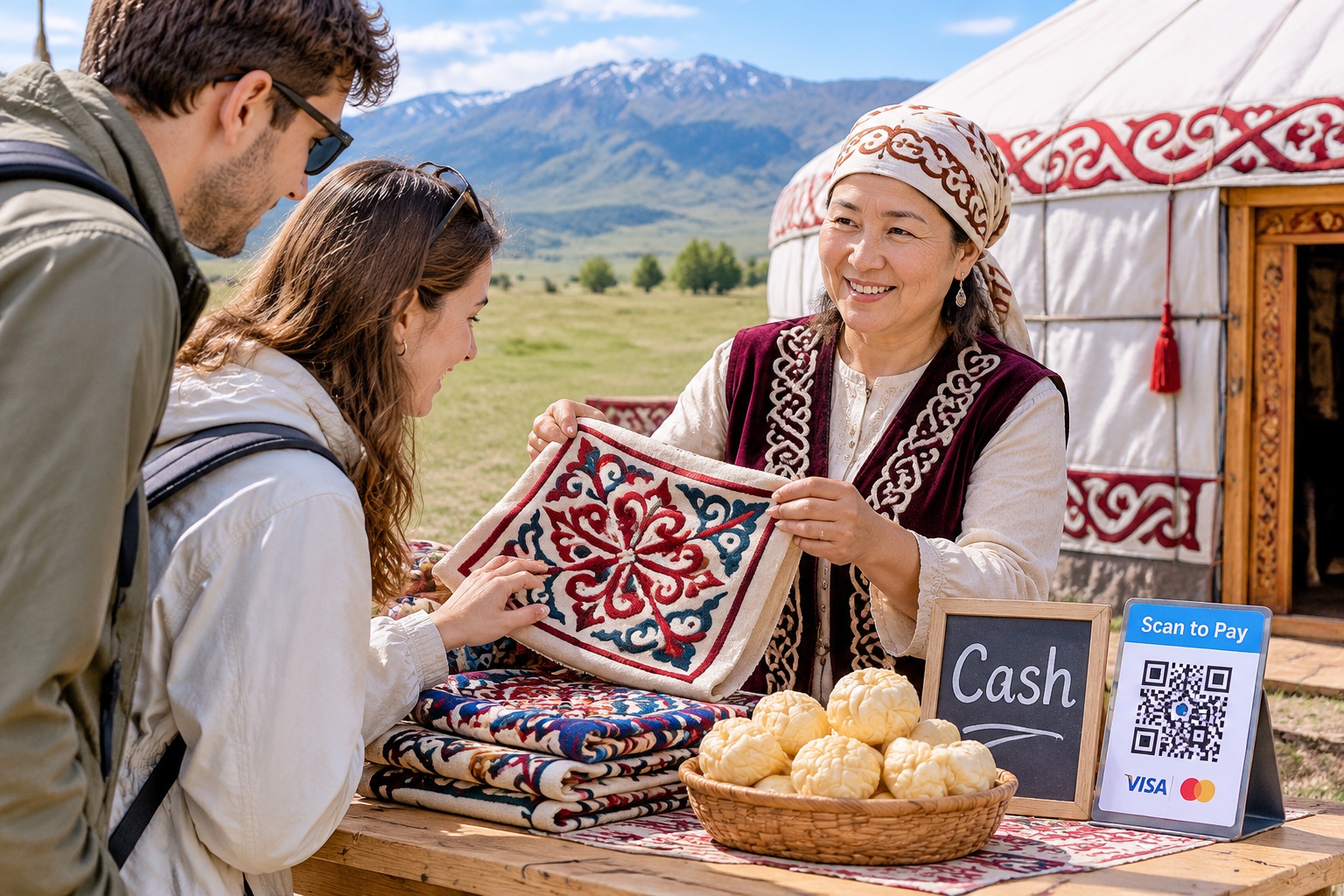
“Last year, we bought a light truck with tourism money,” he says. “The sheep paid for it, too, but we didn’t have to sell as many.” Aysana, a quiet woman in her 30s, has developed her own mini-economy. She sews traditional Kazakh embroidery, makes dried cheese and kumis, and sells them from a small wooden table at the edge of their yurt. In a good month, she earns about 3,000 yuan. “It’s not huge,” she says, “but it’s mine.” This income has changed the family’s internal dynamics; Aysana now makes her own spending decisions, and she is saving for a sewing machine that can replicate traditional patterns more efficiently.
Roads, Wi-Fi, and a New Window on the World
Infrastructure has tied the pasture to the country. In 2015, the road past Aibek’s summer grazing area was paved. What once took a full day on horseback or foot now takes two hours by car. Buses from Altay city and Burjin county now bring tourists directly to trailheads. Along the route, small parking lots, public toilets, and signposts have appeared.
The change that has affected daily life most, however, may be the internet. Mobile signal reaches the valley for now, though it flickers on rainy days. Aibek has a smartphone — a modest brand he bought for 800 yuan. He uses WeChat to receive payments and to share short videos of his yurt camp on Douyin (China’s TikTok). Last summer, he says, nearly half of his guests found him through these videos.
“The phone has become my shepherd’s staff,” he jokes. It has also changed how he judges business decisions. This year, a tourist complained that there was no air conditioning. Aibek simply shrugged. “In the mountains, it gets cold at night. They don’t understand that.” He didn’t buy air conditioning, but he did install a water heater — a practical request after several guests asked for warm showers. Solar panels now power the lights and the water pump, a quiet upgrade that his parents, who lived by kerosene lamps, would find miraculous.
Herders, Guides, and a Changing Community
Walking through the tourist base near the Kanas Lake ticket office is a practical education in China’s borderland dynamics. Kazakh men in distinctive eagle-patterned jackets walk next to Han Chinese entrepreneurs who have opened food stalls and souvenir shops. A young Kazakh woman, Tianul, works as a tour guide after finishing her studies in Urumqi. She says her father still grazes cattle in winter, but she has no intention of taking over the herd. “I love my culture,” she explains, “but the mountains are a hard place to make a life. I can better help my family from a town.”
That sentiment points to a deeper transformation. Fewer young Kazakhs want to sleep on the ground or chase livestock in a blizzard. The tourism industry has created jobs that appear more manageable and light cleaner: operating shuttle buses, staffing front desks, and managing guesthouses. At the same time, it has made traditional skills — horse riding, eagle hunting, felt making — into something that can be performed for a paycheck. Some older herders worry this turns their culture into a show. Others see it as a way to keep the culture alive while the economy moves forward.
The Fragile Balance Between Growth and Grass
Tourism does not come without friction. The summer season is short — roughly from June to September — which pushes herders to earn as much as they can in a few months. But heavy foot traffic can damage the fragile alpine meadows. Aibek notices that the grass near the main trail has become patchy. “We now let the sheep eat on higher ground, away from the visitors’ path,” he says, adding that the local government has started to regulate designated camping sites and restrict the number of yurts allowed in the core scenery zone.
There is also the constant pressure of seasonality. When the camps close, herders must return to grazing or find off-season work. In winter, tourists are scarce, although ski resorts are beginning to attract visitors to Altay’s abundant snowfall. “Sometimes we worry if we depend too much on summer people,” Aibek admits. “But we also remember that before tourism, a bad year meant we might lose everything.”
An Evening Walk with the Horses
As the sun drops behind the snow-capped ridge, Aibek walks with me to the horse pen. A handful of tourists are taking phone shots of the golden light. He checks the legs of each horse, ignoring the excitement around him. “The tourists will leave in September. The horses stay all year,” he says, almost to himself.
His wife serves a dinner of laghman noodles and fried lamb with onions. A group of visitors from Guangzhou has gathered around a bonfire, singing pop songs in Chinese. Aibek sits a little apart, drinking tea and watching his sheep settle down for the night. The yurt lights up with warm electric bulbs — a luxury his parents didn’t have.
“Life is better than before,” he says. “But me, I still count my wealth in sheep.” He pauses, then adds, “The grass must come back every year. If it doesn’t, no one will come to see this place.”
The next morning, I wake to the sound of cowbells and the smell of smoke. Aibek is already on the slope, leading his animals to a fresh patch of pasture. In the guest yurt, someone is brushing teeth; another guest is taking a video of a horse sneezing. The new season has started.
Start the discussion at forum.chinacomes.com